Patterns for Pirates

P4P stylish, modern, wearable patterns

  • Home
  • Blog
    • Frequently Asked Questions
    • Pattern Releases
      • Free Patterns
    • P4P University
      • Fitting
      • Sewing with Stretch, Knit Fabrics
      • Sewing with Woven Fabrics
      • Sewing Machines
    • Sew-A-Longs
    • Fabric for Pirates
    • Pattern Hacks
    • Announcement
      • Blog Tours
      • Contest/Giveaway
  • Shop
  • Bundle Discounts
  • Flash Friday
  • Gift Cards
  • My Account
  • Cart

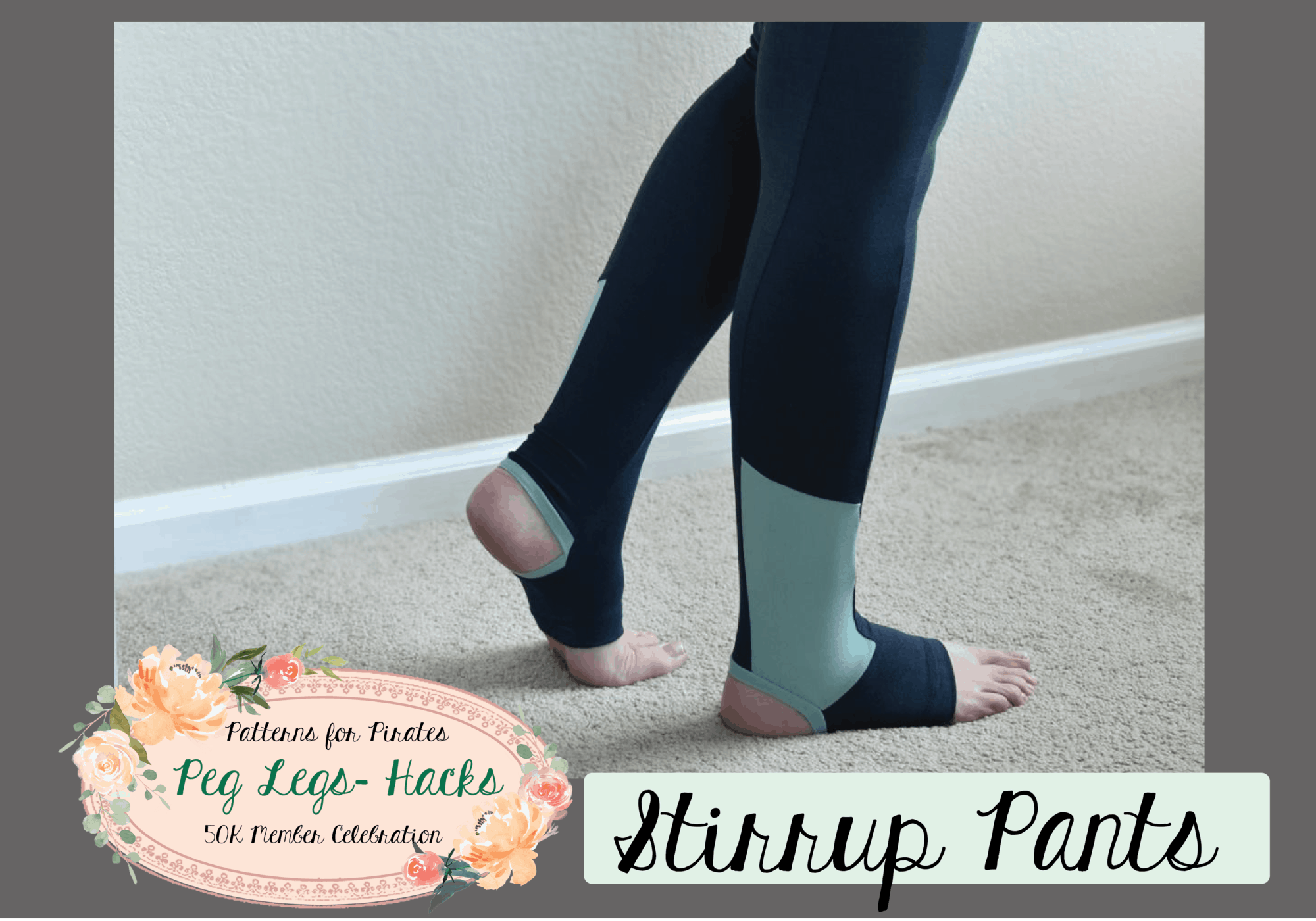
50K Fan Celebration :: Stirrup Pant PegLegs Hack

April 22, 2017


Written by Kelly Bailey (P4P Blog Contributor)

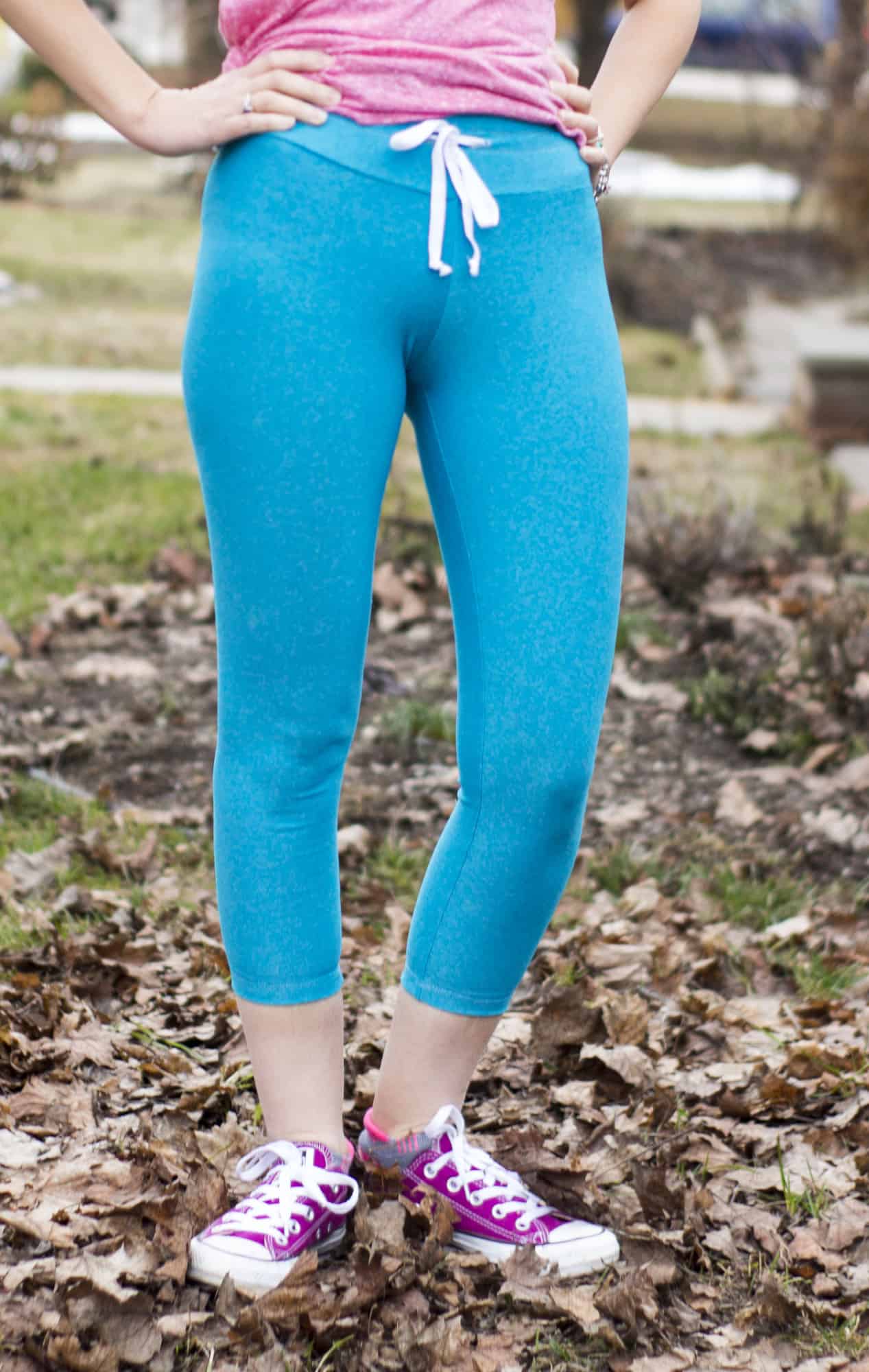
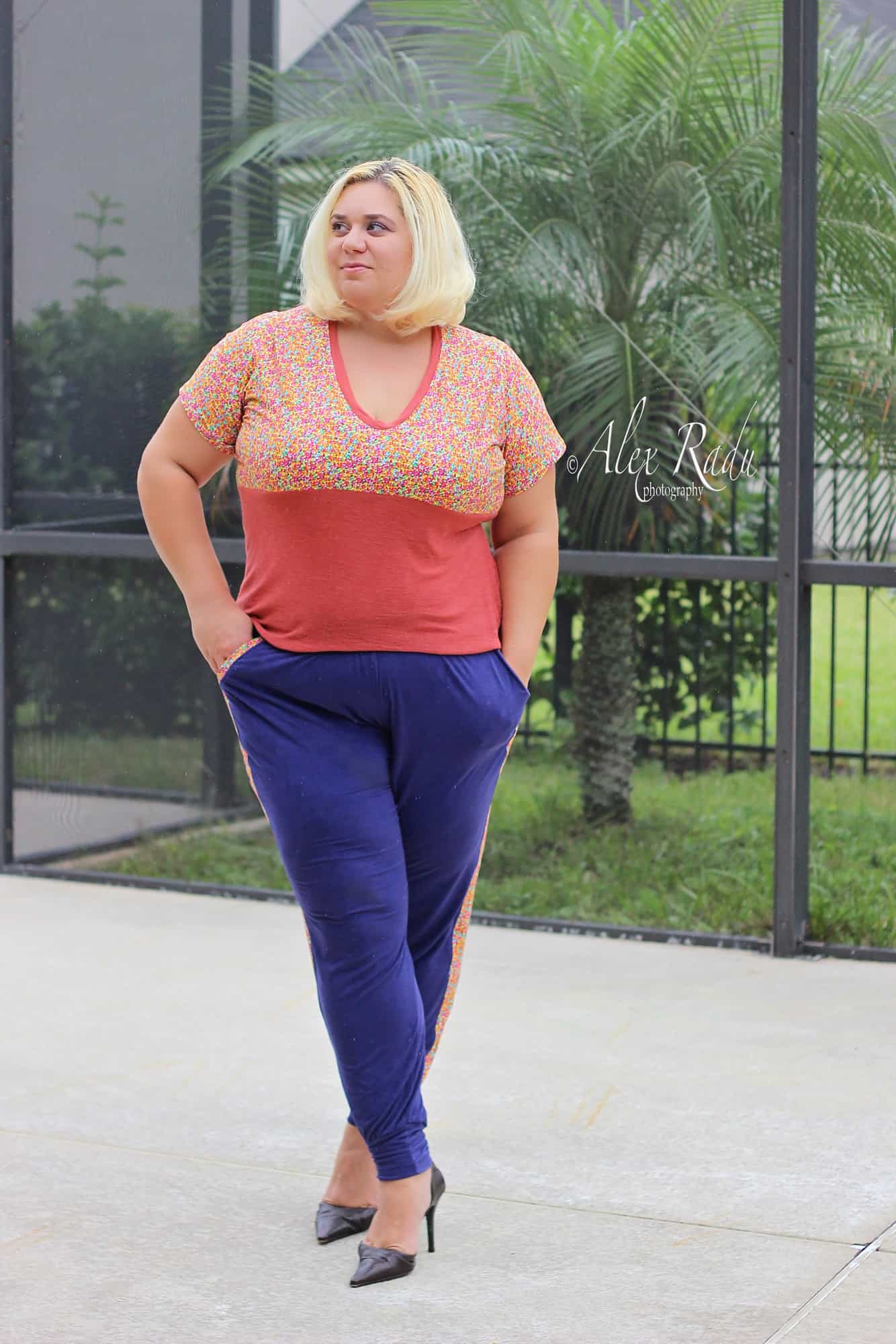
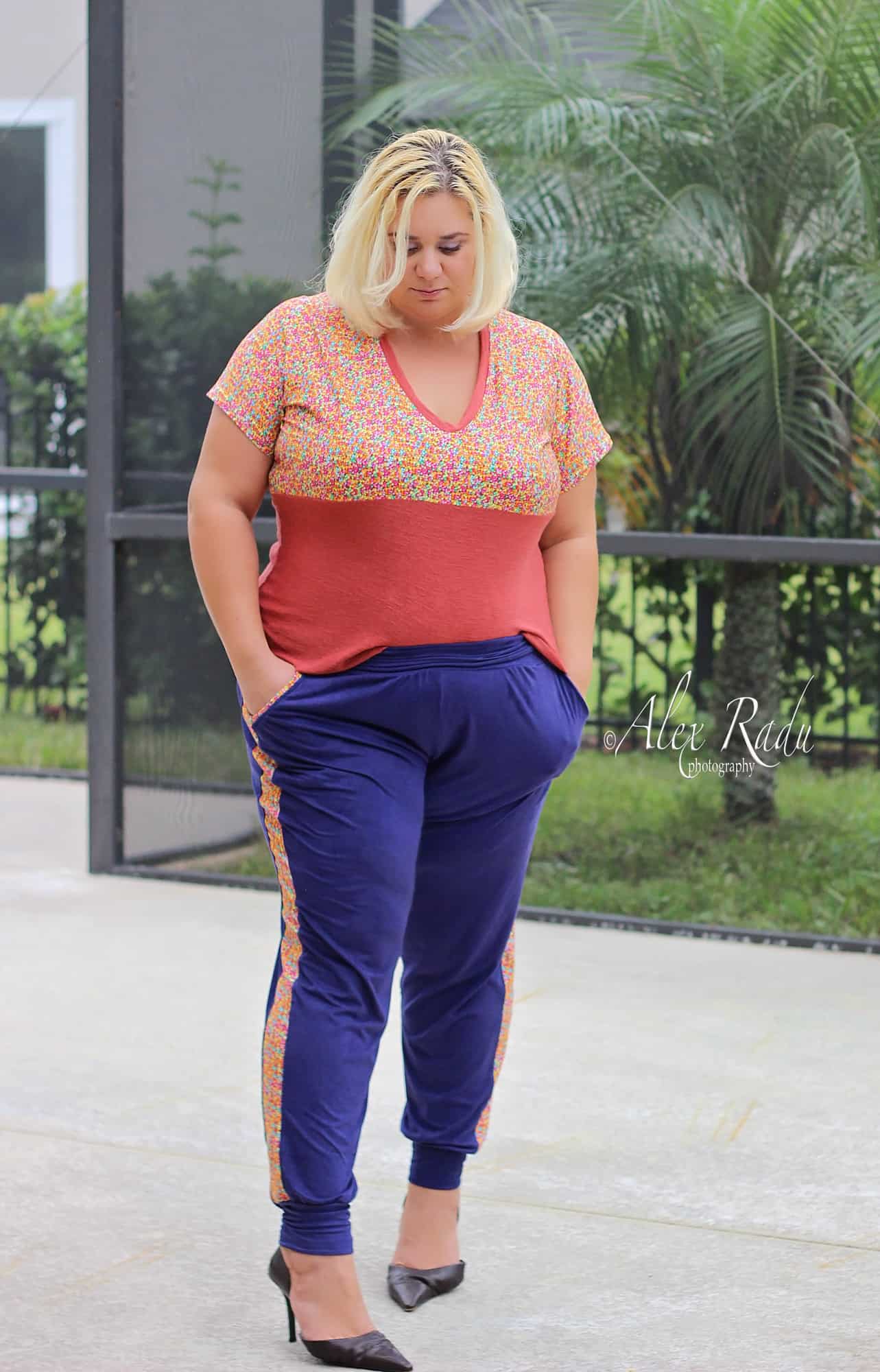
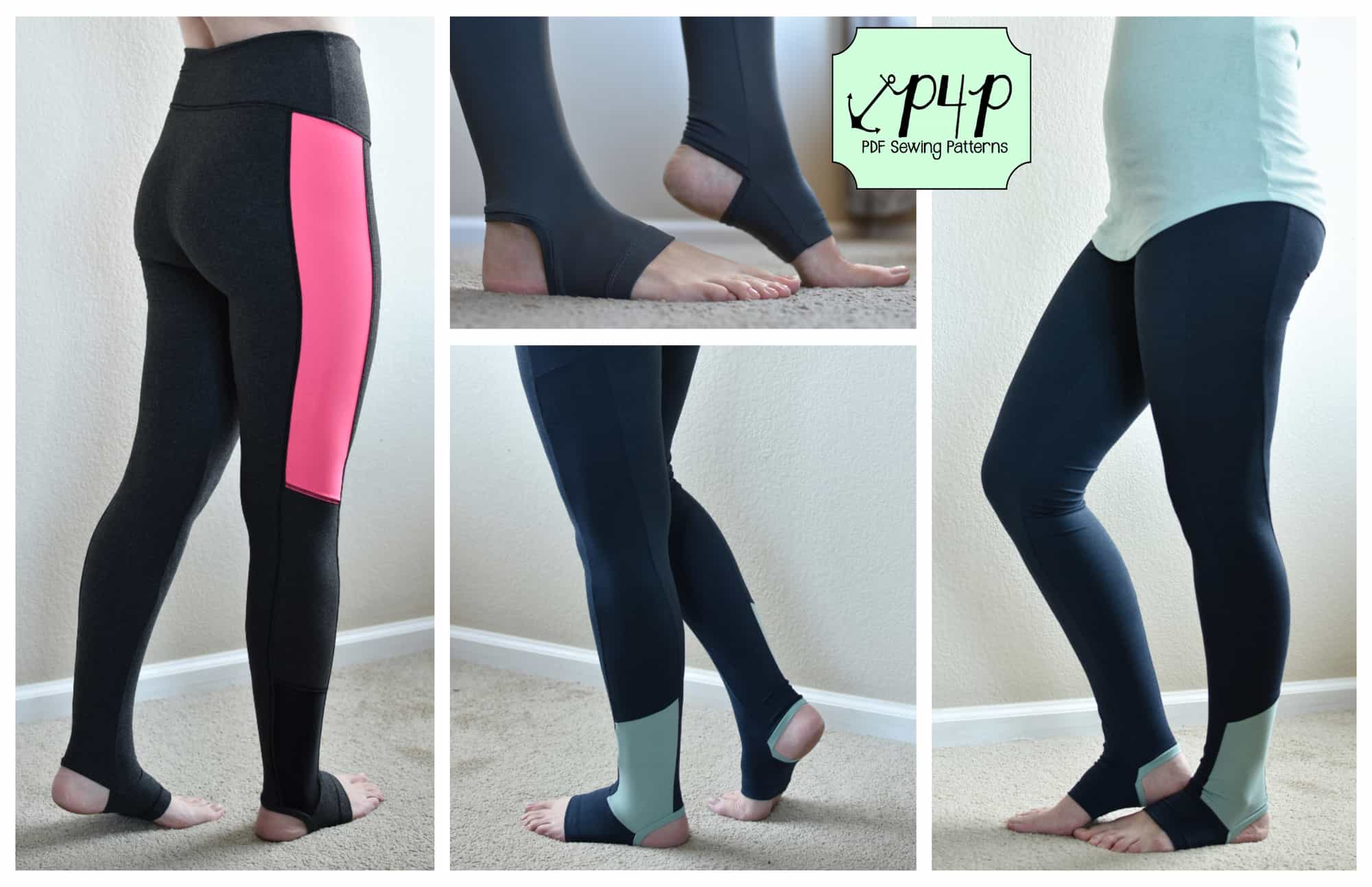
For this tutorial I will be showing you how to take the updated Patterns for Pirates Peg Leg pattern and hack it into a pair of leggings featuring the stylish yoga stirrups! Have you seen these store purchased versions in your gym classes, or maybe on Pinterest, or maybe you’ve been looking for a comfortable pattern for stirrup leggings to compliment a casual outfit? This simple hack is both comfortable and durable. Follow along with this tutorial and please share your results in the P4P sewing group!

Step One: Fabric

My first, and most important, advice is to choose your fabric wisely. This pattern is intended for 4-way stretch knit with at least 50% stretch. See Peg Leg 101 to review the way the fabric contents and stretch will affect your results. Not all knits are meant for leggings due to the degree of stretch this pattern requires. For all 3 of my versions I have used a brushed polyester spandex knit with varying weights. Athletic knits, such as supplex or heavy weight brushed poly, are the best option if you intent to vigorously work out in your finished garment.


Step Two: Stirrup Pattern Piece

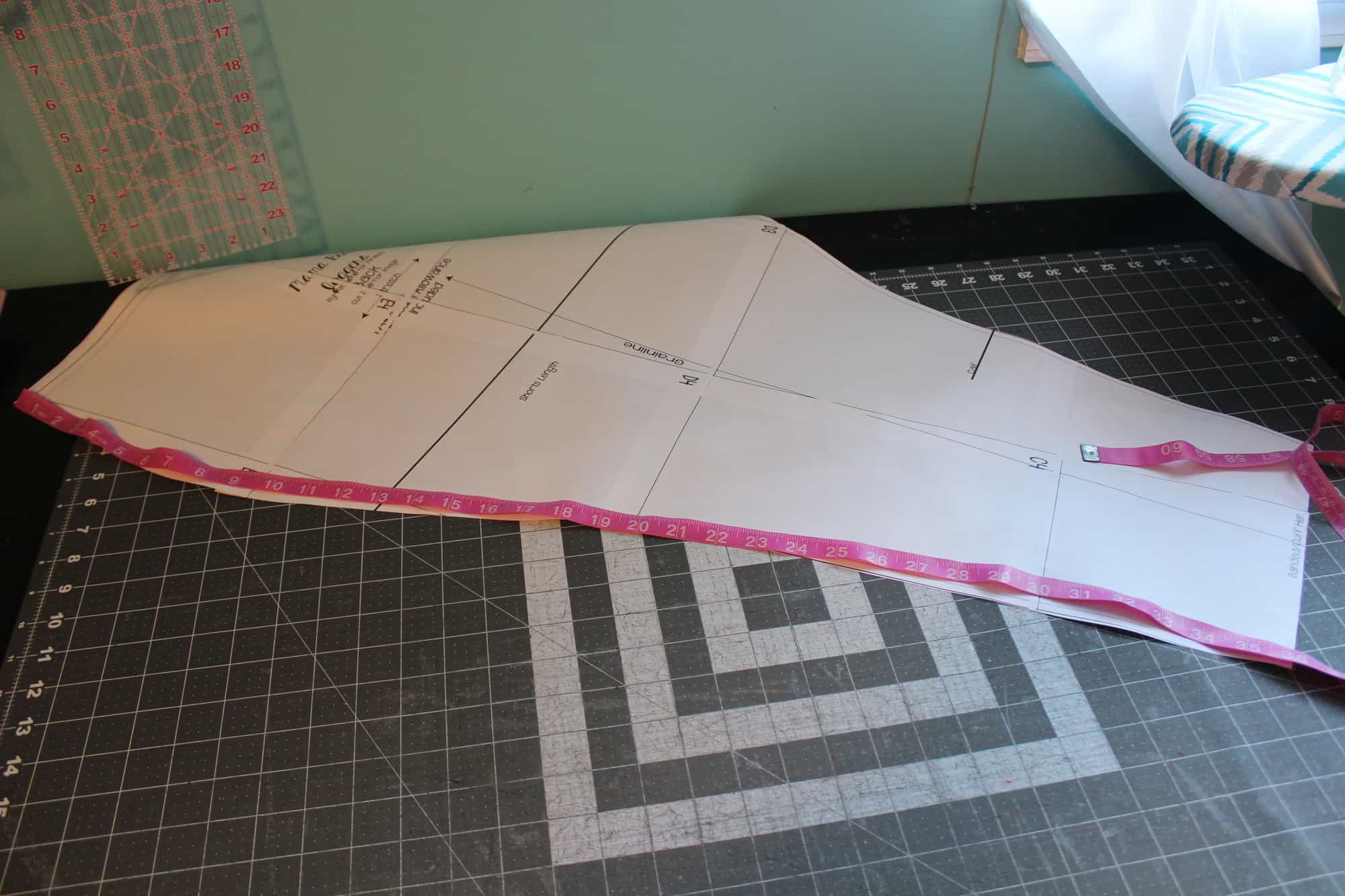
Print out and assemble your Peg Leg pattern as normal, being sure to add or take away height as necessary for you. See Peg Leg 101 for more information on how, where and when this is necessary. The Peg Leg pattern is drafted for an average height of 5’5” and an inseam of 28”. This hack can be applied to both the “plain” version and the “color-blocked” versions. Beware that once you’ve sewn this up you will not be able to simply trim off length at the very end of construction as you would with the standard pattern. So be sure to make a traditional pair and know these height adjustments before attempting this hack.

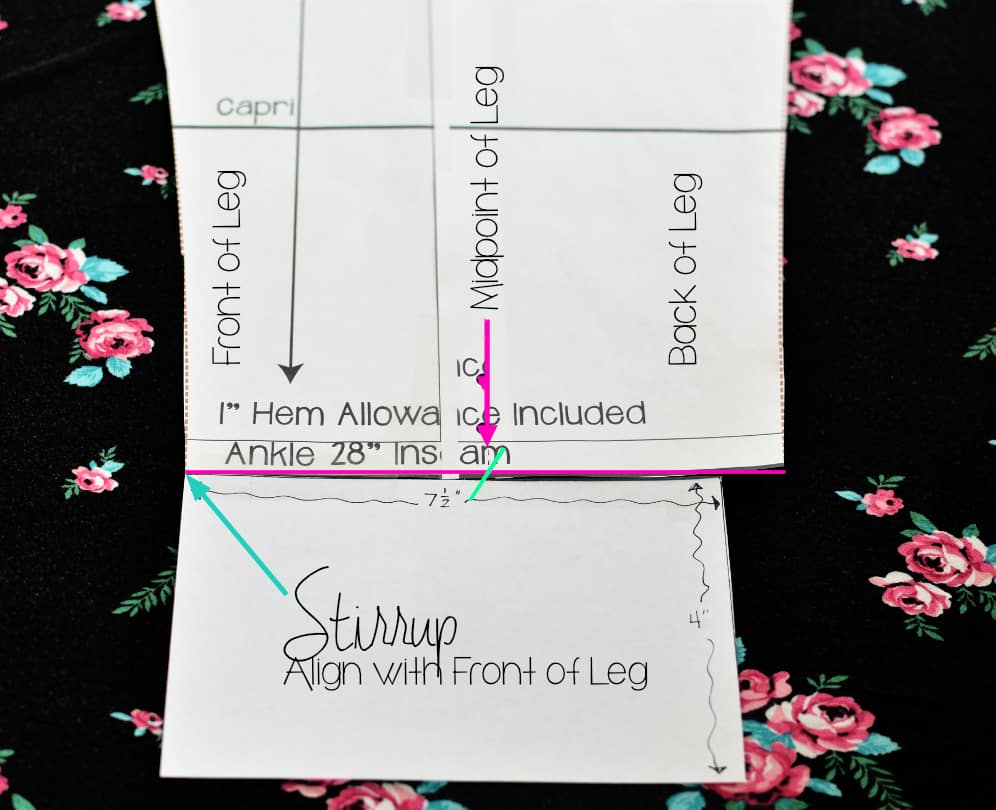
Next cut out a paper rectangle measuring 7.5” x 4”. The 4” height fits my size 9 foot perfectly but you may need to add or remove a little bit to that measurement depending on your shoe size.
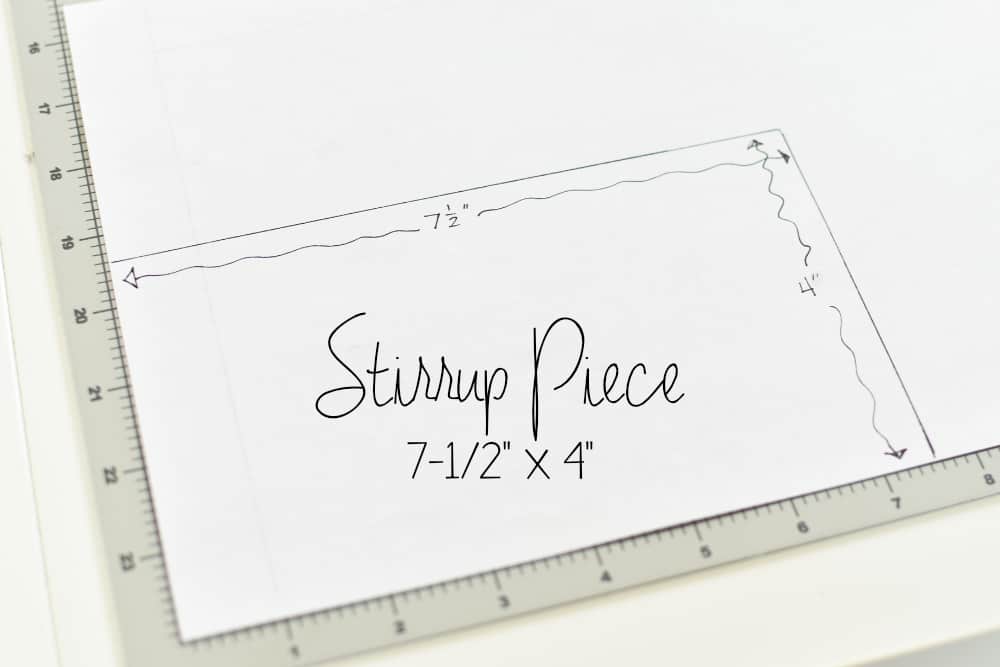
Step Three: Modifying the Peg Leg Pattern

If you’re modifying the “plain” version tape your rectangle to the ankle of your peg pattern as shown. Be sure to pay attention to the side you’re attaching the rectangle to. You want to line the edge of the stirrup rectangle with the FRONT side of the leg piece.
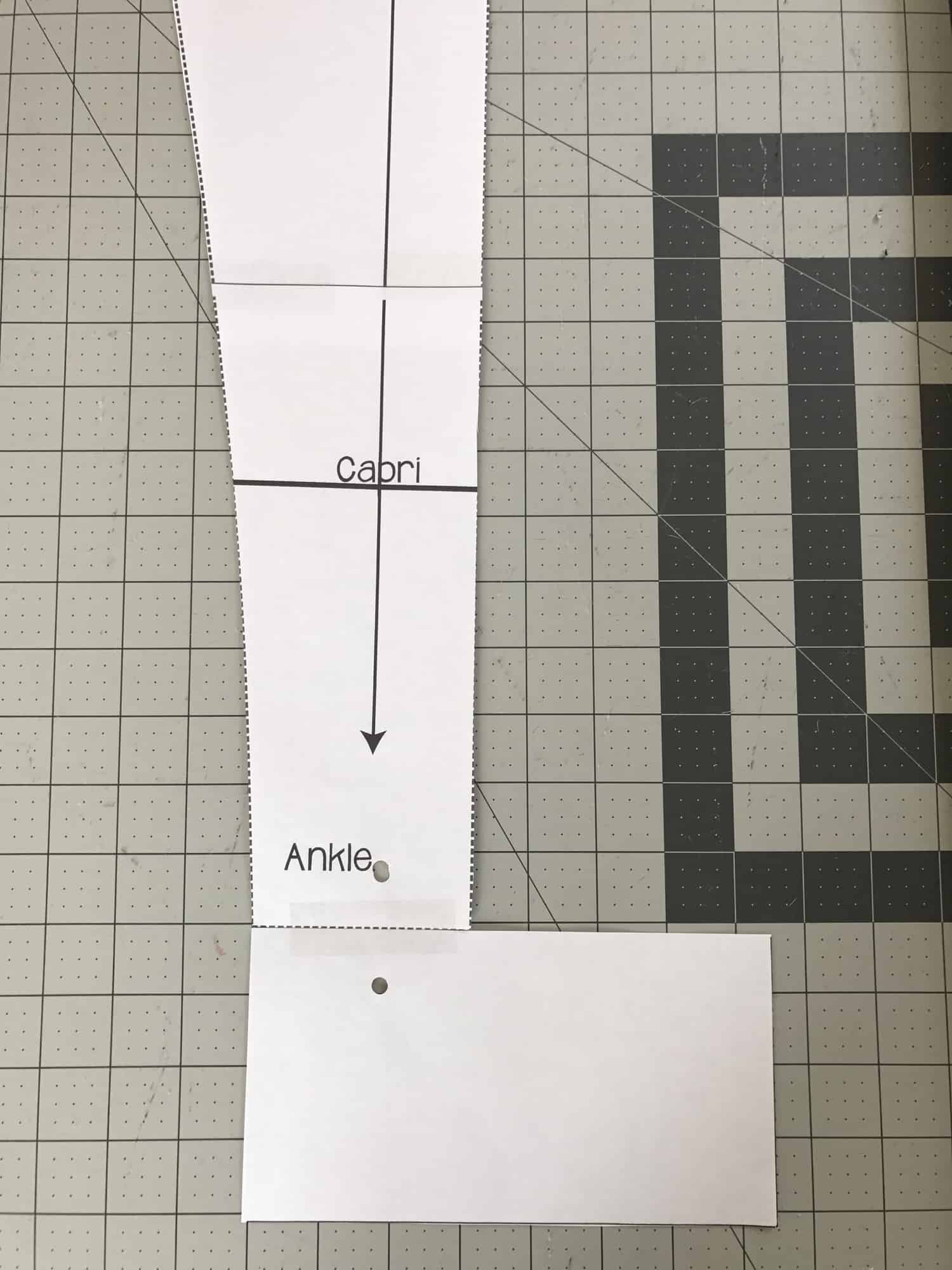
If your modifying one of the “color-blocked” versions line up and attach your stirrup rectangle with the edge of the FRONT pattern piece as pictured.
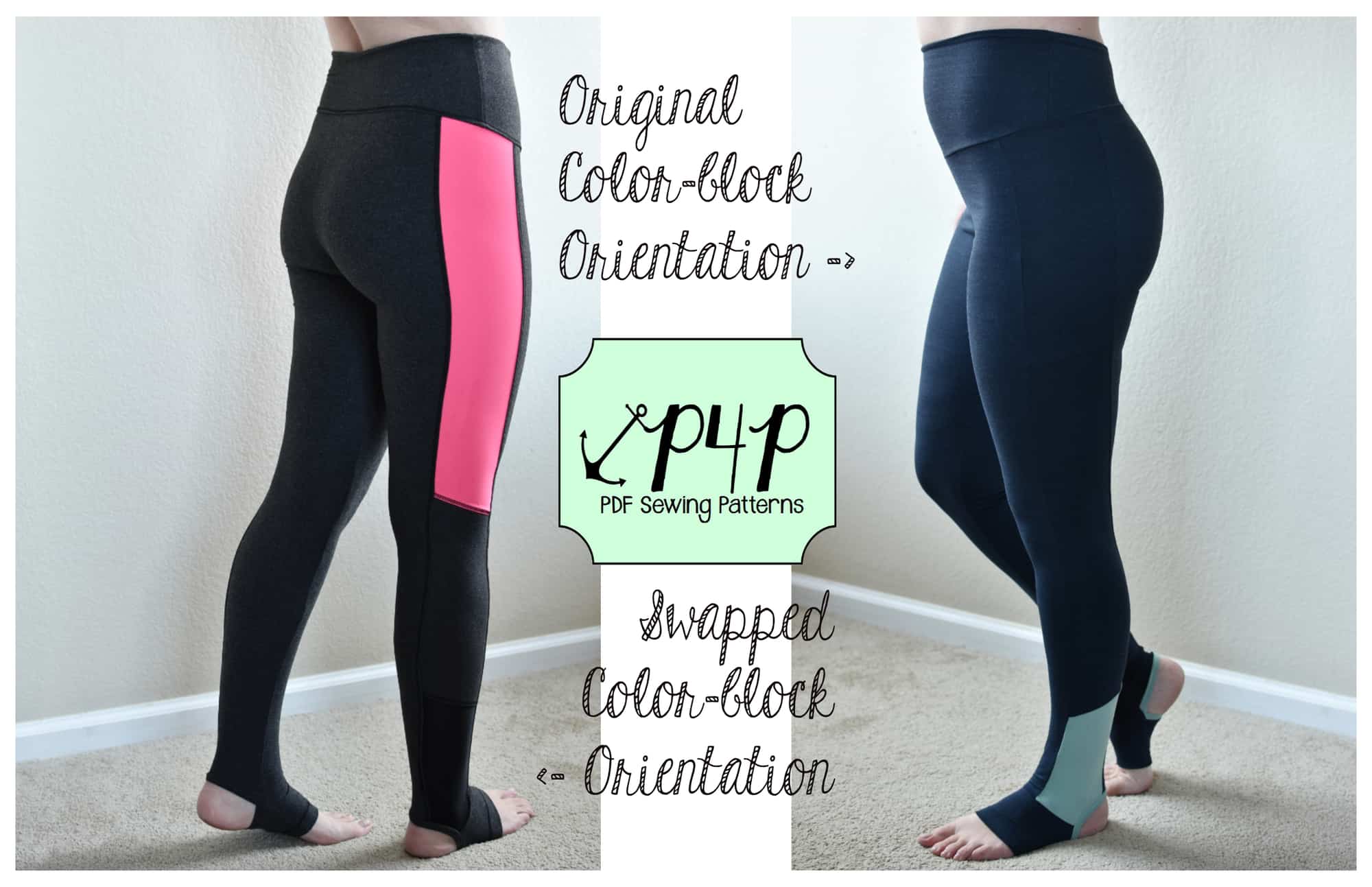
NOTE: You can switch up the top and middle color-block panel pieces and the pattern will still go together without issue if you are not attaching the pocket. If you do attach the pocket still, it would just sit lower on your leg. My charcoal and hot pink pair show what this swap looks like. My navy and seaglass version show the color-block panel assembly as instructed in the original pattern. I also chose to give a faux flatlock look to my pink version. Follow Alex’s decorative top stitching blog to get this look yourself!
Step Four: Cut Out Your Pieces & Assemble Color-block

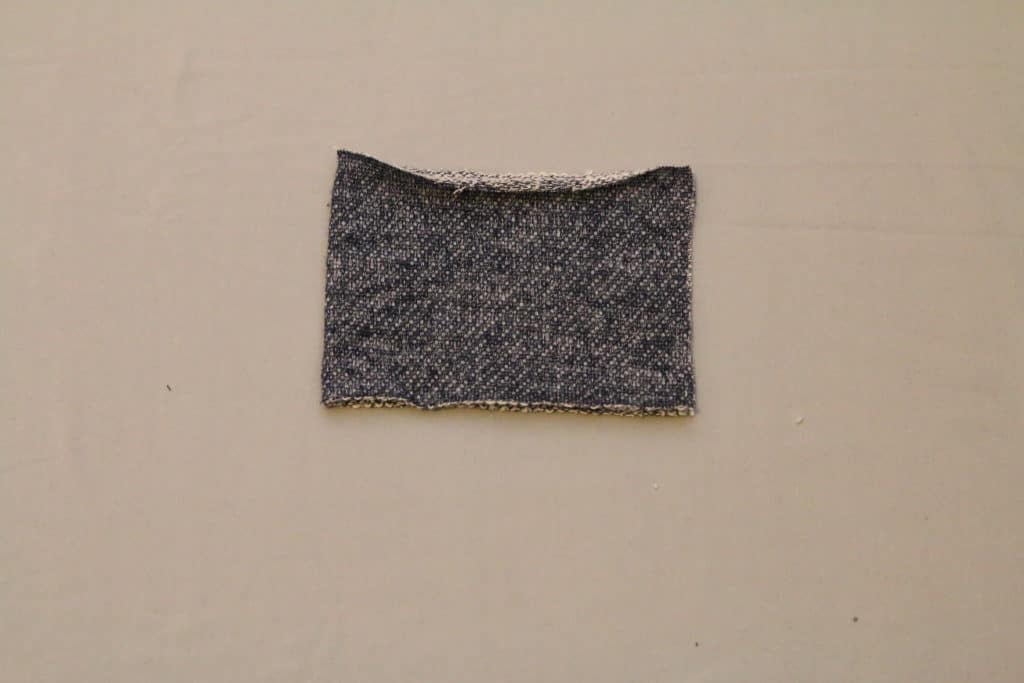
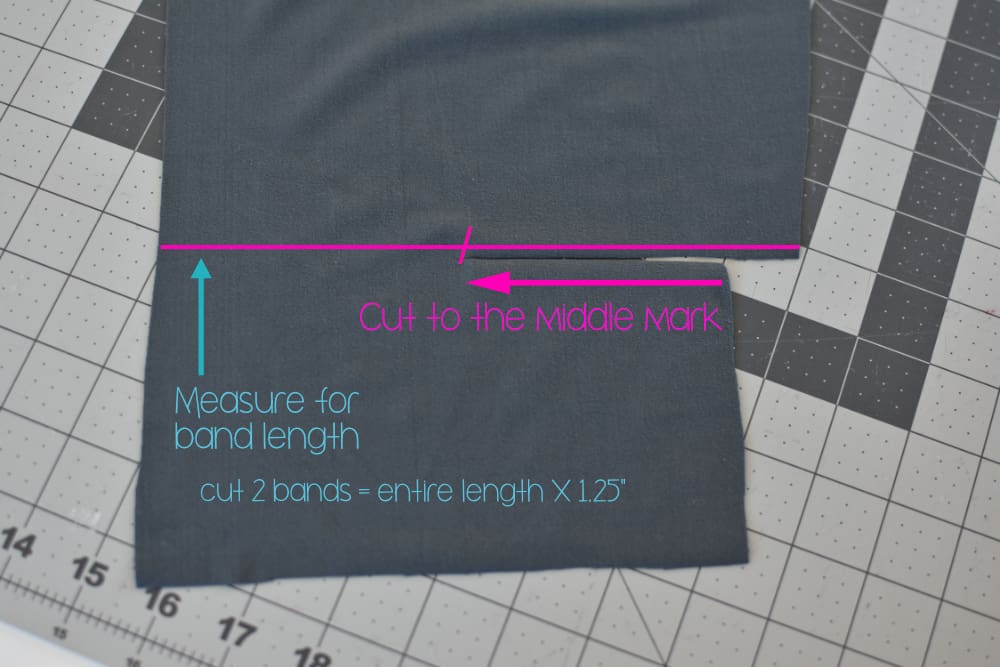
Use your modified pattern to cut from your fabric all legging pieces. Add to this the addition of two 1.25” x width of ankle strips with the greatest stretch going with the longer length. Theses will be the bands that stretch around the heel of your foot. The width measurement will leave extra that will get trimmed off after attachment. For a size small I cut a 8″x 1.25″ sized heel band.

For the “plain version” make a cut in each leg piece, as shown in the image below, just to the center width of the leg. This is where you will attach the heel band.
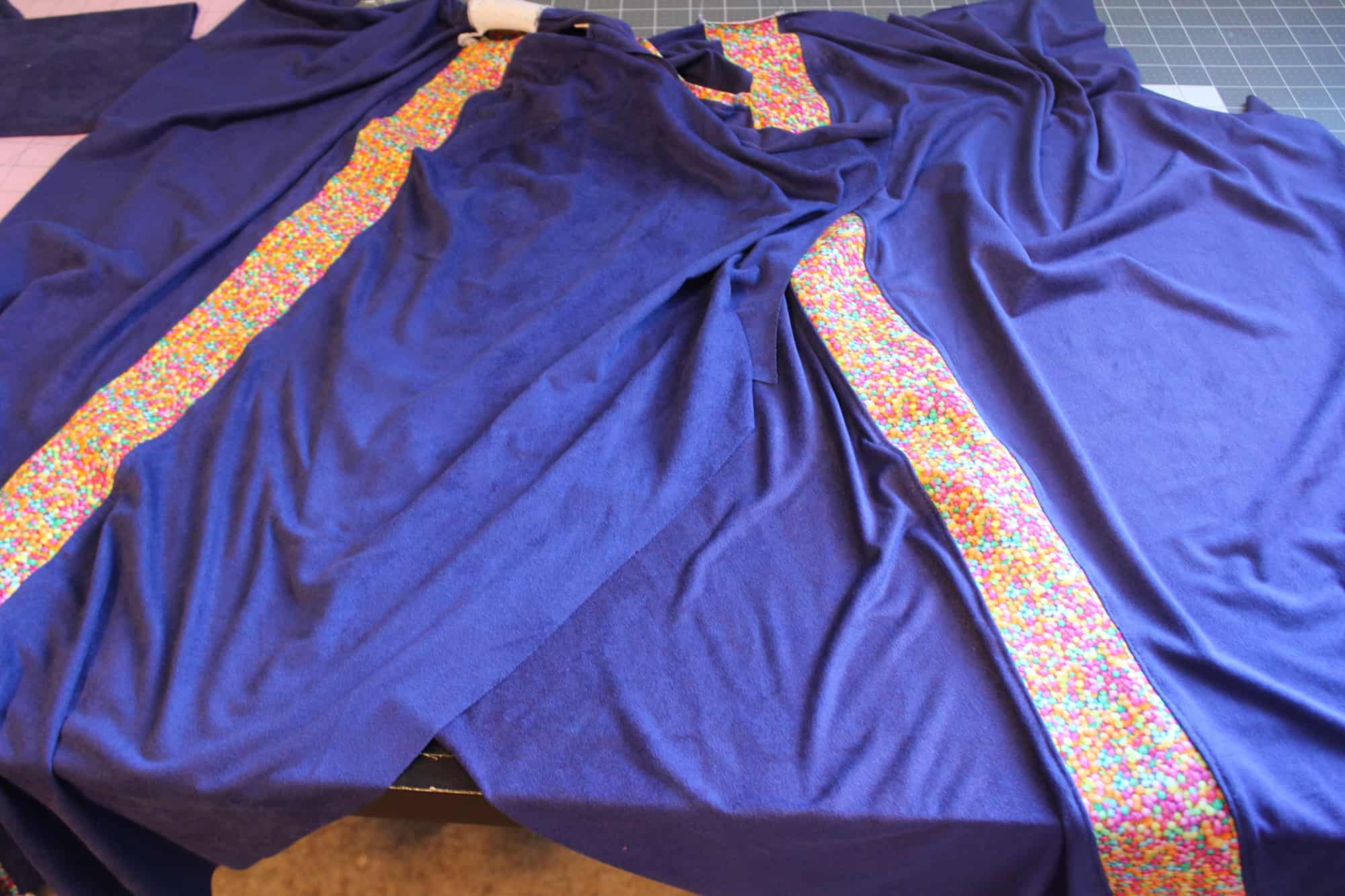
For the “color-blocked” version you are going to sew together all color-block pieces as normal, creating two full leg pieces. You will need to pivot the seam 90 degrees to attach the stirrup to the ankle at the front of the leg. Be sure to only sew the stirrup to the halfway mark along the ankle (mid color-block). Leave the rest unattached so that you can sew the heel band in place.

Step Five: Sew Crotch Seams

Lay your fully assembled leg pieces right sides together on top of one another. Sew your crotch curves together.
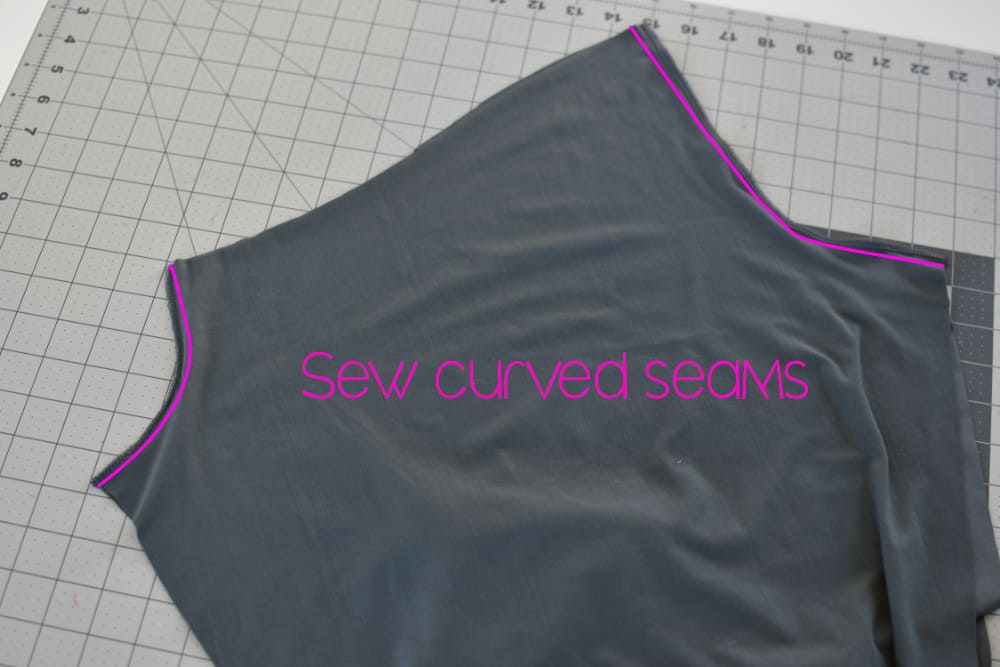
Step Six: Attach Heel Bands

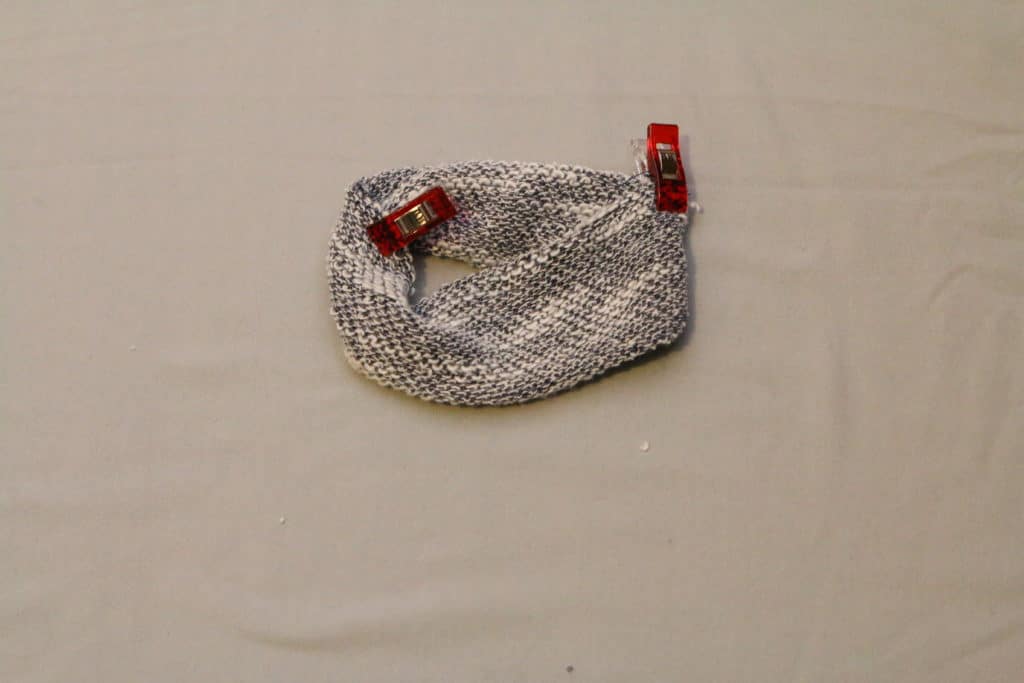
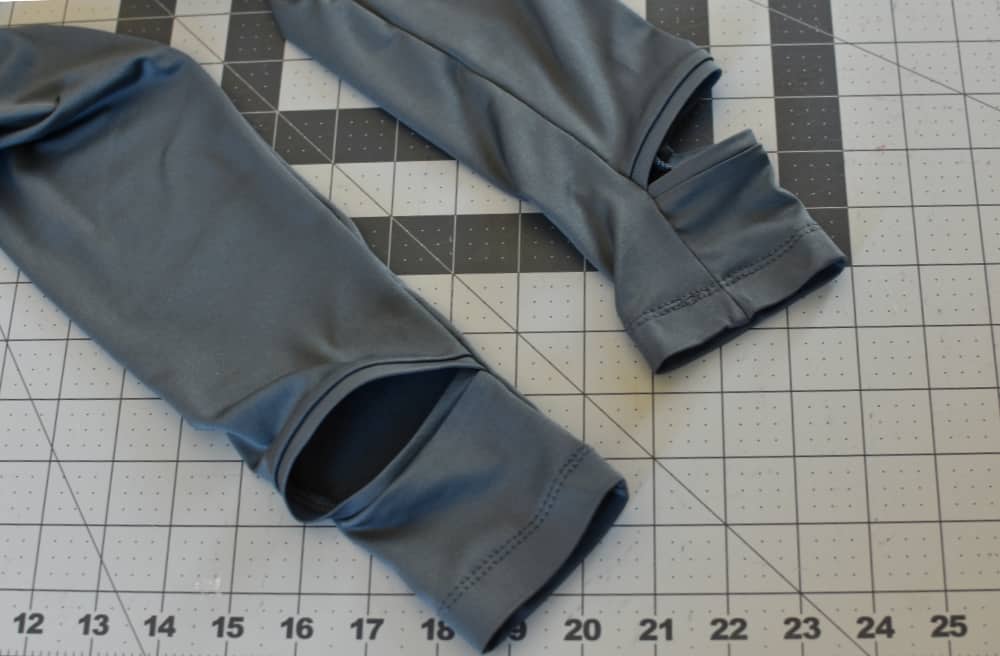
Press your heel bands wrong sides together lengthwise and then pin along the unfinished slit along ankle edge. Sew in place being sure to use a stretch stitch but not to stretch either the band or the leg piece.
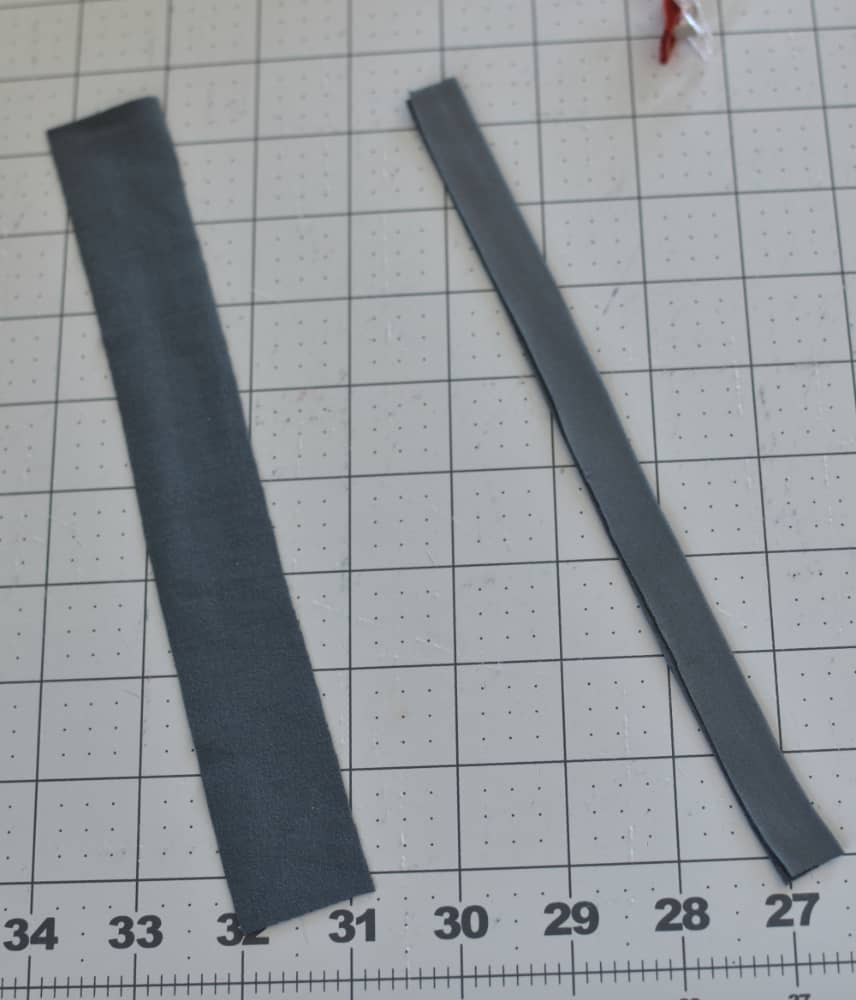
 

Step Seven: Pin Inseam in Place

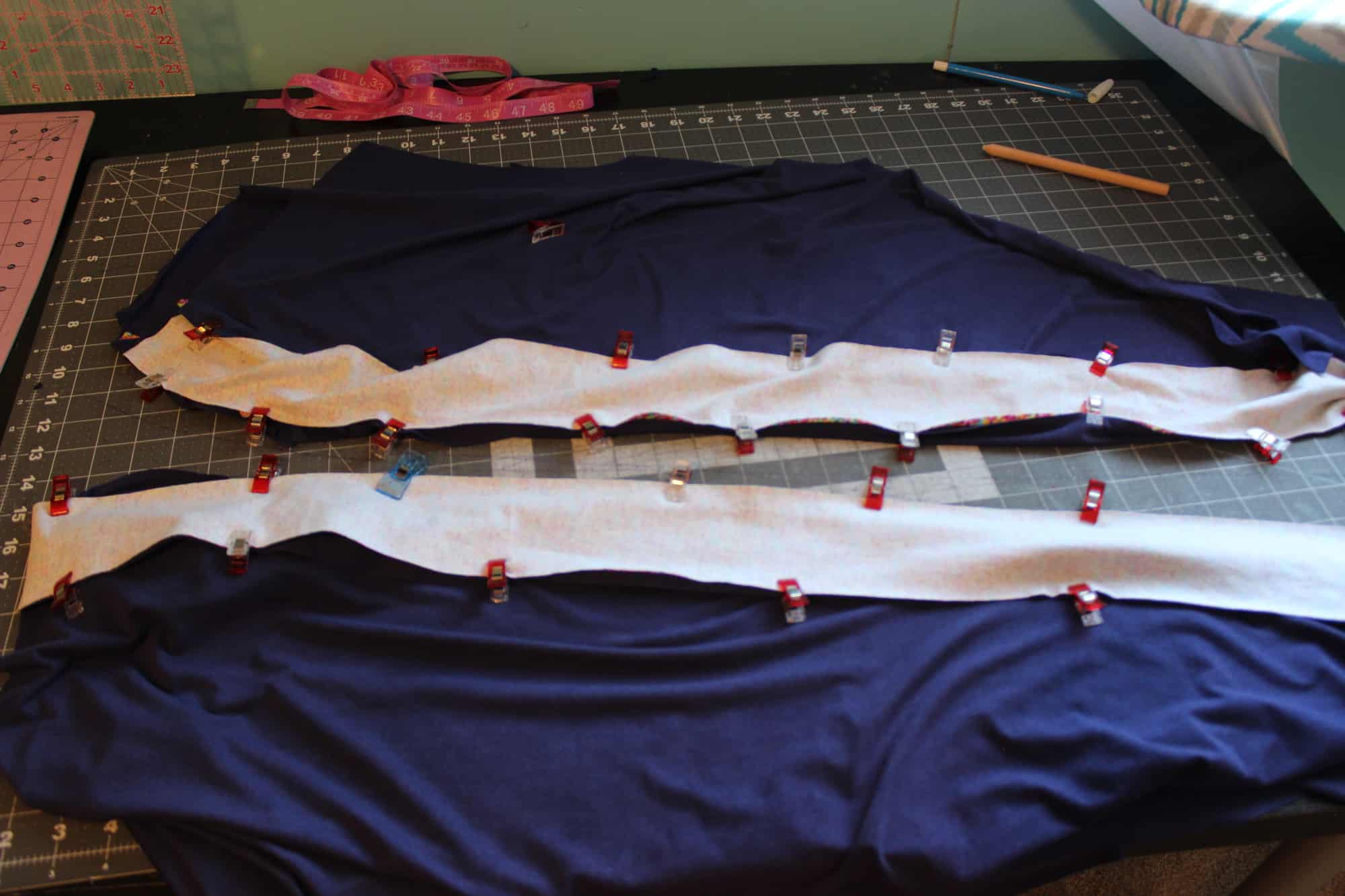
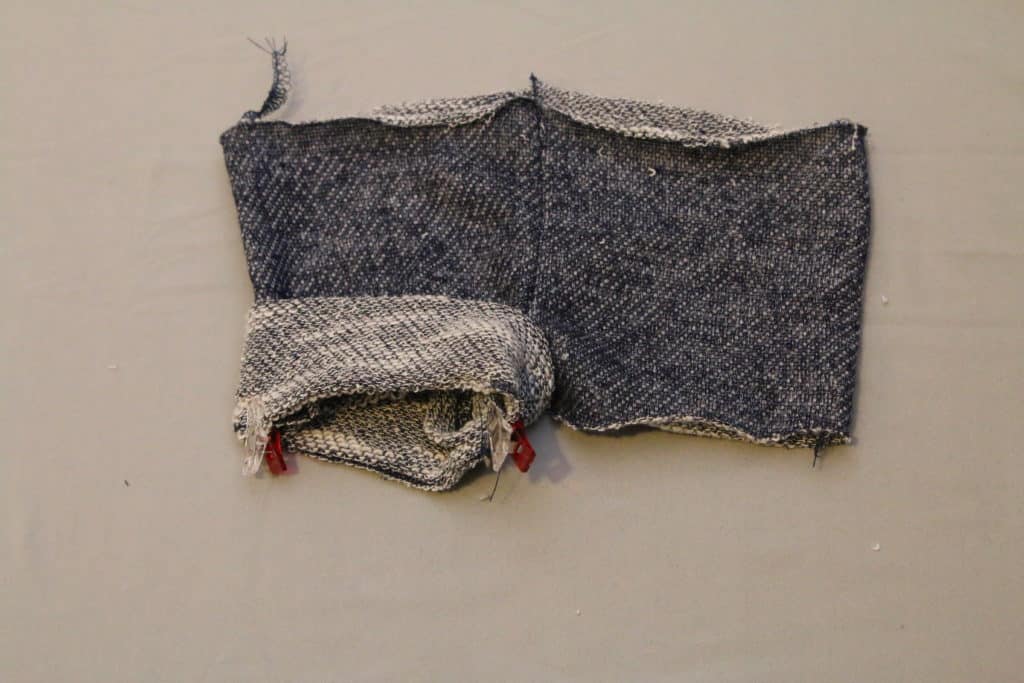
Start by pinning your crotch seams right sides together then go to the stirrup piece and start lining up inseams there. Work your way up the leg making sure to overlap the bands as shown in the photo below. Sew inseam together using stretch stitch. Trim off excess heel band.
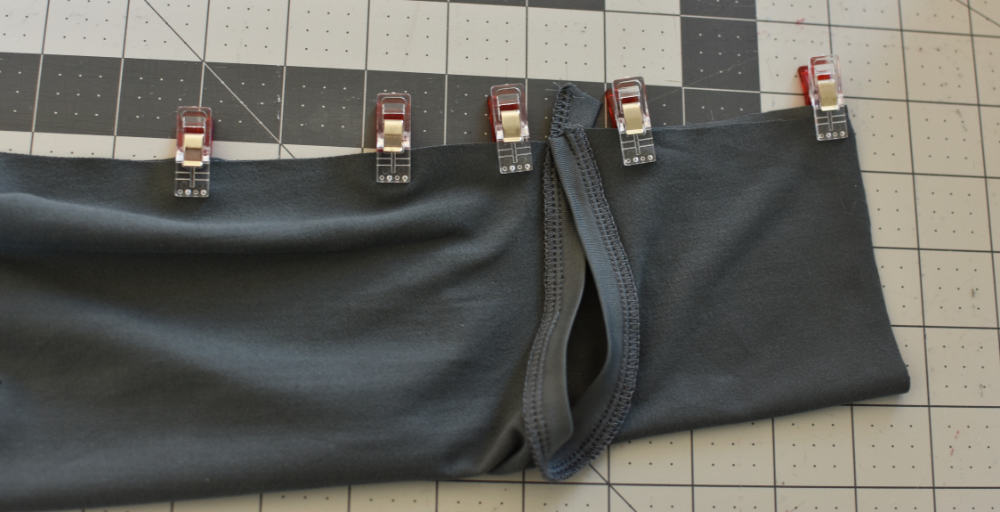
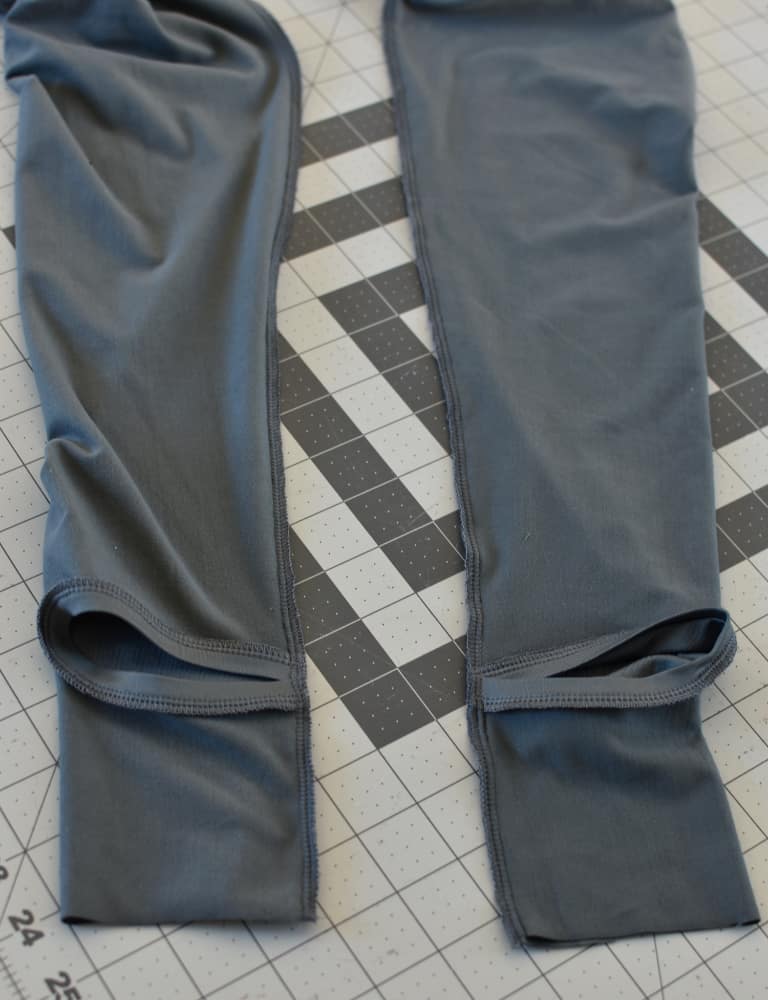
 

Step Eight: Finishes

At this point you can attach your waistband using the directions in the patterns tutorial and then hem the bottom of the stirrups using a stretch stitch and your preferred hem width. Press.
All Done!

Try them on and enjoy. Keep your feet cozy whether in yoga class or sewing your next garment at home!

We are celebrating reaching 50K fans in our Facebook group!  To make it a party, our beloved PegLegs pattern just got an update AND some new add-ons.  Before you go running to your machine to sew up your own leggings, make sure to read our PegLegs 101 blog post.  This way, you’ll have all the the information you’ll need to make the perfect pair before you even cut into your gorgeous fabric.

But wait, there’s more!  After any good party is an after-party.  We are taking it one step further and sharing some easy hacks that’ll bring even more flavor to your favorite leggings pattern!  We hope you check them out, make your new favorite pair of leggings, and know that we appreciate every single one of you amazing sewing guys and gals!

Here are our hacks / tutorials / latest tricks:

Lace Waistband Alternative | Drawstring Waistband Tutorial
Exposed Elastic Waistband | Stirrup Pant Hack
Ruched Ankles Adjustment | Decorative Topstitching Tutorial
Ruched Side Panel Hack

Filed Under: Blog Tours, Pattern Hacks, Pattern Release, Uncategorized 2 Comments

50K Fan Celebration :: Drawstring Waistband PegLegs Hack

April 21, 2017

Today I’m sharing a quick cute hack to your peg legs to add a drawstring to your waistband.  I wear peglegs all year round and the drawstring changes up the look just a bit.  Let’s get started.

  1. First you sew your legs together as per the pattern.
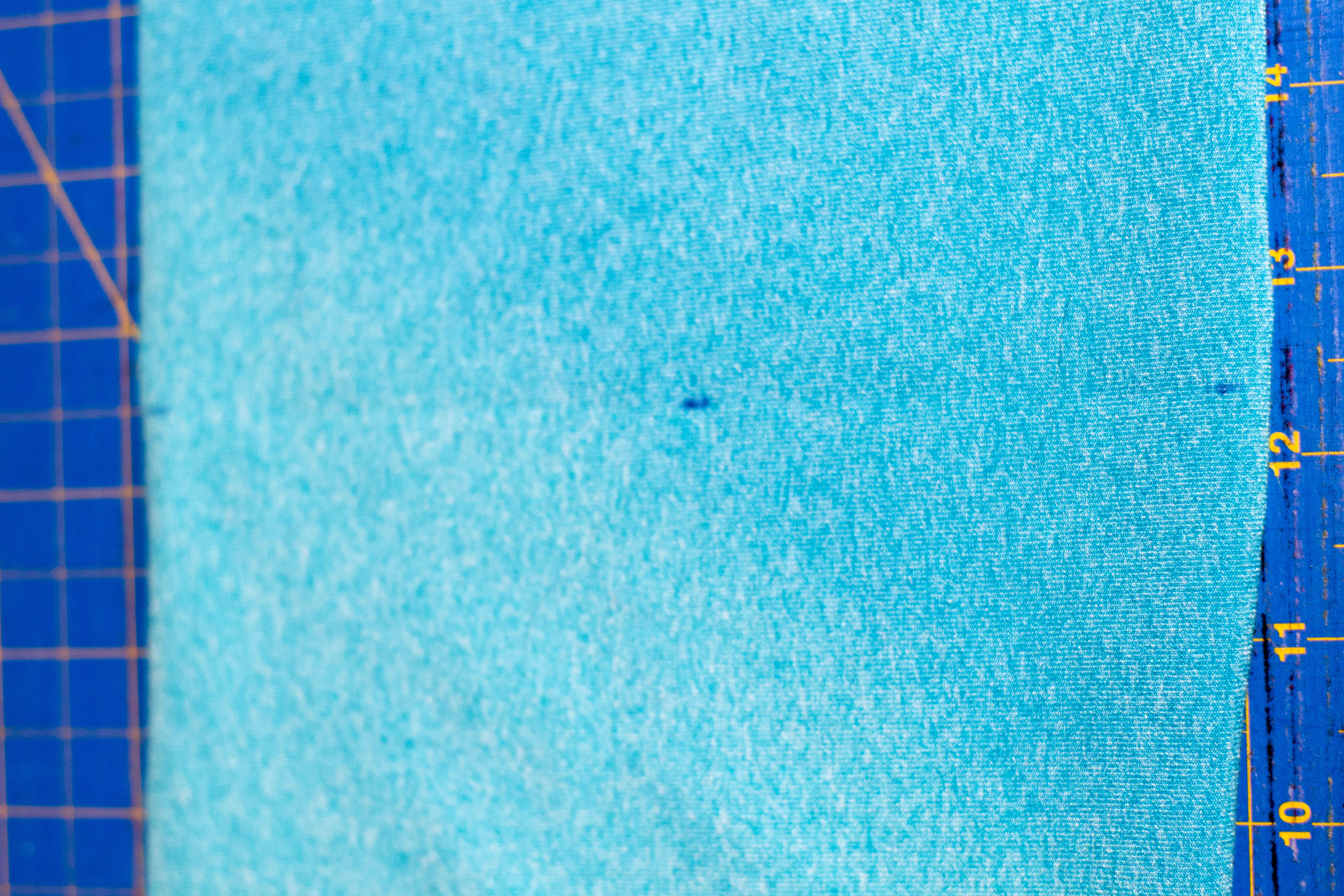
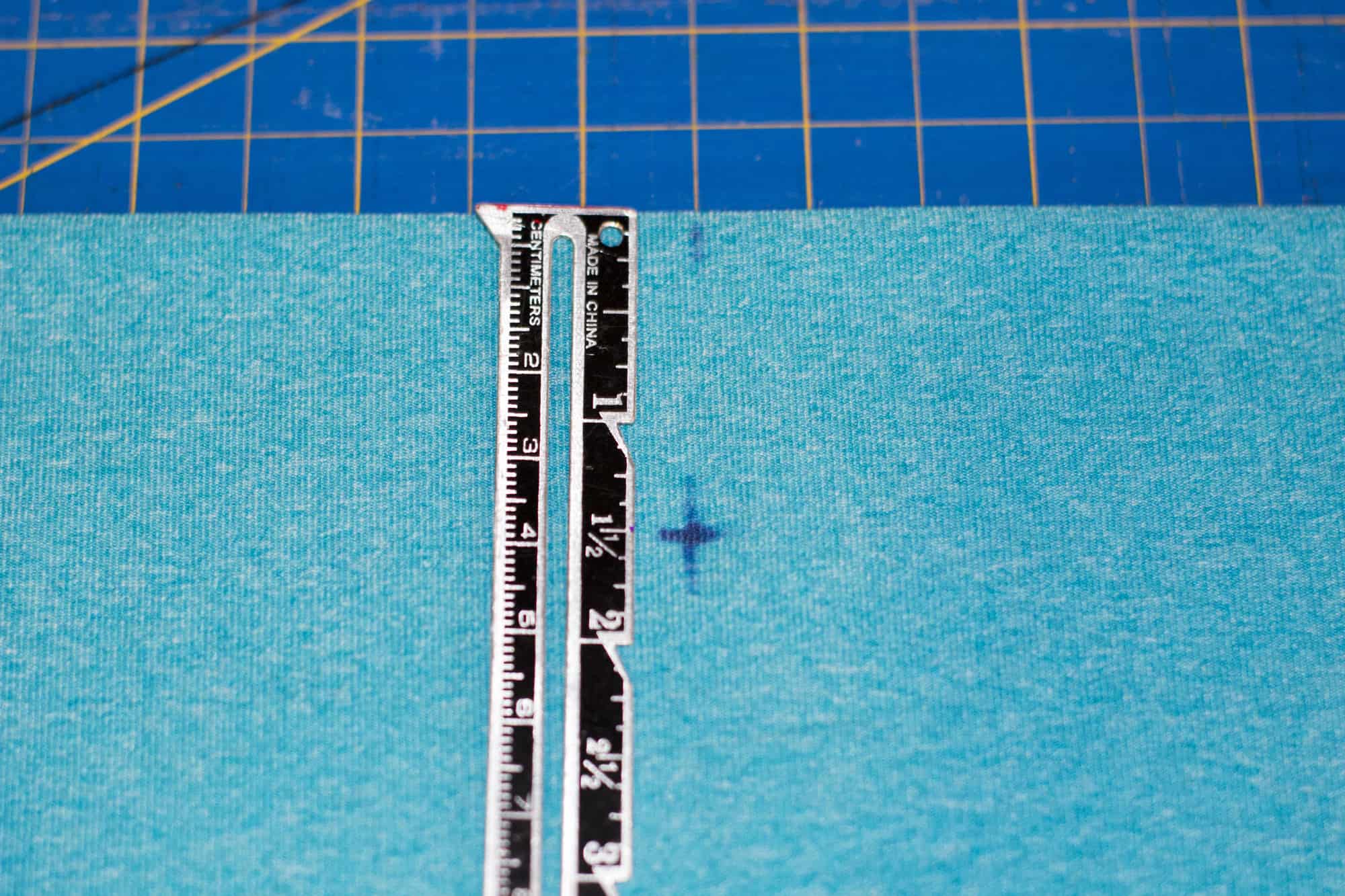
  2. Before we start the waistband we are going to make some markings.  I am using a disappearing ink pen from my fabric store to mark mine.  I folded my waistband in half to find the center and marked the center with my pen in a few spots.  Next I found folded the fabric long sides together to mark where I wanted my buttonholes.  I wanted my buttonholes in the middle of my waistband. Your waistband is 7 inchs wide so folded it is 3.5 inchs but the bottom .5 inch is your seam allowance therefore I measured 1.5 inchs down from the top fold and marked that as being the center right across the other mark that I had made.  Now I have a little cross right marked.

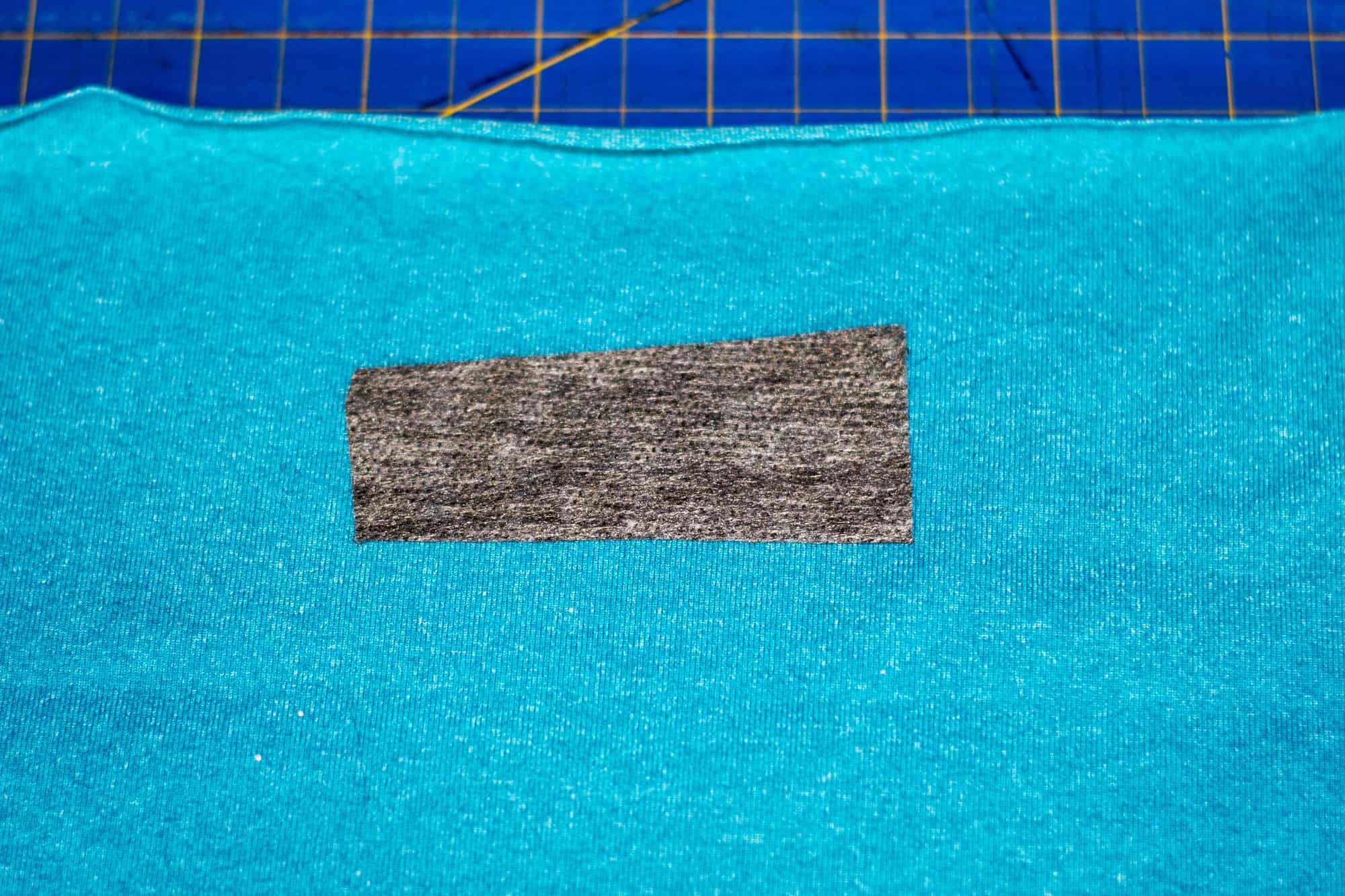
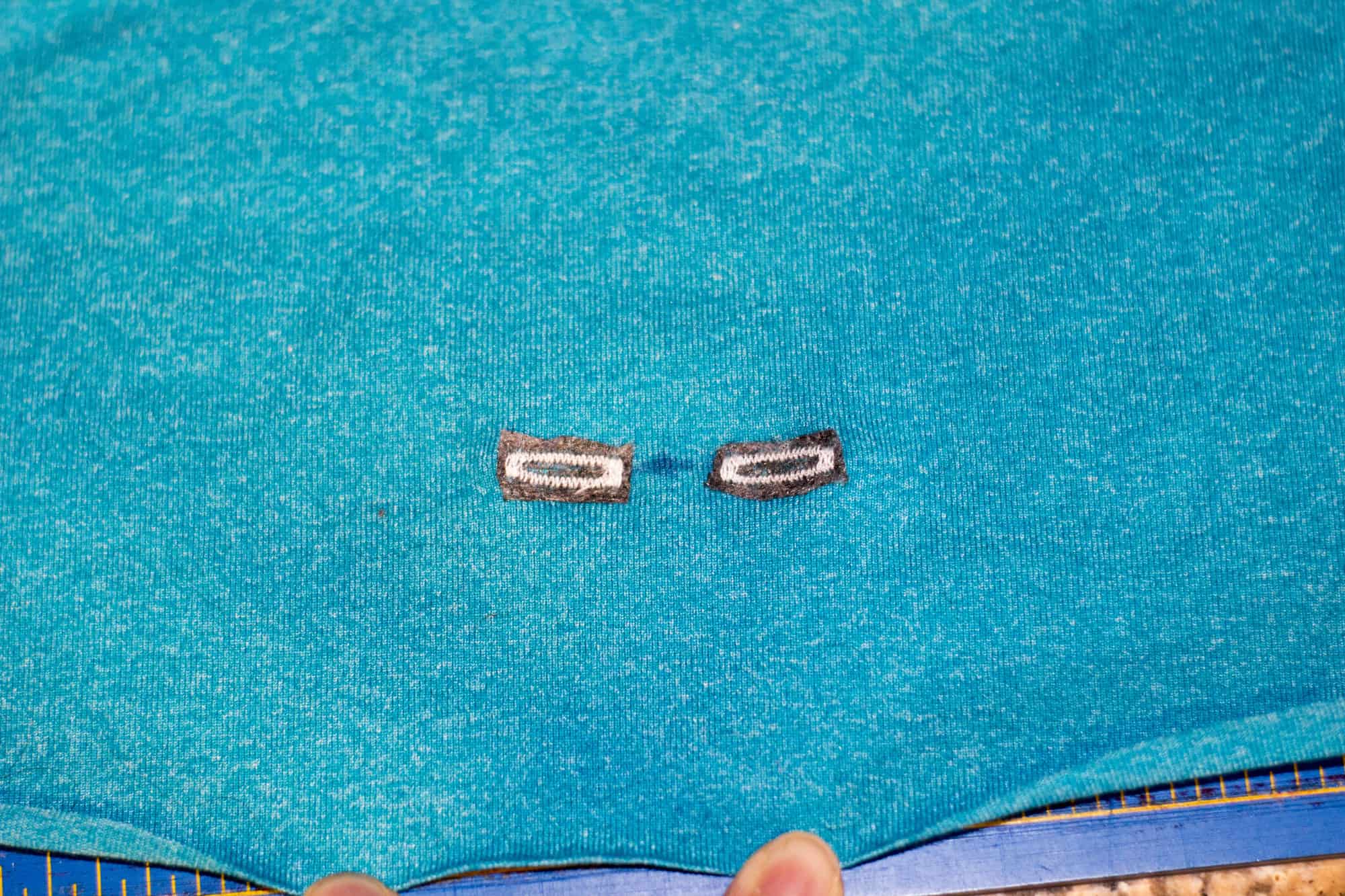
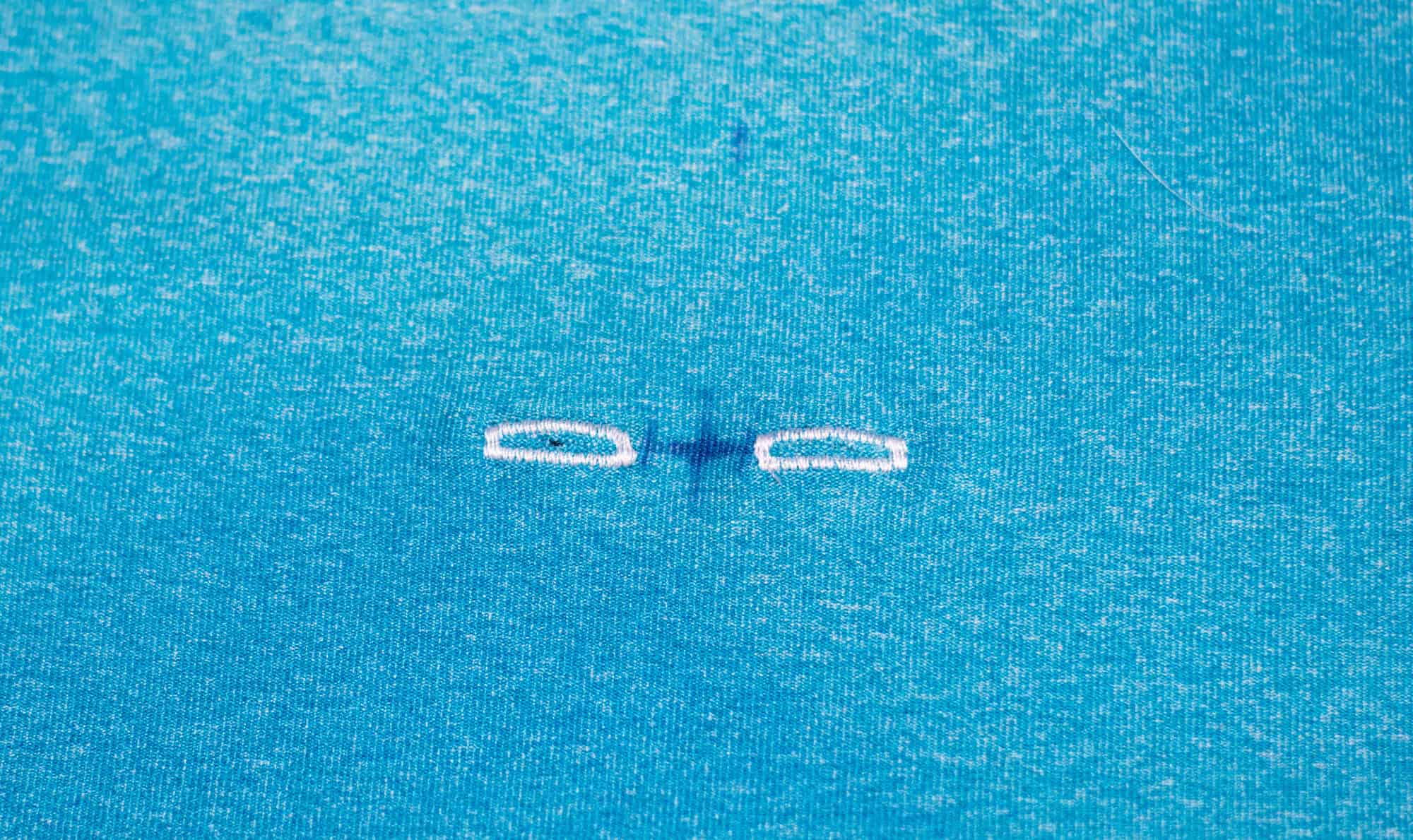
3. Buttonholes can be a bit of a pain on knits so I added a little piece of interfacing on the back, I didn’t actually iron it on to my fabric I just wanted something to give it a bit of stability, a tear away stabilizer would also do the trick or you can iron on a piece of knit interfacing.  I happened to have a bit of regular interfacing sitting here so that is what I used. I sewed the buttonholes on either side of my cross .25 inch from the center. I just did a really small buttonhole, it doesn’t need to be big cause you are just threading through some drawstring.  Now for all those people that hate sewing buttonholes not to worry knits don’t fray so you can always just cut some little slits in the waistband if that is the option you choose make sure to iron on some knit interfacing thou, it would prevent the knit from stretching out while wearing them.


4. Once you have the buttonholes are done we are going to create a casing for your drawstring.  First you are going to match the short sides of your waistband as the pattern directs and sew them together, fold the waist band in half and then your going to sew all the way around about .25 of an inch above the waistband and below the waistband. Now you can mark your lines here that you are going to sew but I’m a rebel and just went for it by sewing 1.25 inchs from my fold, for the second row of stitching I sewed .5 down from the first line I made.  Once your casing is all done just attach the waistband to your legs as normal.

5. Now you just need to add your drawstring.  I used 50 inchs of drawstring on the xxs size and I just tied off each end but you could certainly fold the ends over and hem the edges of your drawstring.  I like to just put the drawstring around me and leave long tails and then insert it into my casing try it them on and you can always cut the drawstring shorter so start with a long piece and then cut them the length you like best.  Remember you have to leave your drawstring fairly loose or you won’t be able to pull your leggings on! I figured this out while trying mine on! Another simple solution to use elastic for most of your drawstring, I would use 1/4 inch or 3/8 inch elastic.  You could cut your elastic slightly shorter then your drawstring and then sew drawstring onto each end of your elastic and thread it through your casing, it would give you just a bit more give when pulling them on and off.


I hope you try adding some drawstring in your peglegs and don’t forget to show them off in our Facebook group! – Angela


We are celebrating reaching 50K fans in our Facebook group!  To make it a party, our beloved PegLegs pattern just got an update AND some new add-ons.  Before you go running to your machine to sew up your own leggings, make sure to read our PegLegs 101 blog post.  This way, you’ll have all the the information you’ll need to make the perfect pair before you even cut into your gorgeous fabric.

But wait, there’s more!  After any good party is an after-party.  We are taking it one step further and sharing some easy hacks that’ll bring even more flavor to your favorite leggings pattern!  We hope you check them out, make your new favorite pair of leggings, and know that we appreciate every single one of you amazing sewing guys and gals!

Here are our hacks / tutorials / latest tricks:

Lace Waistband Alternative | Drawstring Waistband Tutorial
Exposed Elastic Waistband | Stirrup Pant Hack
Ruched Ankles Adjustment | Decorative Topstitching Tutorial
Ruched Side Panel Hack
Filed Under: Free Pattern, Pattern Hacks, Uncategorized 1 Comment

Sleeves and Their Wrinkles

March 28, 2017

I’ve scrolled past the question or remark about wrinkling around armpits a ton in sewing groups.  I’m here to talk about the #1 cause of armpit wrinkle on the sleeves.

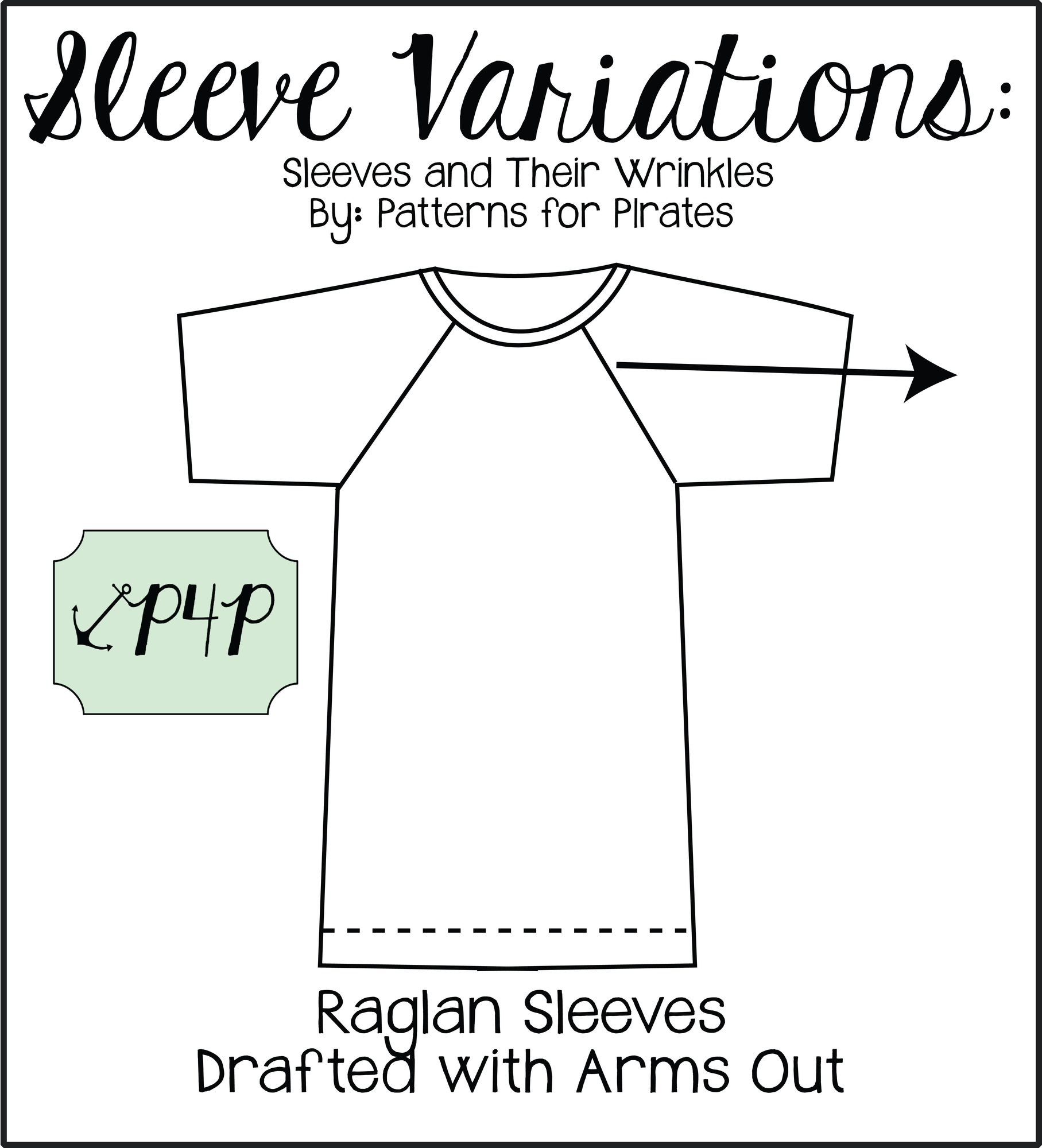
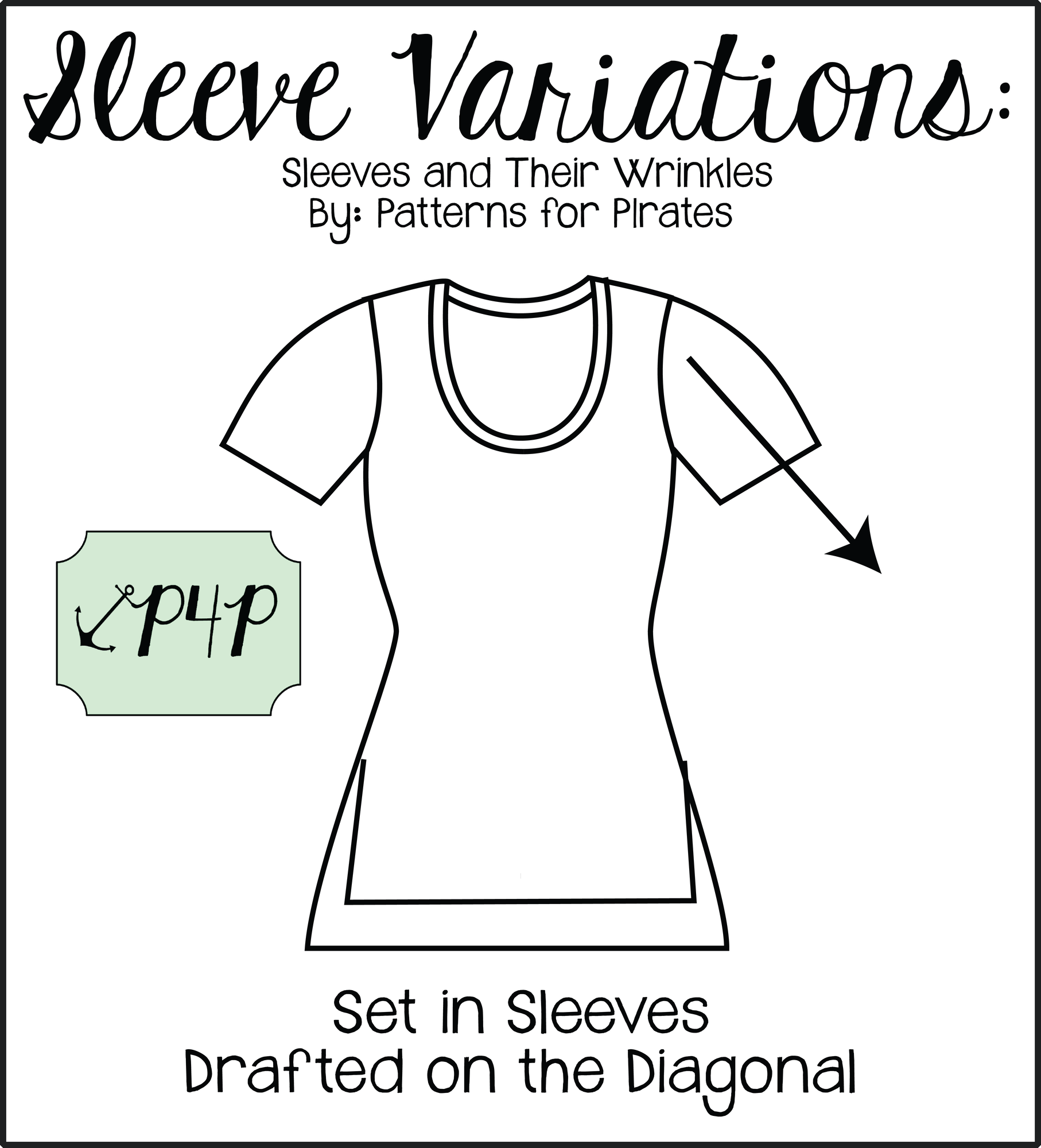
It’s easier to understand why we have wrinkles around the armpit when we know how the sleeve was drafted.  Different sleeve types are drafted differently.


Dolman sleeves are also drafted so that there are no wrinkles when we have our arms lifted horiztonally.

Raglan sleeves are drafted so that there are little to no wrinkles when your arms are lifted.

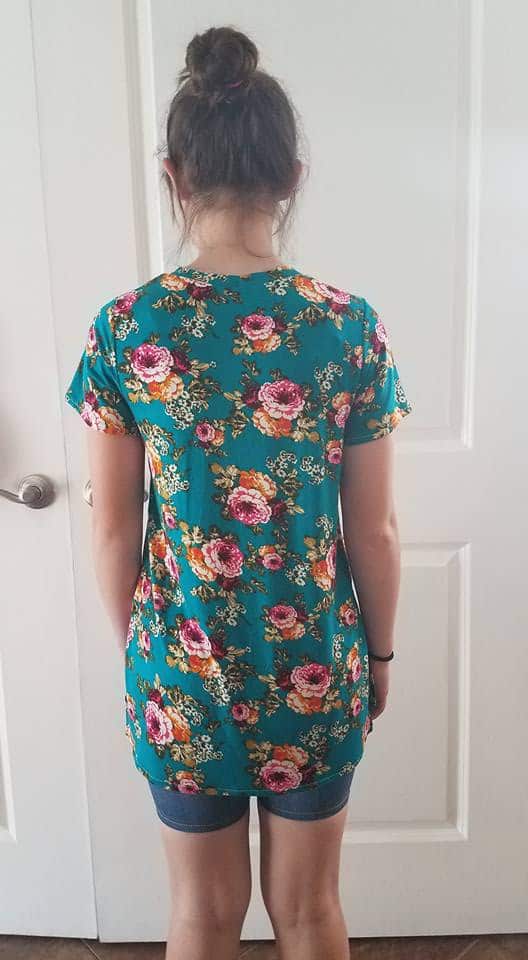
Set in sleeves on knit tees are drafted so that there are no wrinkles when our arms are at a diagonal.

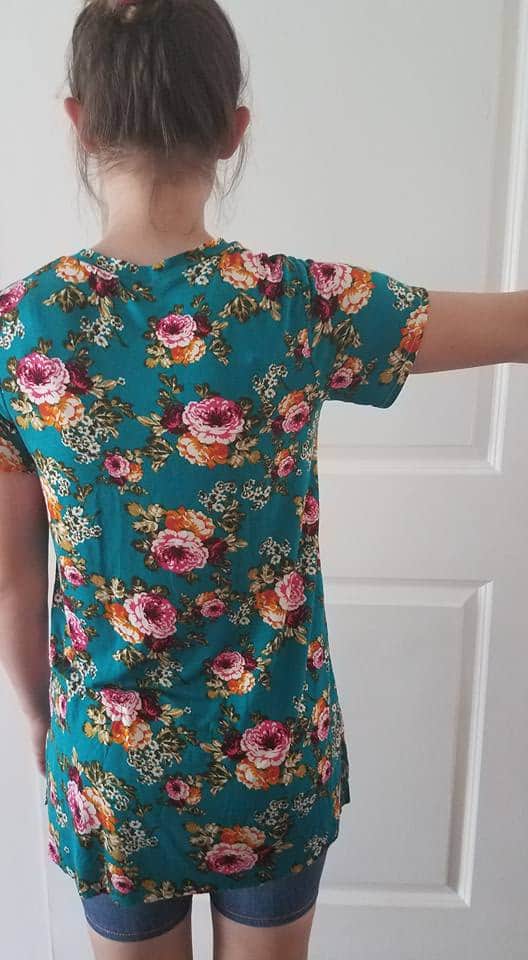
Okay, so what does that mean? When your arms are in other positions than the ones the sleeves are drafted for there will always be wrinkles/extra fabric/pulling.  Lets see a few real life picture examples!

Dolman: Shown here: The Sweet Tee Others we have in the shop are: The Pumpkin Spice Dolman and CoCoon Cardigan

Arms up (almost horizontal– I don’t stand with my arms straight out too much for pictures ;)): very little wrinkling or extra fabric and if my arm was up slightly more horizontal it would go away completely.

Arms Down: All the extra fabric is now “bunched”up under my arm when I put them down.

Arms Up:

Arms Down: in this more stable cotton spandex you can really see the difference!


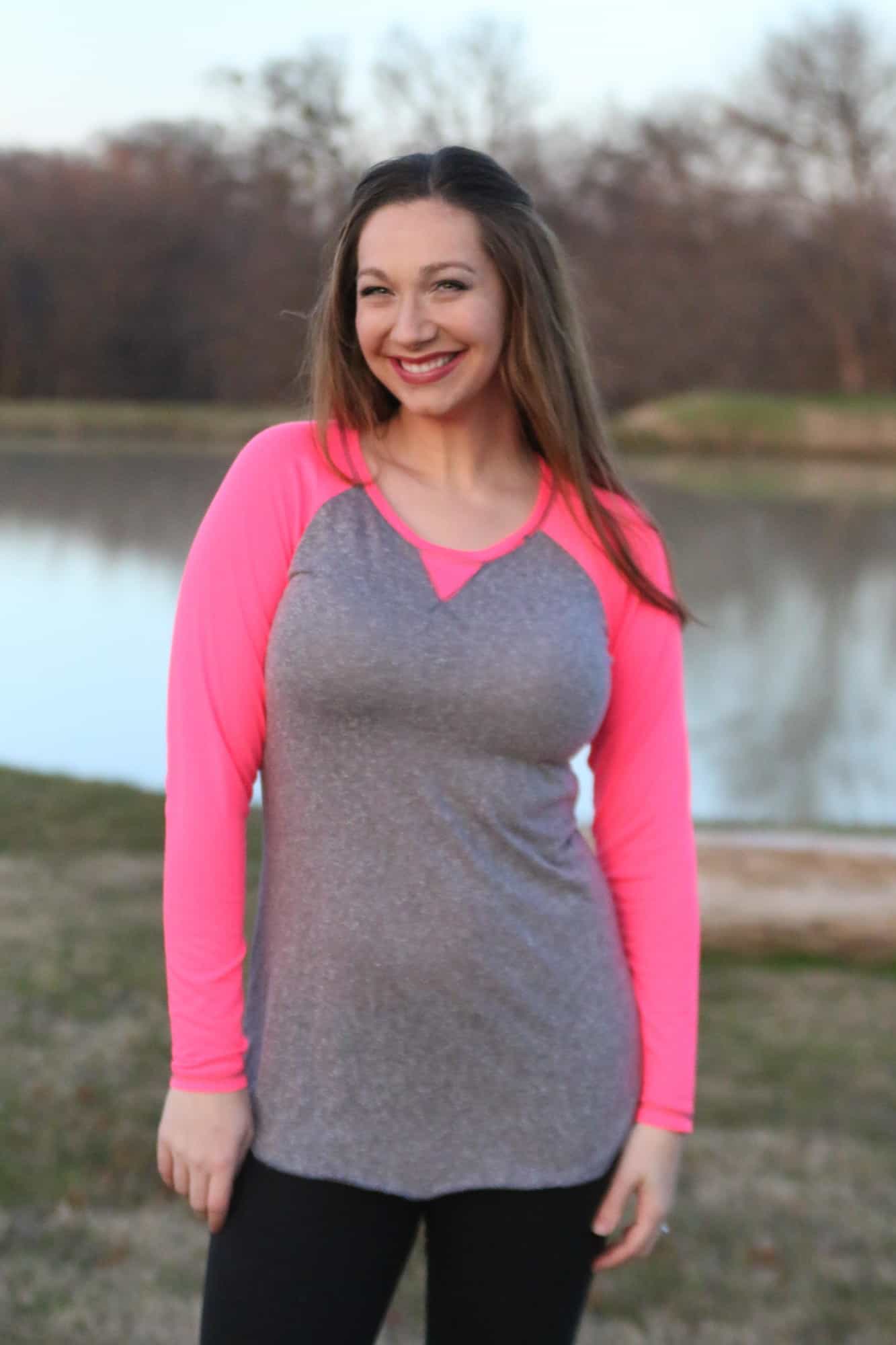
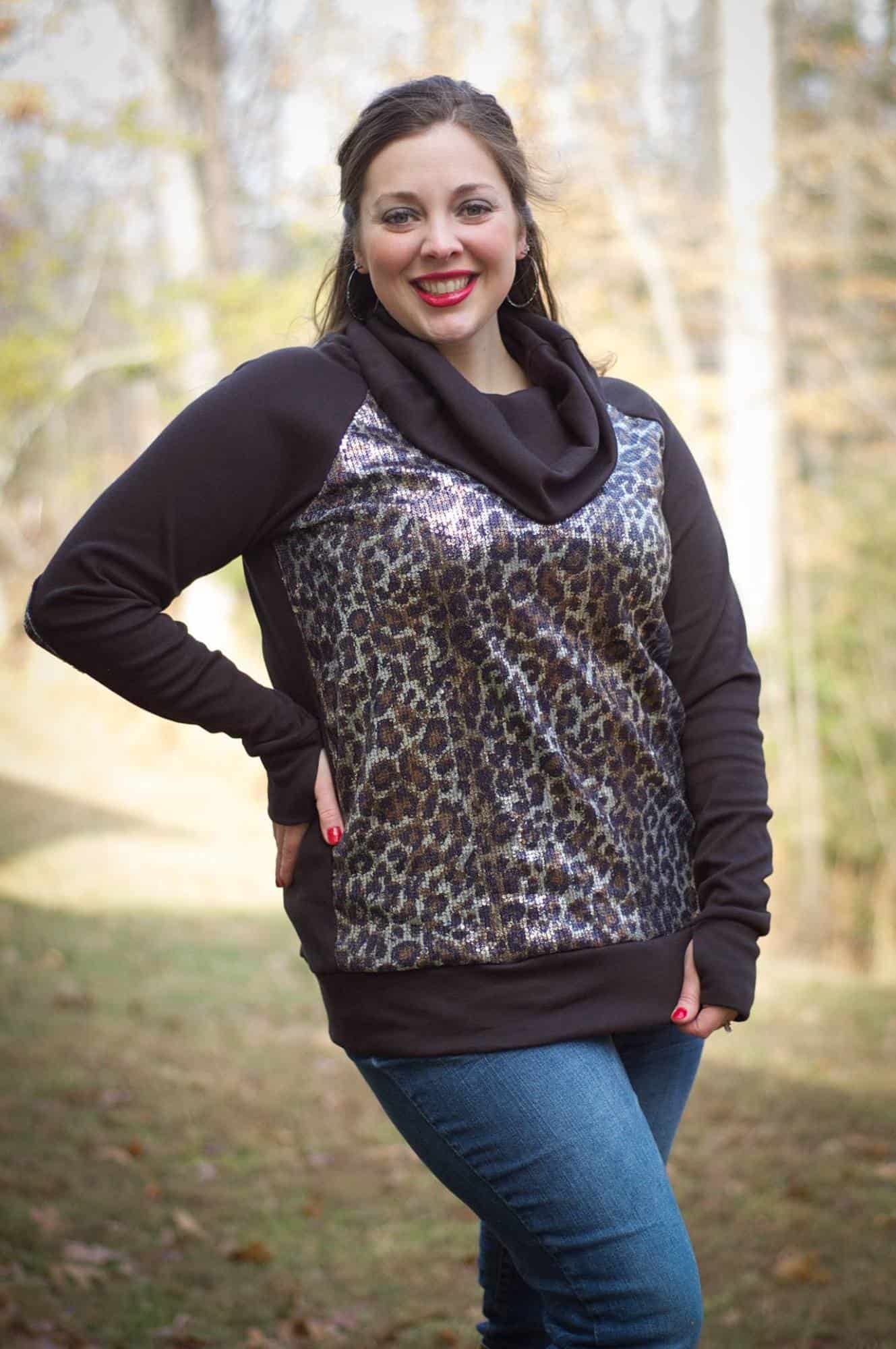
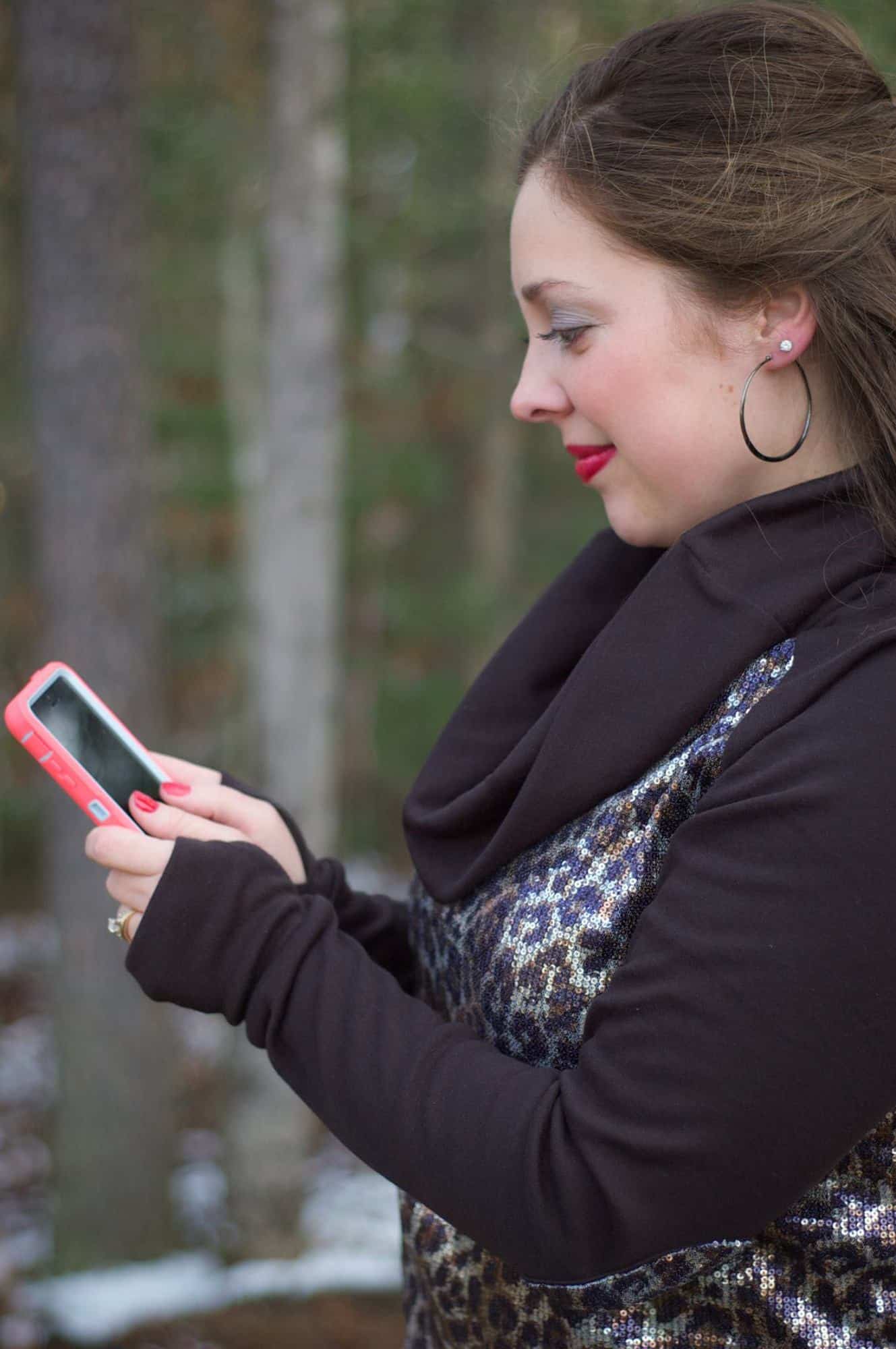
Raglan: Shown here in the pink and grey: Slim Fit Raglan , Shown here in the black and leopard: Relaxed Raglan , and Shown here in youth: Jolly Roger Raglan

Arm Up: (almost horizontal).

Arms Down:

Arms Up: (again it was near impossible to find one all the way up/out but this is close!)

Arms Down:

Arms Raised: higher than horizontal. You can see the wrinkling move from under the arm to on top, it is being pulled since it is higher than the raglan sleeve is drafted at.

And another raglan set courtesy of my Little Guy 🙂

Arms Up: although it’s a close up, you can see his hands are on his hips-so not fully horizontal, but close!

Arms Down: (that look guys!  He’s a sassy one for sure…that doesn’t enjoy modeling for mama 😉 )


Set in Sleeves: Shown here: Sweetheart Dress , Shown here in youth: Henley , Shown here: fit picture from testing the upcoming youth tee 🙂 , and also in the shop we have Grandpa Cardigan , Wingman Shirt , Boundless Knit Dress , Buried Treasure Tunic , High Low Tide Top

Arms Diagonal:

One Arm Down and One Arm Extended Up: see the wrinkles are in different spots. My arm that is down creates wrinkle under the armpit area.  My arm that is extended all the way up creates them on top of the shoulder. (Also super crazy face I’m making because it was super windy 😉 ).

Arms Diagonal: the only wrinkling going on here is because I’m pulling my arm to the back (pointing my elbow backwards) unnaturally to try to show off the top.

Arms Down:

Here is a few youth examples of set in sleeves as well!

Arms Diagonal:

Arms Down:

Arms Diagonal:

Arms Down:

Arms Diagonal: (no wrinkling)

Arms Down: (wrinkling at under arm)

Arms Extended Up: (wrinkling above arm/shoulder)

If you’re realizing you have wrinkles at the bust, not sleeve we’ve also blogged about those here!

I hope this helps all you wonderful seamstresses out there creating knit garments and trying to make sure you’re getting the fit right 🙂


Filed Under: Fitting, P4P University, Uncategorized Leave a Comment

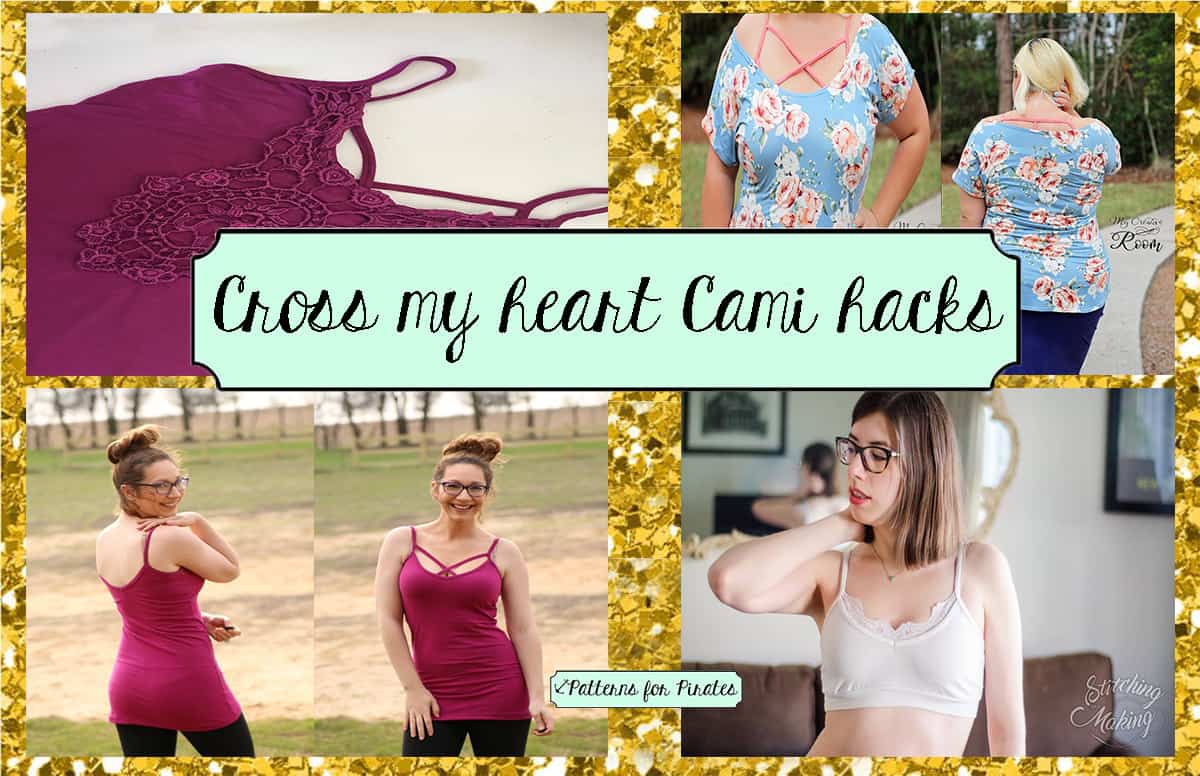
Cross My Heart Cami Hacks

March 14, 2017

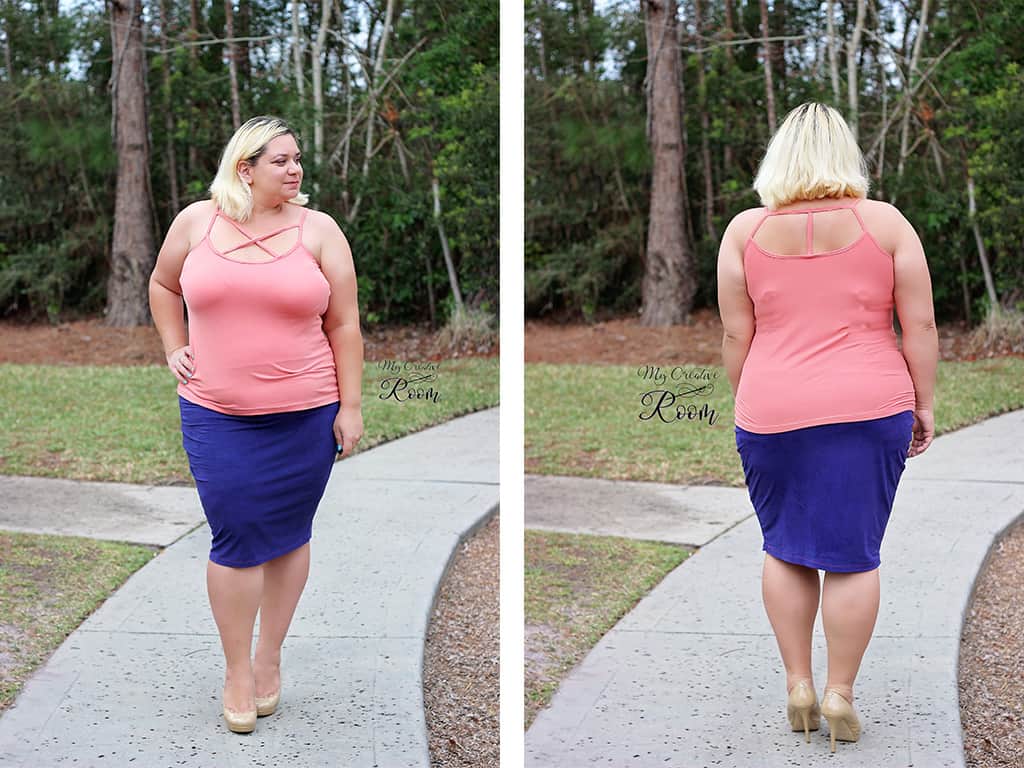
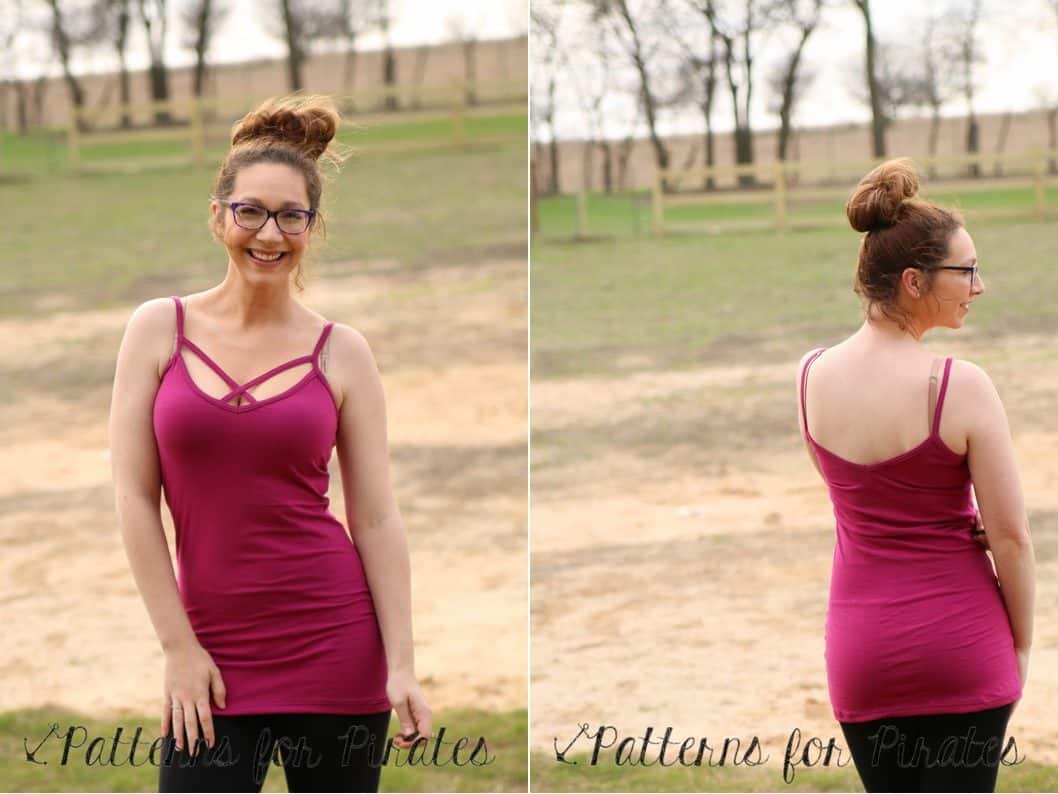
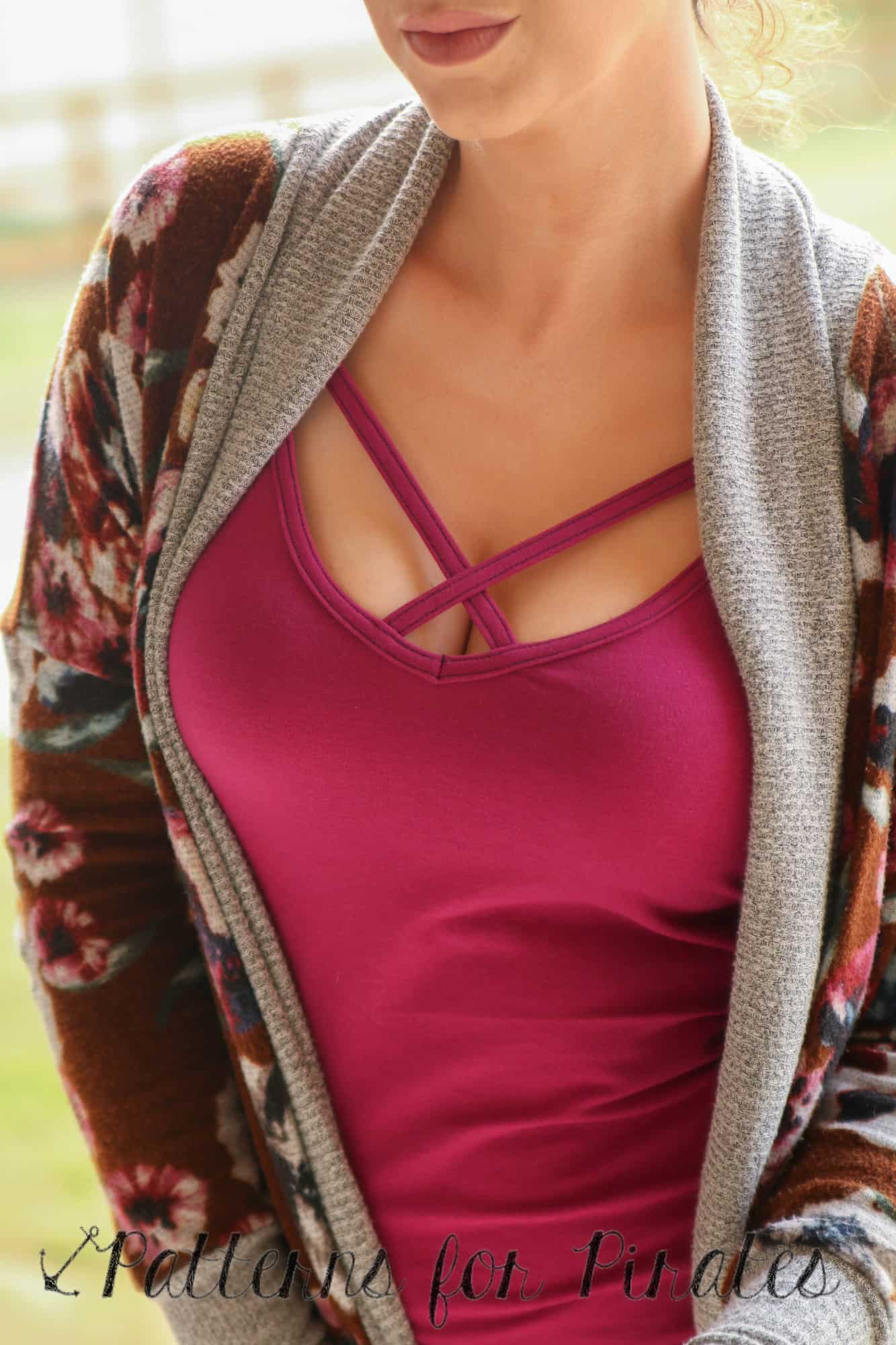
So you love the X option but you also love the T option of the Cross My Heart Cami and now you’re in a pickle…which one do I make? The answer is obvious, you make both! And if you’re anything like I am, you make both style in one cami! 🙂

IMG_6658

IMG_6671

The beauty of the CMHC pattern is that you don’t even need to make any modifications to achieve this look. Simply cut two pieces of the front pattern and follow the directions for adding the T and the X details to the pieces. Finish the cami as per the tutorial and voila! You made yourself a brand new cami that can be worn both way. You can wear the X in the front and the T in the back like I did or you can wear the T in the front.

cami 2fronts

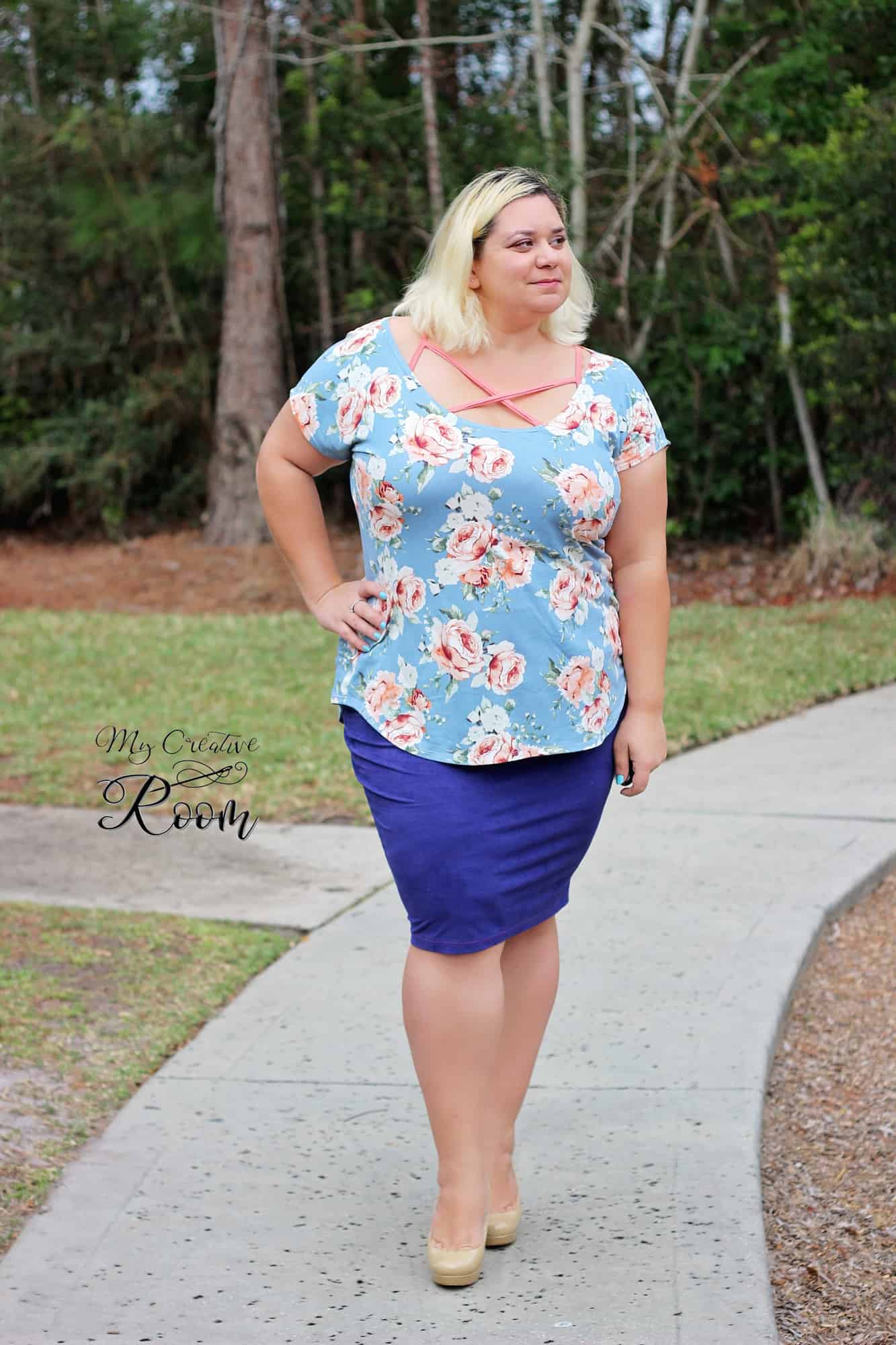
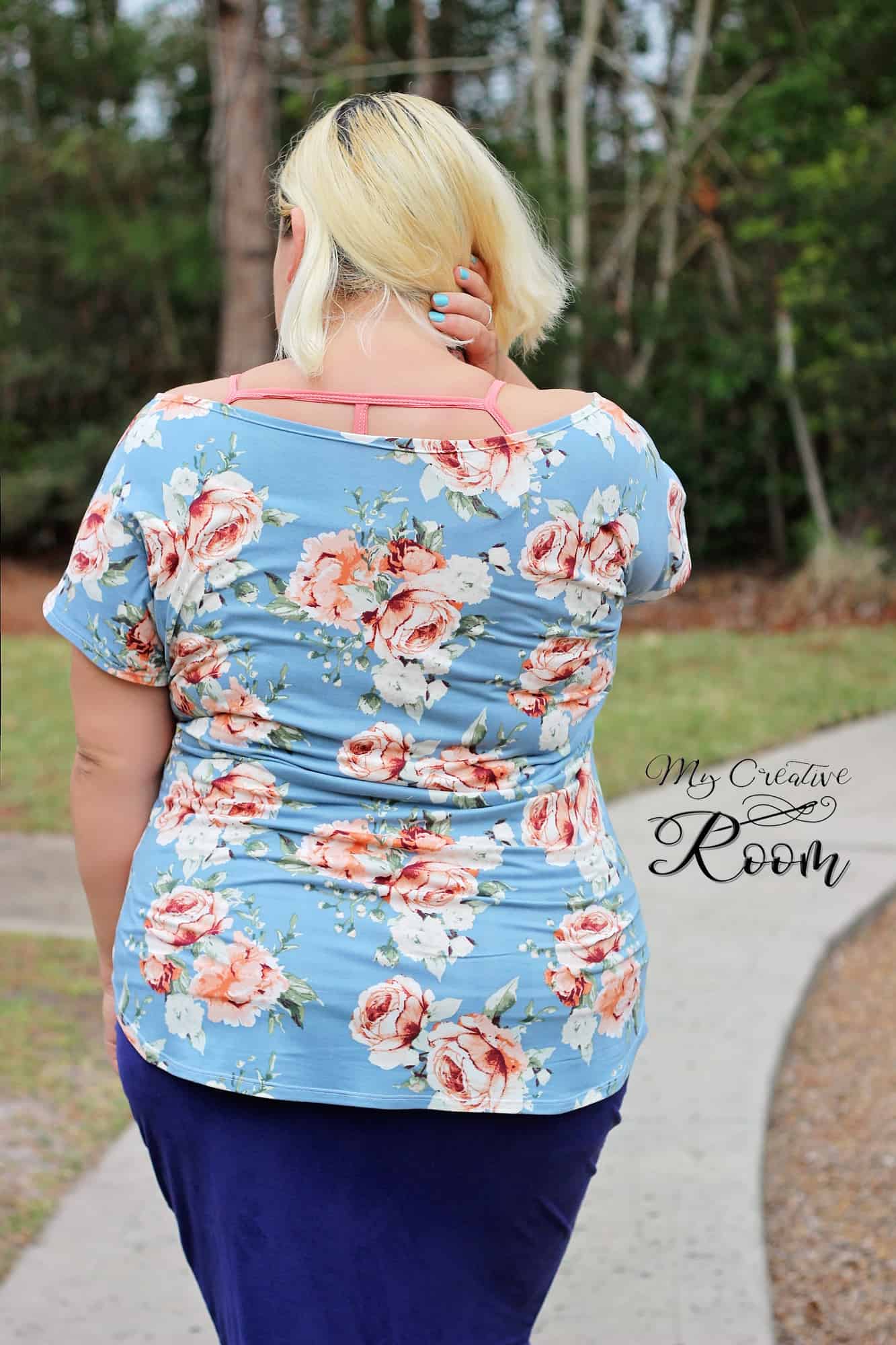
I paired this cami with a Pirate Pencil Skirt and a Sweet Tee with curved hem and an off the shoulder mod. Which styles will you be making first?

Judy made this one with two backs! Such a simple mode that can add so many more options to this pattern!

The V front and low x makes a sizzler! I mean, who doesn’t love to have that piece of clothing that you can pull out, slip on feel a little sexy every once in a while?

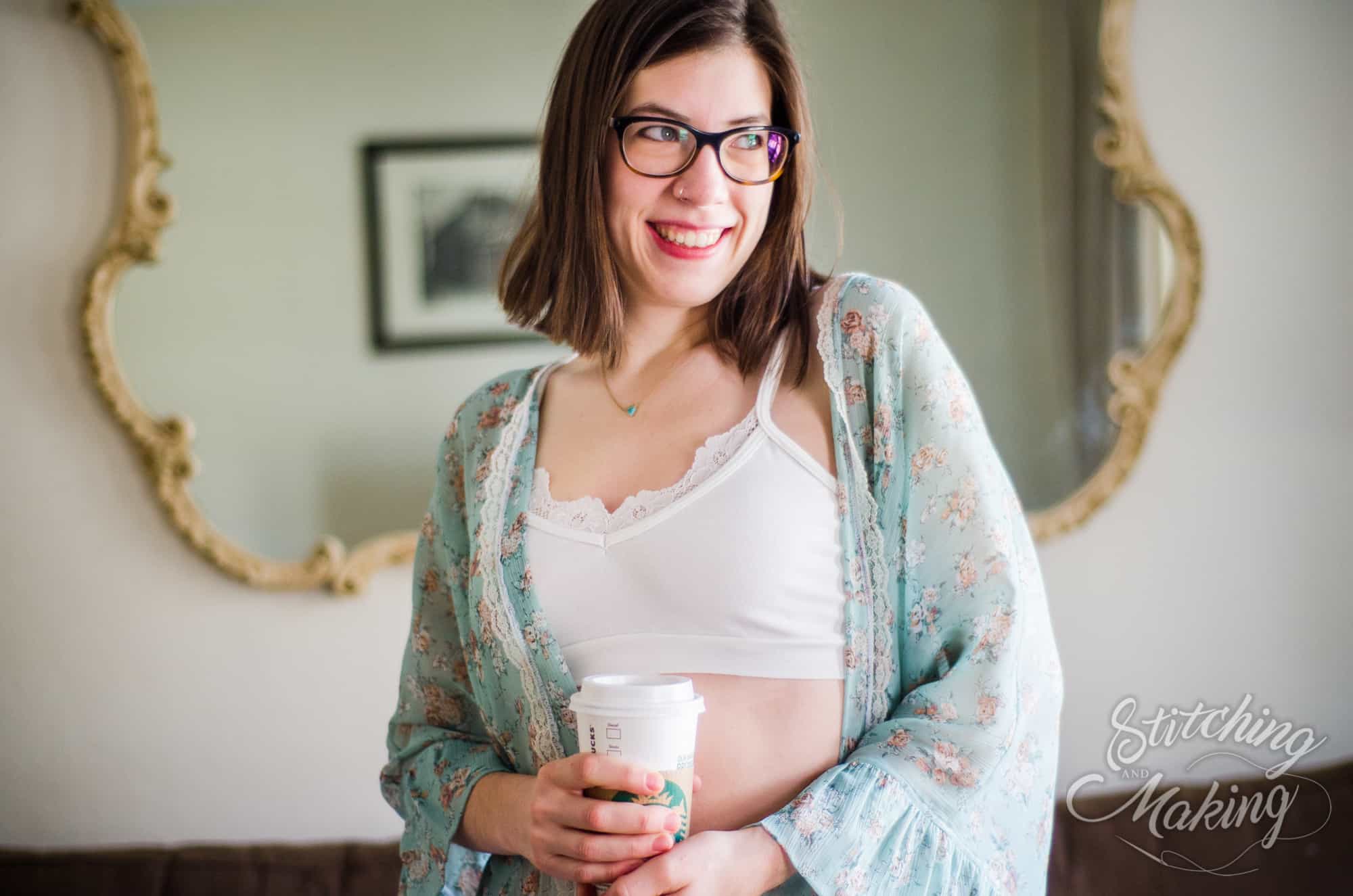
Are you looking for a more delicate, feminine feel?  Grab some stretch lace for an easy hack!

Here’s a simple how-to:

1. Cut the lace the same length as your binding pieces, for whichever neckline you are using.

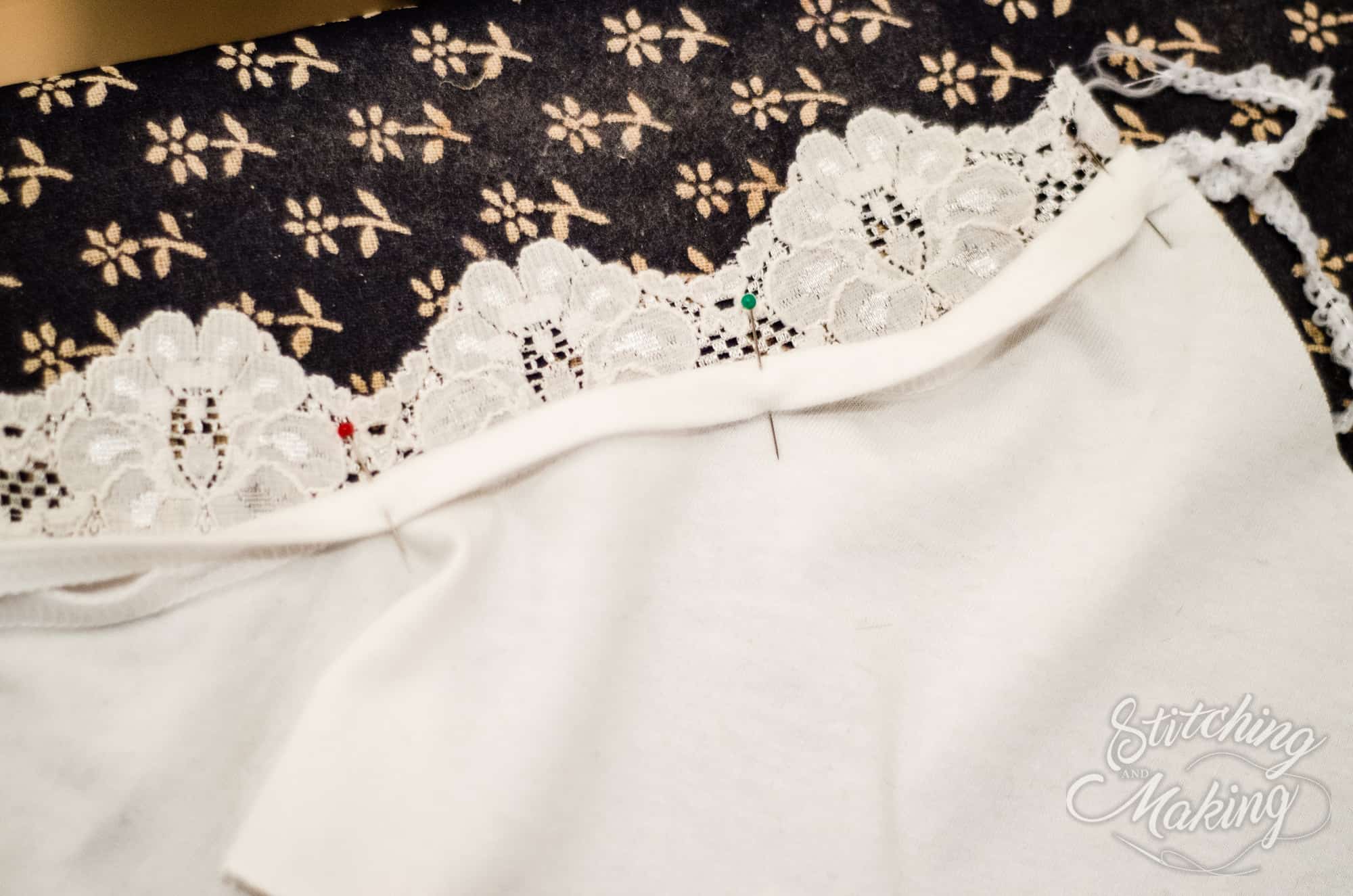
2. After you’ve attached and folded over the binding as directed in the tutorial, pin the right side of the lace to the wrong side of the neckline/binding. In the picture below, the fabric is right side up.


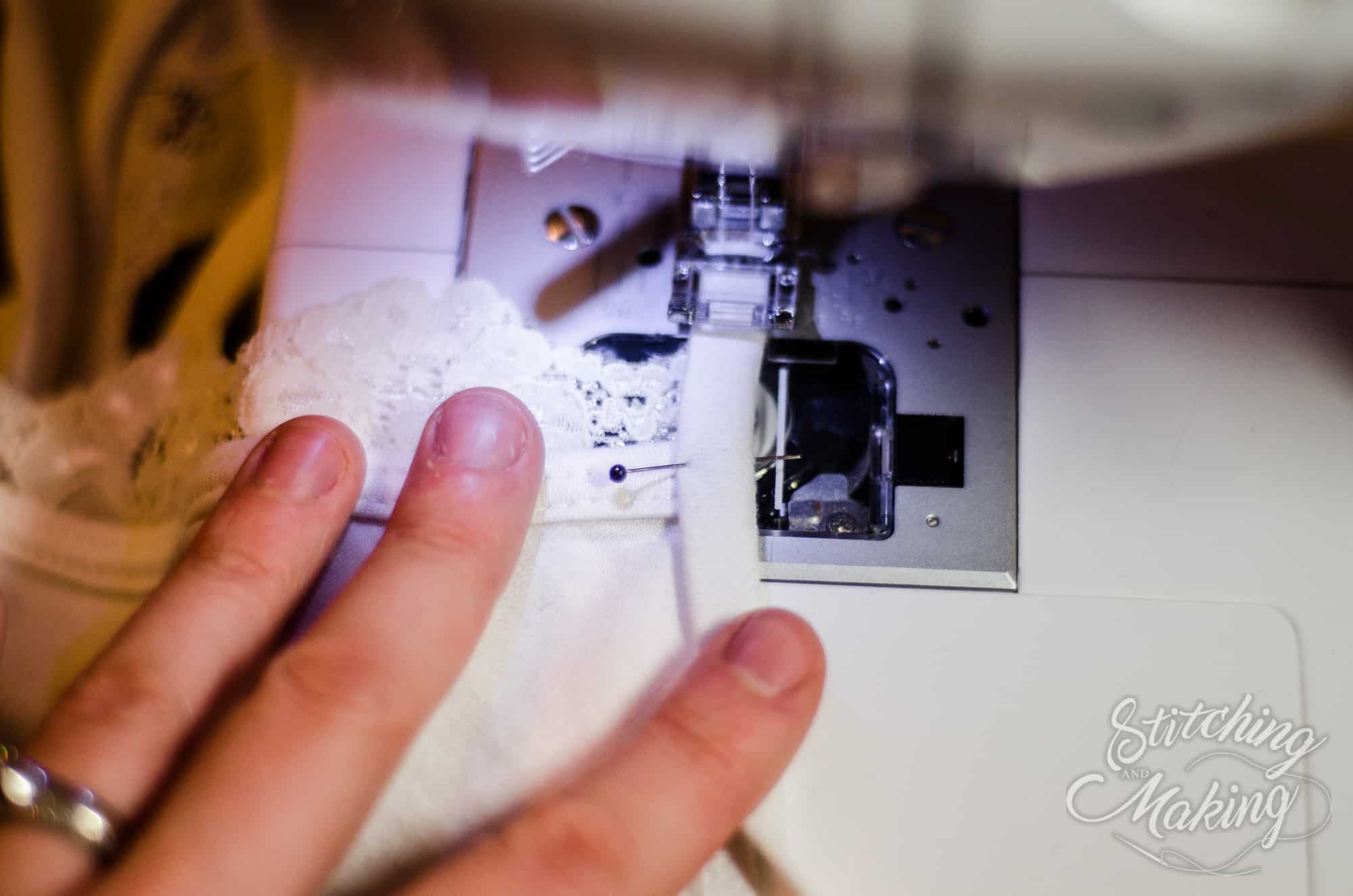
3. Repeat for the back as well, if you’d like.  Then, sew it on as you top-stitch the binding, per the pattern tutorial.  Here’s how it should look all said and done; wrong side up shown on the bottom of the picture, right side up shown at the top.


4. Be sure to catch the edge of the lace on the side of the shoulder binding as you attach it.


5. Finish the shirt as the pattern tutorial directs.  That’s it – easy peasy!

~ Elisabeth


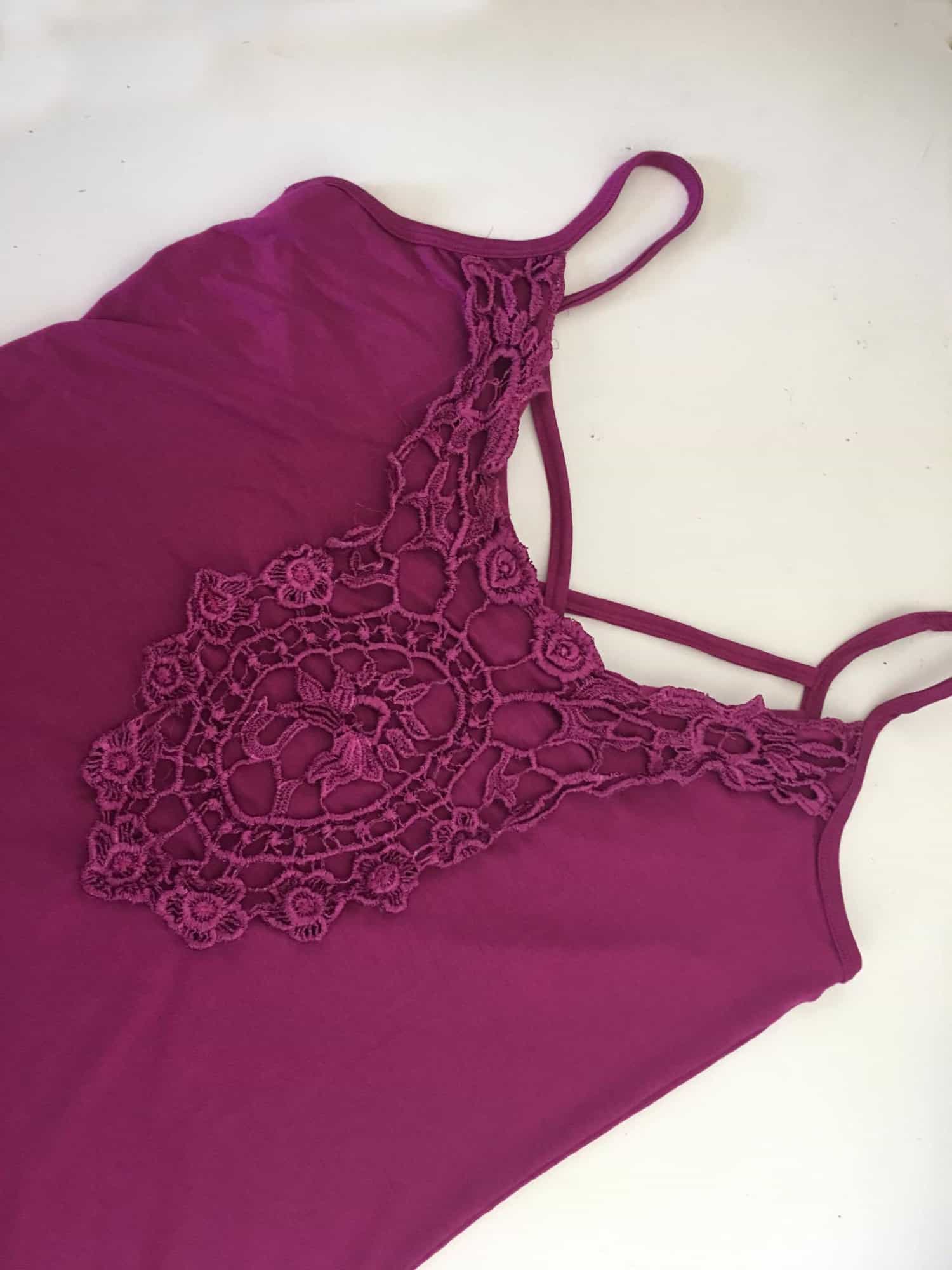
Not sure what to do with all those pretty lace appliques? Attach one to the front or back of the cami.  I happened to up-cycle one from an old shirt that didn’t fit anymore and have some knit on hand that matched perfectly!  I used to V back because of the shape of the applique.  I left the front neckline raw and stitched the lace just overlapping the top edge using a zigzag stitch.  (Knit does not unravel so no need to finish those edges).  Attach to the right side of the cami prior to doing the shoulder binding if your applique extends to the armholes.  For the main body of the applique, I chose to tack down in a few areas (center of the flowers) as the applique itself was pretty open throughout.  Easy Peasy!


Filed Under: Frequently Asked Questions, Pattern Release, Uncategorized 1 Comment

5 ways to finish a serger hem

March 9, 2017


IMG_6554

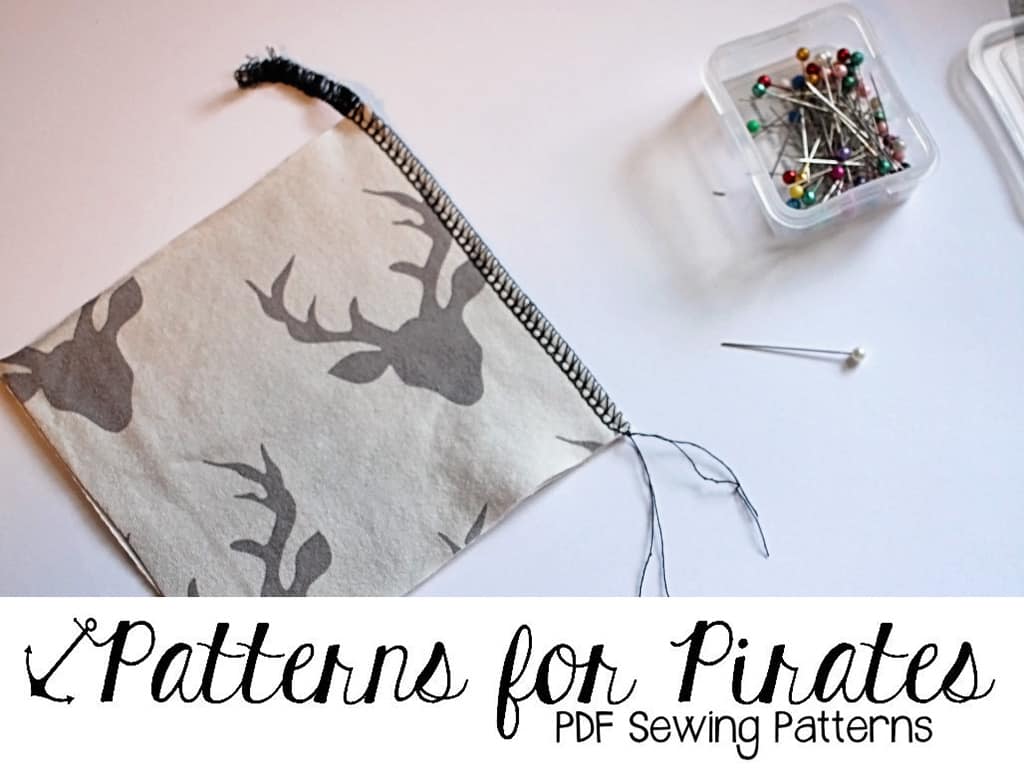
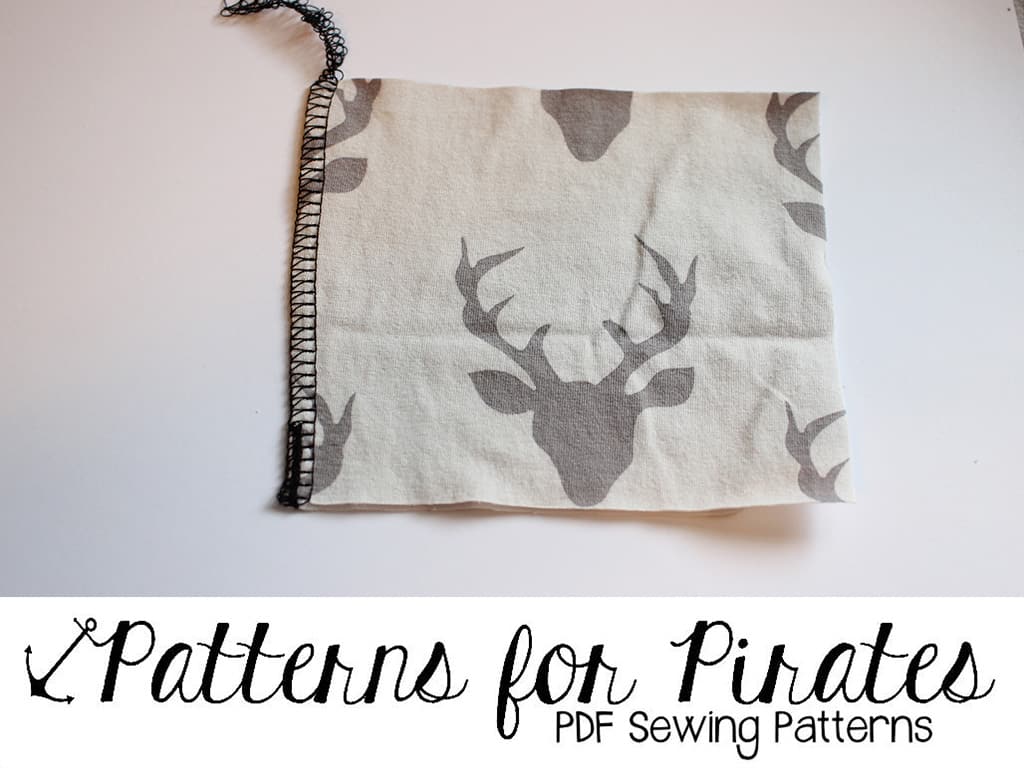
“How do you finish your serger stitch since you can’t back stitch?”; “What do I do with the long serger tail ?” ….just a few of the  serger questions we’ve seen in our group. So, today in the blog I will show you 5 easy ways to finish your serger seam. These techniques will definitely come in handy when your seams will not be enclosed in a hem or they won’t be serged over in a subsequent pattern step.

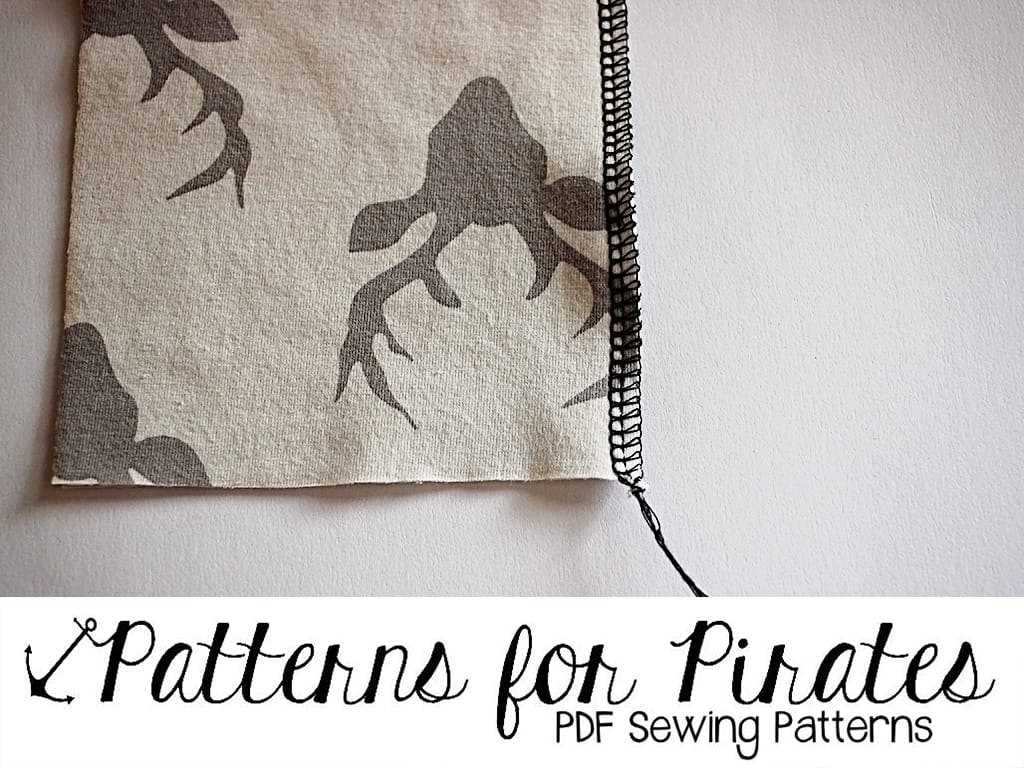
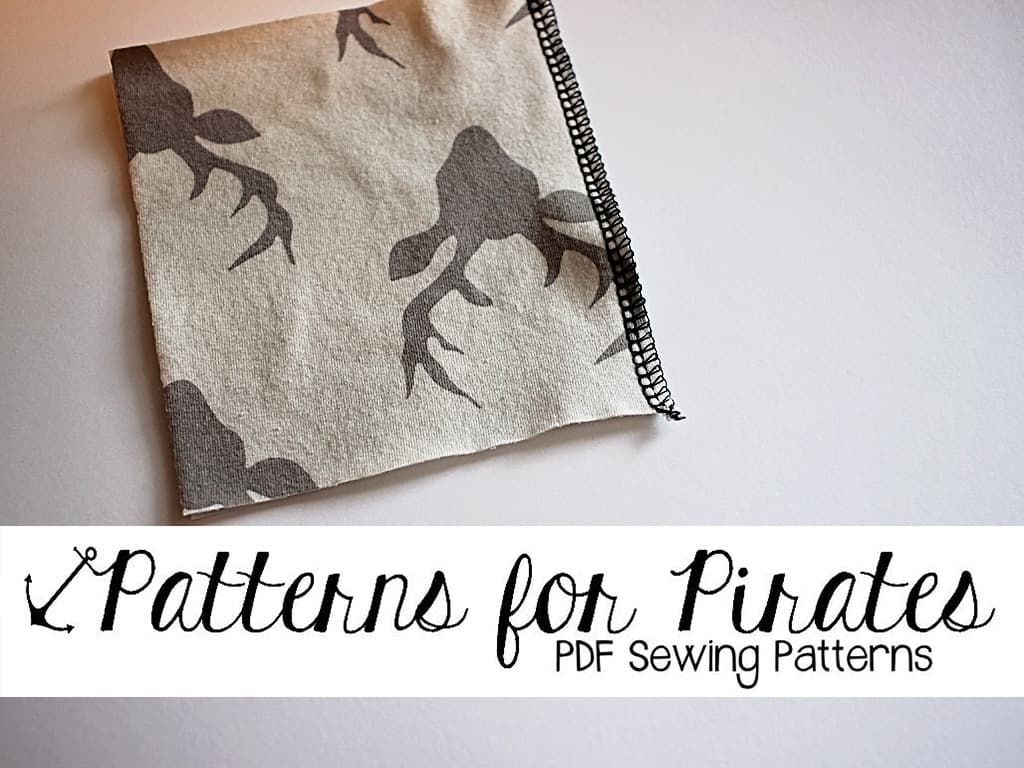
1. Let’s start with my most used one, and the easiest method since it does not involve any other tools. Serge your fabric together and chain off a 5- 6 inches tail. Simply tie a knot as close as possible to the edge and done! It will not unravel and it took you 20 seconds to do. 🙂

IMG_6537

IMG_6538

TIP: For a cleaner look you can tack down the seam with your sewing machine. Simply stitch down the serged edge half an inch  towards the back.

2. Another simple way to finish your serged seam is to snip the tail close to the edge and then add a little dab of Fray Block or Fray Check. This will prevent your seam from coming undone. This method is my least favorite since it takes a while for the liquid fray block to dry and they are not always 100% secure.

IMG_6539

3. A third way to insure that you have a nice smooth finish to your serged seam is to chain off 4-5 inches then using a needle gently unstitch the chain so you have 4 threads. Take the two needle threads and the two looper threads and tie a double knot. Carefully snip the threads as close to the knot as possible.

IMG_6540

IMG_6541

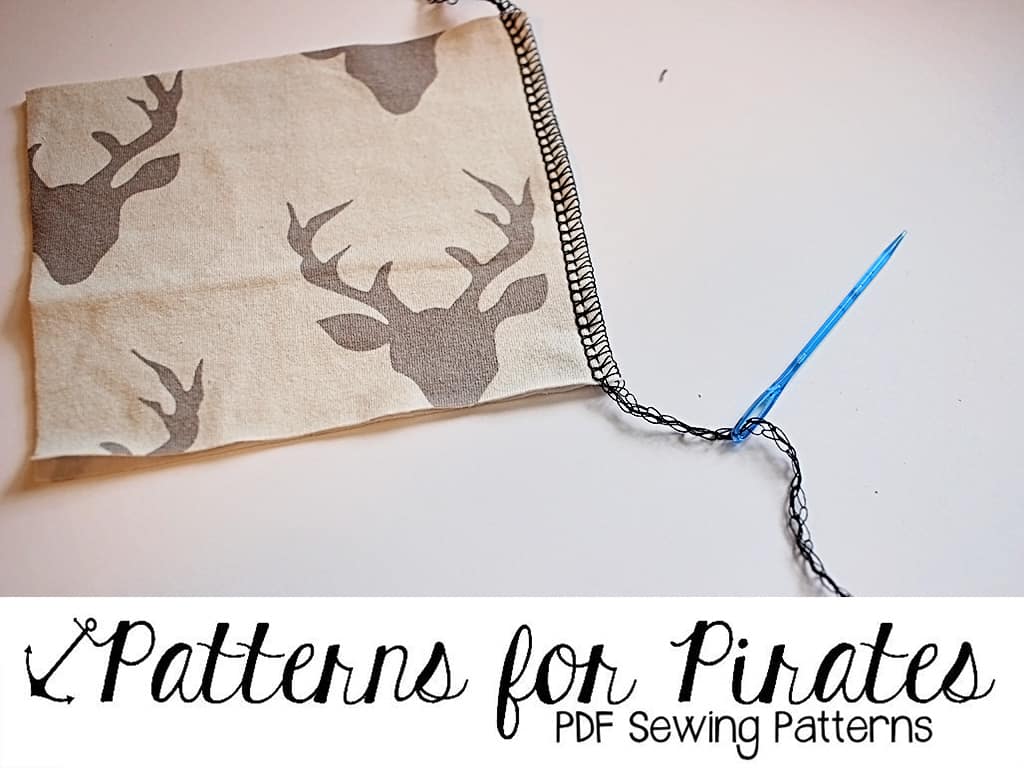
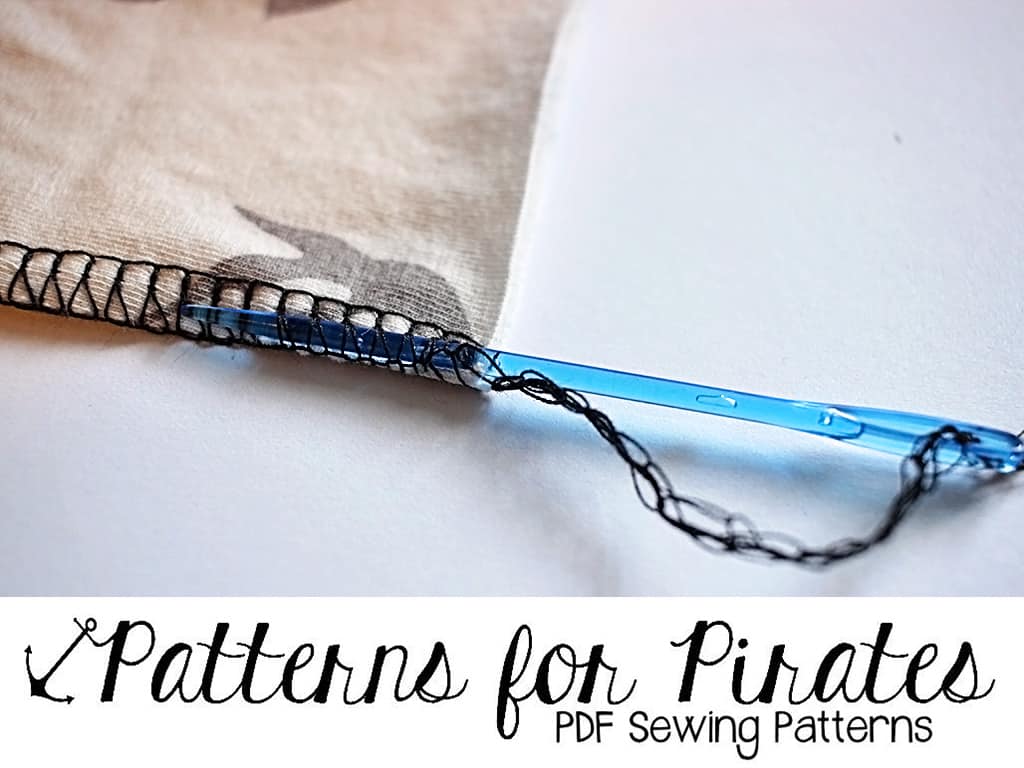
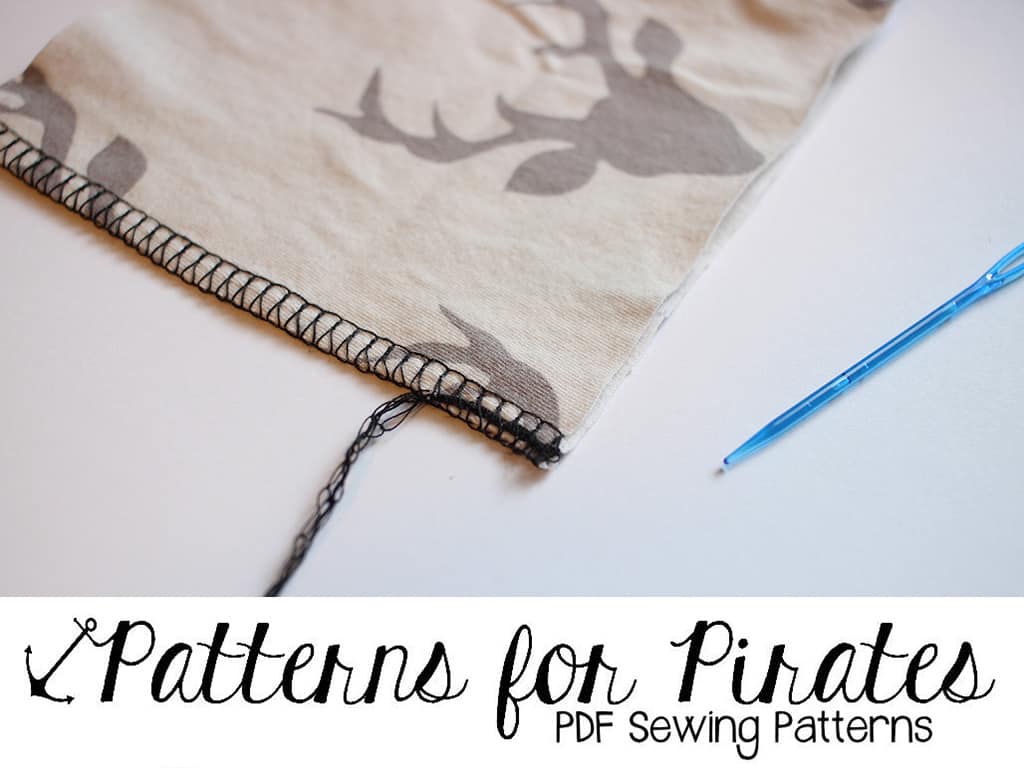
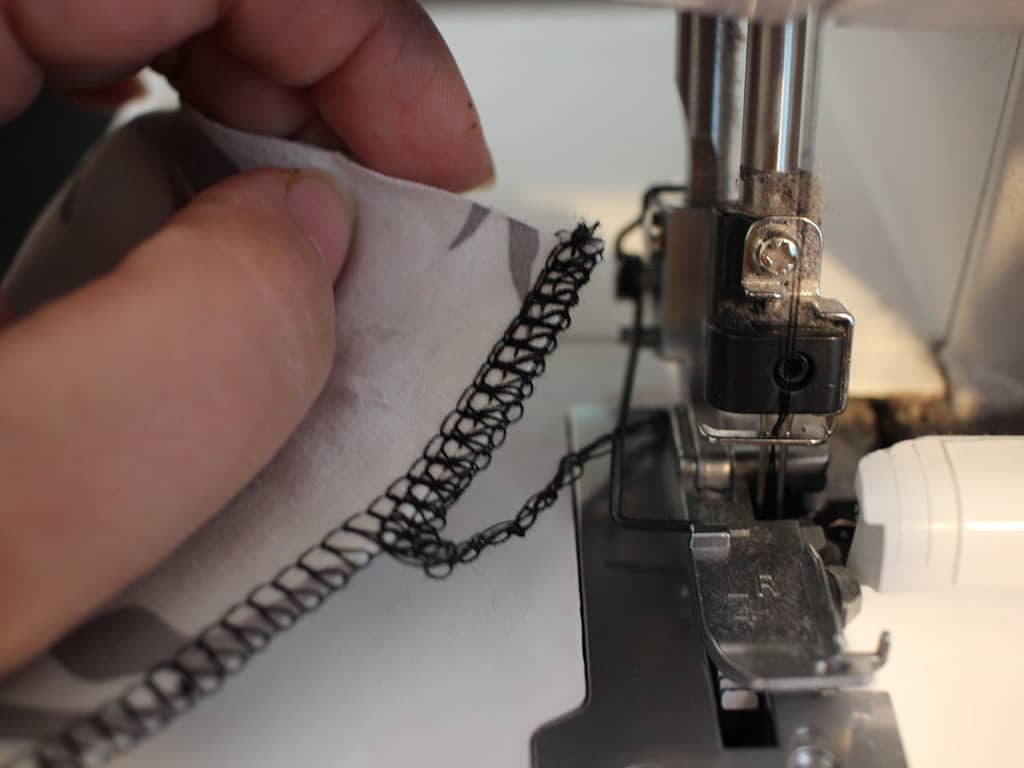
4. One of the most popular ways to finish a serger seam is the “weaving through” method. In order to do that you will be chaining off your stitches about 5 inches, then you will be using a knitting or crochet suture needle to weave the chain in the looper stitches. Grab the needle and thread the chain through the needle eye. Slowly weave the chain through the looper stitches about an inch or so. Carefully trim the rest of the chain stitch.

IMG_6542 IMG_6543 IMG_6544 IMG_6545

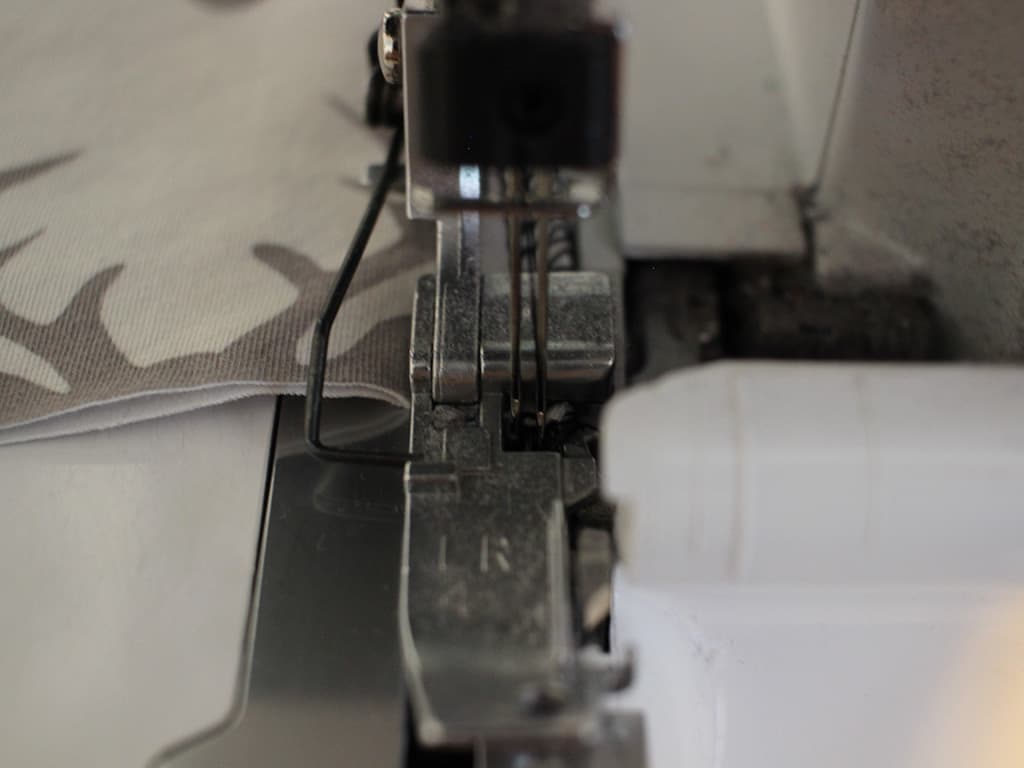
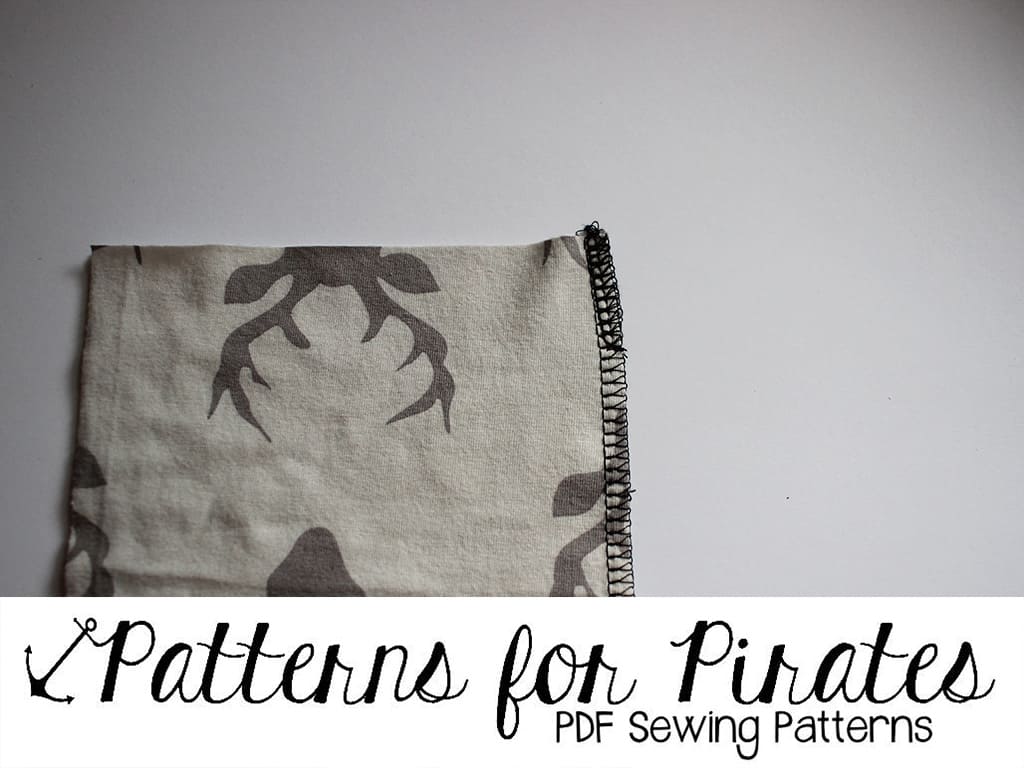
5. The last finishing method is the most “complex” one and it will need a bit of practice. It is not difficult, you just need to pay extra attention. Serge your seam and when you get to the end of the edge, lift your presser foot, gently but firmly pull the fabric just enough that you can flip it on the other side. Disengage the serger knife and serge in the opposite direction for an inch or two. Stop, lift your presser foot and carefully pull the fabric on the side away from the foot. Chain off a couple of inches and then cut the chain as close to the fabric as possible. In doing this “faux backstitching” you will end up with a beautiful finish that is also very secure.

IMG_6547 IMG_6548 IMG_6549

There you have it! Hope you found these 5 easy ways to finish off your seam helpful and that you’ll refer back to them when you’ll be sewing the new cami patterns that Judy sneaked on the P4P Instagram page. 😉

Alex


Filed Under: Frequently Asked Questions, P4P University, Sewing Techniques, Uncategorized 12 Comments

P4P Cardi Week :: Grandpa + Cpt. Mack Ribbon Tie Closure

January 23, 2017


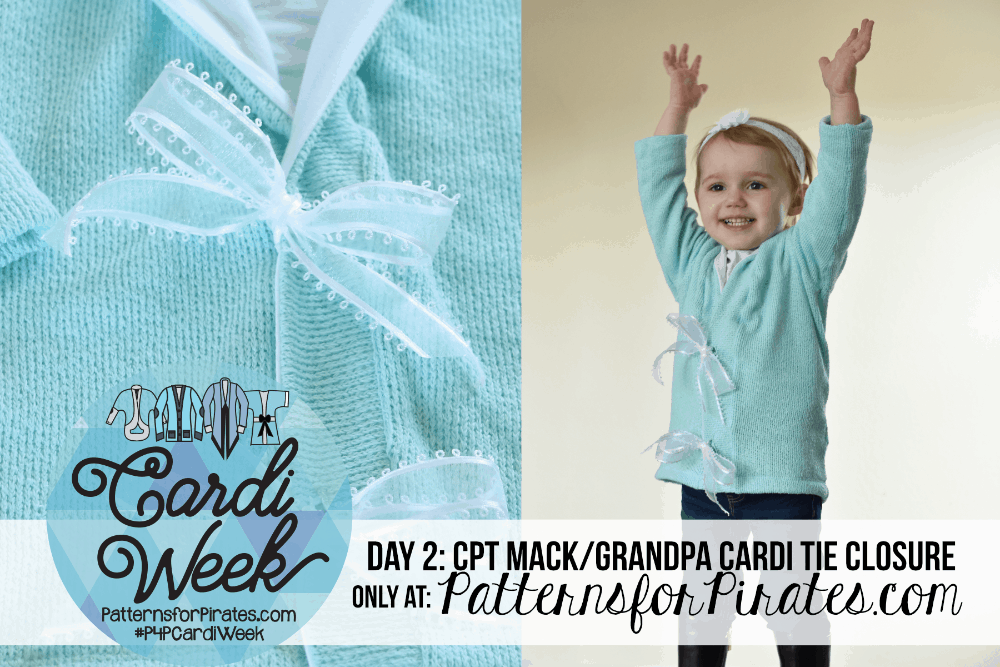
Cpt Mack Ribbon Tie Closure Primary


Today I have for you a simple hack that can be applied to either the Patterns for Pirates women’s Grandpa Cardi or the youth version, the Cpt. Mack’s Cardigan. This mod is simple but it adds so much to the overall look! There are a few different ways that you could approach this; but grab your pattern and follow along the tutorial below to find out how I like to add a ribbon tie closure to the Cpt. Mack and Grandpa Cardigans.

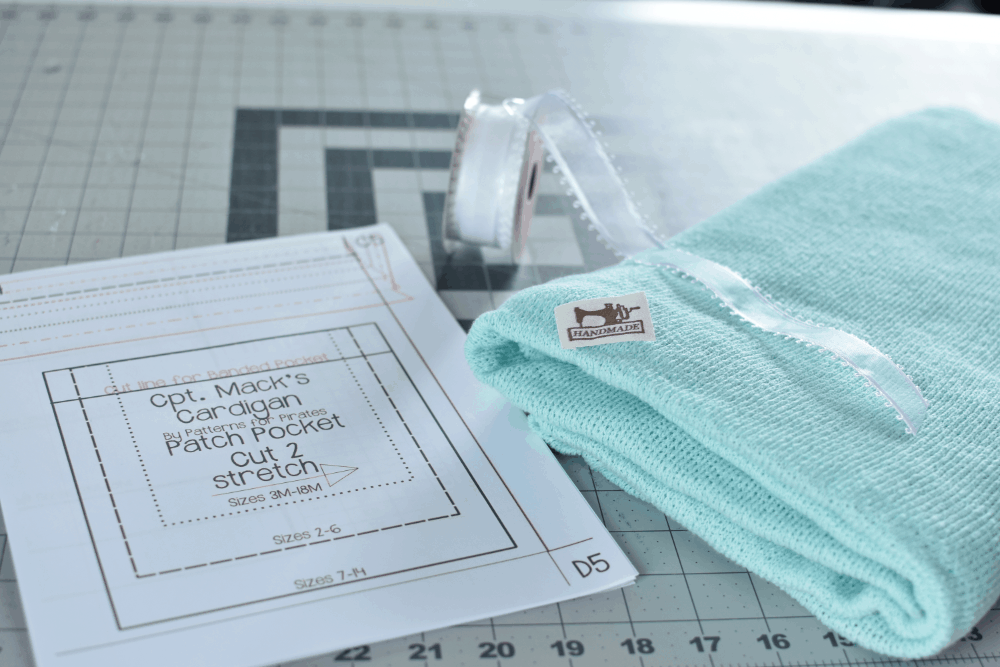
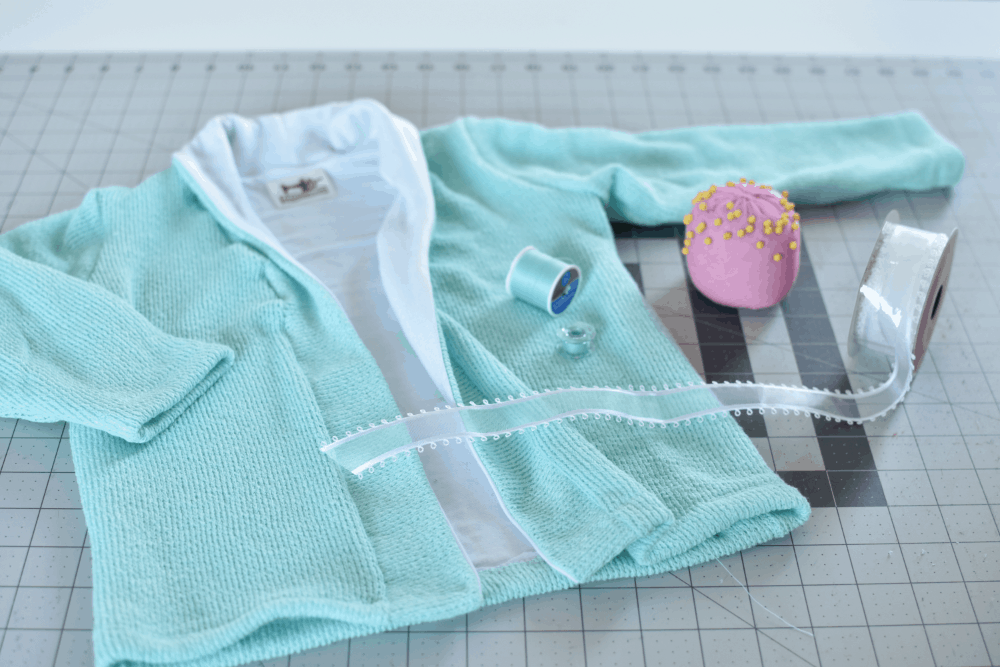
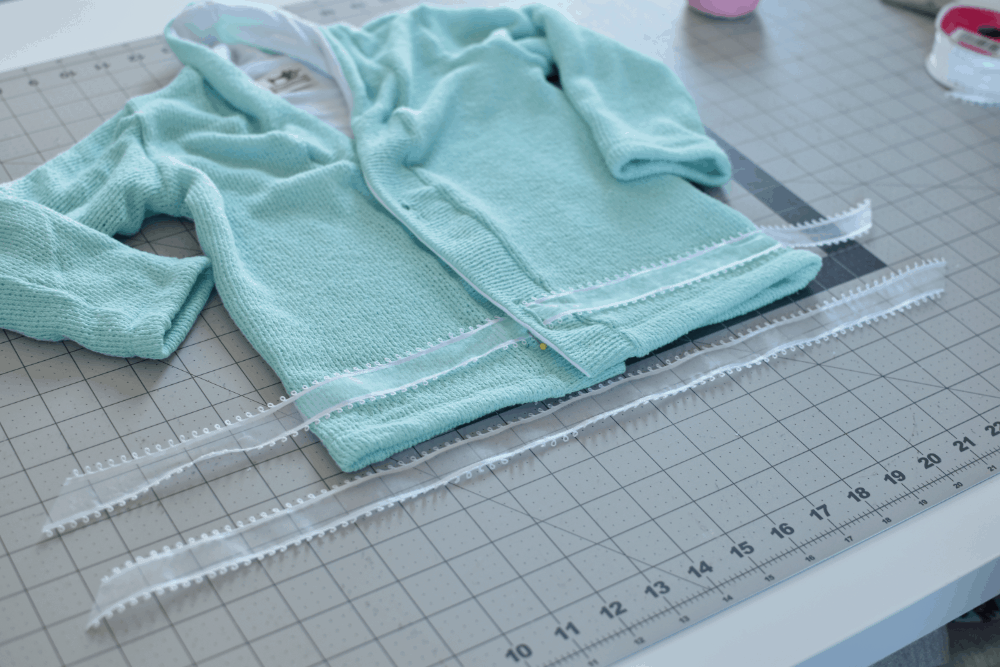
For this tutorial I am using some simple satin and mesh ribbon to coordinate with my rayon spandex lined loose weave sweater knit Cpt. Mack.

MATERIALS

Step 1: Sew up your cardigan, stopping just before attachment of the collar.

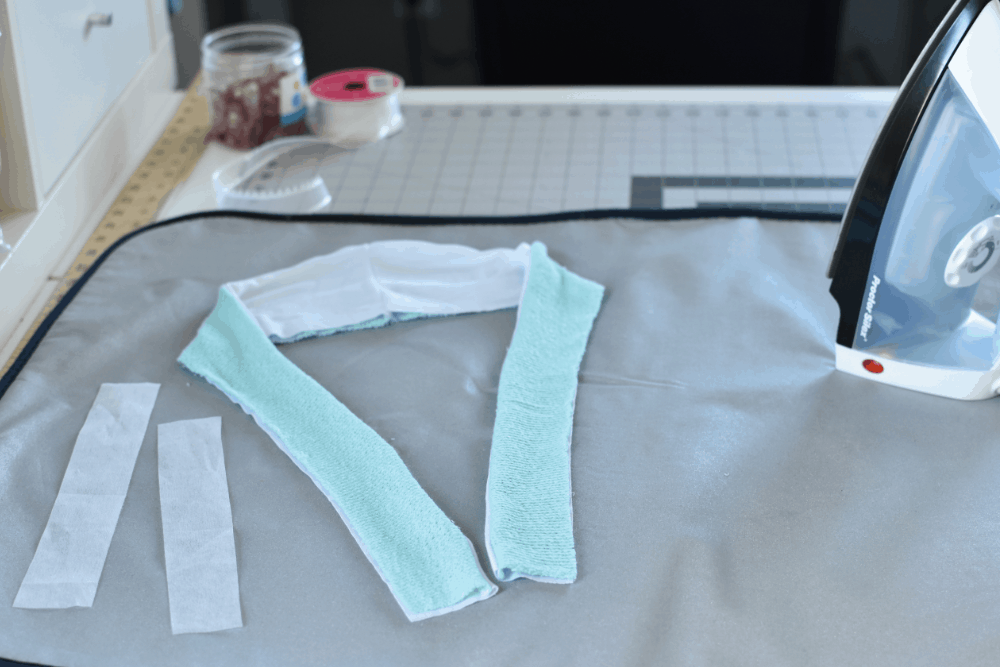
IMAGE 0

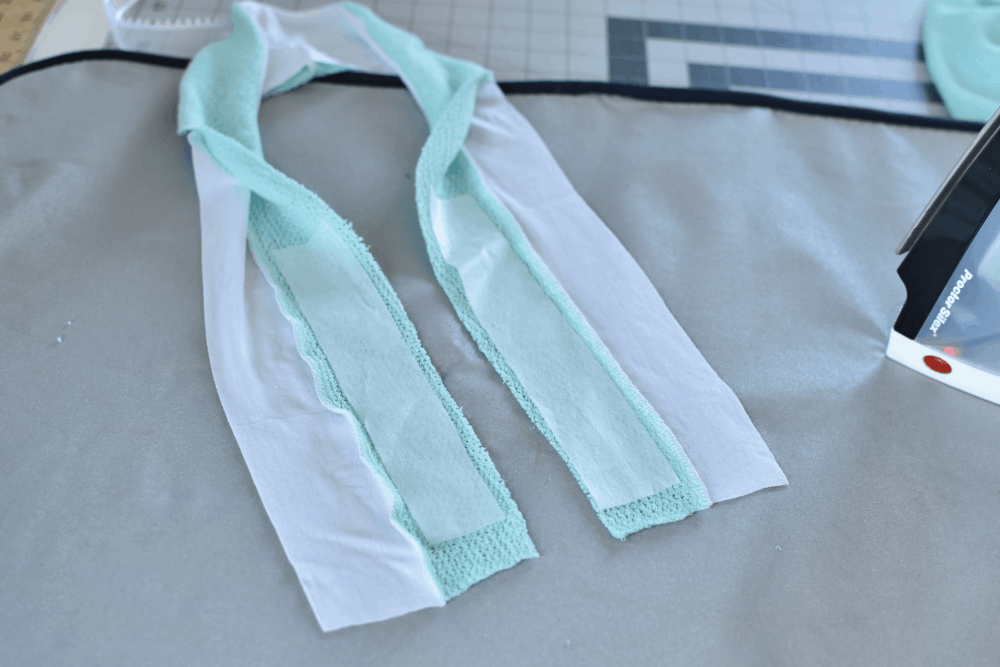
Step 2: Iron on some interfacing along the inside of the collar where the buttonholes will be stitched. This will provide some stability to your knit and to prevent the holes from being stretched out with use. I know my kids aren’t gentle with their clothes!

IMAGE 1

Step 3: Now sew your collar onto the cardigan as directed by the pattern tutorial.

IMAGE 2

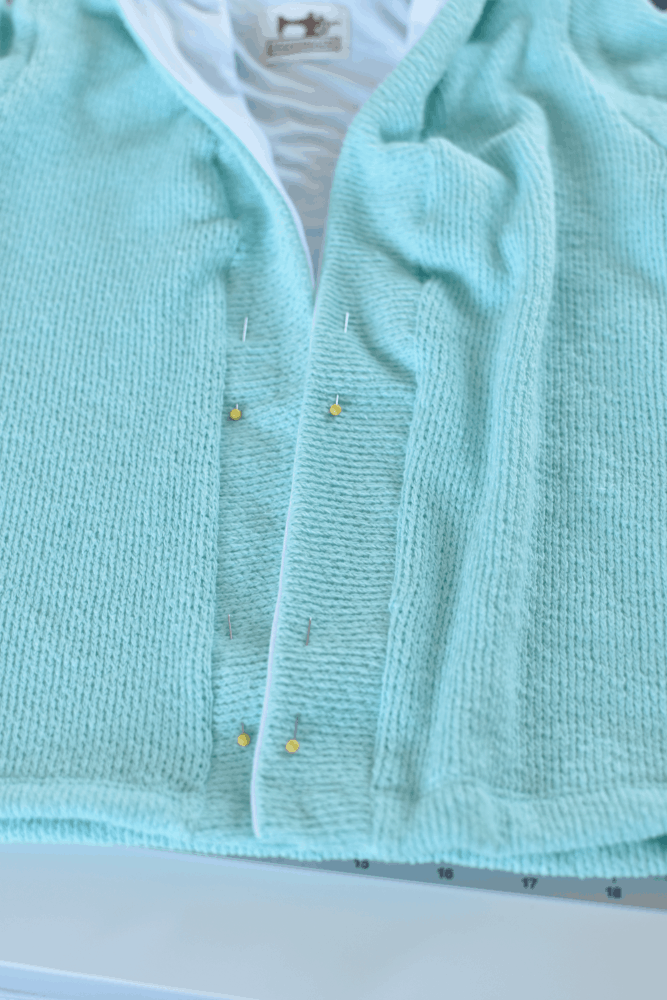
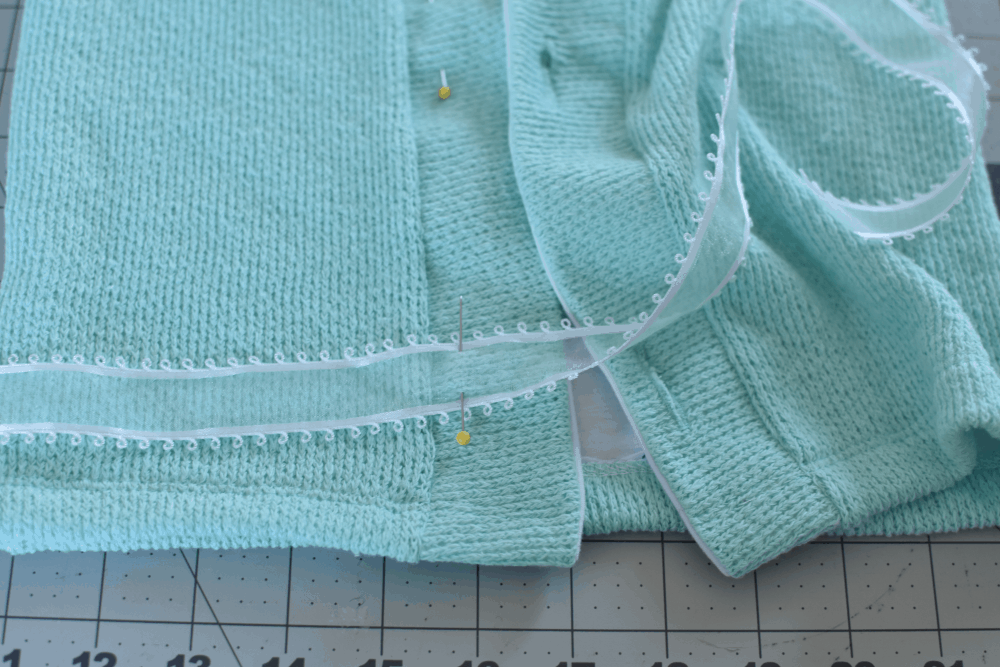
Step 4: Mark on the overlapping band (with pins) where you would like your bows to be located. I used two bows for my daughters size 2T tunic length cardigan. The width of the chosen ribbon should be considered when deciding how many bows to use as well. Now mark the corresponding location on the under lapping band.

IMAGE 4

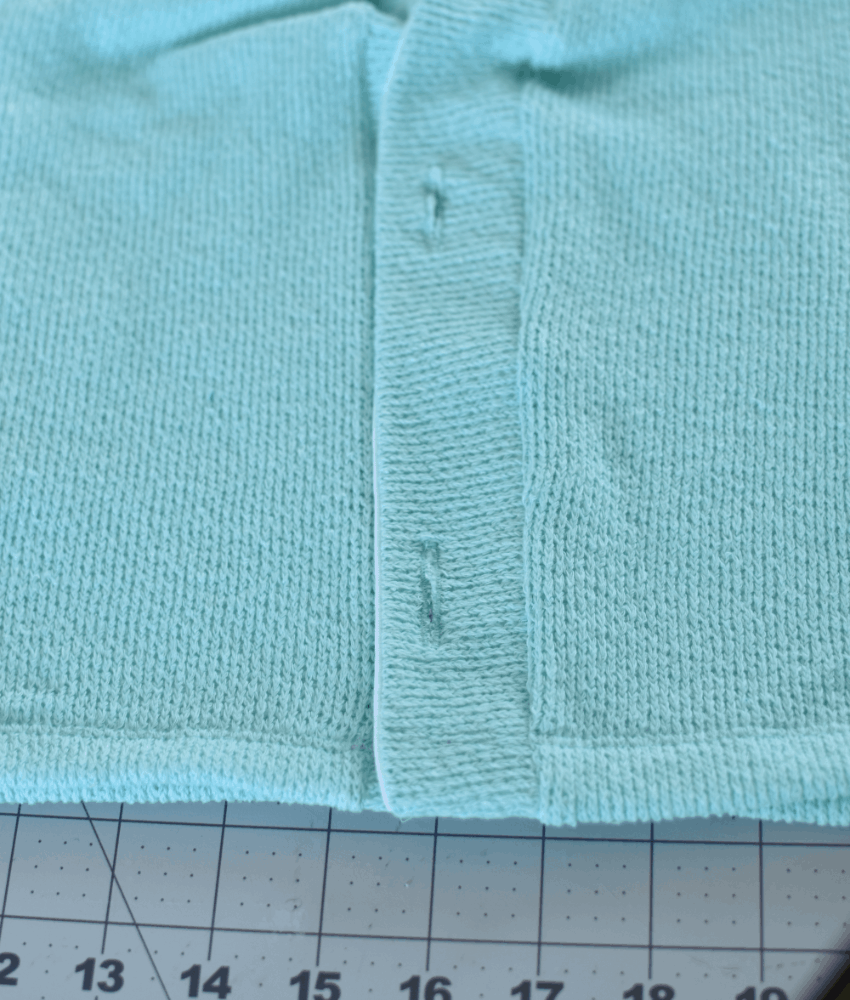
Step 5: Use your machine to create buttonholes on the overlapping band locations. For this I used my automatic buttonhole presser foot. If you haven’t yet used your buttonhole foot I highly suggest reading your manual or searching YouTube for a quick video. These make it super simple! If you do not have a buttonhole setting and foot option on your machine you can certainly use a zigzag stitch to create one yourself. Follow along Judy’s Carefree Cardigan Button blog post to see how she likes to create a buttonhole in that circumstance. Once the buttonhole is stitched, it’s time to very carefully cut them open with your seam ripper.

IMAGE 5

Step 6: Next, use your ribbon to tie a bow to the size of your liking. Trim the ribbon tails a little longer than desired to allow for some wiggle room as we construct this. Untie your bow and cut an additional piece equal in length for as many bows as you would like to attach.

IMAGE 6

IMAGE 7

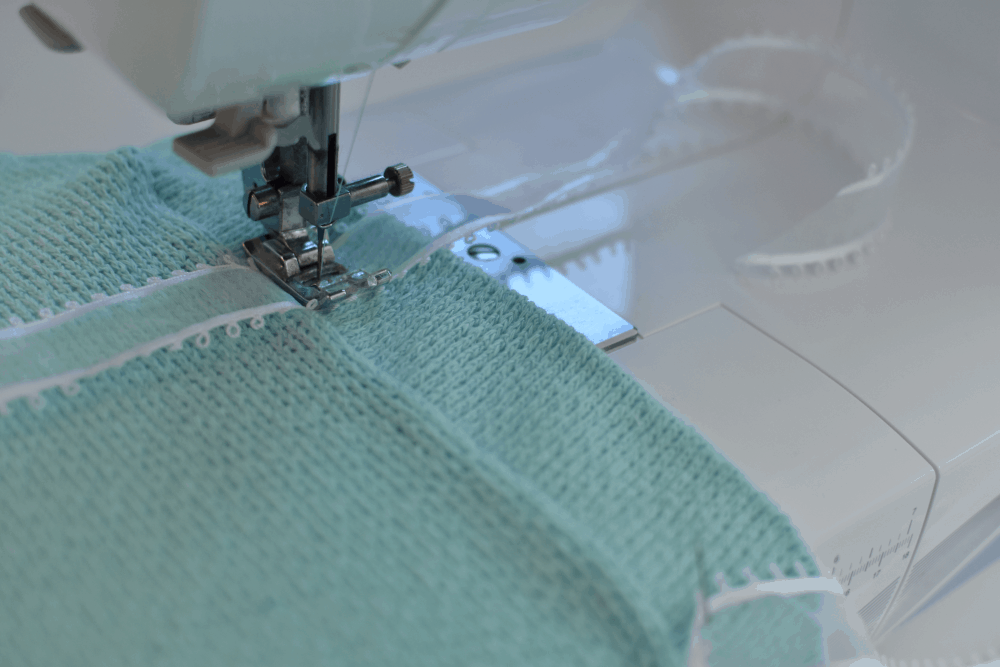
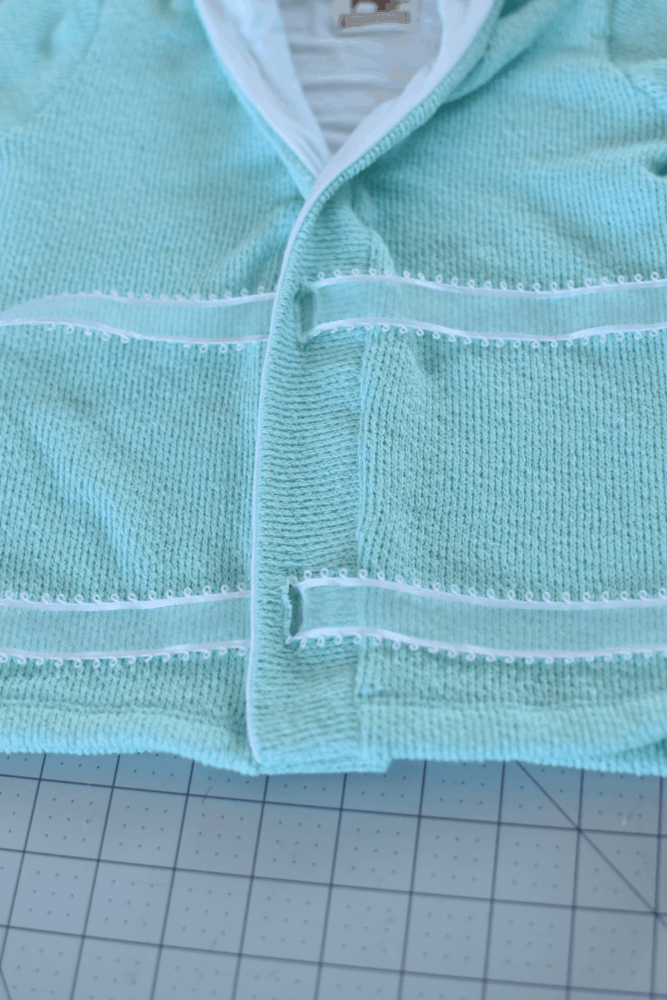
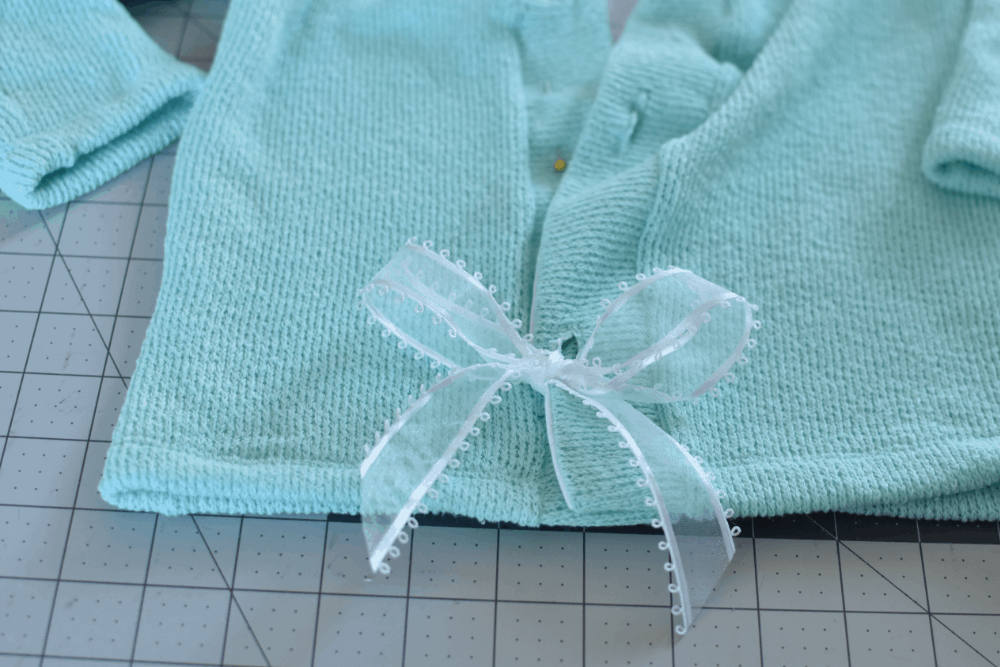
Step 7: Find the center of each piece of ribbon and secure it to the under lapping band at the pin locations. Sew a straight stitch vertically down the centerline of the ribbon to attach it to the cardigan. I stitched mine on along the left side of the band. This allows the overlapping band to fully cross over once tied.

IMAGE 8

IMAGE 8B

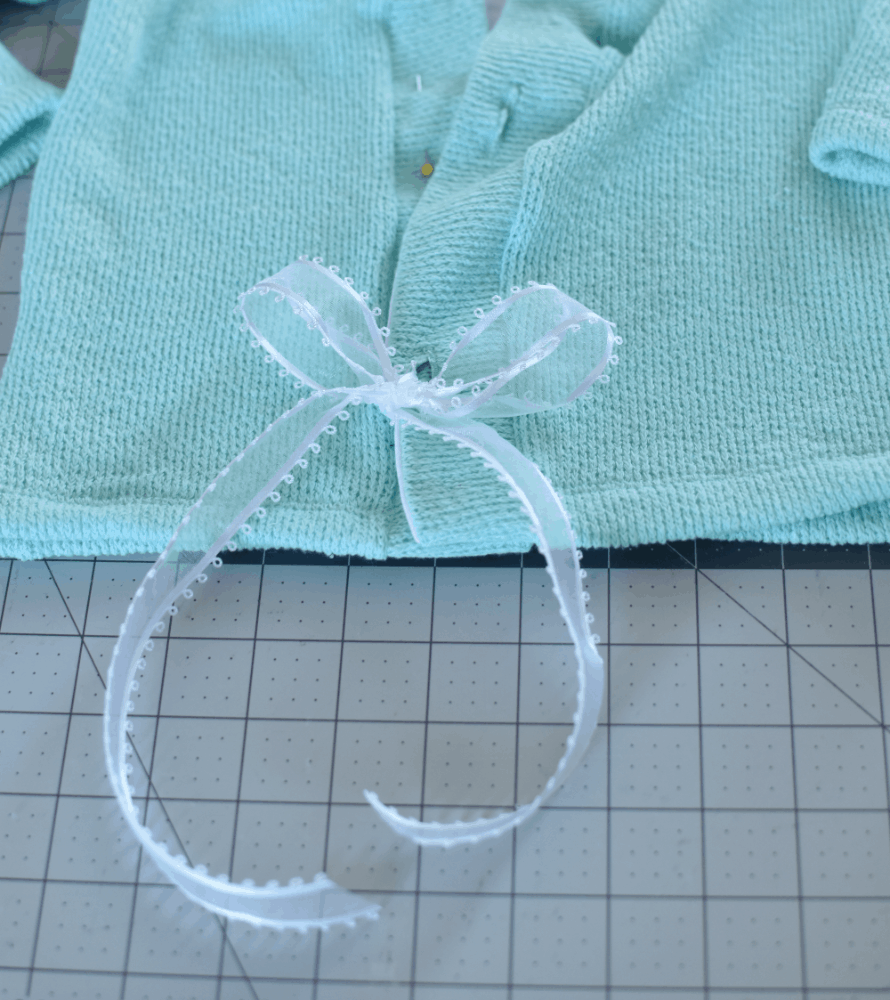
Step 8: Pull one end of each ribbon through its corresponding buttonhole and tie into bows once again, closing the cardigan front. Once all of your bows are tied you can trim the tails to the desired lengths. If you prefer these to be permanent bows you can certainly hand stitch them so that they may not come untied.

IMAGE 9

IMAGE 10

Step 9: If you have used a ribbon that frays easily, use a lighter to gently melt each ribbon end or some Fray Check to seal the weave. Be careful to use the heat from the flame and not the flame itself. If you mess up, no worries! Simply trim off the tip of the ribbon tail and try again.

There you have it. All done!

IMAGE 11B

Keep your eyes peeled for some other fun tutorials the ladies at Patterns for Pirates have prepared for you this week! Be sure to read all the way to the end of this post to find out how to participate in this week’s sewing contest!

-Kelly Bailey

P4P Blog Contributor


Take a look at our jam-packed schedule of cardigan love!

Saturday, January 21: #P4PCardiWeek Announcement

Sunday, January 22: Cocoon Lace Hems and Butterfly Ruffle

Monday, January 23: Ribbon Tie Closure Hack
Tuesday, January 24: Carefree Cardigan Fringe Hack
Wednesday, January 25: Duster-Length Adjustment

Thursday, January 26: Kimono Ruffle Sleeves + Hem

Friday, January 27: Varsity Sweater Style Hack
Saturday, January 28: Carefree Cardigan Flannel + Vest Hack
Monday, January 30: #P4PCardiWeek Winner Announcement
You can follow along on the blog here, or in our Facebook group.  Search #P4PCardiWeek to be able to find our posts all over social media.  And please feel free to sew-along with us on one or all of the days.  The more the merrier!

But wait, there’s more!  We wanted to create a friendly pirate-y competition with our P4P Cardi Week!

Between tomorrow and Saturday, January 28, sew up a Patterns for Pirates cardigan using one of our hacks, or by keeping the pattern as-is.  Share your photo with us on Instagram or in our Facebook group and use the tag #P4PCardiWeek. We will pick our favorite and the winner will win a free P4P pattern of choice AND be featured on this blog.  Fun right?

To make it even better we have put all the cardigan patterns in the shop on sale all week (no code needed)!

Now get out there and sew some cardigans, matey!

Filed Under: Contest/Giveaway, Pattern Hacks, Uncategorized 2 Comments

Blanket Scarf

December 16, 2016

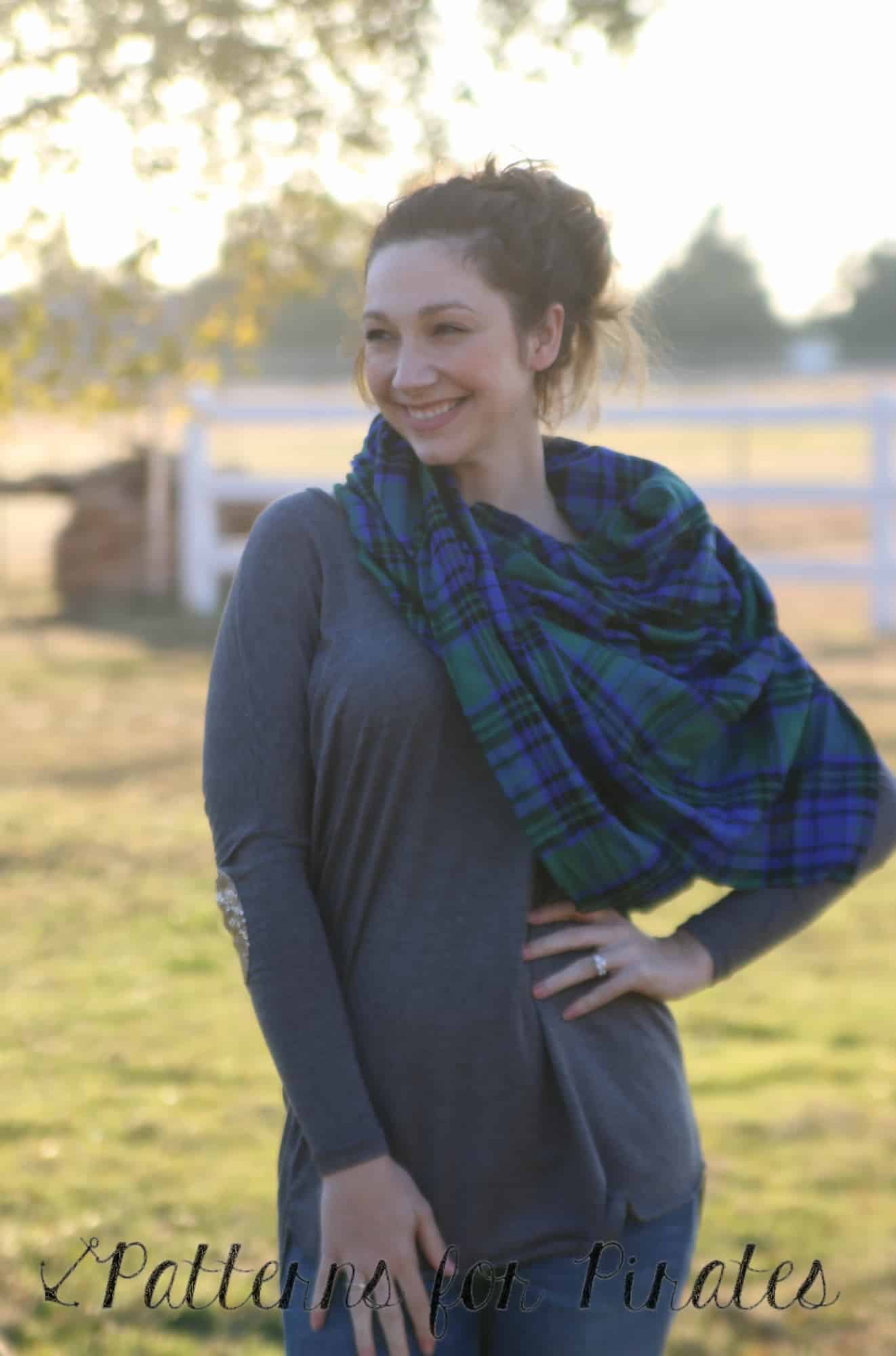
Have you been following our 2016 Holiday Freebies? You can see our Free Adult Mittens HERE and our Free Adult Slouchie Beanie HERE! Today I’m here to show you how to make a Blanket Scarf!

p4p-blanket-scarf

Blanket scarfs are a great, easy item you can whip up for yourself or others during those colder months!

img_8641 img_8721

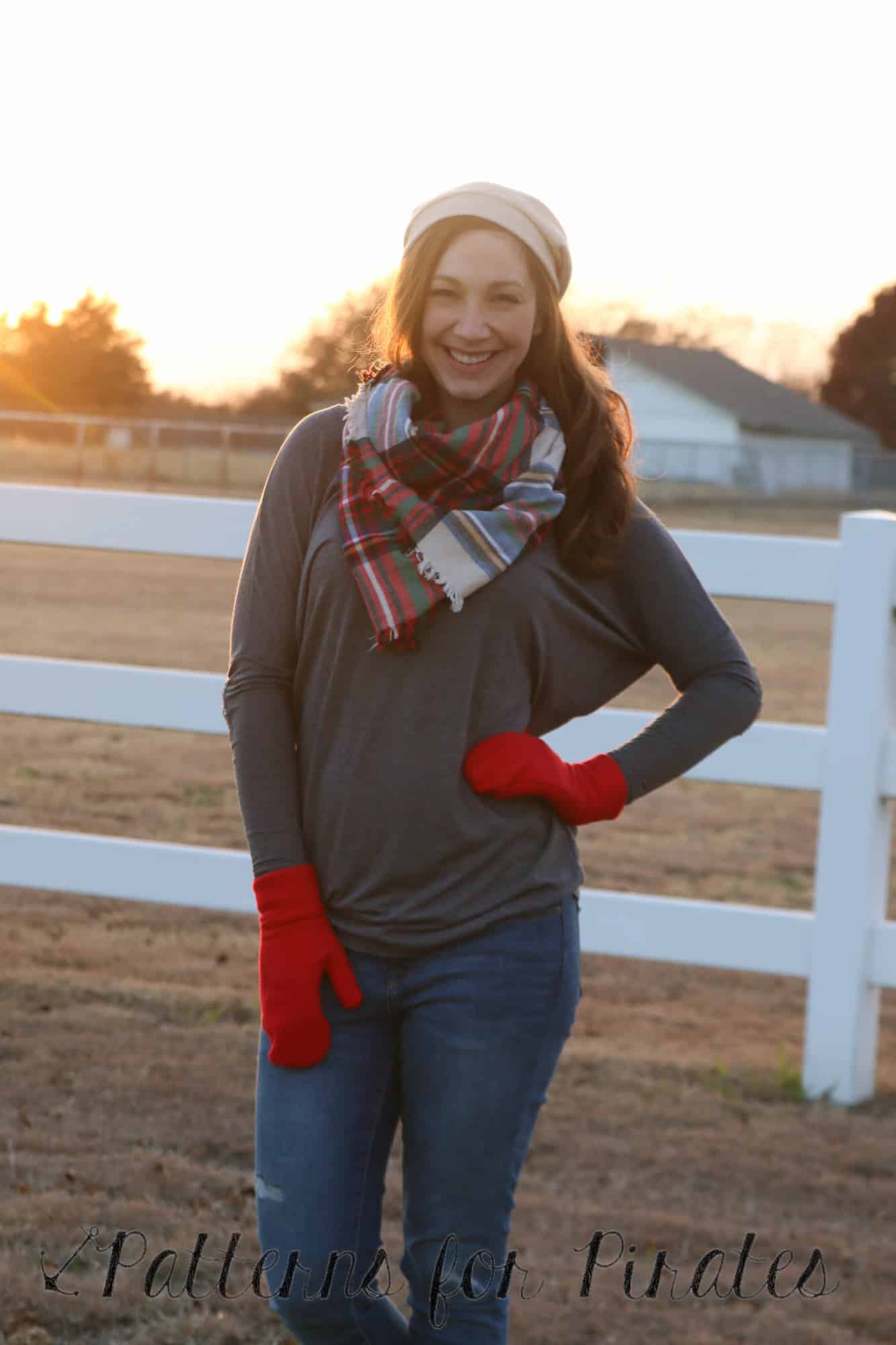
You can pair them with a top or dress for a touch of color and finish off your outfit with the perfect trendy touch.

You’ll need:

Flannel- 1.5-2 yards

Scissors

Optional: Sewing Machine and matching thread


You’ll want your scarf anywhere from 1.5-2 yards long.  A few factors that you can consider when deciding on the length are how tall are you? The more petite you are the less you’ll need.  How thick is your flannel? The thicker the fabric the less you’ll need.

I cut mine into a square. Since my flannel was about 56″ wide.  I squared it up at 55″ x 55″.  You don’t have to have a perfect square either, if your fabric is thinner or you’re taller you might want to keep the width and make your length a bit longer (up to about 2 yards).

You can finish the edges anyway you’d like.  You can leave them raw (they will fray with wear and washing).

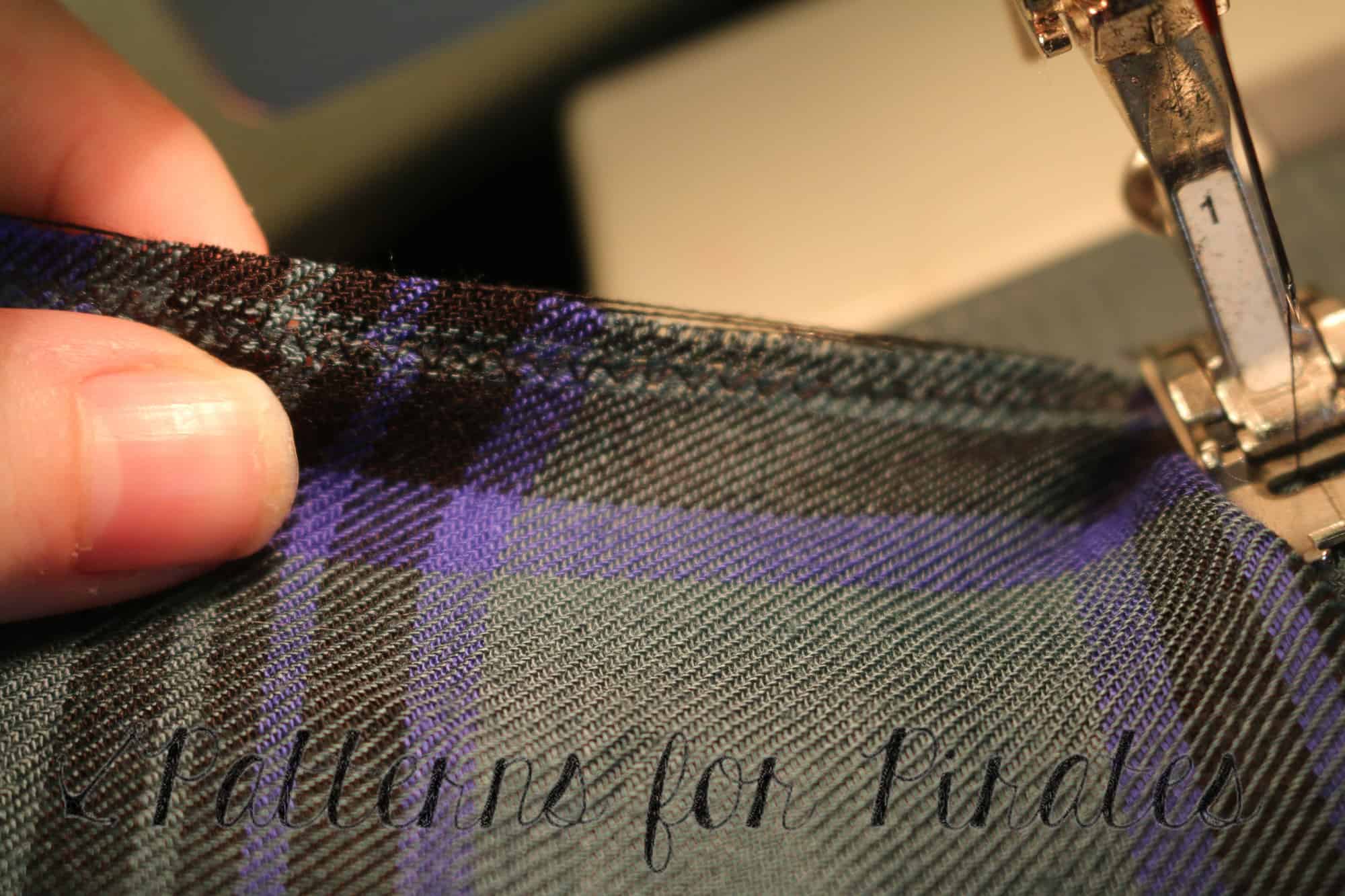
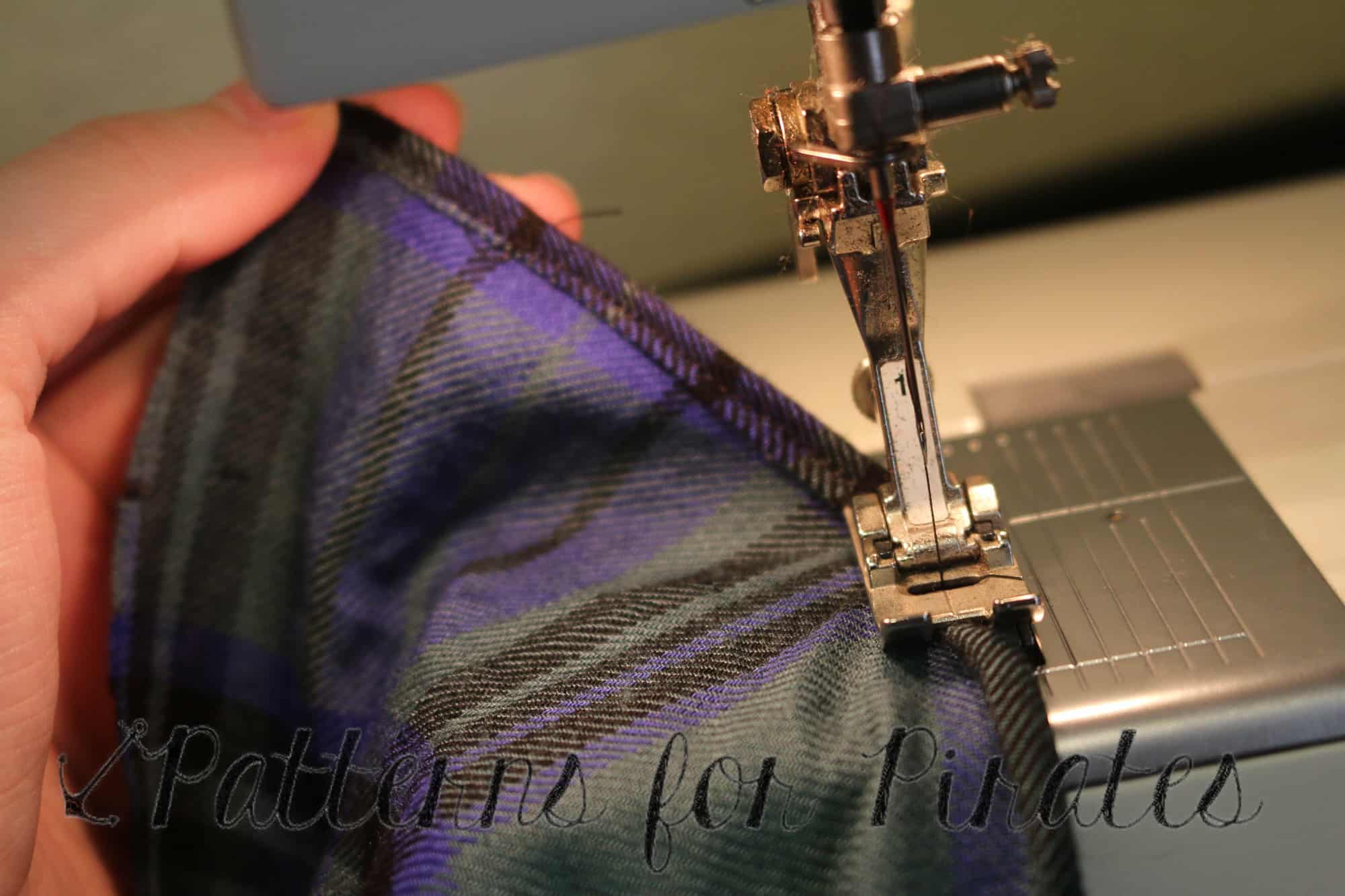
You can stitch around the edge with a finishing stitch of your choice. (zigzag, overlock, ect.) Pictured here with a zigzag, which will still fray up to the stitch if you’re not right on the edge.

img_0838

You can do a narrow hem, folding 1/4″ and another 1/4″ enclosing the raw edge for a cleaner finish.

img_0839

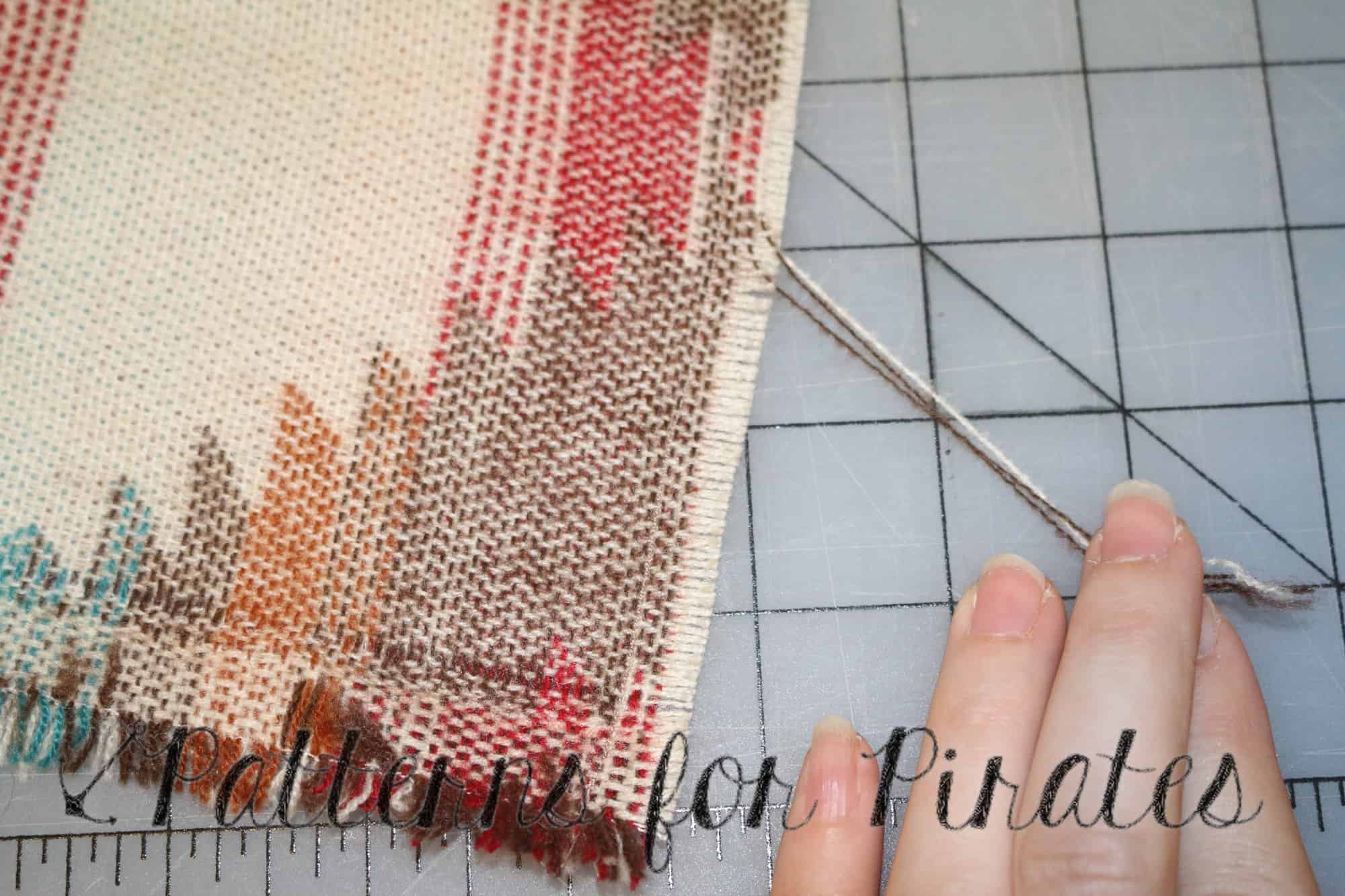
You can also stitch around the inside where you’d like the fray to stop.  You can fray the edges up to the stitch line by pulling the cross grain threads up to the stitch line.

img_0835

img_0836

Now you’re ready to style it!

***I’m sorry, but my camera man (aka my husband) wasn’t very interested in all the different ways you could style a blanket scarf, and he often cuts my head off! You will also hear my kiddos (you can even catch Little Guy being super naughty…) in the background.  But, hopefully they are helpful still 🙂

You can wear it bandera style by folding it in half at a 45 degree angle creating a large triangle, then wrapping it around the back of your neck and tucking tails under.

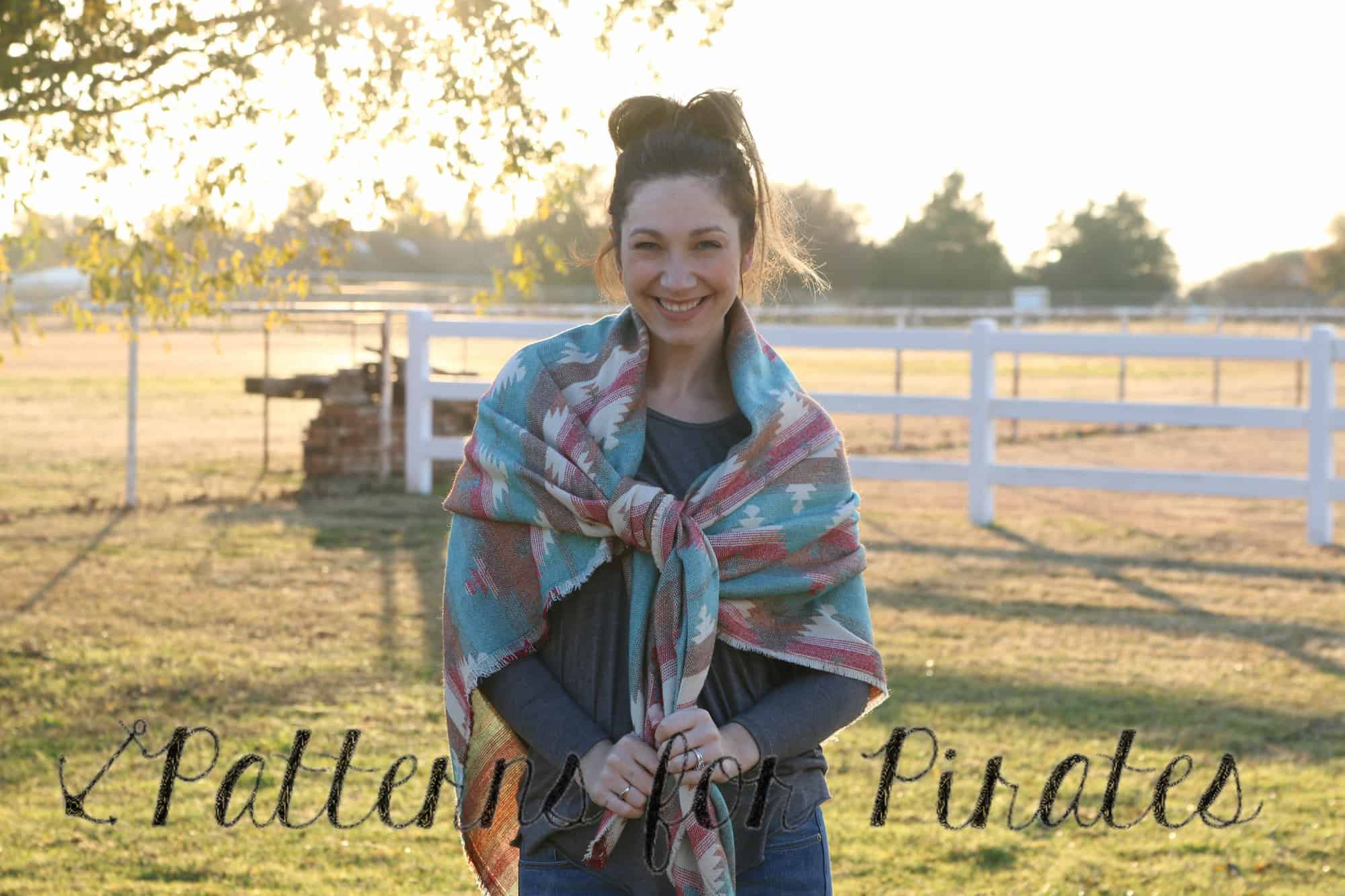
You can wear it shawl style.

You can wear it like a traditional scarf wrapped about your neck.

You can to the tie front, wrapping it back around your neck and tying in the front.

You can wear it like an infinity scarf.

Drape it over your shoulders. You can wear a belt over to hold it in place as well.


You can fold in half lengthwise wrap around back of neck and pull ends through the fold.

You can wear it over your head and wrap one end around to the back.

You can wrap around the back and criss cross through the front.


Still with me? 😉 Don’t miss our other 2016 Holiday Freebies here:

Free Fleece Mittens 

and

Free Slouchy Beanie

They all pair perfectly together for some great cozy finishing touches!

img_9040 img_9063

Filed Under: Free Pattern 3 Comments

Easy Bear Jogger Hacks

November 11, 2016

img_3221

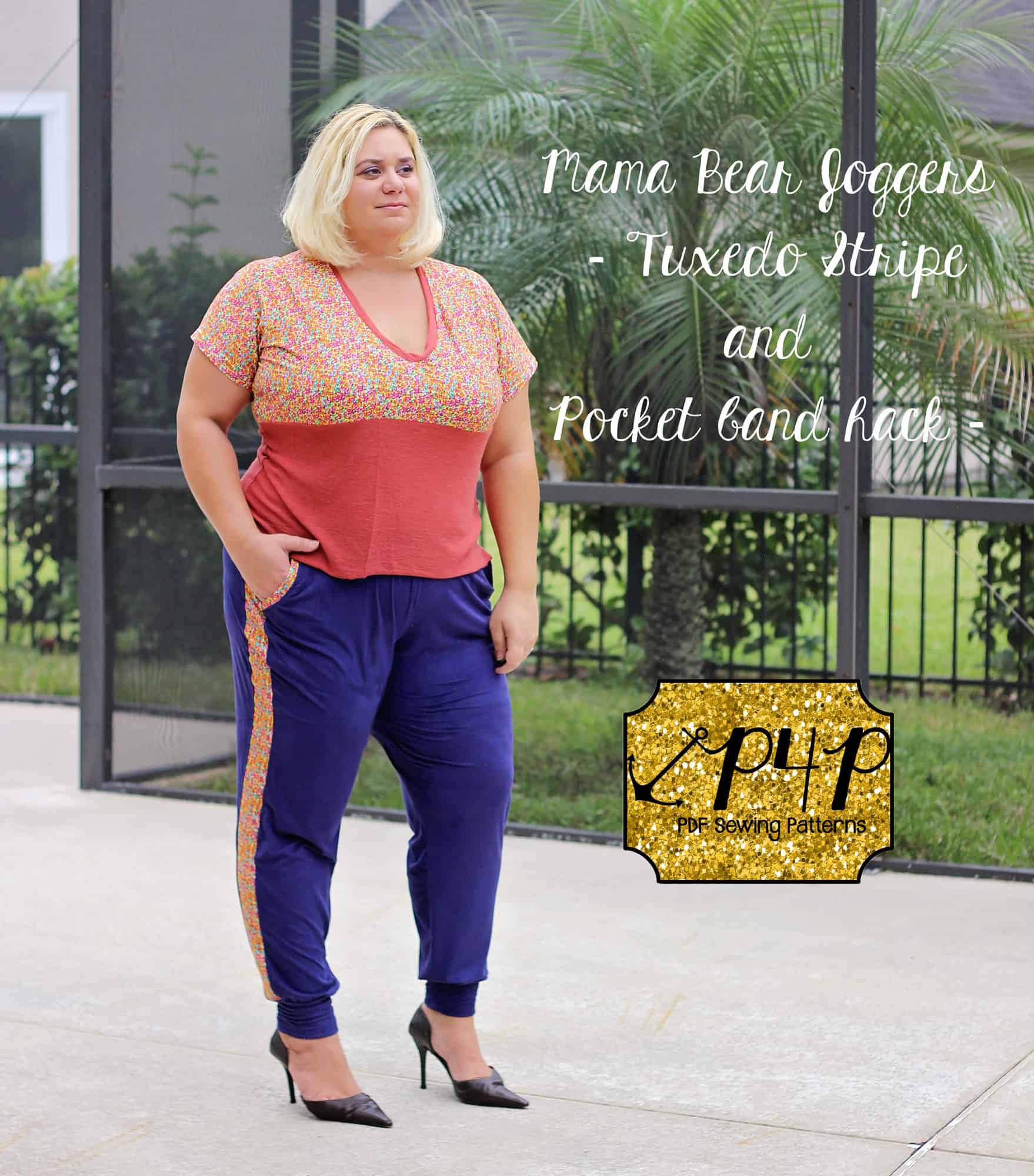
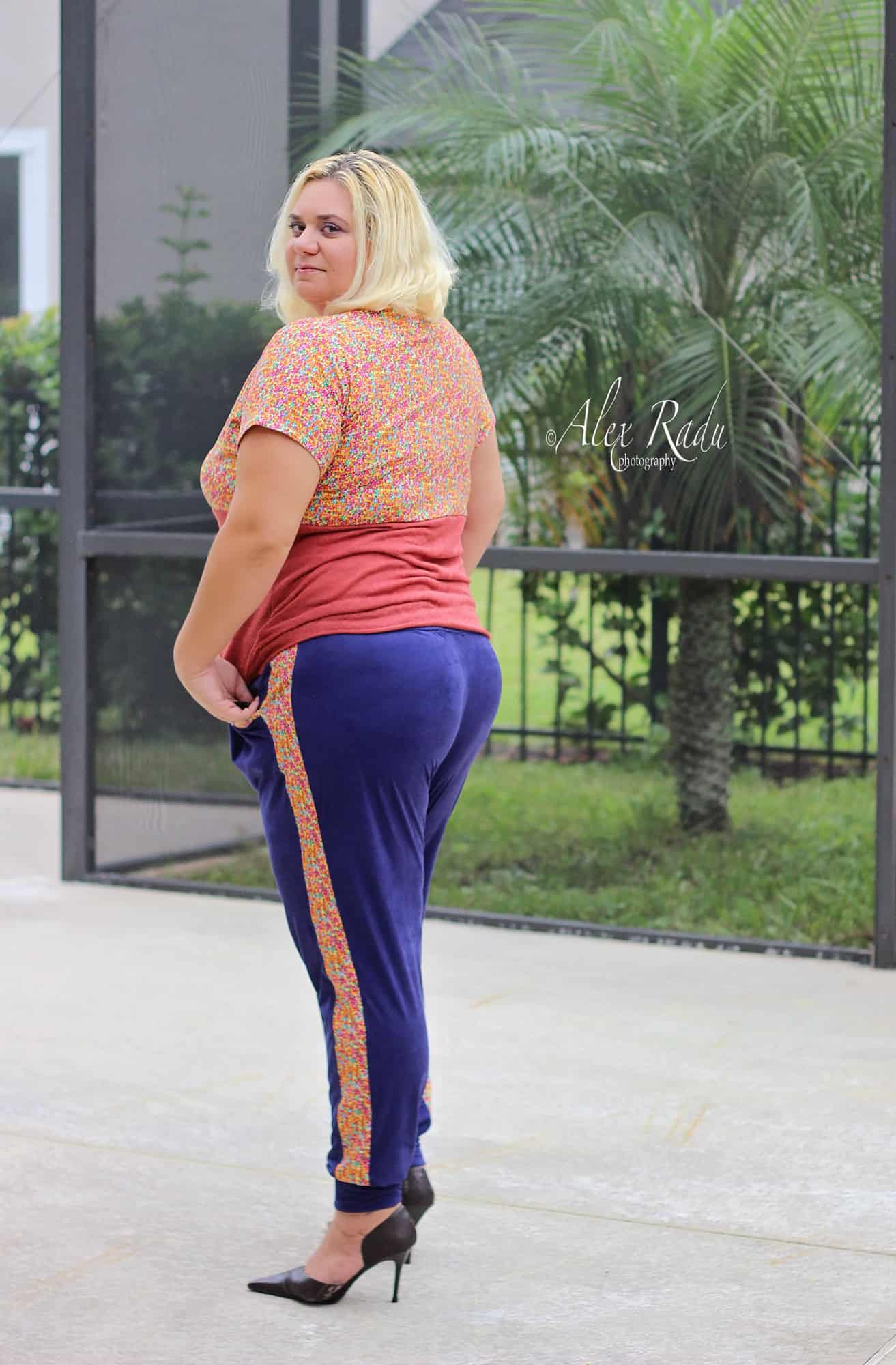
The Mama Bear Joggers were just released and are packed with options. I have already made myself a few pairs so I was browsing Pinterest for styling ideas (don’t we all?). I came across a cute pair of joggers that had a tuxedo stripe on the side so I just had to make myself a pair like that. In today’s blog I’ll show you how I did the tuxedo stripe and an accent slat pocket band.

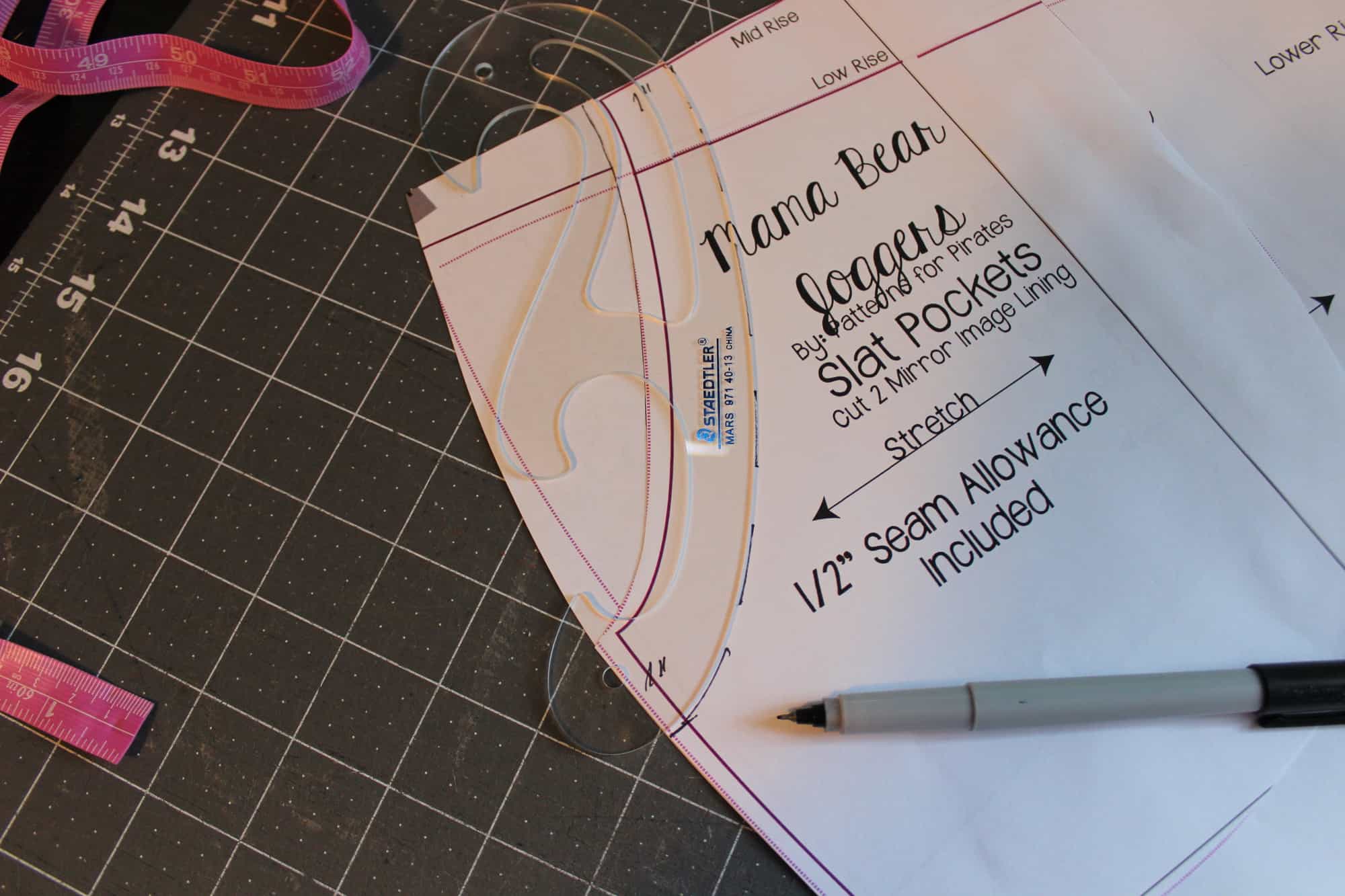
Start by printing and cutting the pattern in your size. (I grade mine in for the waist that’s why you’ll see two lines instead of one). Don’t cut the fabric just yet. If you’d like to do just the accent pocket band you’ll nee to place the pocket lining over your front piece and remove 1 inch from the curve. That can be done easily if using a French Curve.

img_3040

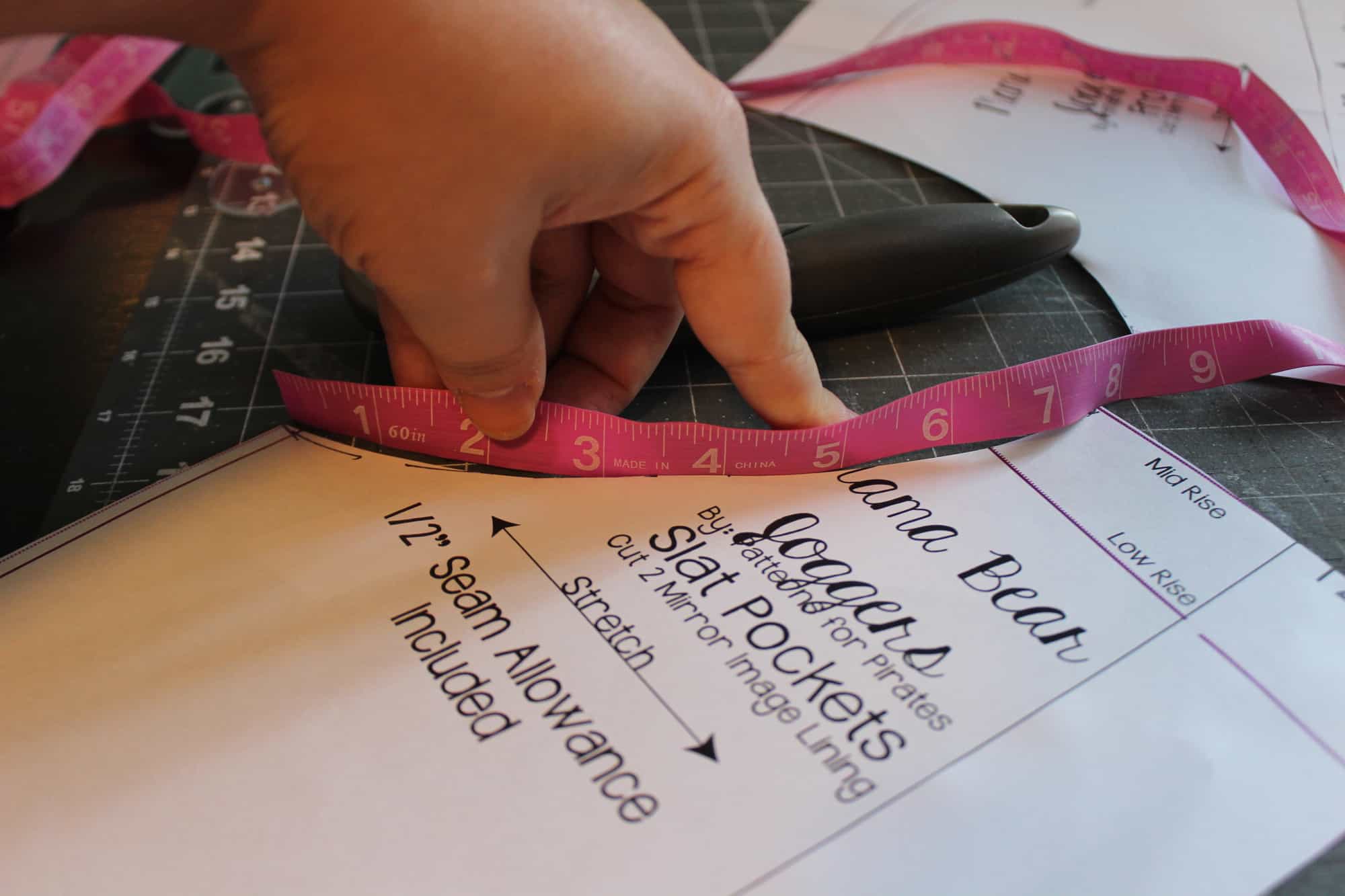
Now take your measuring tape and measure the new pocket opening. You will be cutting your accent band to be 2″ by 95% of the opening.

img_3043

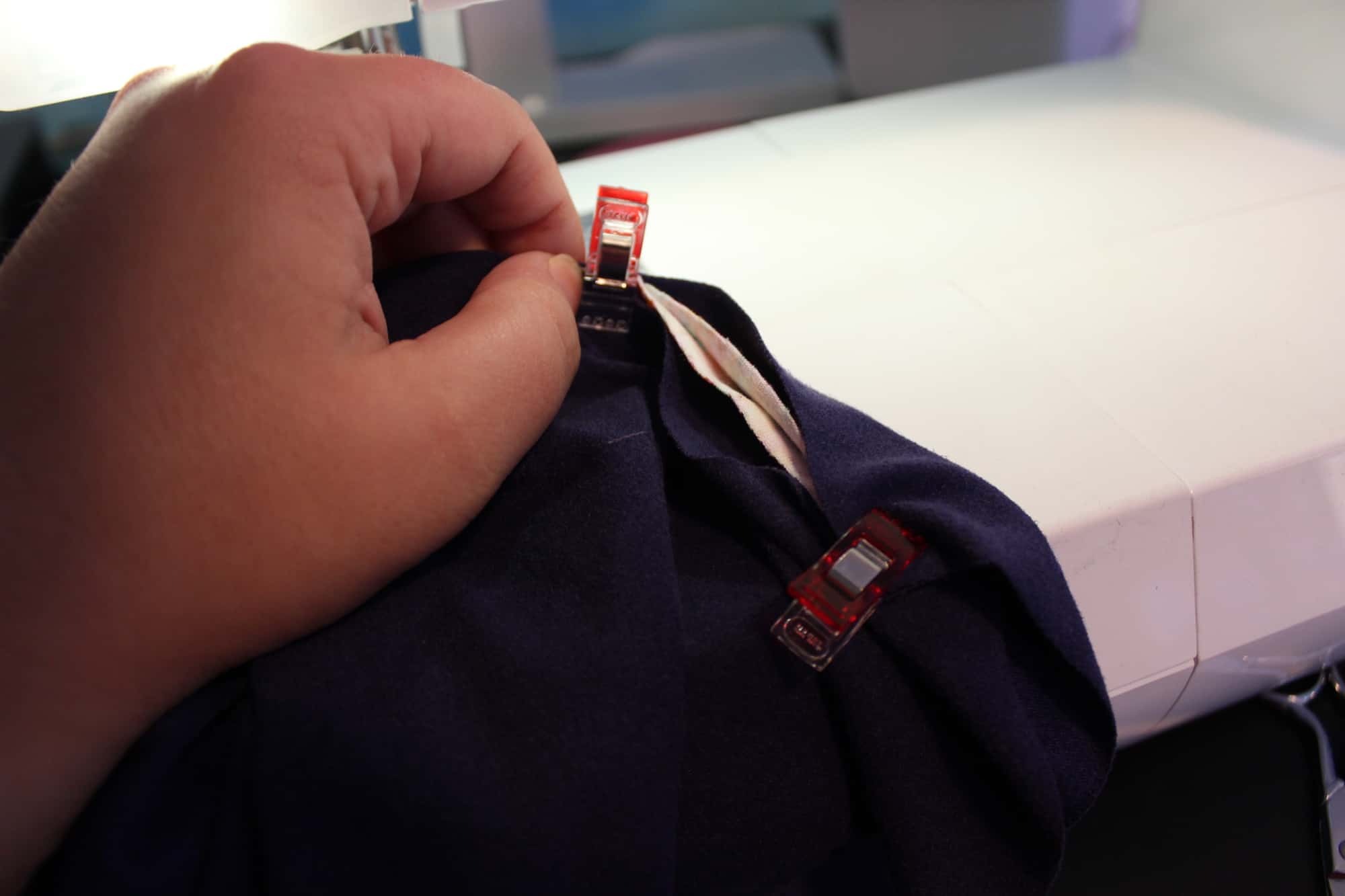
Fold the band wrong sides together and give it a good press. Sandwich the  folded band between the right side of the front of the pants and the right side of the pocket lining. You will be stretching JUST the band slightly. Sew the 4 layers together.

img_3050

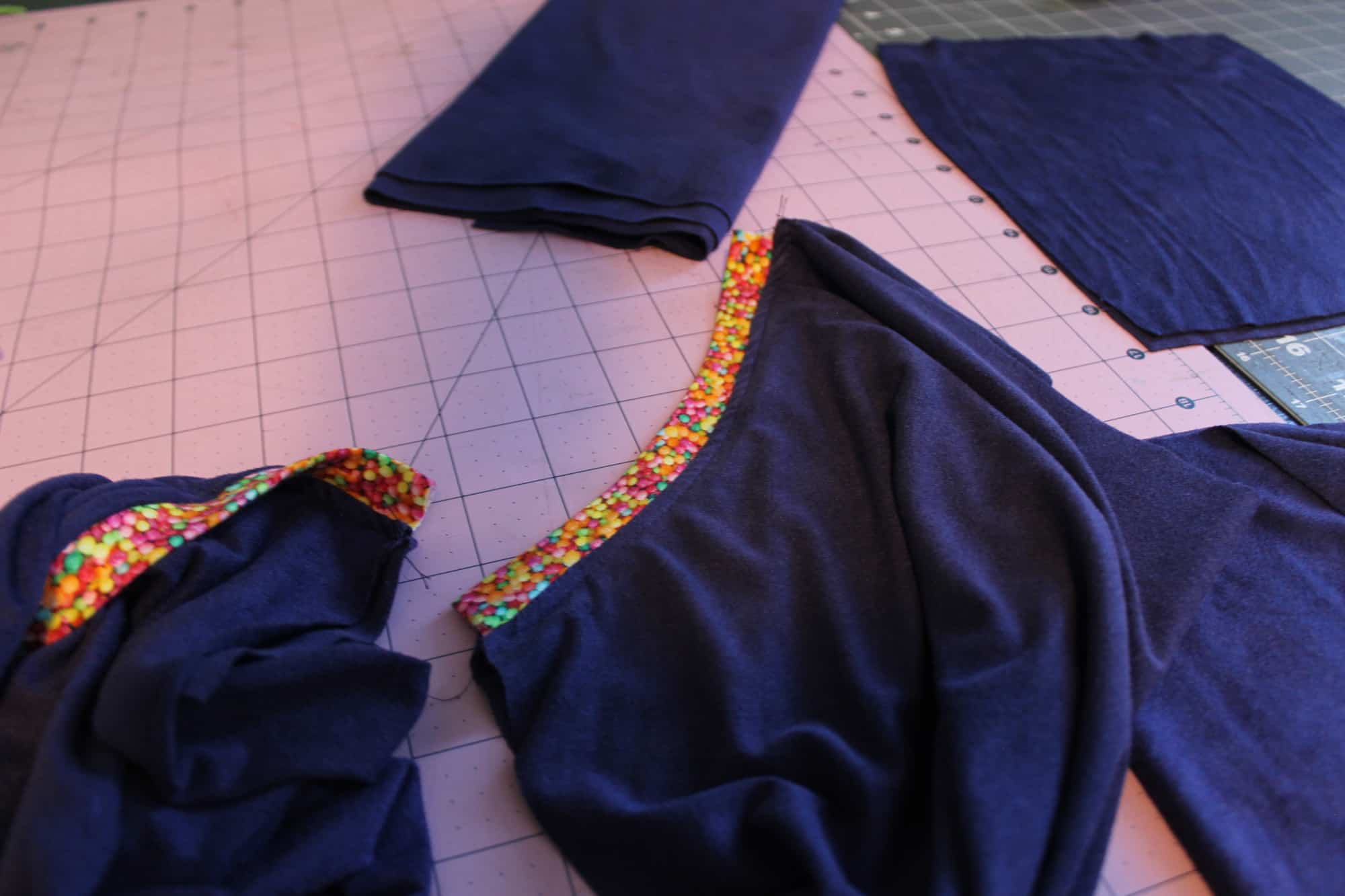
Turn the pocket over so its wrong side is on the wrong side of the front leg. You can now top stitch along the curve. Tadah! You’ve added a decorative band to the slat pocket. If you do not add the side strip proceed with sewing the joggers according to the pattern tutorial.

img_3052

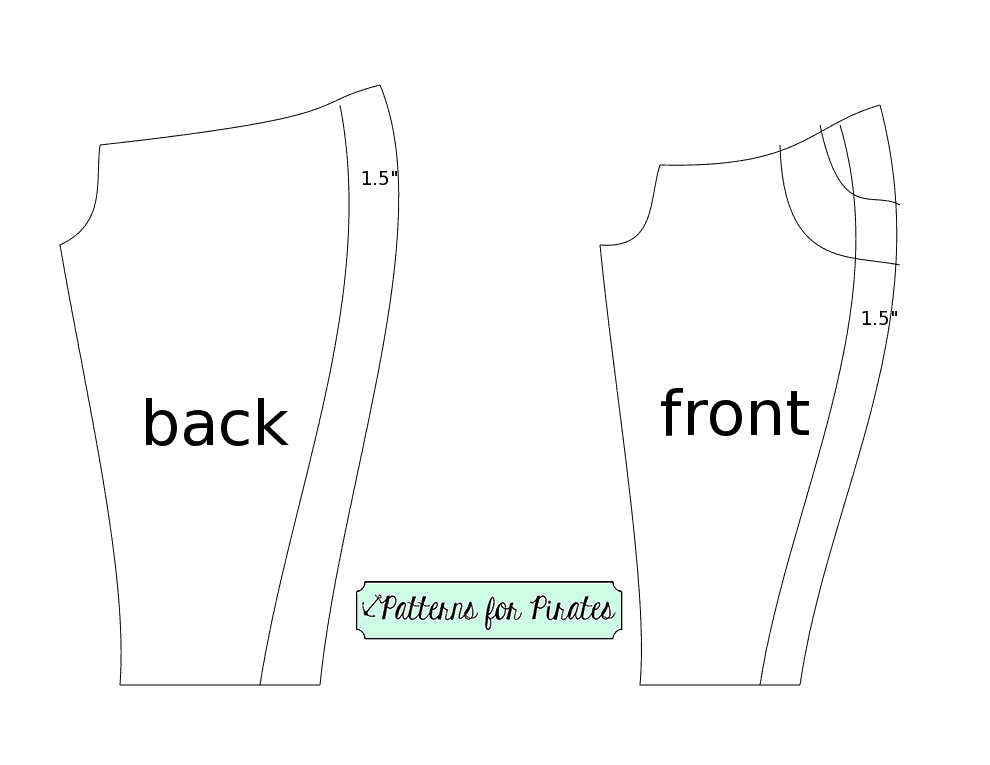
If you add the stripe, we will be making some pattern alteration prior to cutting the fabric. Place your pocket lining and back on top of the front of the pants matching the top and  side lines. We will be removing 1.5 inches from the side of the front of the pants. Following the side curve draw a line parallel to the side, 1.5″ away.joggersstripe

Cut along the new line. Now grab the back of your pants and repeat the process on the side. You now have 4 new pattern pieces, front and back, pocket and pocket lining. We will measure the new side length with a measuring tape because it’s flexible. The tuxedo stripe will be 3″ by the new measured side. See? That wasn’t so bad.

img_3038

Add the pocket according to the tutorial. We will now sew RST the front piece with one side of the strip. Then attach the other side of the strip to the back of the leg, right sides together. Repeat with the the other leg.

img_3055

img_3056

That’s it! Those are the only changes we made to the pattern. You can now finish your joggers according to the tutorial. You can add the strip to either one of the leg options, cuffs, elastic or rolled.

img_3200img_3223

Get creative with all these joggers hacks and as always post your pretties in the group.

Alex

img_3225


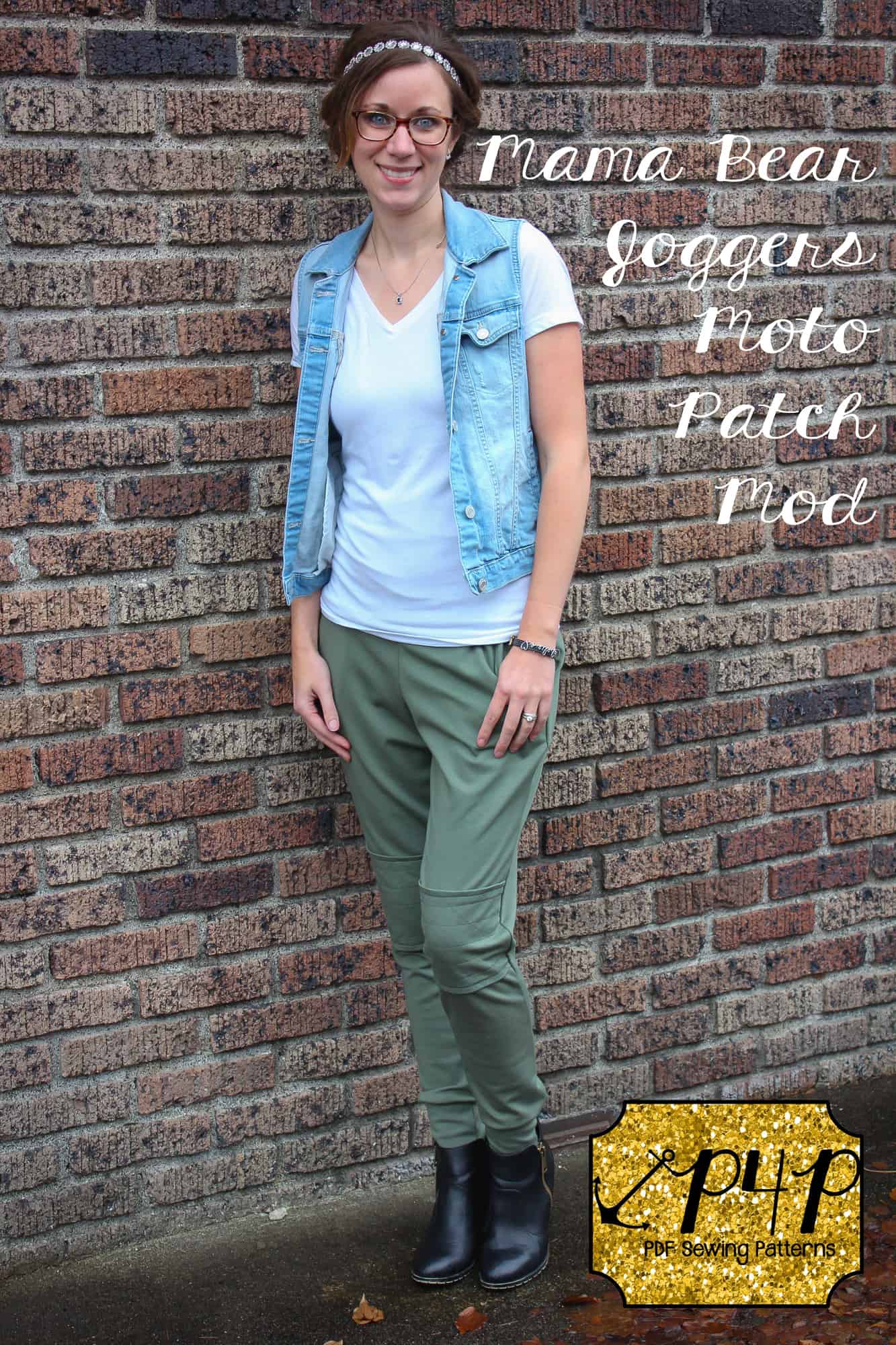
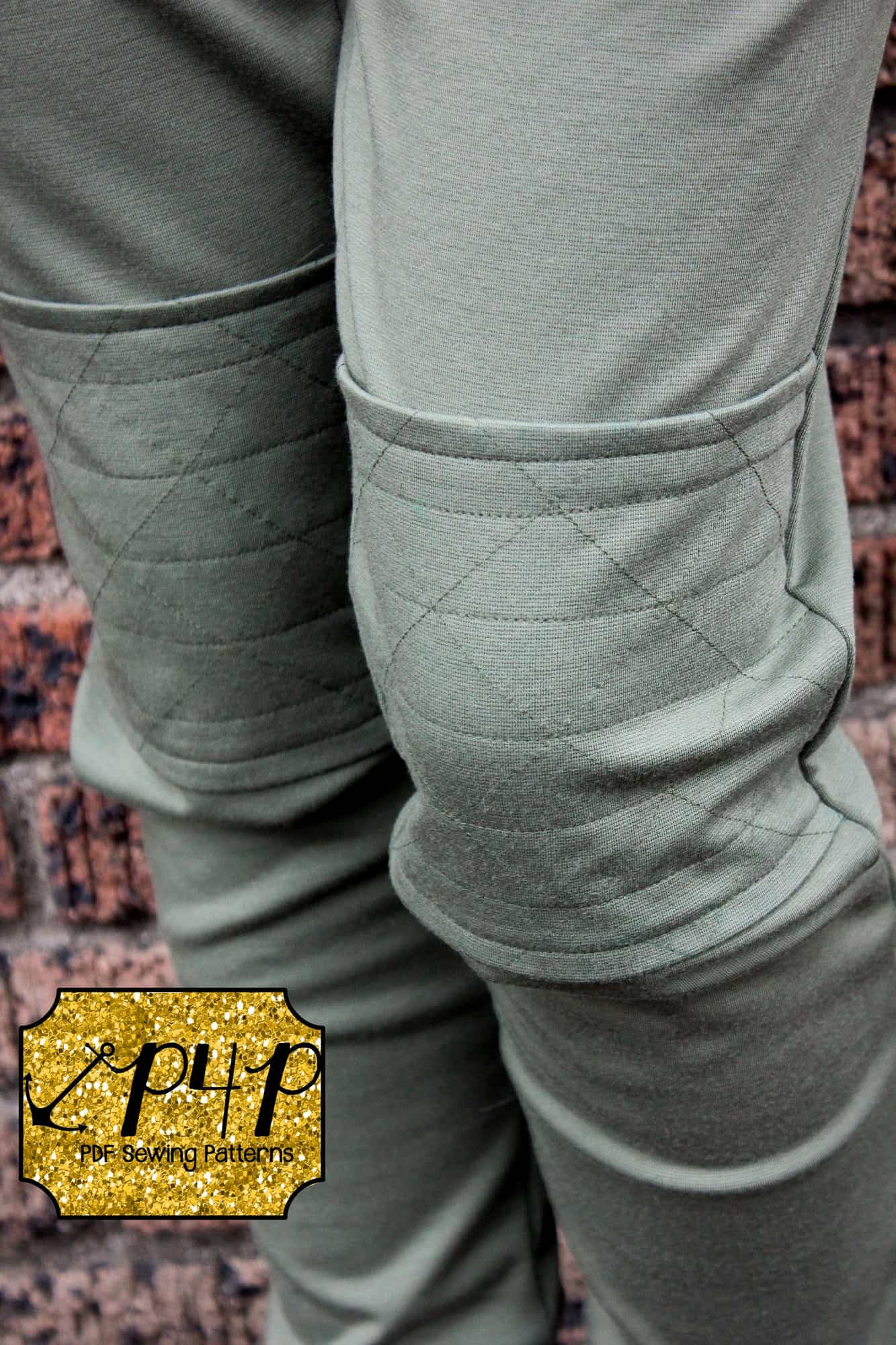
Let’s face it- everyone loves a jogger and the Patterns for Pirates Joggers are perfect! One of the things that I love about joggers is that there are so many different ways to style them. One of my favorite looks is the addition of a moto patch. This simple detail can add an extra bit of edge and flair to your joggers and help take an already awesome look to the next level! So let’s get started…

img_52302

Creating Patch Piece

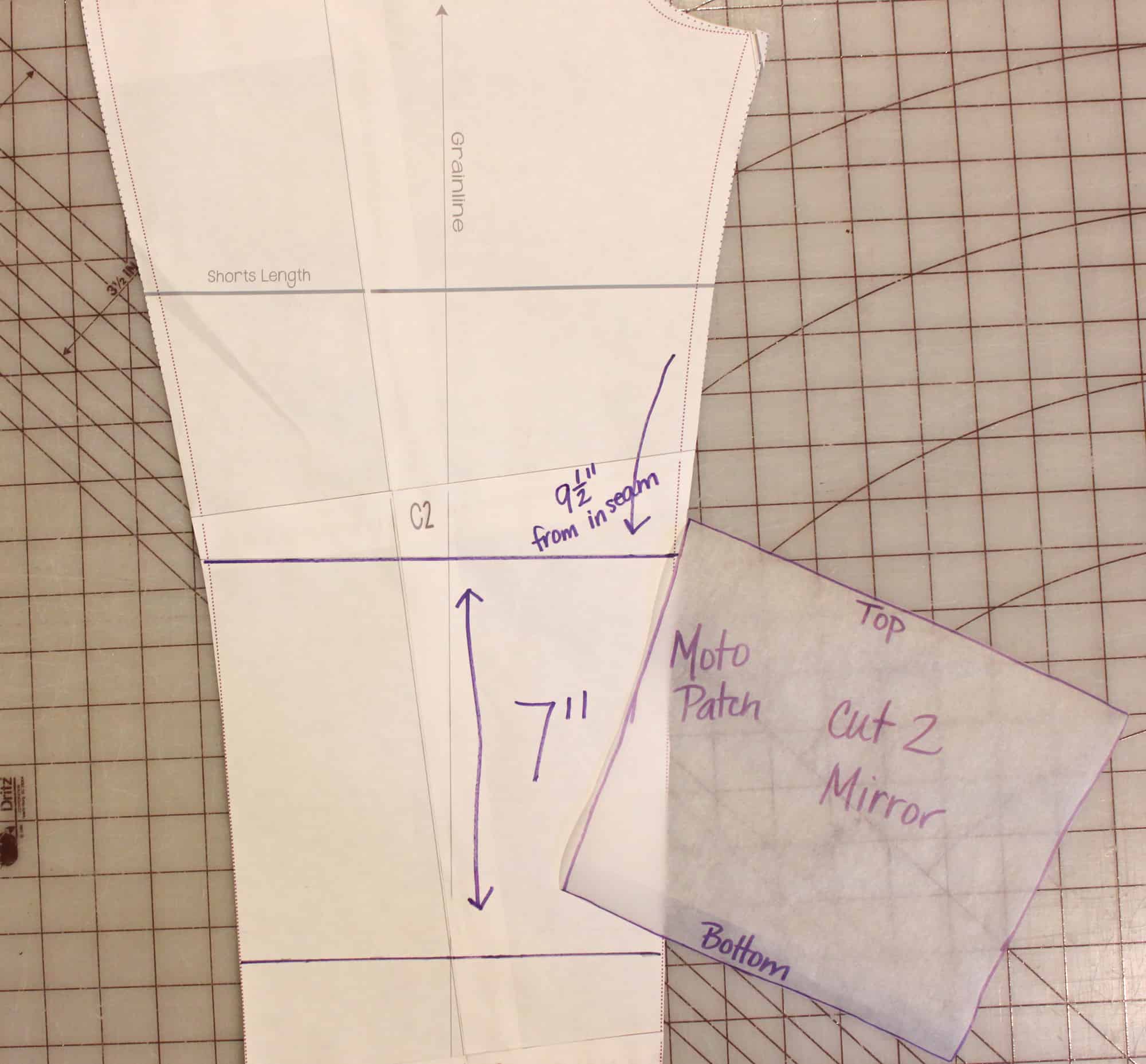
To start with, you will need to determine how far down to attach the patch. You will want to measure from your inseam to the top of where you want to attach the patch. As you can see in the picture below, mine measured 9.5″. Draw a line across your pattern piece at this measurement. Next, you will draw the bottom line for your patch- your next line should be 7″ down from this line (your finished patch will be at total of 6″). Using tracing paper, copy this section of your pattern to create your moto-patch.

img_5240

Quilting the Patch
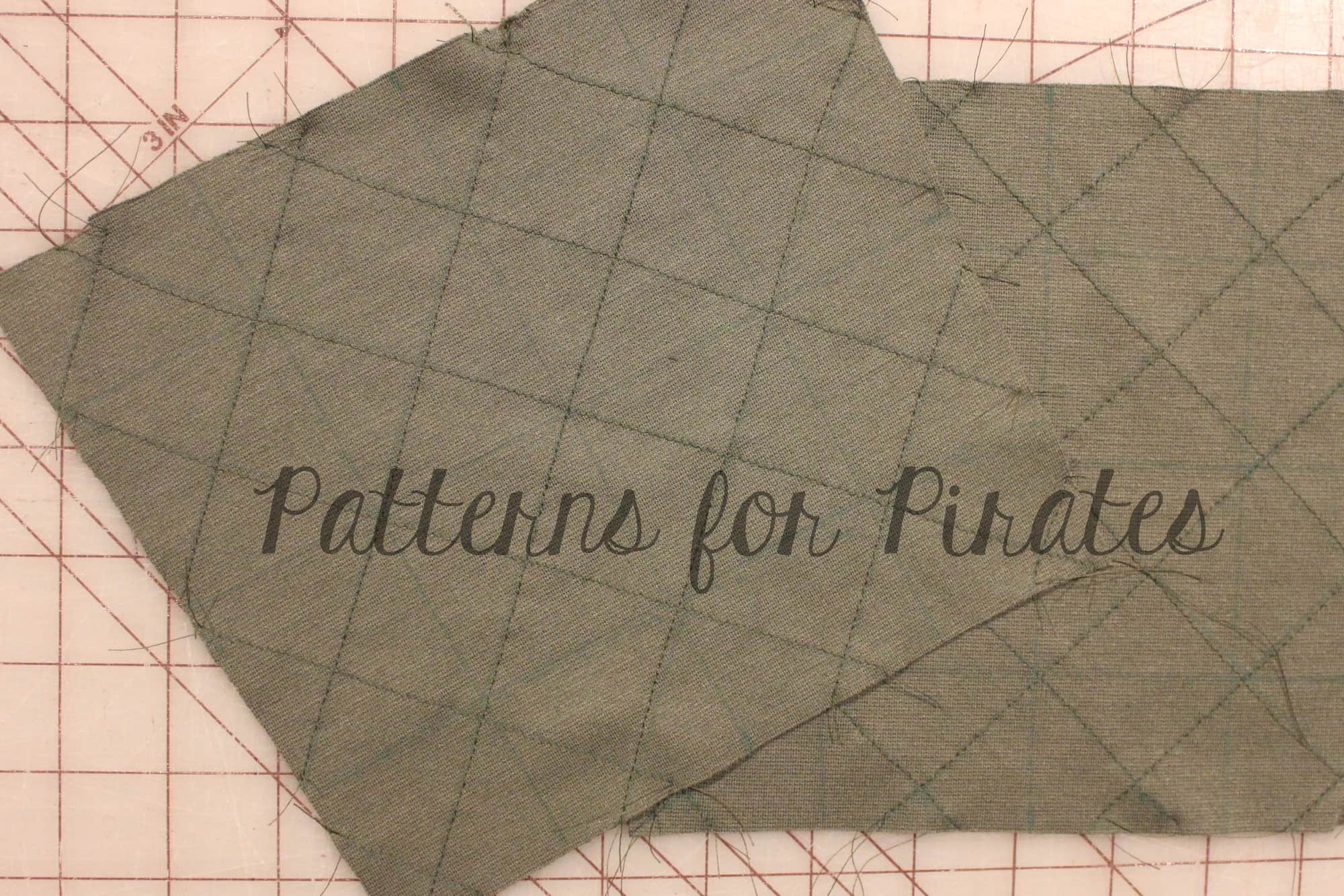
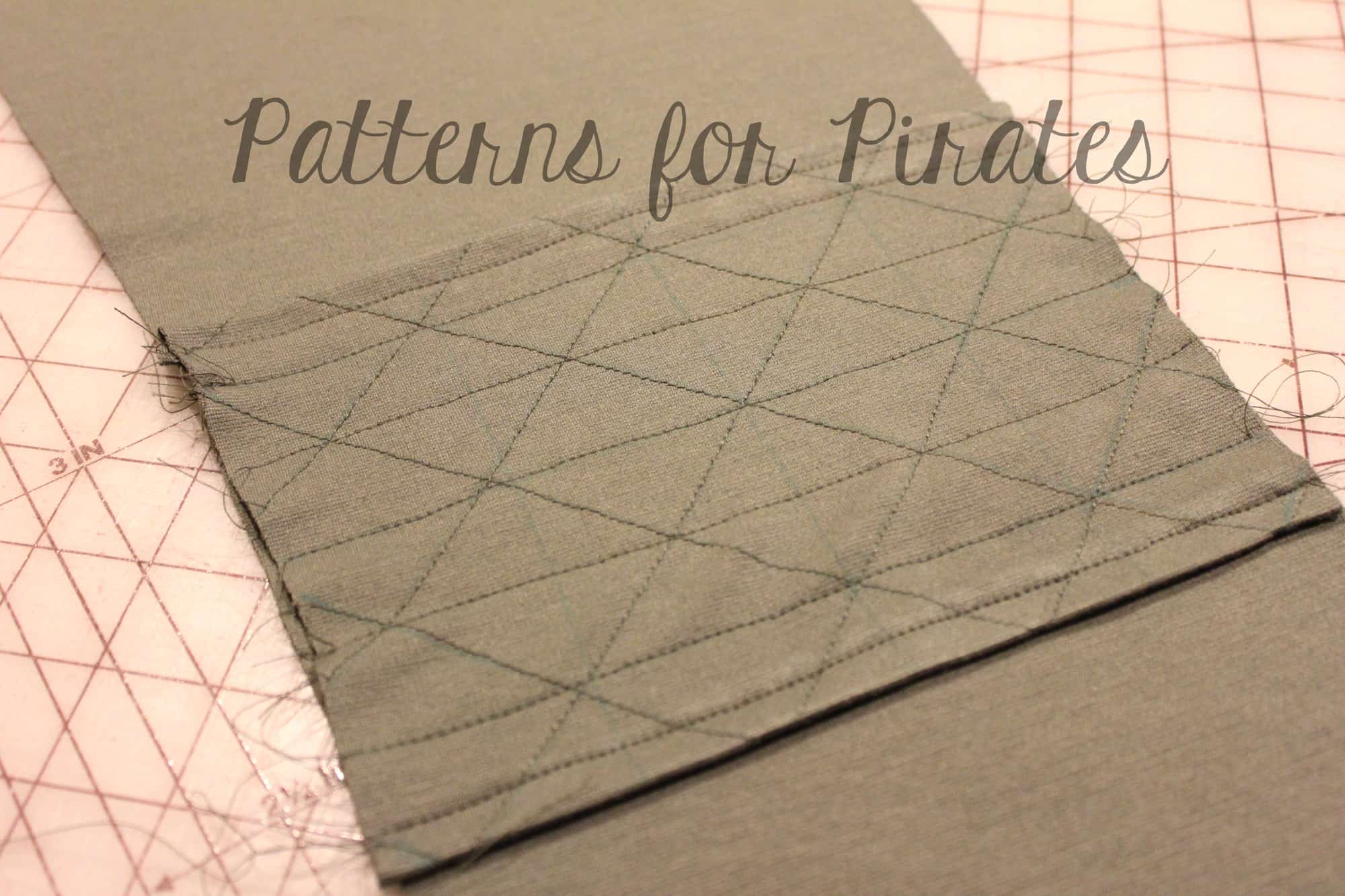
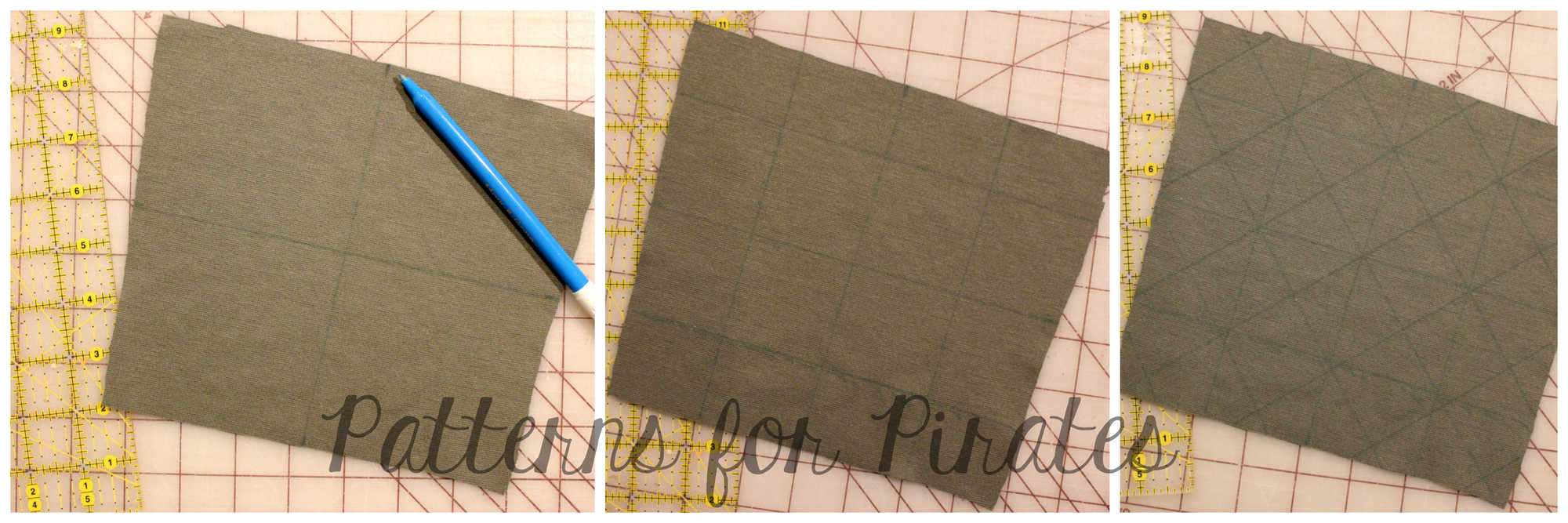
You will need to cut out two mirror image pieces. Next, you will trace your quilting lines on each piece (make sure to do mirror images!). Begin by marking both the horizontal and vertical centers of your piece (if you don’t have a quilters ruler- this mod is a GREAT excuse to go purchase one!!). After marking centers, draw lines every 2 inches in both directions. The final markings will be on the diagonals- connecting your squares. Repeat on the other patch.

picmonkey-collage

After completing your markings, stitch across all of the diagonal marks only. Then, take a few minutes and admire all of the hard work you just did— Ok! Moment over, because now you get to repeat all of that beautiful stitching on the other patch! img_5214

Finishing and Attaching Patch
Press both the top and bottom of your patch, using a 0.5″ allowance to create a finished edge. Taking your front leg piece, place patch piece 0.5″ lower than original line (to account for your pressed seam… ex. Mine was at 9.5″ and I placed the patch at 10″ down) and pin in place.  img_5219
Using a 0.25″ seam allowance, stitch the top and bottom into place. Then stitch over the horizontal lines only to finish creating your quilted look. img_5222You can now complete your Joggers by following the pattern directions.

And if you needed a few other ideas for you patches, you could also…

  • Cut your patches at angles
  • Place patches on thighs
  • Mix and match fabric patterns
  • Use fabrics that are already quilted (Yes- They exist and would be a huge time saver for this!)

img_52363

I can’t wait to see how your patches (and joggers!) turn out. Make sure to share all of your creations on the P4P Facebook page!

~Erinn


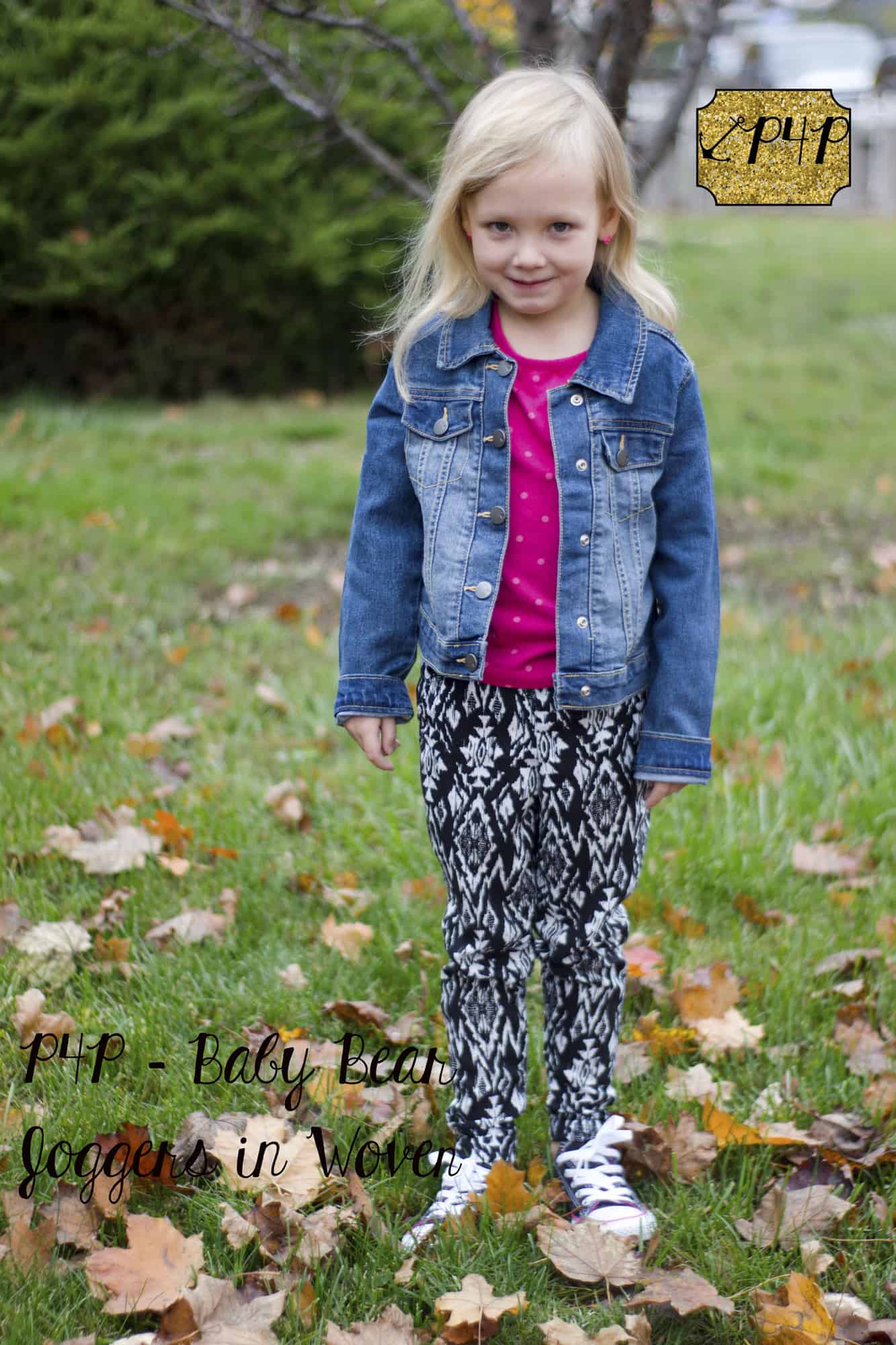
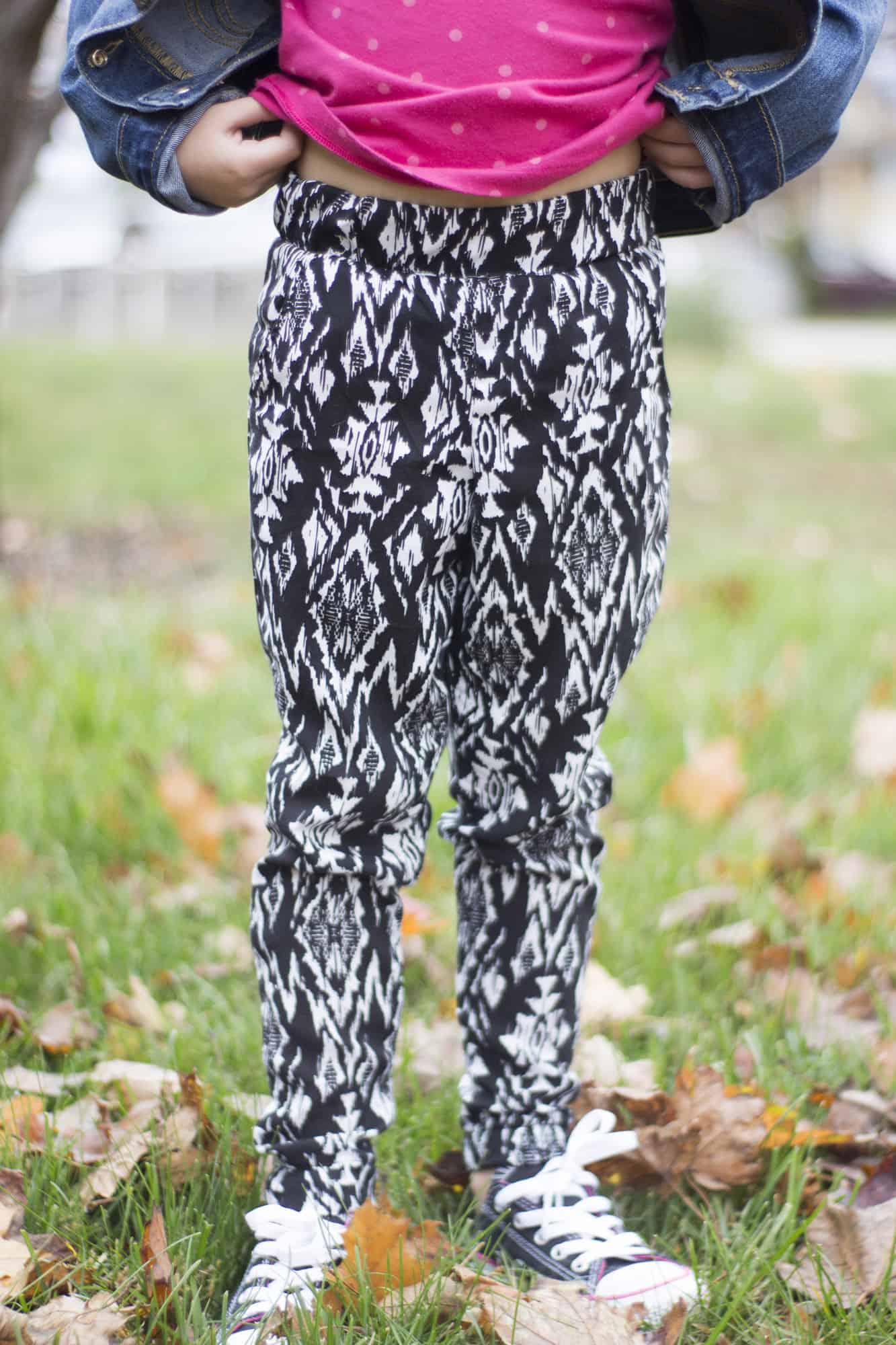
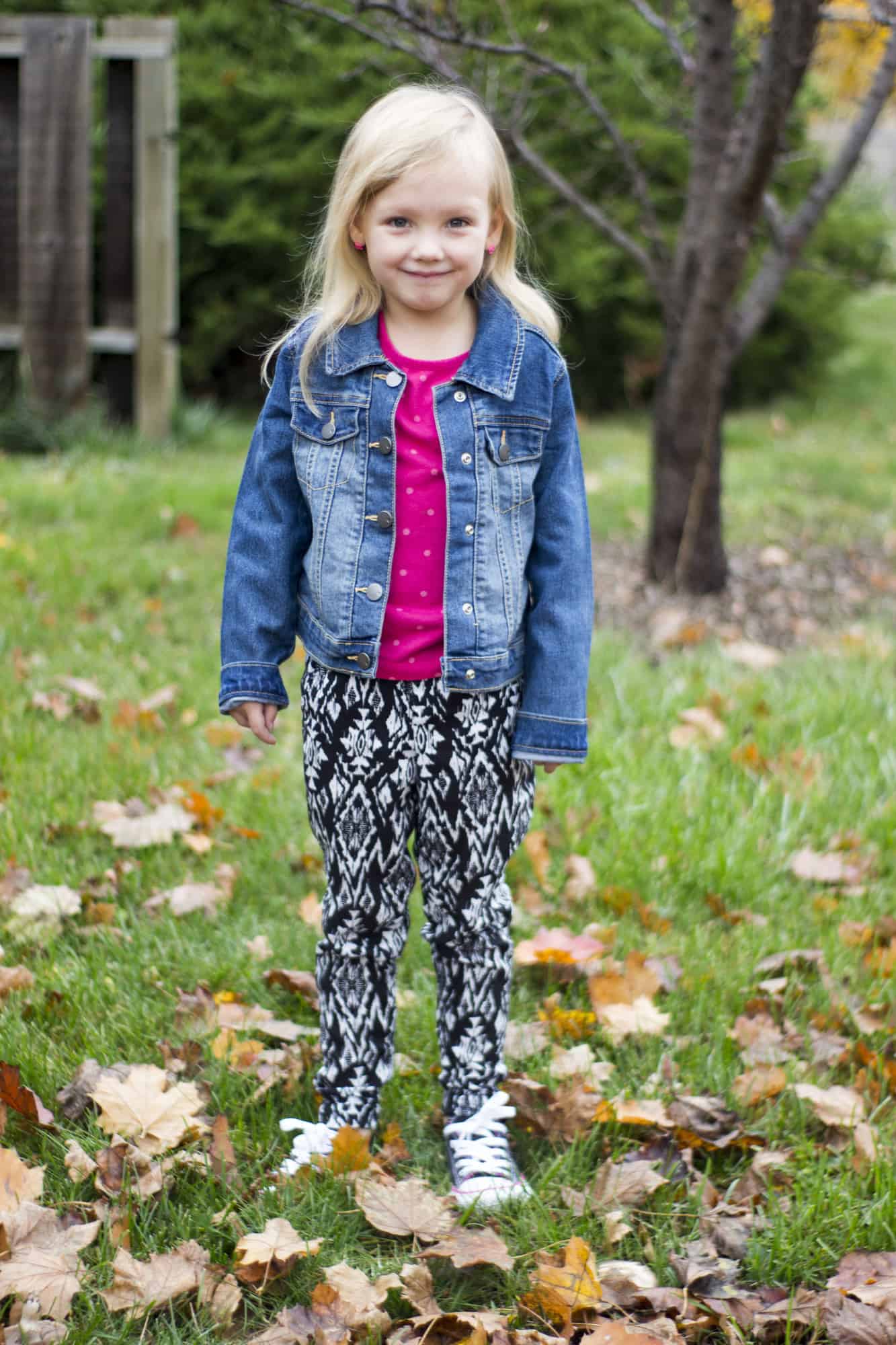
img_60741I have been eying up all the adorable woven joggers that seem to be everywear this season and as soon as I saw the new P4P joggers I thought hmm, I wonder if then could be done in woven and guess what, they work great in woven for the baby bear joggers! I sewed up this pair for my daughter in a rayon challis remenant that I found and they are just too cute on her and super trendy right now! I didn’t alter anything while sewing but if your child has thicker calfs or ankles you may want to grade out one size to give a bit more room or take a smaller seam allowance from the calf down. These have the elastic waistband but as I had some 1 1/4 elastic in my stash Idecided to use it instead of doing the 3 rows of elastic. I inserted my elastic into the waistband and then basted the seam allowance before attaching the waistband to the pants. I did the elastic casing cuff which worked great the rolled cuff may be a touch to tight thou for wovens. No other changes to these and my girl has adorable woven joggers! I can’t wait till spring to make her a pile more!

img_60771

img_60751


I love the little shorties or bloomers look for my Baby Girl.  Show off those rolls on her legs that I love so much!  It’s very simple to use the new Baby Bear Joggers to create this cute, trendy look!

I determined the inseam by estimating how wide I would need it to cover her diaper.  I made hers about 1″ before bands…they could’ve used another 1/2″ really though.  I marked this on the inseam of back and front pieces.  The side seam length I determined by thinking about how long I needed it to cover the diaper.  I curved the bottom hem up towards the outer leg seam by about 2″ on both the back and front pieces.

I sewed the pattern up per the directions.  To finish the bottom hem I added thick bands.  I made them finish 1.5″ matching the waistband thickness.  So, I cut 4″ by slightly shorter than my leg opening.  You want to stretch the bands to fit the leg openings so that your bands are snug to their thighs.

Fold the bands in half width wise with right sides together (I wanted the “wrong side” to show on my bands.

img_0985

Fold the band in half lengthwise with wrong sides together.

img_0986

Align raw edges with raw edges of shorts and stitch, stretching band only as you sew all three layers together. Then flip band down with seam inside shorts.

img_0987

I think they’re so precious! My Baby Girl has been sick and wasn’t really up for pictures, but we snapped just a couple to show them a bit.     img_0990 img_0630  img_0659  img_0692 img_0693

Filed Under: Pattern Hacks 2 Comments

Free Spirit Tank – mash up & high low hem

August 30, 2016

IMG_0490

I’m sure by now we’ve all been invited to a least one “Buy these clothes” Facebook party and we’ve been tempted to buy some outfits only to think “nah…I can make it myself”.  Am I right? Well that was my thought when I saw one of this big online company’s newest relaxed fit dress that features a high low hem.

IMG_0556-1

Today on the blog I wanted to show you my version of this popular dress and teach you how to use your favorite P4P patterns to make yourself one. First you will need the Free Spirit Tank (which just got updated to include the Layer Feature!) and the Boyfriend Vneck shirt patterns, a ruler, markers, paper, your fabric of choice, a measuring tape and a French curve ,if possible (A great investment if you don’t have one!). Start by printing the patterns according to the instructions and then cut your size and the high low option.

Screen Shot 2016-08-26 at 11.15.13 AMScreen Shot 2016-08-26 at 11.16.06 AM

I used the sleeves and armcyce from the Boyfriend V neck shirt because it has a looser fit. If you are unsure how to mash the two patterns to add sleeves to the FST, use Judy’s Free Spirt Tank- Layer Me Up mash up tutorial. You would apply the same guidelines and tutorial. Even better, the Vneck Boyfriend tee includes a pocket piece too!

Now that we have the sleeves part covered, let’s move on the the high low hem. Grab your measuring tape because it’s time to take some additional measurement to create the above knee dress length. Measure the length from underarm to above knee, now measure the FST pattern piece from underarm to the hi low hem mark line. In doing so you’ll figure out how many inches you’ll be extending the side. In my case it was approximately 10 inches.

Attach some blank papers to the bottom of your pattern so you extend it. Using a straight ruler add the 10 inches side extension to both the front and back pattern pieces. Now we will create the front and back curved hems. The back curve will be a much more deep one than the front. Take the front piece and mark 12 inches down from the high low hem. Using a French curve draw a curve from the side point to the center seam. We will draft the back curved hem the same way only this time we’ll mark the extended center  mark at 14 inches and carefully draw a curve between the side mark and the center.P4PGRAPHIC

That’s all! You’ve now drafted your own “Carly” inspired dress. Cut out the pieces and sew them according to the pattern instruction.  The Boyfriend V neck shirt includes a pocket so I added it to the FST front too. Simply mark the pocket placement from the Boyfriend shirt on the FST pattern.

TIP: the bottom hem will have a pretty big back curved hem so don’t forget the tips I gave you in a earlier blog about hemming knits.

IMG_0541IMG_0561IMG_0544

Let me know if you have any questions by posting them in the comments below. As always, don’t forget to show off your creations in the group. I can’t wait to see your versions of this dress.

Alex

Filed Under: Pattern Hacks, Uncategorized 16 Comments

Essential Tank- Open Back Hack
June 12, 2016

Presentation1

I’m excited to share another hack to the new Essential Tank pattern! I’ve seen this look in the popular athletic wear brands and love it! But being 5’10” means no way I can buy it off the rack, even if I wanted to splurge on the price tag 😉
So, I hacked the newest pattern in the P4P collection and I’m so in love with the result! I used a brushed polyester blend that is super soft.

listing pictures1 listing pictures3

I took the front and raise the neckline by 2″ (although the inspiration tank was probably 3″ higher I just can’t take a neckline that close!). Make sure your neckline ends at a straight angle or you will have a point when you open up your folded front.  If you have a french curve use it for a nice smooth neckline. If not, you can get it as smooth as possible.

IMG_6990

Next I cut the back. Here I cut the full piece to help demonstrate, but you can skip cutting the entire piece to save on fabric.

IMG_6993

I took my straight edge and alined it to the widest part of the racerback.  I sliced it straight from the top of the shirt to the bottom hem. (I’ll mention here I did shirt length cutline. but left it unhemmed).

IMG_6995

Then I cut another MIRROR image back piece.
I decided to leave my hem and back edges raw. If you wanted to hem, go ahead and hem those back center edges now.
Tip-I ALWAYS cut a center notch on the necklines of every shirt- they’re cut on the fold and you always need that center mark for attaching your neckband marked anyways.  It is such a quick, easy time to mark it with a notch!

With both right sides up and aligning the center, baste the overlapping sections along the neckline.  Looking back I would also advise to baste just outside the 3/8″ seam allowance as well to hold it in place while attaching the neckband. It’s such a small section that extra baste will really help keep it nice and neat.

IMG_6997

Then just sew up the shirt as the tutorial recommends, treating the back as 1 back piece.  If you make the neckline higher you will need to shorten your neckband a bit as well.  A good ratio is about 80-85% of the finished neckband plus your seam allowance.

IMG_6999 IMG_7001

And wa-lah! Now you can waer it open and loose or tie it at the bottom for a more fitted look! And a big bonus (for me anyways ;)) is that you can untie the back and it’s super nursing friendly! I already have 2 more fabrics that need to become this hack! I can see myself wearing these with some capri peglegs throughout the hot TX summer!  I have it paired with a cute Siren Swim Top I made for a sports bra!

13402172_151754171904282_974103483_n(1)

Don’t forget to share your final creations in the P4P Facebook group, tag me on Instagram, or in your favorite sewing forum! <3 I absolutely love to see your P4P creations!


Filed Under: Pattern Hacks Leave a Comment

  • « Previous Page
  • 1
  • 2
  • 3
  • Next Page »

connect with me

  • Email
  • Facebook
  • Instagram
  • Pinterest
  • YouTube
Privacy & Cookies: This site uses cookies. By continuing to use this website, you agree to their use.
To find out more, including how to control cookies, see here: Cookie Policy
  • Privacy Policy
  • Refund Policy
  • Contact Us
  • About

Copyright © 2025 Patterns for Pirates

Copyright © 2025 · Genesis Framework · WordPress · Log in