Patterns for Pirates

P4P stylish, modern, wearable patterns

  • Home
  • Blog
    • Frequently Asked Questions
    • Pattern Releases
      • Free Patterns
    • P4P University
      • Fitting
      • Sewing with Stretch, Knit Fabrics
      • Sewing with Woven Fabrics
      • Sewing Machines
    • Sew-A-Longs
    • Fabric for Pirates
    • Pattern Hacks
    • Announcement
      • Blog Tours
      • Contest/Giveaway
  • Shop
  • Bundle Discounts
  • Flash Friday
  • Gift Cards
  • My Account
  • Cart

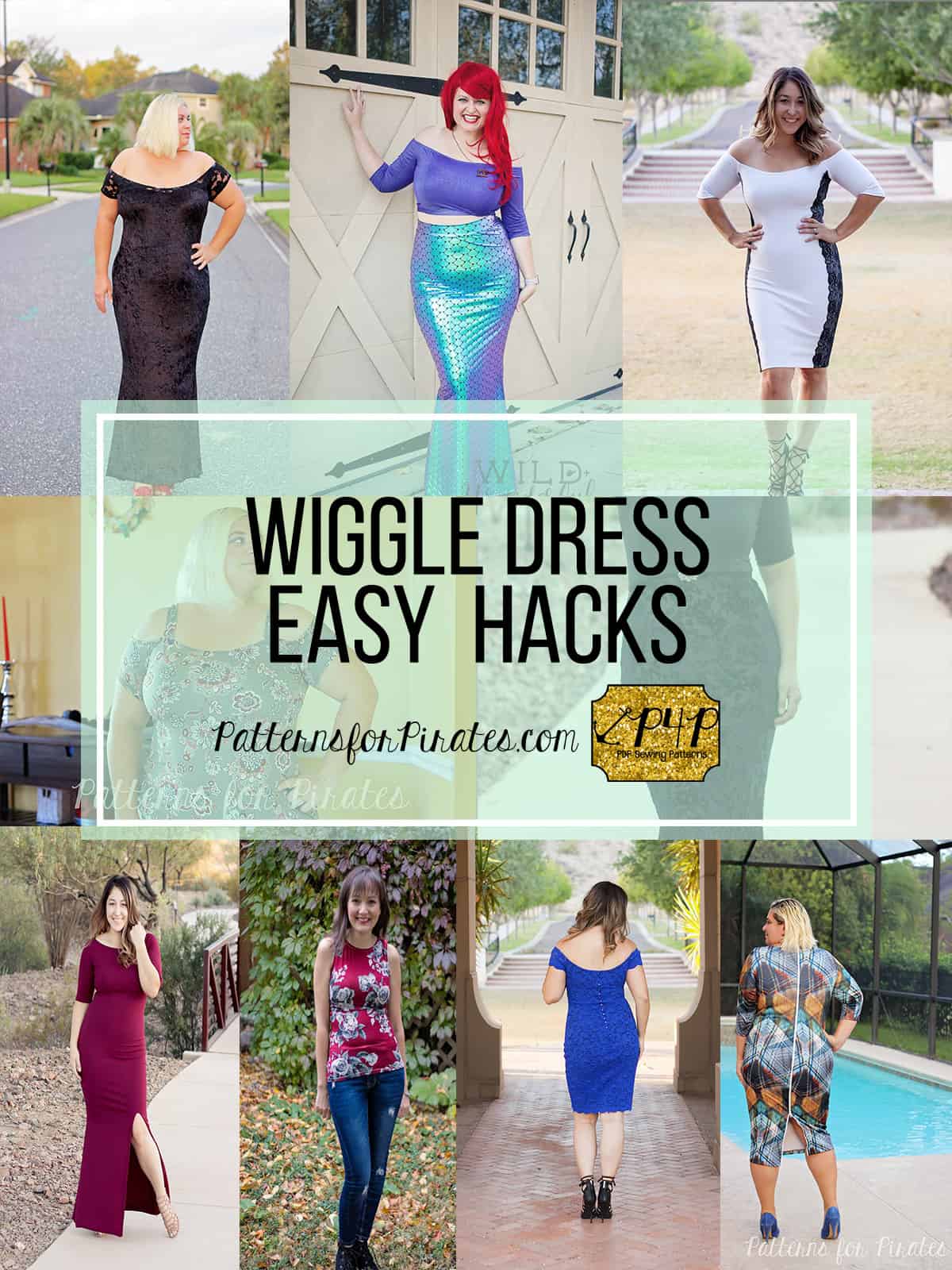
Wiggle Dress – easy hacks

October 24, 2017

…..

Separates

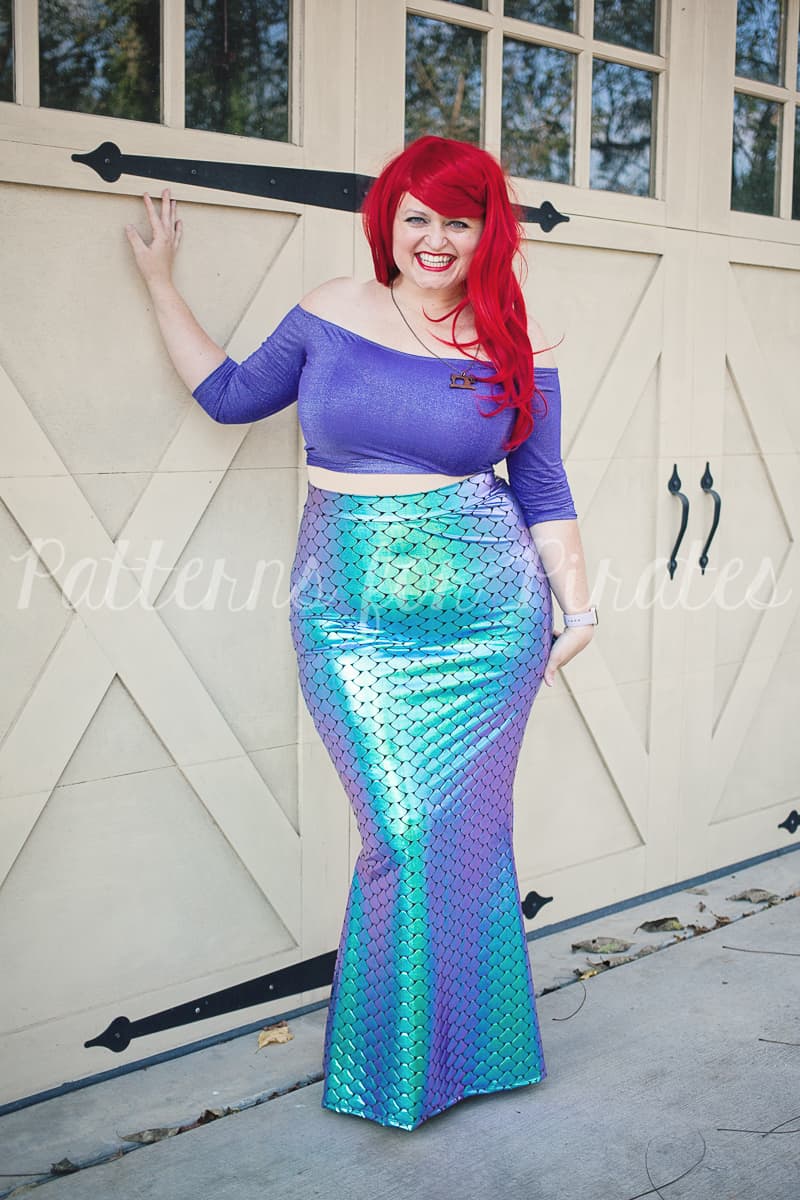
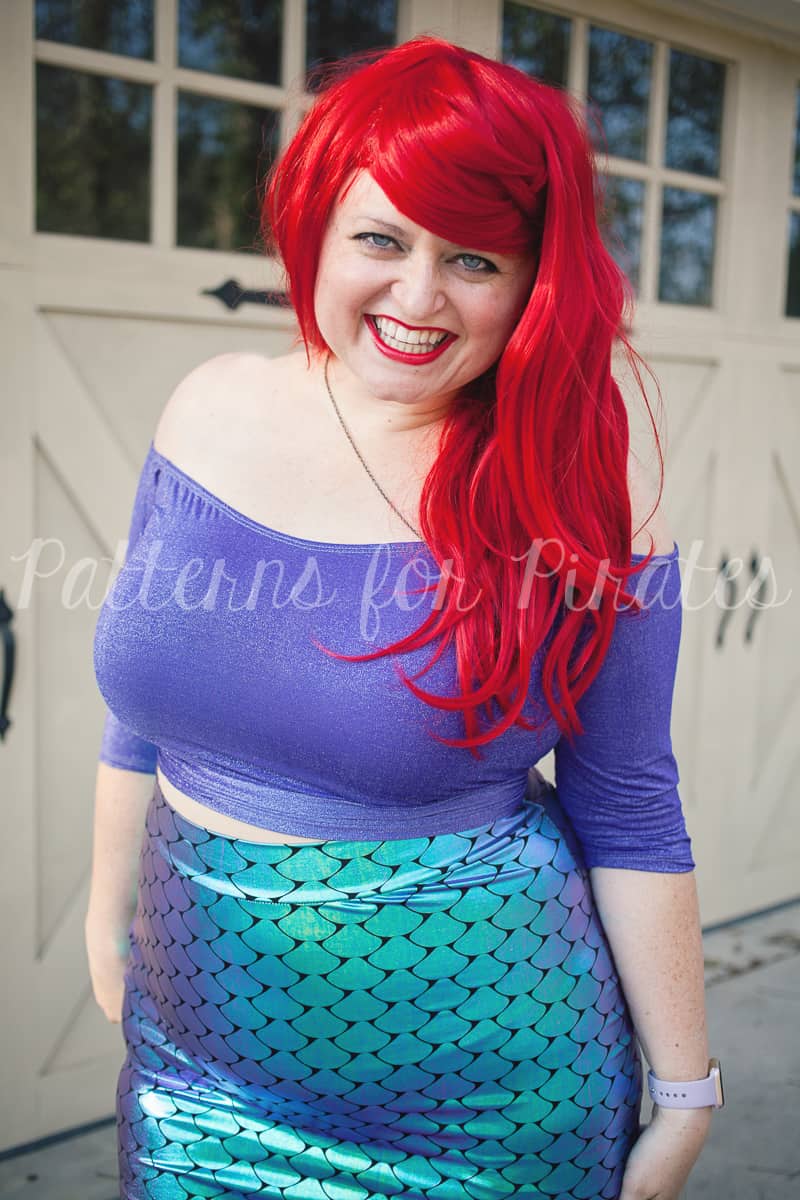
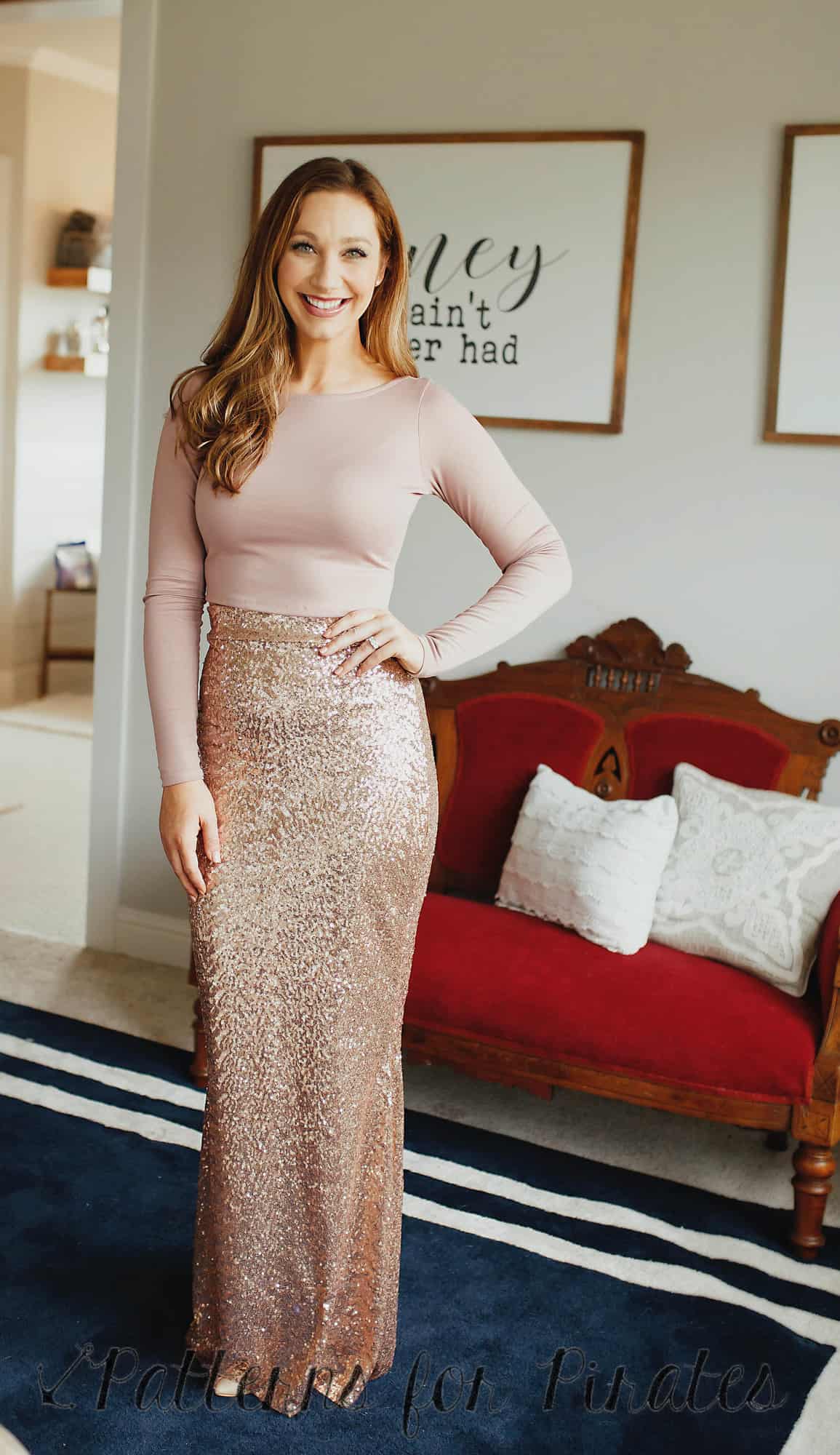
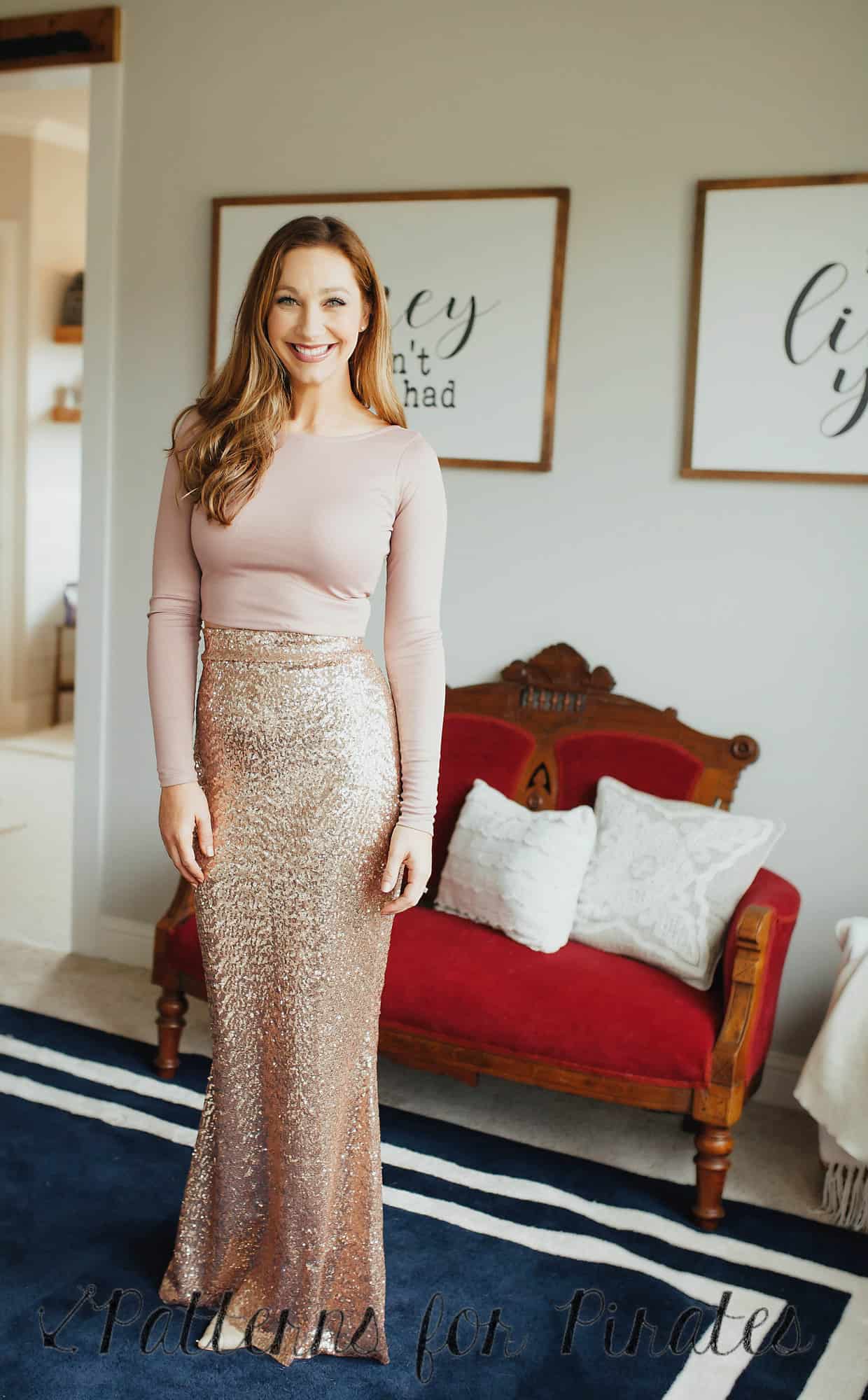
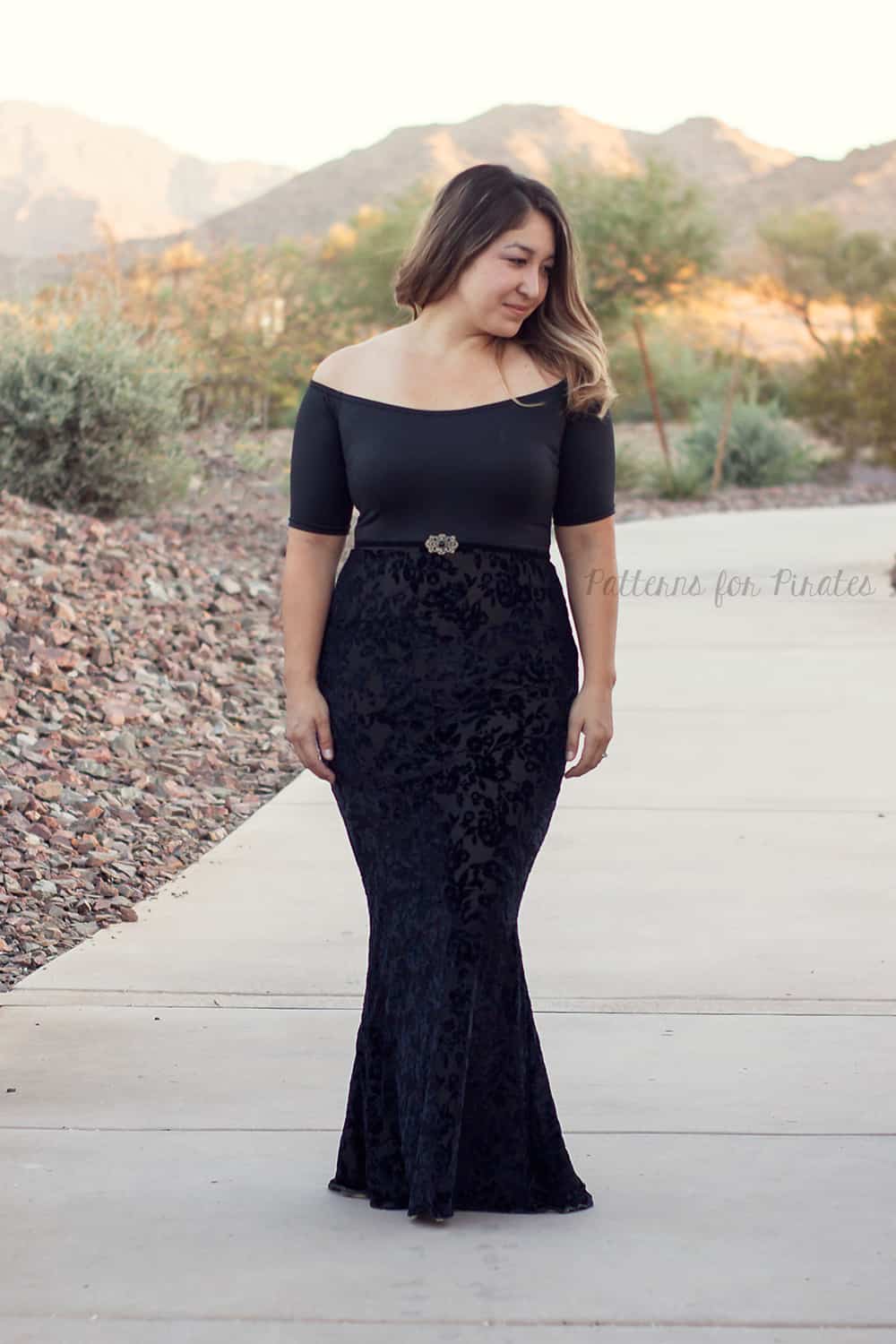
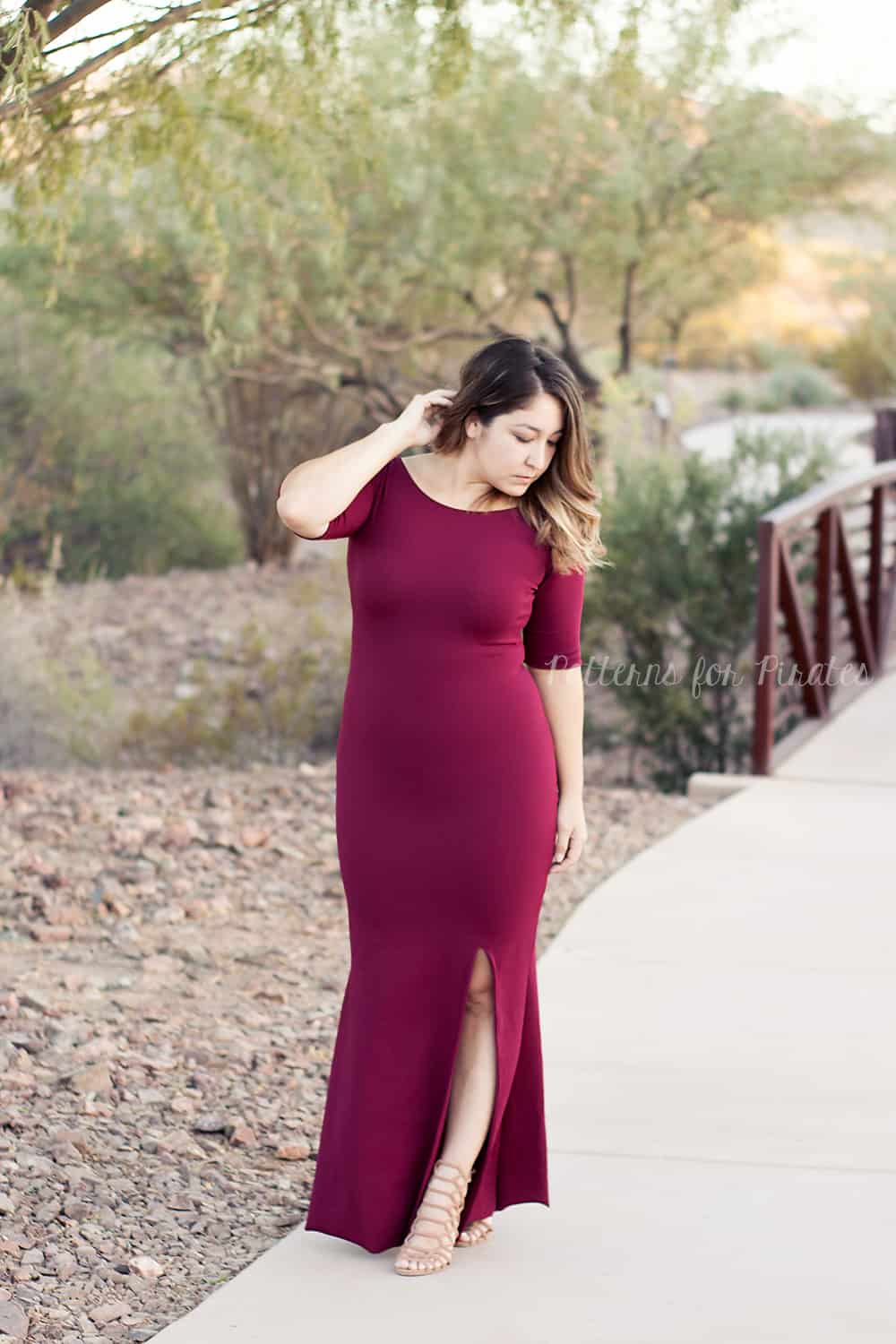
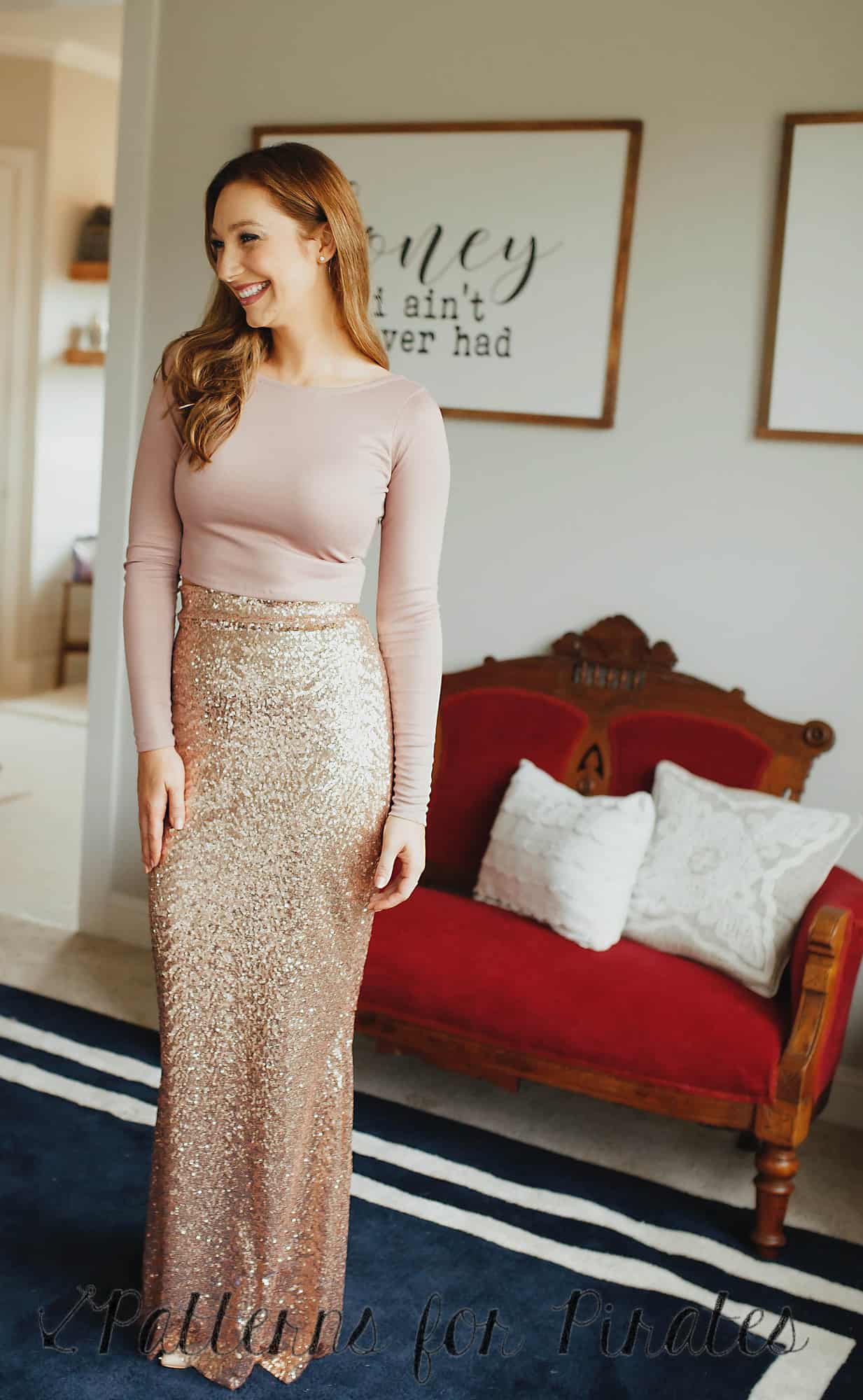
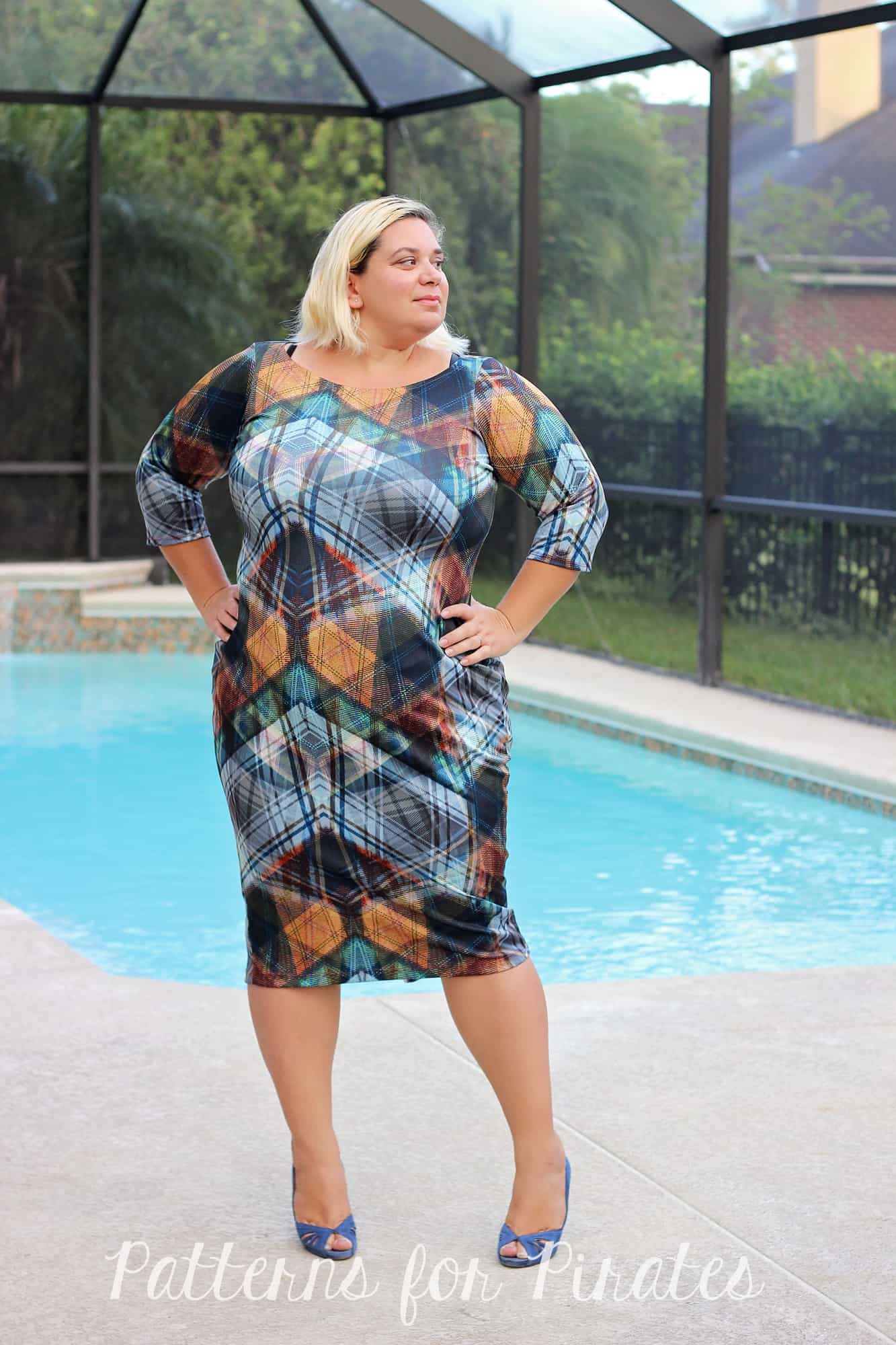
The full-length mermaid-esque dress is gorgeous, but maybe you want to pair it with a different top or choose different fabrics?  With this simple hack, you can create a gorgeous set and wear them as separates.  For the skirt, cut along the crop cutline.  Stitch the center back seam and each side seam.  Using the cropped band measurement and instructions, attach to the top edge of the skirt.  Easy peasy!

How cute is Katy in this Ariel inspired Haloween outfit!


And seriously, how amazing is this sequin skirt!!

…..

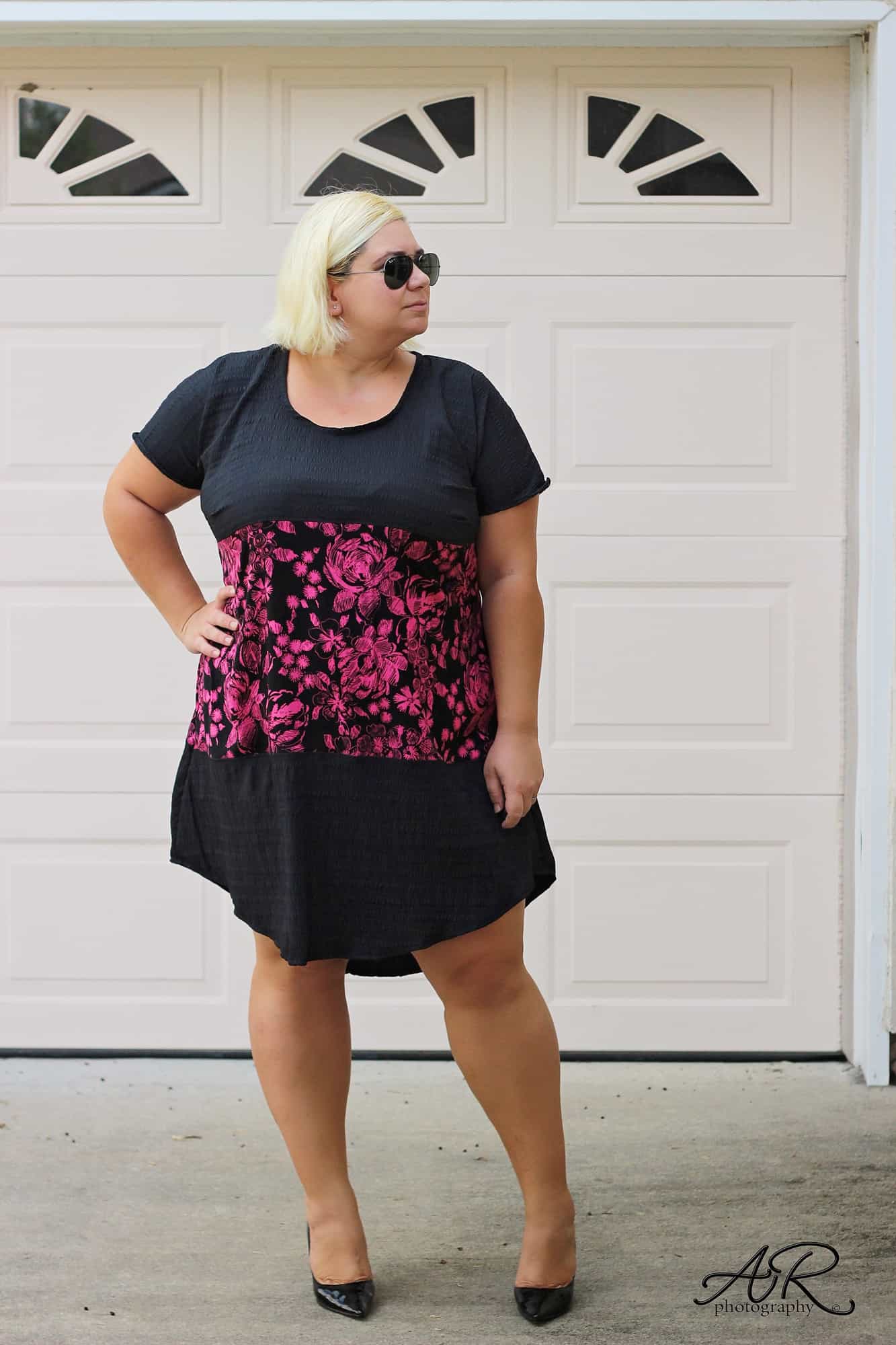
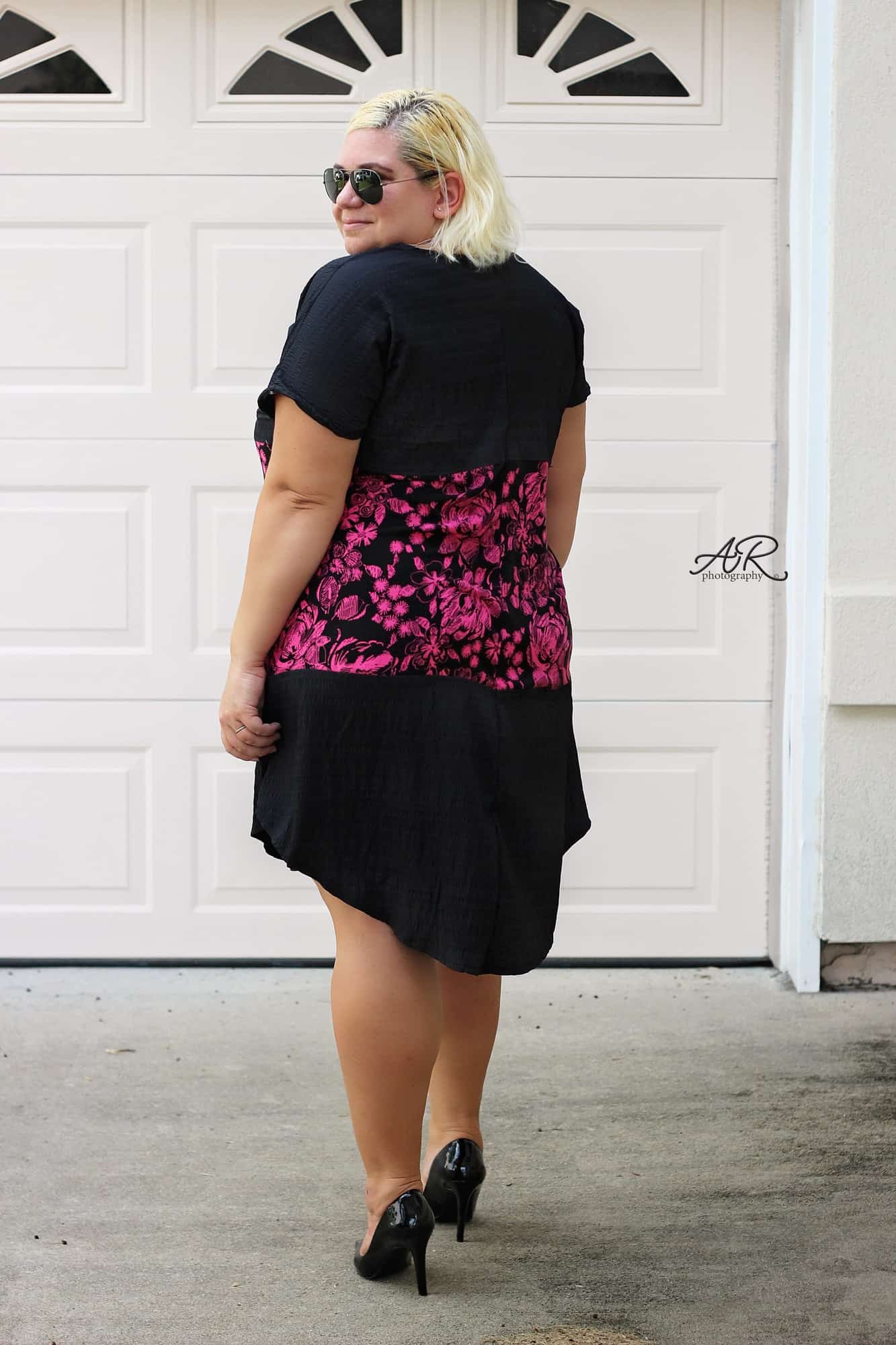
Color-Block Bodice
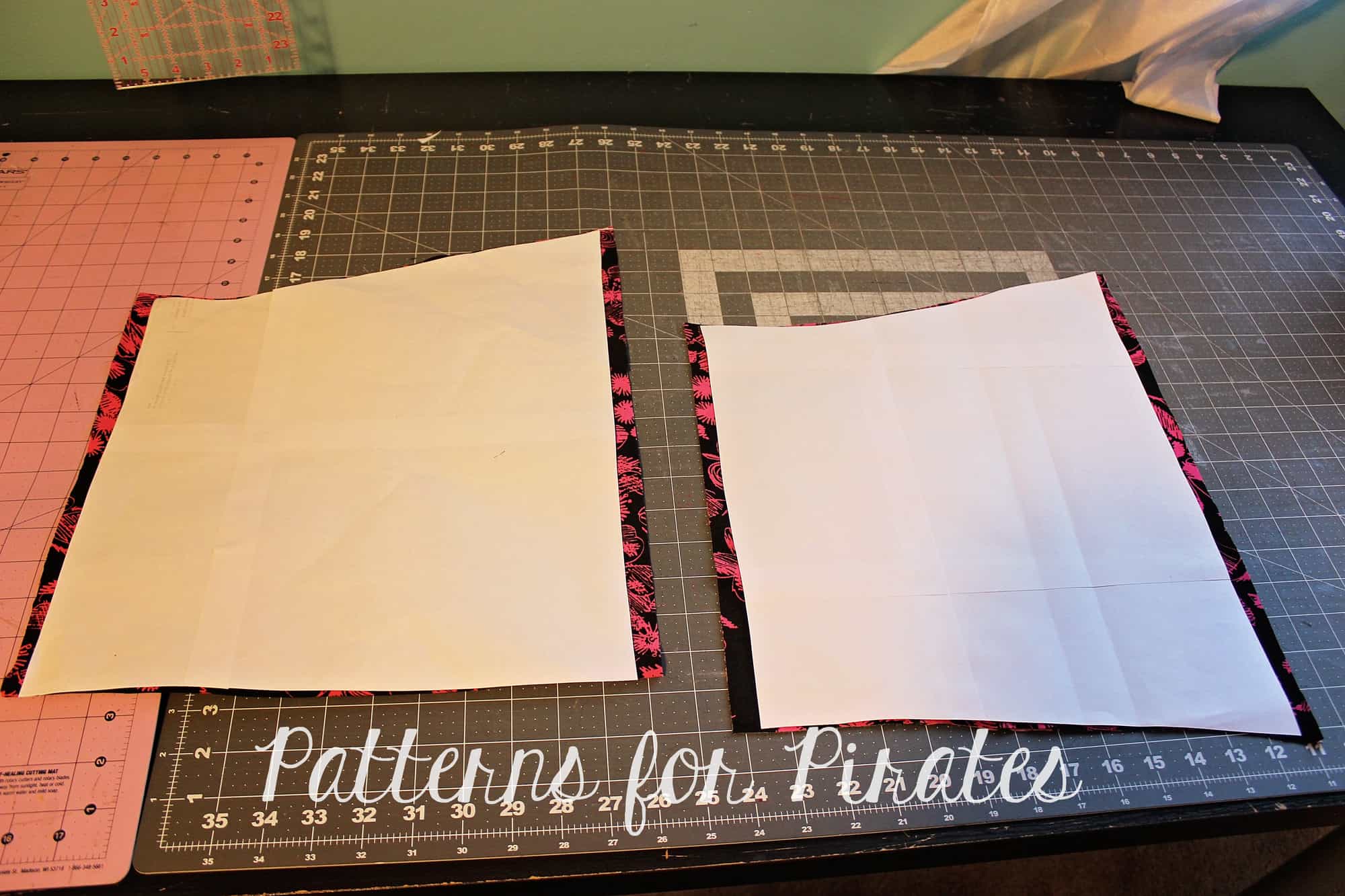
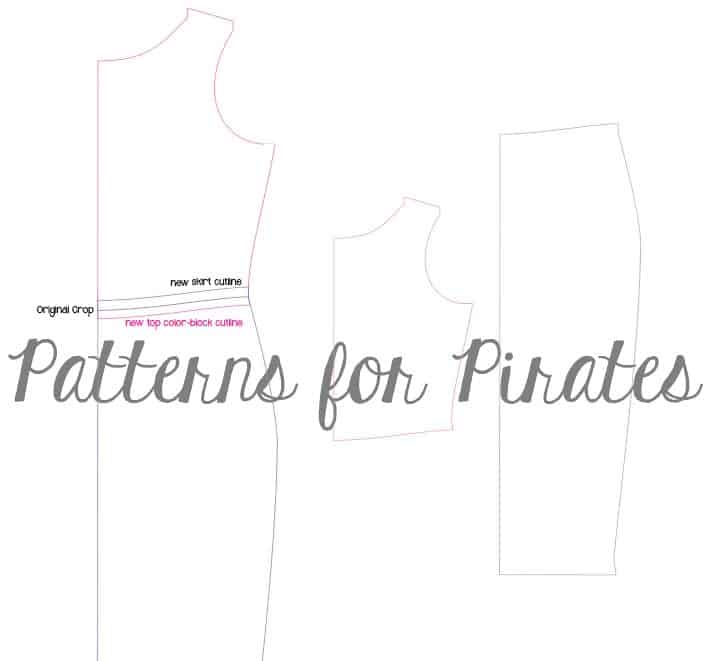
Keeping with the concept of separates, but perhaps you still wanted a dress. Doing a color-block bodice gives you a chance to mix up your fabrics. Since there is already a crop cutline on the pattern pieces that hits at the natural waist, we will be using that as a guideline. Re-trace the crop cutline 1/2″ above and below it to create your seam allowance on both the front and back pattern pieces.  Cut your new top bodice and bottom skirt from both front and back.  For the back, you will have 2 back top bodices (mirror image) and 2 back bottom skirt (mirror image) pieces.  For assembly, with right sides together, stitch with a 1/2″ seam allowance the front bodice to the front skirt. Repeat for both back bodice and skirt pieces.  Continue construction as provided int he pattern. 🙂

…..

Decorative Button Back

Adding embellishments to your dress can give it some extra special details that will set it apart from the next.  Since the pattern is drafted for stable knits, you do not need a zipper or functional buttons to put it on, so these buttons are purely for decorative reasons.  I love the finishing touch it gives the back. Using the center back seam as a guideline, I hand stitched pearl buttons every 1/2″.  I used the zipper lengths as mentioned in the tutorial as a guide where to end my button placement.  For this version, I used a total of 13 buttons. ”


…..

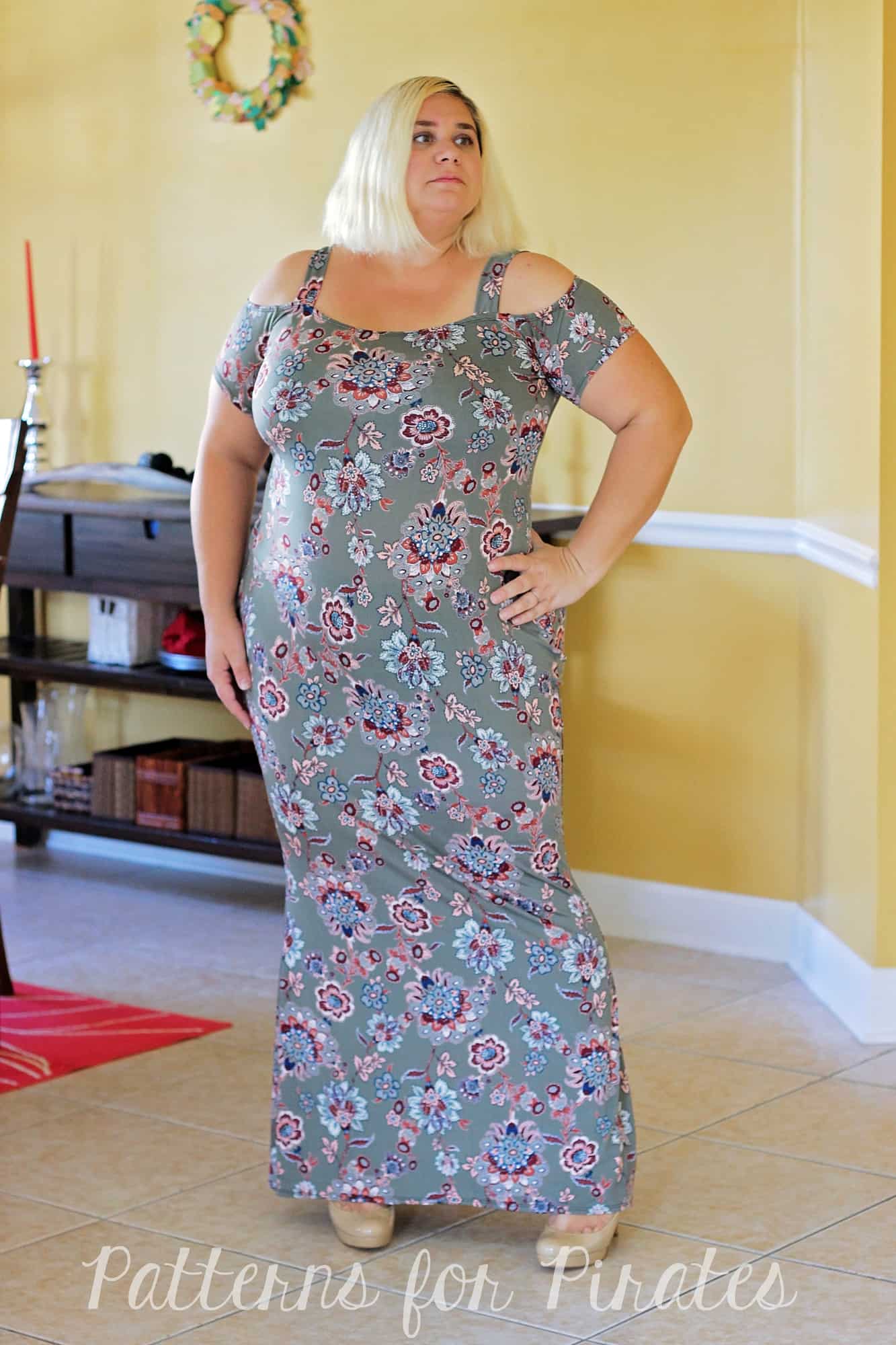
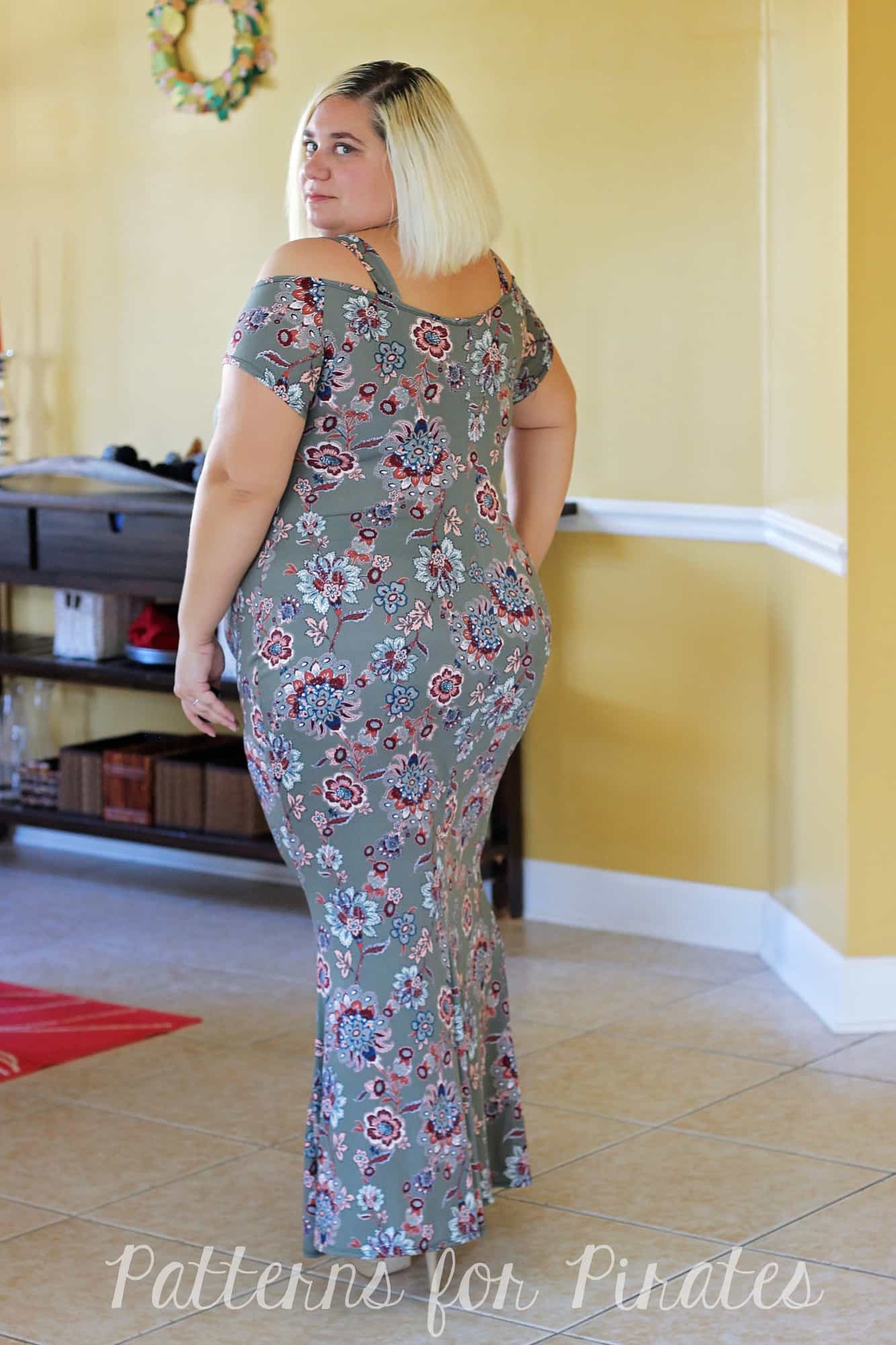
Straps for off the shoulder

Love the off the shoulder but hate wearing strapless bras? No problem! Let’s add some cute straps to the Wiggle off the shoulder dress that will cover your bra straps. Print the off the shoulder option of the pattern and sew it up as per the pattern tutorial. Stop at the neckline finishing steps. Cut two pieces of fabric 4″x 9.5″. These will be your straps. The length of your straps may vary slightly based on the size you make.

Fold the straps lengthwise and sew them side with a 1/2″ seam allowance.
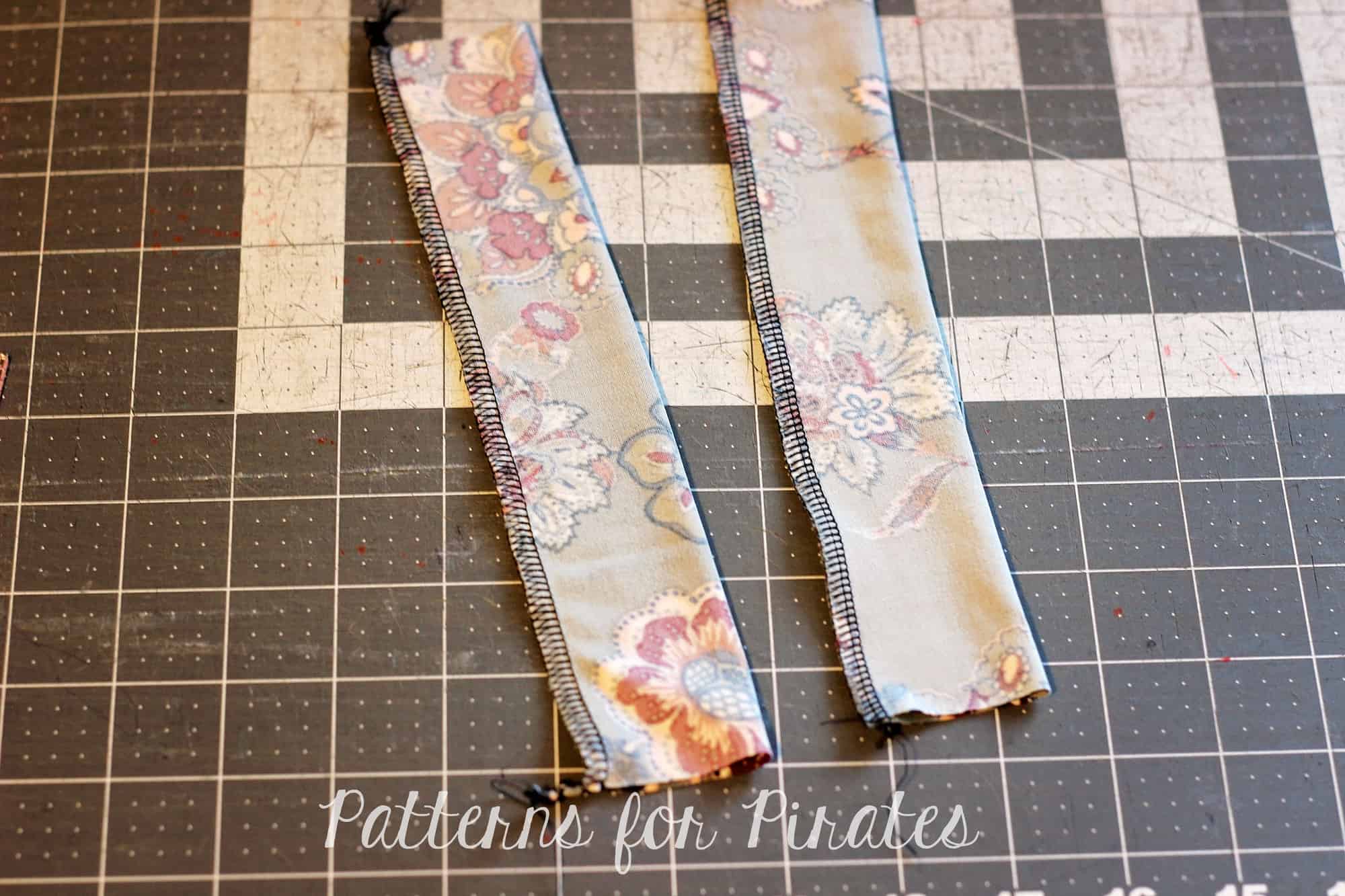
Turn the straps inside out and press them with the seam in the center.

For perfect straps placement, try the dress on with your favorite bra. Mark with a pin or a clip where the bra straps will be.
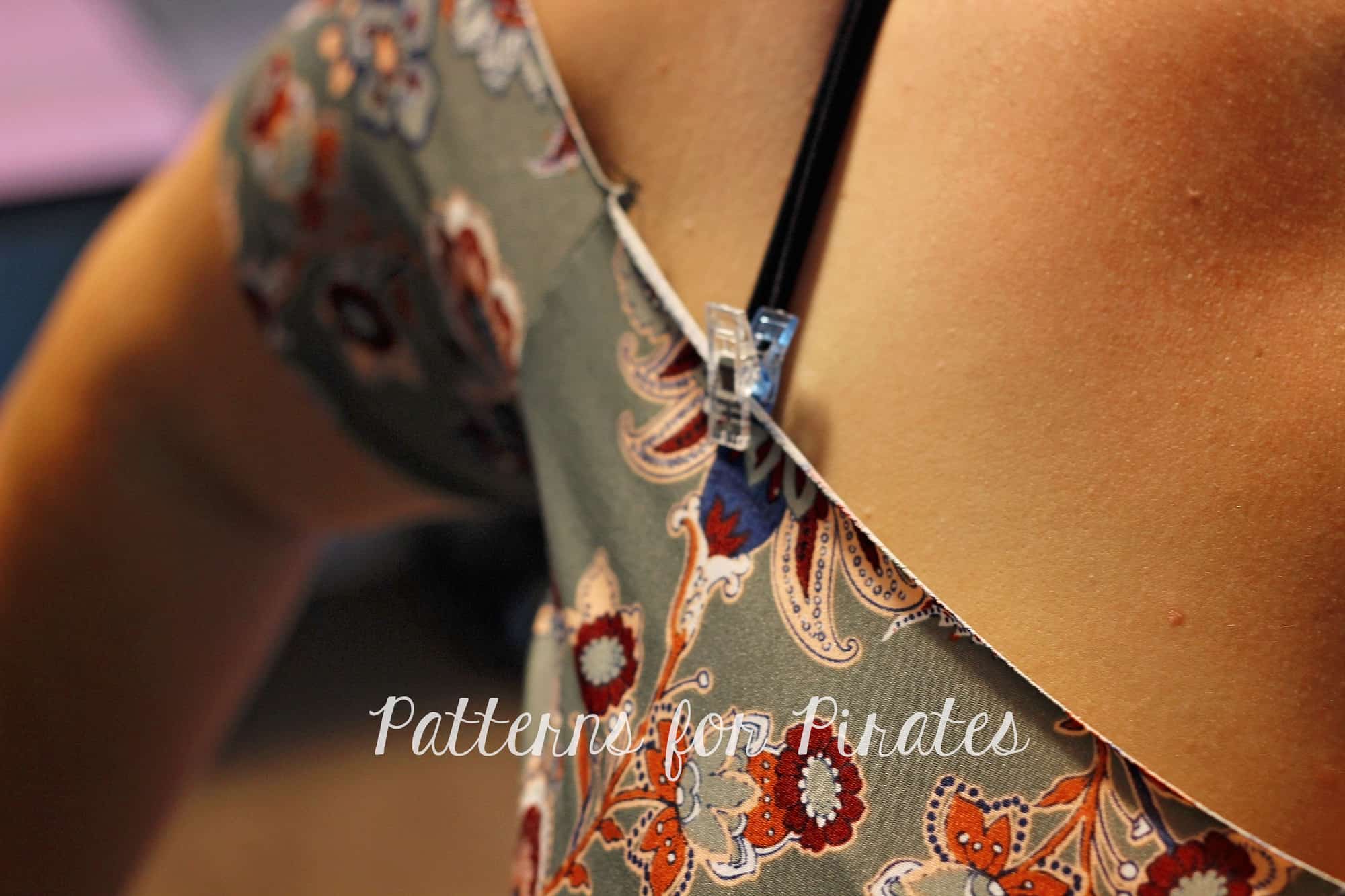
Sew the straps to the dress with the right sides together. Finish the neckline as per the pattern tutorial.
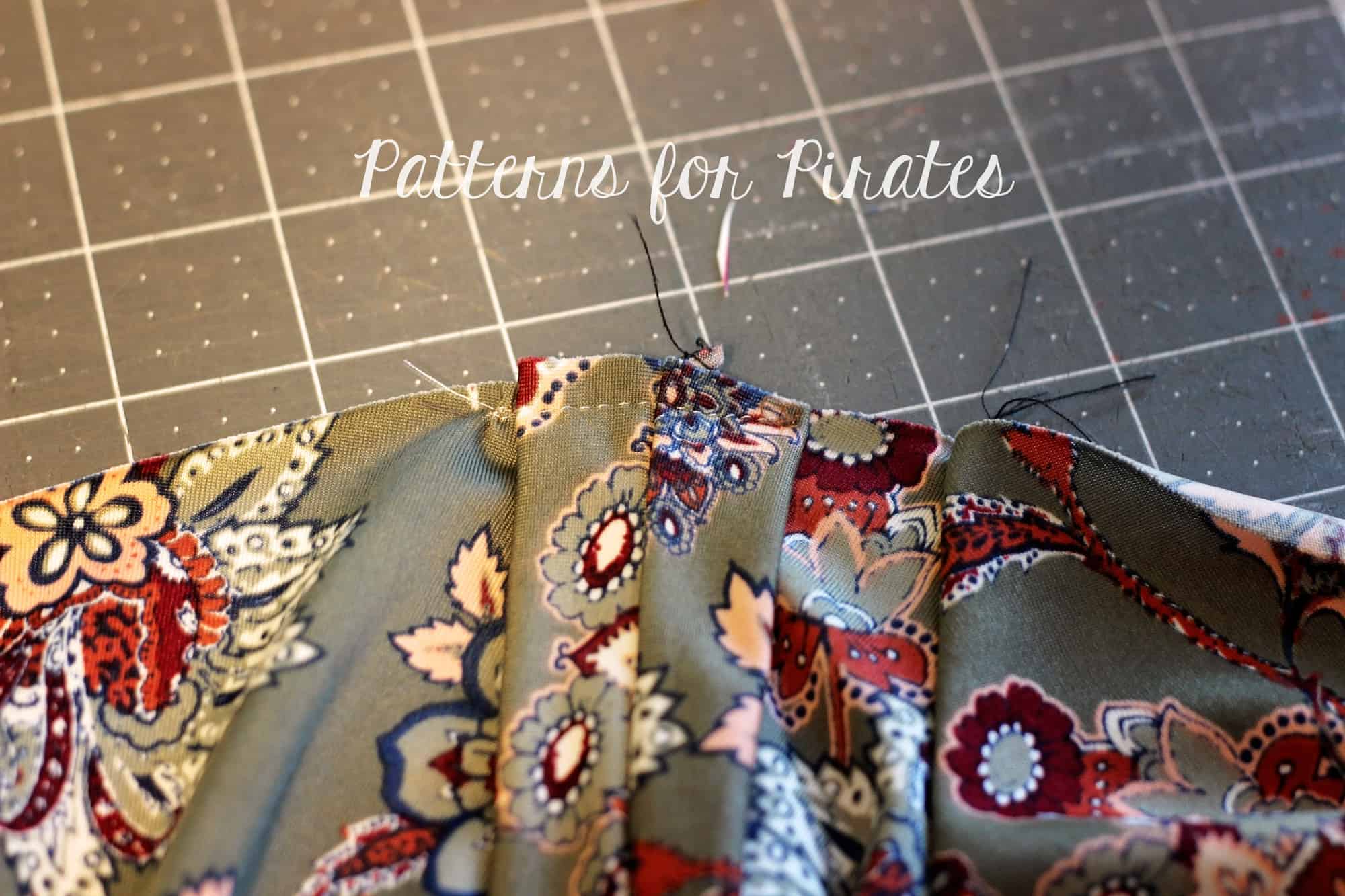
That’s all! You now have yet a new style of the new Wiggle dress!
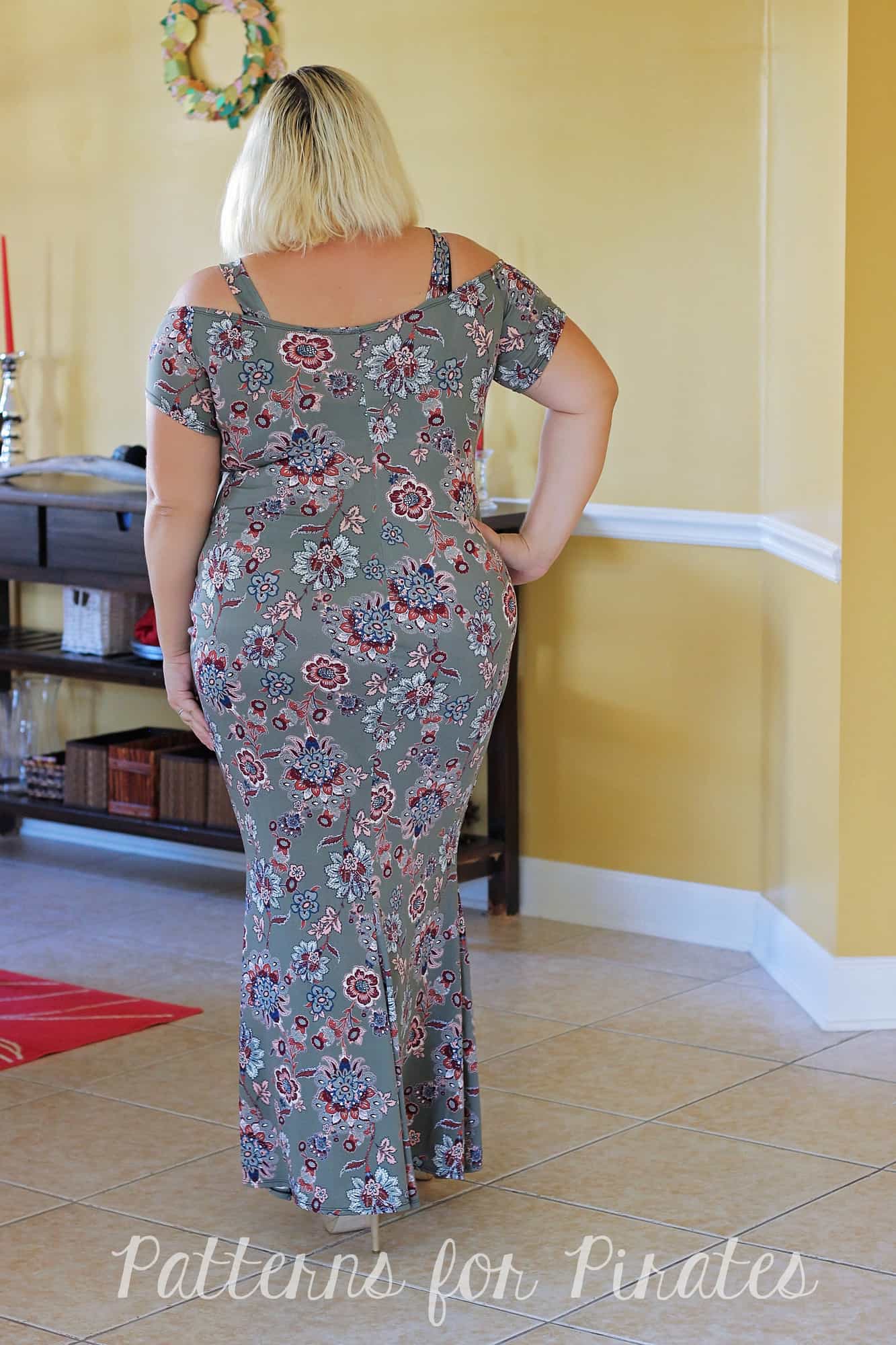
…..

Sleeveless

The Wiggle Dress is already packed with soo many options and great for every season but I don’t know about anyone else but summer here is HOT!! I can not handle any type of sleeves at all so a sleeveless version of the Wiggle dress would be what I would want for summer and lucky for me it is a really quick and easy hack.  Let’s get started.

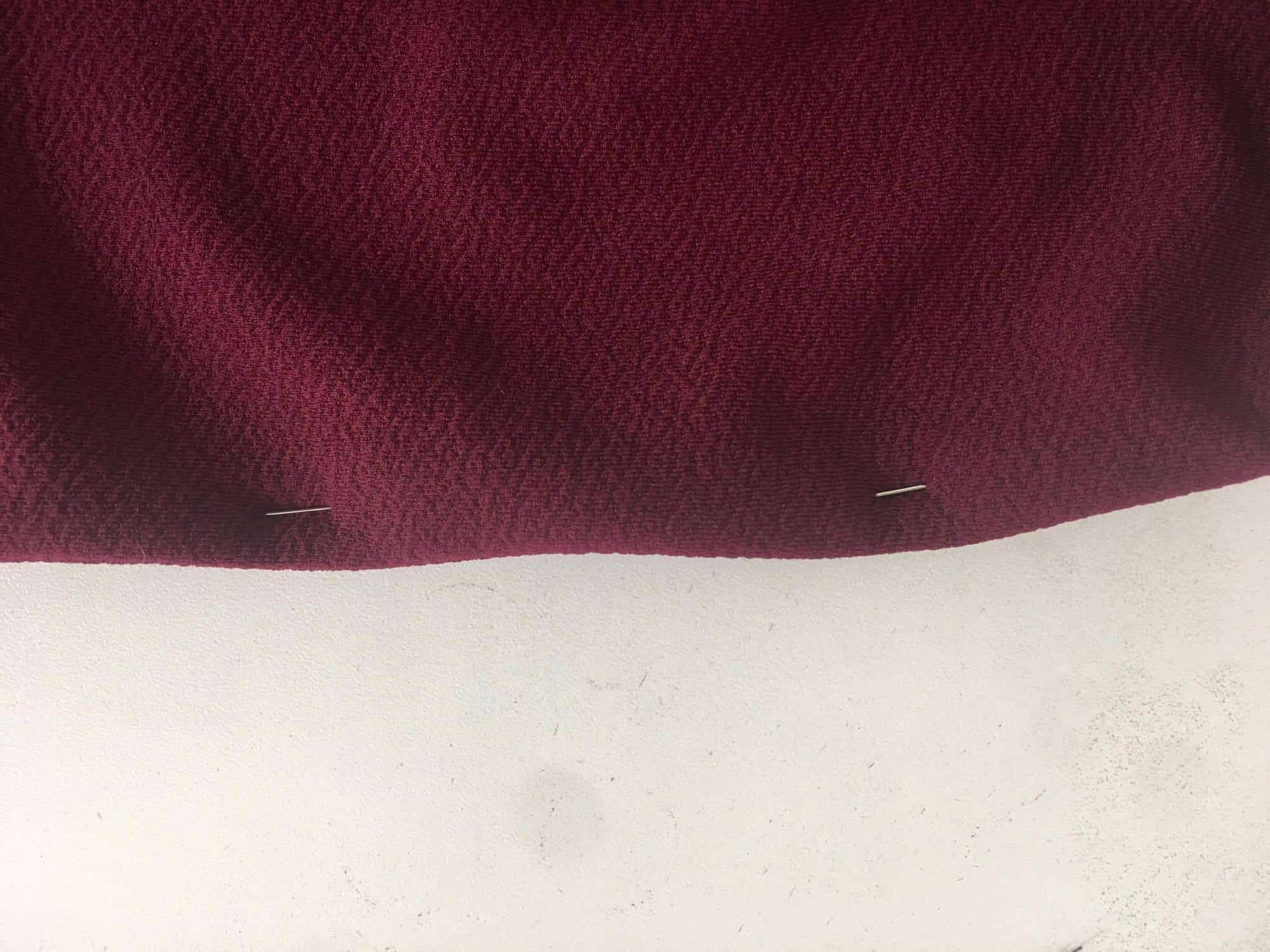
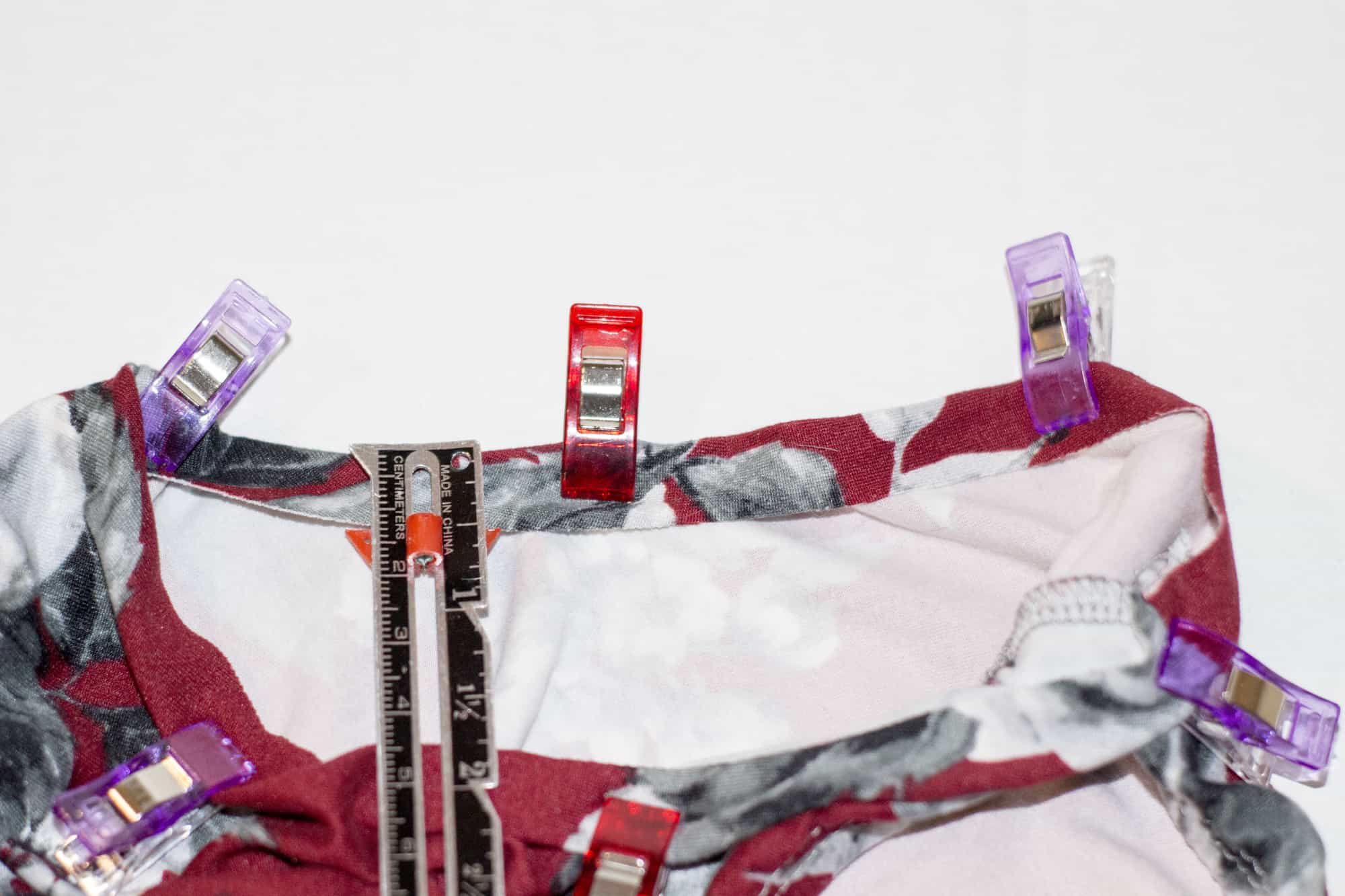
First, you are going to cut all your pieces except for your sleeves.  You do not need to modify the armscye at all for this hack so just cut your front and back as usual.  Sew the shoulder seams and side seams as directed in the pattern, but skip the section for adding a sleeve.   Next, you will iron and pin your armscye to the wrong side 1/2″ inch as shown below. Topstitch using your favorite stretch stitch.
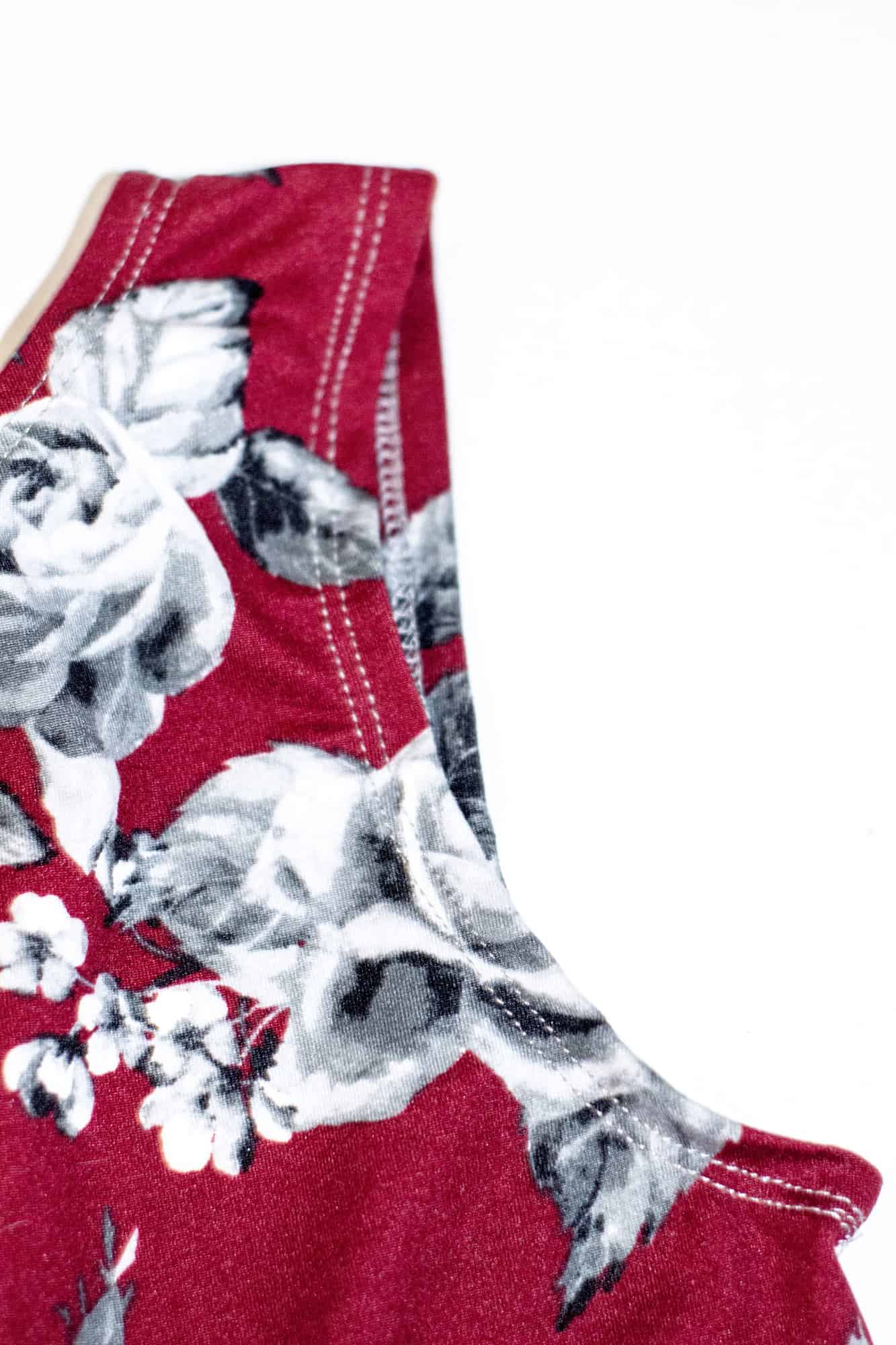
 

Now just finish up the dress or top as instructed in the pattern and you’re done. Quick, right!?


…..

Full Zipper Back
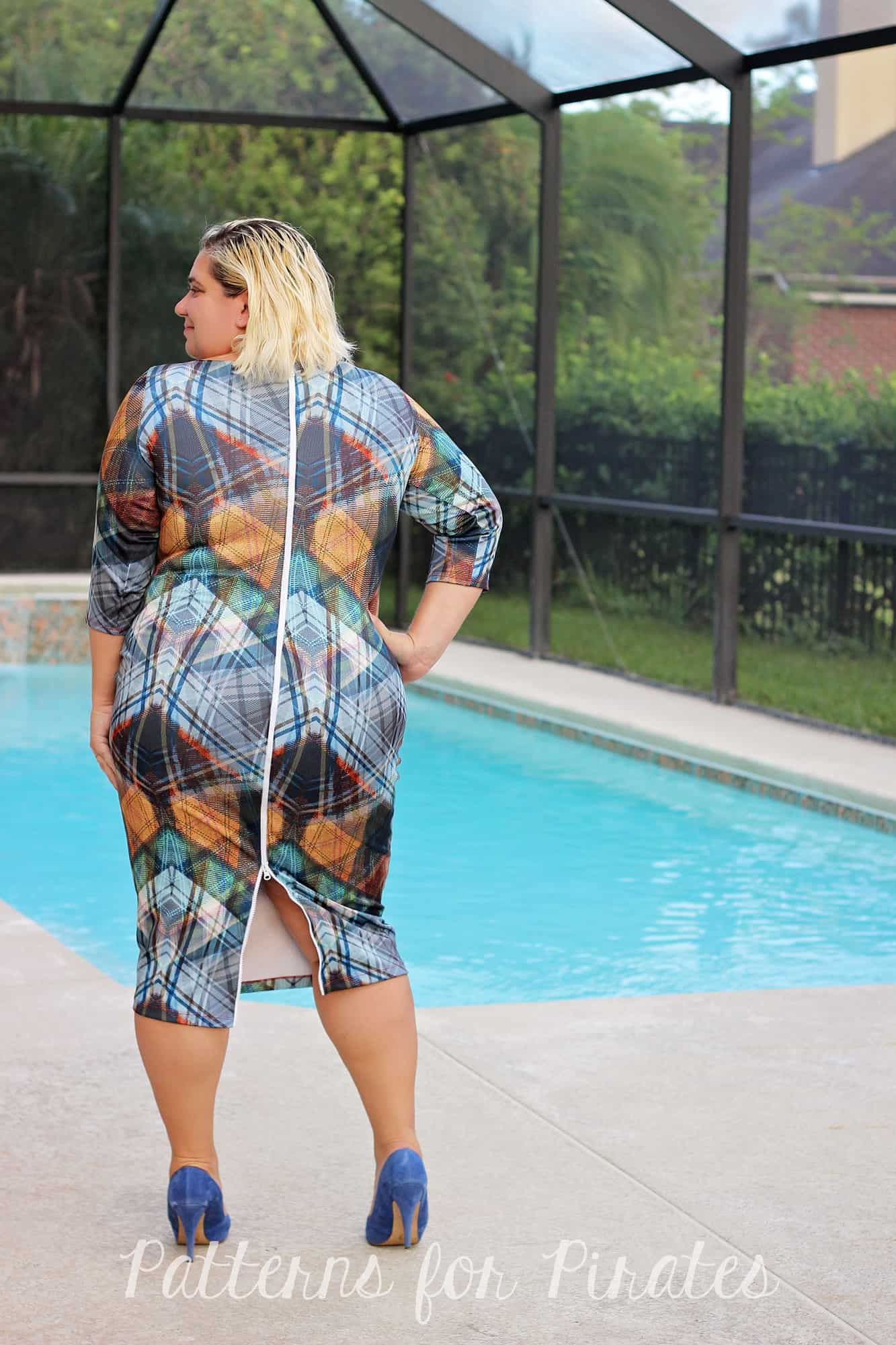
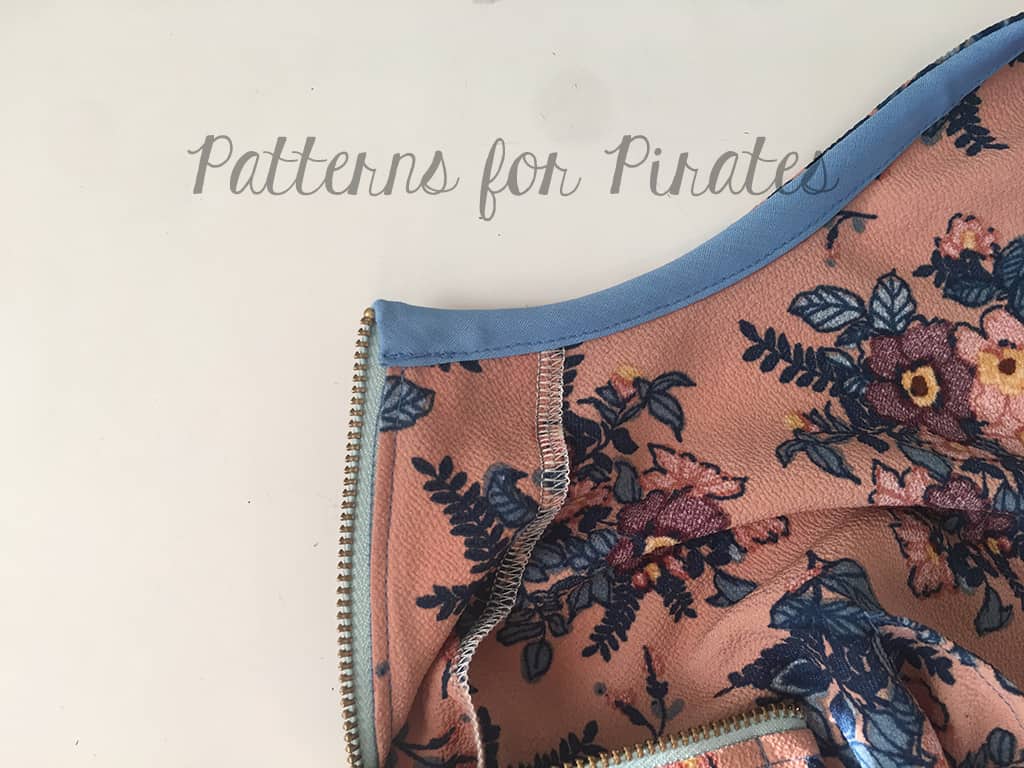
As soon as I saw the Wiggle dress I knew I had to make a full zipper back! So I took it up a notch and bought a dual zipper. This style zipper opens at the top and bottom. You can add this zipper to the high back, low back or even the off the shoulder option as well as the above, bellow or midi length. Just make sure the zipper you use is long enough! As a point of reference, I used a 48″ zipper for the high back, midi length style.

Start by marking the hem on the center back seam.
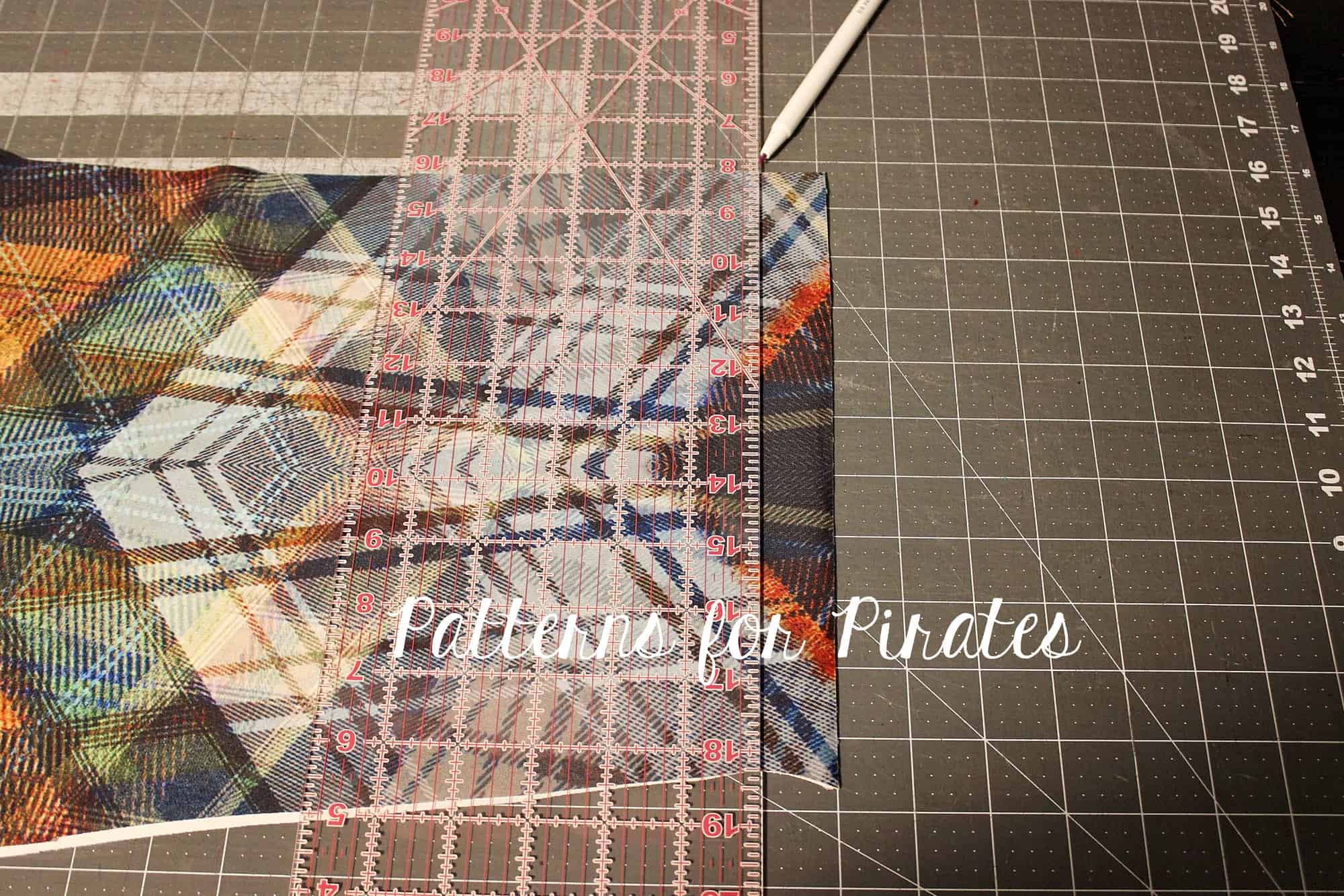
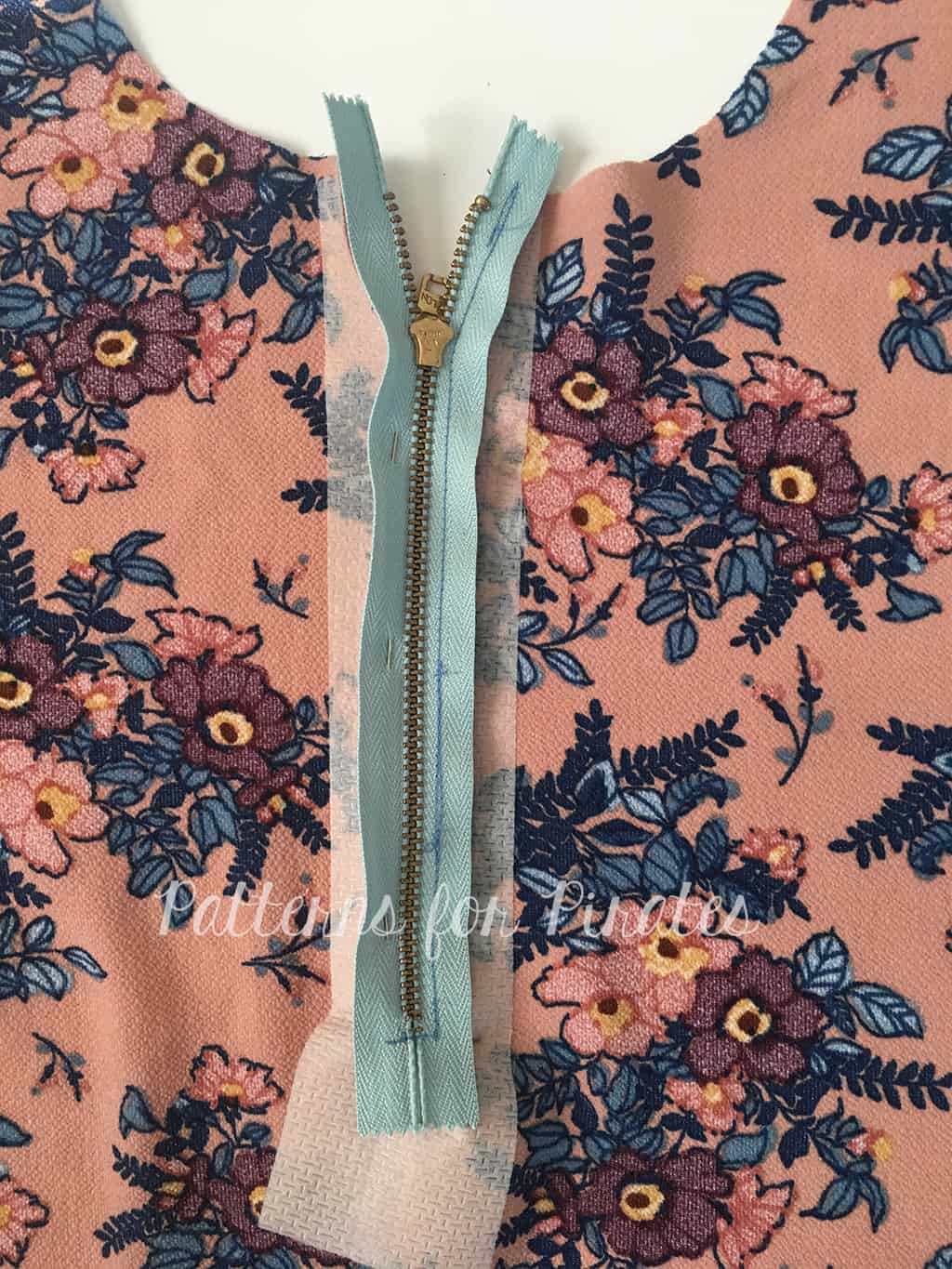
Add a strip of 1/4″ Wonder Tape to the center back seam, 1.4″ away from the edge. Start at the point you marked above and stop 1/2″ away from the top.

Repeat with the other back piece.
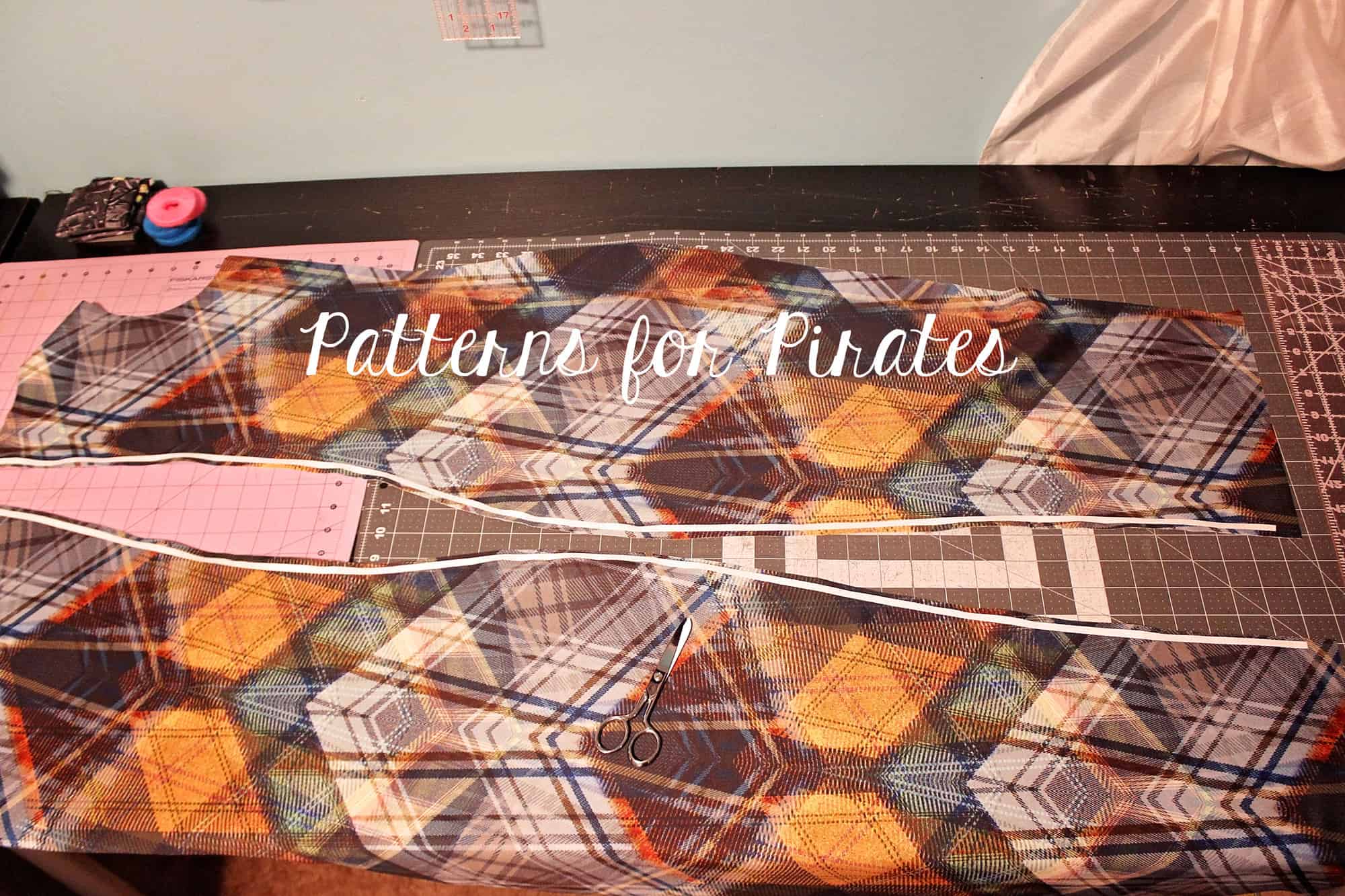
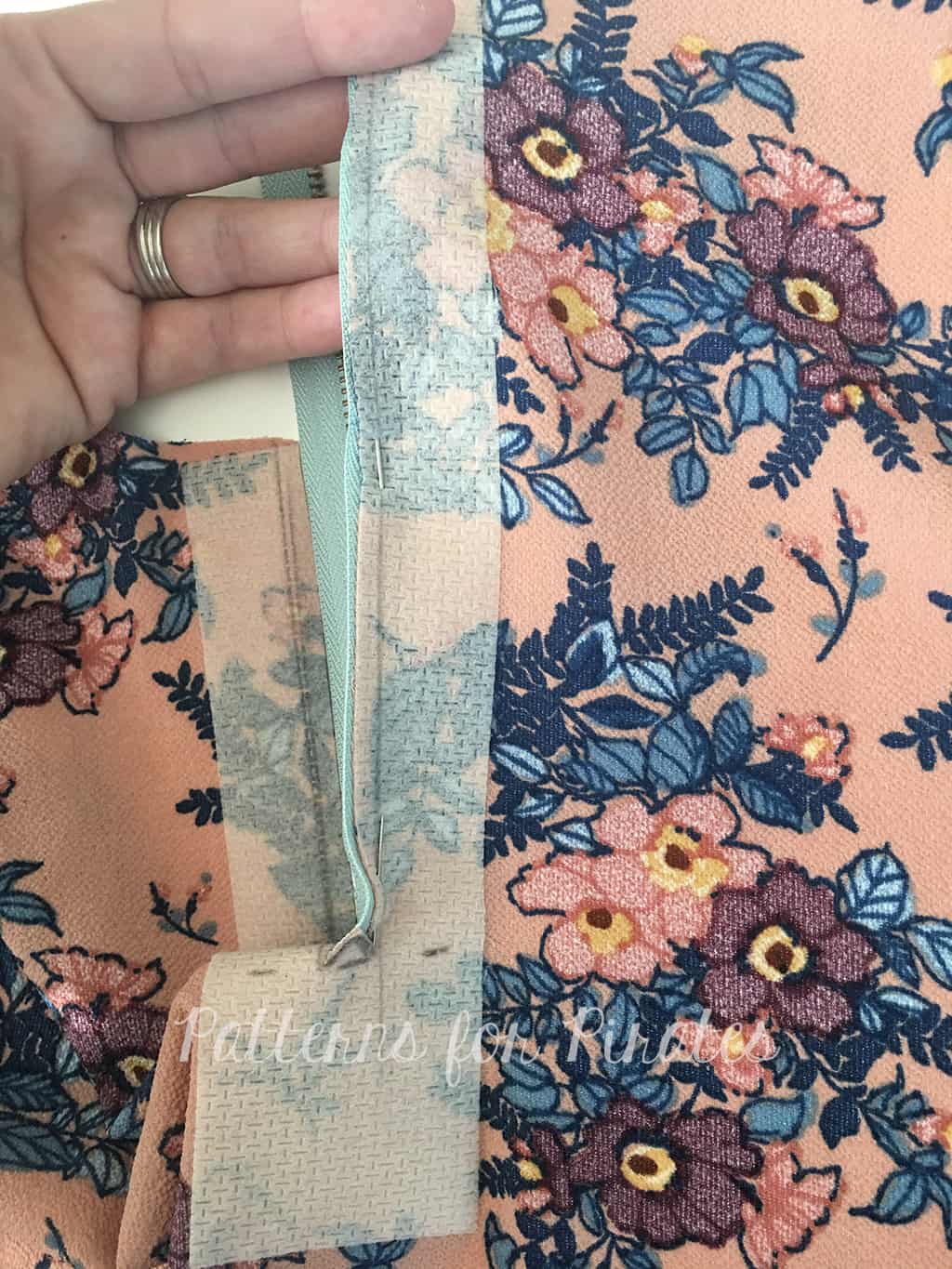
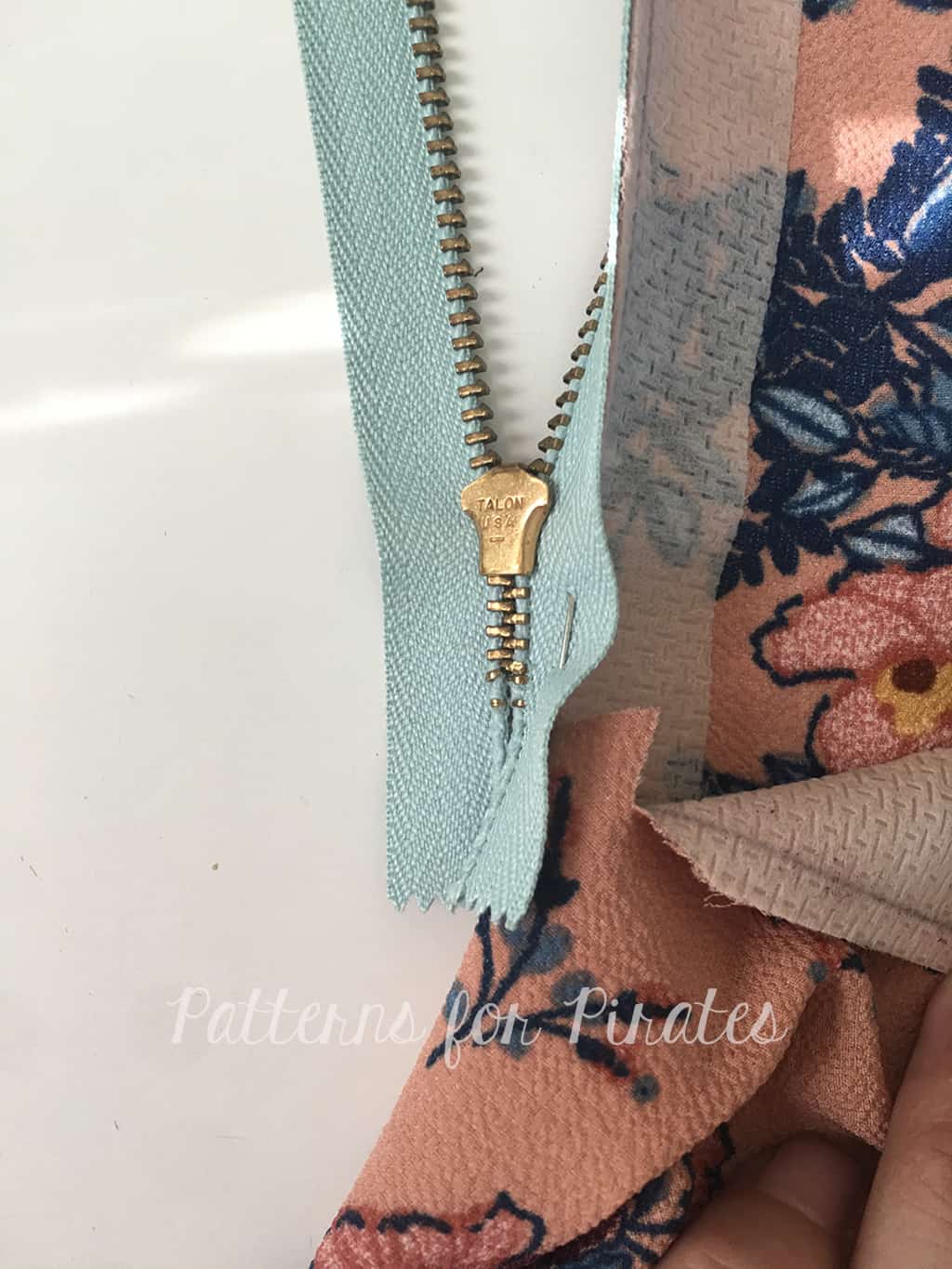
Remove the paper backing of the Wonder tape and adhere the zipper right sides together. Sew in place with a 1/2″ seam allowance.
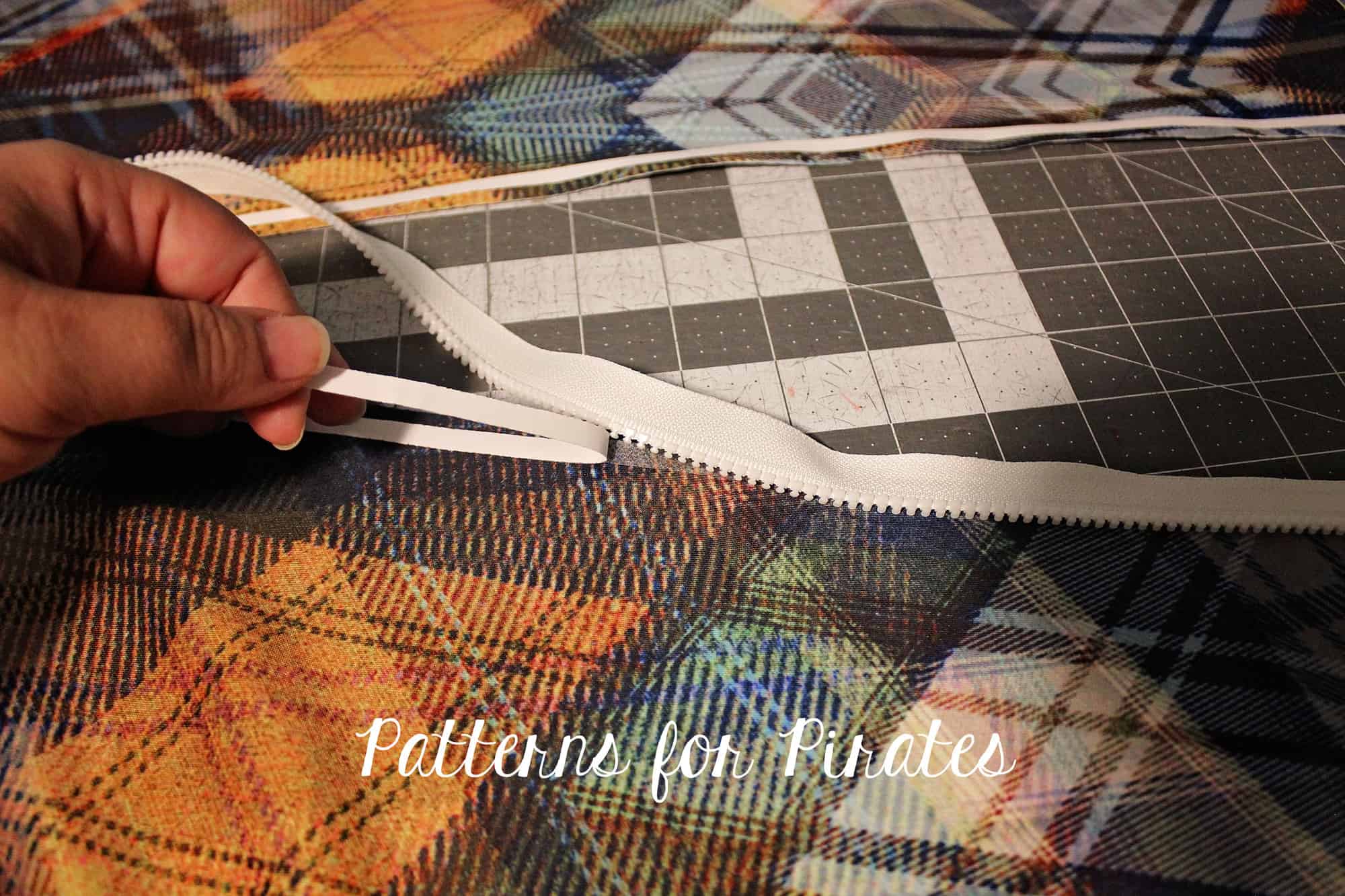
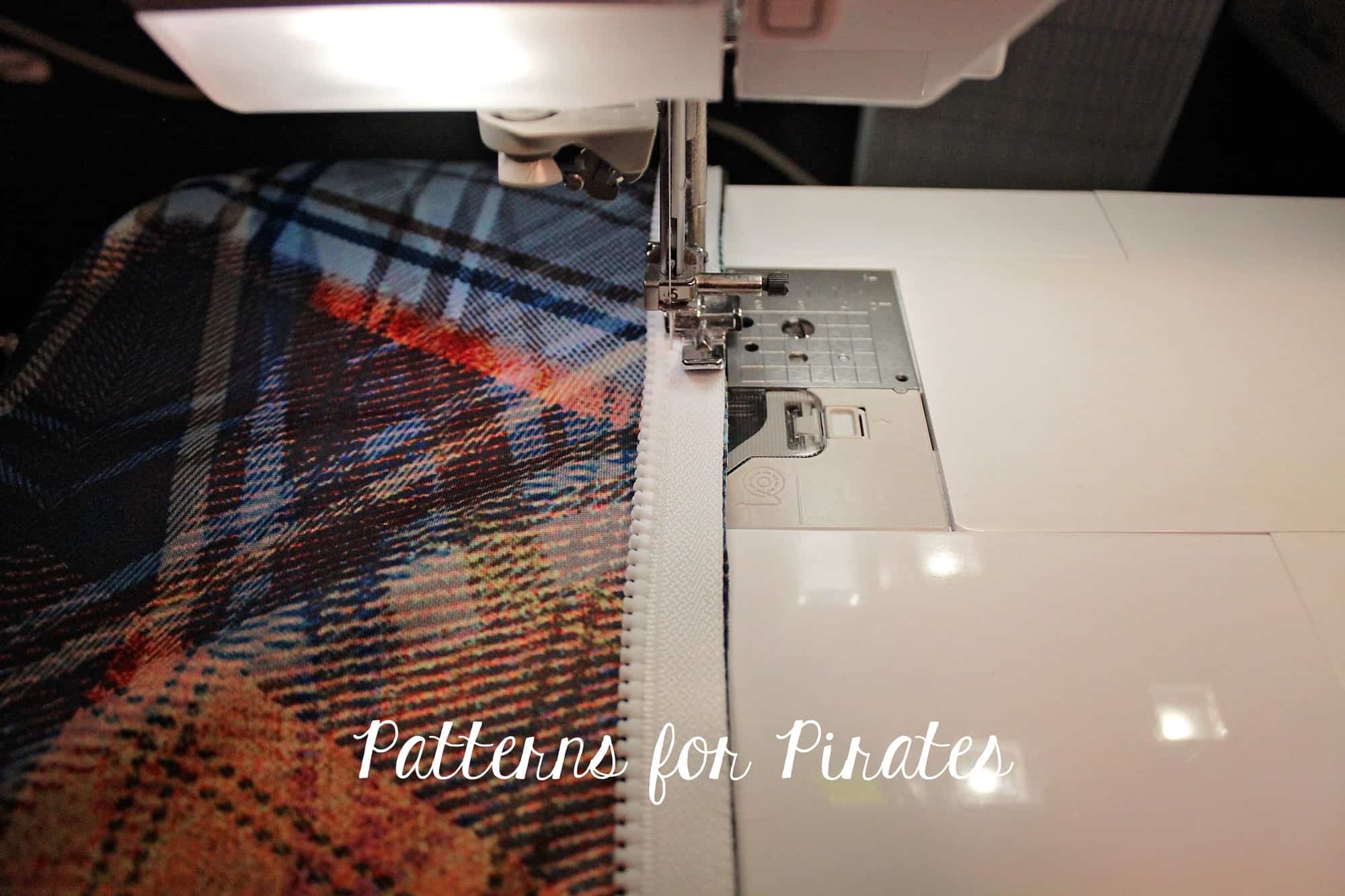
Zip up the zipper and place the other side of the back piece, right sides together, making sure that the bottom and top match.
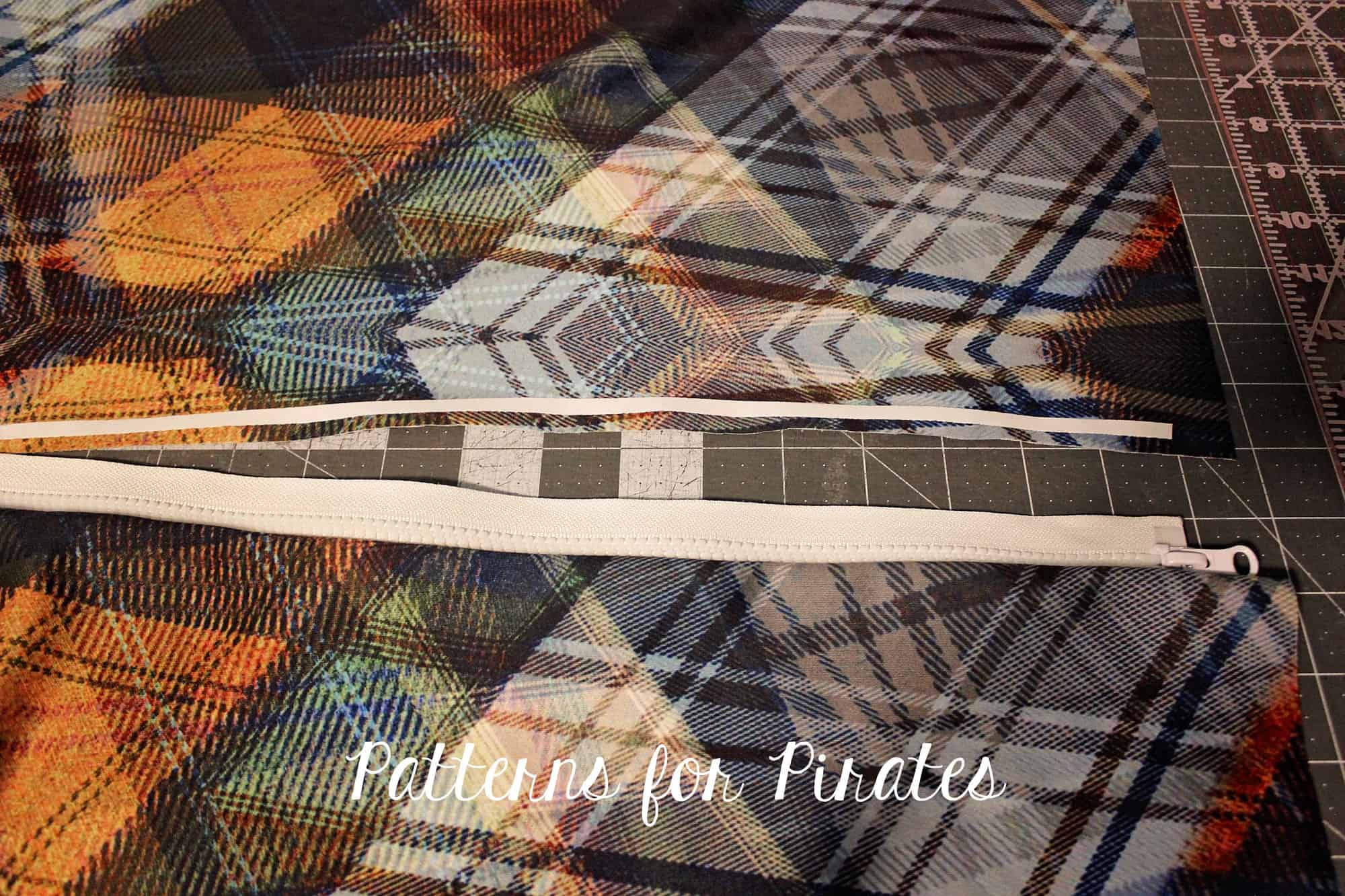
Sew in place and top stitch.

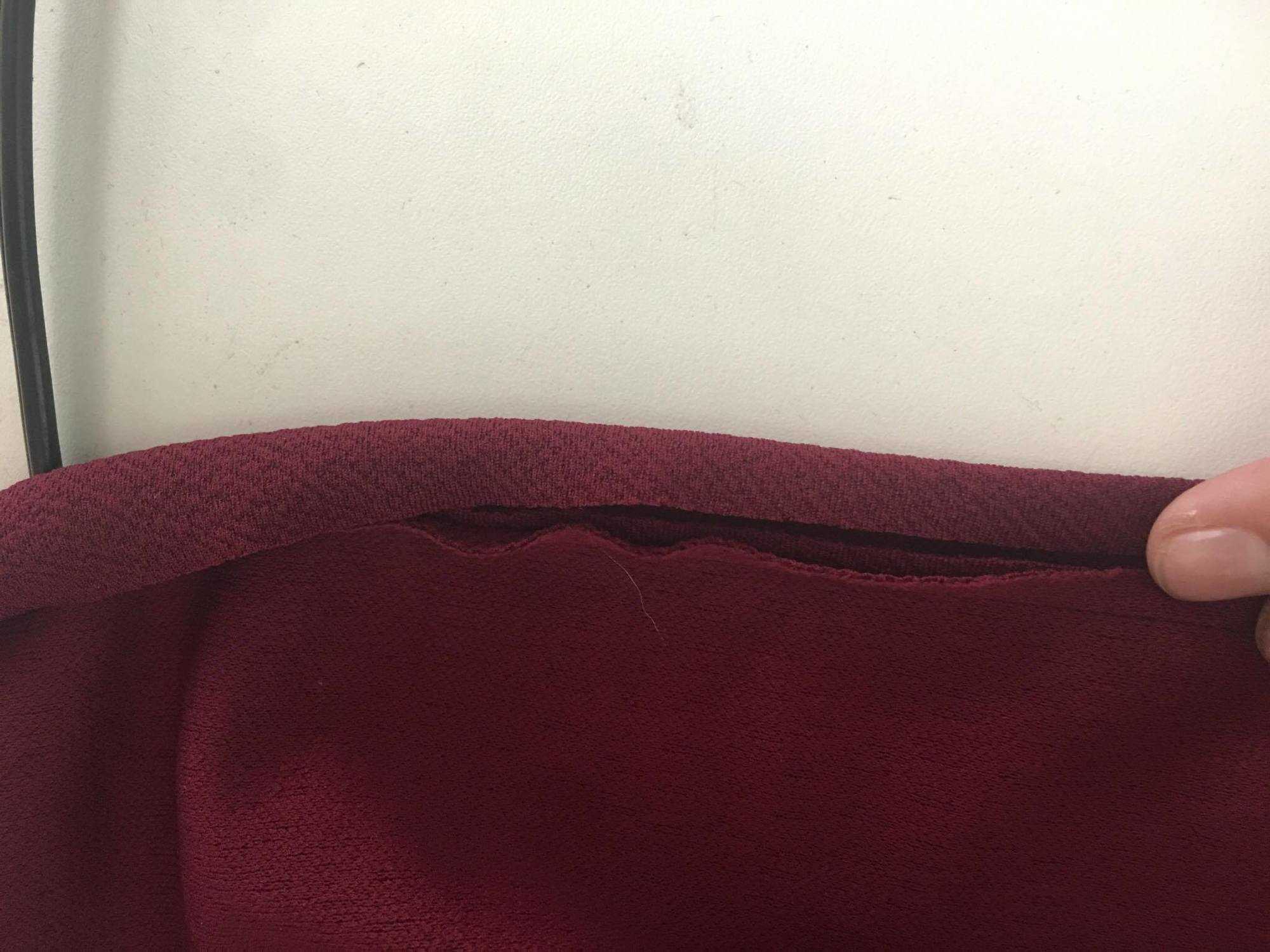
Now that you have your back piece ready, sew the dress as per the tutorial. You will be enclosing the zipper in the bottom hem as shown below.
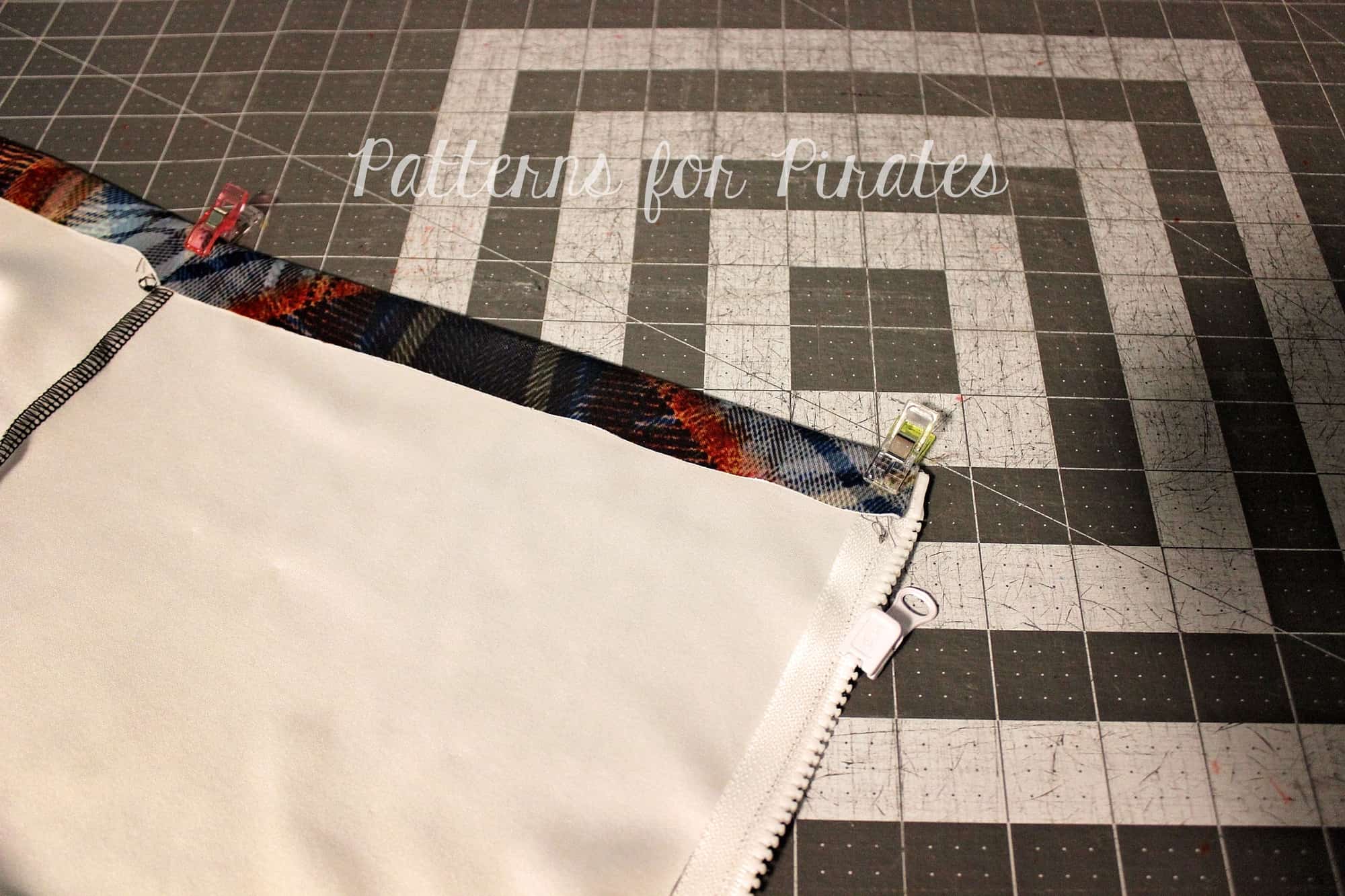
All done! Now all you have to decide is where the next date night will be! 🙂
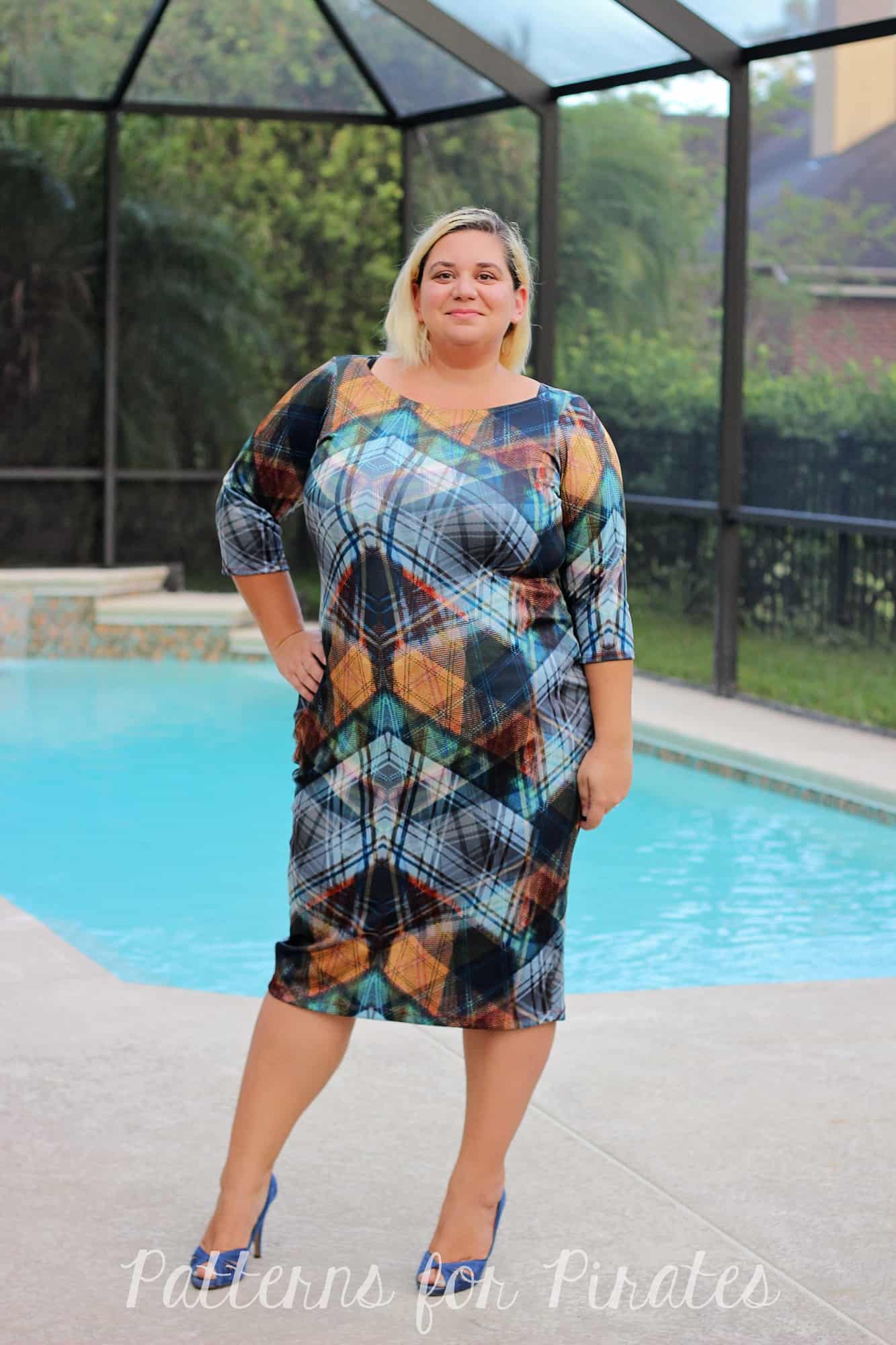
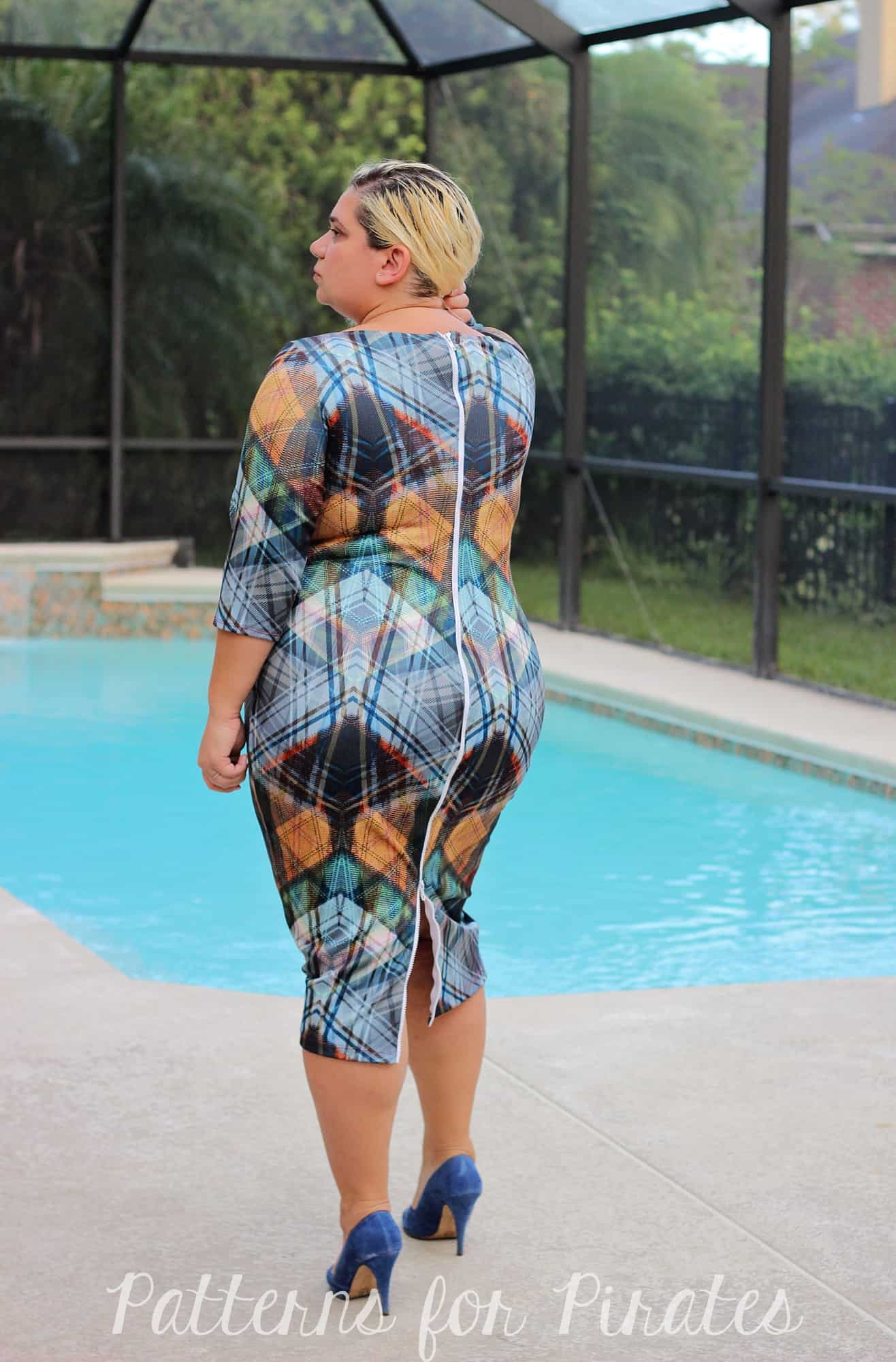
 

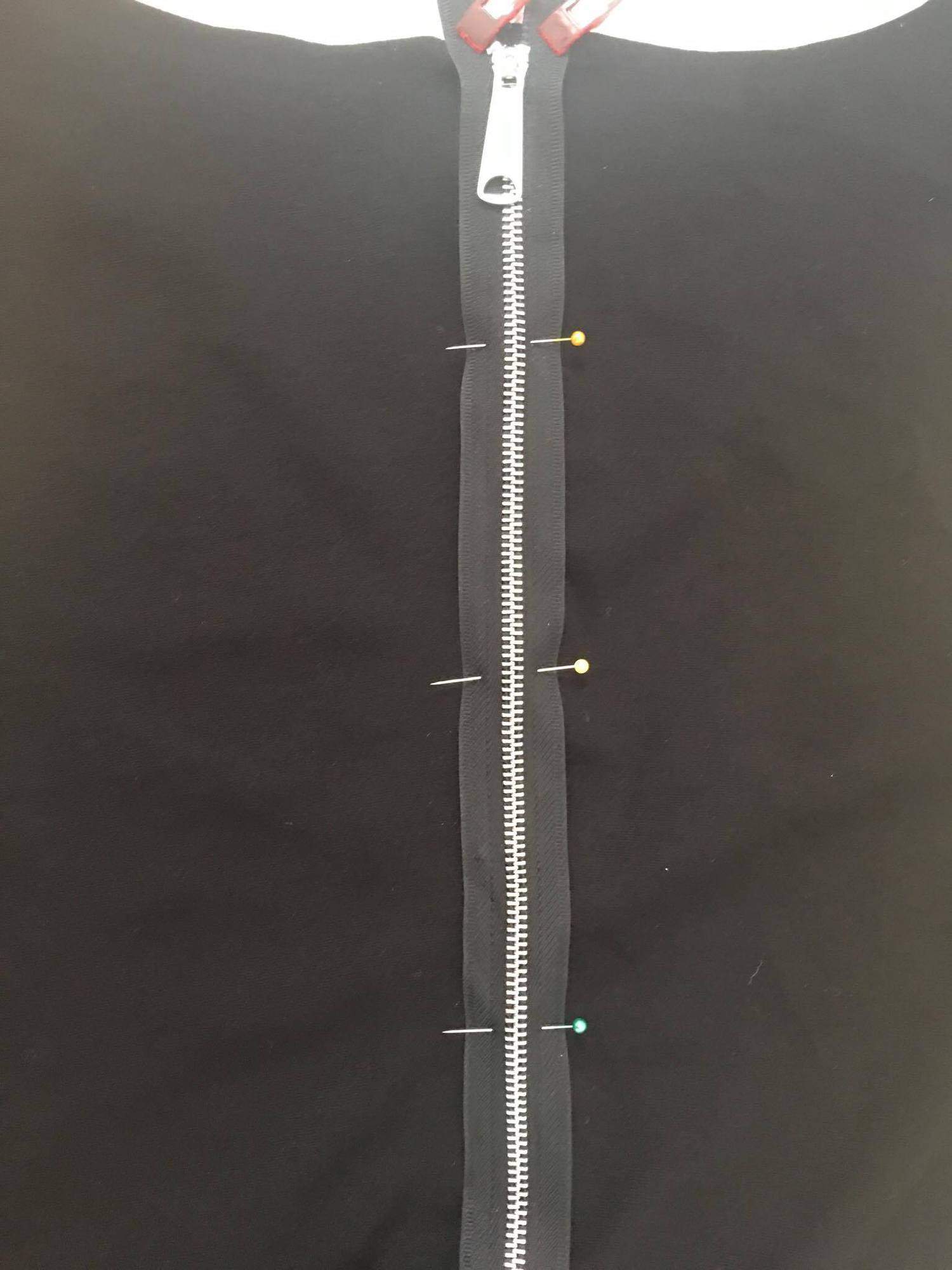
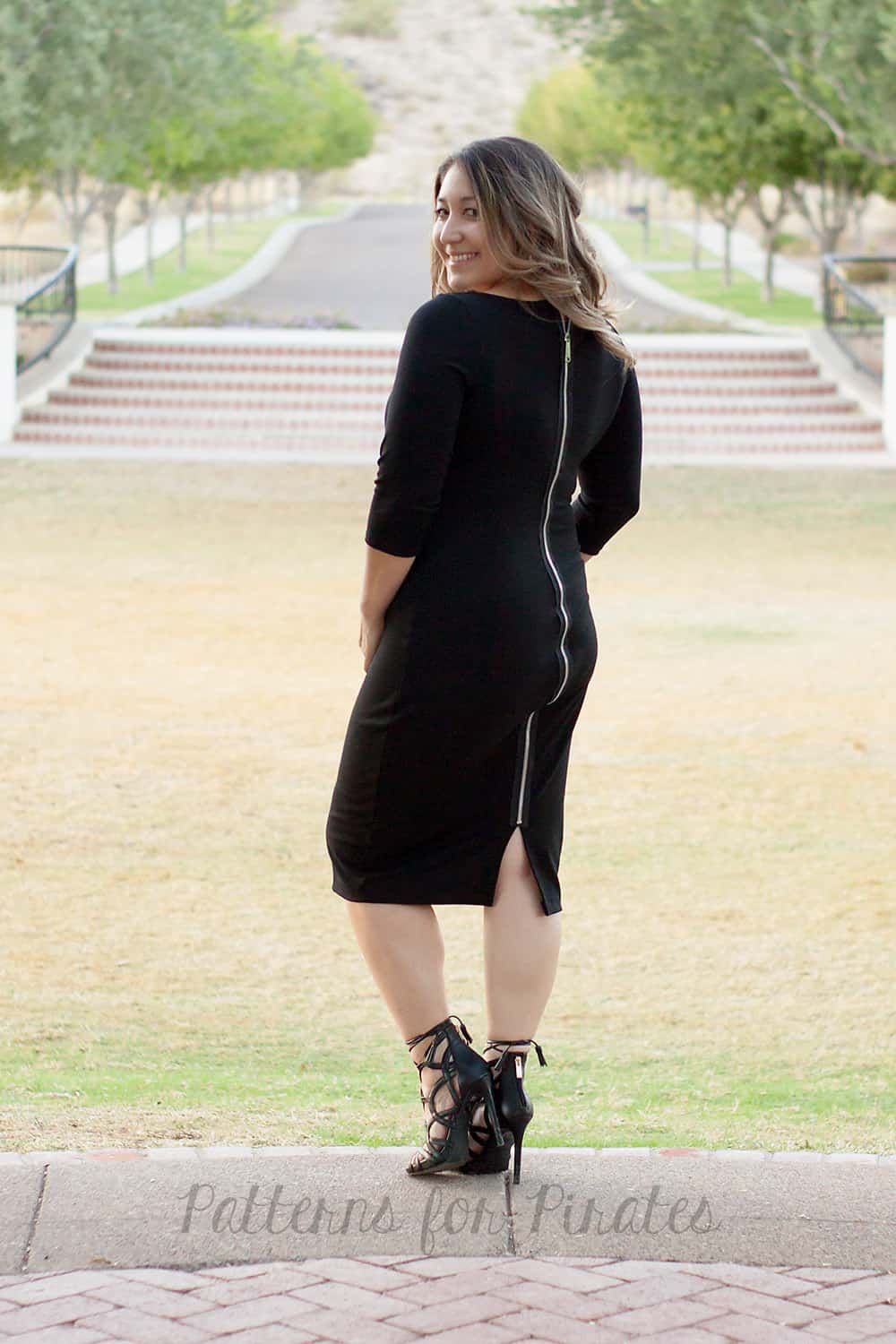
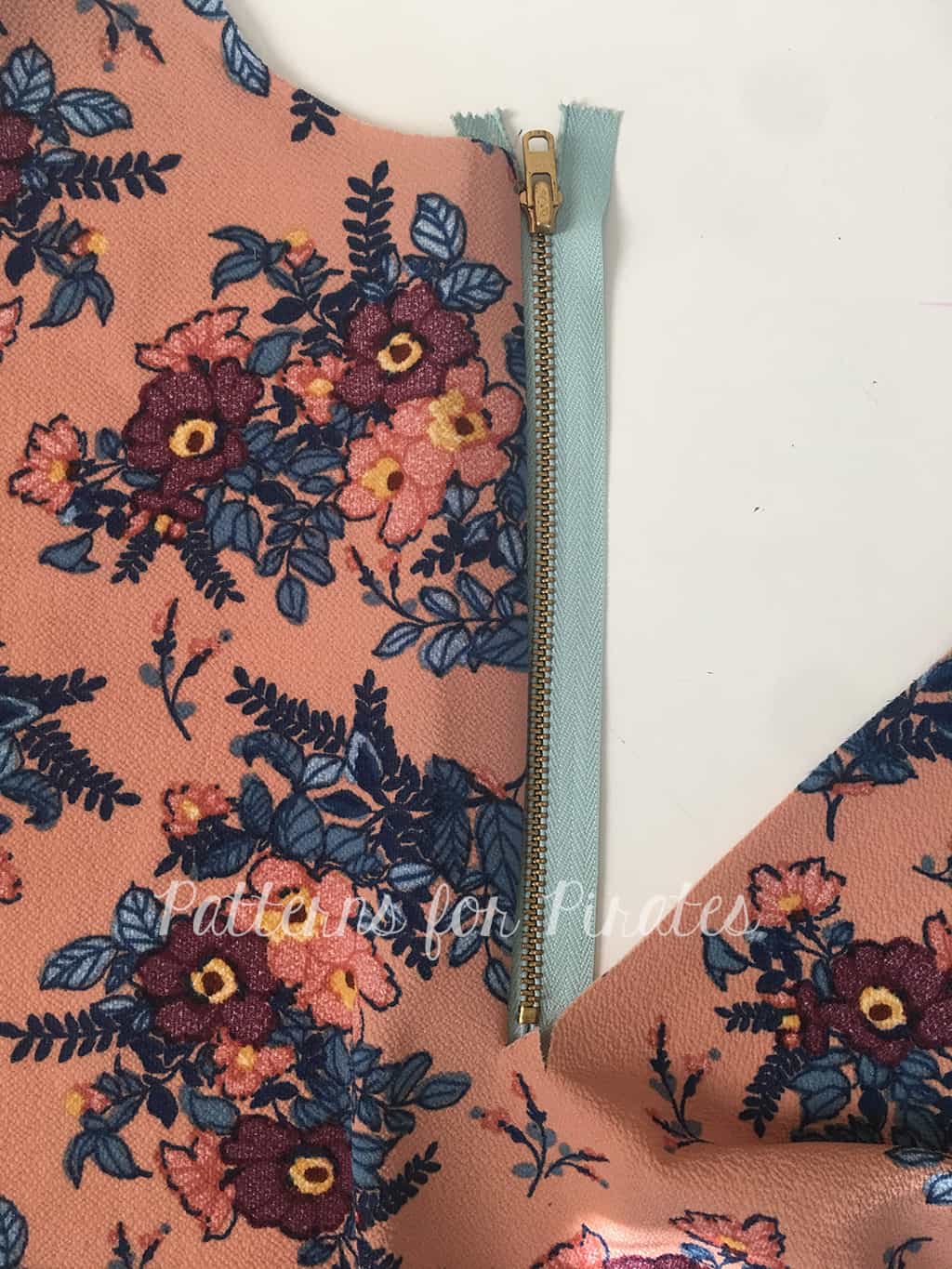
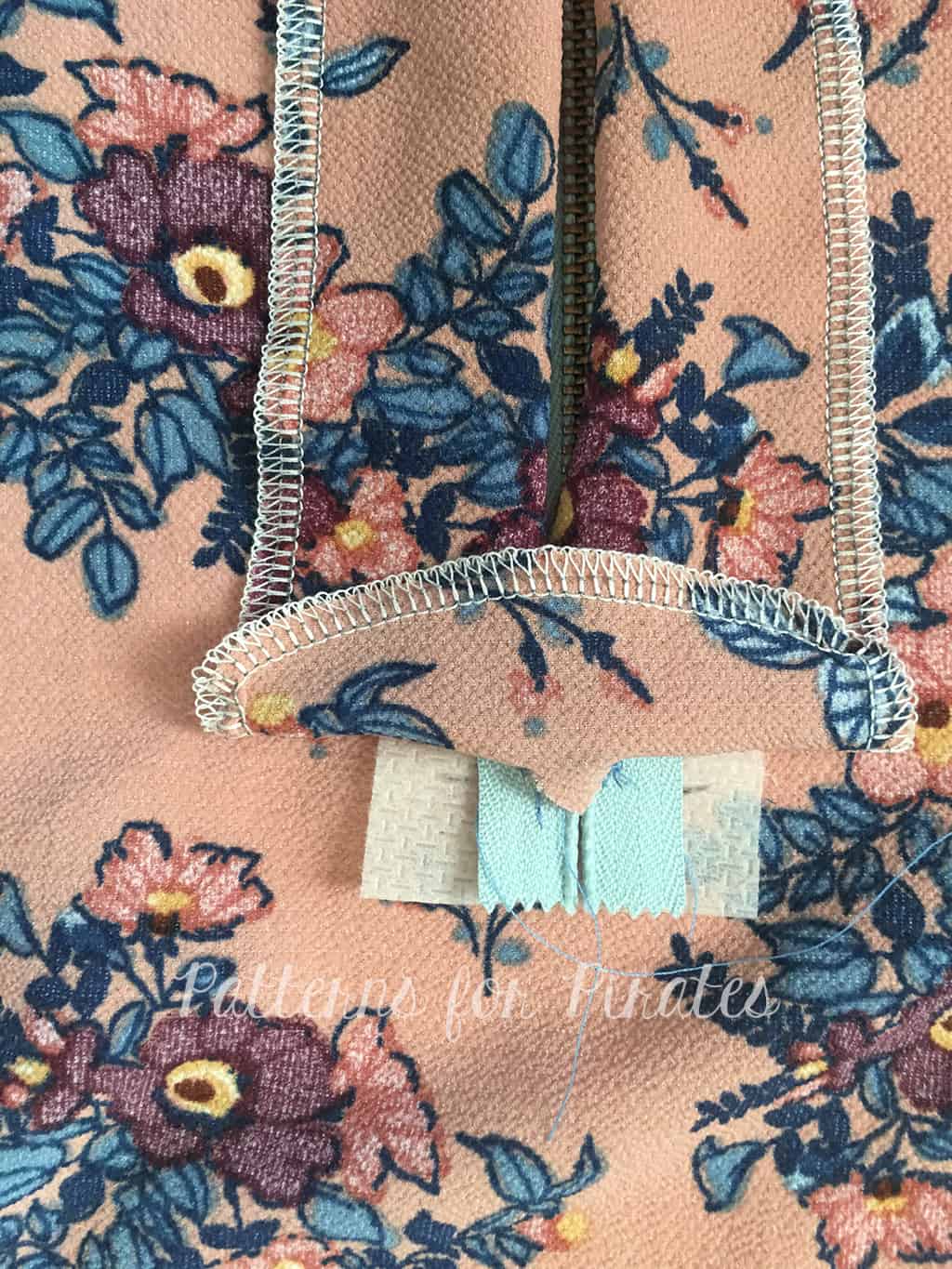
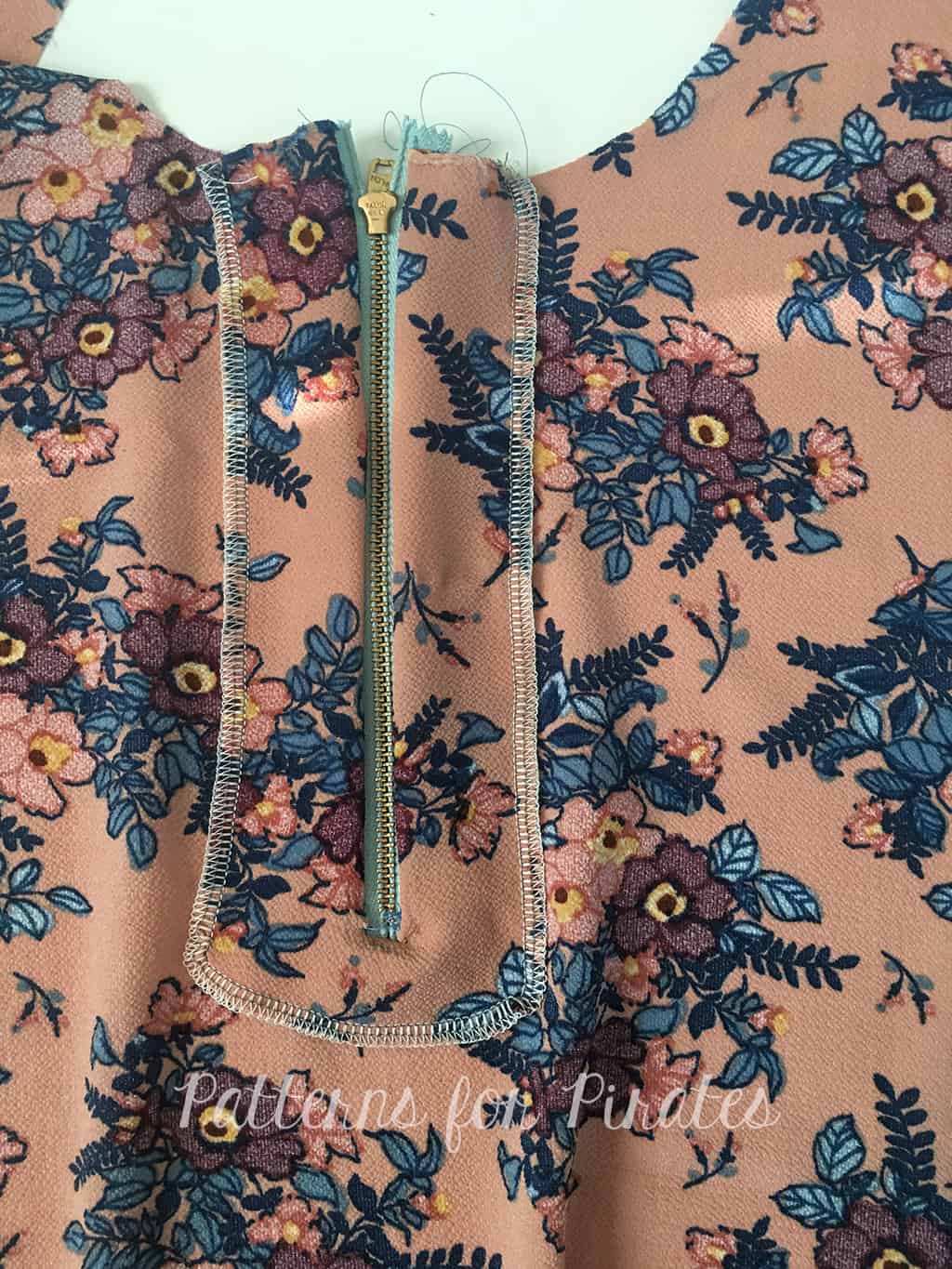
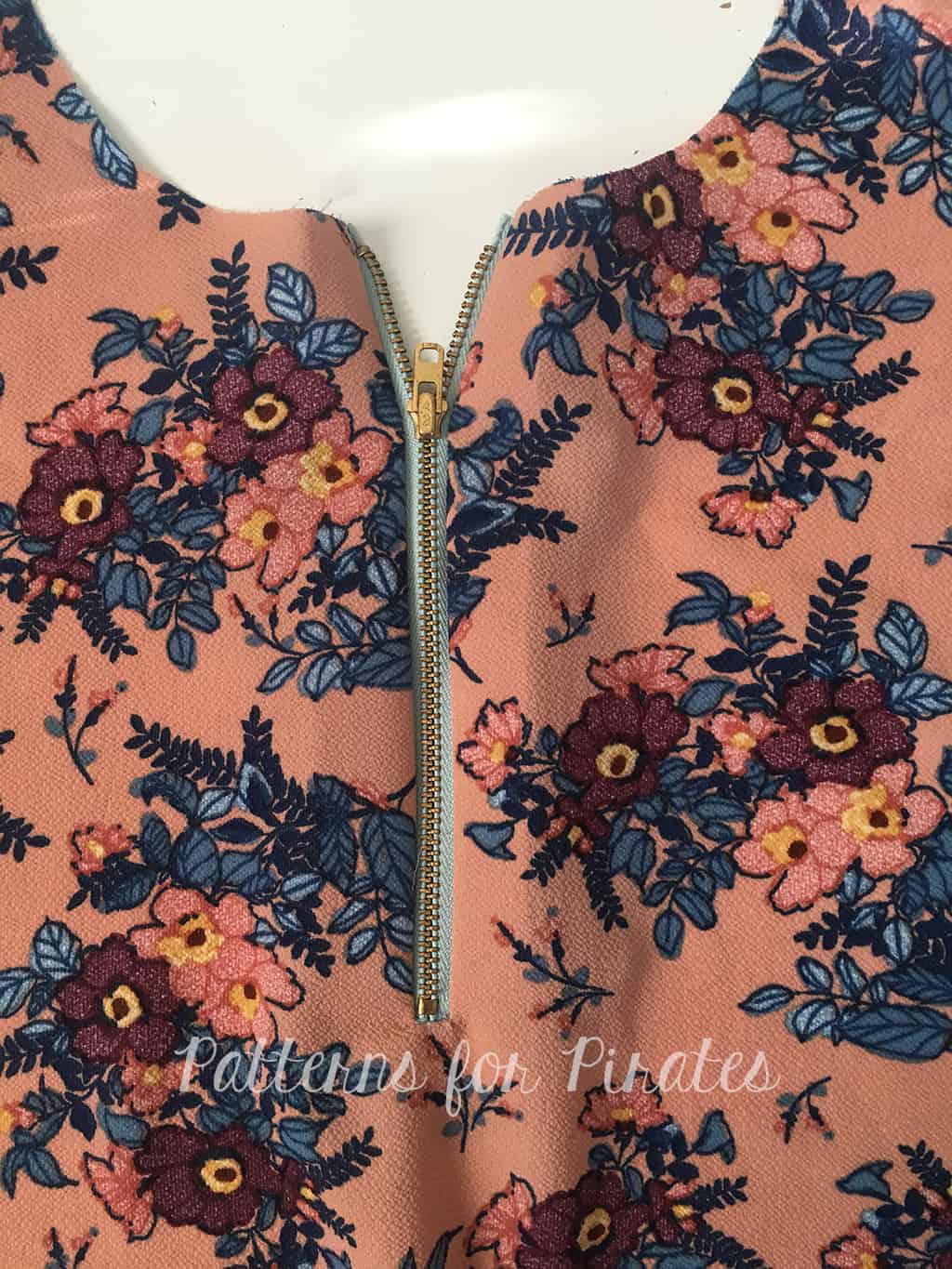
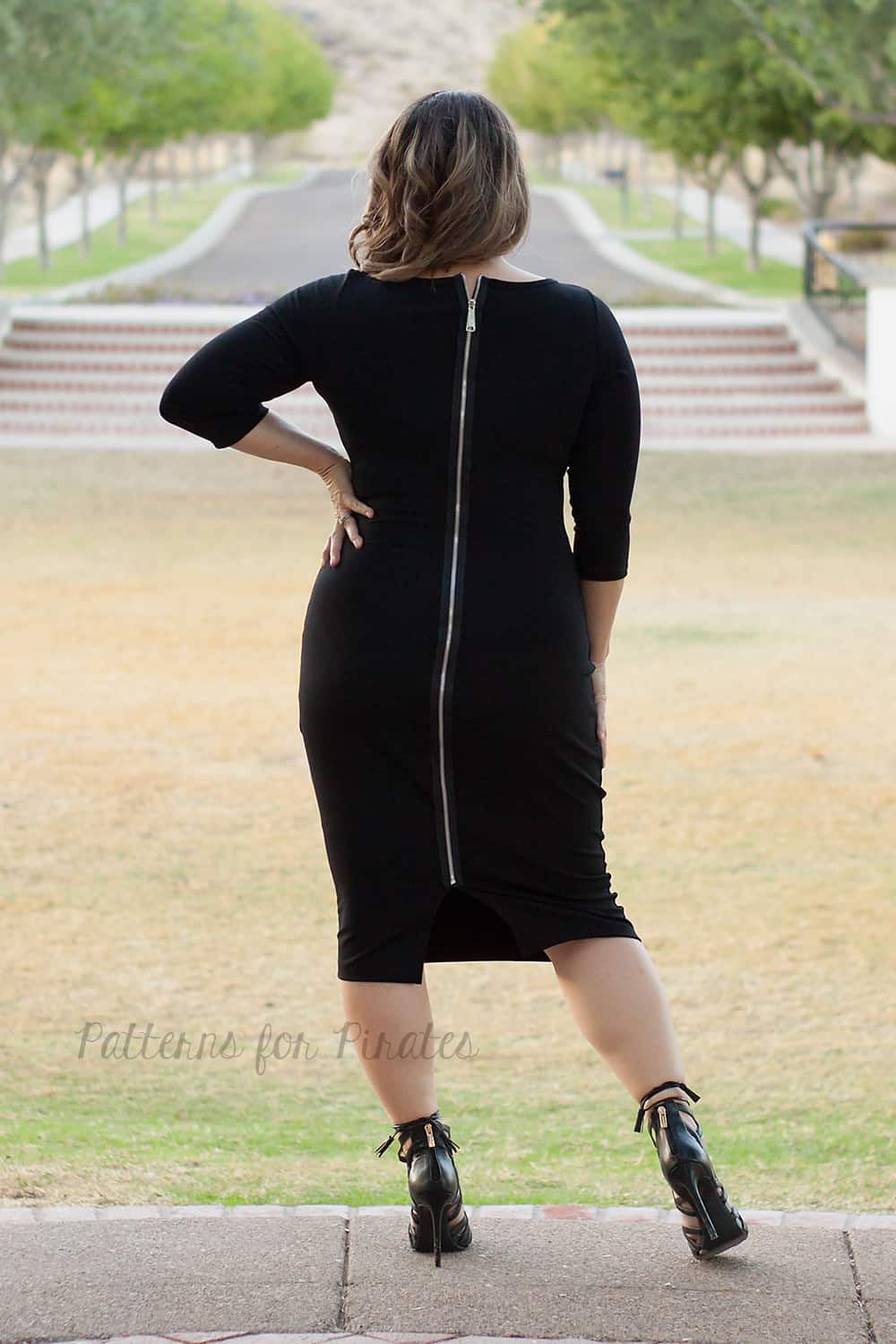
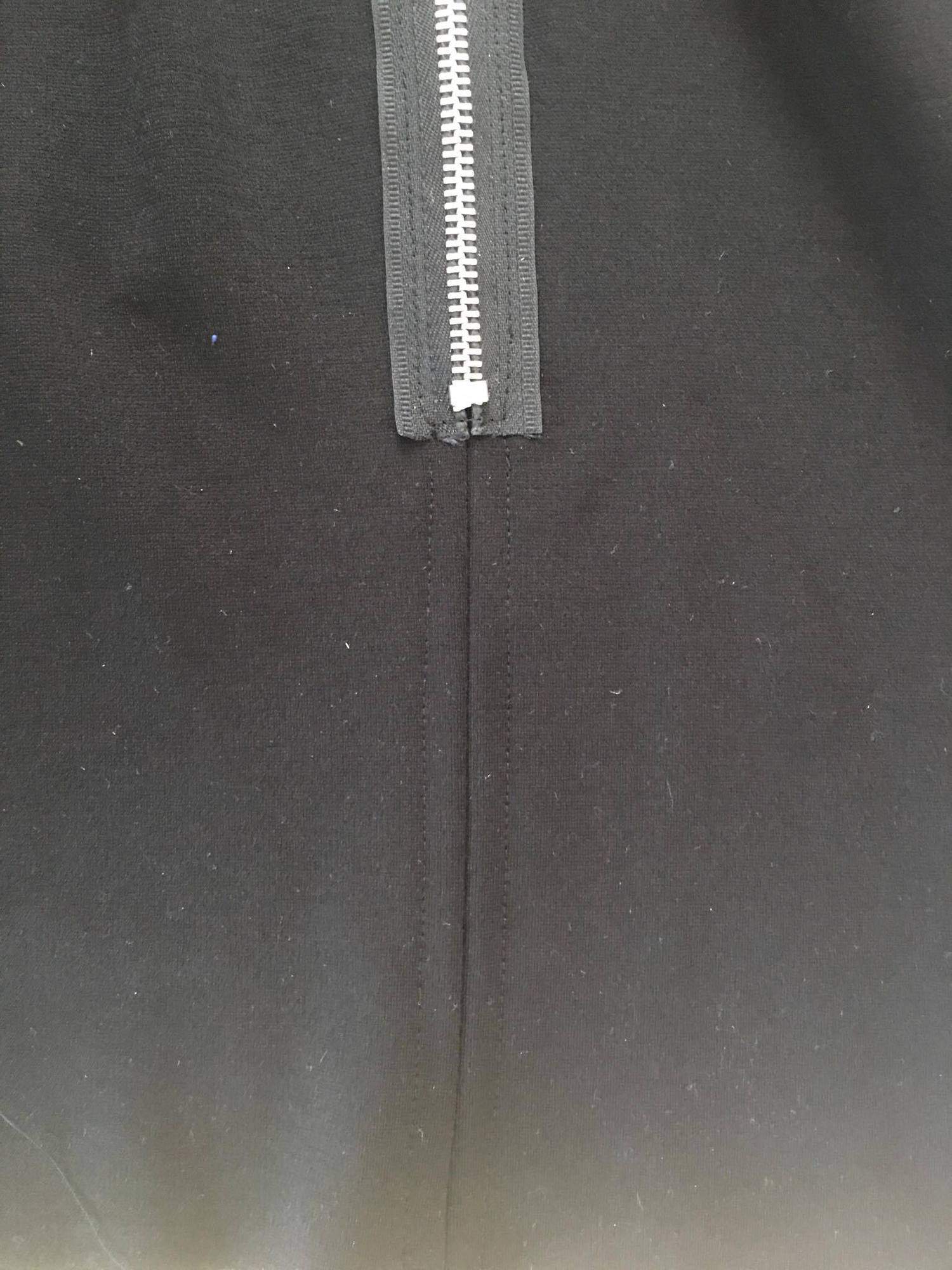
I loved the idea of a full-length zipper like Alex showed us above, but when it came to finding one locally, I wasn’t able to get one the length I needed.  I did find a chunky zipper that would be perfect to use as an exposed zipper and just so happened to work out that it’s finished length was about knee length.  I opted to go with the midi length and do a split hem at the center back.  You will install your zipper the same as you would in the tutorial, except place it on the RIGHT side of the fabric with the wrong side of the zipper centered along the back seam.
Place zipper on top of the center back seam.
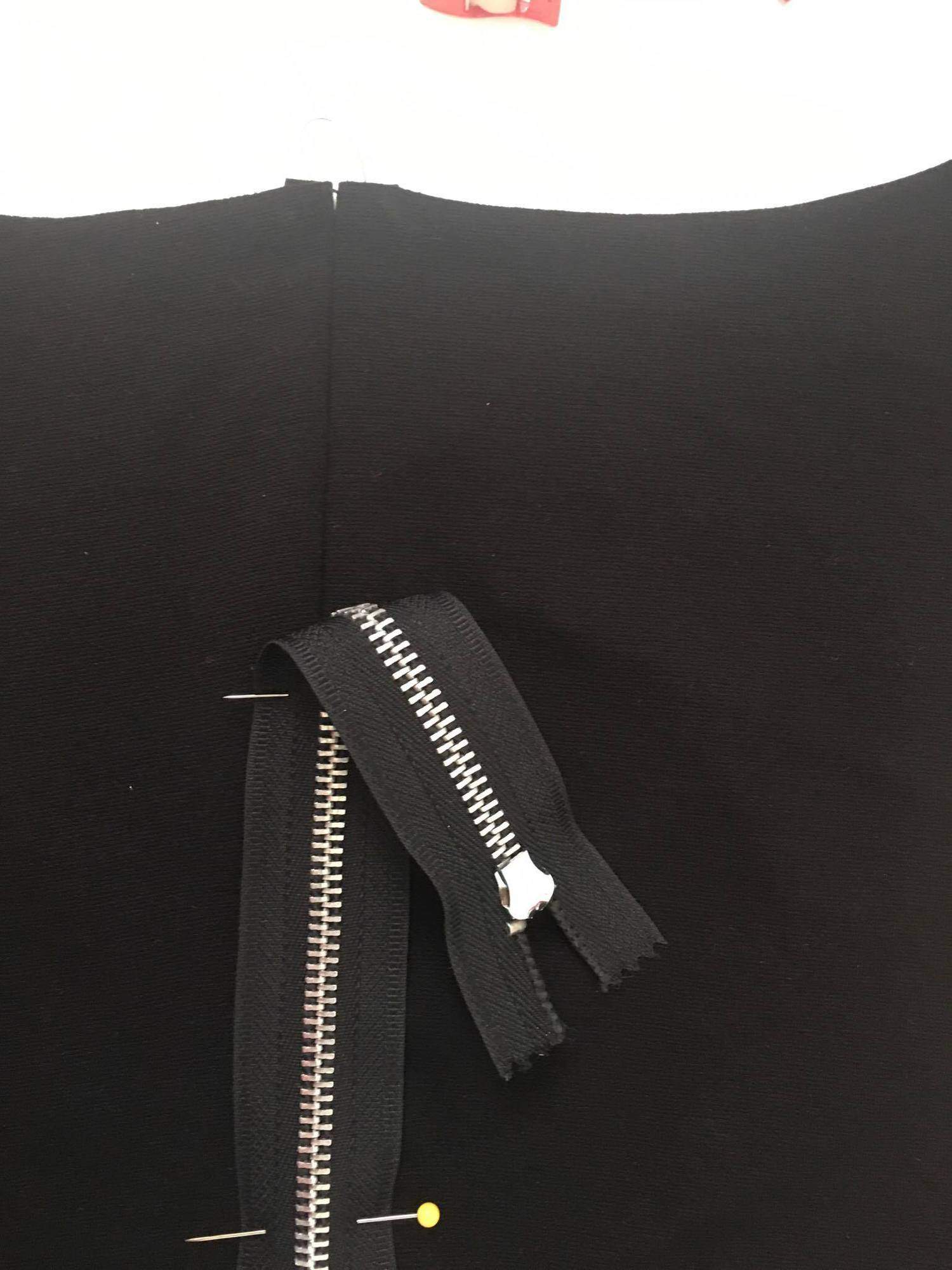
Pin in place and topstitch.
View from Back
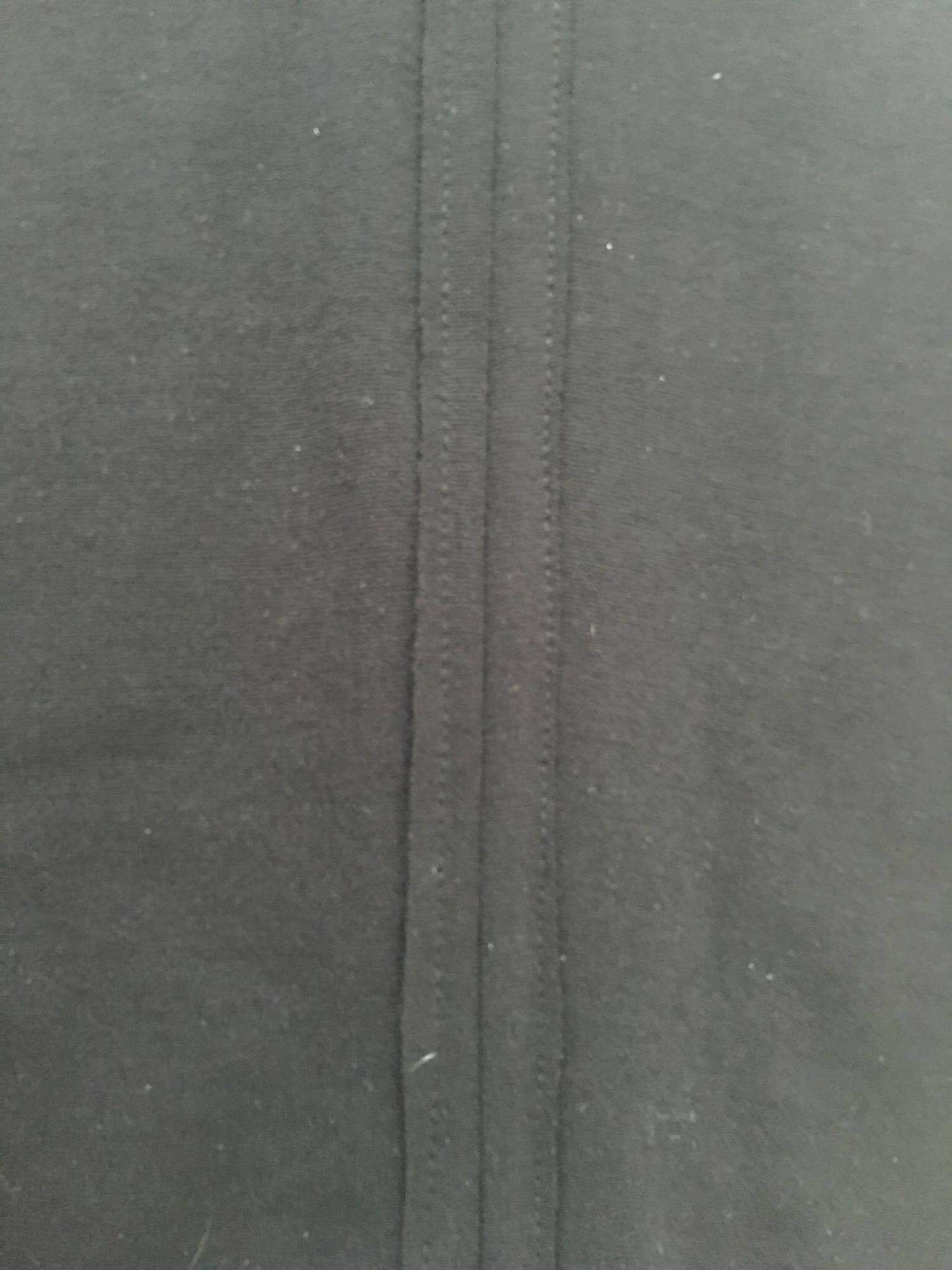
Fold the remaining center back seam to the wrong side and topstitch.

…..

Lace Applique
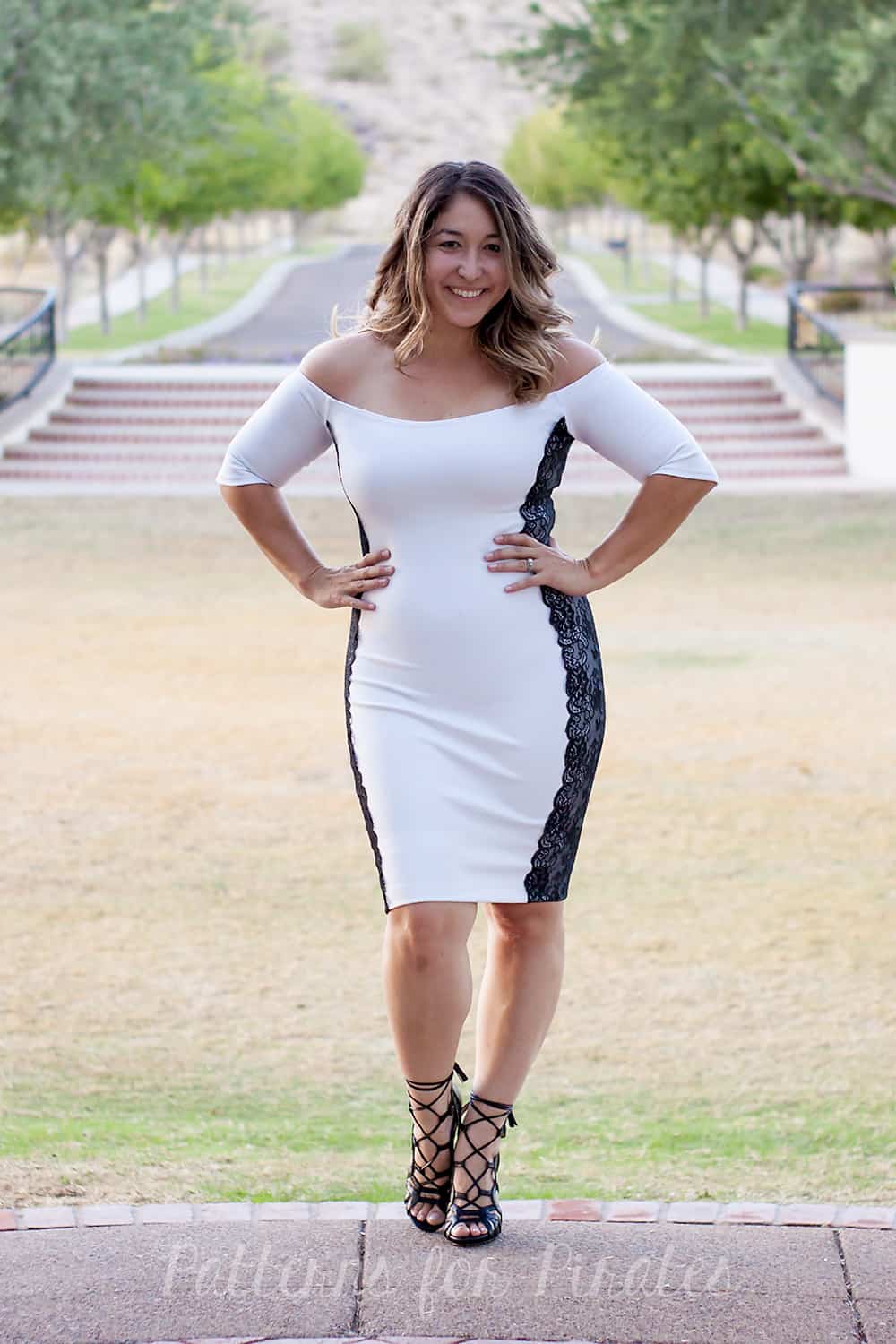
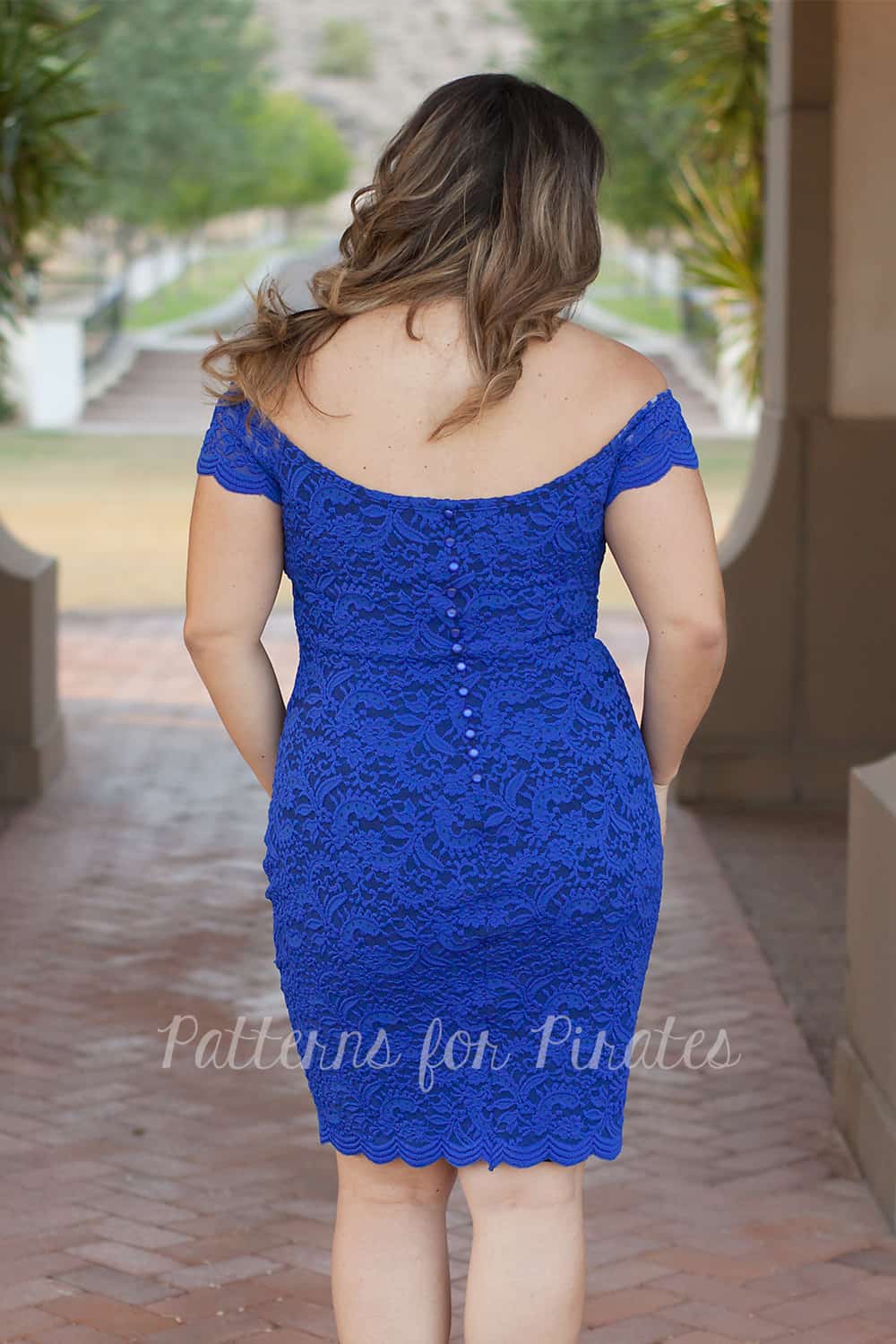
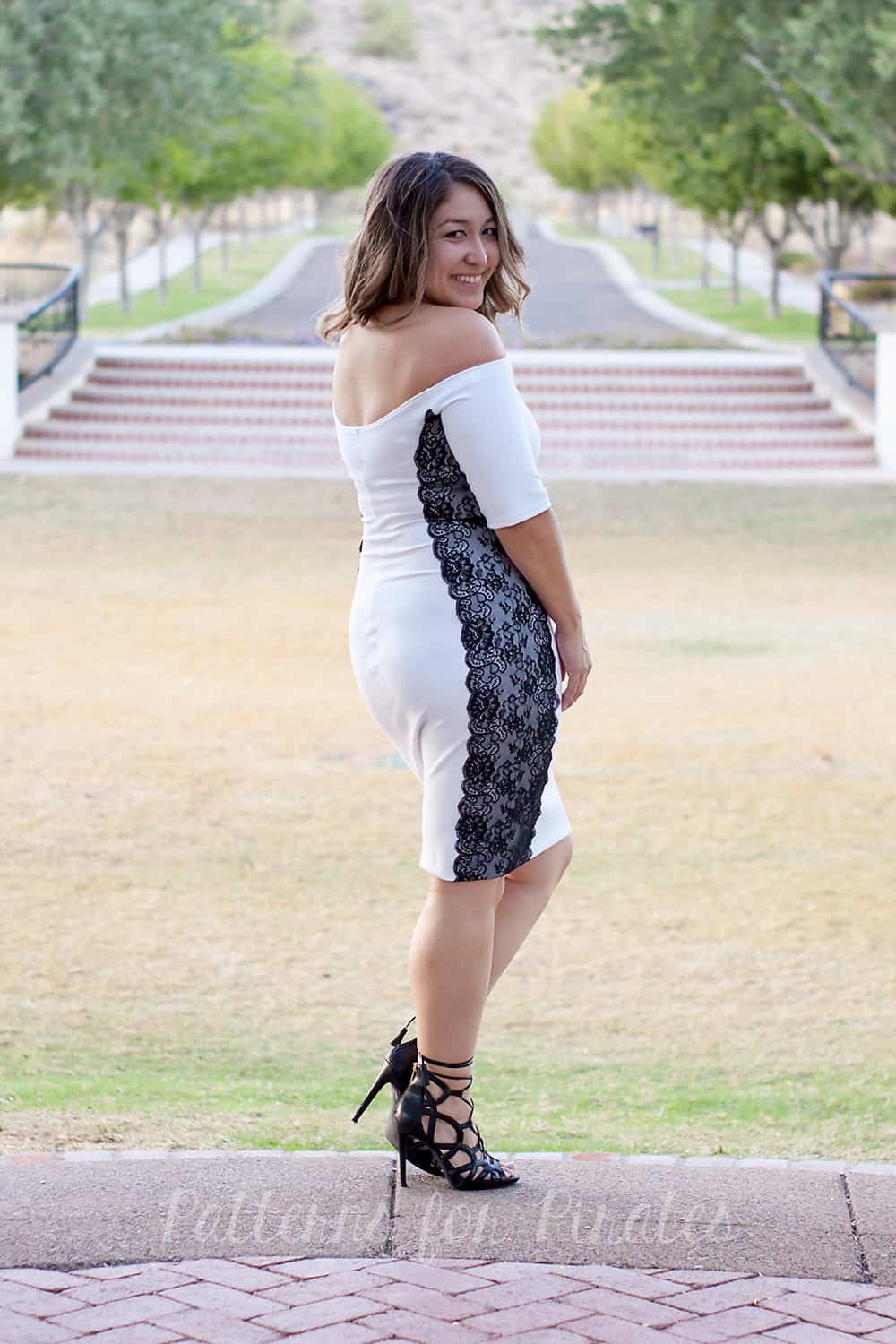
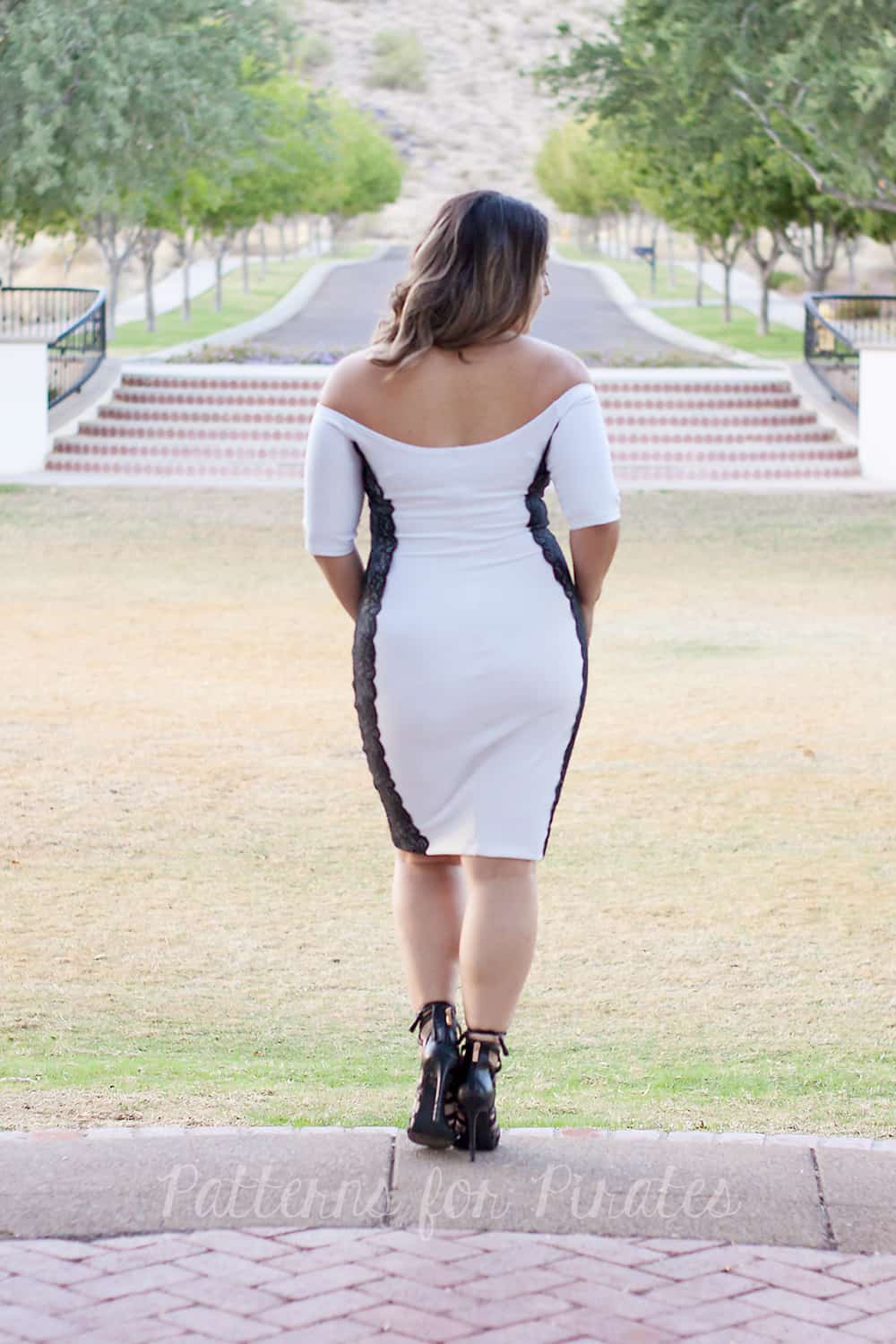
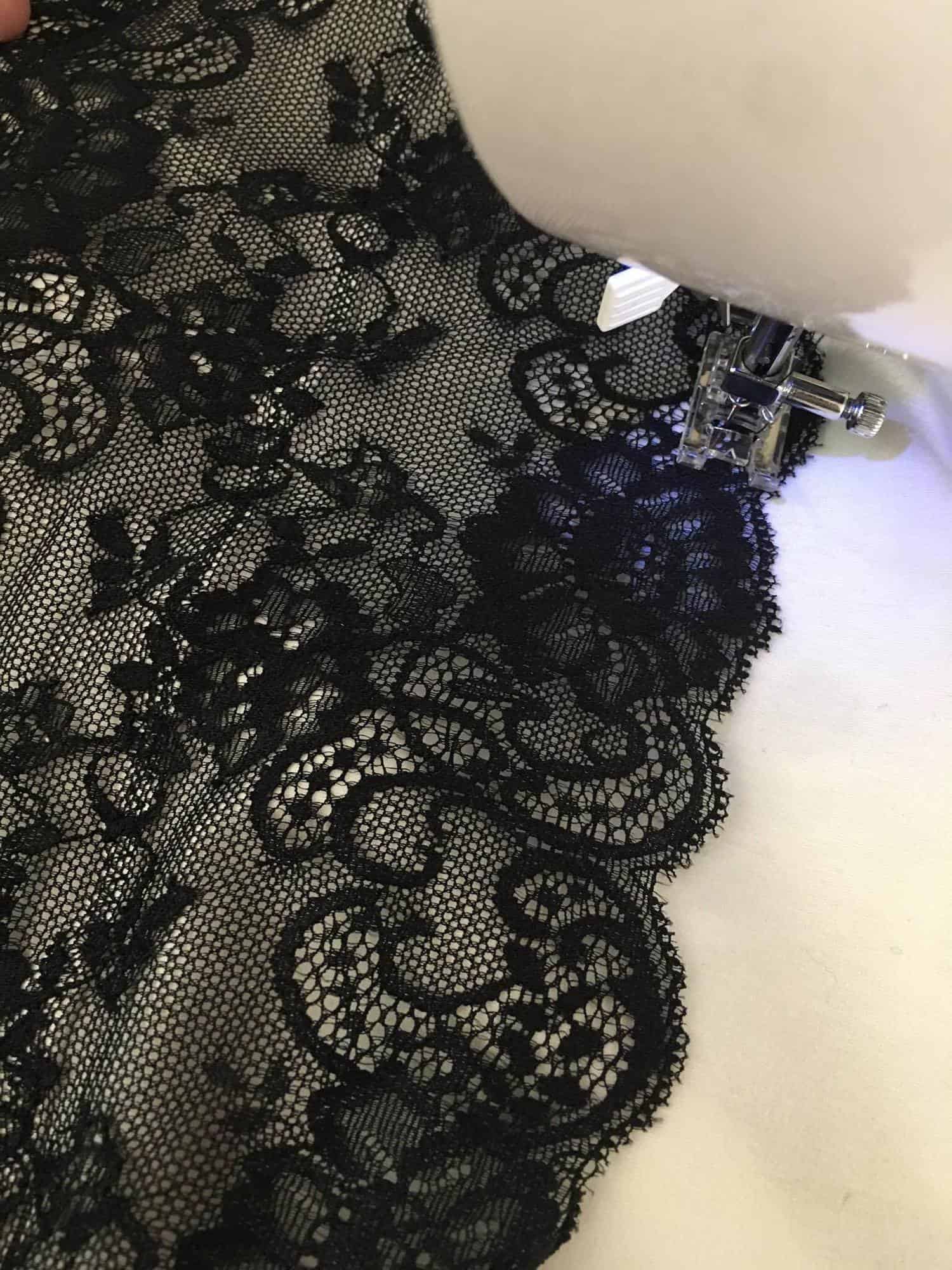
I’ll be honest, Judy created this dress while we were pre-testing and I had to replicate it.  Adding a lace applique is super easy but adds a super sexy and classic flair.  For this particular version, the lace extends along the entire side seam, so I constructed my bodice first, added the lace to the top, then sewed my sleeves on so that the lace was enclosed in the armscye.  You can, of course, add lace wherever you’d prefer, such as the neckline or bottom hem but I love the silhouette the wide stripe gave from the front and back.   I used a fairly narrow zig-zag stitch down the center seam and along each edge of the stretch lace trim.  Be sure to keep your lace taut as you sew along the waist and hip curves.

…..

Front Leg Slit
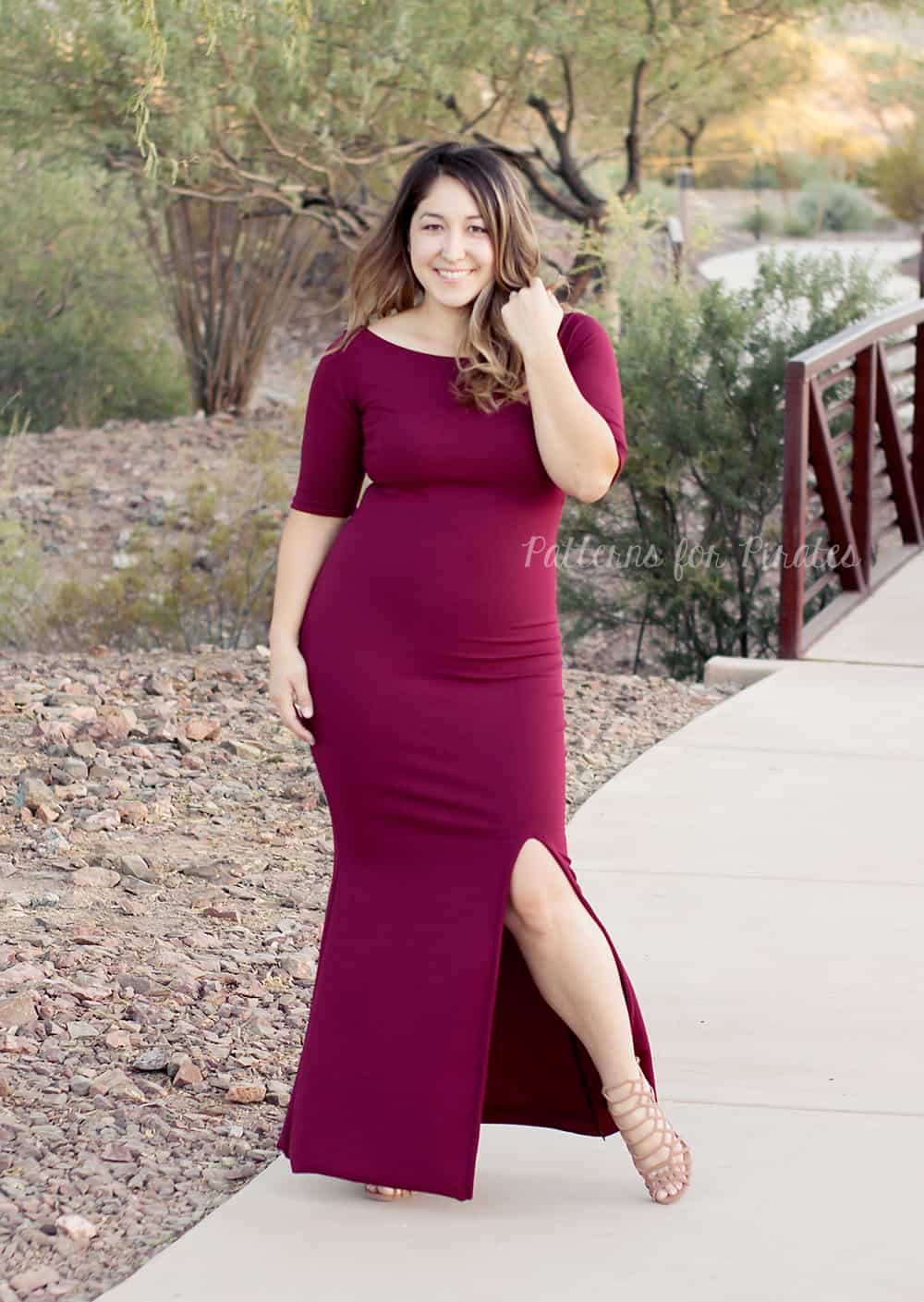
What sexy dress doesn’t include a slit!  Show off those legs and add a front slit to your wiggle.

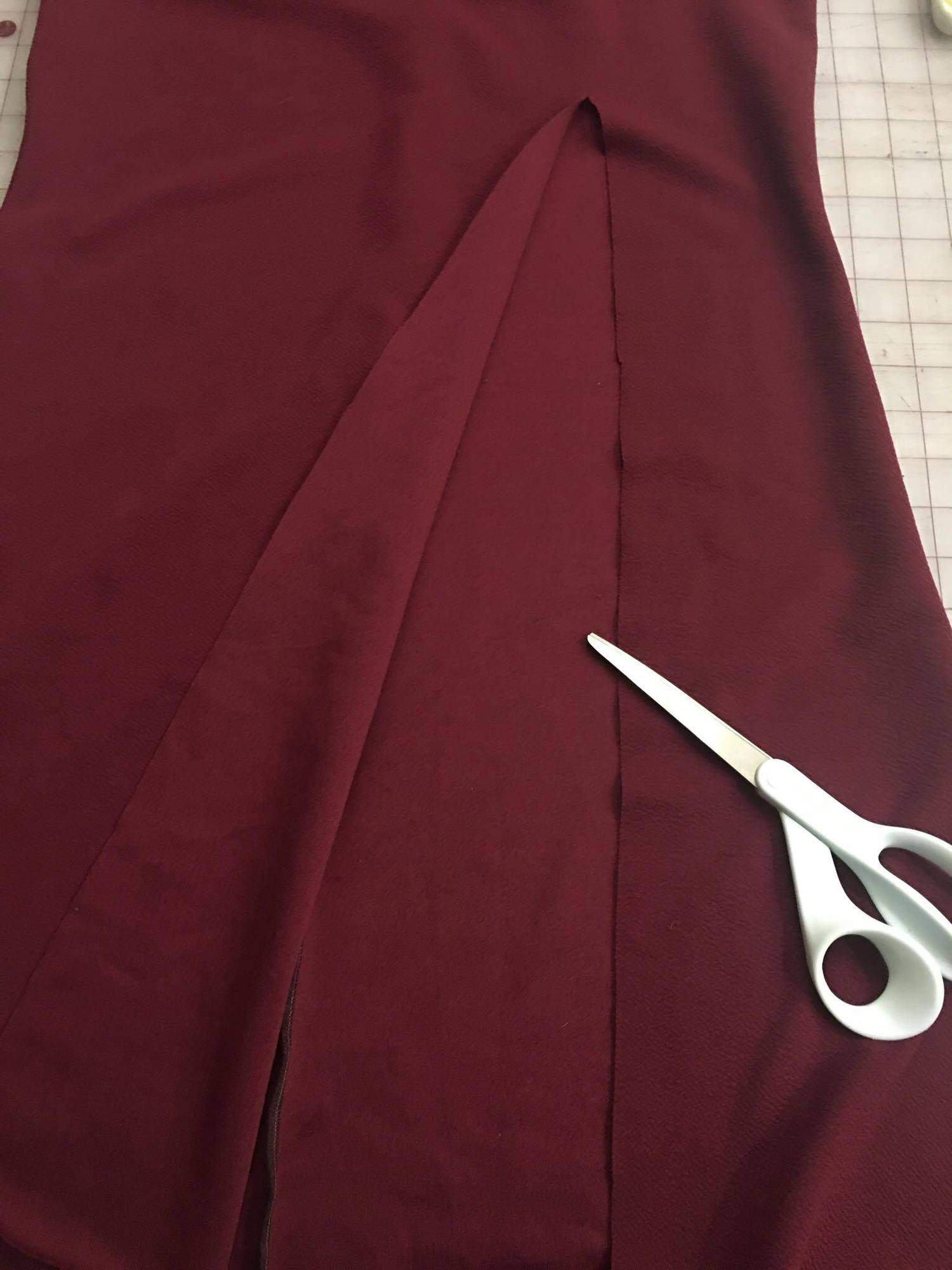
Try on your dress and mark where and how high you would like your slit. For reference, mine is 24″ from bottom hem (just above the knee) and is about half the distance from the center (1/4 point).
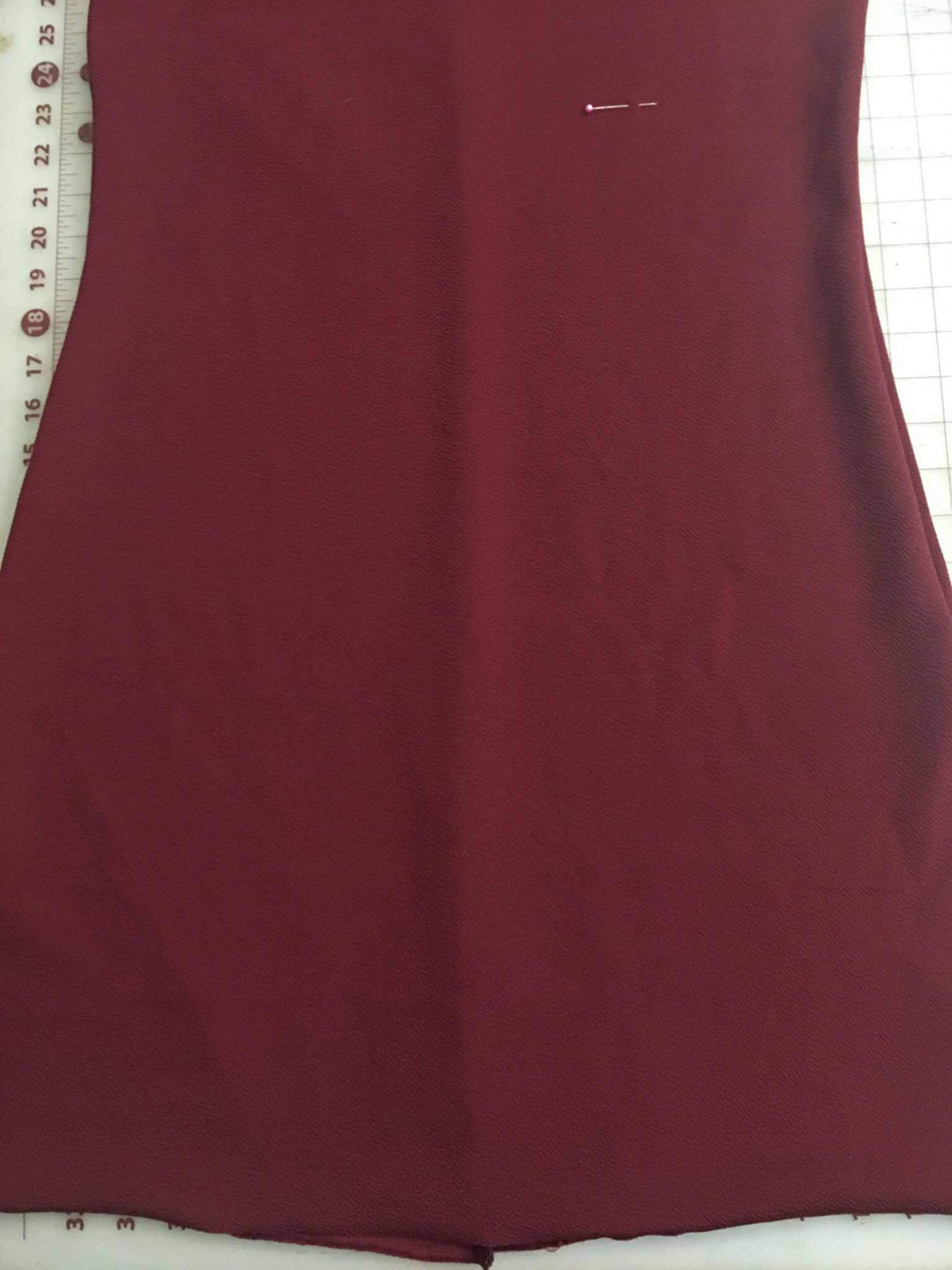
Cut the slit.
Cut 2 binding strips 1 1/4″ by the length of your slit.
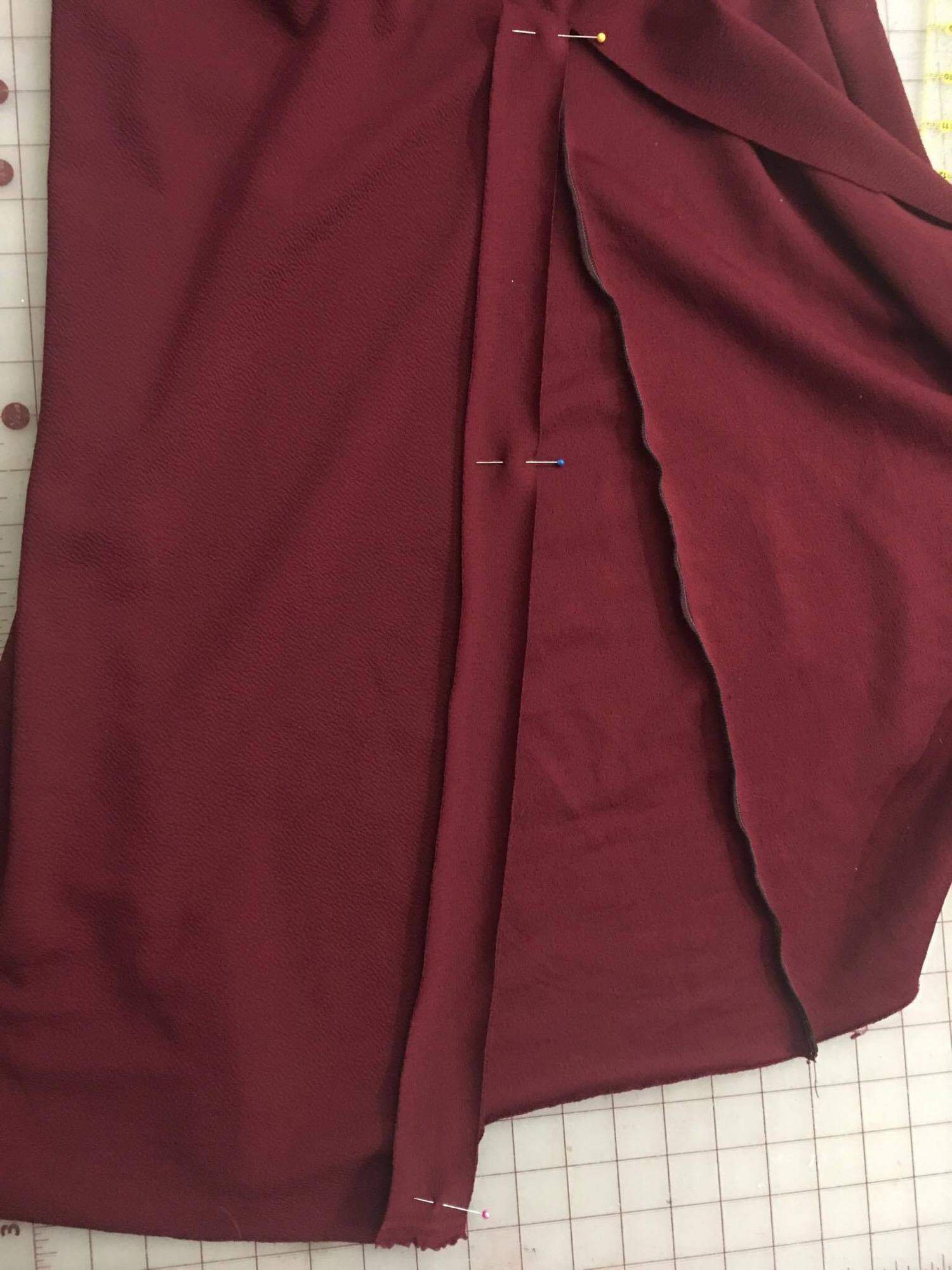
With right sides together and using a 1/4″ seam allowance, stitch binding to each side of the slit.
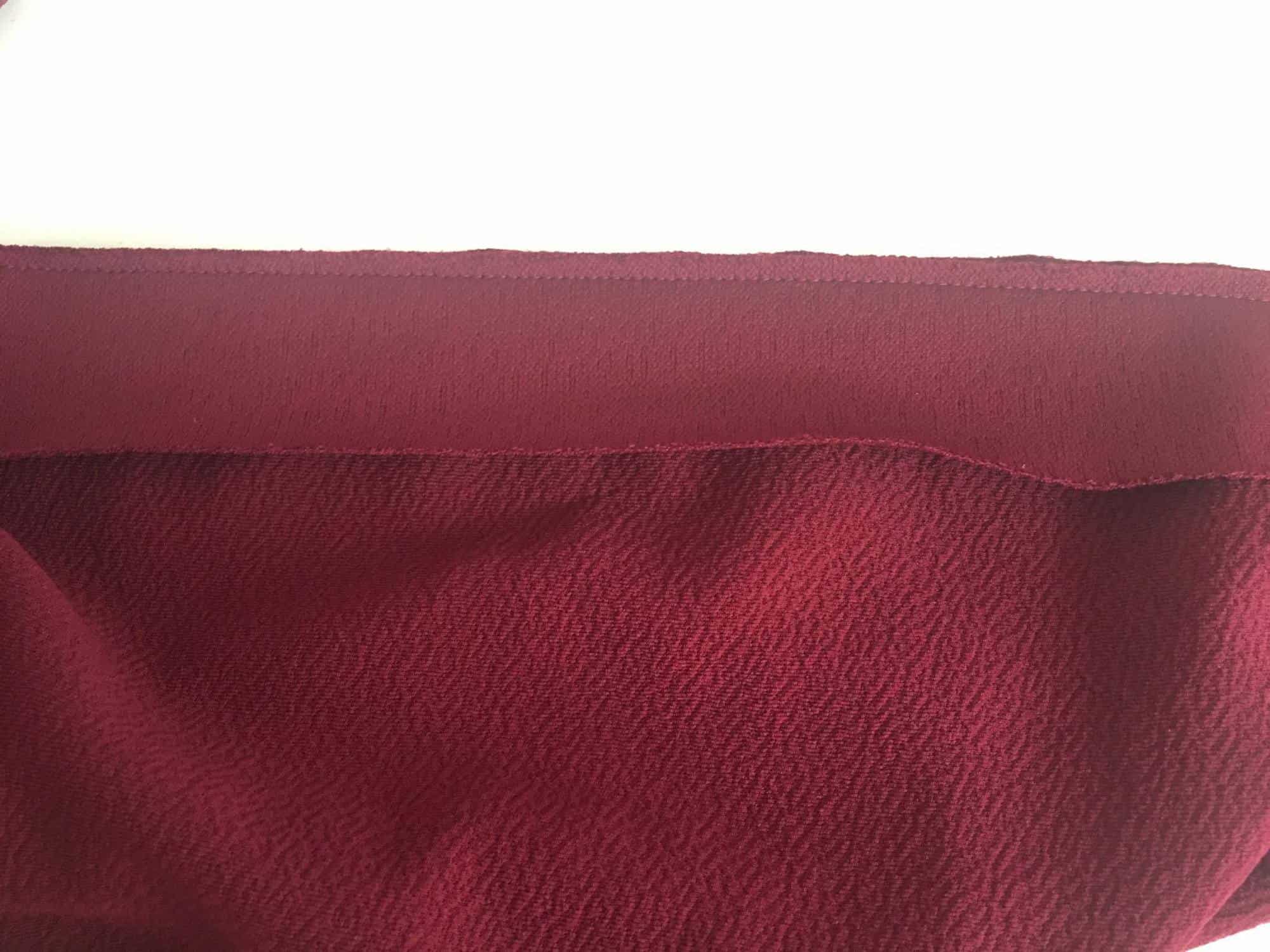
Fold the binding to the wrong side.
Fold the raw edge down to the previously sewn stitch line.
Fold over to the wrong side again, and pin in place.
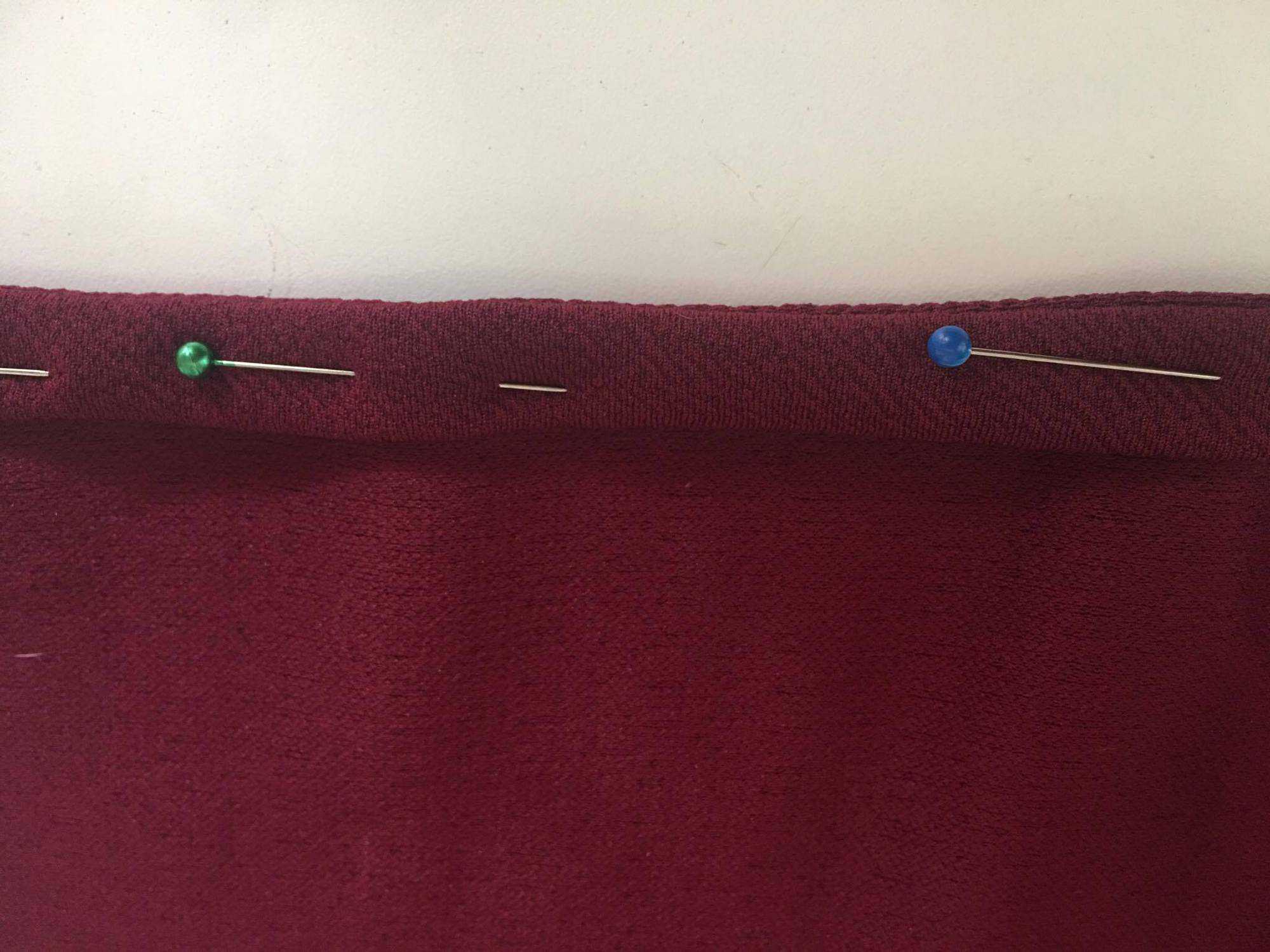
Topstitch.

…..

Sweetheart/Wiggle Mash
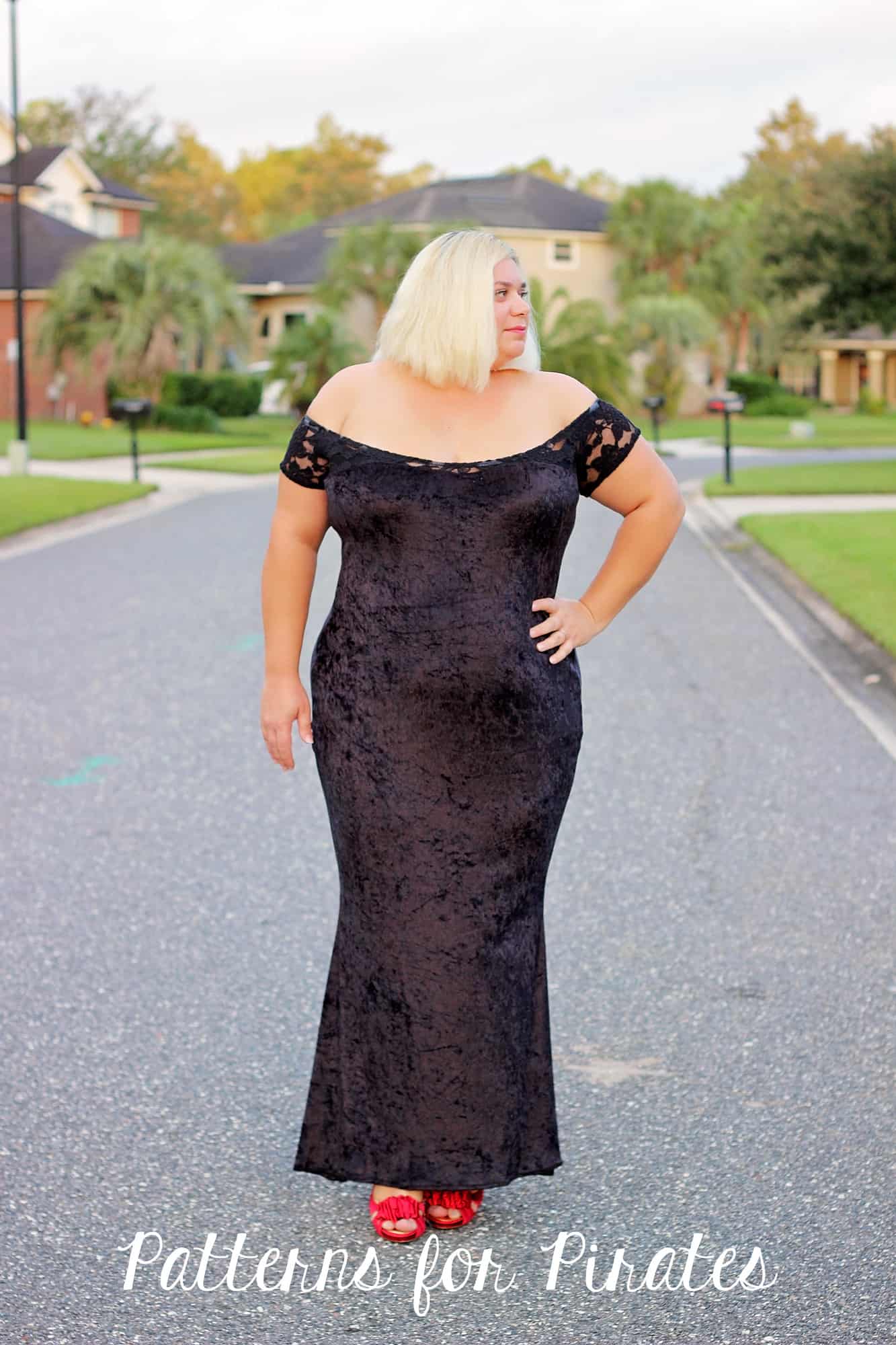
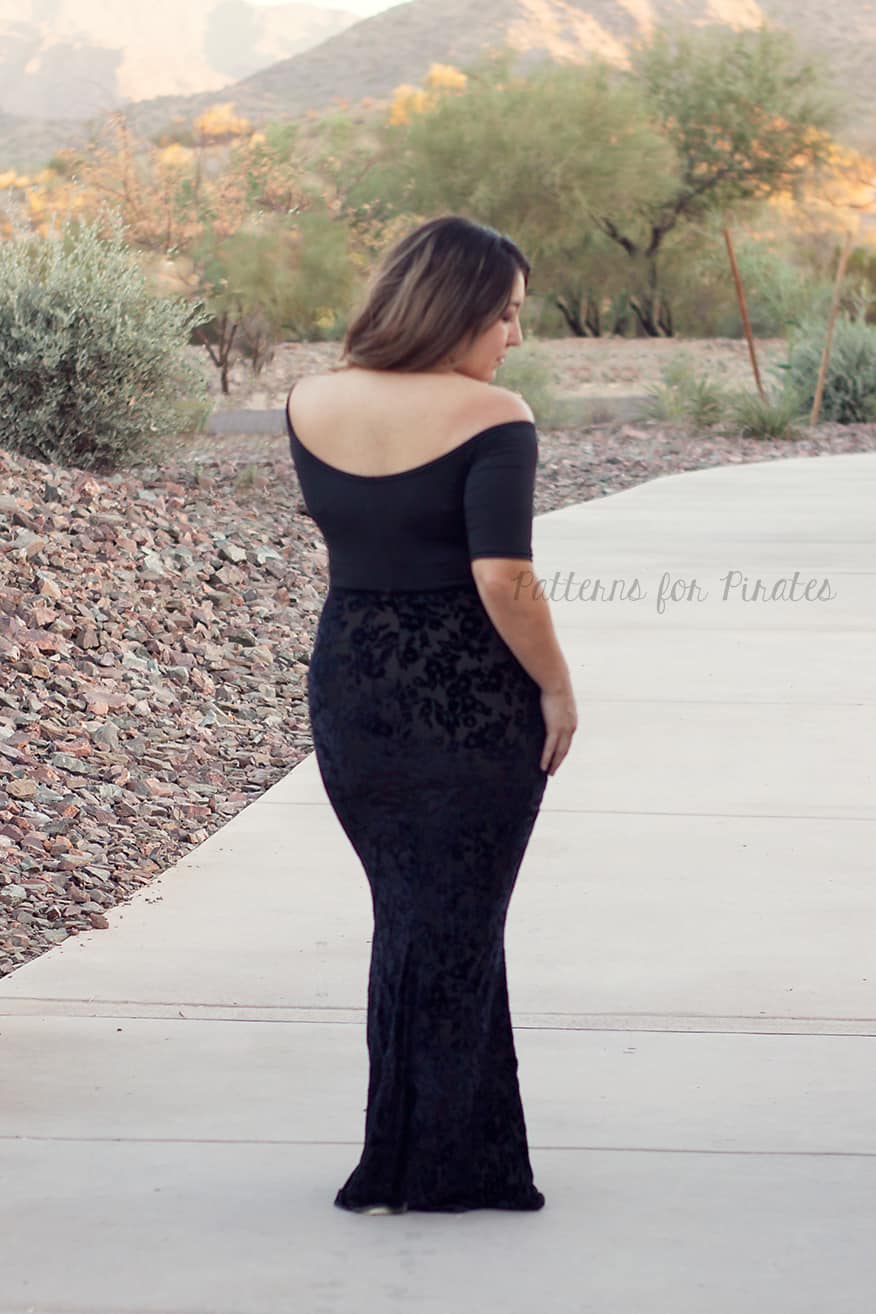
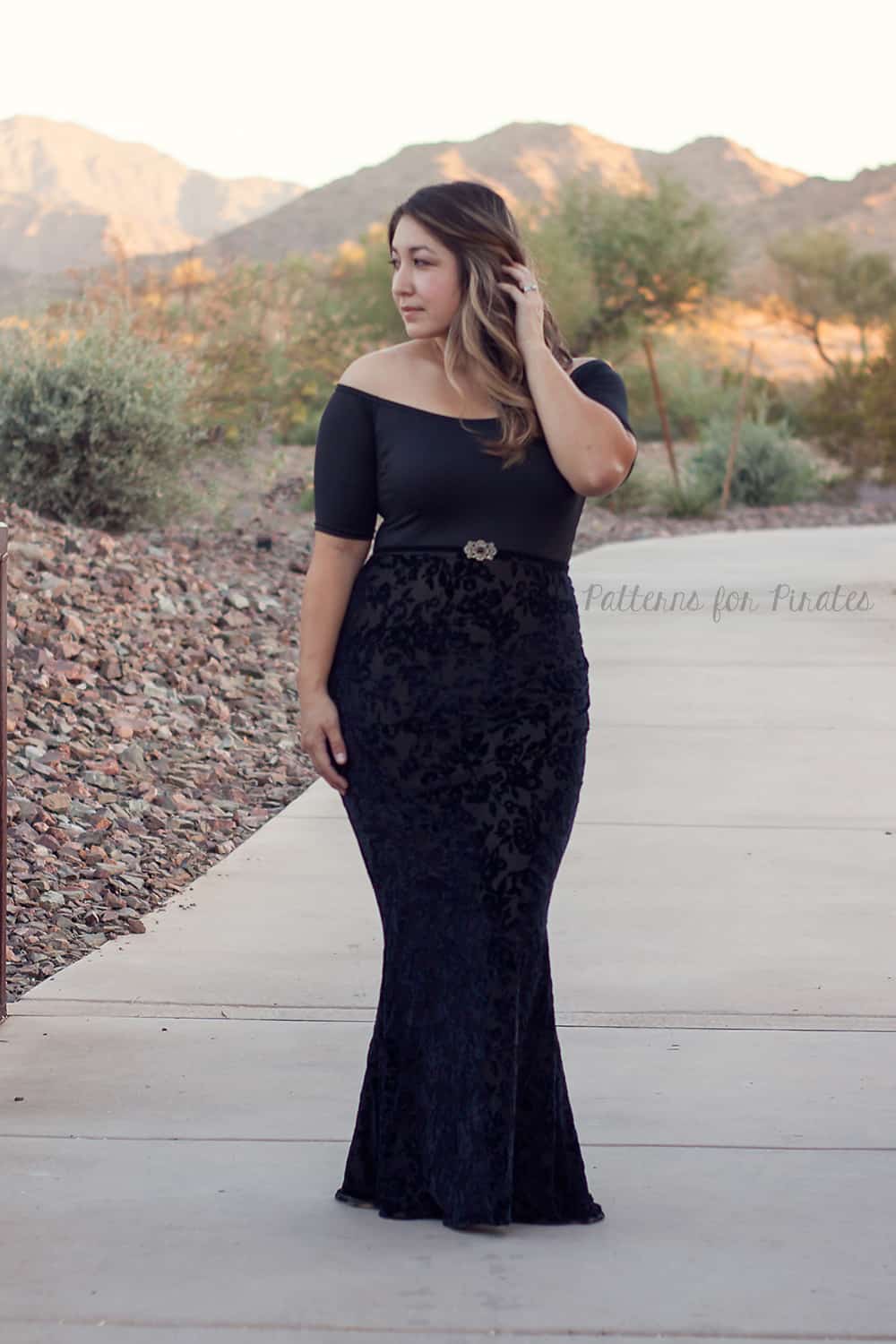
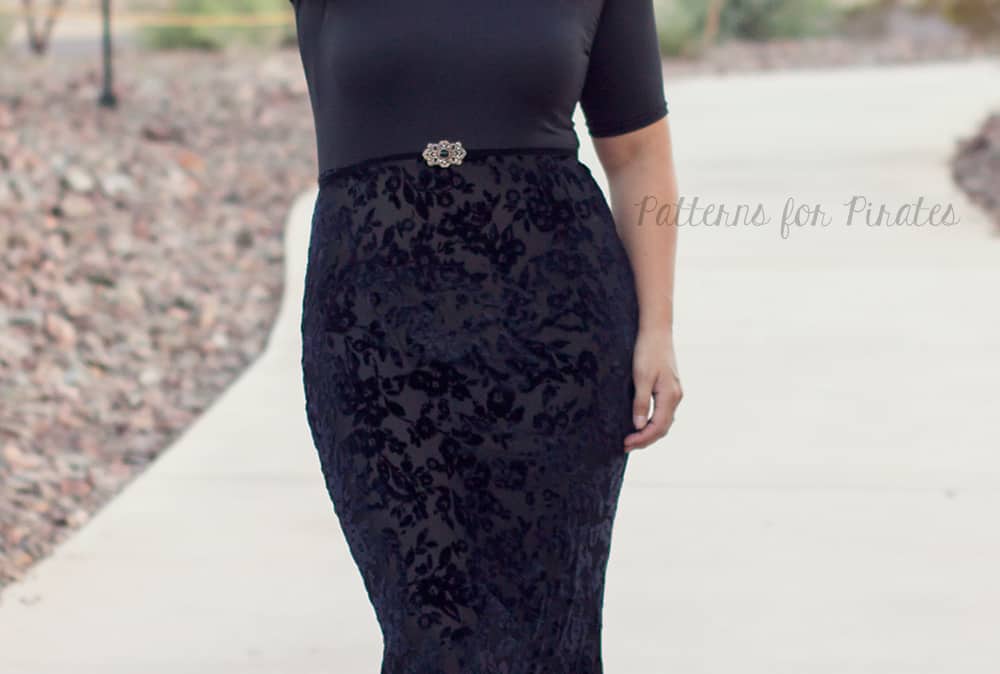
We couldn’t end this epic hacks series without a Wiggle dress/Sweetheart mash up. I just had to make myself a black velvet and lace long dress. We all need one in our closets, right?
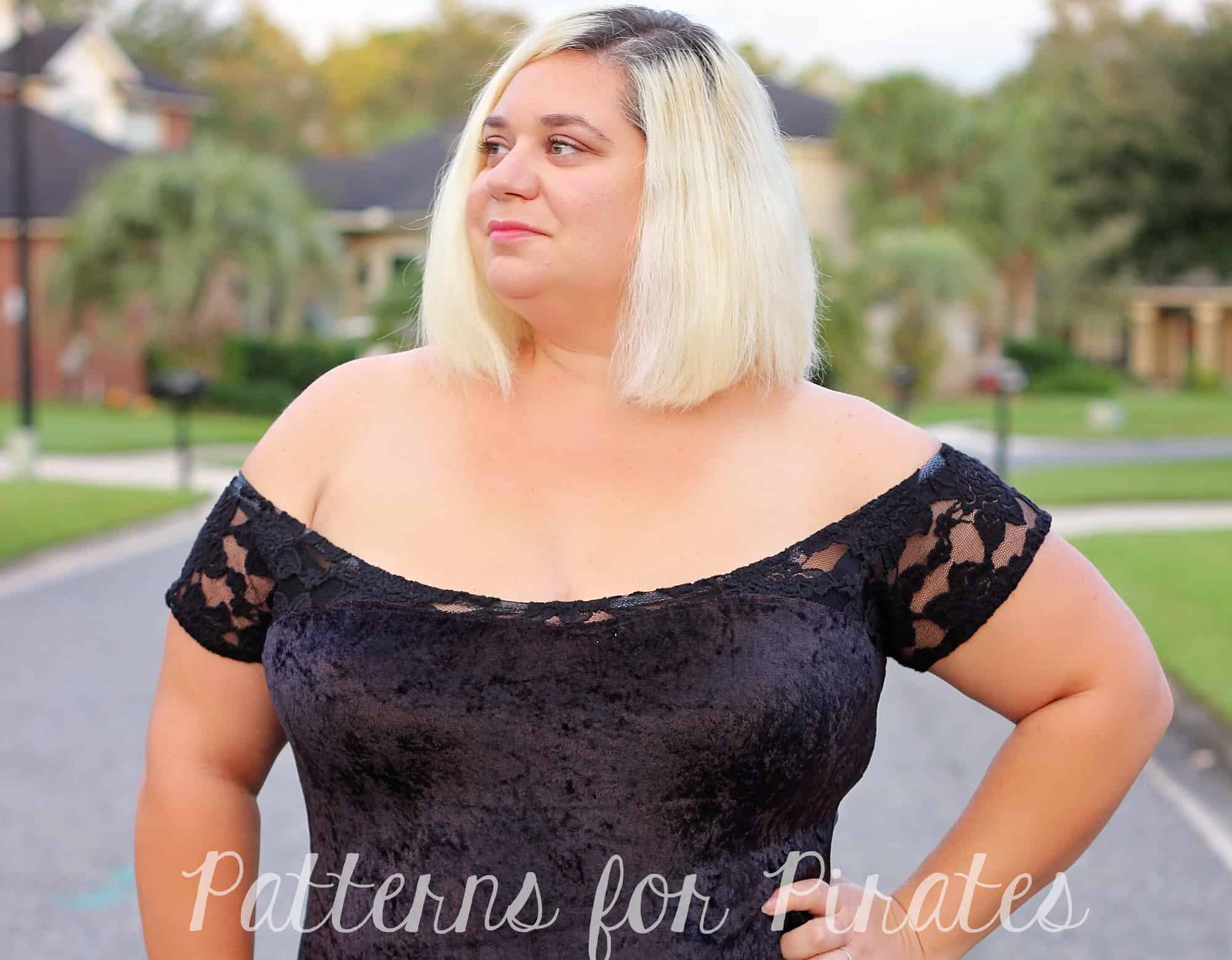
This mash is super easy. Simply take the front patterns of the wiggle dress and mark the sweetheart color-block lines using the Sweetheart dress top pattern piece. Don’t forget to add the seam allowance!

Sew the two front pieces (lace and velvet) as suggested in the Sweetheart pattern.
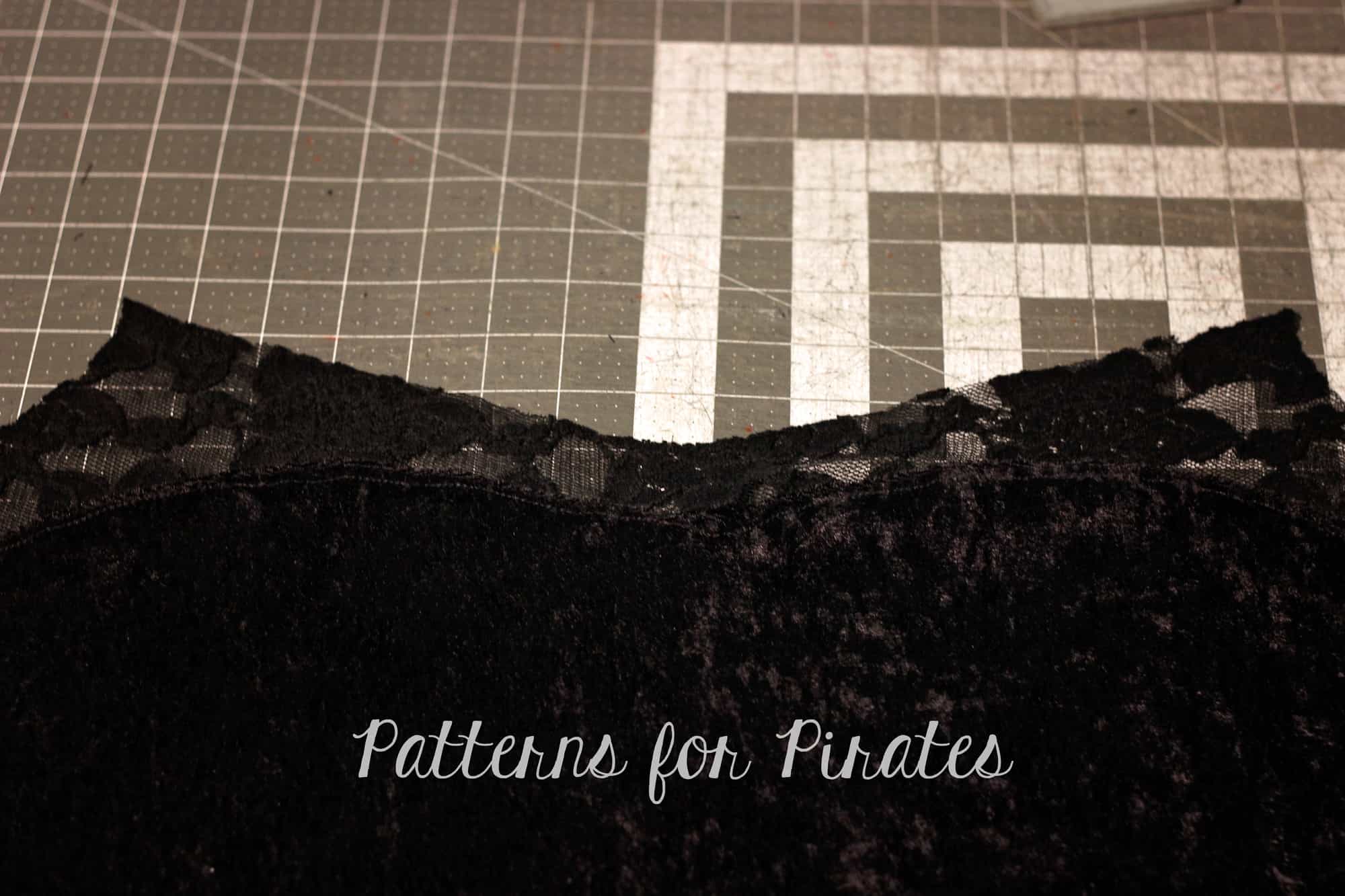
Once you do that simply follow the directions in the Wiggle Dress pattern to finish your dress. I used lace for my sleeves too. Since I didn’t have any black elastic and I certainly couldn’t use white elastic for the neckline, I used clear elastic instead. It worked like a charm!

Tadah! Just by adding a sexy sweetheart color block front, you took your Wiggle dress up a notch!
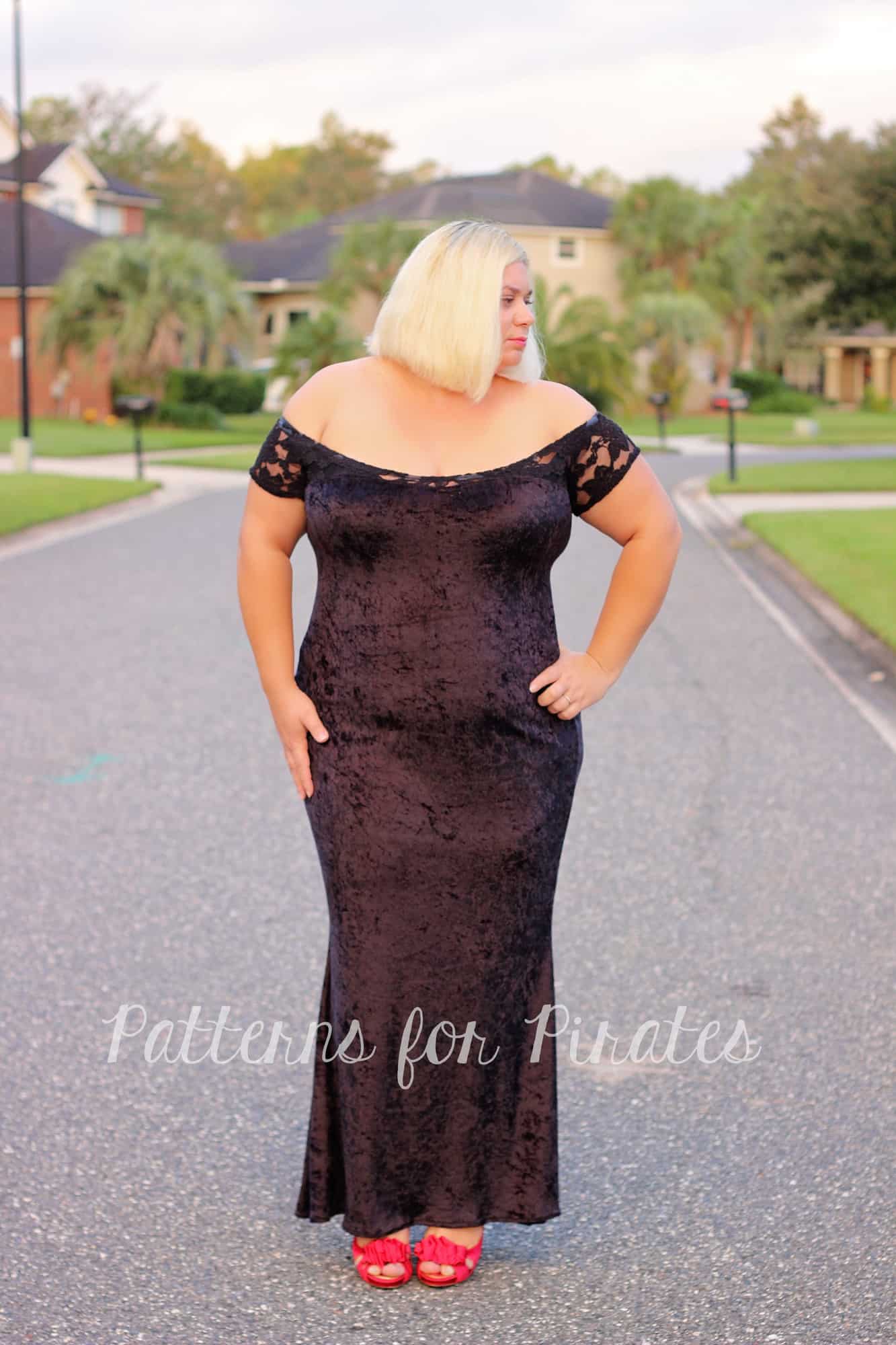
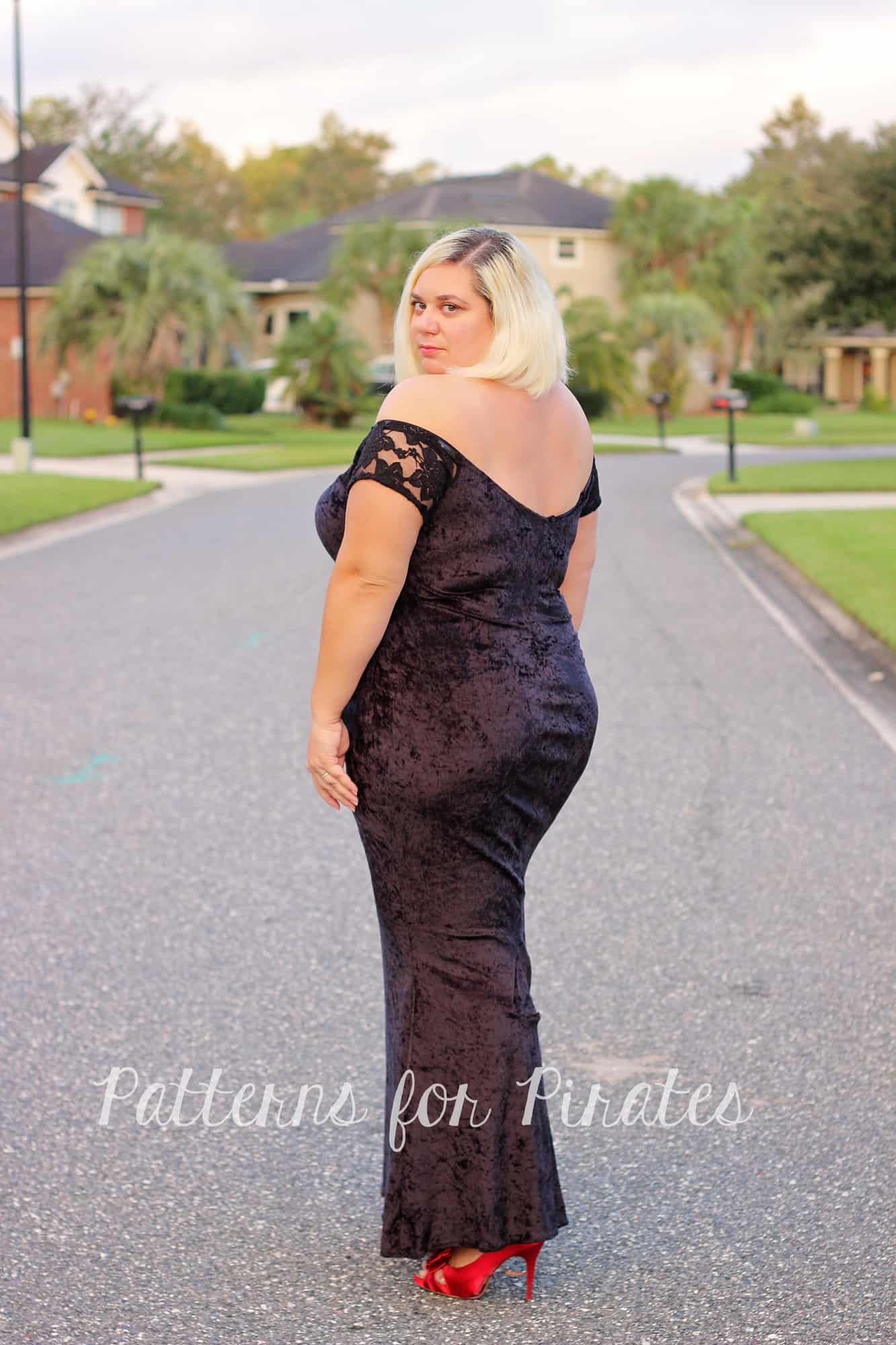
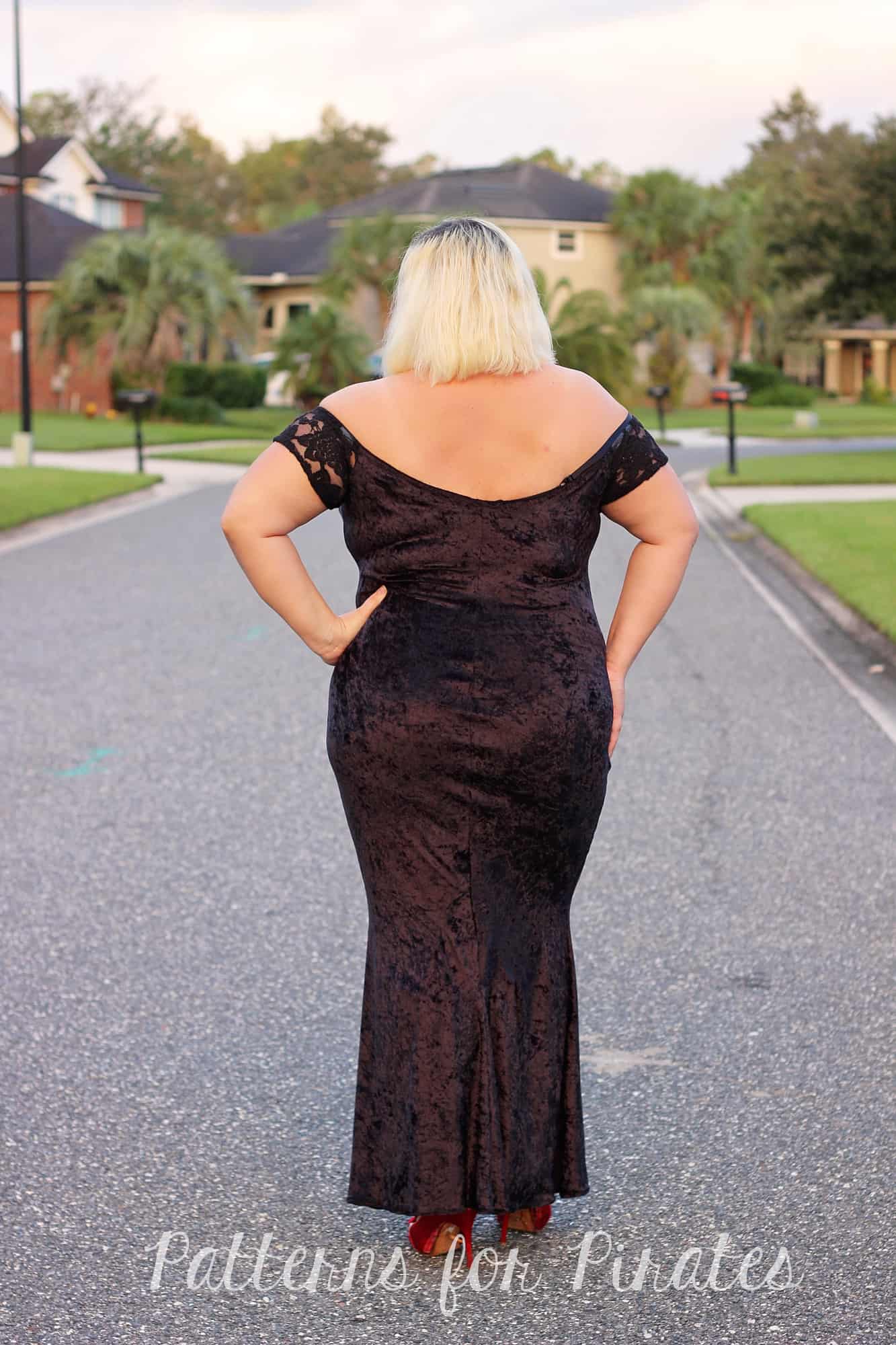
Holy Moly…. I think we covered just about every hack we could come up with to take The Wiggle Dress to the next level (if it wasn’t already on its own)!  Make a Wiggle? Hop on over to the Facebook Group, and share your makes, we’d love to see it!
Filed Under: Frequently Asked Questions, Pattern Hacks, Pattern Release, Uncategorized 15 Comments

Brunch Blouse – easy hacks

September 14, 2017

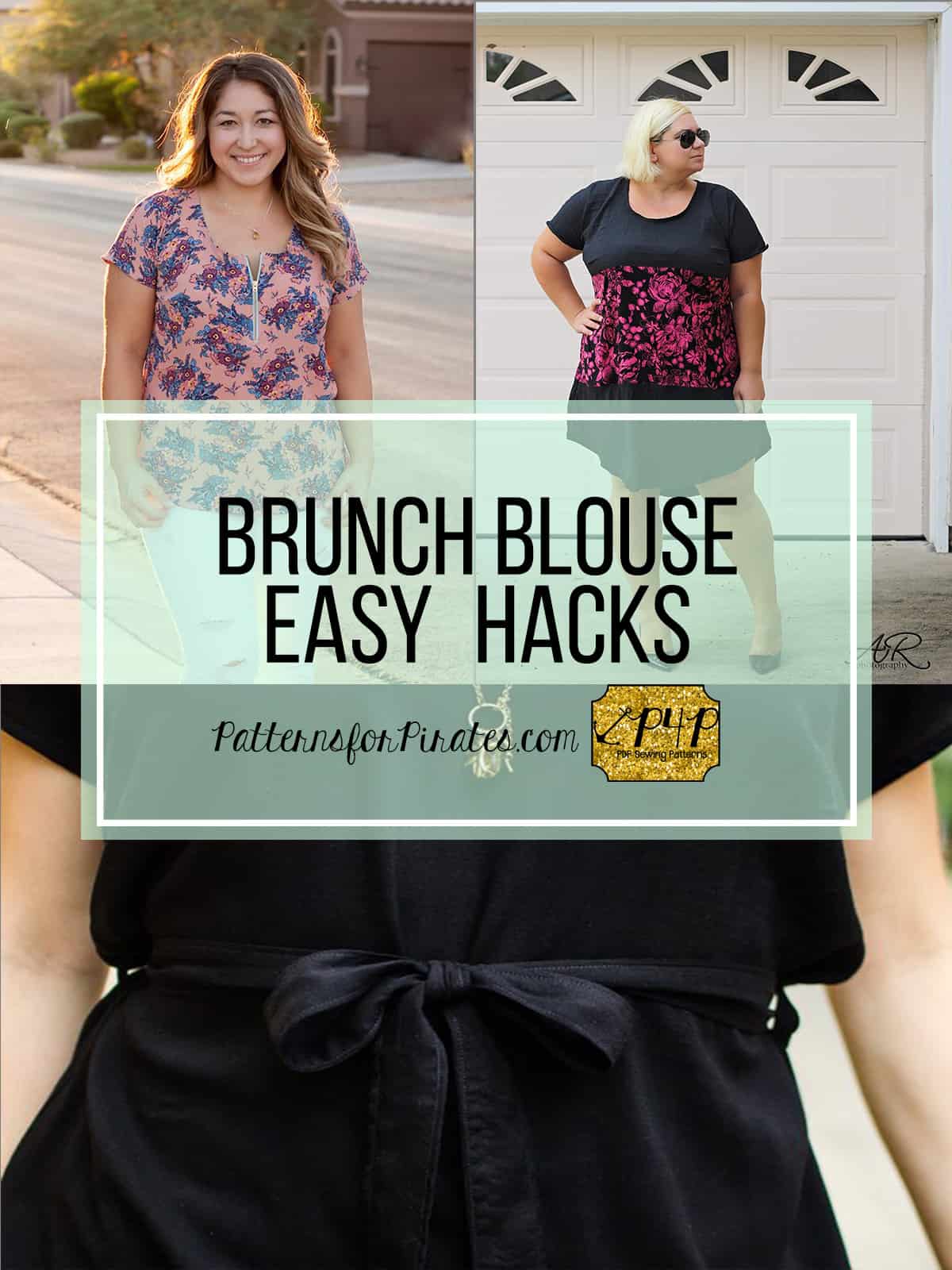
In true P4P fashion, we have a few easy, fun hacks for the Brunch Blouse. Grab the pattern here and get creating!

. . . . .

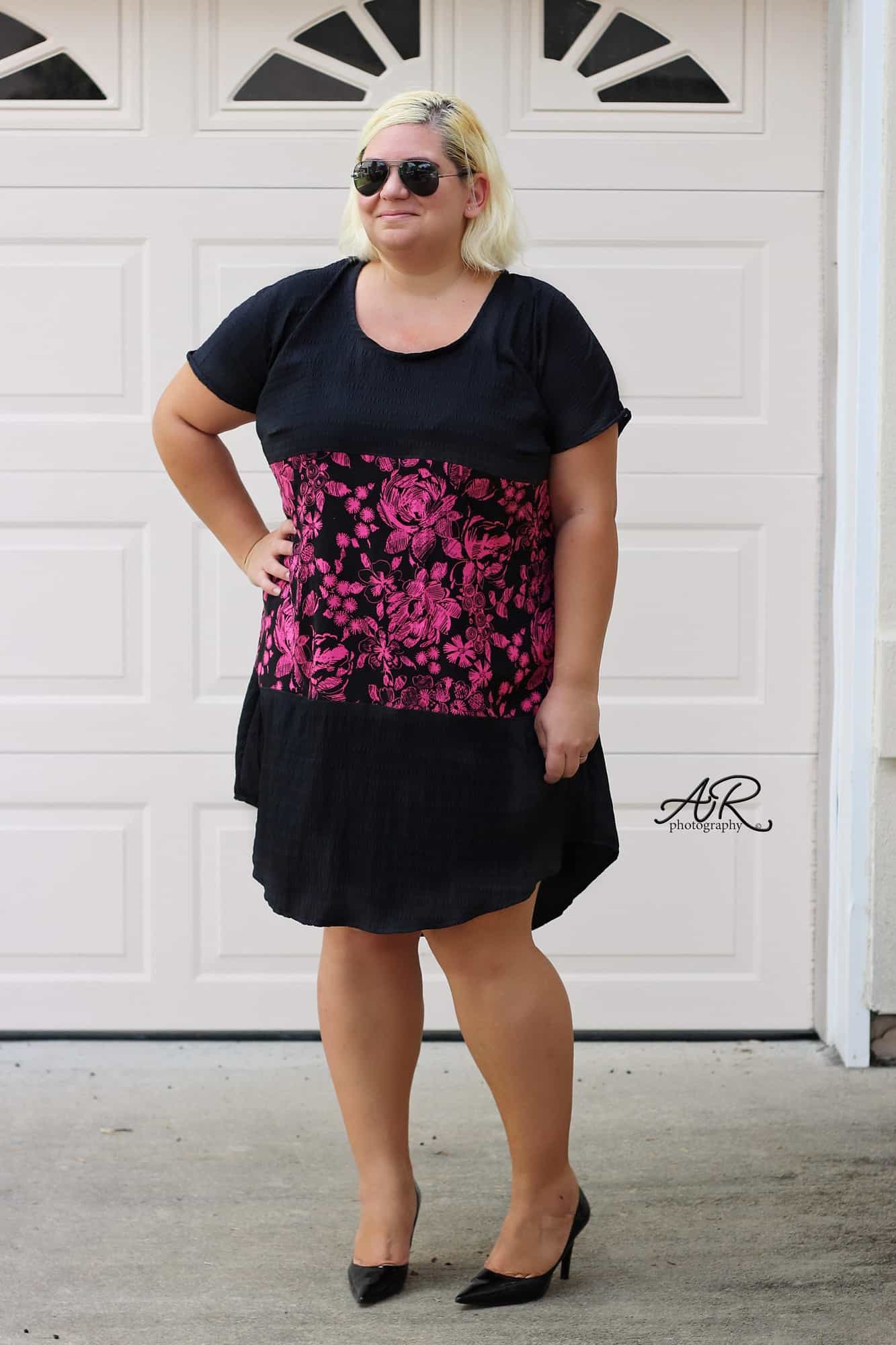
Color Block Dress

First off I will show you how to achieve a color block look with the dress option of the Brunch Blouse. You can use the same principles for the top option, you will just need to adjust some measurements. Start by printing the pattern in the size you need. Now grab a ruler and some scissors or a rotary cutter (for paper only 😉 ) because we’ll do some cutting.

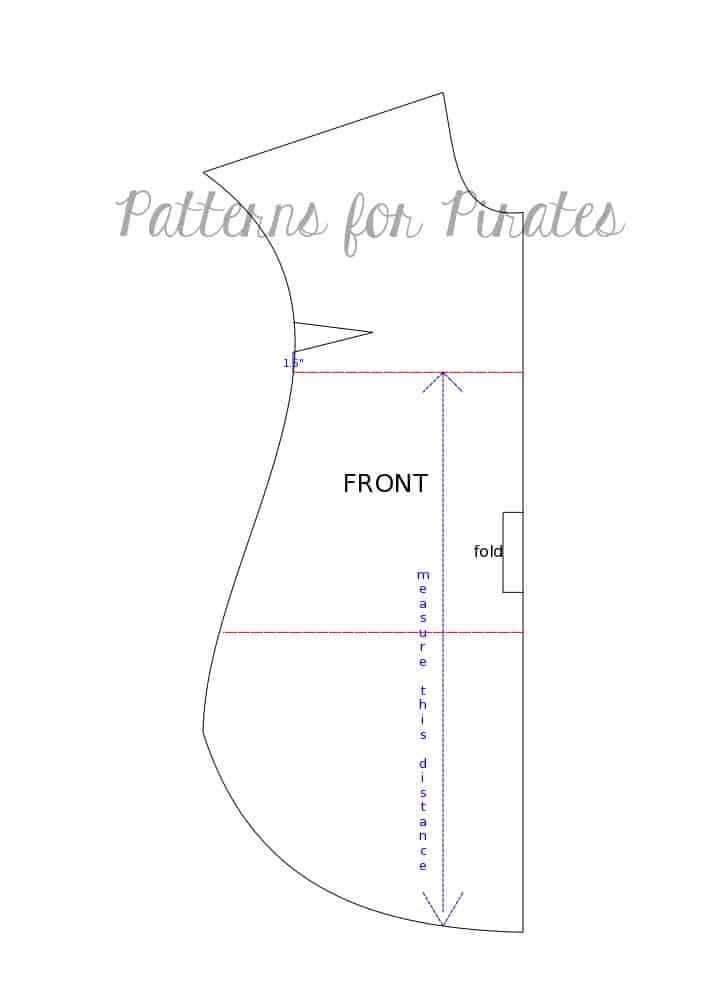
Take the front pattern piece and mark 1.5″ down from where the dart mark is. Now draw a horizontal line (perpendicular to the center fold). Measure the distance between this line and the bottom of the dress.

Divide the length in half and draw a horizontal line at the half way mark. You have now split the front in 3 separate pieces.

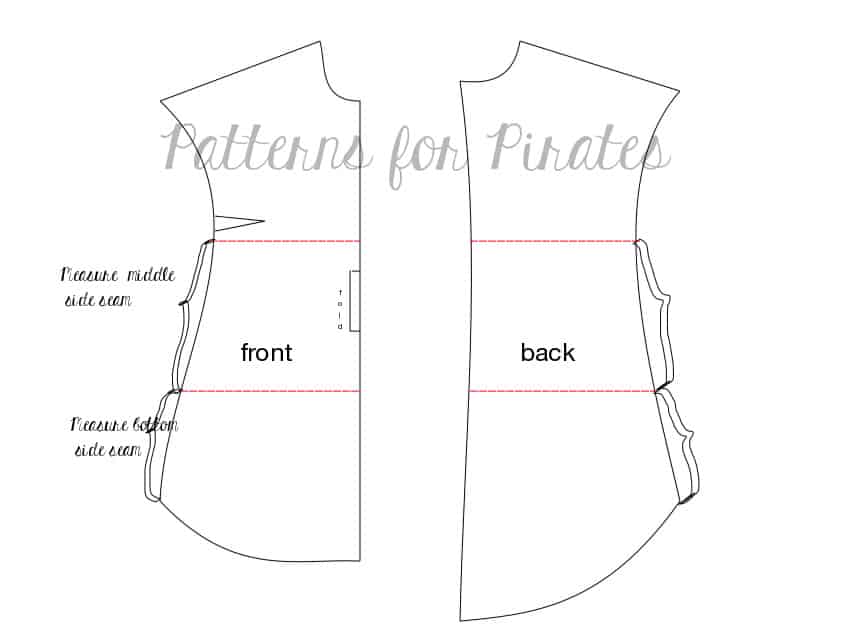
Measure the side seam from the bottom to the bottom colorblock line. Take your back piece and measure up on the side seam the same amount and mark it. Now draw a horizontal line on the back piece. We will be measuring the front middle part side seam now. Mark the point on the back piece from the bottom colorblock line to whatever the measurement was for the middle front side piece. Draw a horizontal line front that marking point. You have now color blocked your back pattern pieces too, making sure that they will line up beautifully with the front color block pieces. Great job!

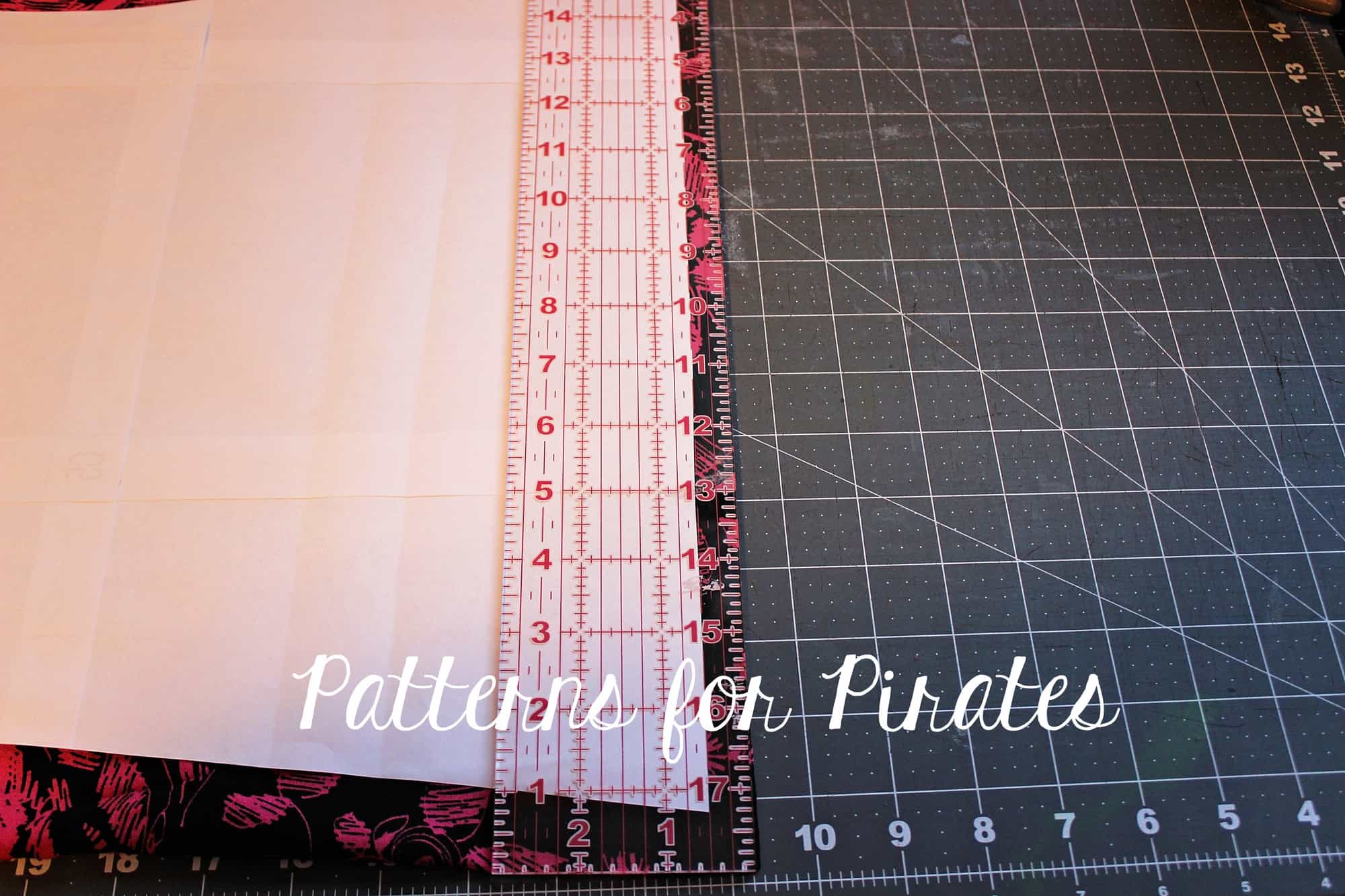
We will now cut the fabric. DO NOT FORGET THE SEAM ALLOWANCE! Since we are only dealing with straight color blocking lines, I will show you the easiest way to add SA. Simply use a quilter’s ruler and cut away 1/2 from the newly designed pattern pieces. Remember you need to add seam allowance only to the colorblock parts, NOT the center fold or side and middle back seam. Those seam allowances are already included in the pattern.

Once you have all your pieces cut (3 for the front, 6 for the back) you will start sewing them together. First sew the front top to the front middle (RST) with 1/2″ seam allowance, serger your raw edges and optionally top stitch. You will now sew the front bottom to the front middle, right sides together. You now have your front piece ready. Repeat the process for the back pieces. Remember that the back of the Brunch Blouse is not cut on fold so you will end up with two mirrored back cuts.

Finish sewing your BB dress as per the tutorial instruction. How easy and fun was that? You can get creative with your color blocking…just imagine a beautiful ombre blouse, or a blouse with lace overlay for the top colorblock. The possibilities are endless.

. . . . .

Belt Loops and Sash Hack

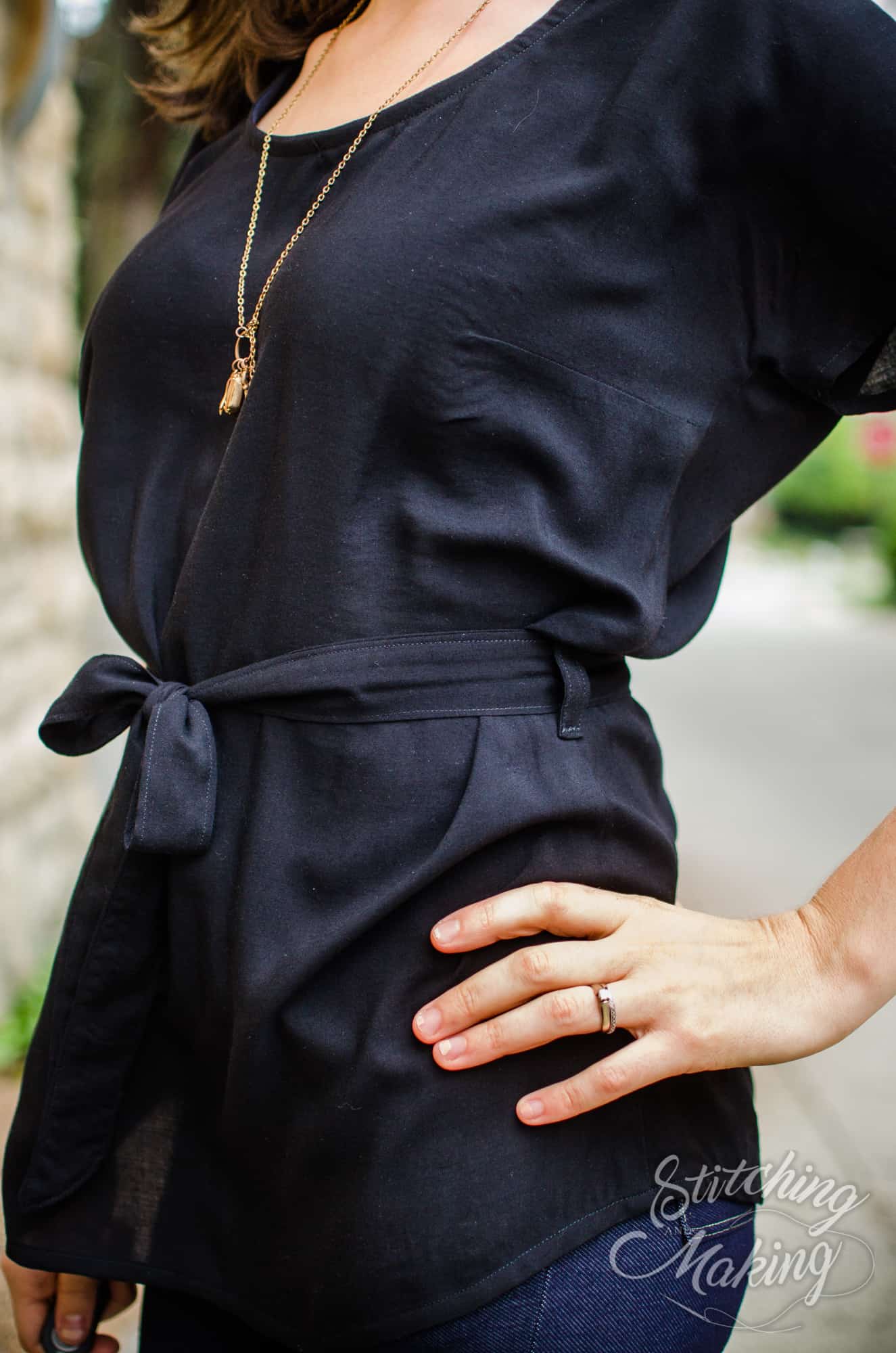
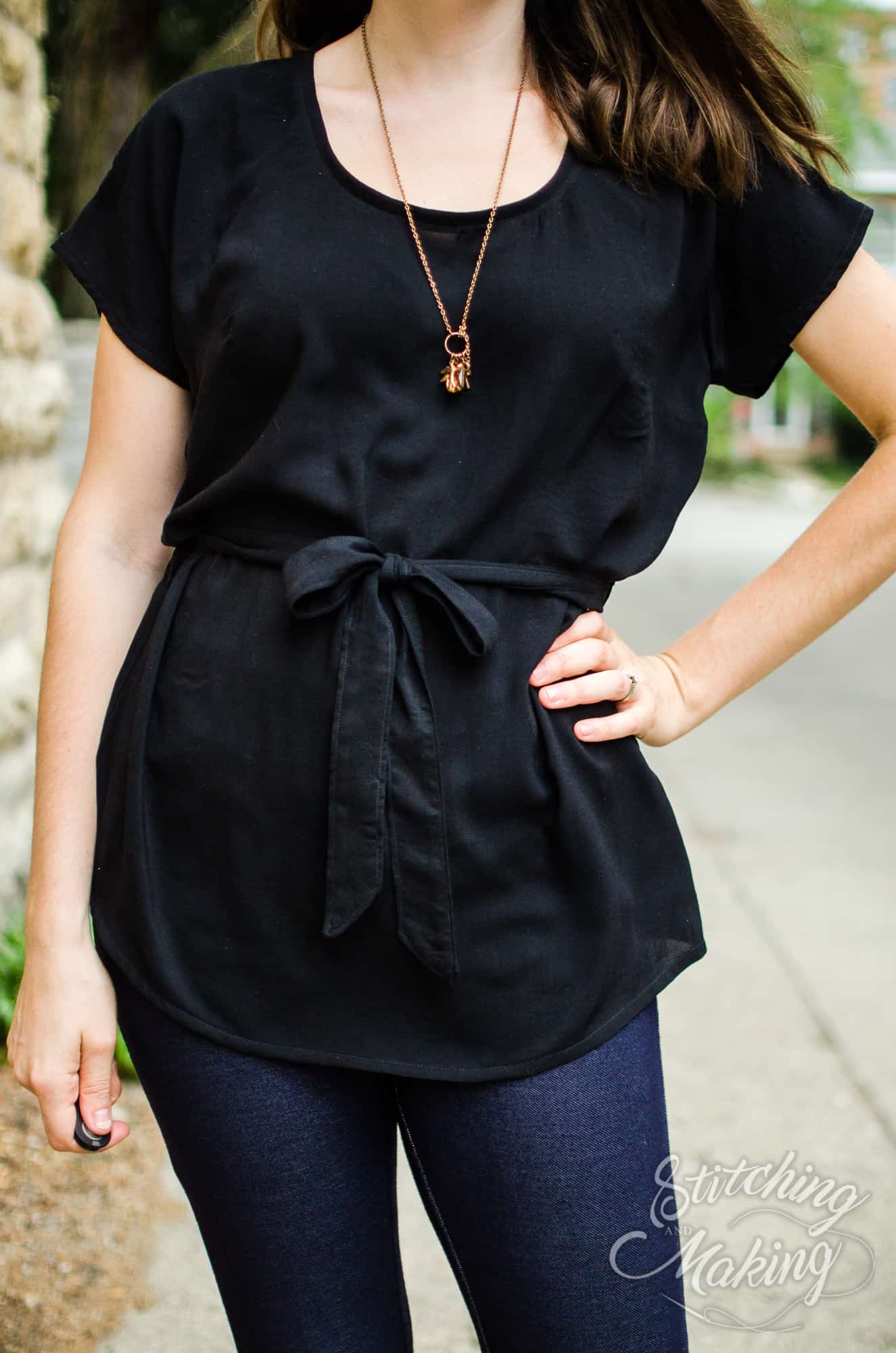
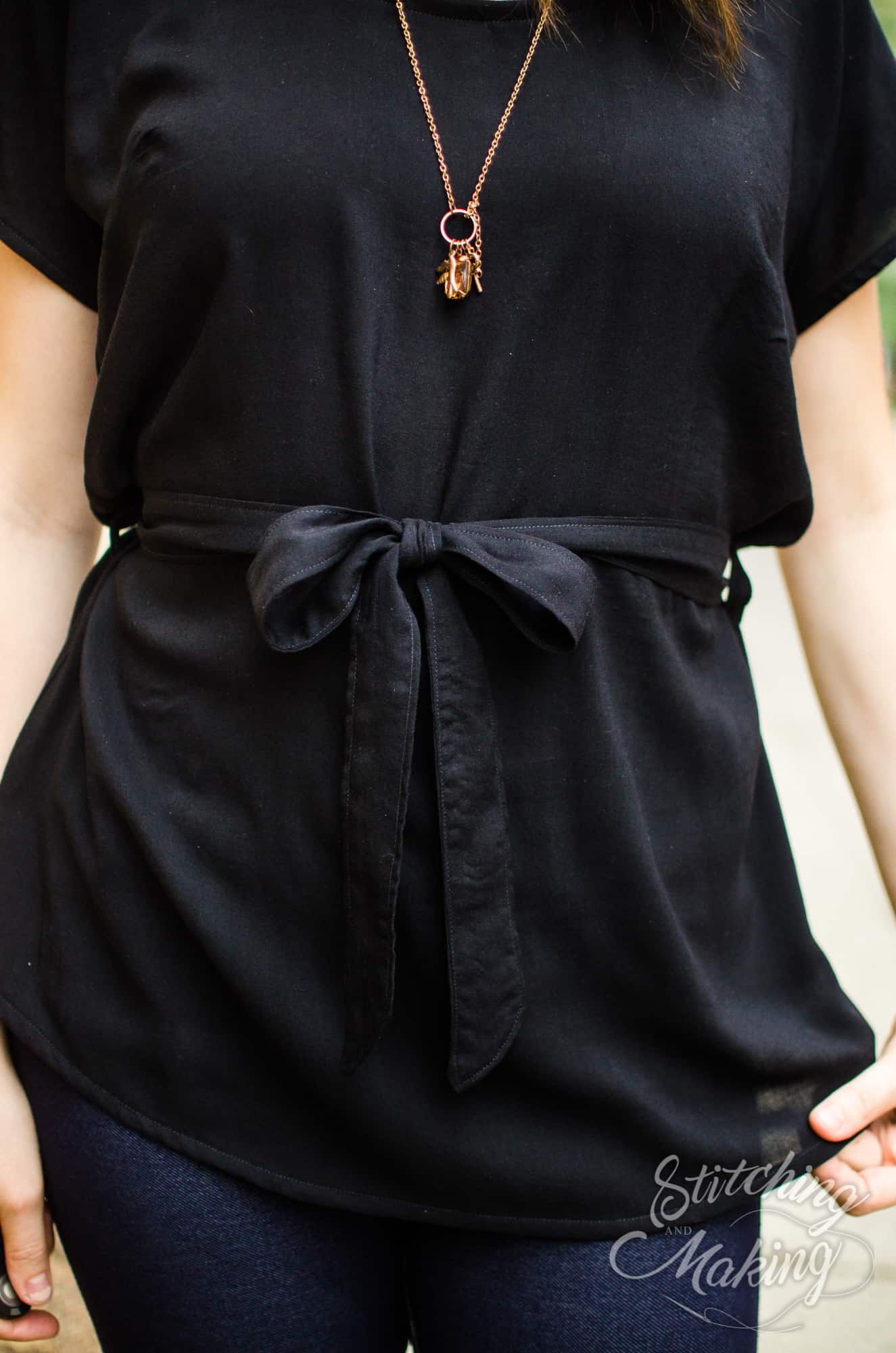
This hack is super easy but a fun option for a different look than the normal Brunch Blouse!  You can do this hack with any option except the one that already includes the waist tie.


1. First, sew up your blouse/dress as usual.  Make sure to mark the notches on the side seams, add a pin as well after you’ve sewn the side seams so that you can still see where the notch is.

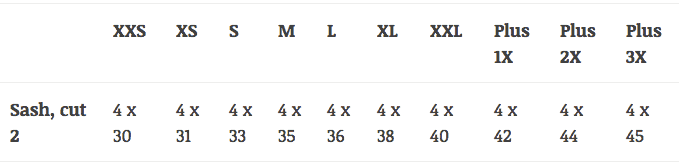
2. To make the sash, refer to this cut chart based on your size.  Cut two.


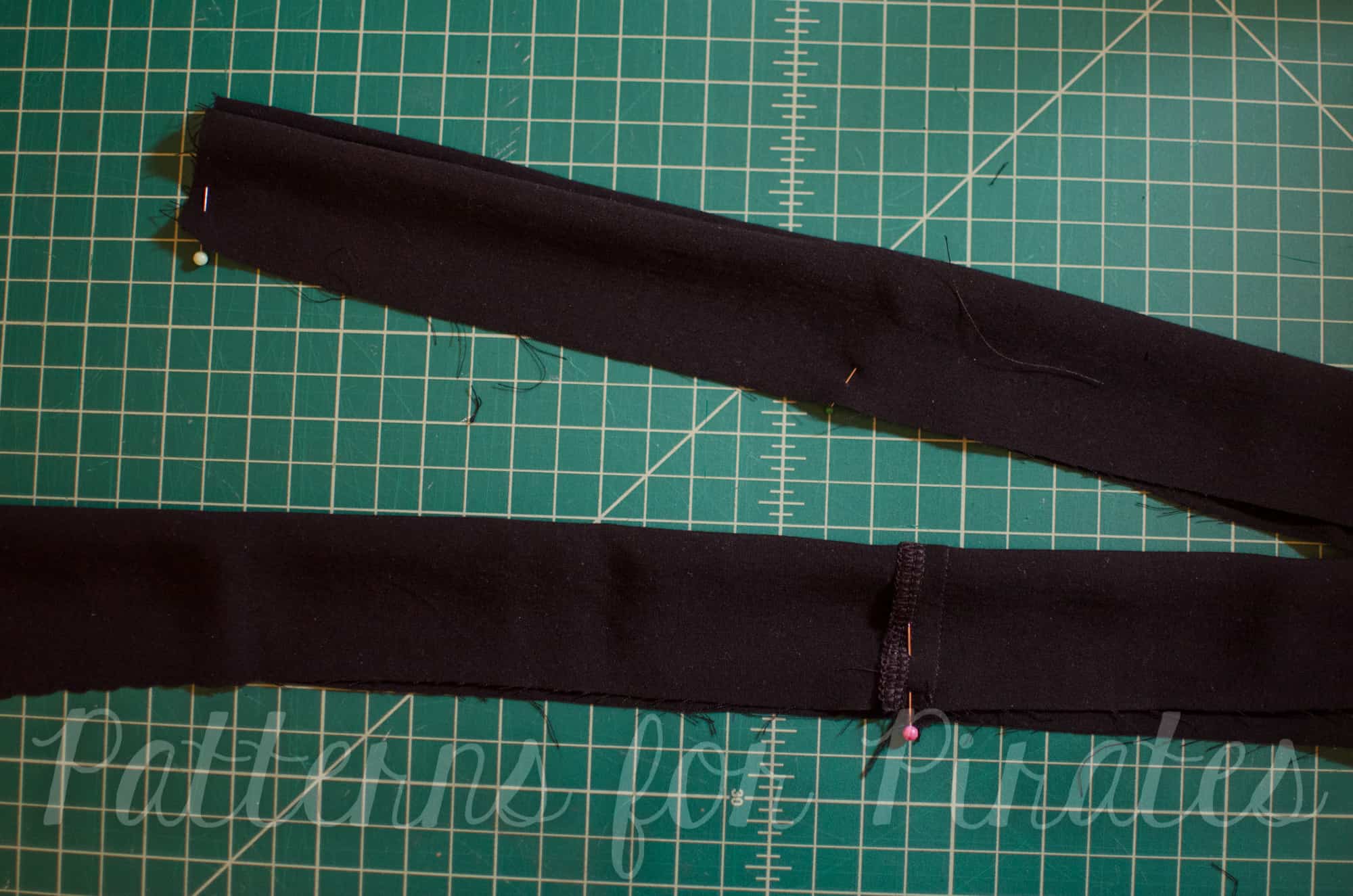
3. Right sides together, sew the short ends together.  Press open and finish edges.


4. Right sides together, sew the long edges now, but leave 2″ unsewn in the middle.  This is how you’ll turn it right side out when you’re done.


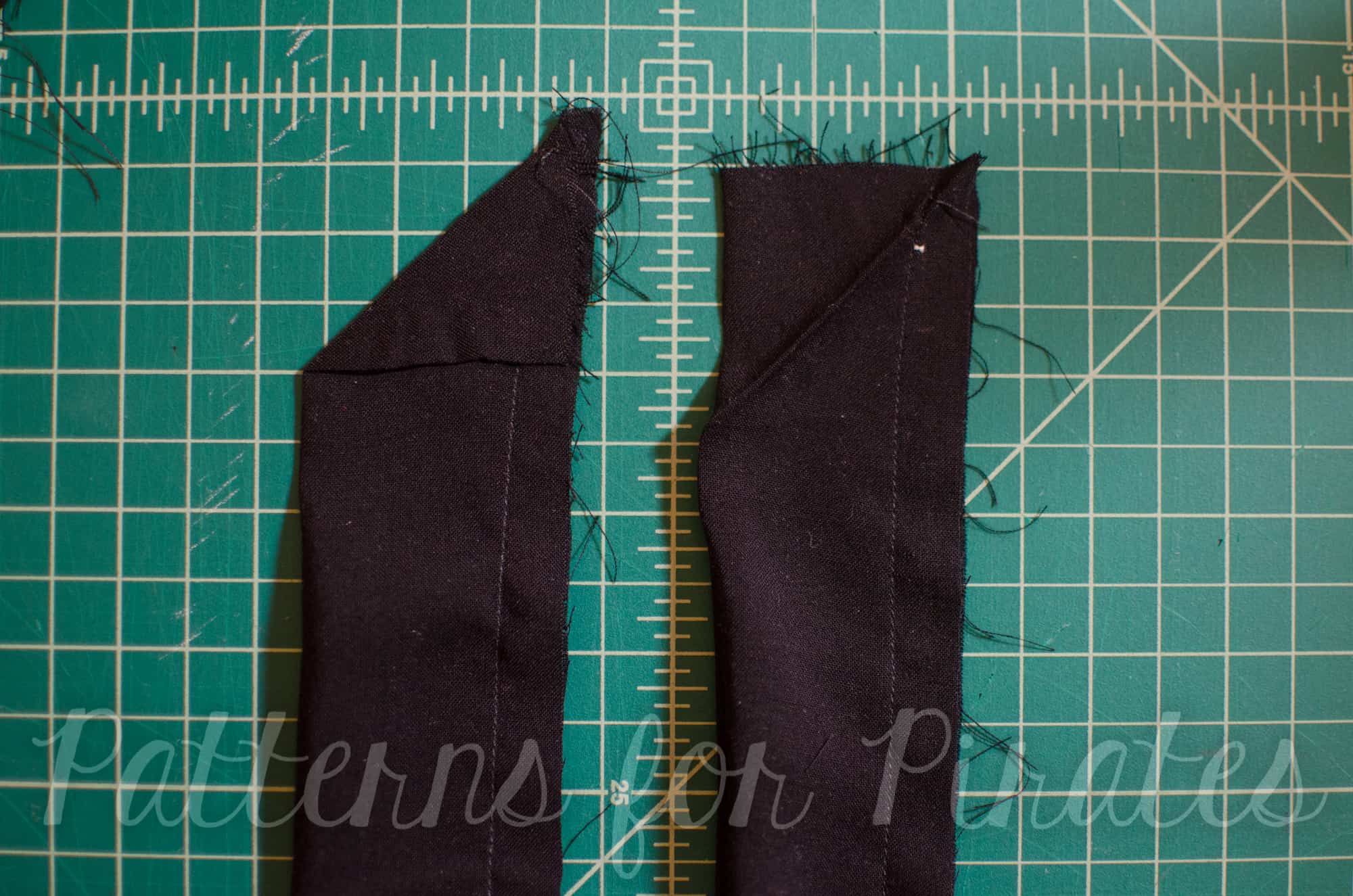
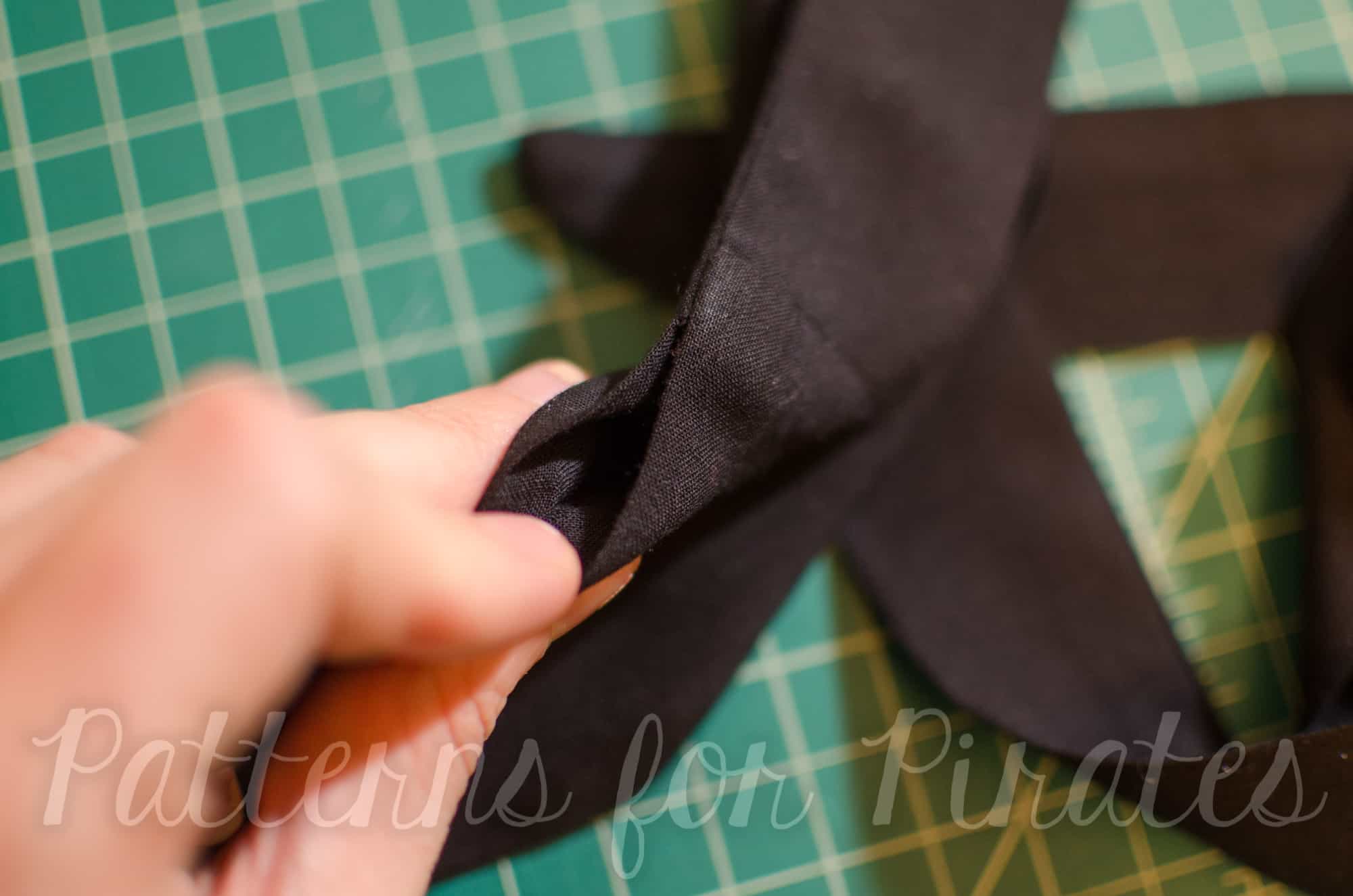
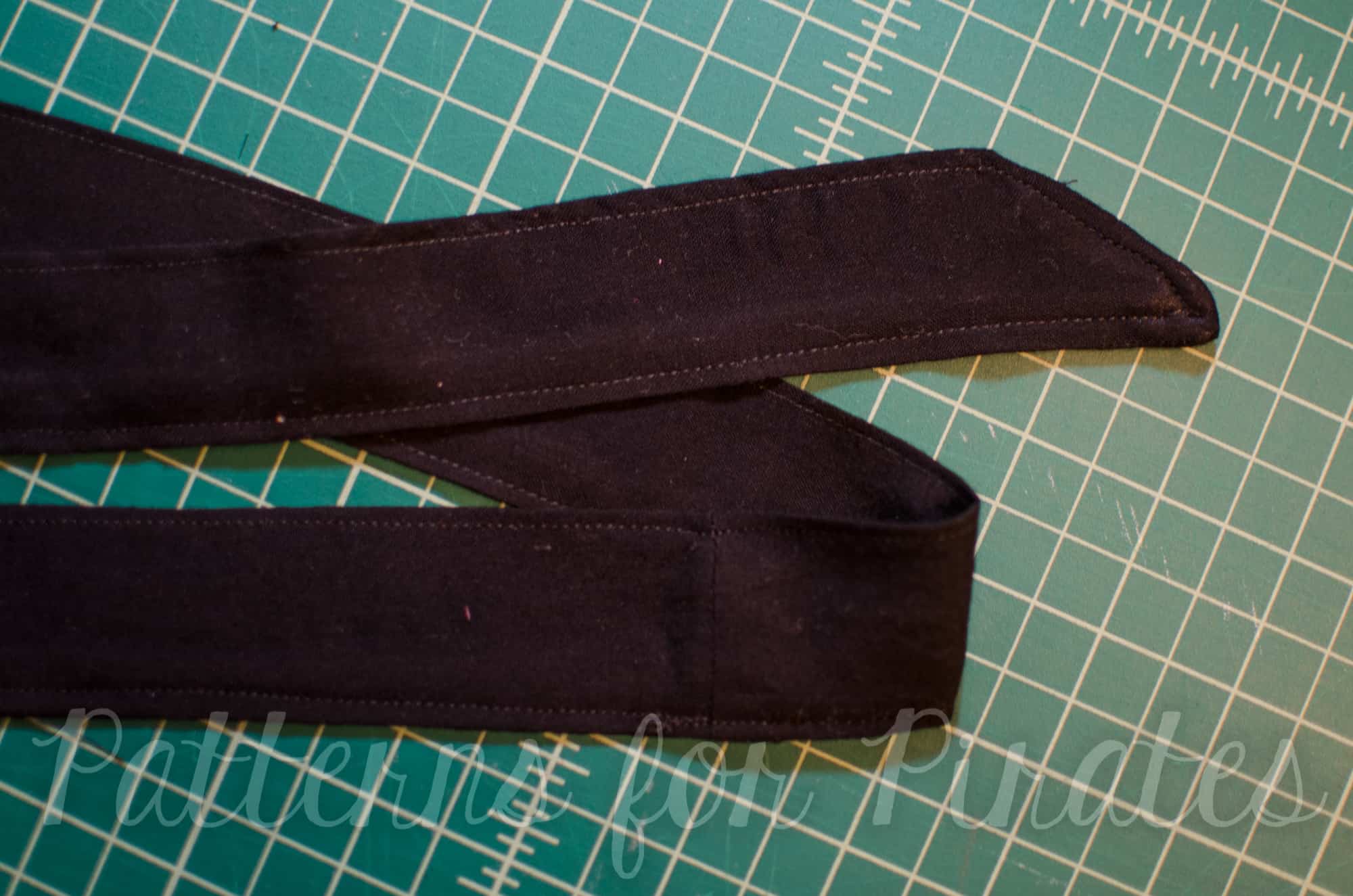
5. Iron the short edge over to form a triangle.  Now sew here to make the pointed edge, and trim the seam allowance down to 1/2″.


6. Turn right side out, press, and topstitch as close to the edge as you feel comfortable.  When you get to the 2″ you left open, align the seam allowance inside and and stitch shut while topstitching.


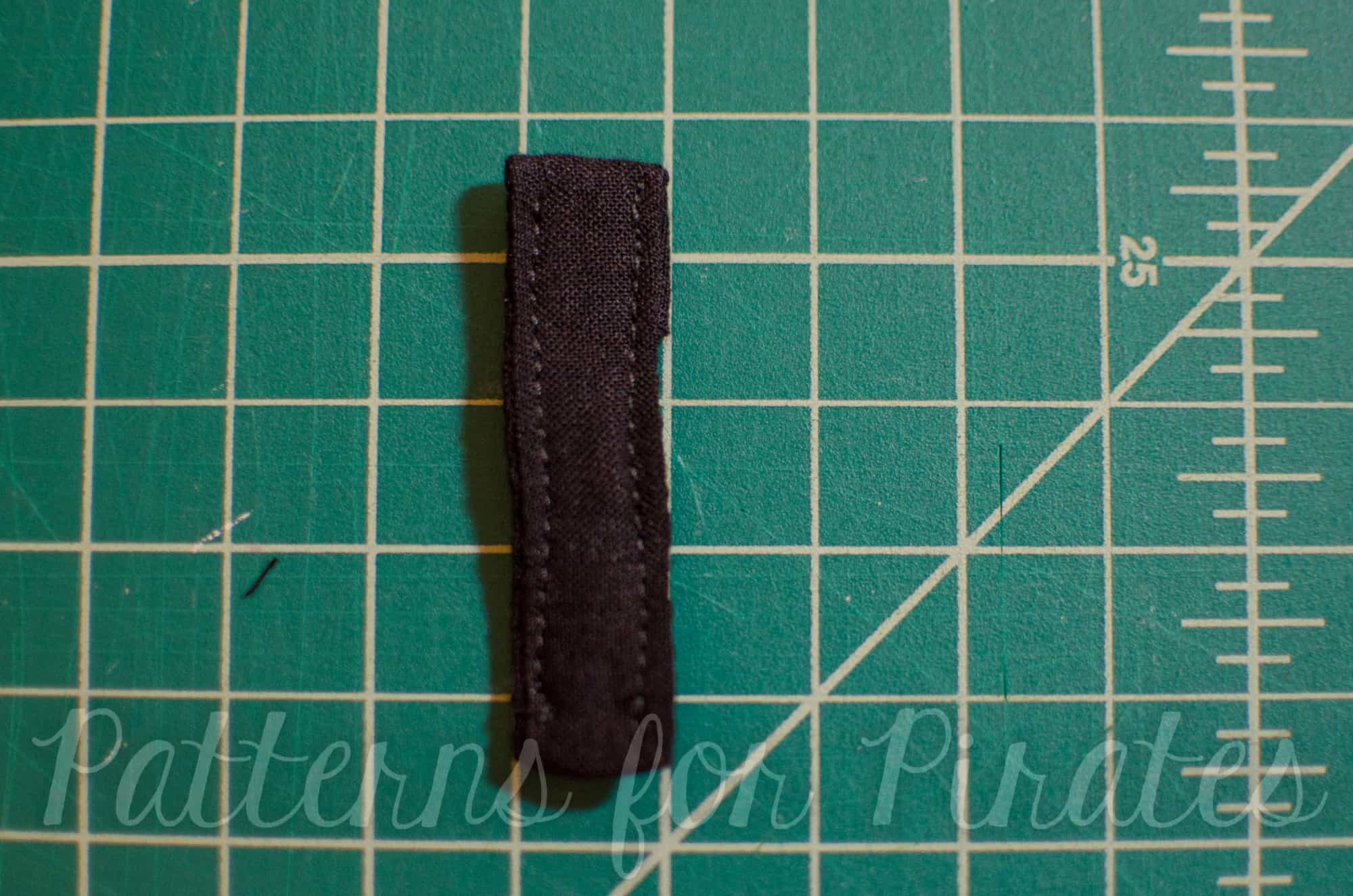
7. For the belt loops, first decide if you want two or three.  I opted for two because I didn’t want one on the back (I just don’t like the feeling).

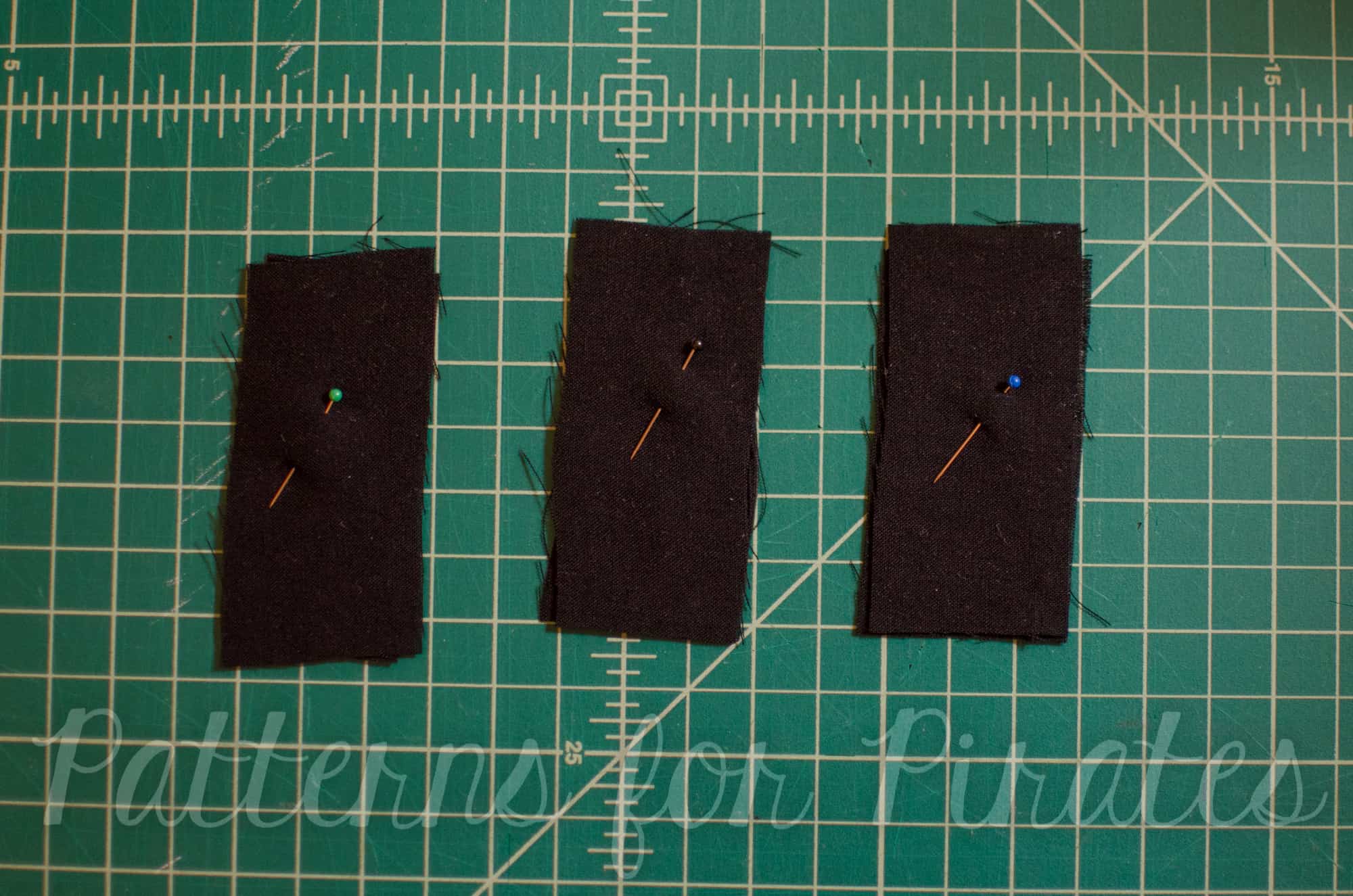
8. Cut rectangles 3″ x 1.5″ – four for two belt loops or six for three belt loops.


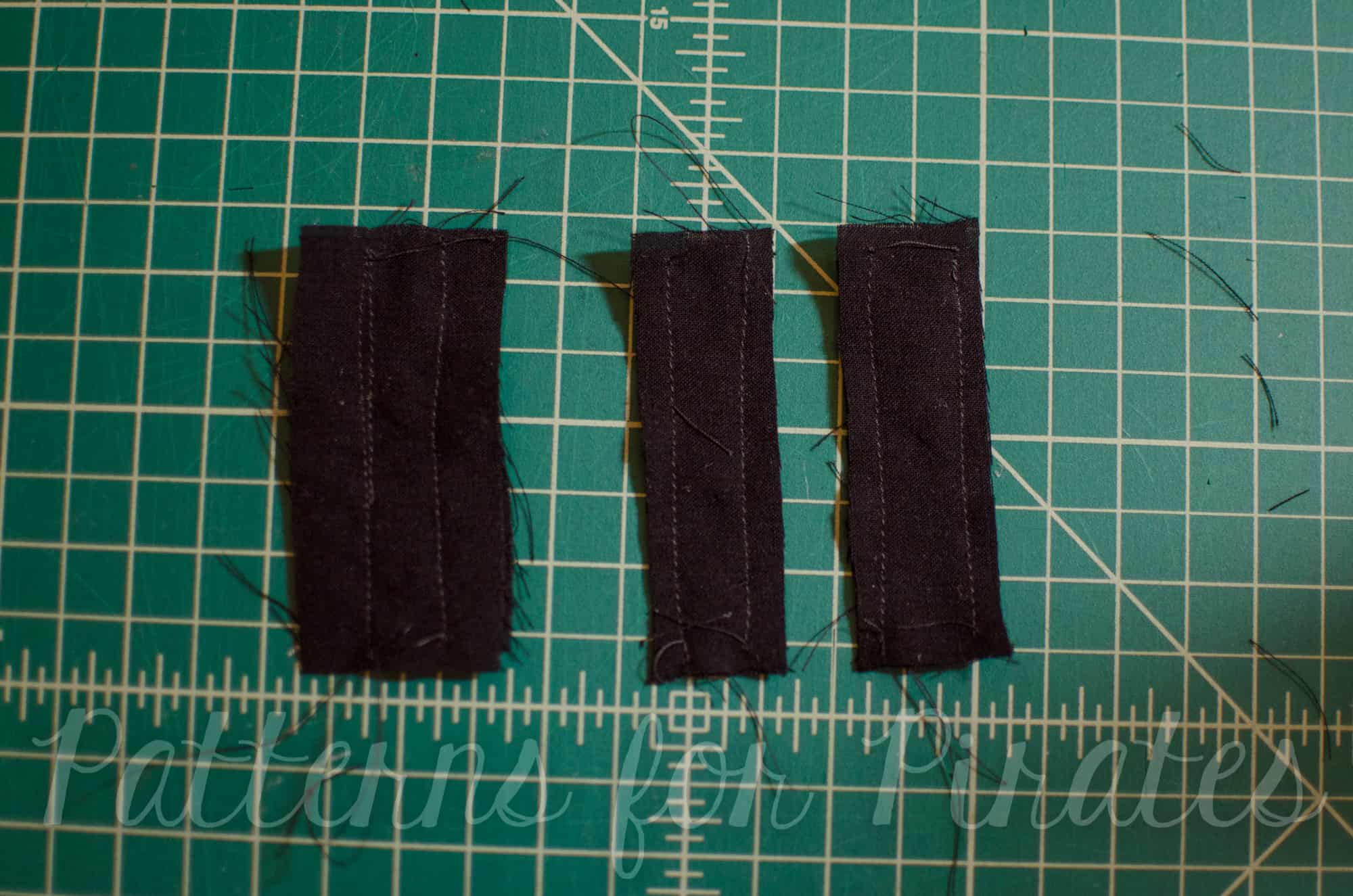
9. Stitch along the long edges, right sides together.  Then trim seam allowance to 1/4″.


10. Turn right side out, press short raw edges to the back 1/2″. then topstitch down the long edges as close to the edge as you feel comfortable.


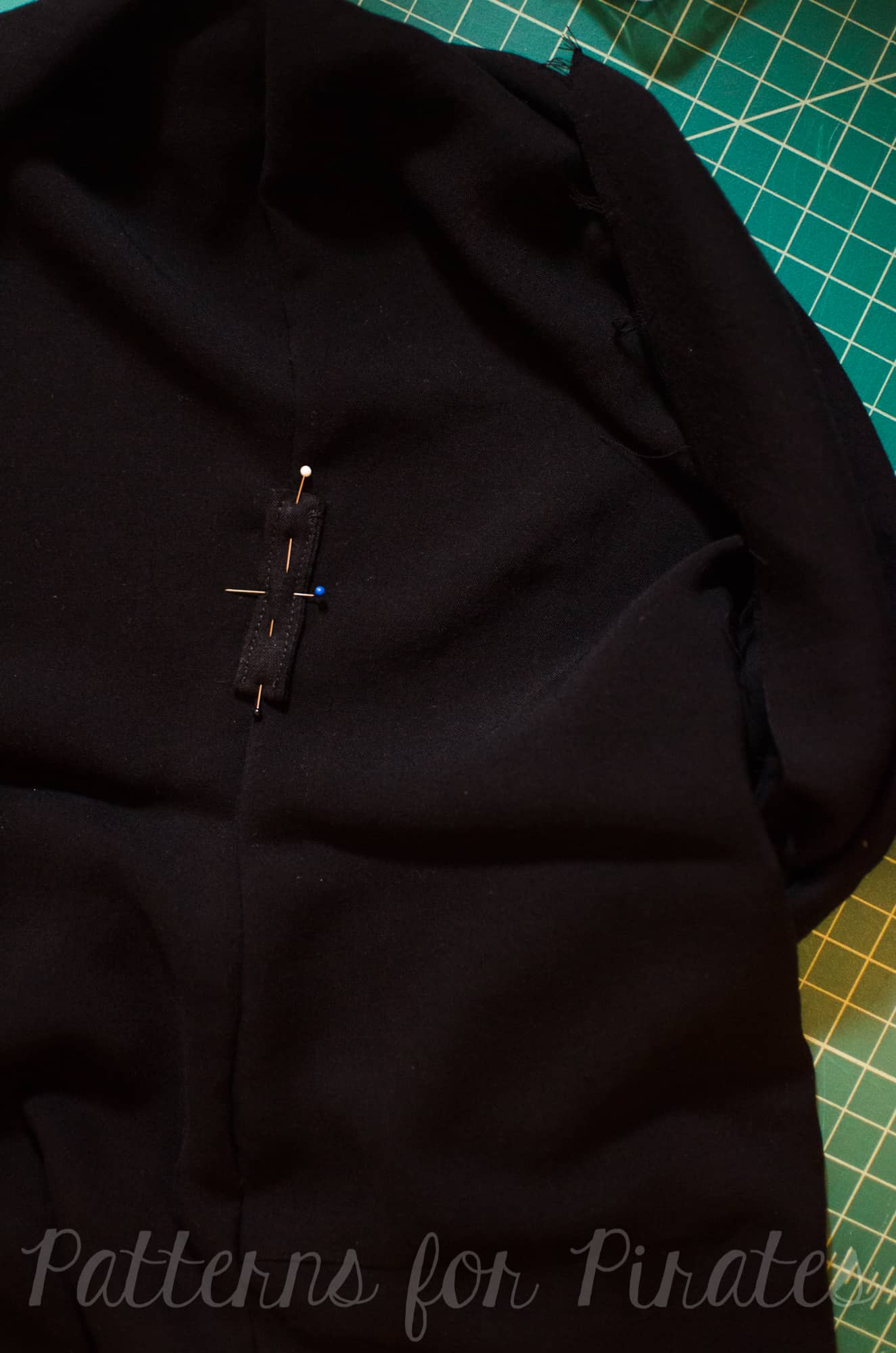
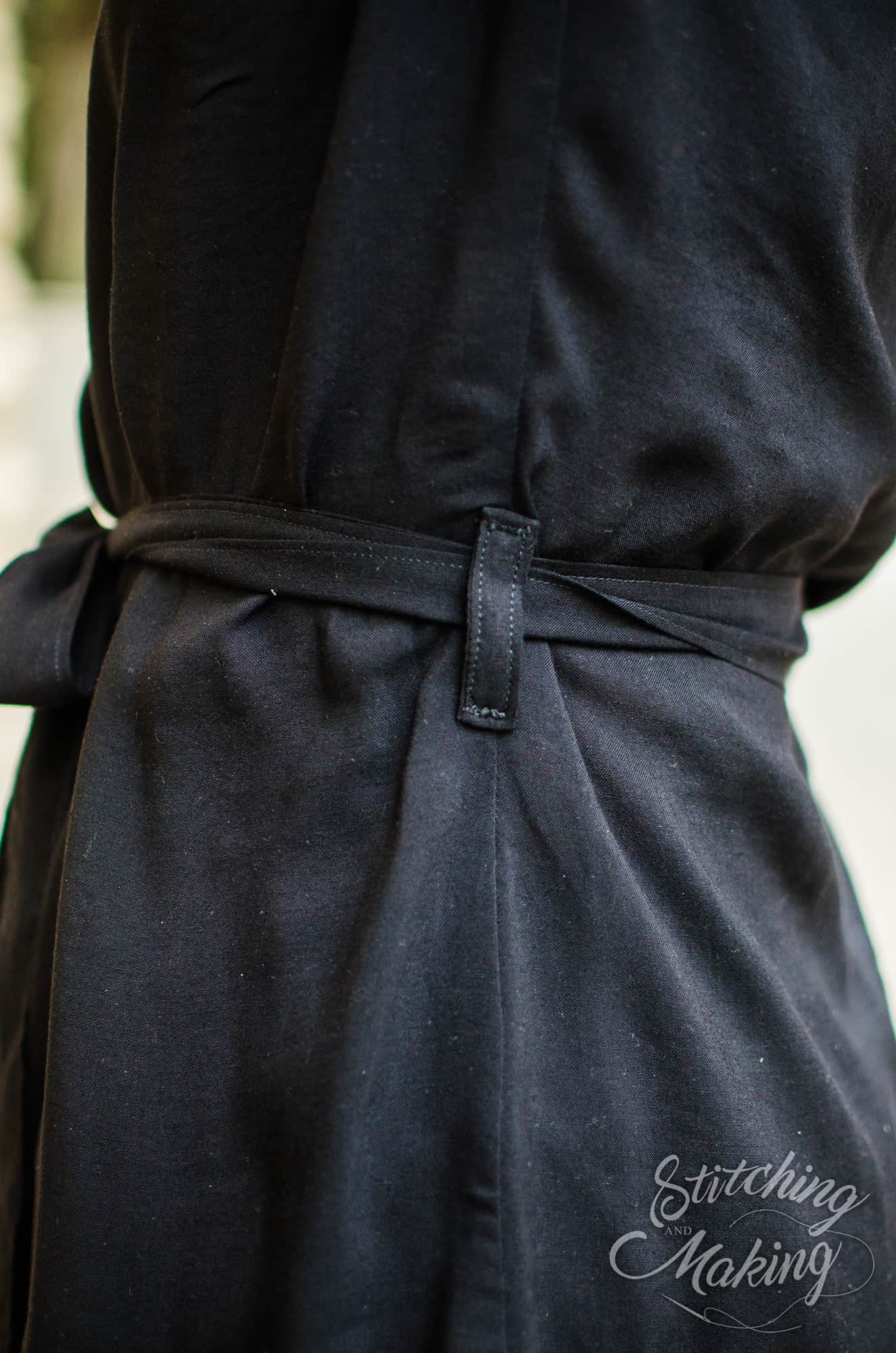
11. Find the notch on the blouse side seams you marked earlier.  Sew the loops on to the side seams, over the notch, by topstitching the short side 1/4″ from the edge.  If you’d like a loop on the back too, find the middle of the back neckline and use a ruler to find the center back of the blouse from there and attach.


12.  Press everything one last time.  Slip in your sash into the loops and wear your new blouse!


~Elisabeth

. . . . .

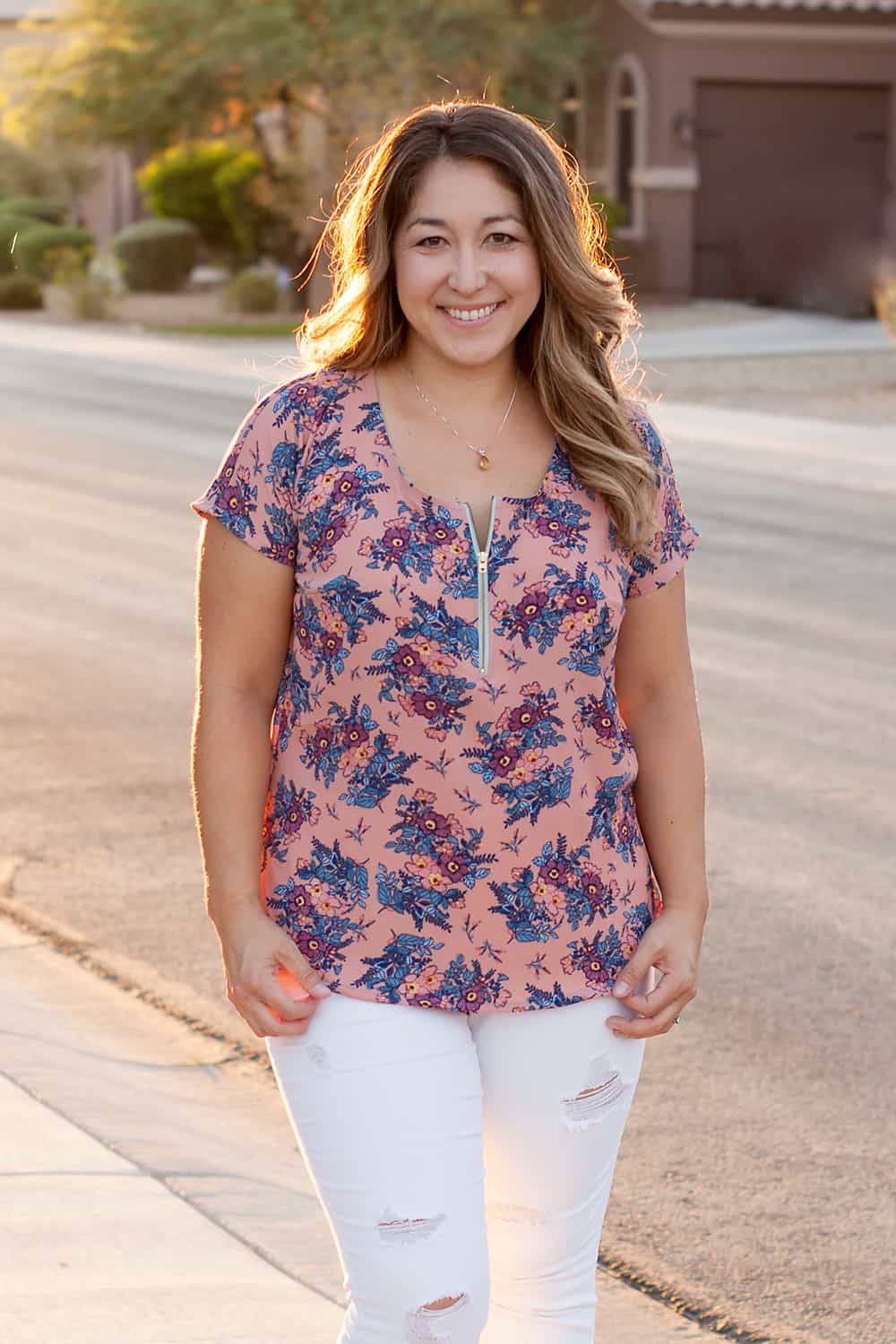
Front Zipper Hack


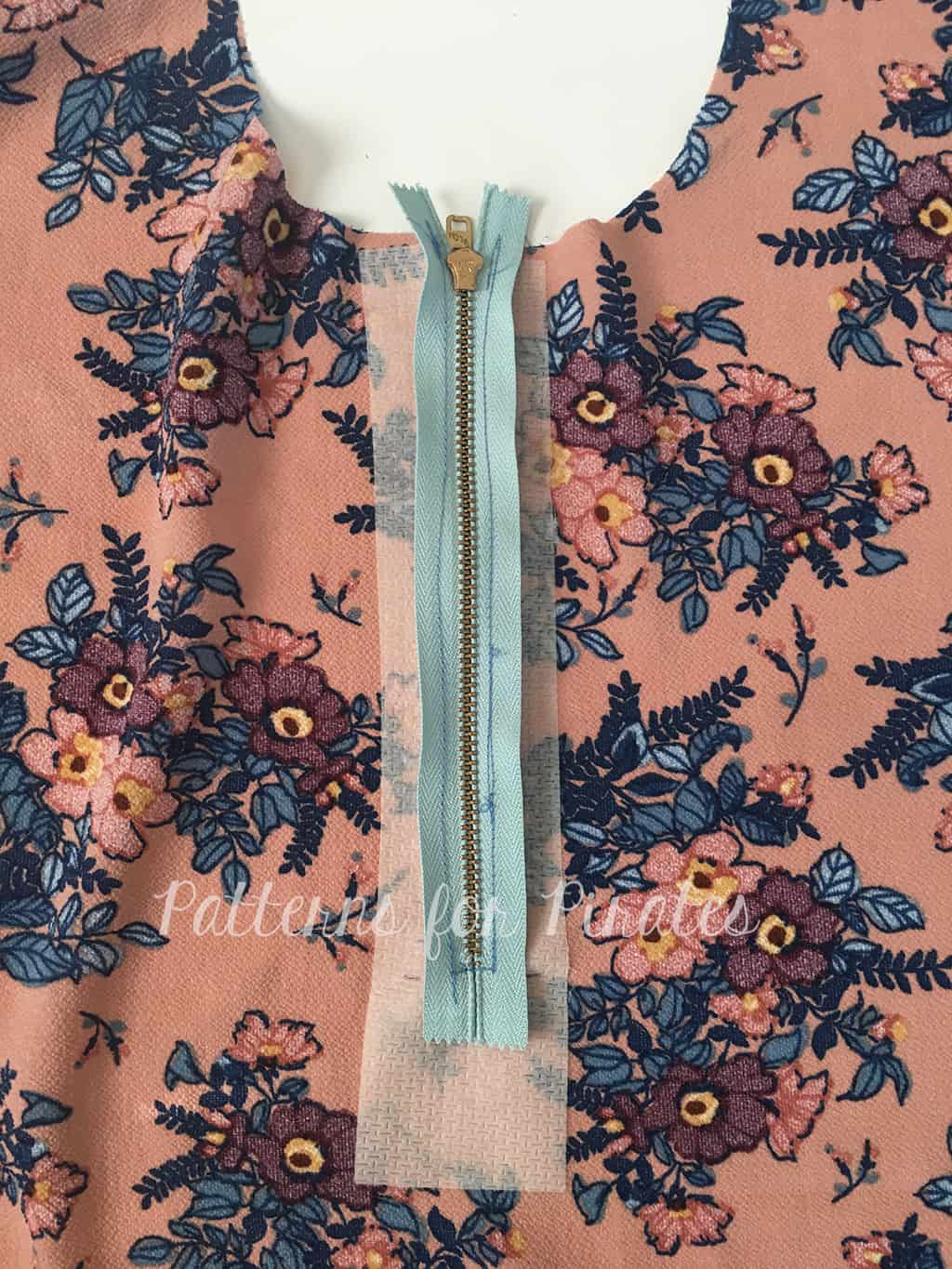
This is a little more intense and involves one of those scary things… you know, a zipper!  Now, if you’ve never installed a zipper this may be a little daunting, but I promise, take it slow, you can do this!

I am using a 7″ (I think?) exposed metal zipper but you can choose your preferred length if you want it shorter or longer.  If you’re choosing this option, do this prior to any other step in completing your top.  So now, let’s get started.

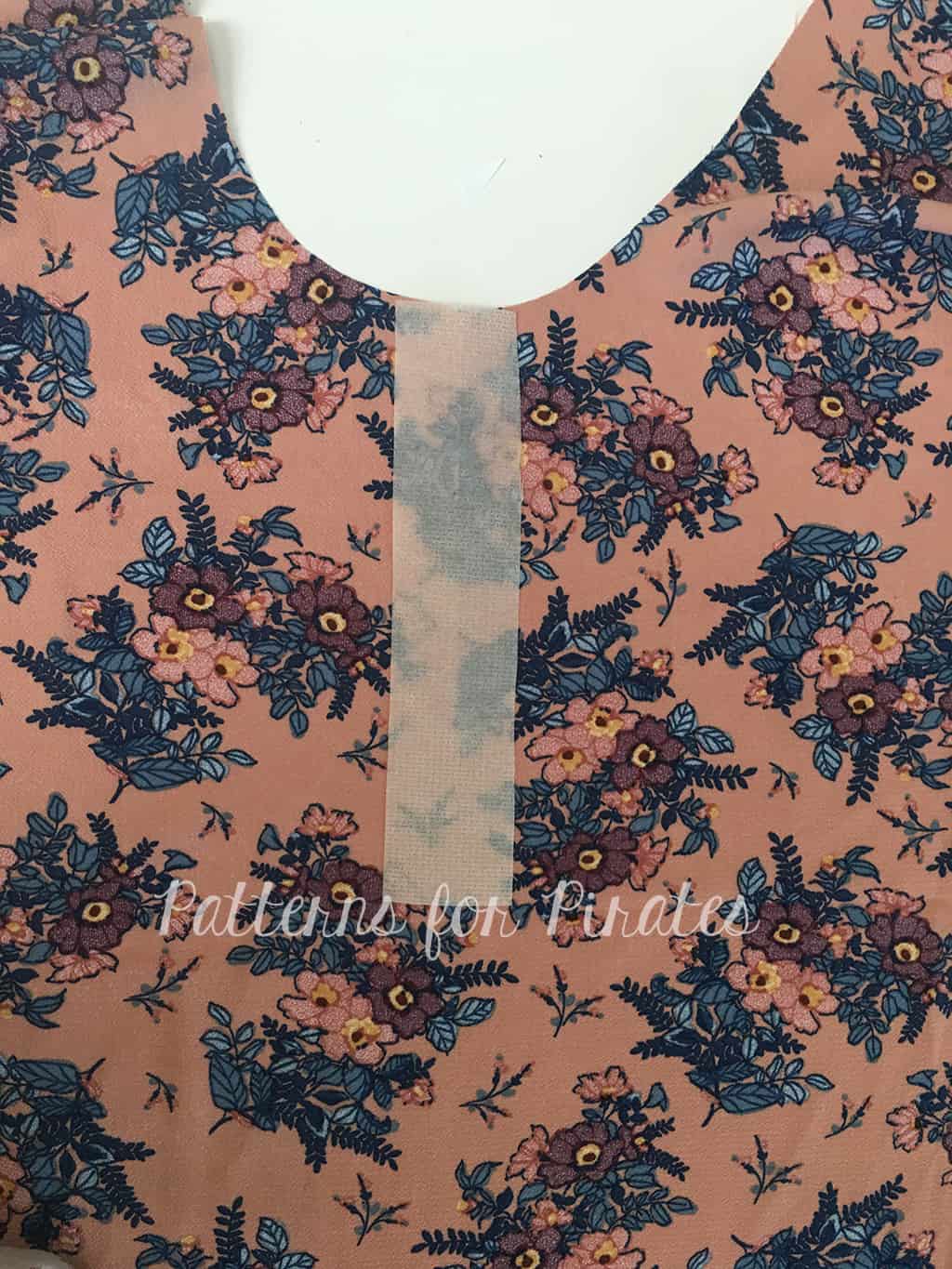
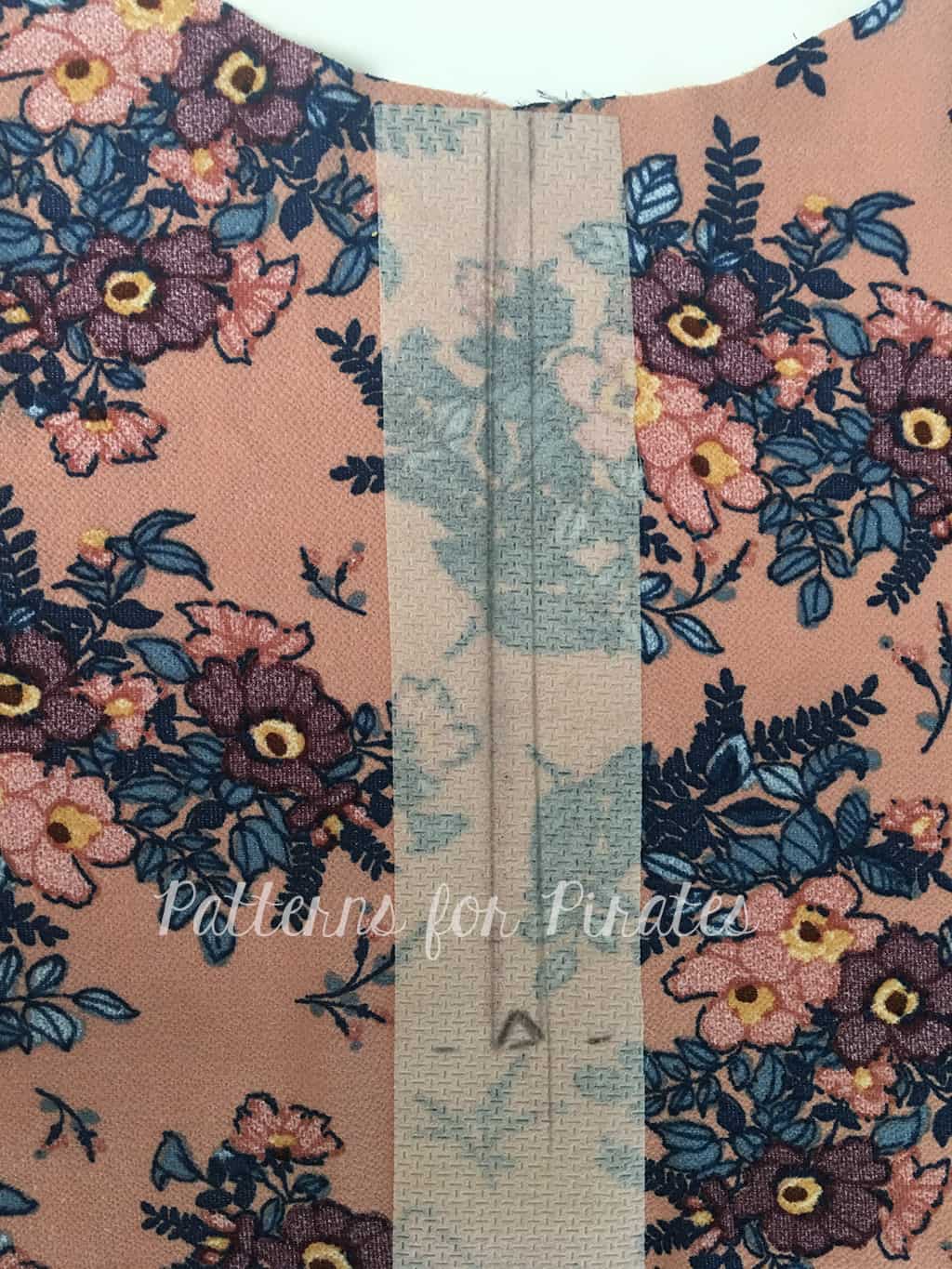
Find center front of neckline and iron on interfacing to wrong side of fabric.
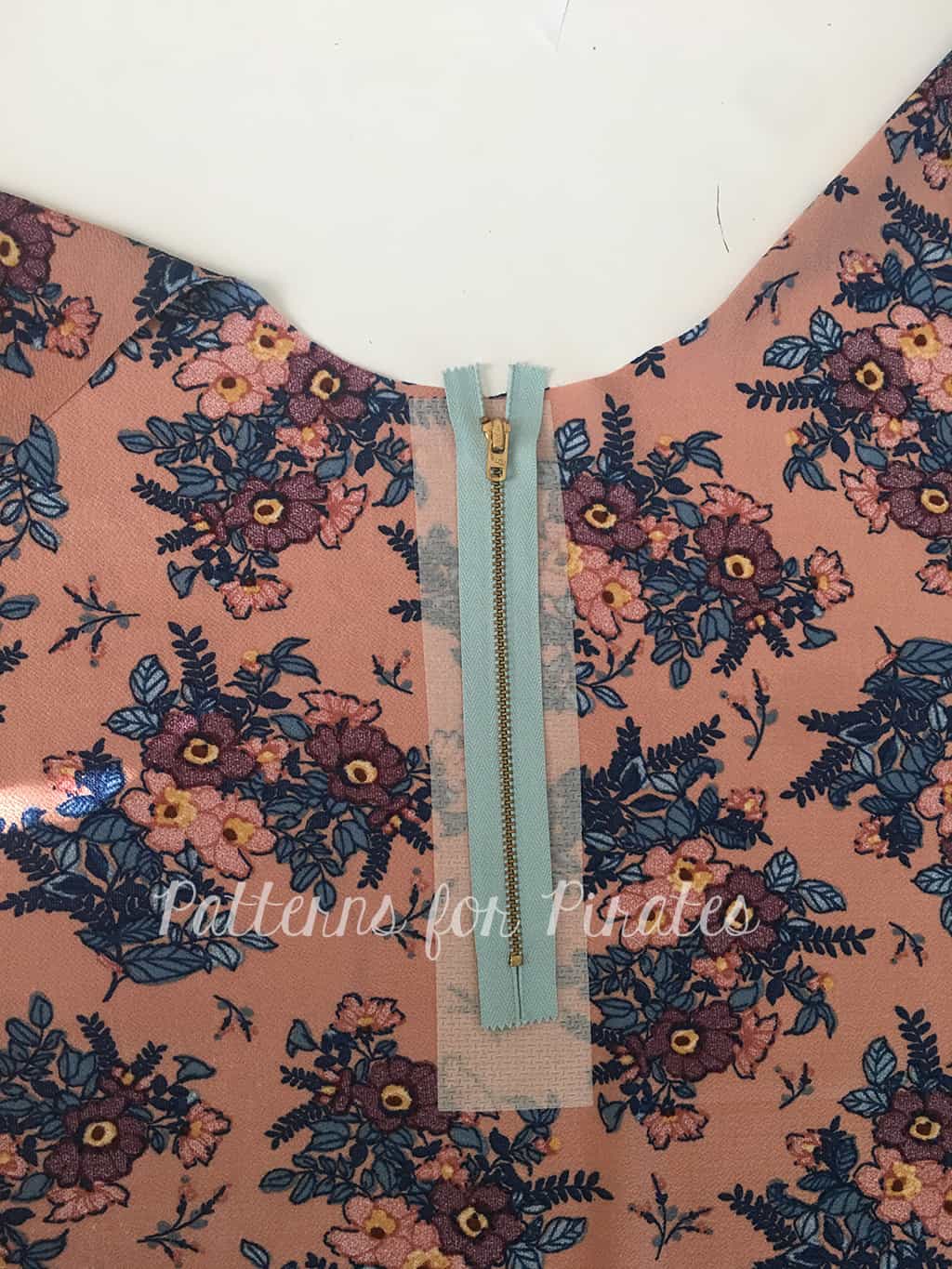
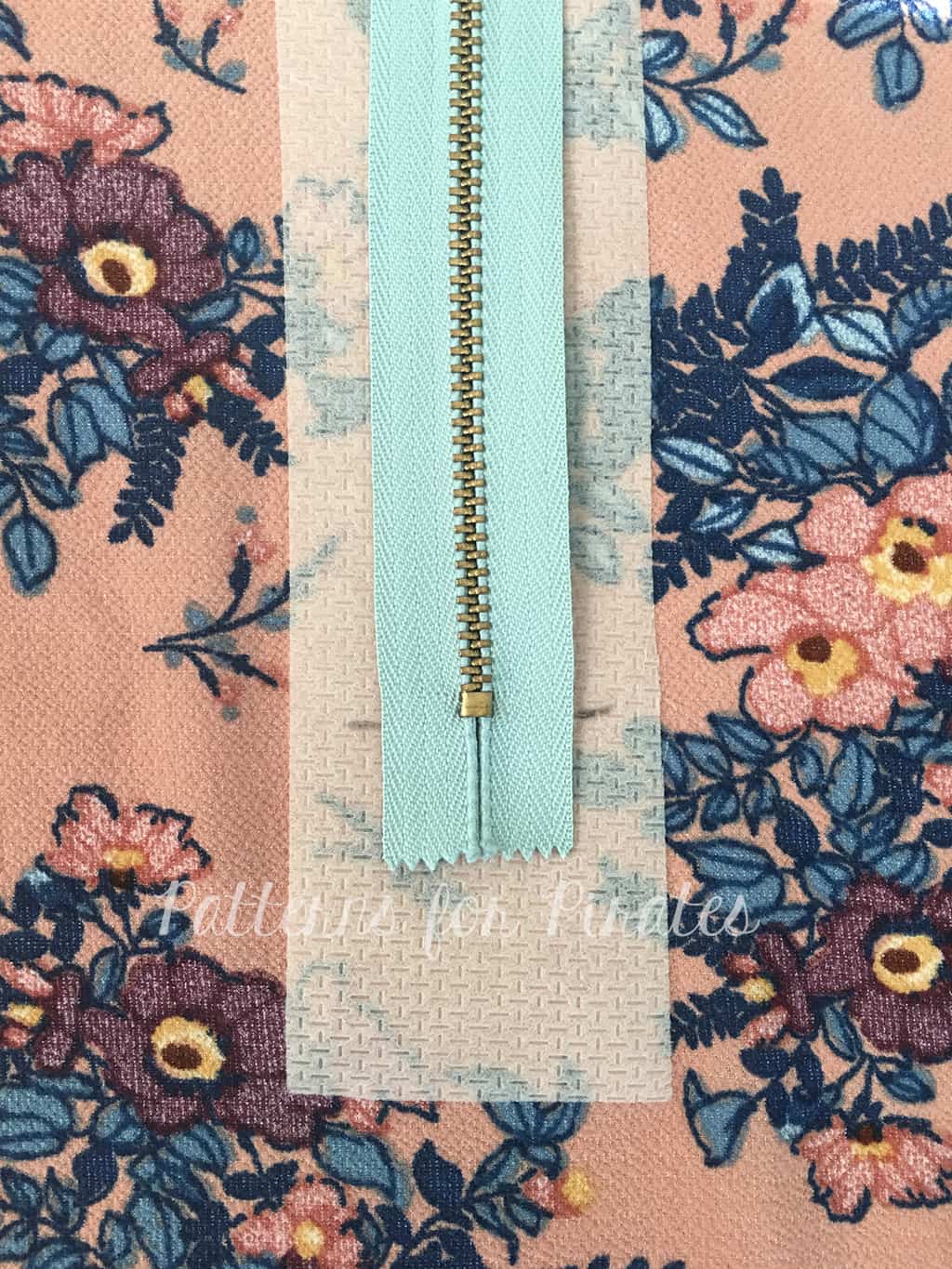
Place top of zipper 1/4″ below raw edge of neckline. If your tails are longer, you can trim them later.
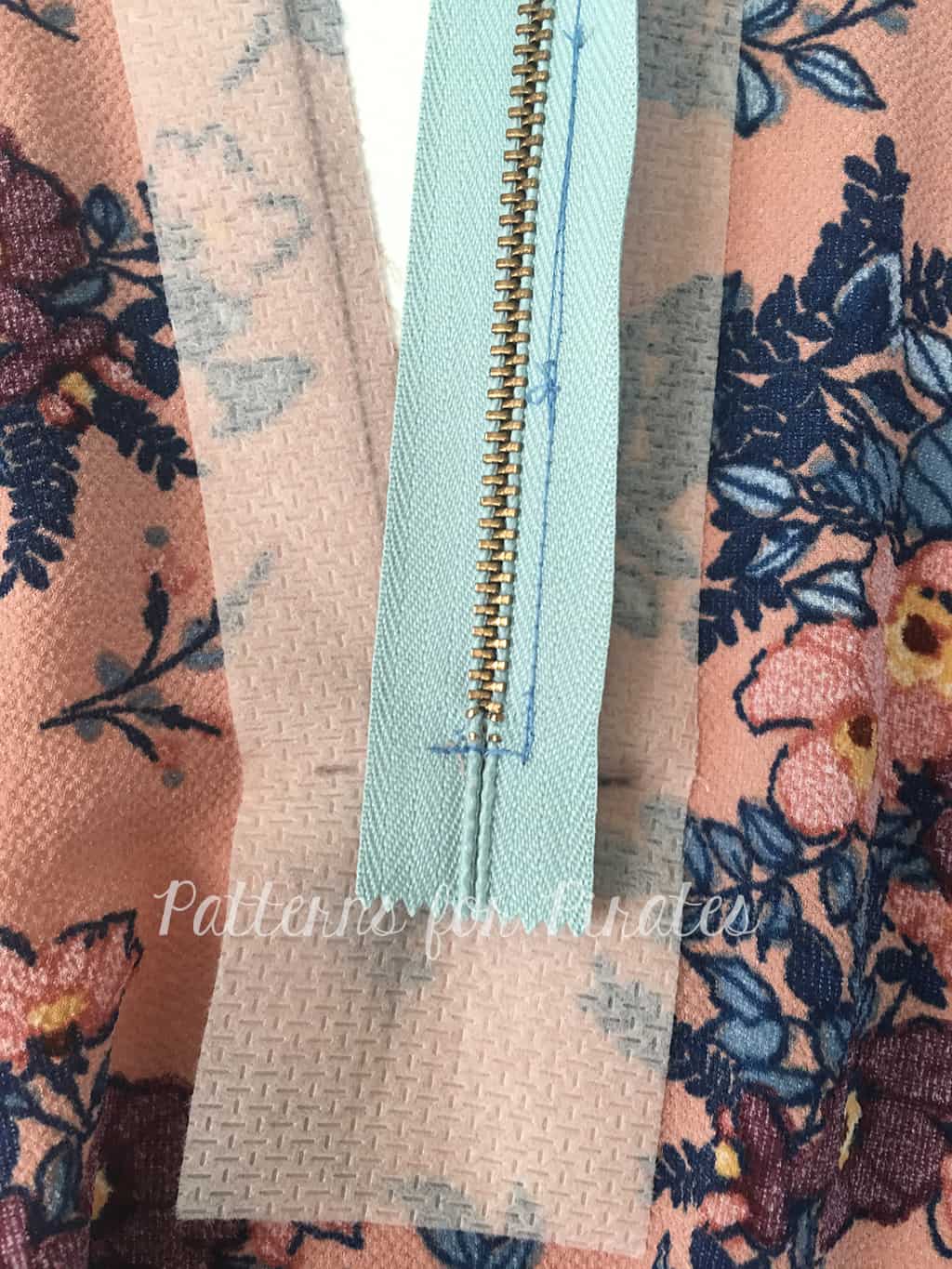
Mark the zipper stop placement on your interfacing.

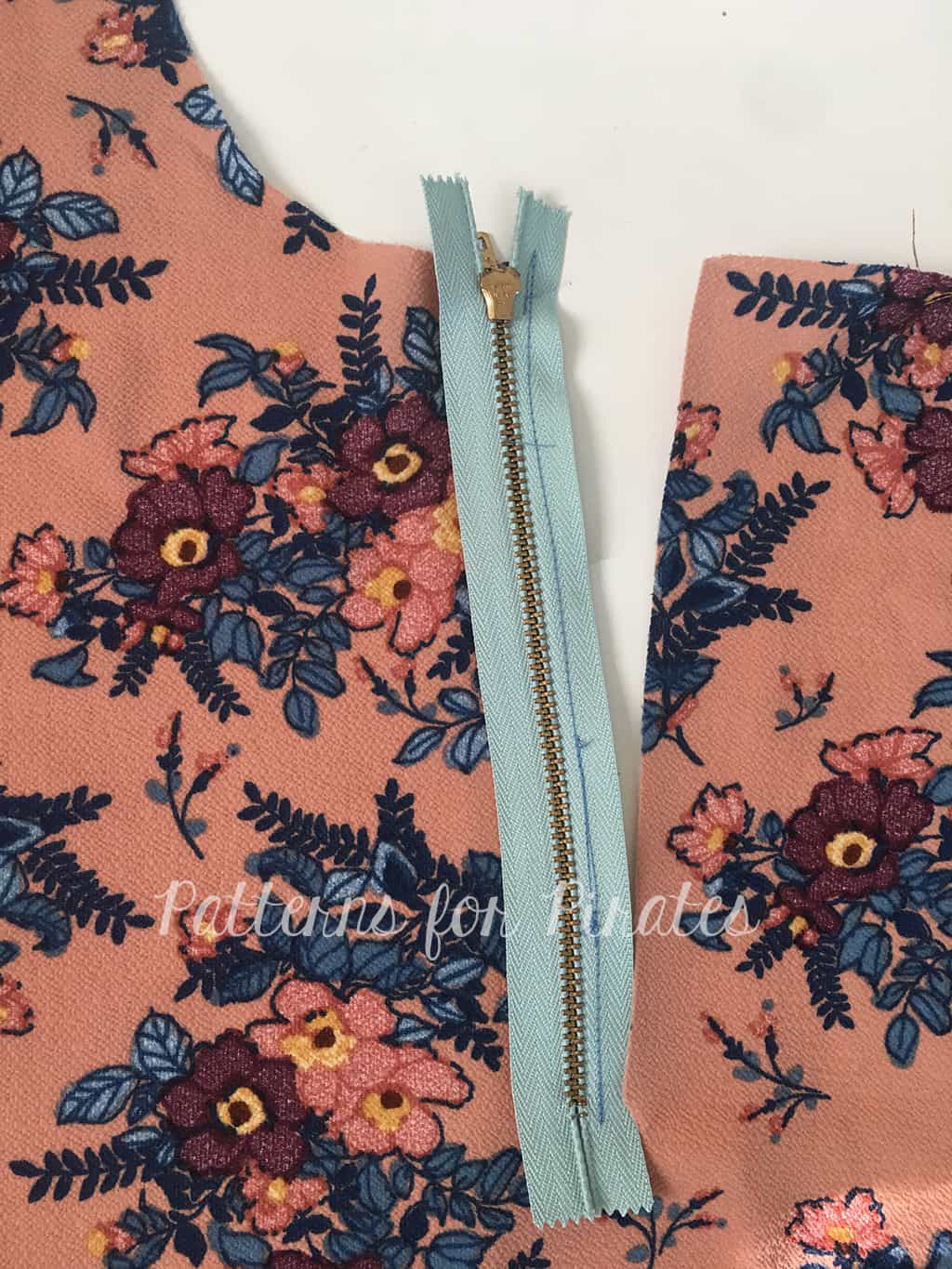
Draw a 1/2″ rectangle down the center of the front bodice. (this will be your stitch guide)
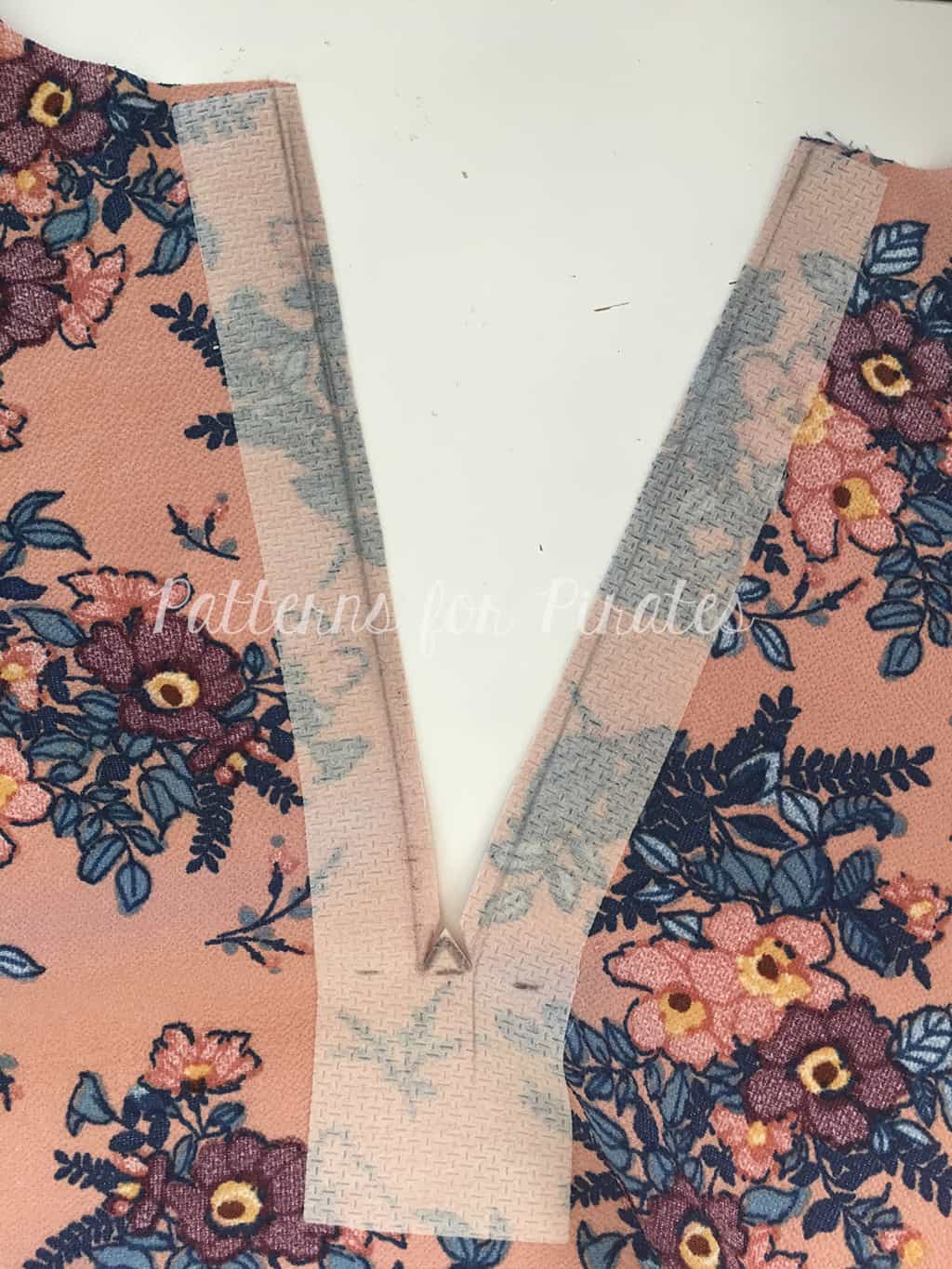
Cut down the center of the rectangle. Stopping just above the bottom, snip at a 45 degree angle to the corners.
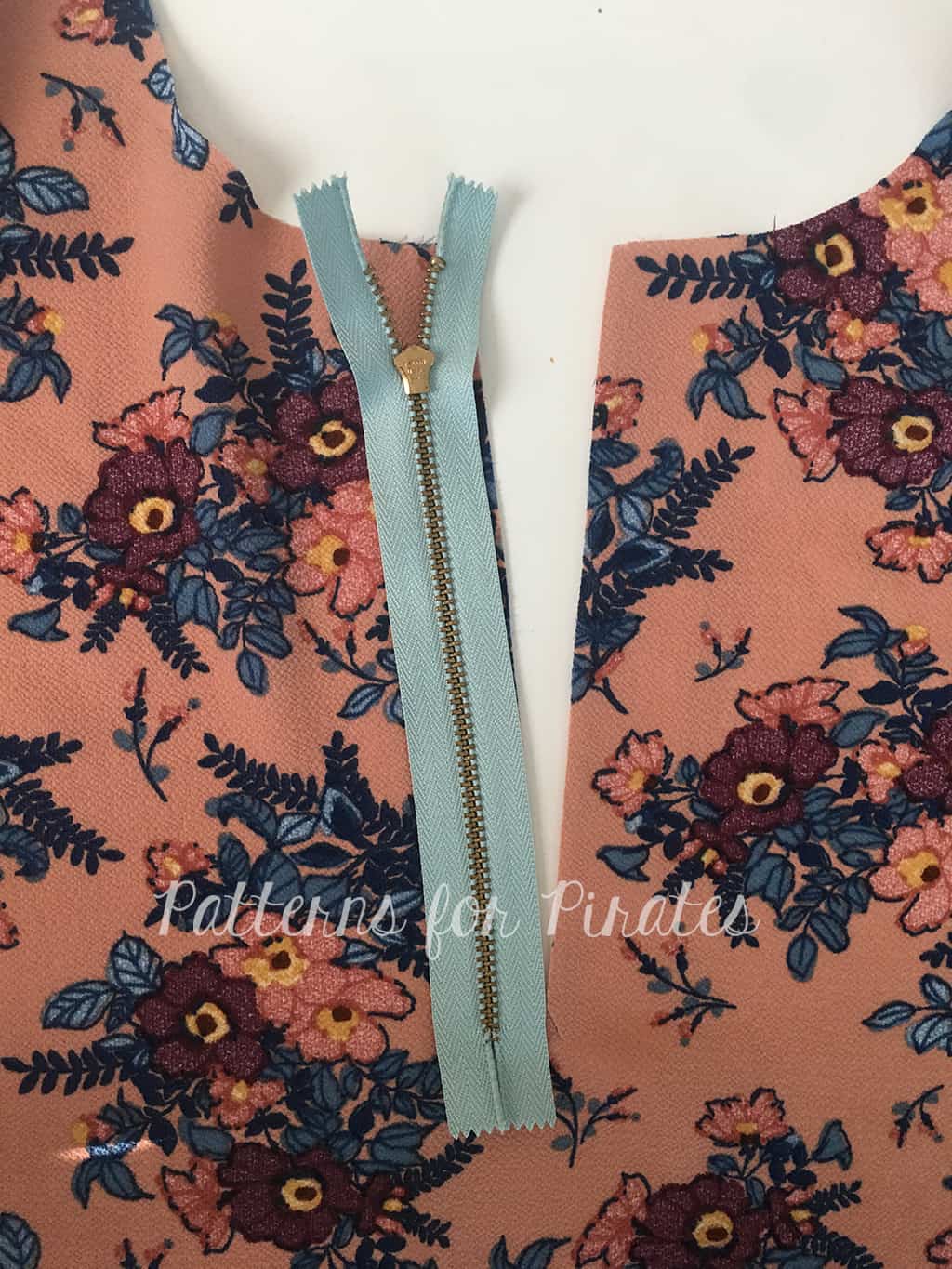
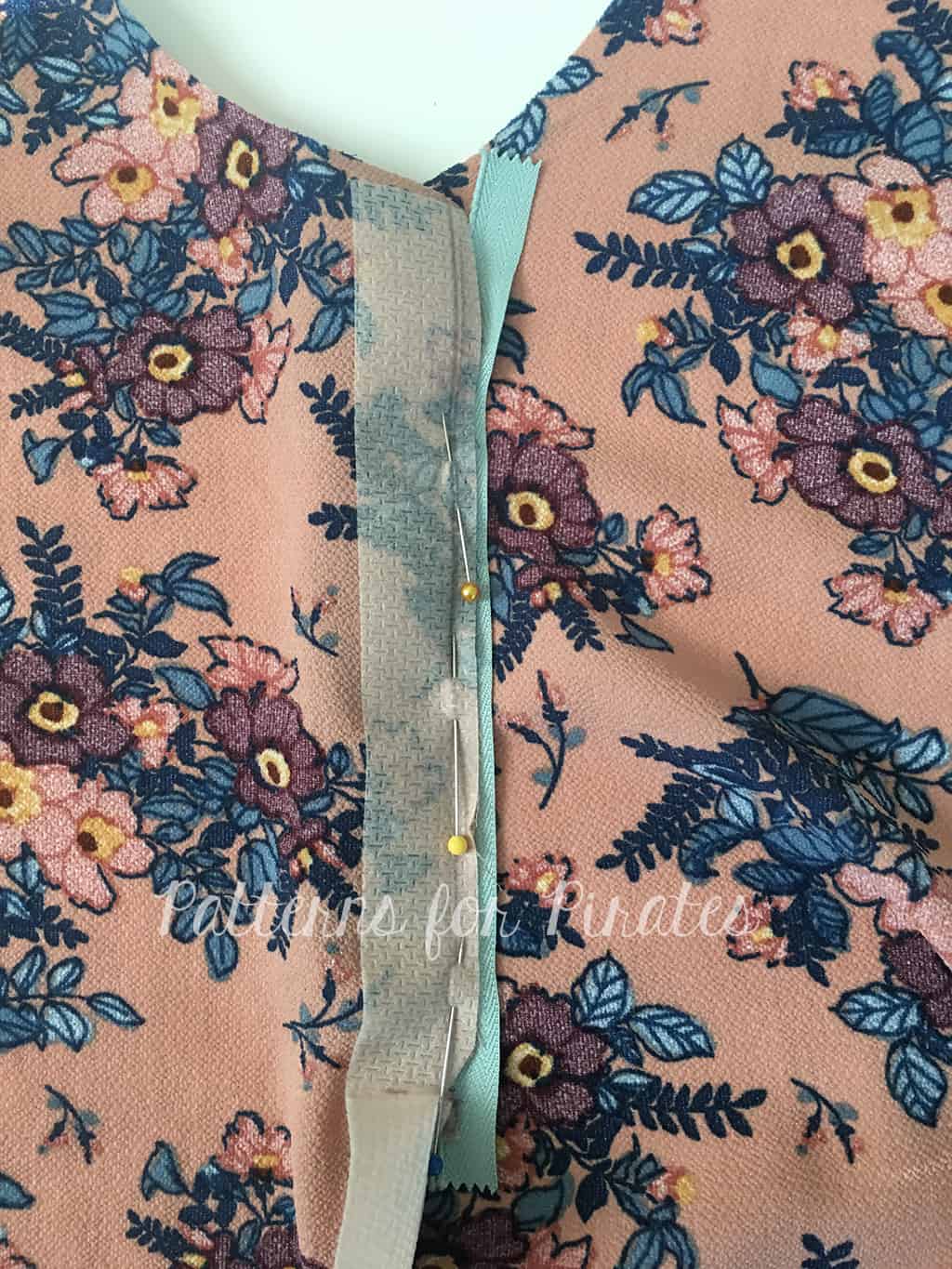
With right sides together, pin zipper in place.

The raw edge of your fabric should line up toward the center of the zipper tape.
Be sure that your zipper stop is aligned with the bottom edge of your rectangle.
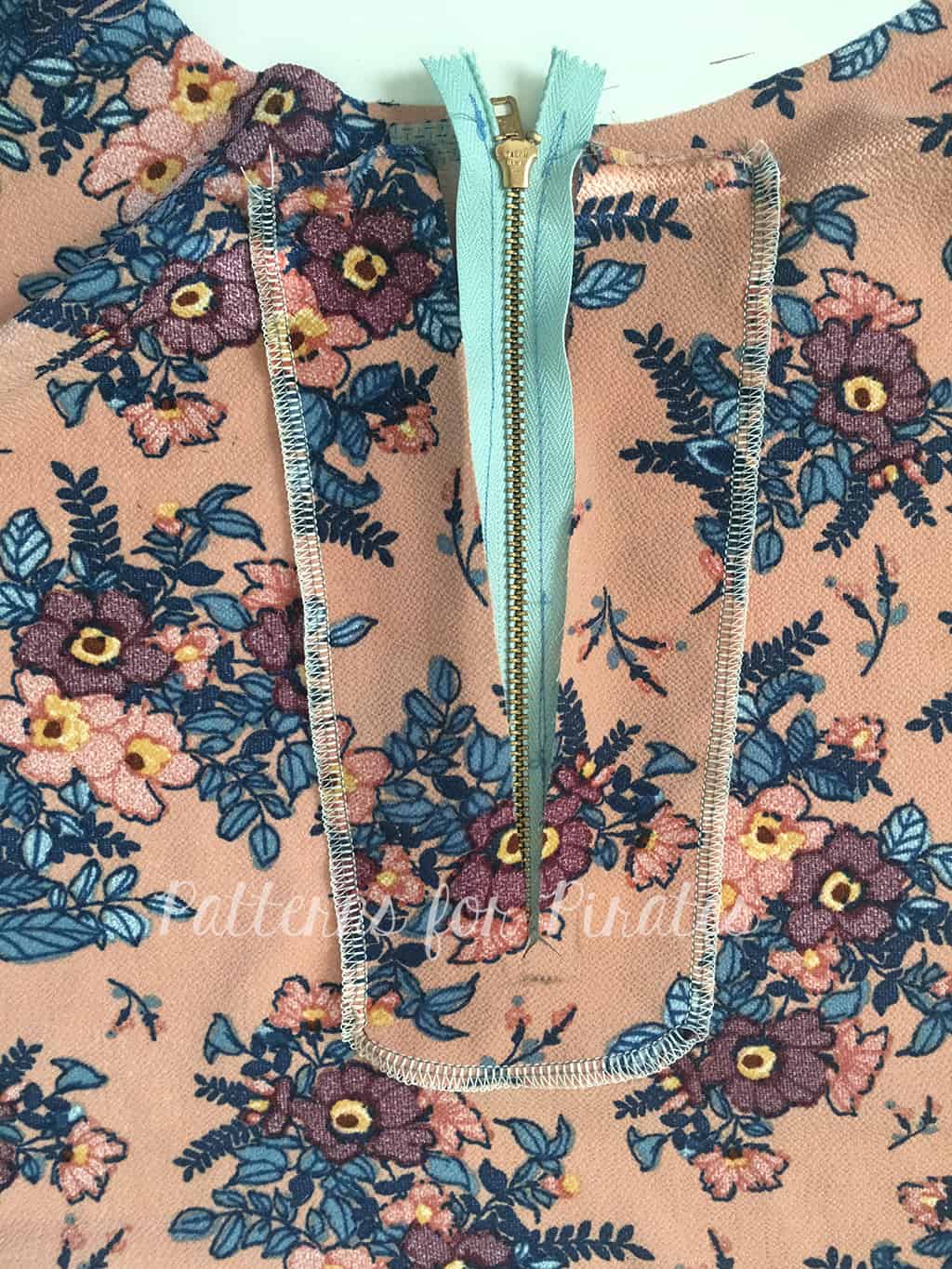
Stitch.

View from the front
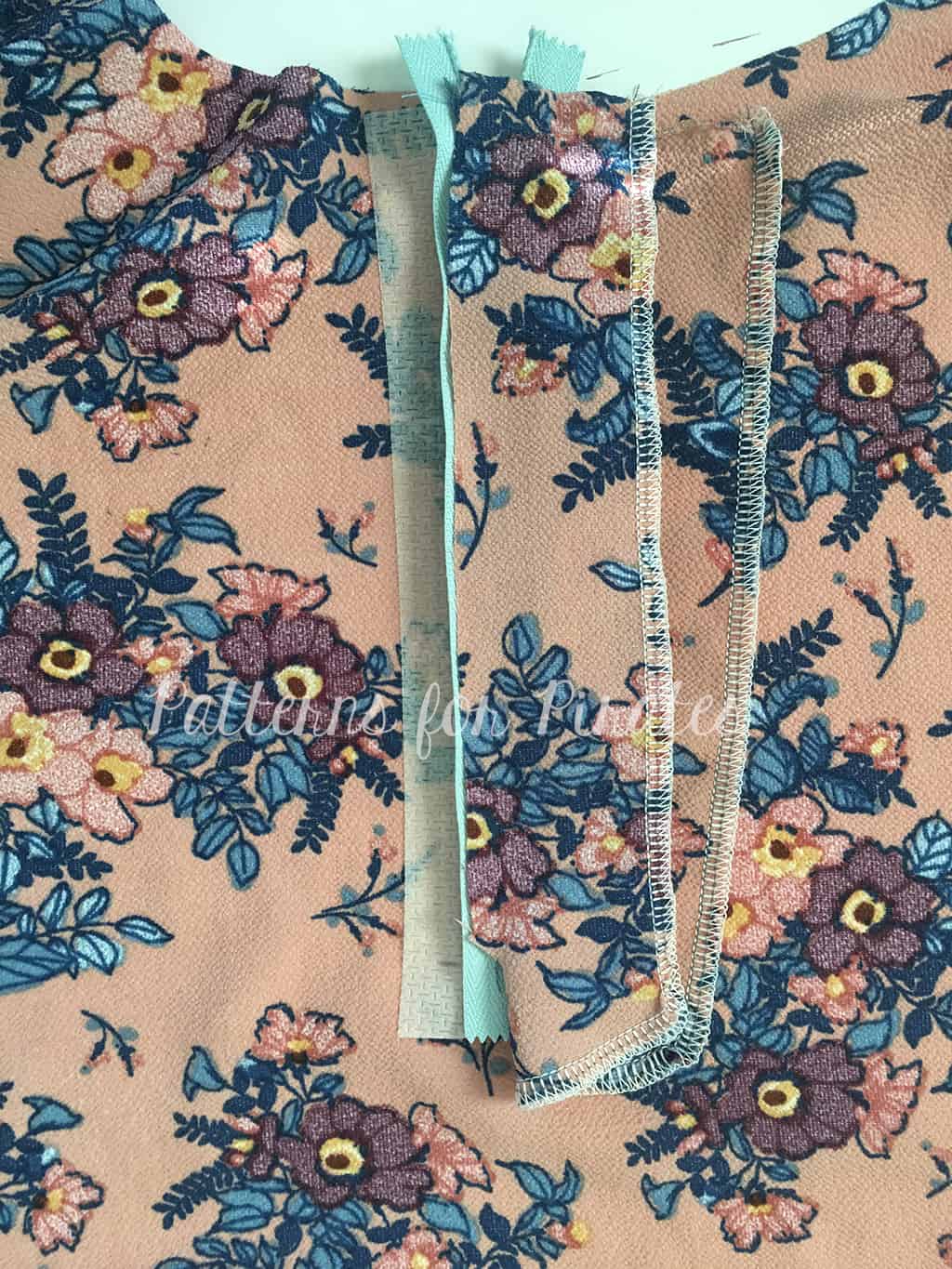
Flip notch upward and stitch.
View from back of zipper.

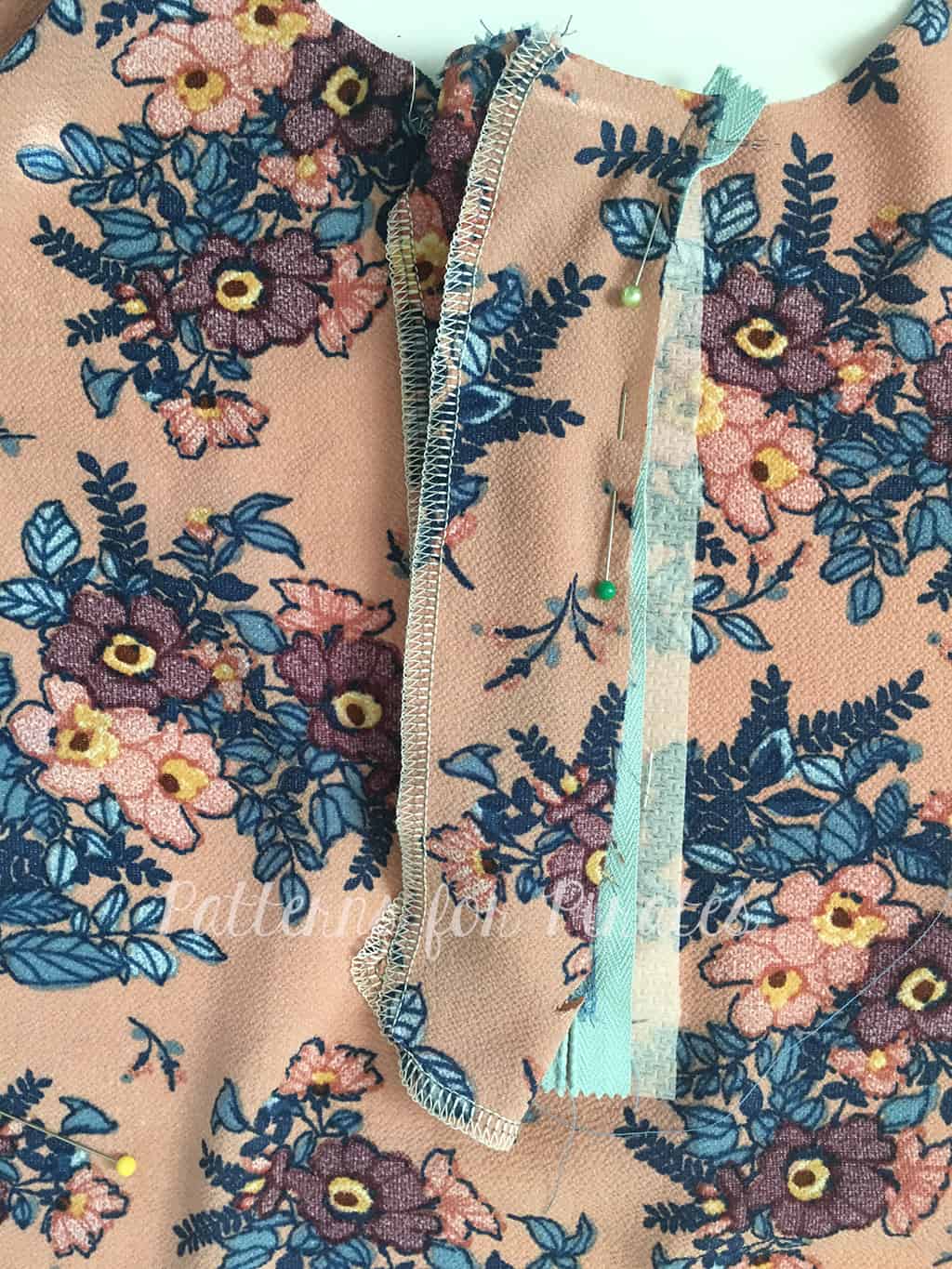
Repeat with opposite side. With right sides together, pin zipper to front bodice.
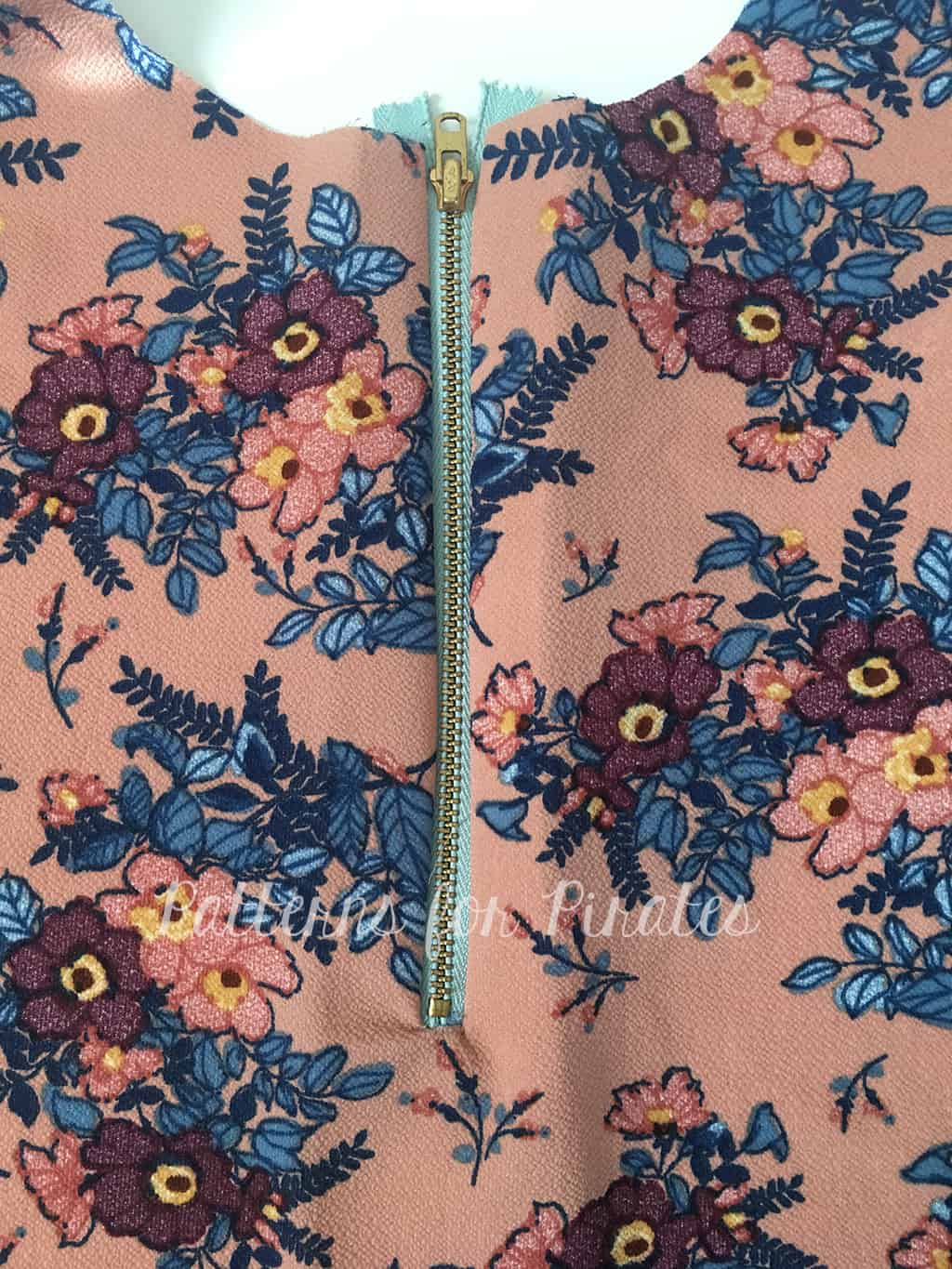
Stitch.
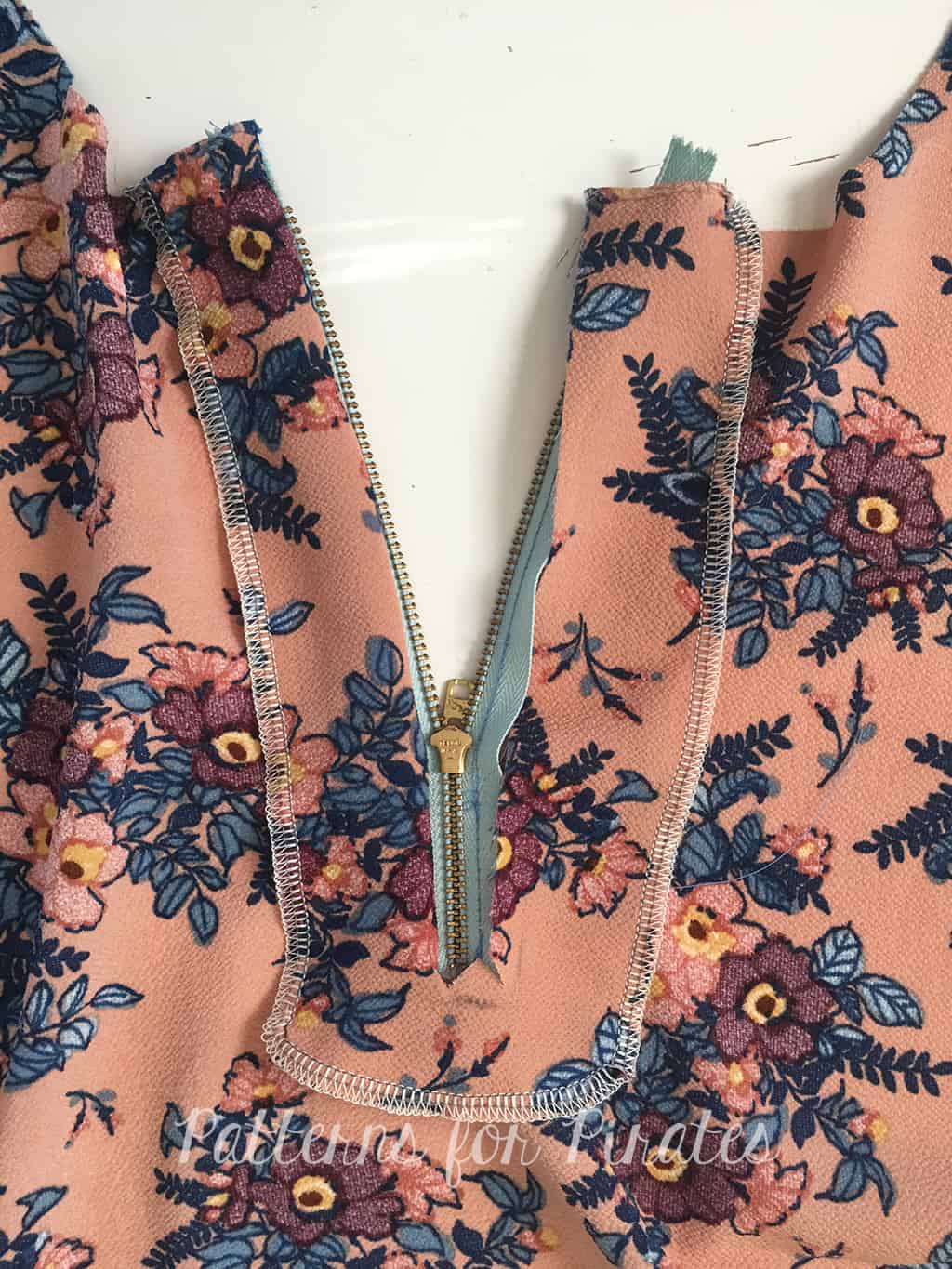
View from back of completed zipper.

View from front. You can stop here and top-stitch if you do not mind the zipper showing inside your item. Proceed to next step if you want to enclose it.
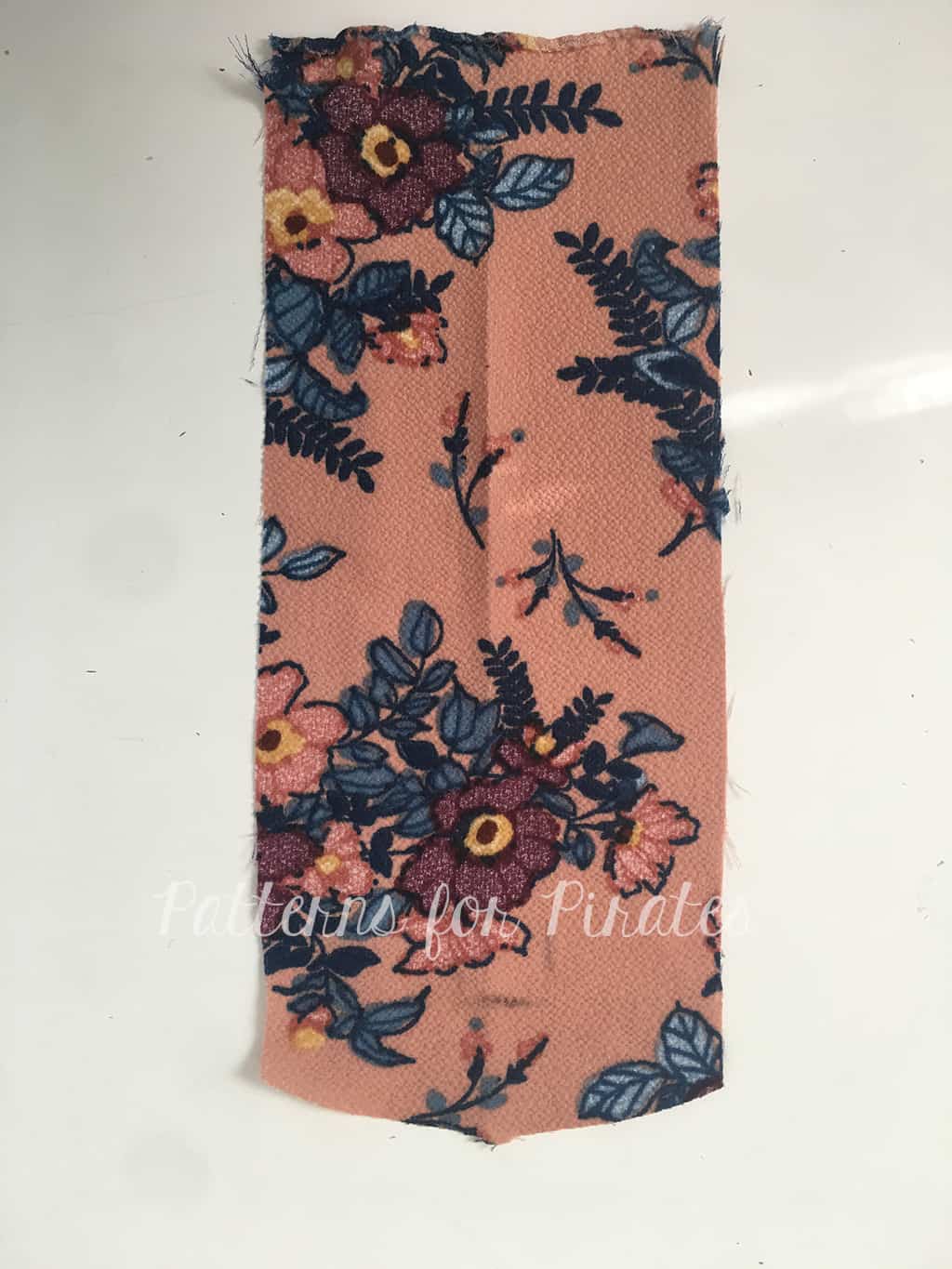
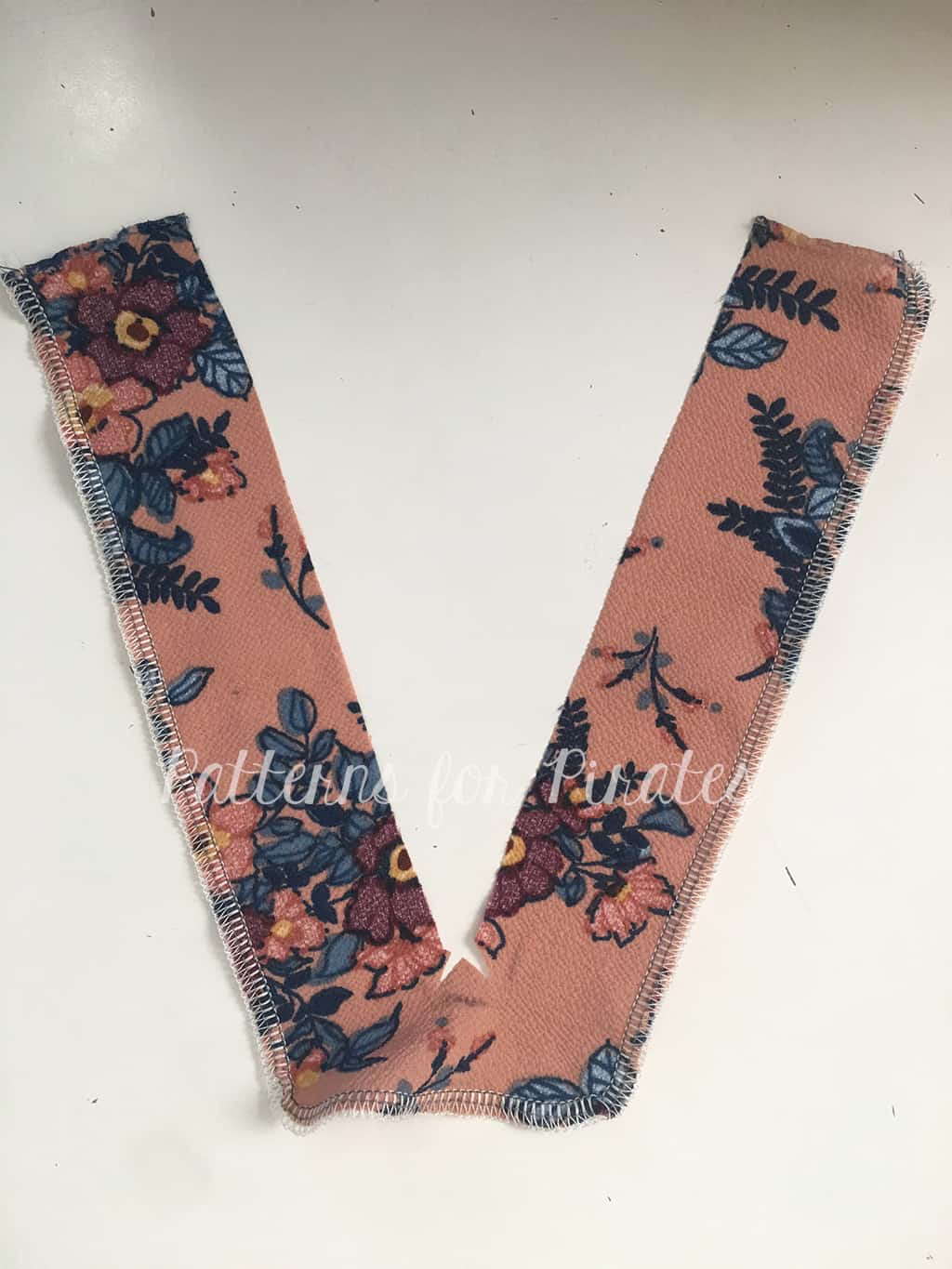
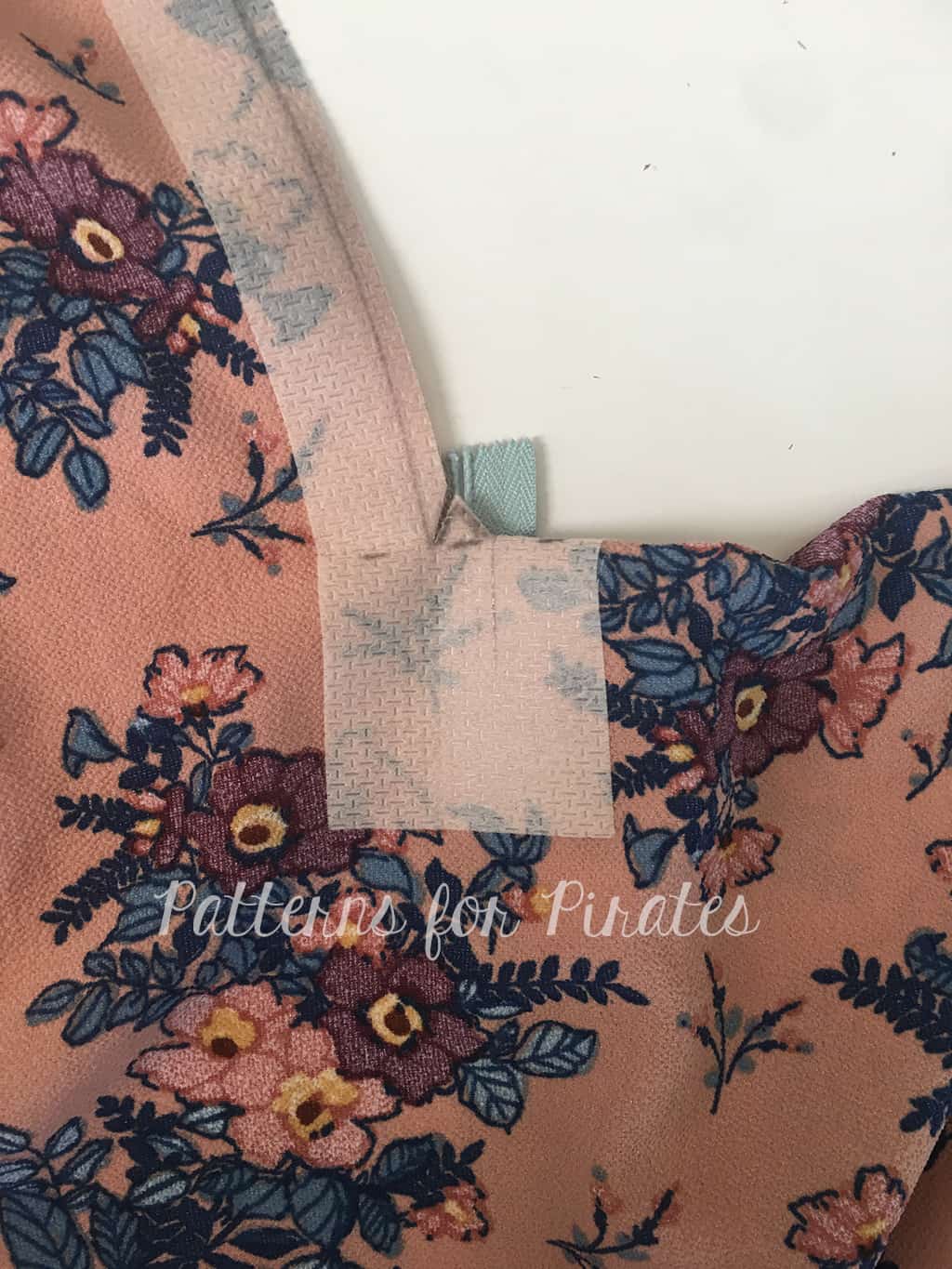
Cut a facing and transfer the markings as previously done in the first few steps.
Finish raw edges. Cut down the center of the facing and snip towards the corner at a 45 degree angle.

Lay the facing right side up on top of the wrong side of your zipper and front bodice.
Flip the facing toward the center so that the right side is now lined up with the wrong side of the zipper. Stitch.
View of left side of facing stitched.

Repeat on opposite side. Stitch.
Pull notch down and stitch in place. (same as you previously did on your main front body).
View from back.

Top-stitch around zipper.
Finish neckline using single fold bias tape as shown in the tutorial.

There you have it!  I hope that wasn’t as difficult as it appears.  If you’re not sure you’re ready to tackle the zipper on your top, try it on a few scrap pieces first.  Practice makes perfect right?


We hope you enjoyed the hacks as much as we did.   Don’t forget to share your makes in the Facebook Group, we’d love to see them!  Happy Sewing!

Filed Under: Pattern Hacks, Pattern Release, Uncategorized Leave a Comment

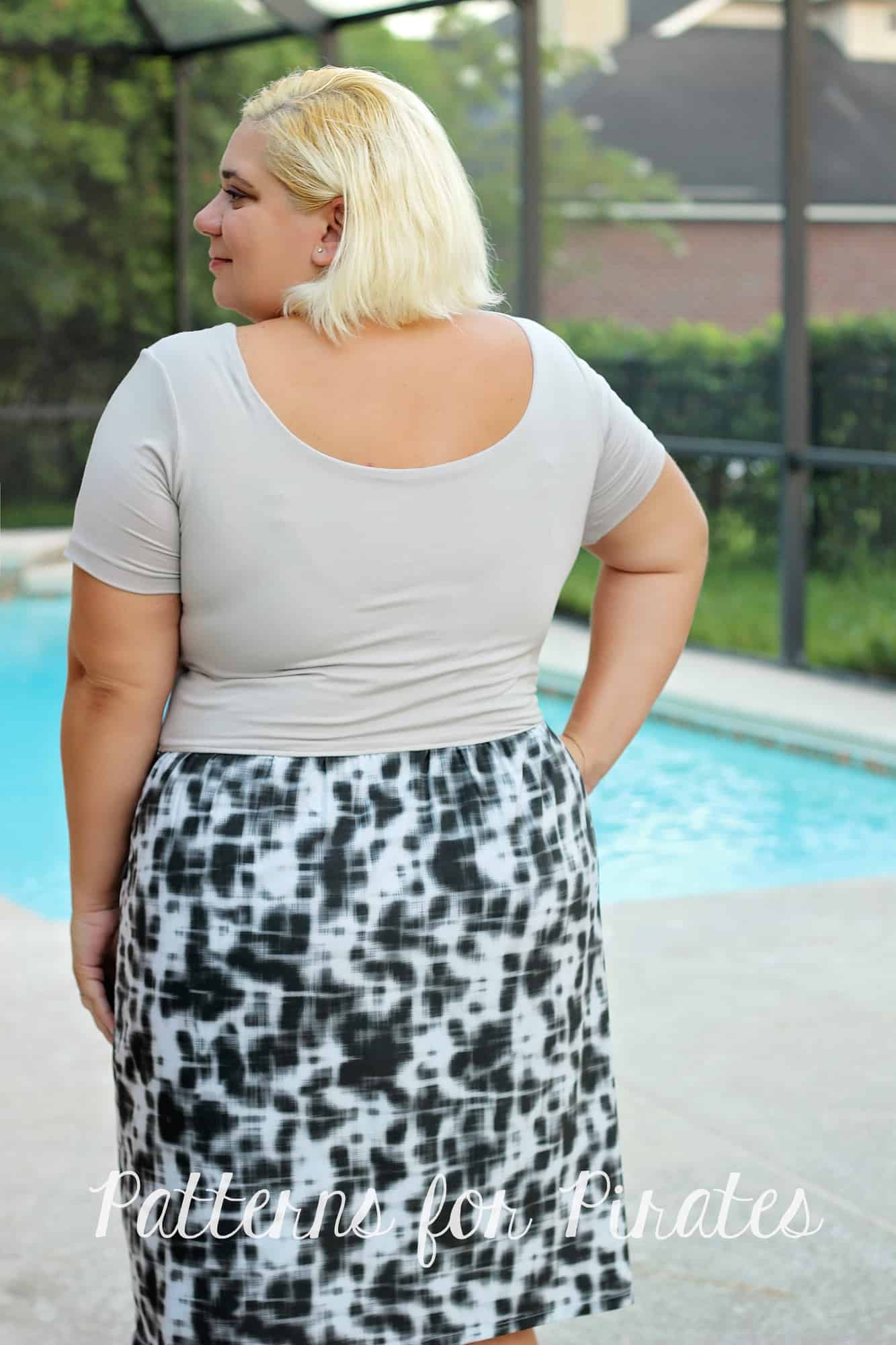
Tips for adding a woven skirt to a knit bodice

August 17, 2017

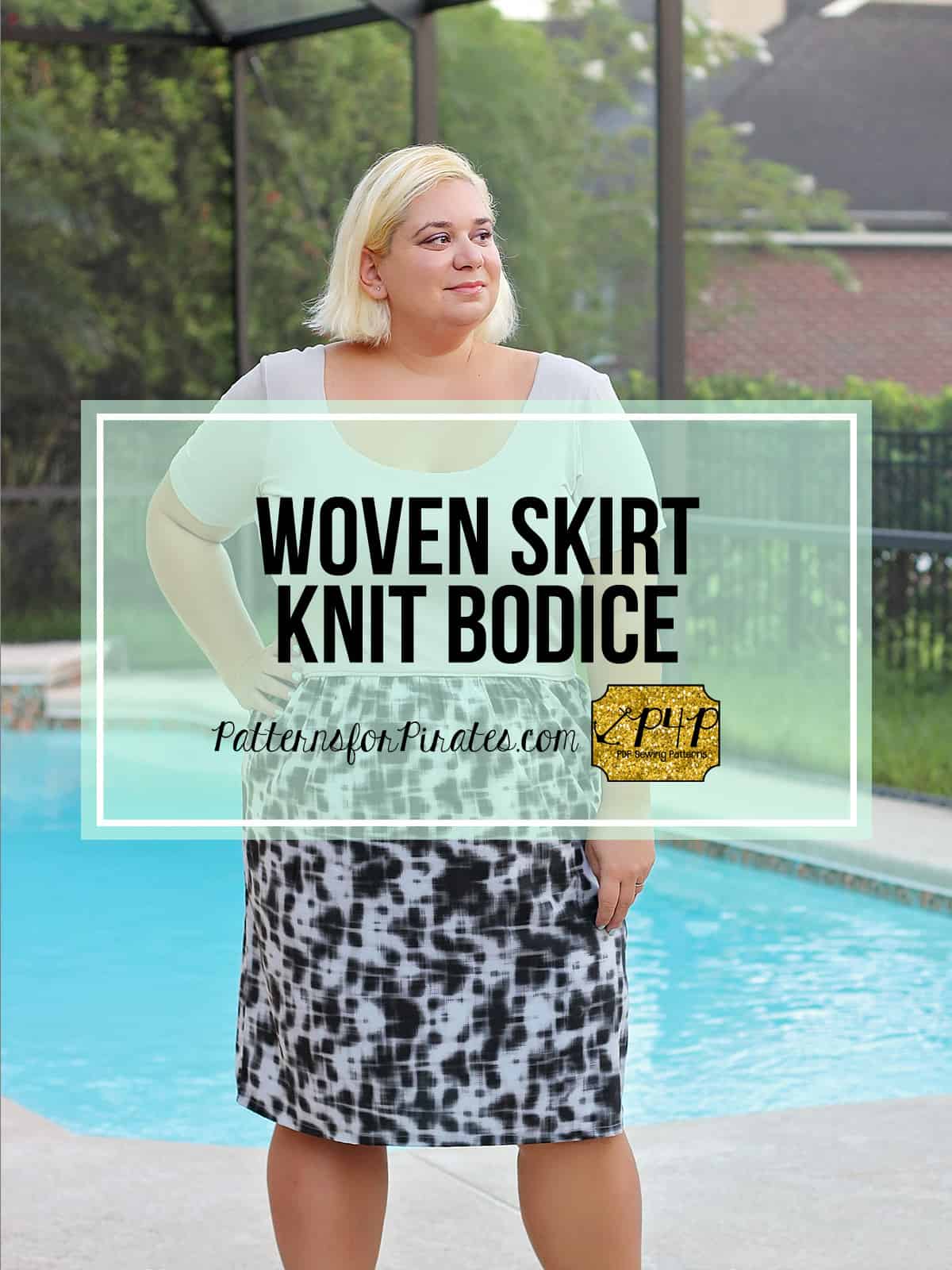
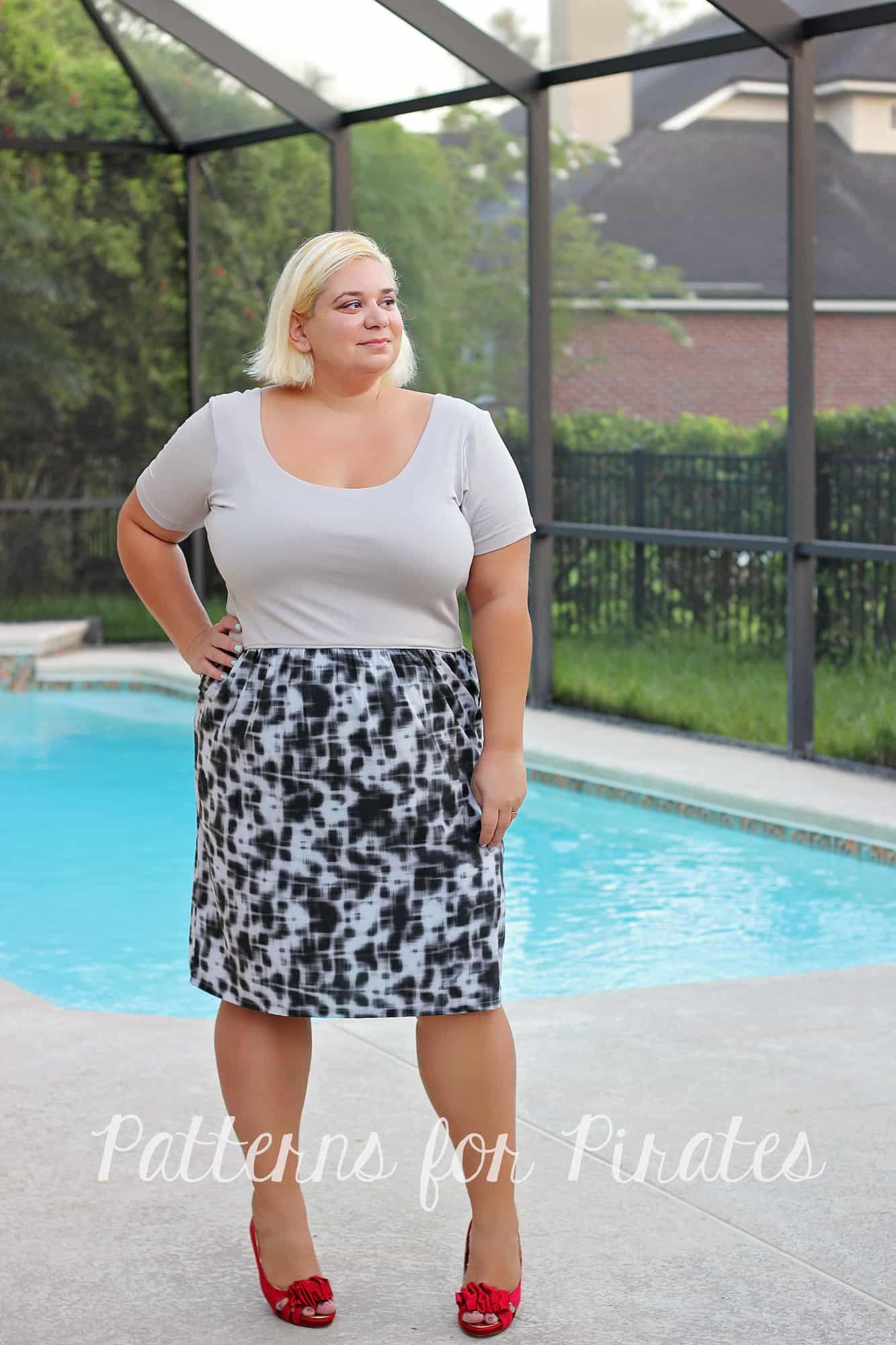
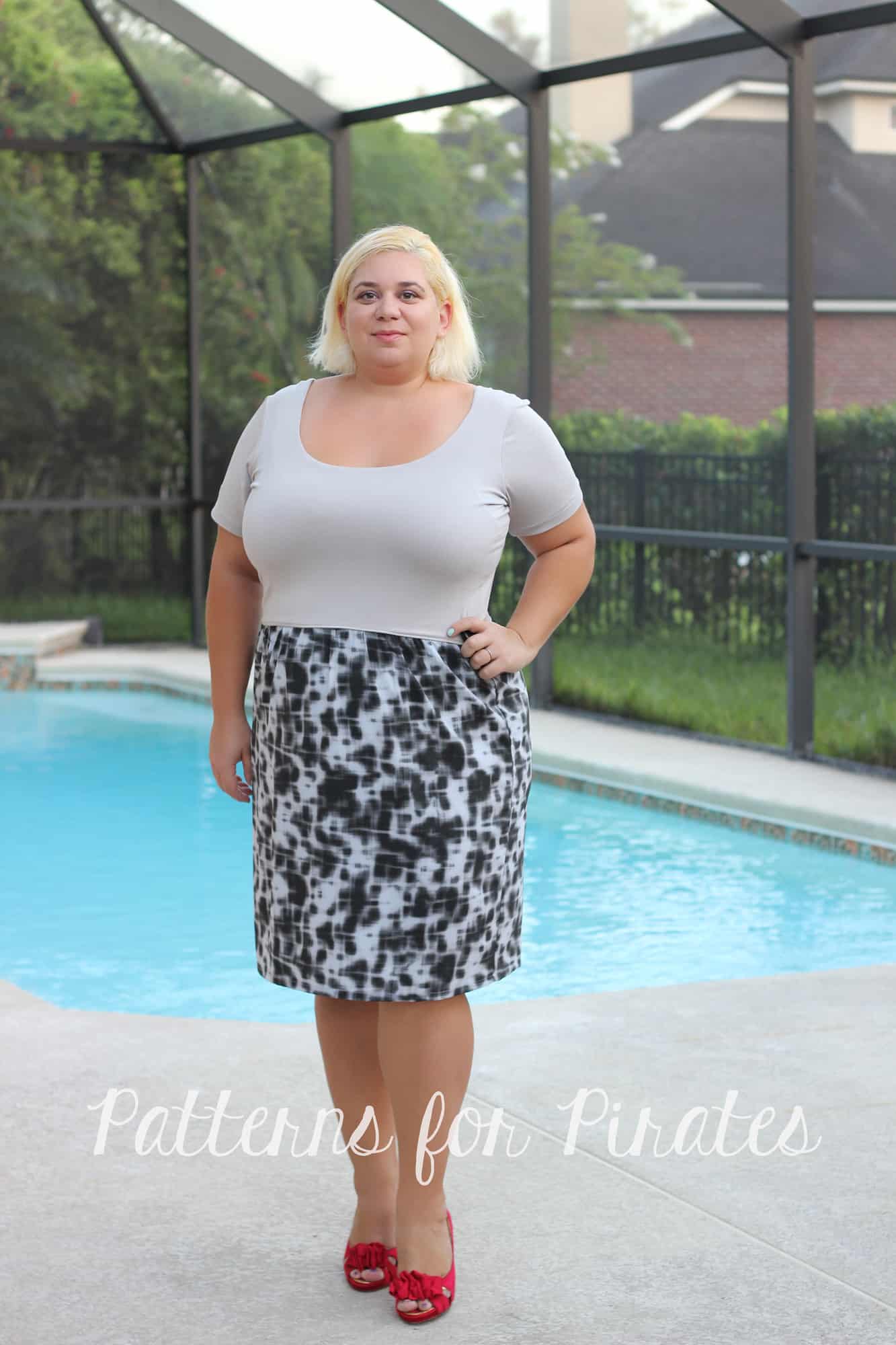
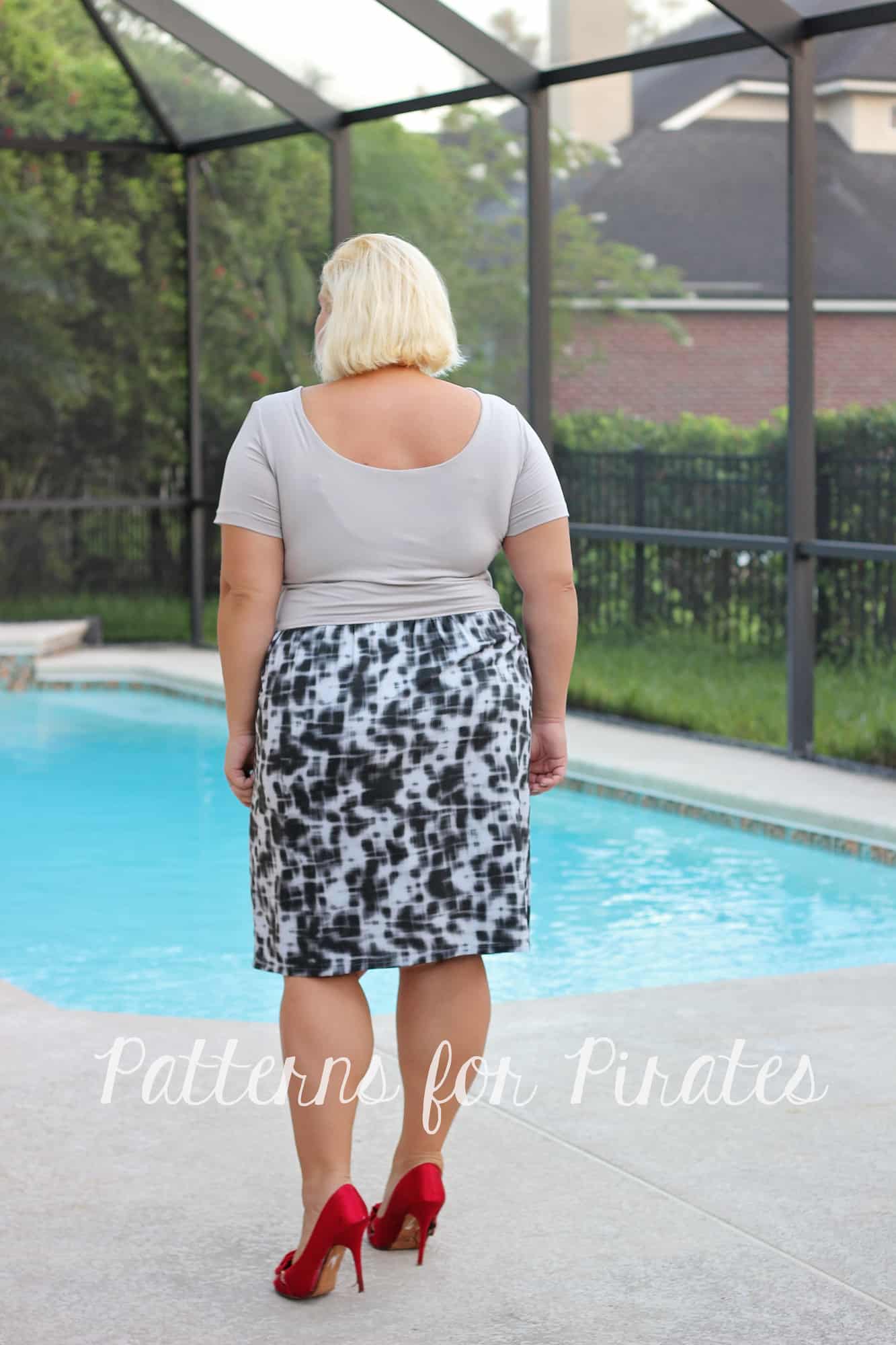
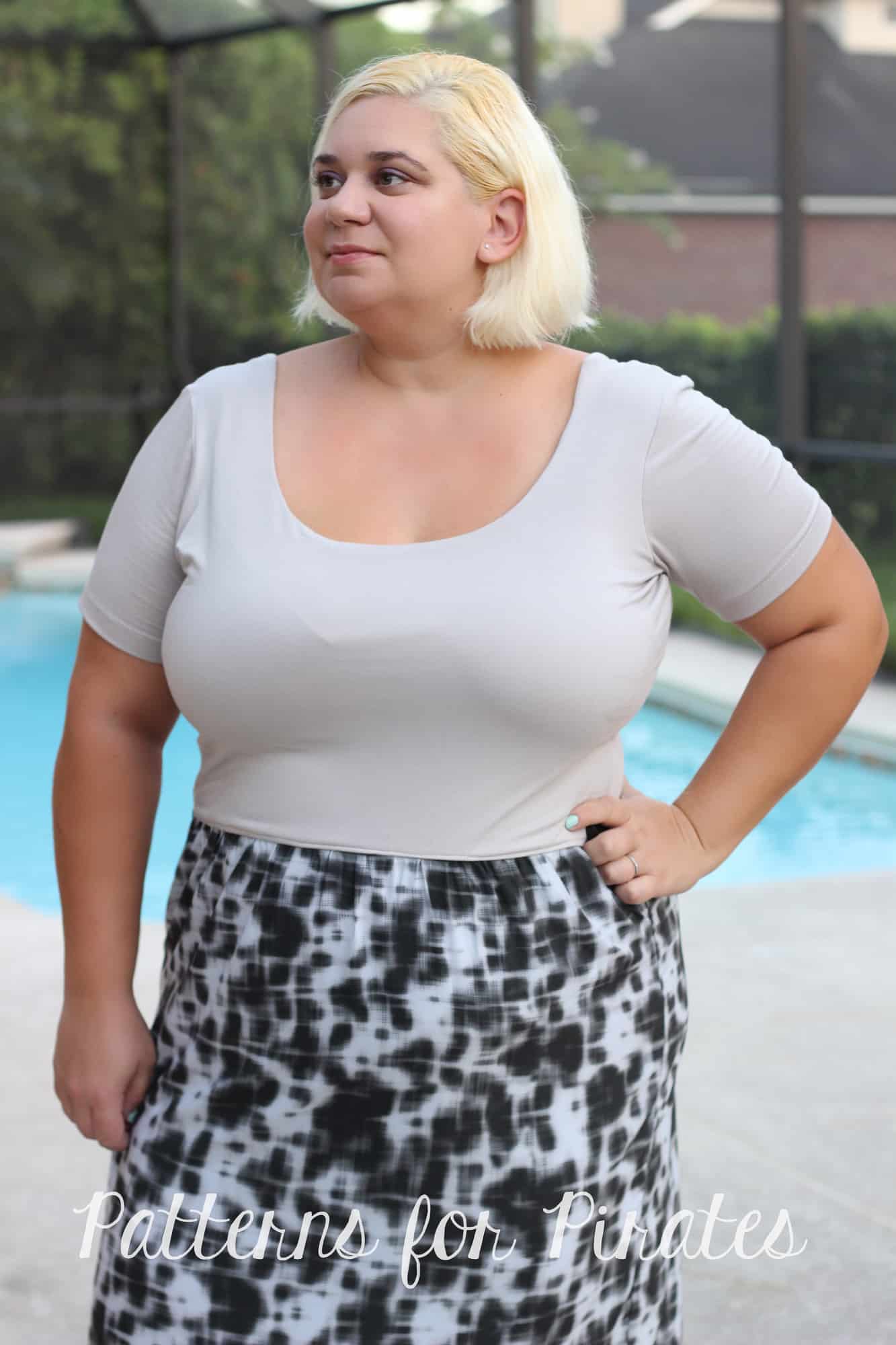
Ahoy, pirates! The Summer of Wovens is in full swing so I wanted to show you how easy it is to add a gathered woven skirt to a knit bodice. You can use this technique to the Boundless dress, like I have, or the Sunshine dress. If you love the bodice of the Sweetheart dress as much as I do you can use it and hack it with a woven gathered skirt too.

The most important thing to keep in mind when adding a woven skirt is CHOOSING THE RIGHT WOVEN fabric. Make sure to use a light weight fabric with great drape. I used a Nicole Miller chiffon and it worked beautifully. You can also use rayon, rayon challis  or crepe georgette. Avoid quilters cotton, it will look stiff and add visual width which we don’t want. Am I right, ladies? 😉

Cut the pieces as per the pattern. You do not need to size up or down, just be sure to measure yourself and choose the size based on that. I do recommend adding some width to the skirt for more comfortable wear. I did not add it to mine but you can certainly increase width by a couple of inches. You can see how to take your measurements here.

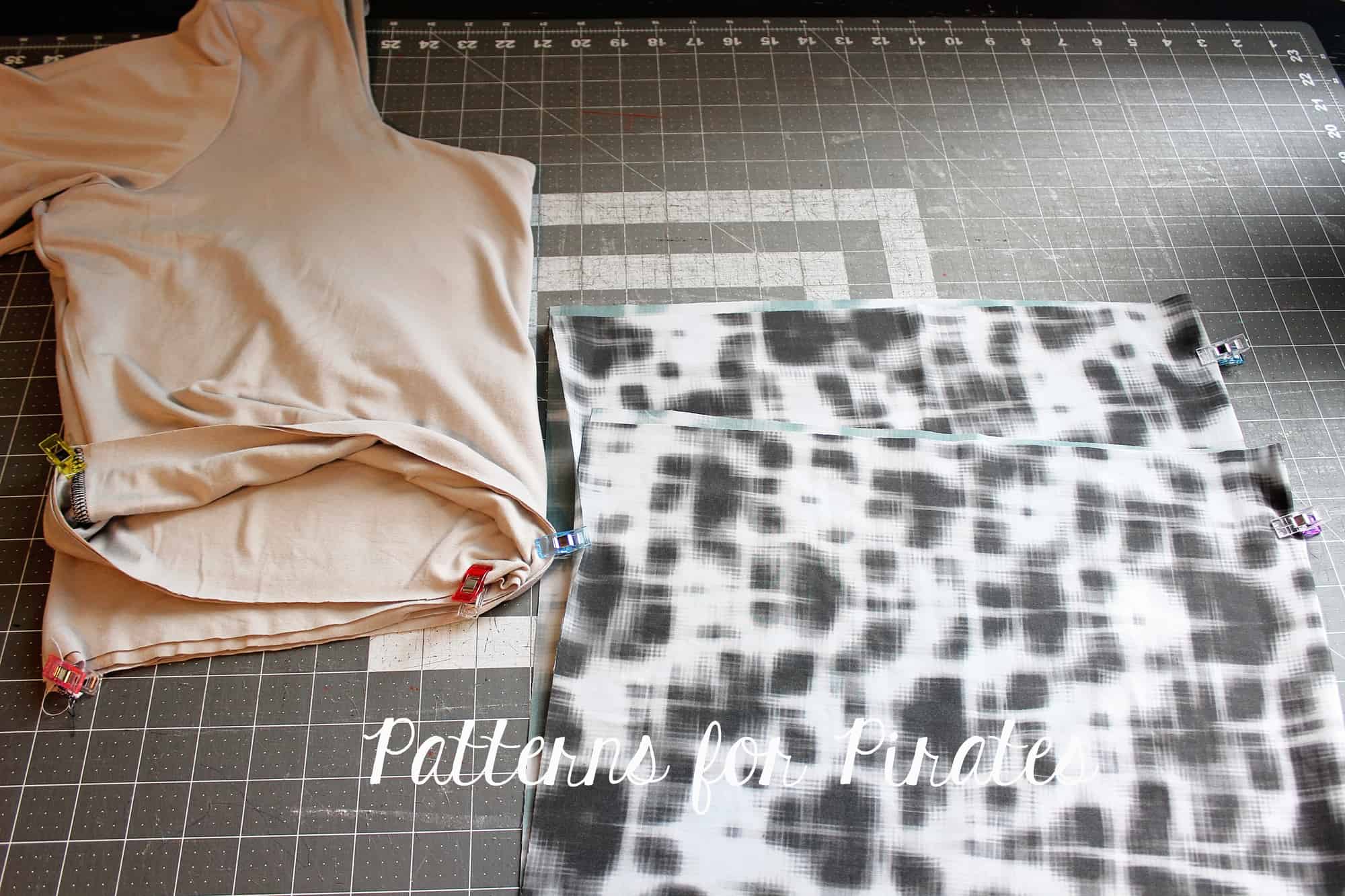
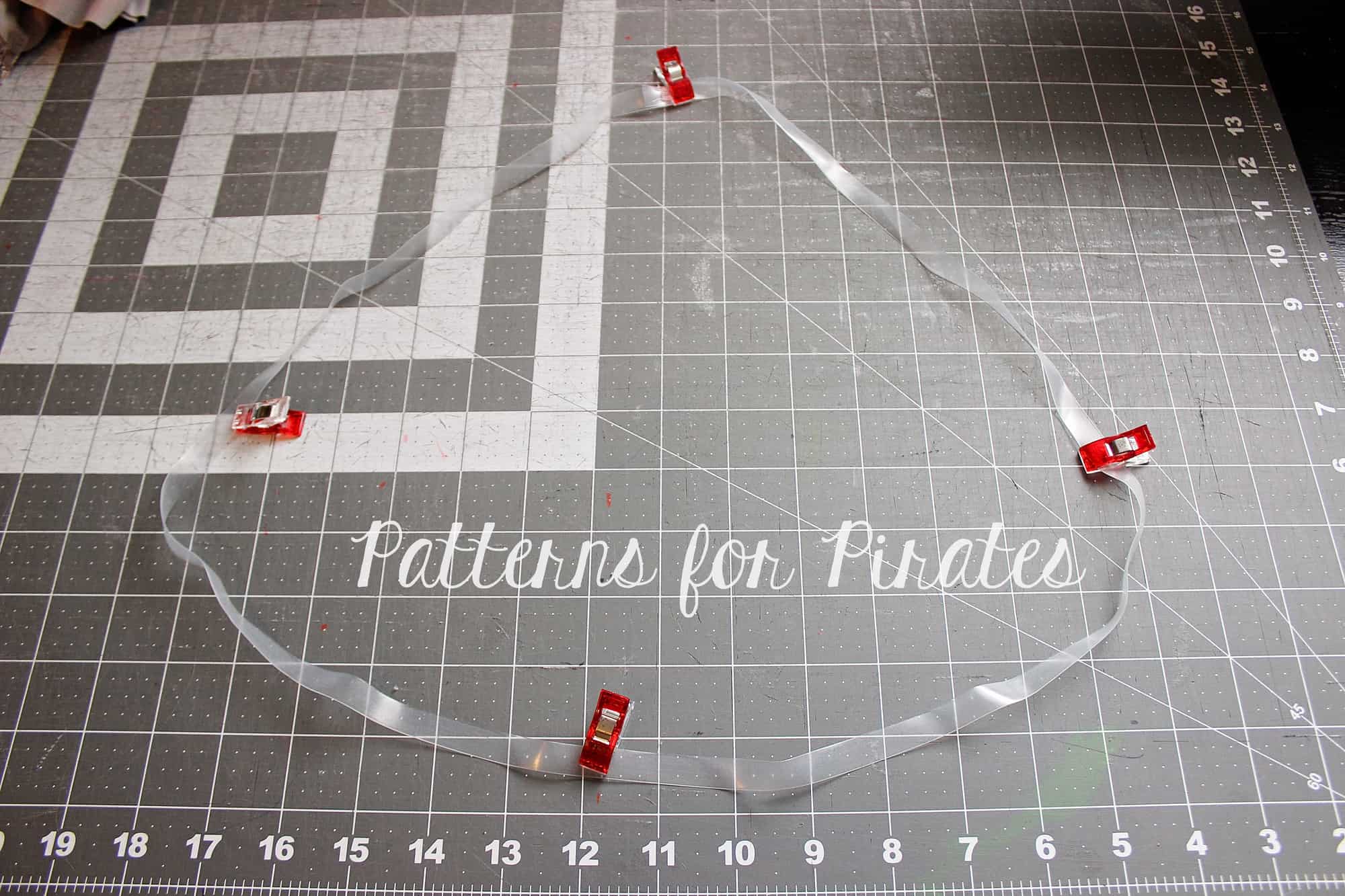
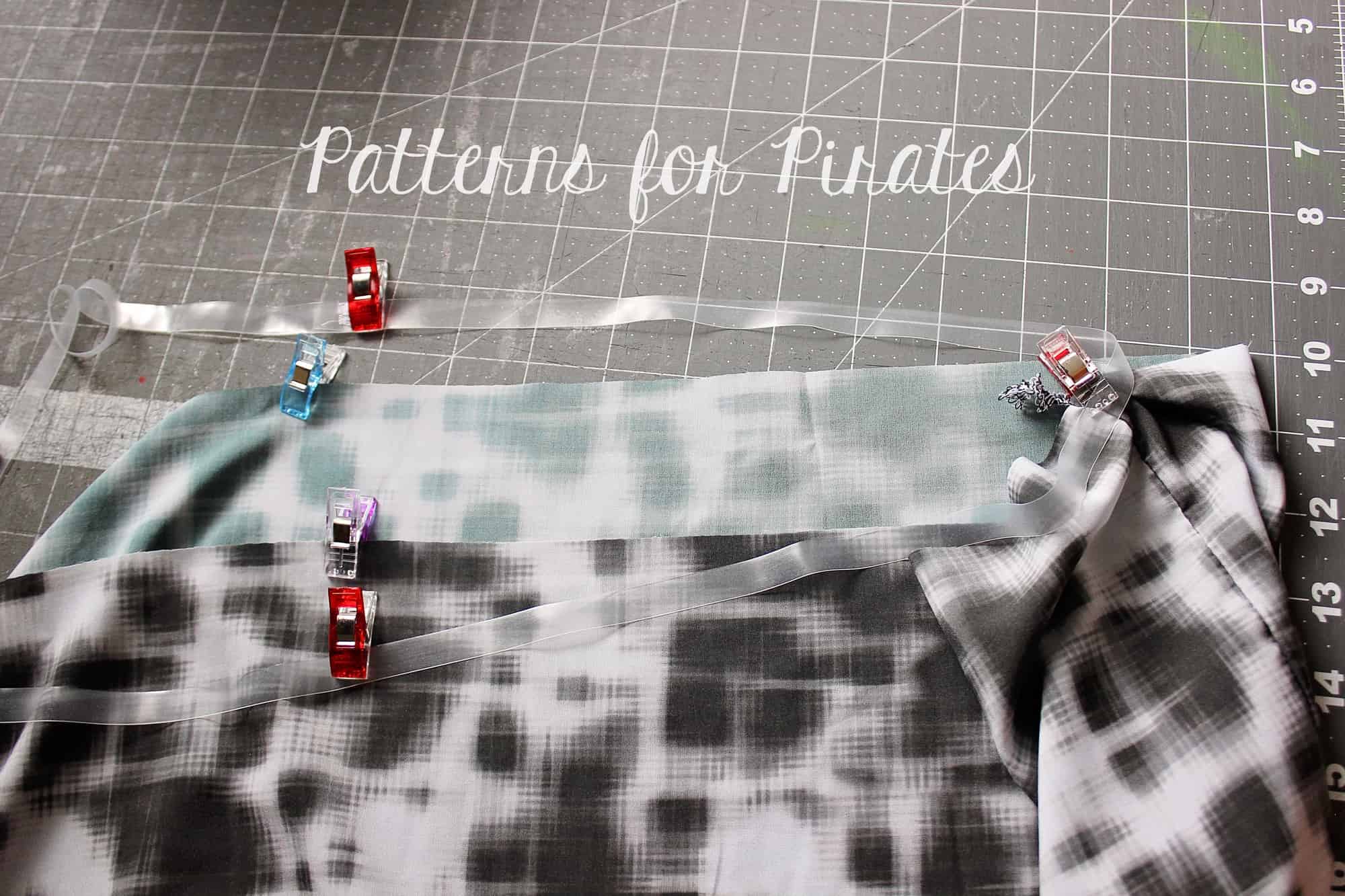
Sew the bodice as per the pattern tutorial. I marked the center of the front skirt piece and the back. I like to use clear elastic when I attach the skirt to the bodice. I do that for two reasons, the clear elastic will add stability to the seam and it will help you gather your skirt evenly. Simply cut a piece of elastic that matches the bodice bottom. Don’t forget to add seam allowance! I prefer to cut just one piece and match the elastic seam to the center back but if you prefer to cut two pieces and match the seams to the sides you’re welcome to do that as well.

Mark the quarters of the clear elastic. Mark the side seams and center back and front of the skirt. Remember to mark the to of the skirt if you’re using a fabric with a directional print 🙂

Match the quarters of the skirt to the quarters of the elastic.

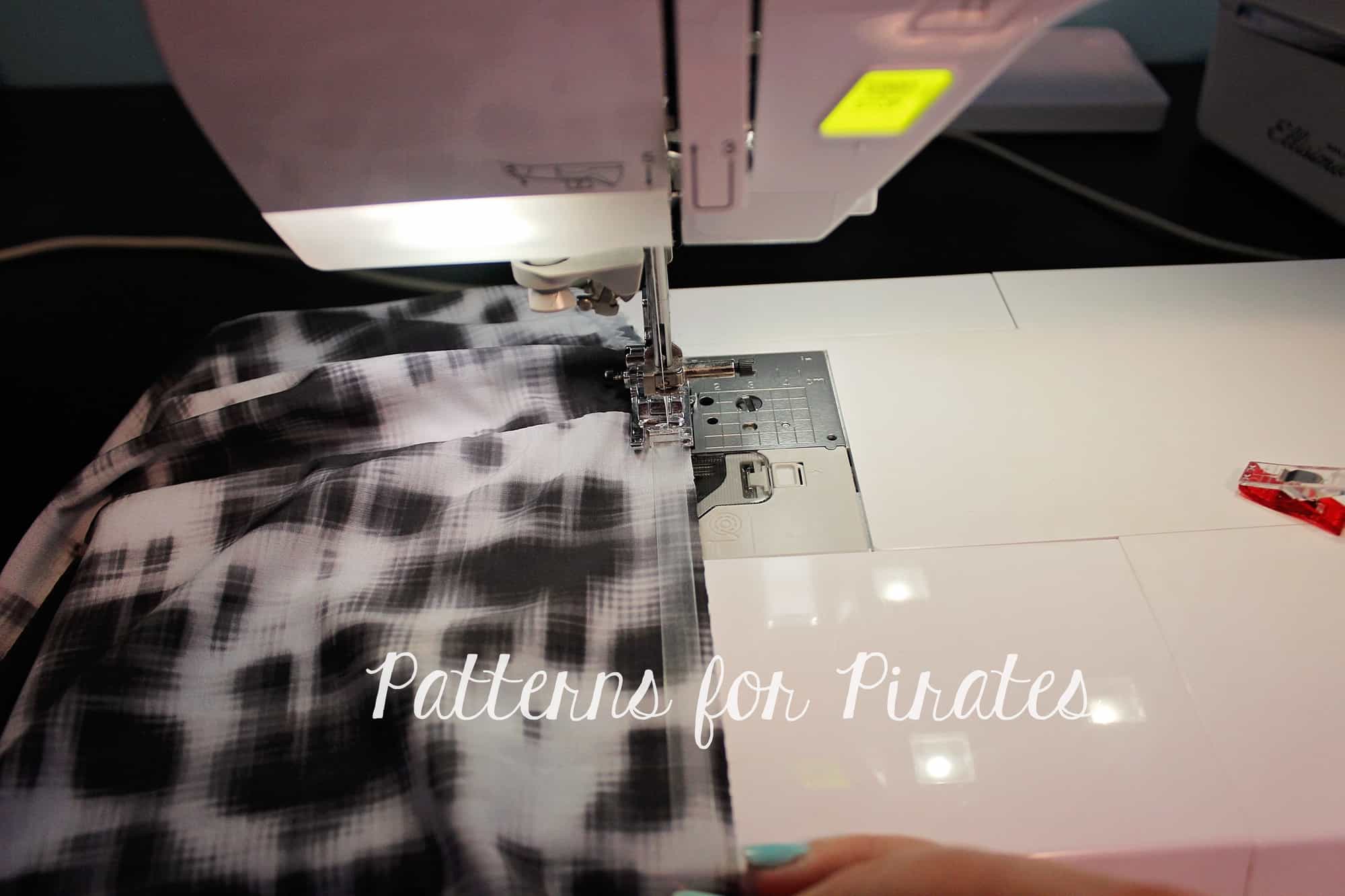
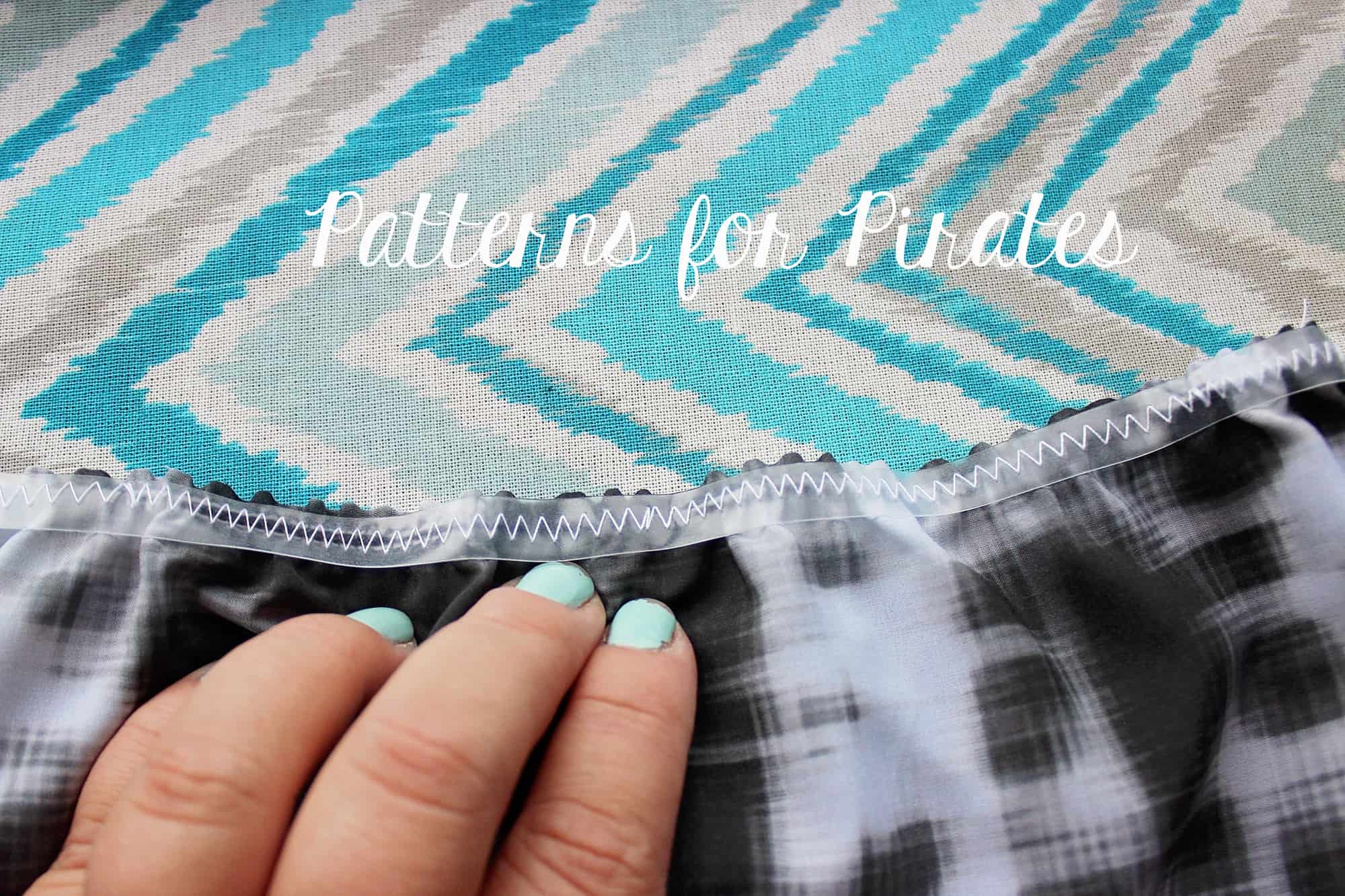
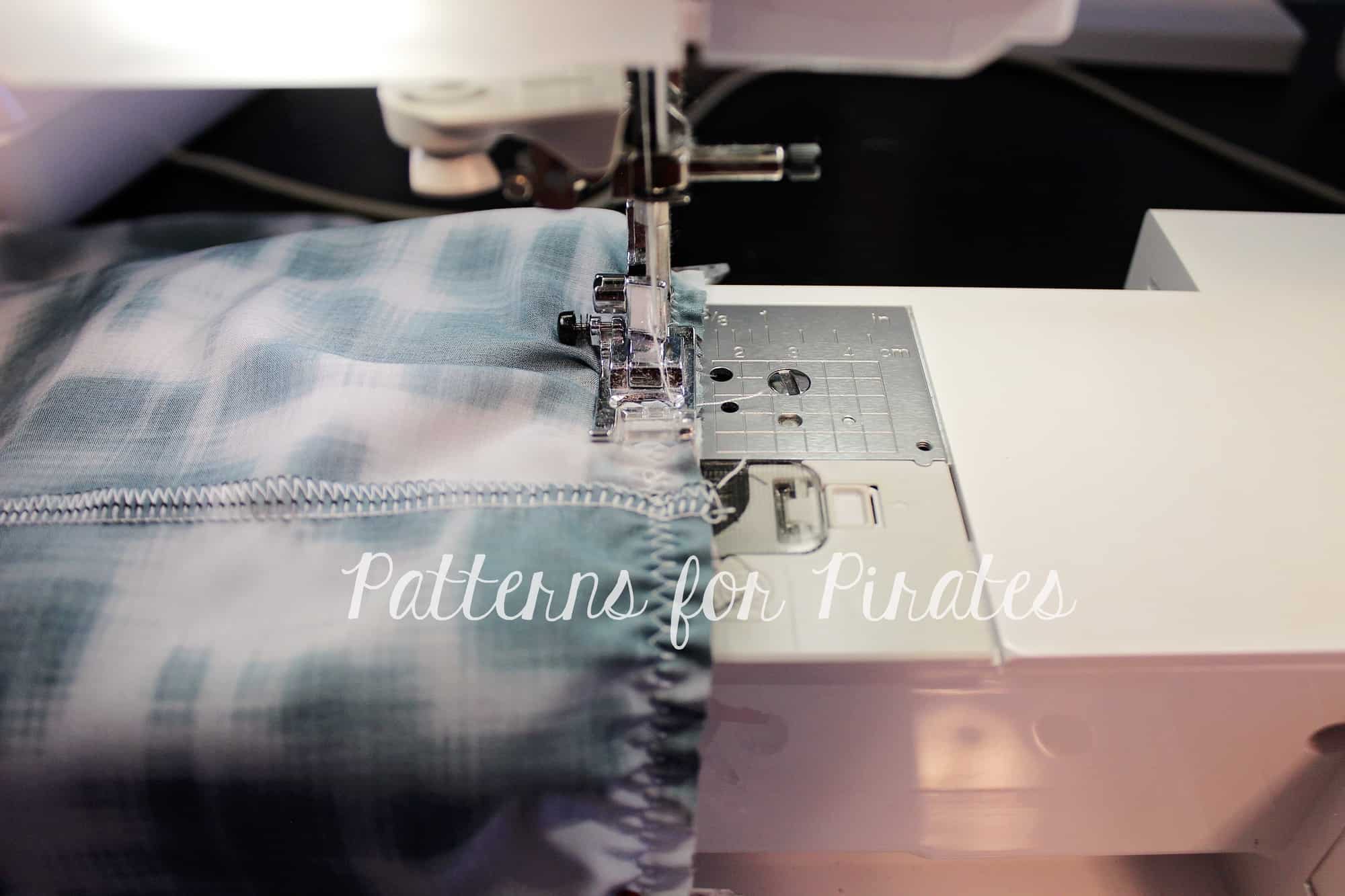
Sew the clear elastic to the top of the skirt. Use a zig zag stitch and adjust the tension and width to better fit the type of fabric you are using. Stretch the elastic as you sew. If you use a 1/2″ clear elastic simply align the edge of the elastic to the edge of the skirt. I use 3/8″ clear elastic so I put it a little lower than the edge to accommodate the 1/2″ seam allowance that is followed in this pattern.

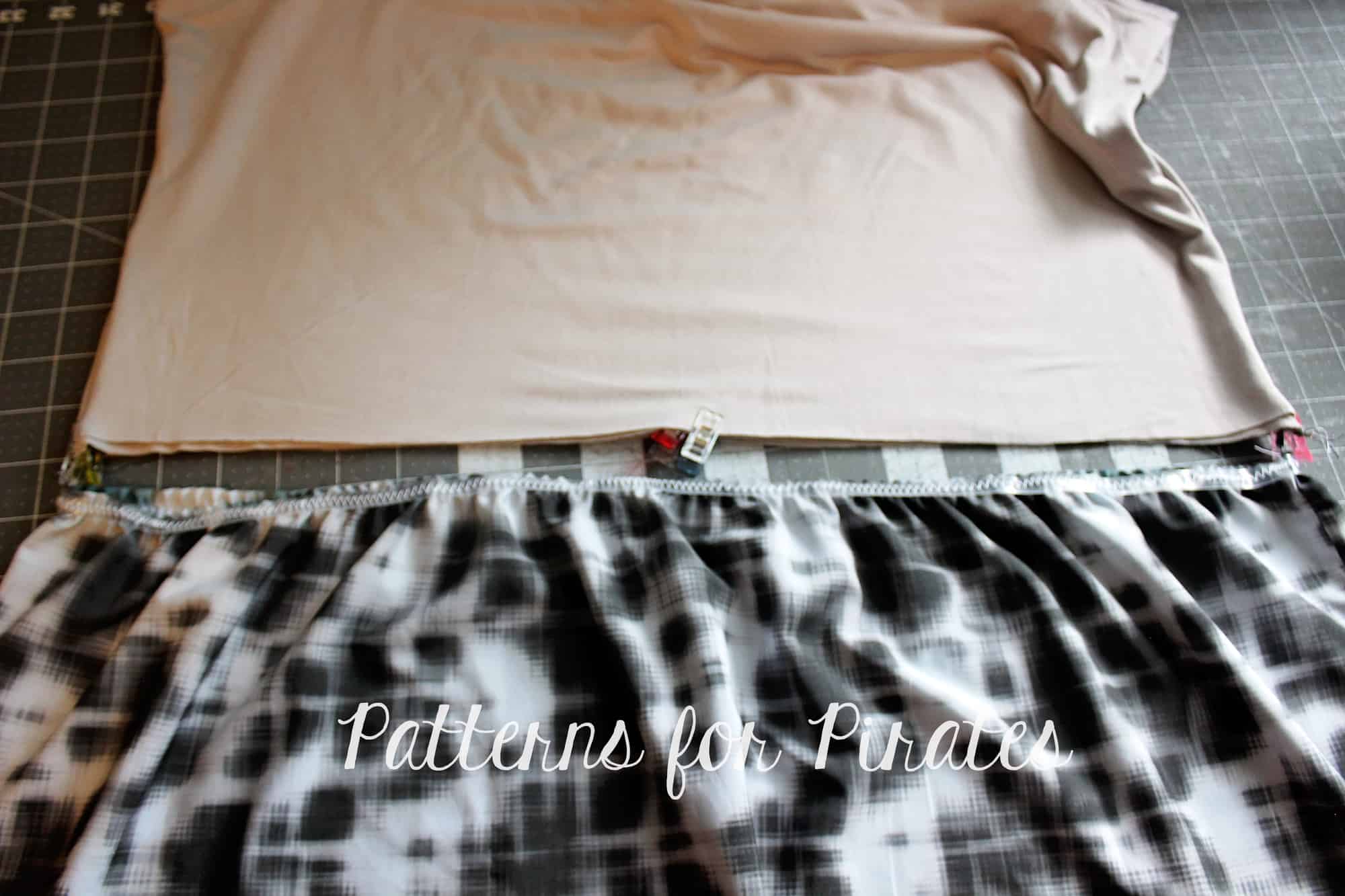
All you have to do now is attach the skirt to the bodice. The bottom of the bodice and the top of the skirt will be the same circumference. Match the side seams and the center backs and fronts, pin right sides together and sew.

I like to attach the skirt to the bodice using a zig zag stitch but you can also use a triple stretch stitch.

Optional: top stitch the seam allowance up towards the bodice.

Tadah! You’re all set to rock your new woven skirt Boundless (or Sunshine) dress! I can’t wait to see your take on this easy hack so be sure to post it in the P4P group too!

Filed Under: Frequently Asked Questions, Pattern Hacks, Uncategorized 7 Comments

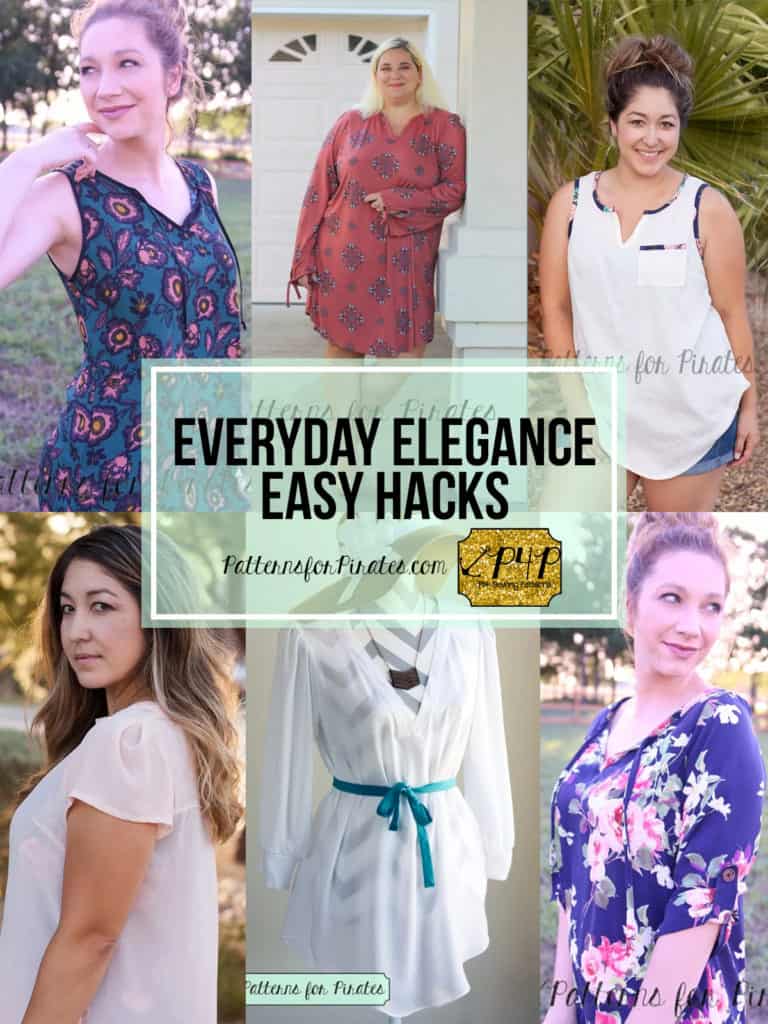
Everyday Elegance – easy hacks

July 13, 2017

The Everyday Elegance recently received an update and and we added more options. (Read more about it the re-release here). We could not let this event pass by without showing you some easy hacks that can take your beloved EE to the next level.

[Read more…]

Filed Under: Pattern Hacks, Uncategorized 1 Comment

50K Fan Celebration :: Exposed Elastic PegLegs Hack

April 24, 2017

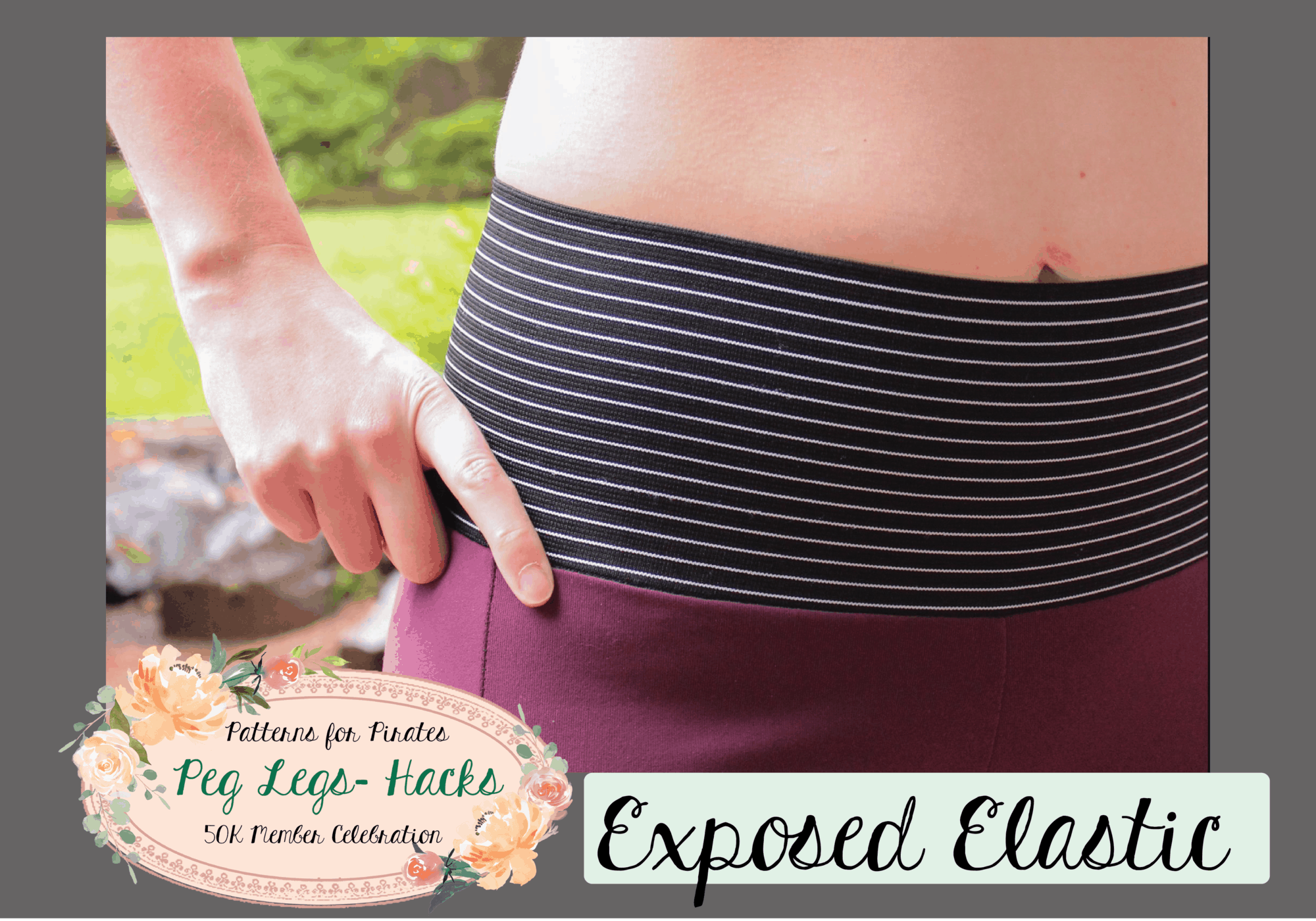
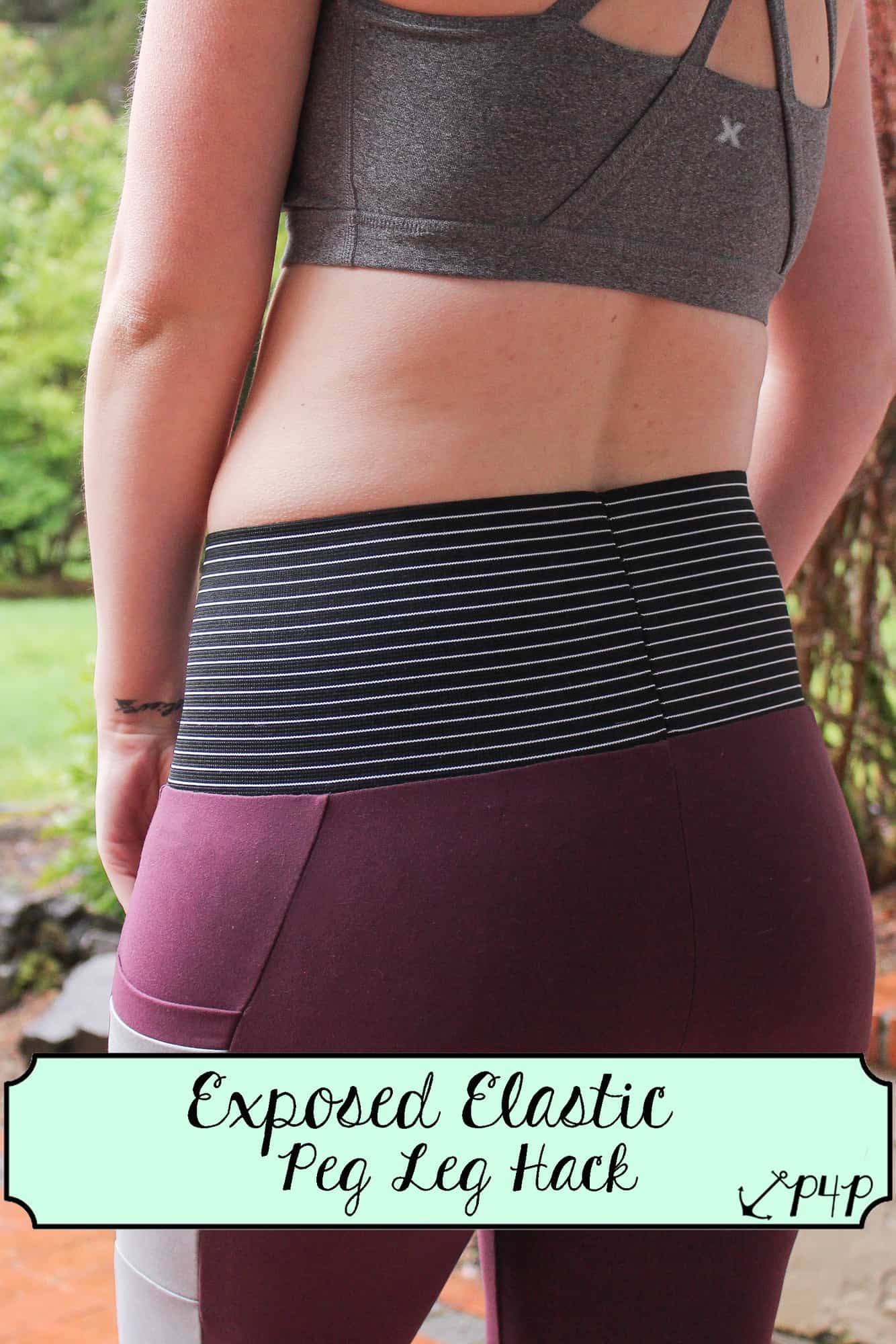
Want to make your Peg Legs even easier? How about skipping the band? Today we have an easy hack for you- adding an exposed elastic band.

There are so many types of elastic available in a variety of colors and designs, as well as a multiple widths. For this hack, you will want to first determine how high you would like your band to come. When I was looking for mine, I searched online for “boxer elastic”  knowing that I wanted a large band and this gave me the biggest variety. I finally decided on one that was 5″ tall.

I chose to cut my Pegs as a low rise since the elastic I chose will add quite a bit of height. You can determine which rise is best for you, keeping in mind how tall your elastic is. You will then want to assembly your Peg Legs as per the tutorial until you reach the step of attaching the band.

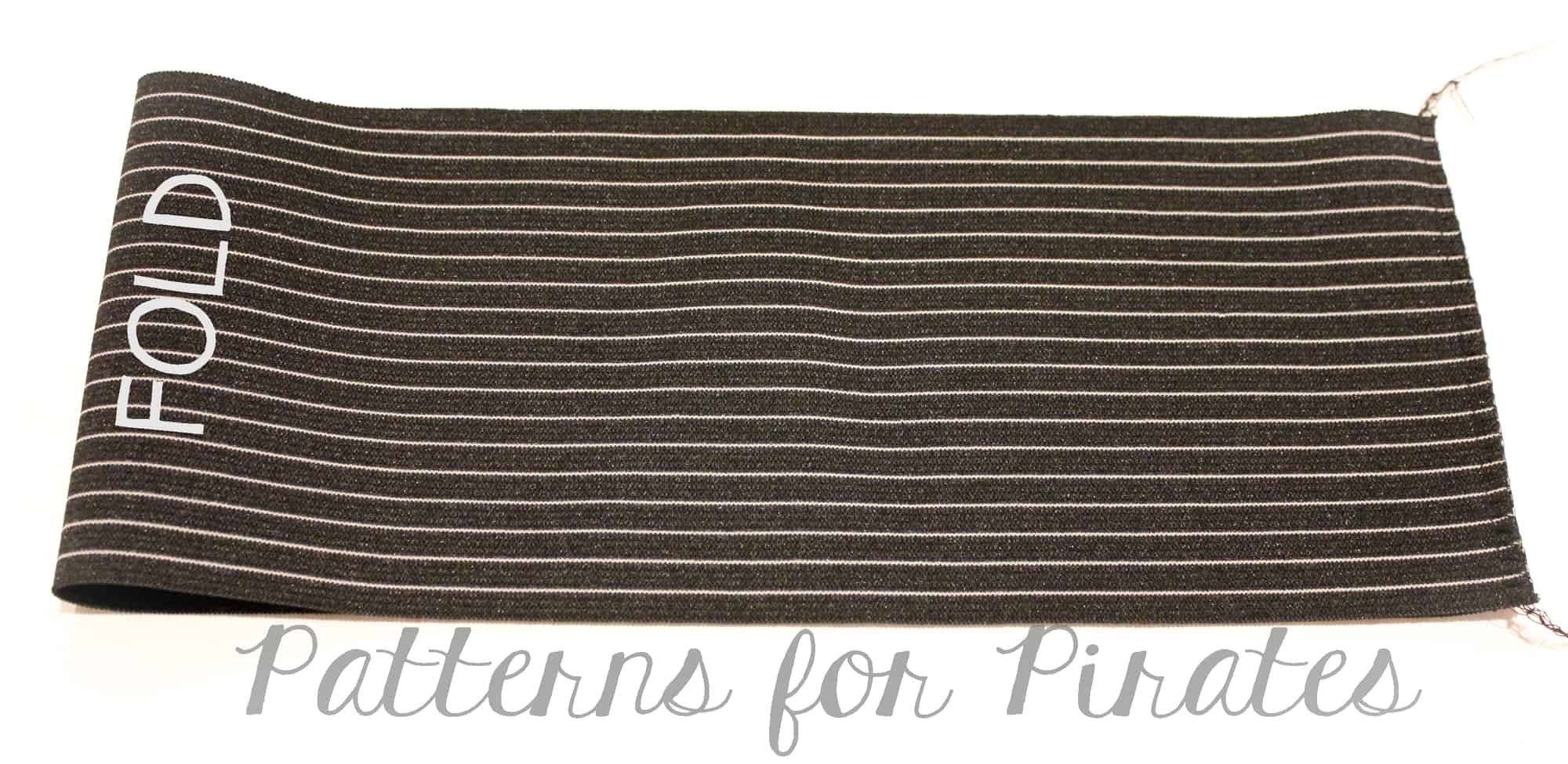
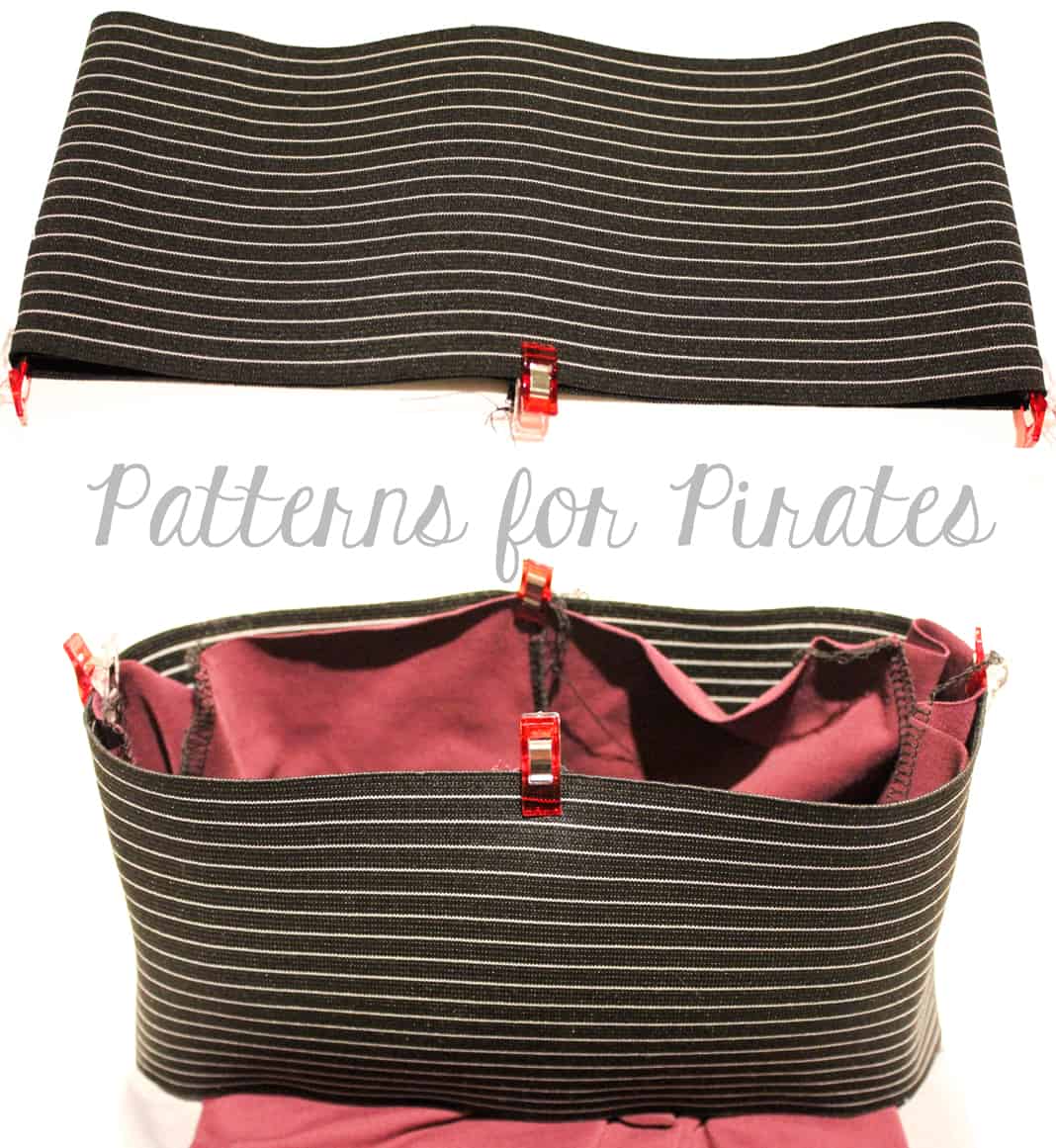
For the width of my band, I used the cut chart as a guide. I added 2″ to this, as my elastic did not have the same amount of stretch as a fabric band would have had (you can always take more off if you need to, should your band be too large when attaching). Fold band in half width-wise, with wrong sides together, and stitch to create an elastic circle.

Mark both your elastic band and Pegs into even quarters, then slip band around waist of Peg (with right sides together), aligning quarter points. You will want to make sure that you will have to slightly stretch the band, not the waist of the Pegs. If you do not have to stretch, unpin and remove a small amount from the waistband. It is important to have the band stretch slightly to help hold the Pegs up!

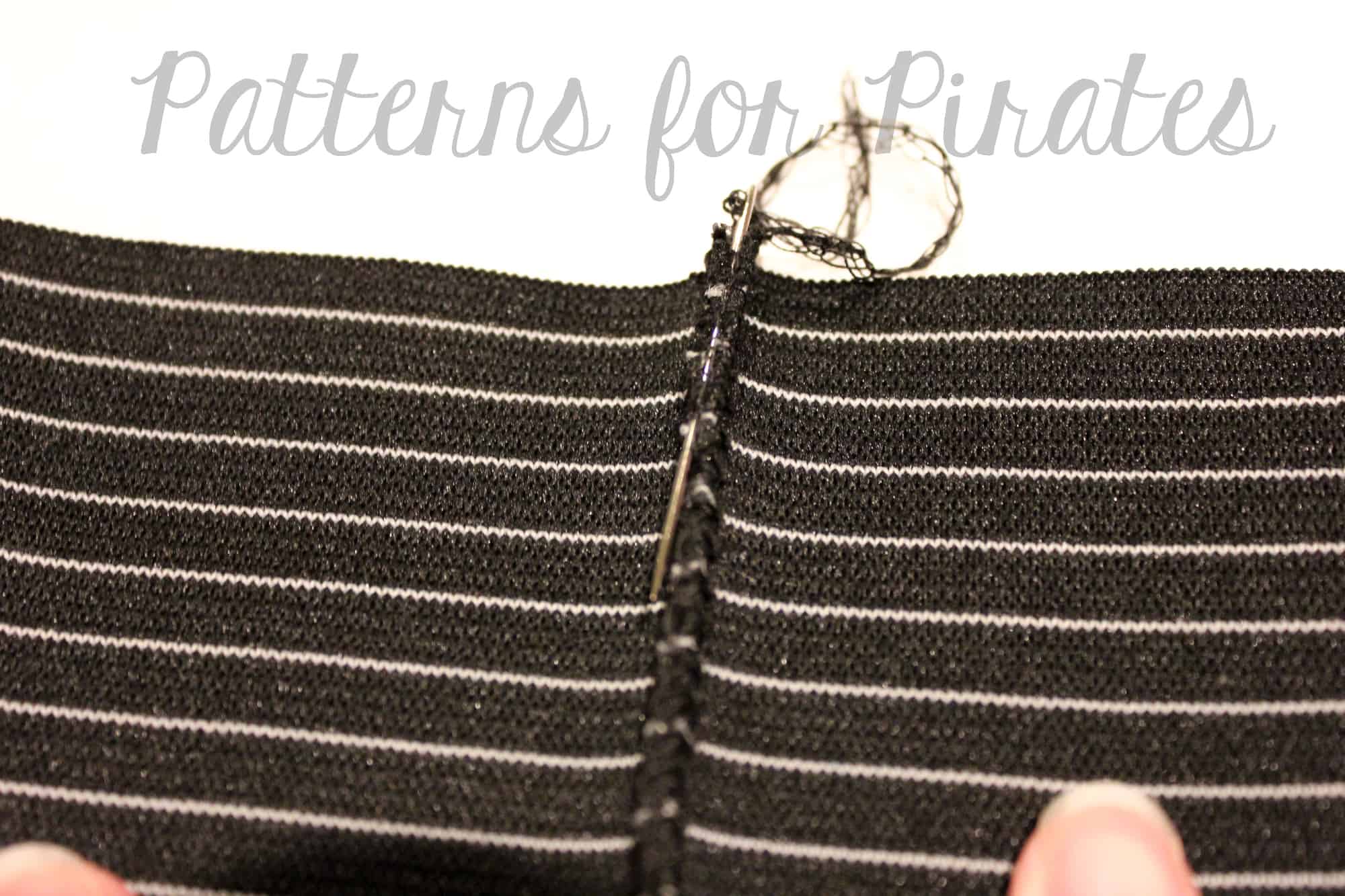
Once you have the elastic waistband and Pegs clipped/pinned together, serge or sew around the waist as you would when attaching a fabric band using a 0.5″ seam allowance. Once attached, if you serged the elastic together in the first step, you will need to finish your seam. I prefer to weave my thread back through using a large needle, however you can also use one of the methods Alex described here. The last step is to hem your Pegs according to the tutorial directions and you’re all finished! Enjoy! ~Erinn


We are celebrating reaching 50K fans in our Facebook group!  To make it a party, our beloved PegLegs pattern just got an update AND some new add-ons.  Before you go running to your machine to sew up your own leggings, make sure to read our PegLegs 101 blog post.  This way, you’ll have all the the information you’ll need to make the perfect pair before you even cut into your gorgeous fabric.

But wait, there’s more!  After any good party is an after-party.  We are taking it one step further and sharing some easy hacks that’ll bring even more flavor to your favorite leggings pattern!  We hope you check them out, make your new favorite pair of leggings, and know that we appreciate every single one of you amazing sewing guys and gals!

Here are our hacks / tutorials / latest tricks:

Lace Waistband Alternative | Drawstring Waistband Tutorial
Exposed Elastic Waistband | Stirrup Pant Hack
Ruched Ankles Adjustment | Decorative Topstitching Tutorial
Ruched Side Panel Hack

Filed Under: Pattern Hacks, Uncategorized Leave a Comment

50K Fan Celebration :: Ruched Ankles PegLegs Hack

April 23, 2017

Ahoy Pirates!

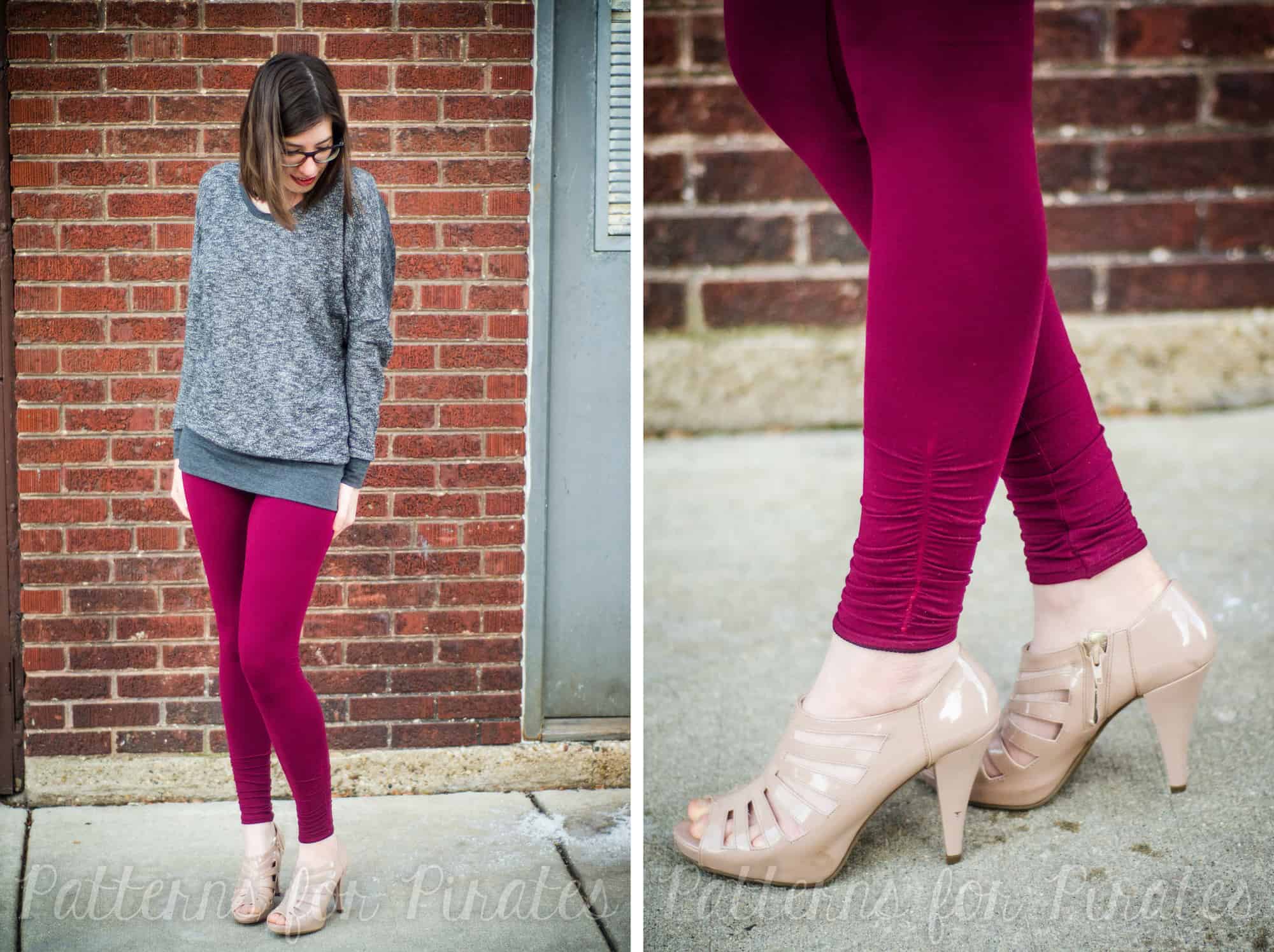
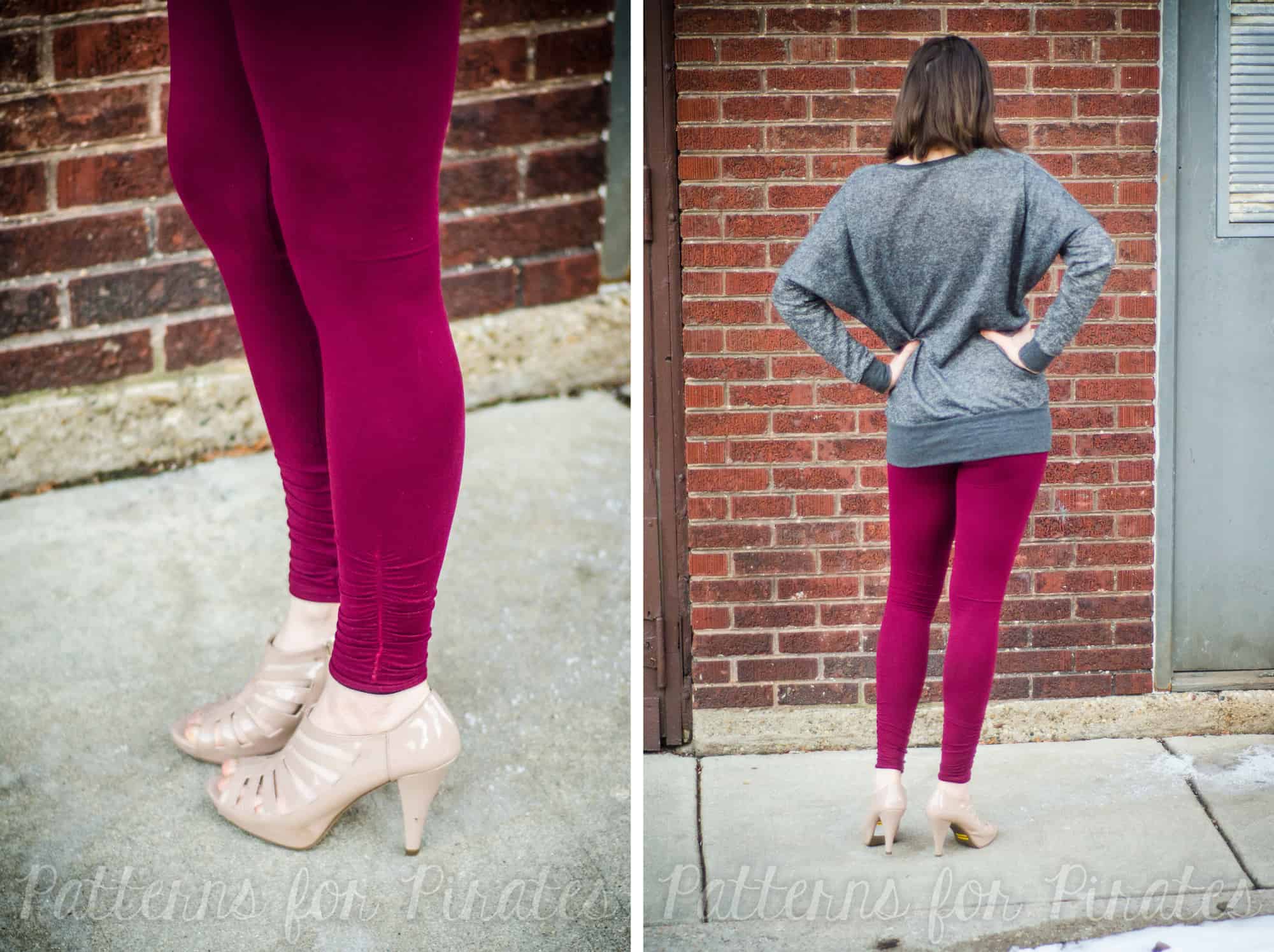
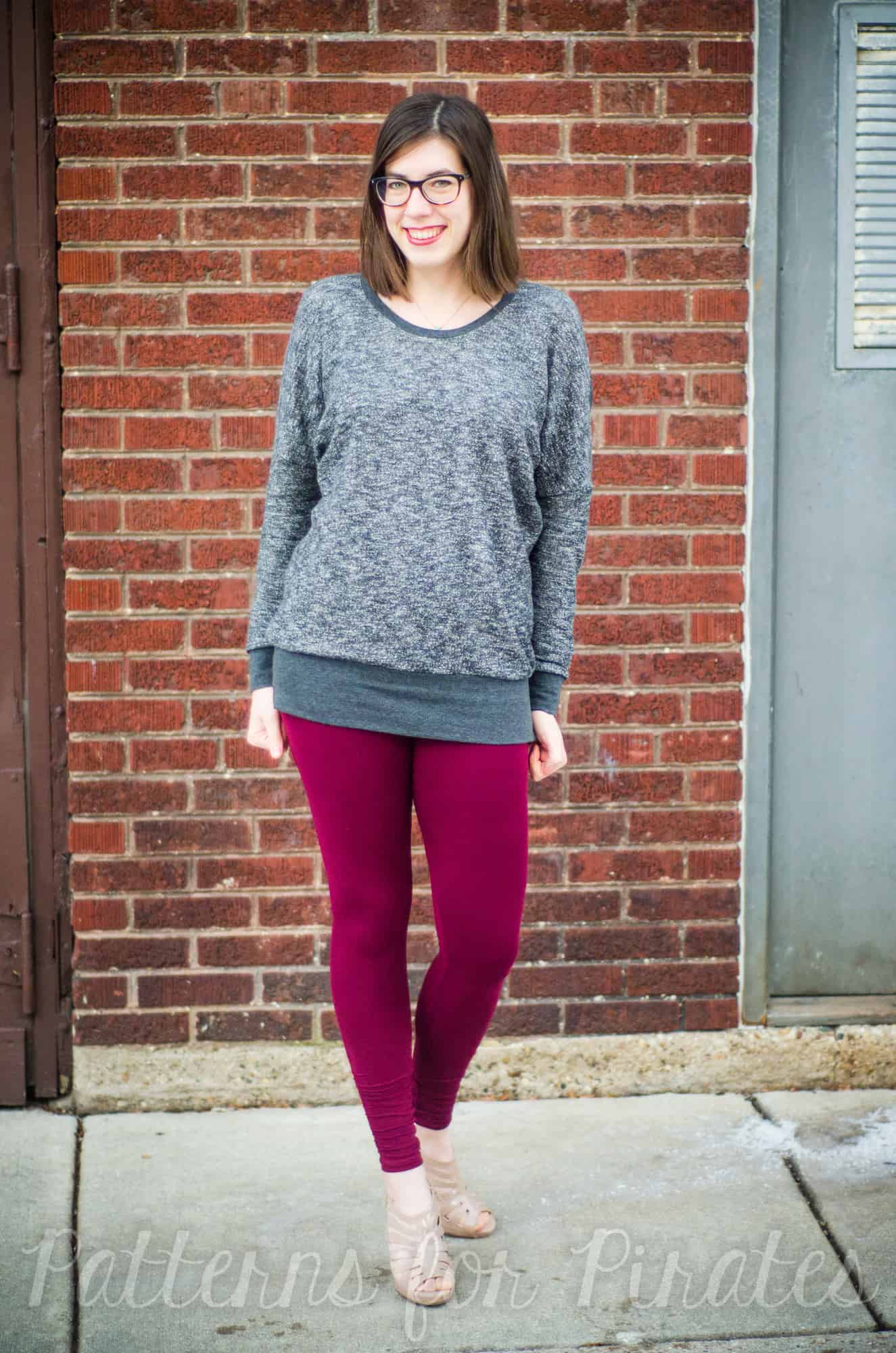
Today I’m going to show you how to add some ruching to the ankles of your PegLegs.  This is a super easy way to amp up their cuteness factor and take them to the next level.

For this hack, I’ll be ruching using elastic.  Depending on your preferences, you’ll need about 12″ of braided (non-roll) elastic.  I used 1/2″, though you can also use 1/8″, if you’d prefer.  You will also need matching thread.

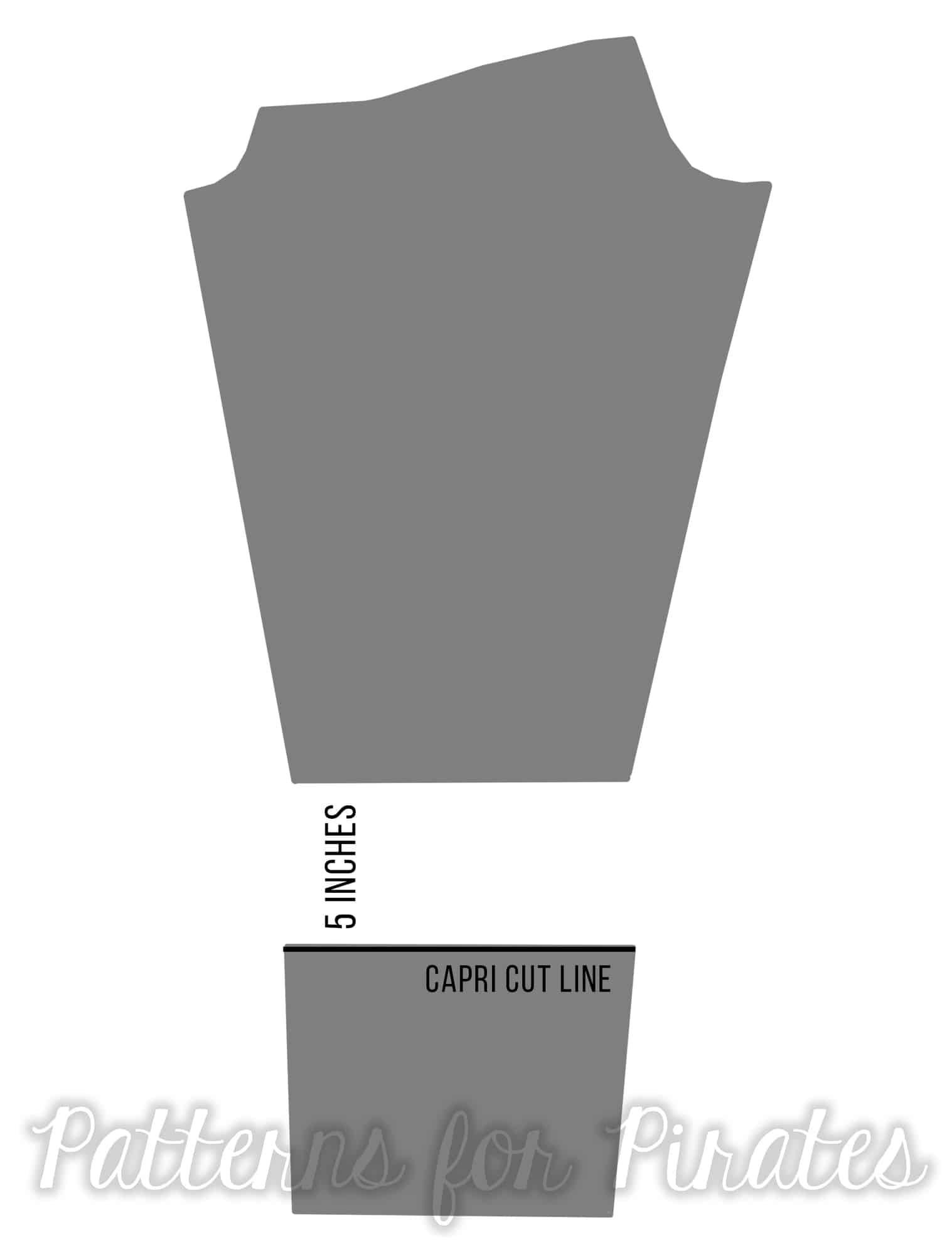
1. The first thing you need to do is decide how long you want your line of ruching to be.  For mine, I chose 5″.

2. You’ll need to add length to the pattern to accommodate the fabric the ruching will take up; you’ll add the same number you originally chose.  So for me, the length to add was also 5″.  And now the total ruched amount will be 10″.

3.  Add the extra length at the capri cut line.  To do this, cut your pattern on the capri line, add however many inches you chose earlier.  I added 5″.  Then cut out your leg pieces with this added length, and your choice of waistband.  Your leggings will look crazy long – this is good!

4. I highly suggest hemming the bottom edge now, before ruching.  It will be so much easier this way; I chose to do a faux blind hem with my serger.  Or, let’s be real…if you’re not planning on hemming, then this doesn’t apply to you! 😉

5. Cut your elastic pieces.  To determine the length, add 1″ to your original measurement.  So I cut mine 6″.

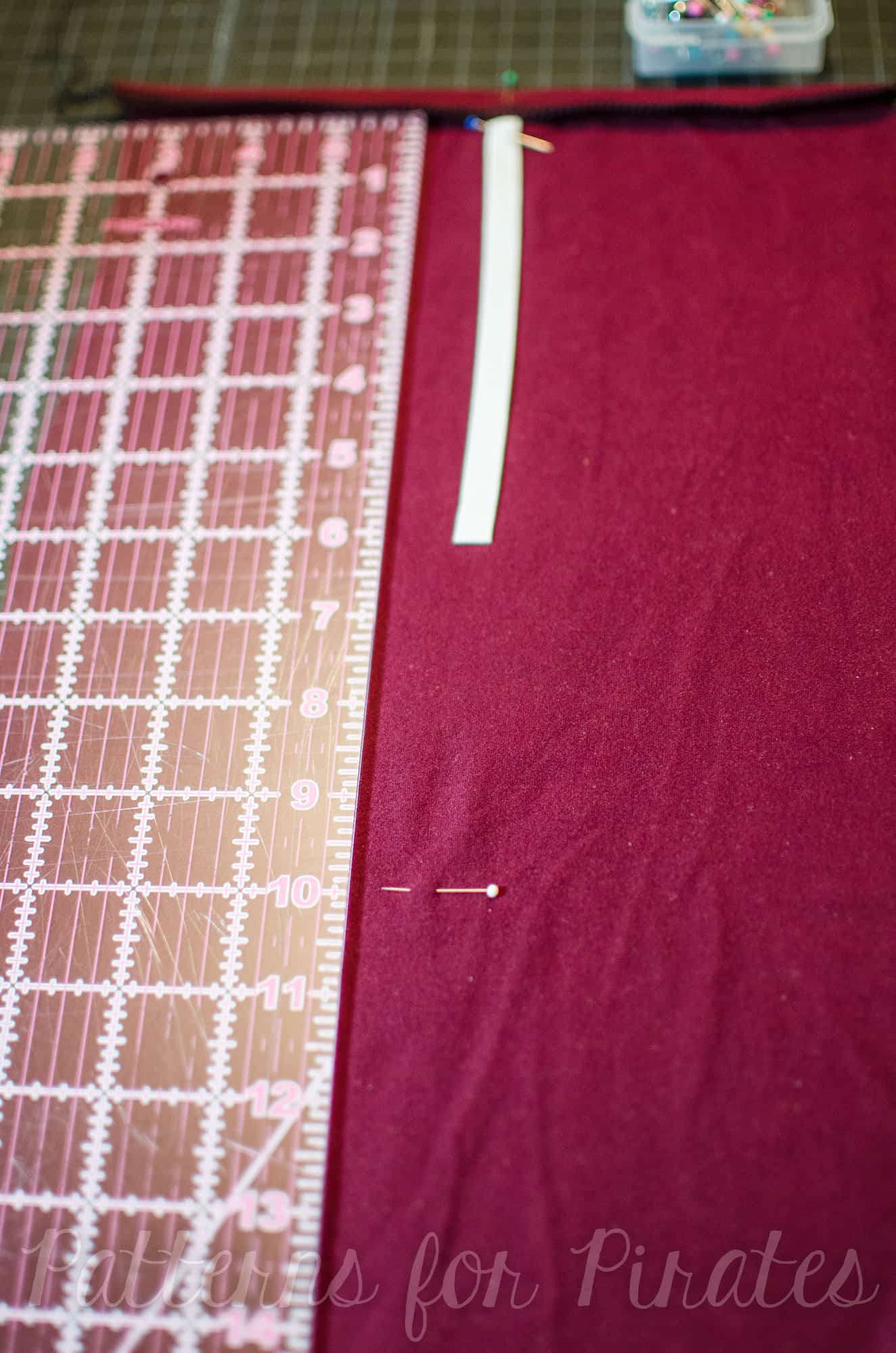
6. Now, before you sew up the side seams, find the middle of the piece on the end, and mark it.  Pin/clip your elastic in place in this place, right above your hem.


7.  From the marked spot, measure up your total ruched amount, determined in step 2.  My ruched amount was 10″, so I measured 10″ above my marked spot.  Add a pin to this spot as well.


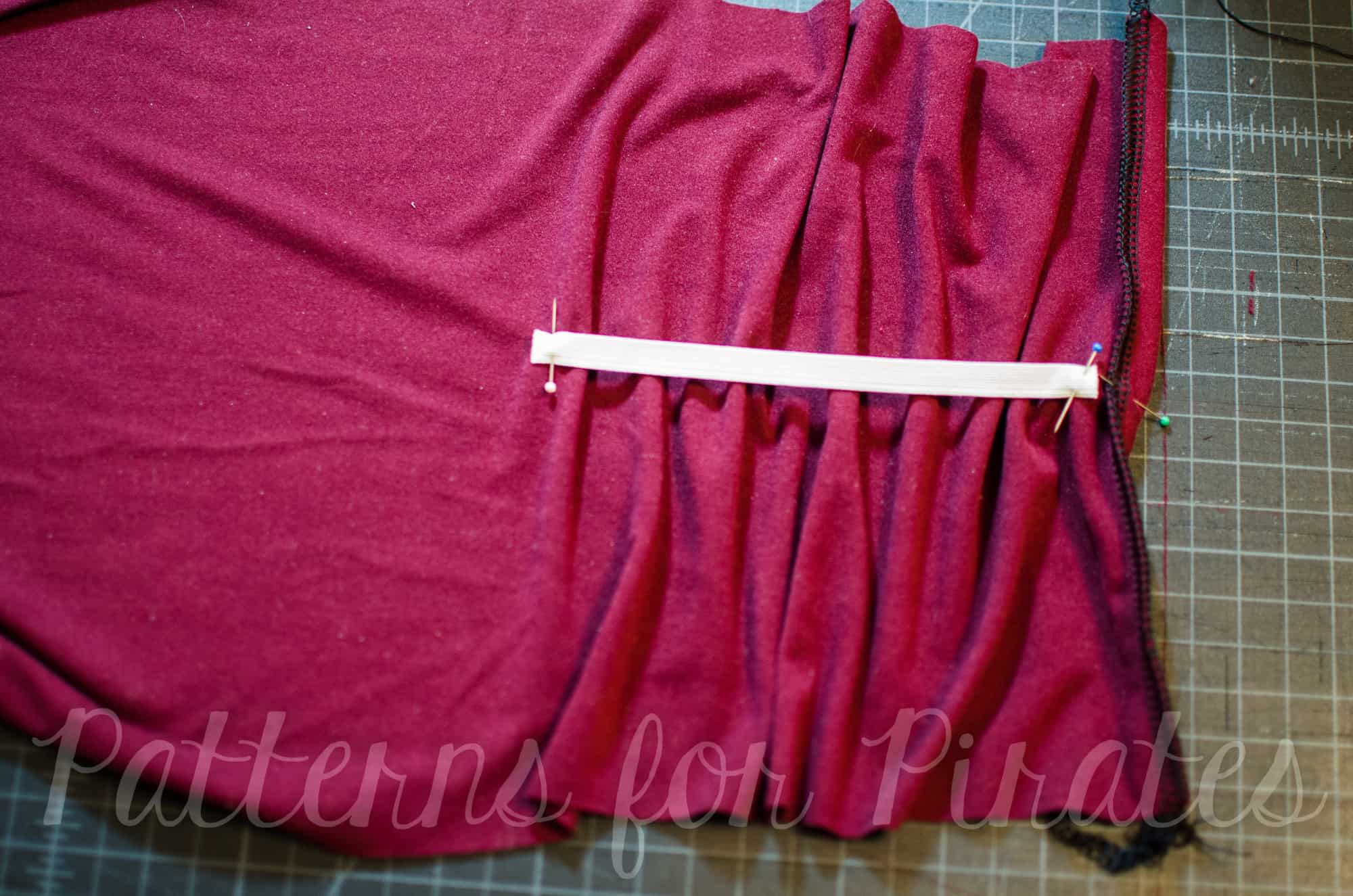
8. Now bring the other end of the elastic to the pin and pin it to the fabric.  This is the spot which will be ruched.


9. You’ll be sewing the elastic to the fabric now, stretching as you sew.  This can be a little tricky, so I advise you test this out on a scrap before sewing your actual ruched piece.

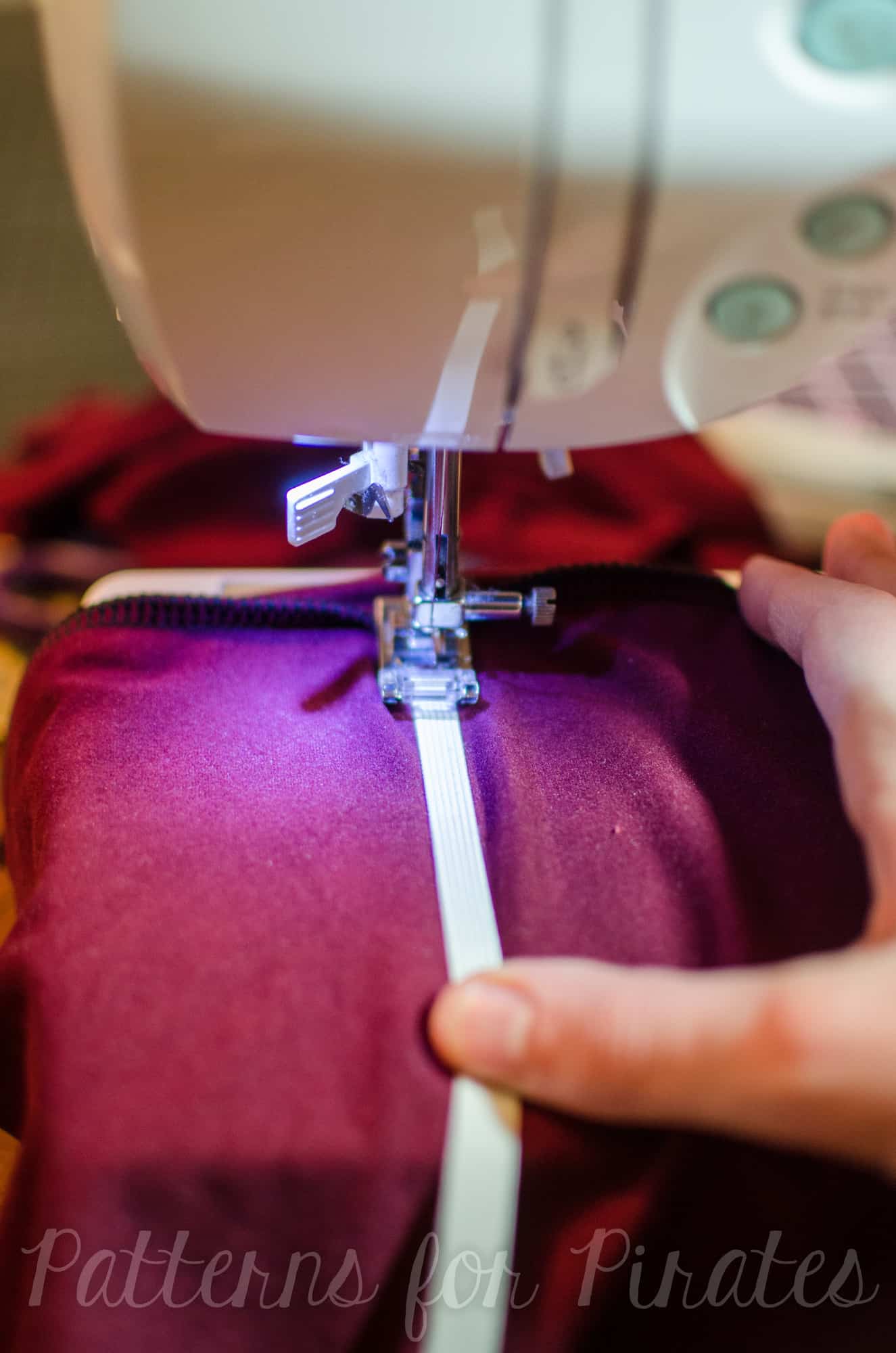
10. Using a slightly shorter zigzag stitch (my length was 1.8, you may also need to reduce the width as well, I used 2.5), start sewing at the end of your elastic.  Don’t worry about pulling the elastic until you can grab the end of it from behind the presser foot.  This should be about 1/2″ of stitching until you can grab it.


11. The trick now is to hold the elastic from the back while you also pull it from the front, as you are sewing (I couldn’t show this while also holding the camera to take this picture). 😉  This way, you can control it pretty well.  I find it helpful to stretch the elastic before sewing, and then pin the middle part to the fabric.  Now you can pull from the pin to the presser foot instead of from the very end.  Once you get to the pin, then pull from end to end until you are finished sewing.  Be sure to backstitch carefully.  Don’t worry about making it absolutely perfect, because the ruching will bunch up quite a bit.


12. Now, assemble your PegLegs as usual…sewing the side seams, the waistband, etc.  Good news is you’ve already hemmed!  Or chosen not to…

That’s it – you’re done!  Feel free to play around with different lengths of ruching as well, you may prefer more or less than me.  Also, you can also ruche using elastic thread hand-wound in your bobbin.  With this method, you’d also lengthen your pattern, and then sew a straight line however many inches you added.  I don’t mind using elastic though, since I always have it on hand (not the case with elastic thread!).

Be sure to post your ruching hacks in our Facebook group so we can have all the “heart eyes” for your creations! 😍

~Elisabeth


We are celebrating reaching 50K fans in our Facebook group!  To make it a party, our beloved PegLegs pattern just got an update AND some new add-ons.  Before you go running to your machine to sew up your own leggings, make sure to read our PegLegs 101 blog post.  This way, you’ll have all the the information you’ll need to make the perfect pair before you even cut into your gorgeous fabric.

But wait, there’s more!  After any good party is an after-party.  We are taking it one step further and sharing some easy hacks that’ll bring even more flavor to your favorite leggings pattern!  We hope you check them out, make your new favorite pair of leggings, and know that we appreciate every single one of you amazing sewing guys and gals!

Here are our hacks / tutorials / latest tricks:

Lace Waistband Alternative | Drawstring Waistband Tutorial
Exposed Elastic Waistband | Stirrup Pant Hack
Ruched Ankles Adjustment | Decorative Topstitching Tutorial
Ruched Side Panel Hack

Filed Under: Pattern Hacks 1 Comment

50K Fan Celebration :: Drawstring Waistband PegLegs Hack

April 21, 2017

Today I’m sharing a quick cute hack to your peg legs to add a drawstring to your waistband.  I wear peglegs all year round and the drawstring changes up the look just a bit.  Let’s get started.

  1. First you sew your legs together as per the pattern.
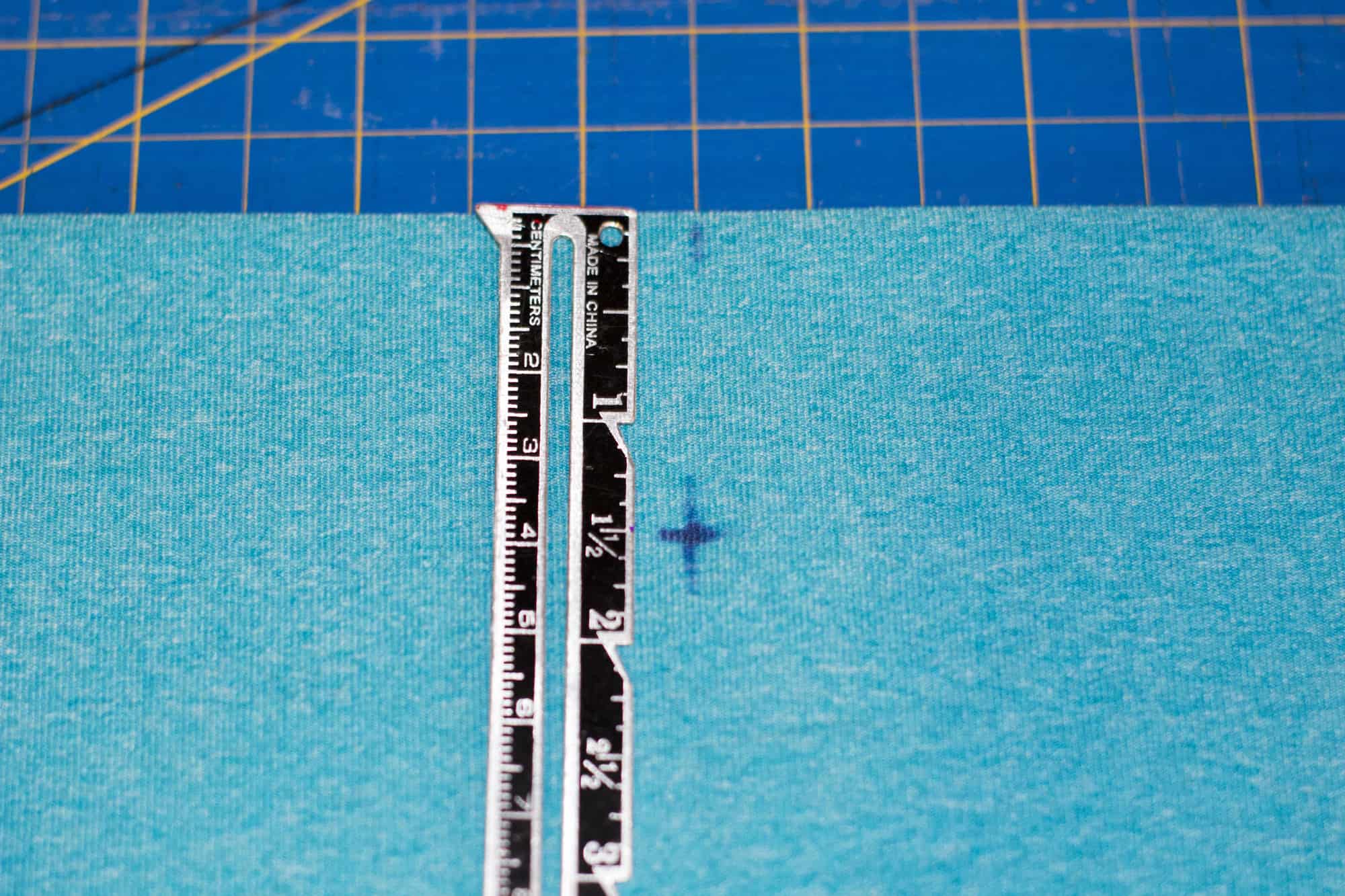
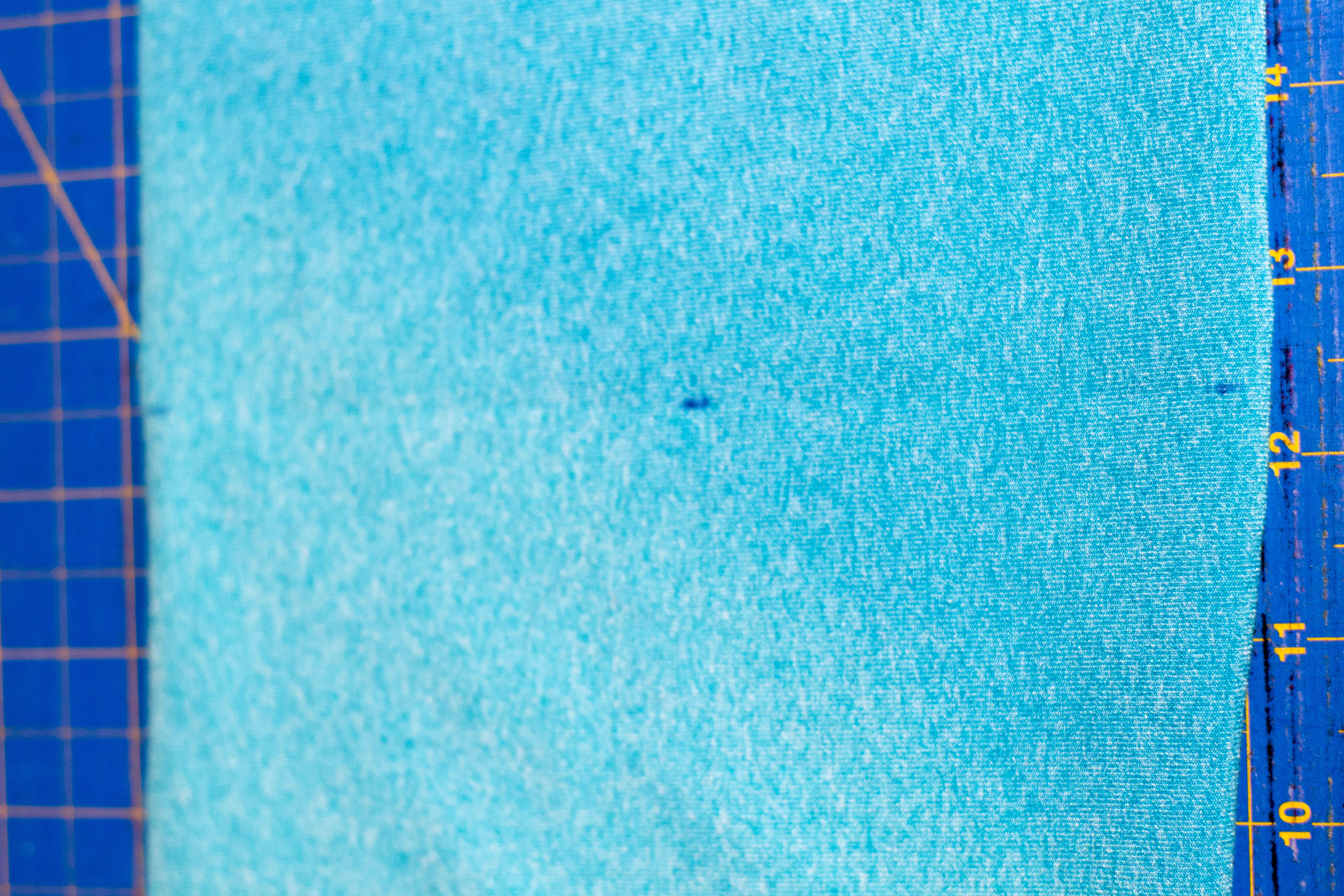
  2. Before we start the waistband we are going to make some markings.  I am using a disappearing ink pen from my fabric store to mark mine.  I folded my waistband in half to find the center and marked the center with my pen in a few spots.  Next I found folded the fabric long sides together to mark where I wanted my buttonholes.  I wanted my buttonholes in the middle of my waistband. Your waistband is 7 inchs wide so folded it is 3.5 inchs but the bottom .5 inch is your seam allowance therefore I measured 1.5 inchs down from the top fold and marked that as being the center right across the other mark that I had made.  Now I have a little cross right marked.

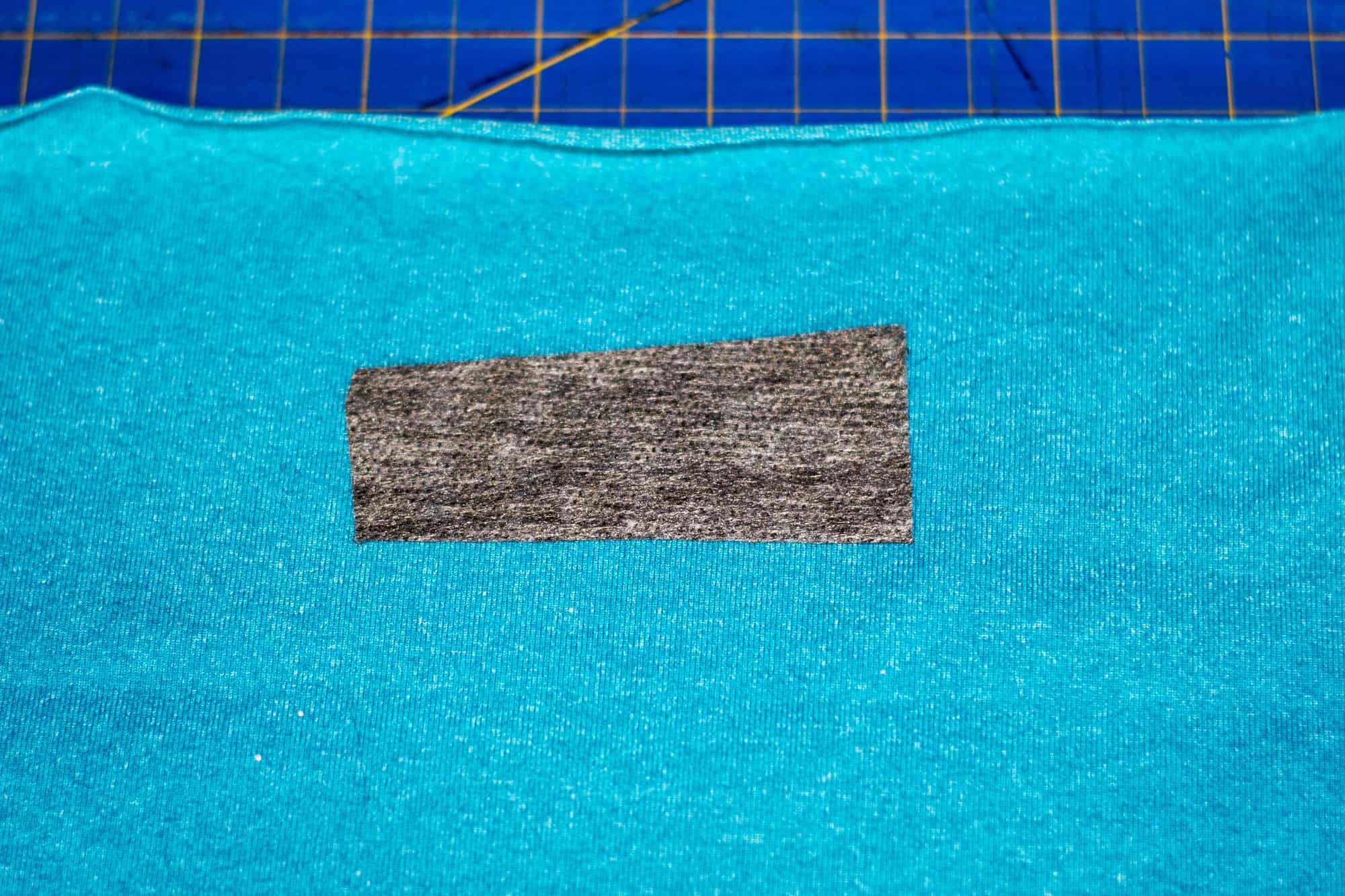
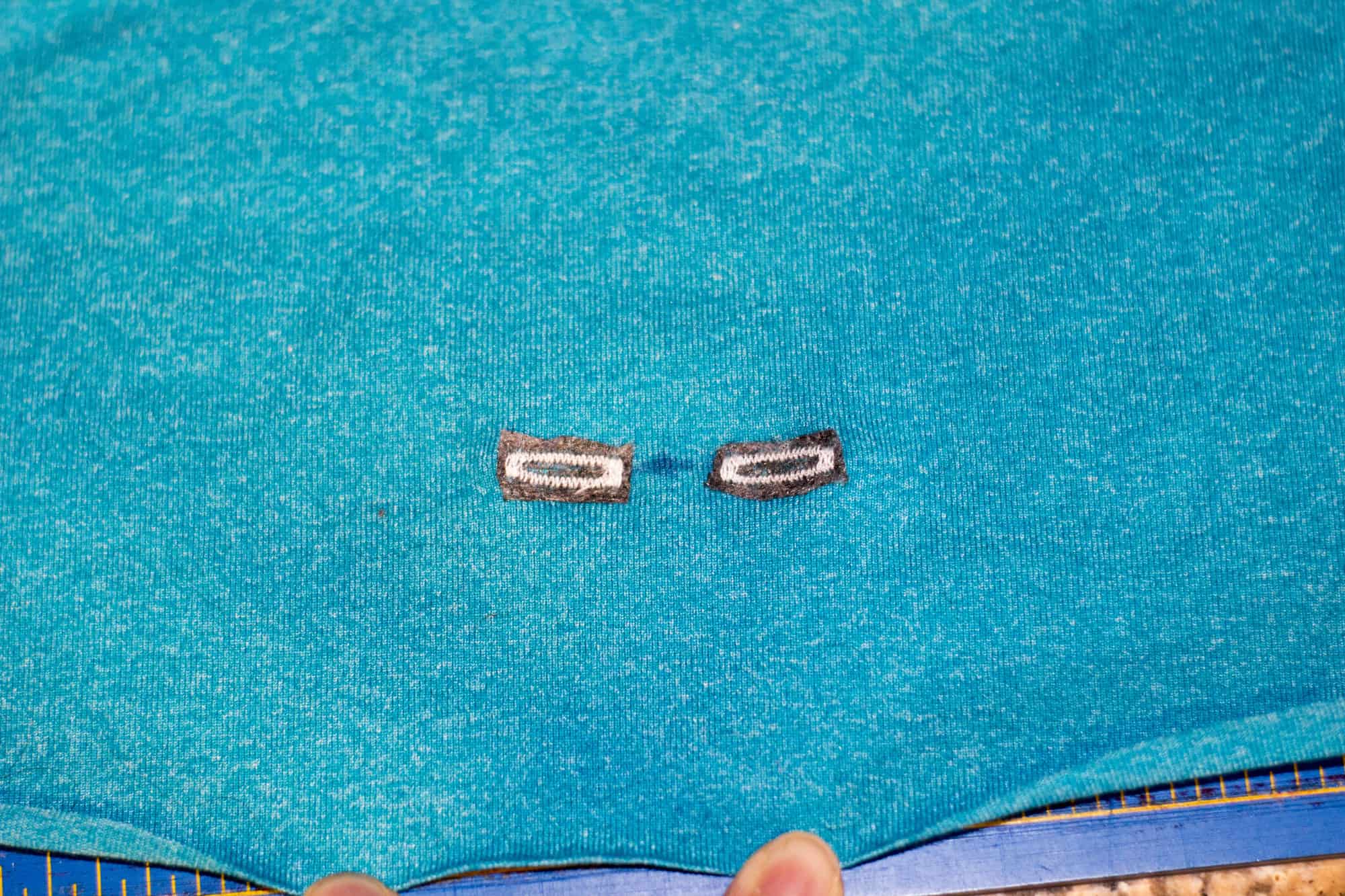
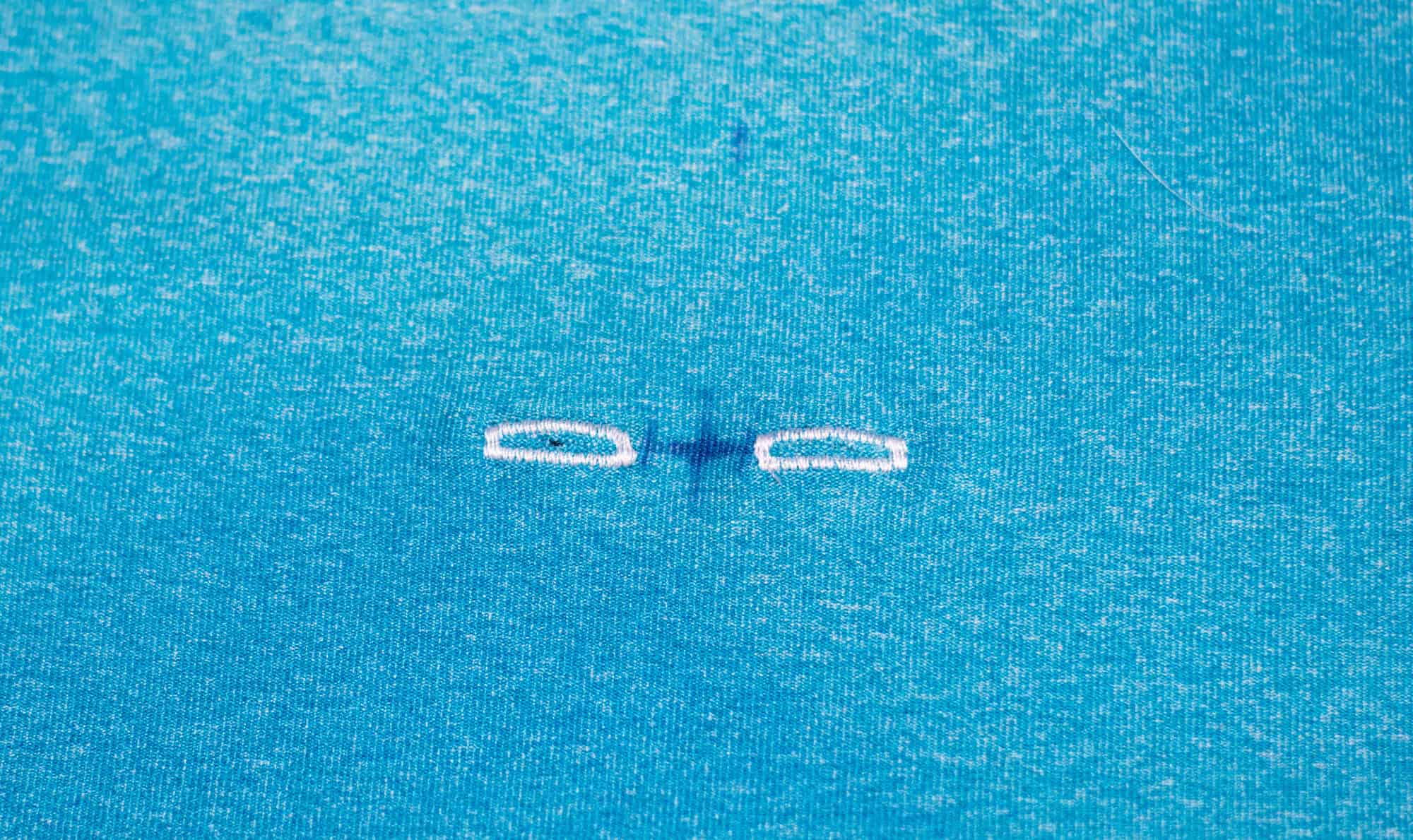
3. Buttonholes can be a bit of a pain on knits so I added a little piece of interfacing on the back, I didn’t actually iron it on to my fabric I just wanted something to give it a bit of stability, a tear away stabilizer would also do the trick or you can iron on a piece of knit interfacing.  I happened to have a bit of regular interfacing sitting here so that is what I used. I sewed the buttonholes on either side of my cross .25 inch from the center. I just did a really small buttonhole, it doesn’t need to be big cause you are just threading through some drawstring.  Now for all those people that hate sewing buttonholes not to worry knits don’t fray so you can always just cut some little slits in the waistband if that is the option you choose make sure to iron on some knit interfacing thou, it would prevent the knit from stretching out while wearing them.


4. Once you have the buttonholes are done we are going to create a casing for your drawstring.  First you are going to match the short sides of your waistband as the pattern directs and sew them together, fold the waist band in half and then your going to sew all the way around about .25 of an inch above the waistband and below the waistband. Now you can mark your lines here that you are going to sew but I’m a rebel and just went for it by sewing 1.25 inchs from my fold, for the second row of stitching I sewed .5 down from the first line I made.  Once your casing is all done just attach the waistband to your legs as normal.

5. Now you just need to add your drawstring.  I used 50 inchs of drawstring on the xxs size and I just tied off each end but you could certainly fold the ends over and hem the edges of your drawstring.  I like to just put the drawstring around me and leave long tails and then insert it into my casing try it them on and you can always cut the drawstring shorter so start with a long piece and then cut them the length you like best.  Remember you have to leave your drawstring fairly loose or you won’t be able to pull your leggings on! I figured this out while trying mine on! Another simple solution to use elastic for most of your drawstring, I would use 1/4 inch or 3/8 inch elastic.  You could cut your elastic slightly shorter then your drawstring and then sew drawstring onto each end of your elastic and thread it through your casing, it would give you just a bit more give when pulling them on and off.


I hope you try adding some drawstring in your peglegs and don’t forget to show them off in our Facebook group! – Angela


We are celebrating reaching 50K fans in our Facebook group!  To make it a party, our beloved PegLegs pattern just got an update AND some new add-ons.  Before you go running to your machine to sew up your own leggings, make sure to read our PegLegs 101 blog post.  This way, you’ll have all the the information you’ll need to make the perfect pair before you even cut into your gorgeous fabric.

But wait, there’s more!  After any good party is an after-party.  We are taking it one step further and sharing some easy hacks that’ll bring even more flavor to your favorite leggings pattern!  We hope you check them out, make your new favorite pair of leggings, and know that we appreciate every single one of you amazing sewing guys and gals!

Here are our hacks / tutorials / latest tricks:

Lace Waistband Alternative | Drawstring Waistband Tutorial
Exposed Elastic Waistband | Stirrup Pant Hack
Ruched Ankles Adjustment | Decorative Topstitching Tutorial
Ruched Side Panel Hack

Filed Under: Free Pattern, Pattern Hacks, Uncategorized 1 Comment

Cross My Heart Cami Hacks

March 14, 2017

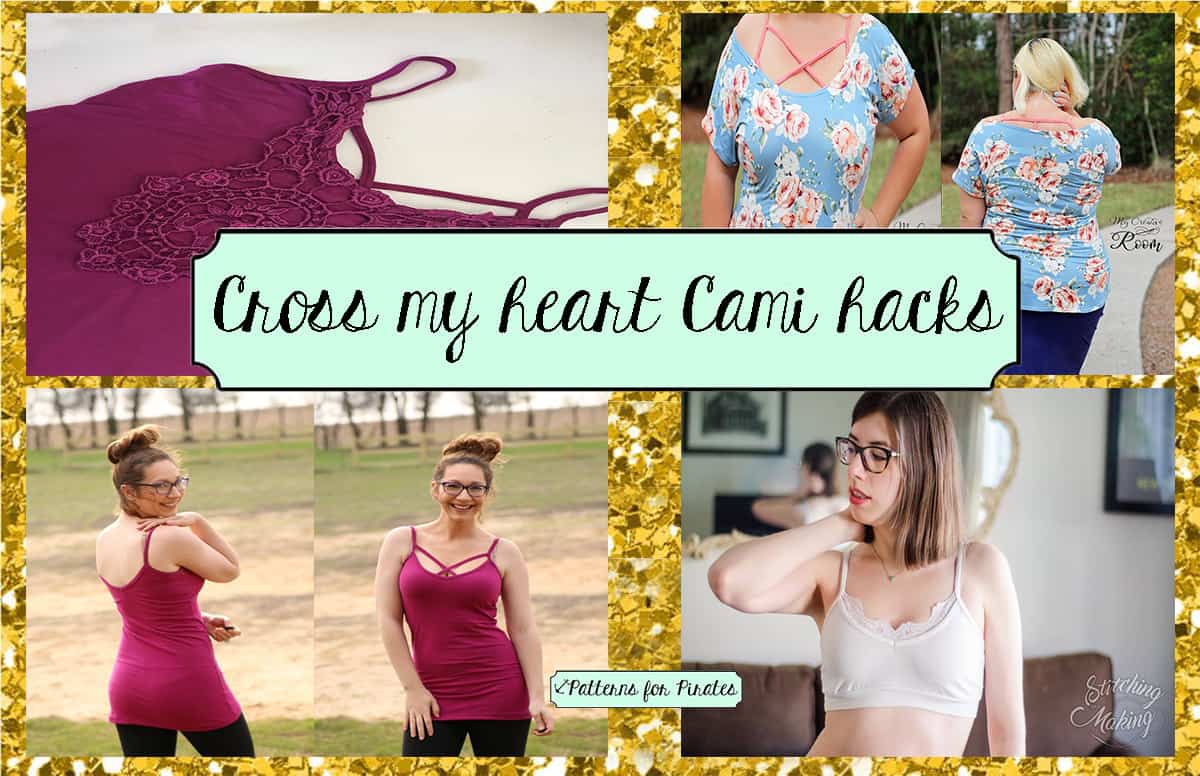
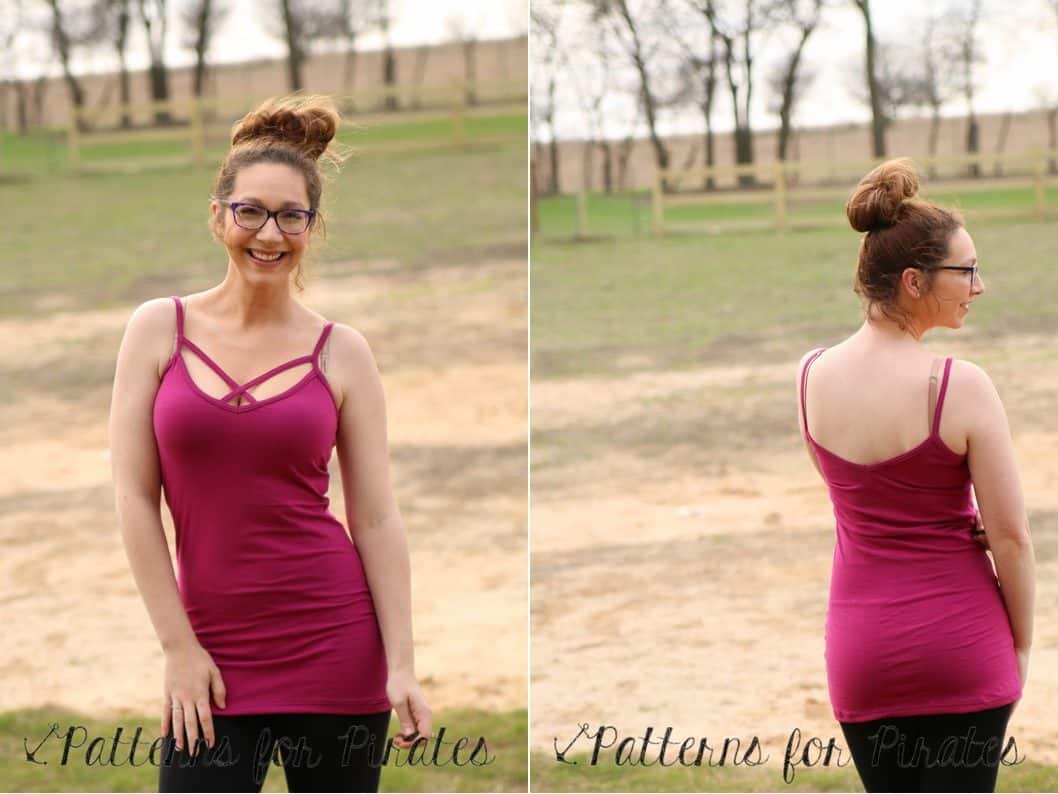
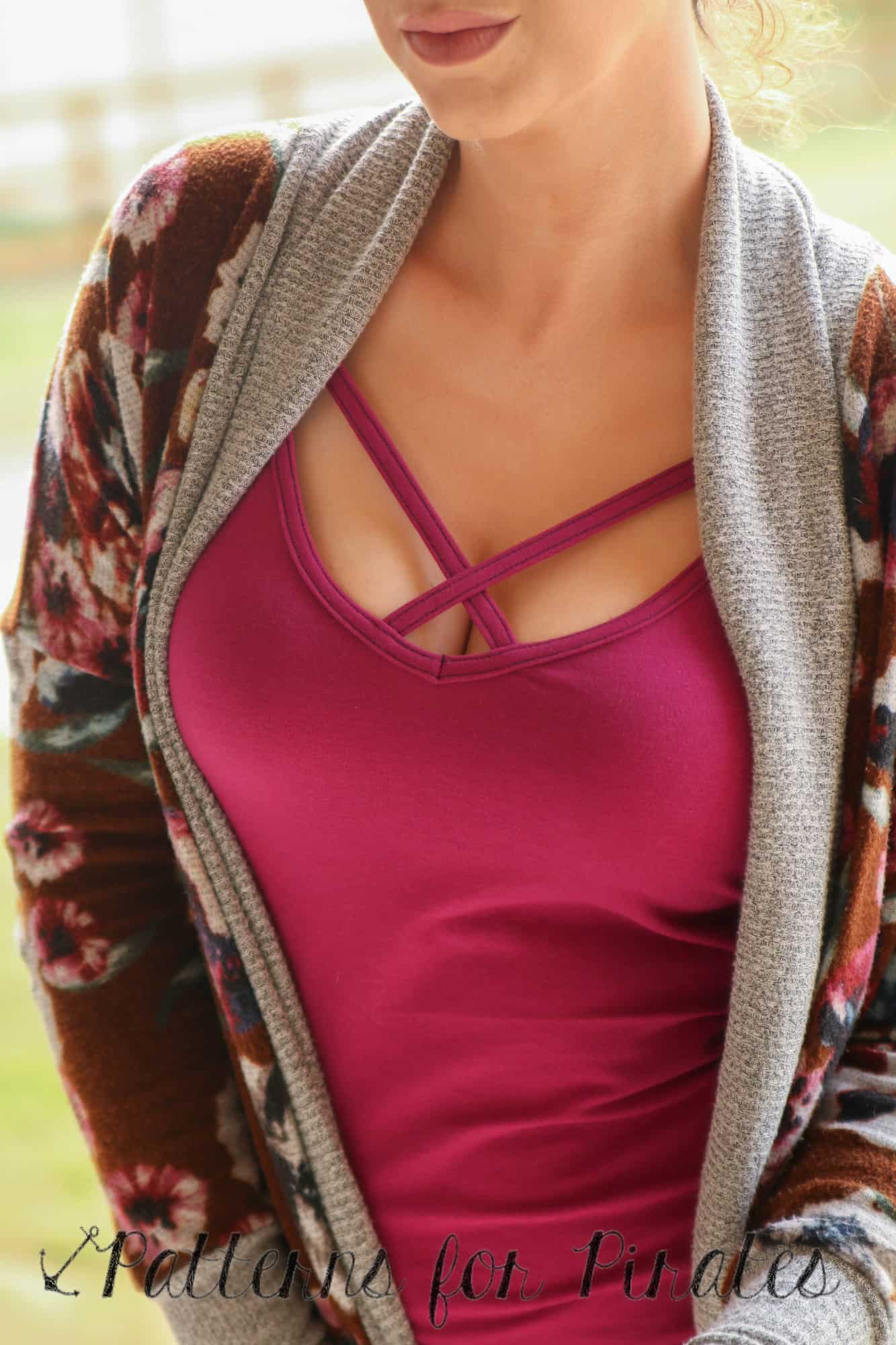
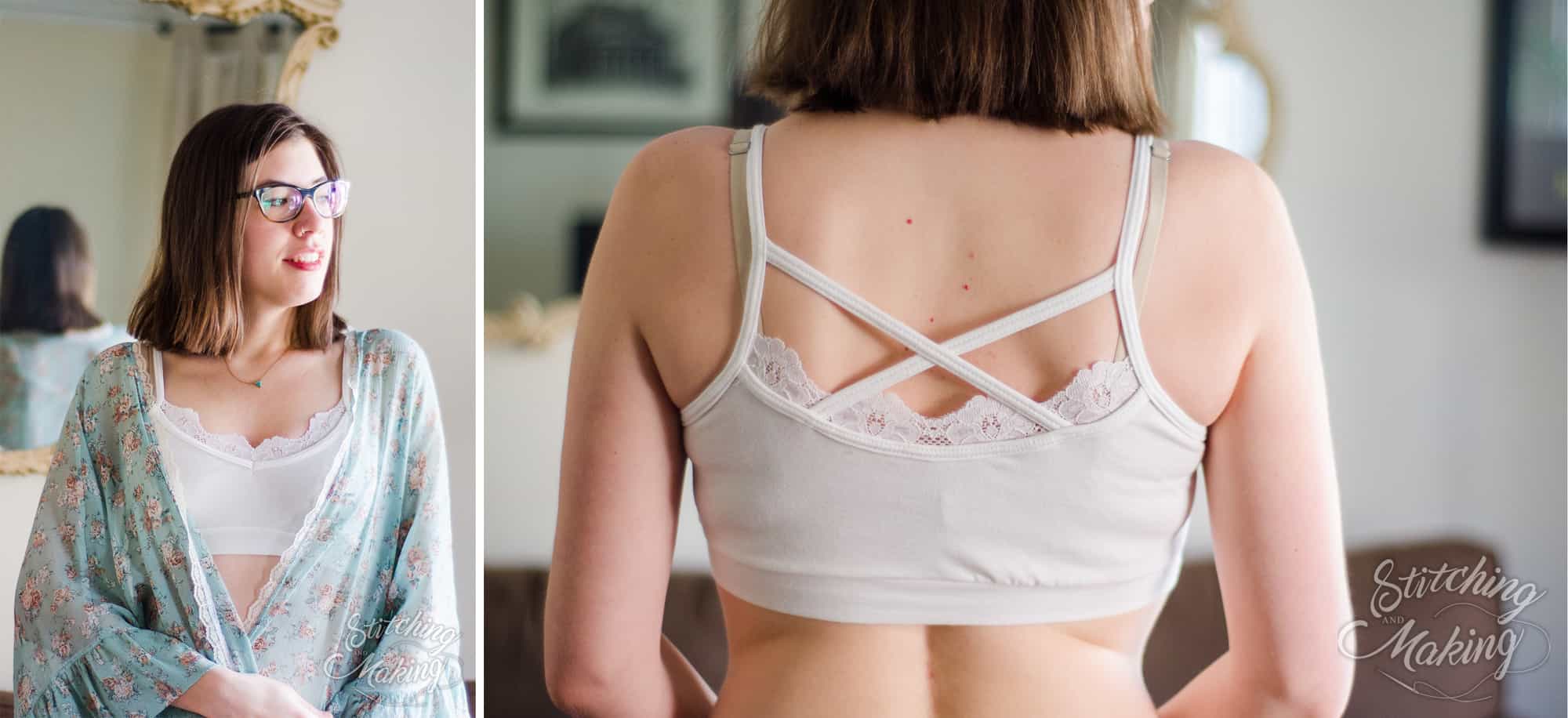
So you love the X option but you also love the T option of the Cross My Heart Cami and now you’re in a pickle…which one do I make? The answer is obvious, you make both! And if you’re anything like I am, you make both style in one cami! 🙂

IMG_6658

IMG_6671

The beauty of the CMHC pattern is that you don’t even need to make any modifications to achieve this look. Simply cut two pieces of the front pattern and follow the directions for adding the T and the X details to the pieces. Finish the cami as per the tutorial and voila! You made yourself a brand new cami that can be worn both way. You can wear the X in the front and the T in the back like I did or you can wear the T in the front.

cami 2fronts

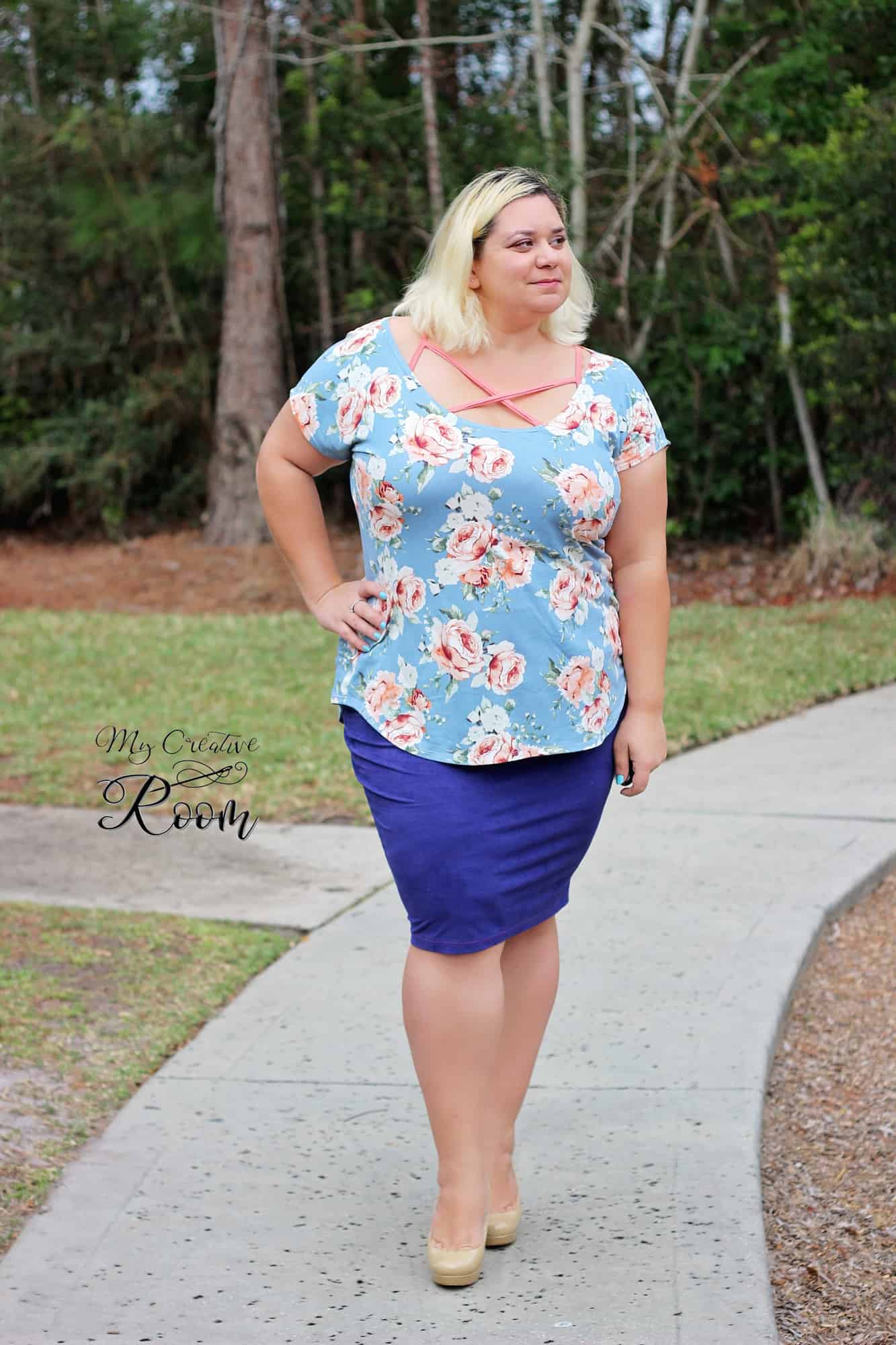
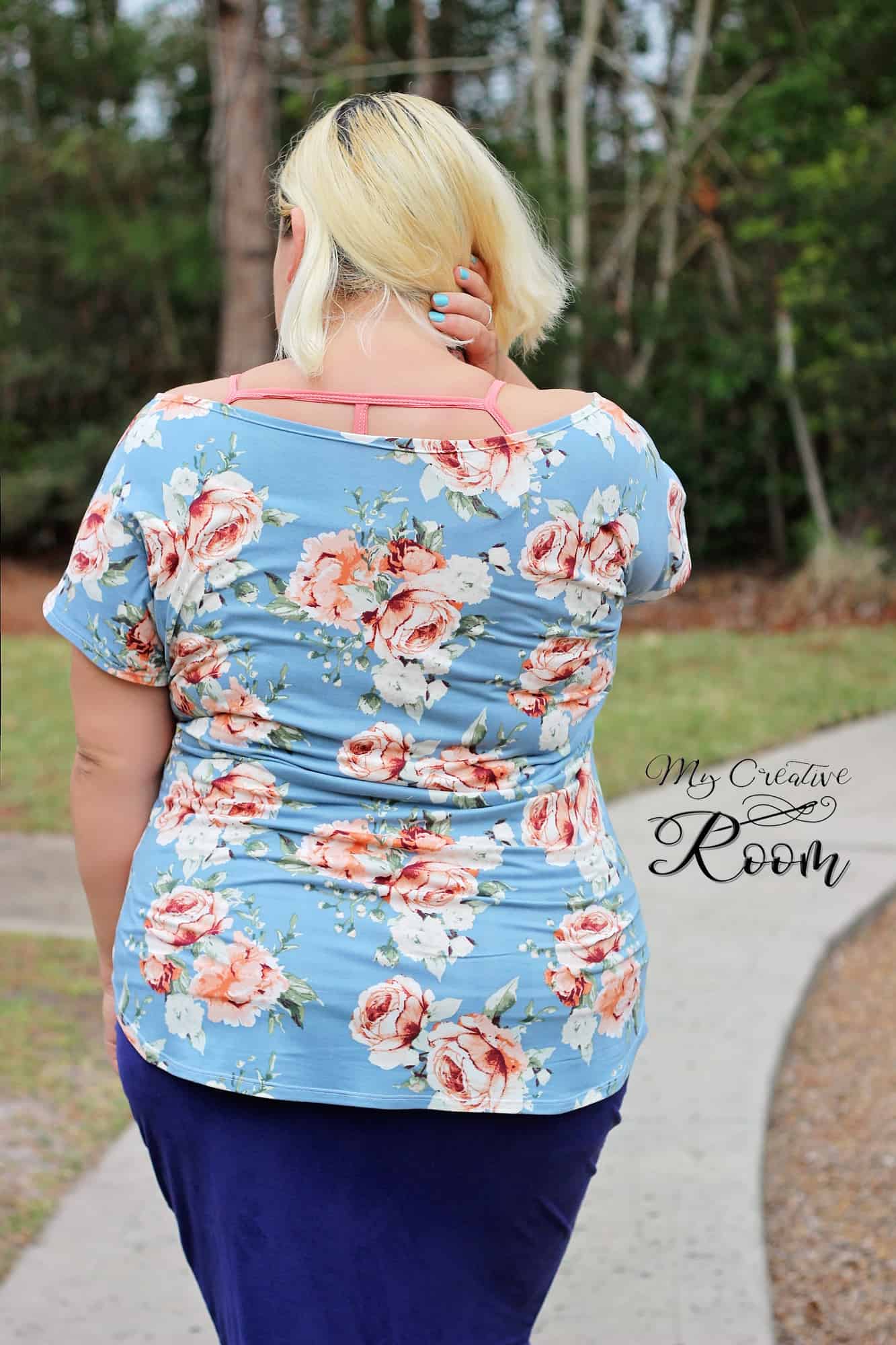
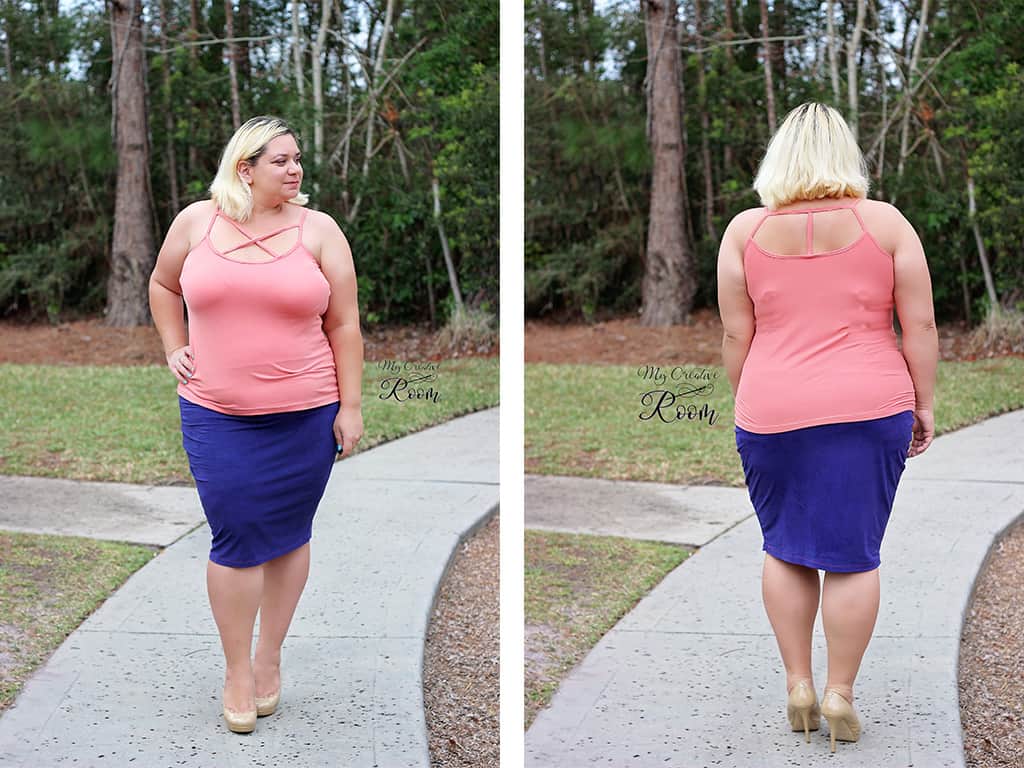
I paired this cami with a Pirate Pencil Skirt and a Sweet Tee with curved hem and an off the shoulder mod. Which styles will you be making first?

Judy made this one with two backs! Such a simple mode that can add so many more options to this pattern!

The V front and low x makes a sizzler! I mean, who doesn’t love to have that piece of clothing that you can pull out, slip on feel a little sexy every once in a while?

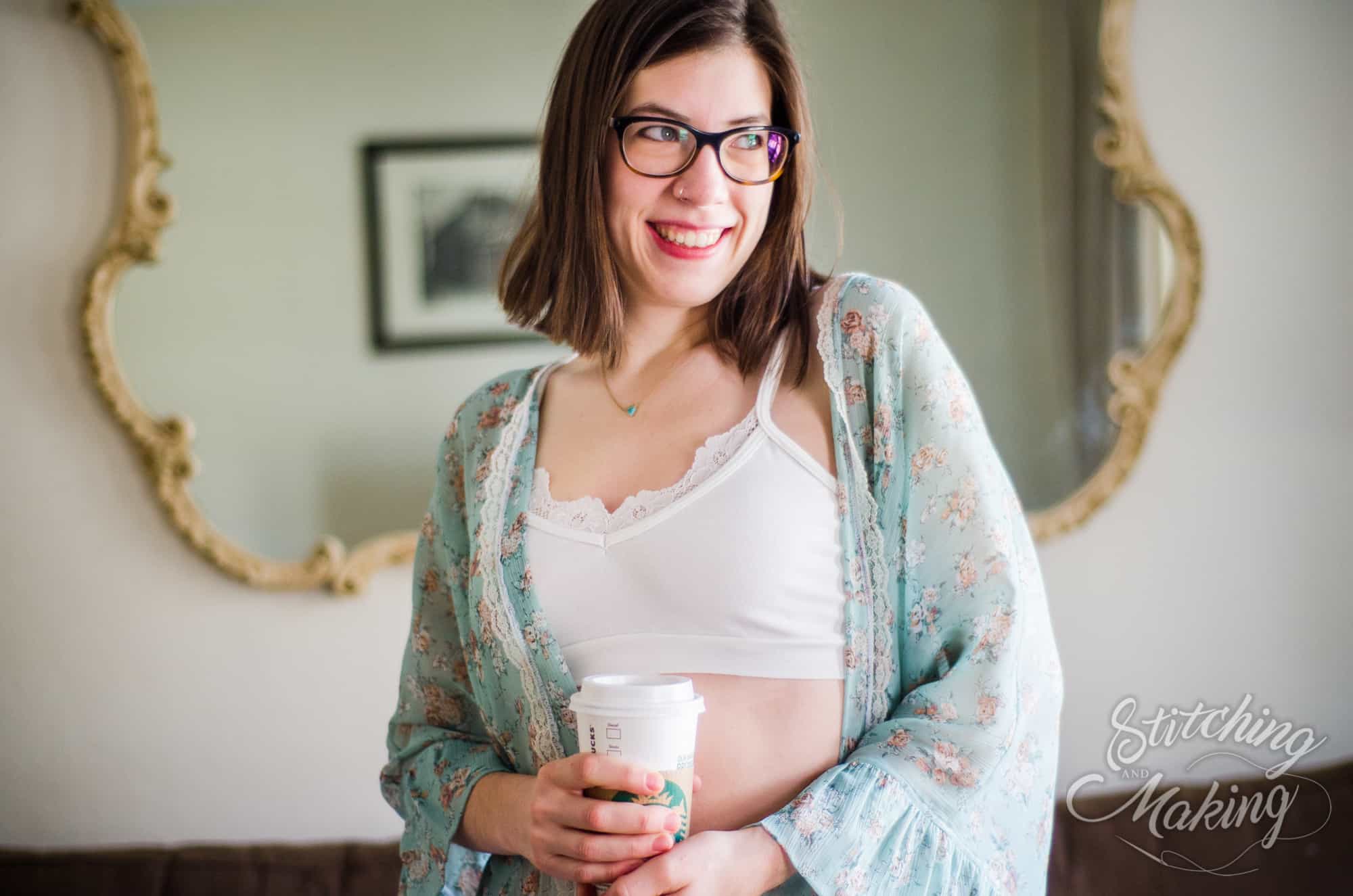
Are you looking for a more delicate, feminine feel?  Grab some stretch lace for an easy hack!

Here’s a simple how-to:

1. Cut the lace the same length as your binding pieces, for whichever neckline you are using.

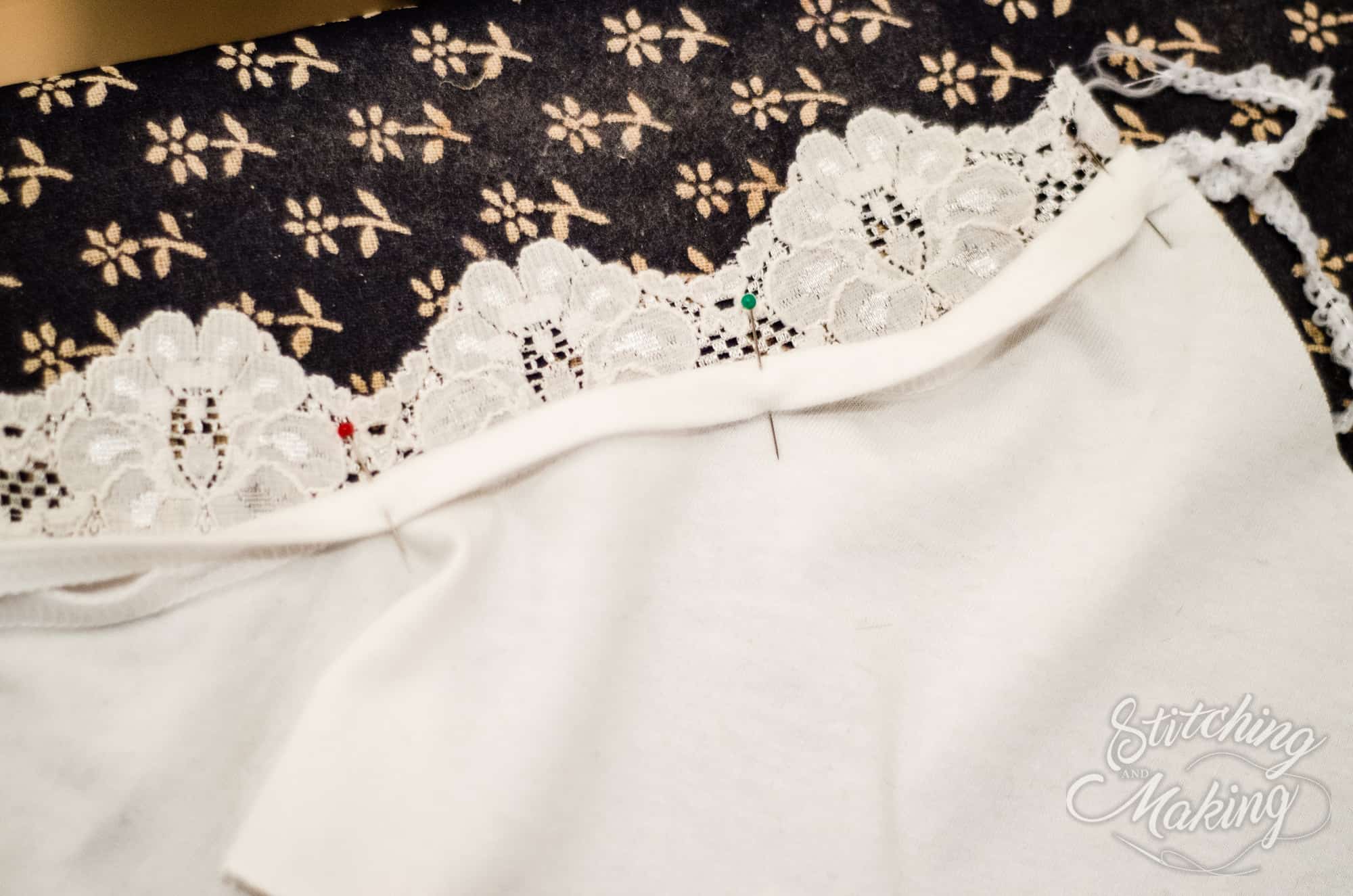
2. After you’ve attached and folded over the binding as directed in the tutorial, pin the right side of the lace to the wrong side of the neckline/binding. In the picture below, the fabric is right side up.


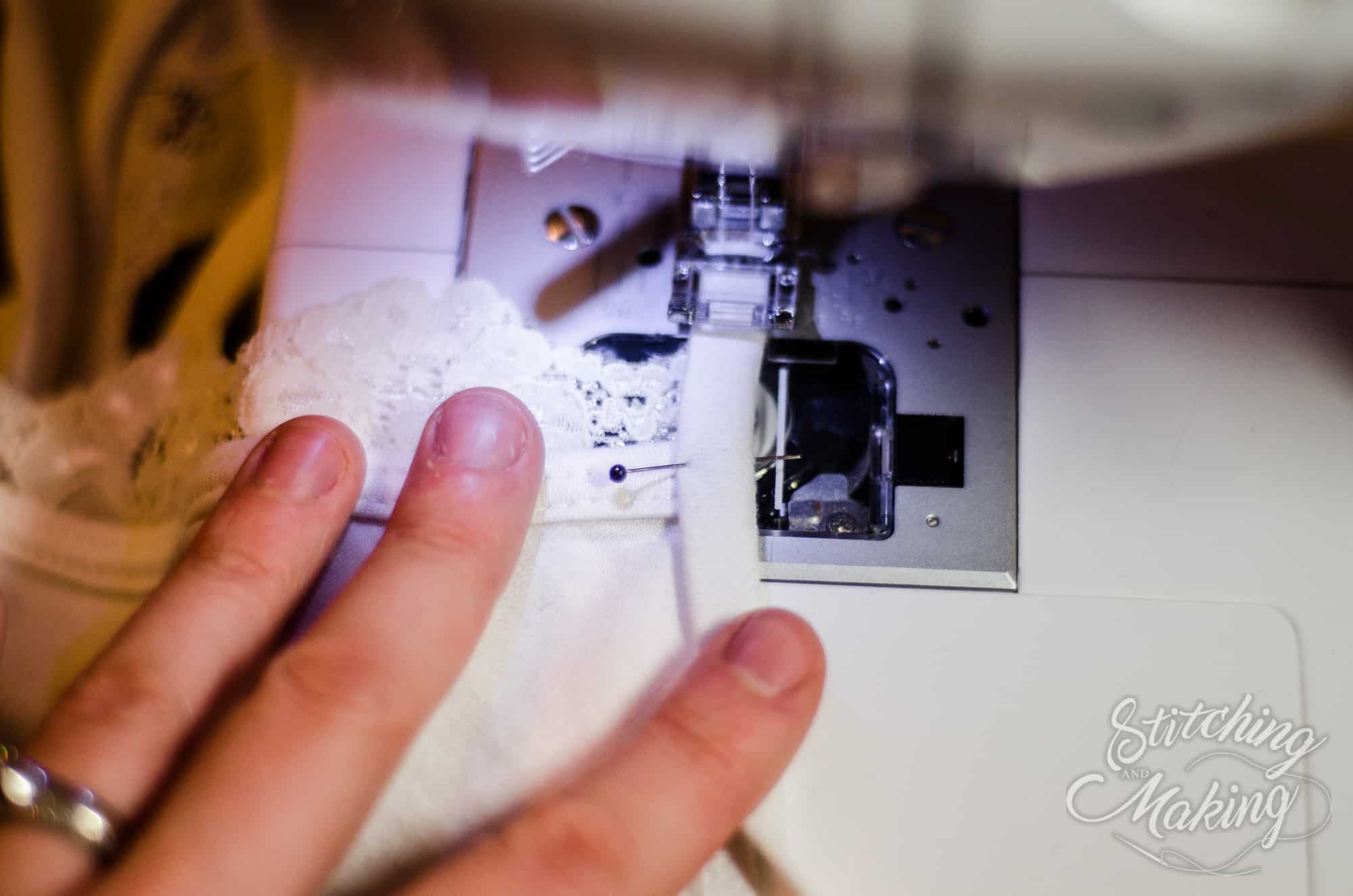
3. Repeat for the back as well, if you’d like.  Then, sew it on as you top-stitch the binding, per the pattern tutorial.  Here’s how it should look all said and done; wrong side up shown on the bottom of the picture, right side up shown at the top.


4. Be sure to catch the edge of the lace on the side of the shoulder binding as you attach it.


5. Finish the shirt as the pattern tutorial directs.  That’s it – easy peasy!

~ Elisabeth


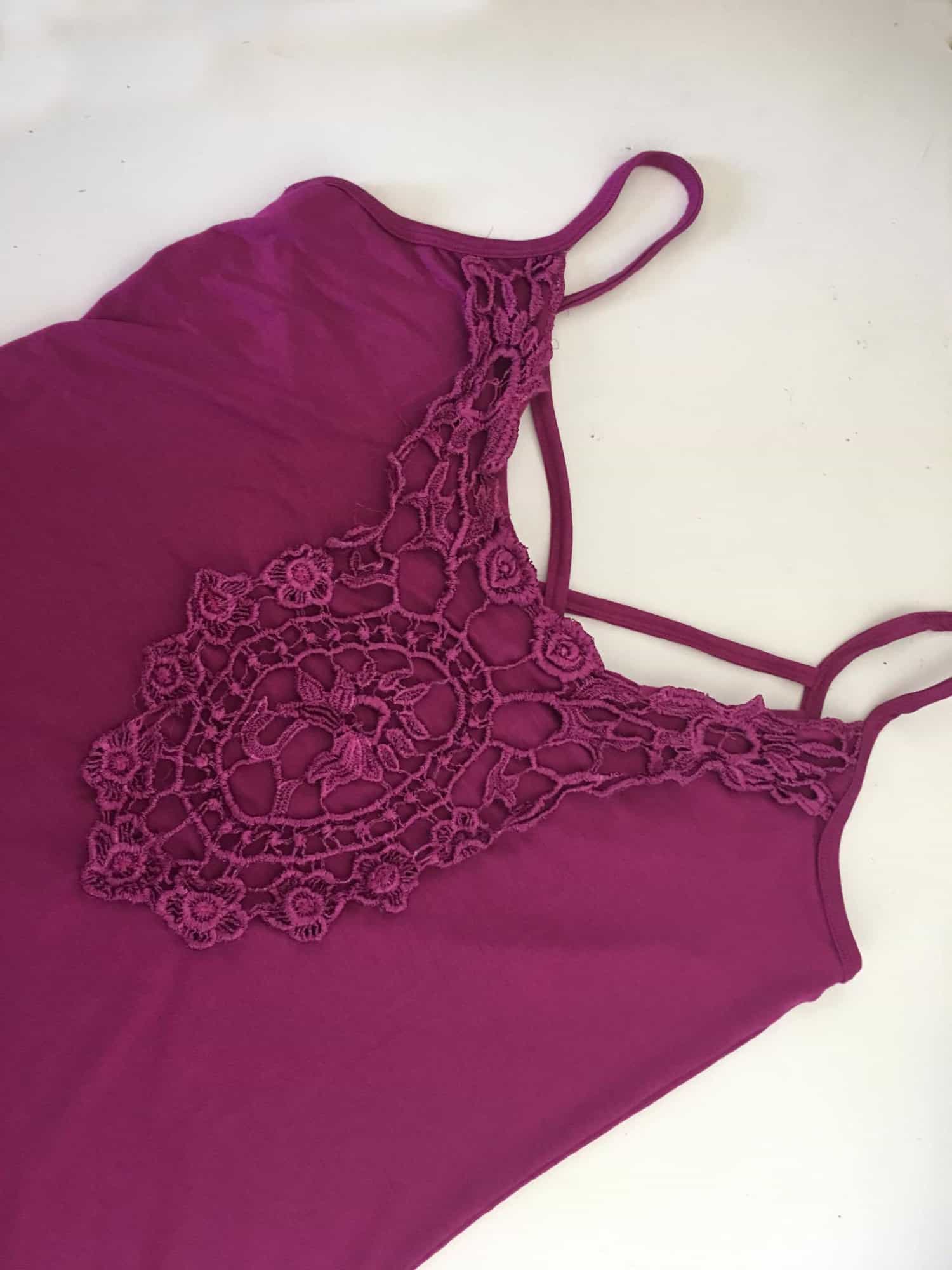
Not sure what to do with all those pretty lace appliques? Attach one to the front or back of the cami.  I happened to up-cycle one from an old shirt that didn’t fit anymore and have some knit on hand that matched perfectly!  I used to V back because of the shape of the applique.  I left the front neckline raw and stitched the lace just overlapping the top edge using a zigzag stitch.  (Knit does not unravel so no need to finish those edges).  Attach to the right side of the cami prior to doing the shoulder binding if your applique extends to the armholes.  For the main body of the applique, I chose to tack down in a few areas (center of the flowers) as the applique itself was pretty open throughout.  Easy Peasy!


Filed Under: Frequently Asked Questions, Pattern Release, Uncategorized 1 Comment

P4P Cardi Week :: Carefree Flannel + Vest Hack

January 28, 2017

cardi week template2

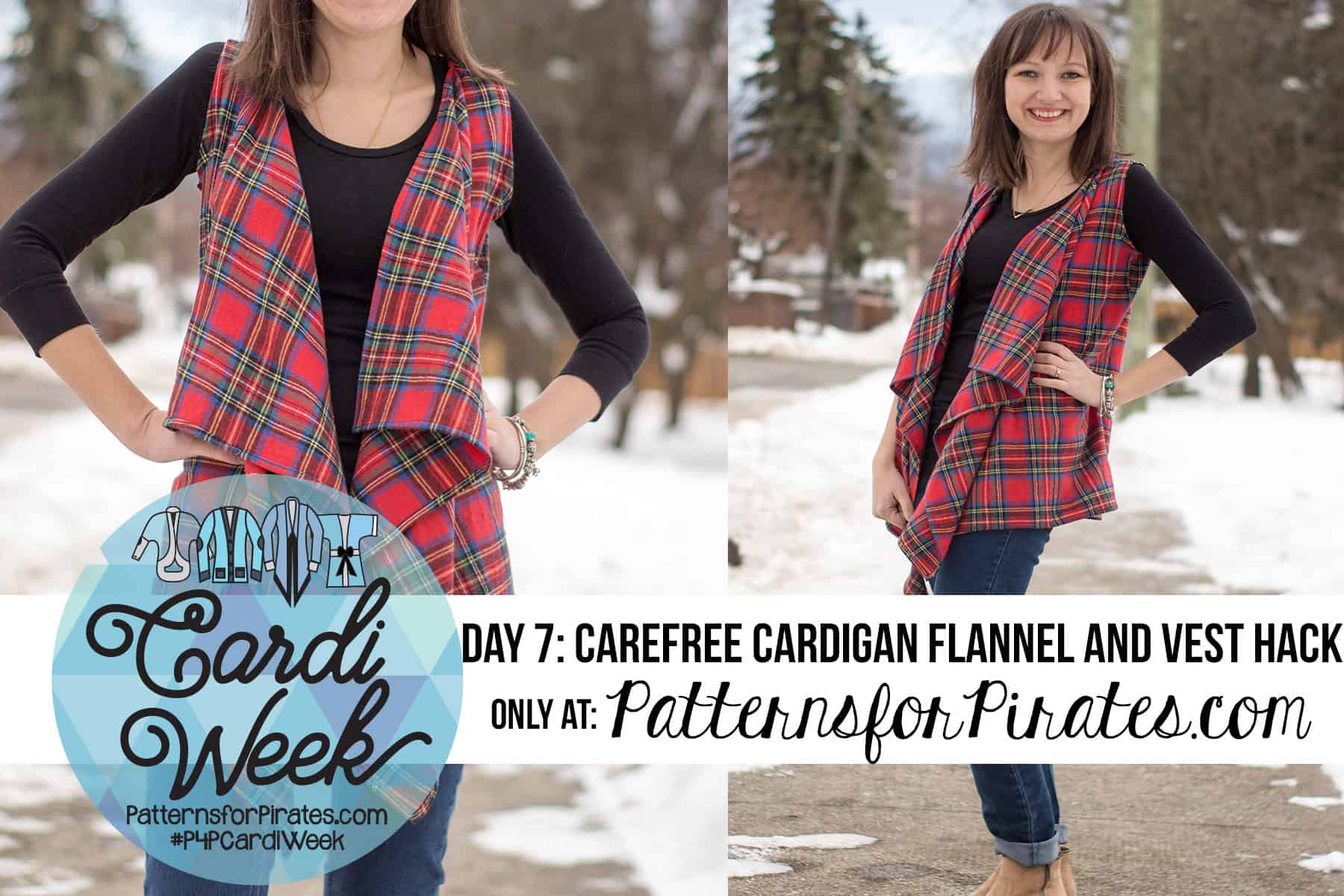
The Carefree Cardigan is such a great drape cardigan and as it has a nice loose fit you can easily use it to make a vest and because of the shape of the cardigan it will work in woven. Yep I said it you can make this vest in woven!

This is a super quick hack, start by cutting your 2 front pieces and back out of your flannel and you are going to want to choose the longer length of the two length, you aren’t going to need any of the band pieces for this. Depending on your height you may want to remove or add length. I’m a shorty so I remove a couple of inchs from the bottom and also from the front side as the drape is quite long on me.

Sew your shoulder, skip the sleeves and sew the side seams as per the directions.  Now instead of adding bands we are going to hem the armholes and all the way around your neck, down the front and across the bottom.  I serged all the way around first to finish the edges. The serged edge gives me a perfect 1/4 inch to flip and iron and then I flipped it one more time so my serged edge was hidden and hemmed all the way around as close to the fold as you can.  Another tip is to trim your corners, it just makes them a bit less bulky to hem.  Do the exact same process to your armcycles and voila you have perfect draped flannel vest! If you don’t have a serger just use a zig zag stitch to finish the edges.  Another cute option would be to fringe the front of your cardigan, you would still need to hem around the neck and down the sides but you can easily just pull the threads along the front and or the bottom till you have the amount of fringe that you would like.

IMG_6525[1]IMG_6526[1]

IMG_6527[1]IMG_6528[1]IMG_6549[1]

IMG_6542[1]

I live in Canada so I really like the extra layer that sleeves add so for this second version I cut the back and sleeves out of a knit and then cut the front pieces in a flannel.  I used the exact same construction as above with no bands and just hemmed all the way around and I have another cute cardigan but got to use my warm flannel!

20151220_132817

Now go sew up all that gorgeous plaid flannel that you have been hoarding!  – Angela Newman  

Take a look at our jam-packed schedule of cardigan love!

Saturday, January 21: #P4PCardiWeek Announcement

Sunday, January 22: Cocoon Lace Hems & Butterfly Ruffle

Monday, January 23: Ribbon Tie Closure Hack

Tuesday, January 24: Carefree Cardigan Fringe Hack

Wednesday, January 25: Duster-Length Adjustment

Thursday, January 26: Kimono Ruffle Sleeves + Hem

Friday, January 27: Varsity Sweater Style Hack

Saturday, January 28: Carefree Cardigan Flannel + Vest Hack

Monday, January 30: #P4PCardiWeek Winner Announcement

You can follow along on the blog here, or in our Facebook group.  Search #P4PCardiWeek to be able to find our posts all over social media.  And please feel free to sew-along with us on one or all of the days.  The more the merrier!

But wait, there’s more!  We wanted to create a friendly pirate-y competition with our P4P Cardi Week!

Between tomorrow and Saturday, January 28, sew up a Patterns for Pirates cardigan using one of our hacks, or by keeping the pattern as-is.  Share your photo with us on Instagram or in our Facebook group and use the tag#P4PCardiWeek We will pick our favorite and the winner will win a free P4P pattern of choice AND be featured on this blog.  Fun right?

To make it even better we have put all the cardigan patterns in the shop on sale all week (no code needed)!

Now get out there and sew some cardigans, matey!

Filed Under: Contest/Giveaway, Pattern Hacks, Uncategorized 1 Comment

P4P Raglan Week: Woven Front Hack

September 20, 2016

Welcome back for Day 2 of P4P Raglan Week!  Now that you’ve all grabbed your copies of the Jolly Roger Raglan and the Add-On pack for it, I’m here to share an easy “hack”!

raglan-week-day2

I love being able to make fun shirts for my son.  However, I don’t always love having to spend the money for fancy knit prints, or having to search high and low for something that is geared toward the interest of my 6-year old.  How to do I get around it?  With fun, WOVEN cotton prints, from my local fabric stores!  They are money savers and tend to have a million fun prints that are loved by my little guy.  Want to know how I manage to mix a woven fabric into a knit pattern?  It’s so simple!

jolly-roger-hack-002

No adjustments are needed for the pattern pieces itself.  Out of your knit fabrics cut your neckband, sleeves and back panel as the pattern calls for.  And for the front, simply opt in your woven print instead of a knit!  It’s as easy as that!  Because of the way raglan sleeves are attached, they still provide enough ease, stretch, and room for the shirt to fit over your little’s heads.  And the Jolly Roger Raglan has enough of a relaxed fit that there isn’t any need to add extra space in the body.  Easiest hack ever, am I right?
jolly-roger-hack-004

Create your raglan as the pattern calls for.  I always use a serger to finish the bottom hem of my woven-front raglans, but you don’t have to.  I just like having that serged piece for a sturdier grip when I’m turning the edge under 1/4″ and then another 1/4″ before I edge stitch the hem.  You are welcome to finish the bottom edge however it suits you the best.

jolly-roger-hack-006 jolly-roger-hack-007

Be sure to press your fabric and then have your child wear it (to distract them while you make a million more).

jolly-roger-hack-008jolly-roger-hack-020

If you’ve created your very own woven-front Jolly Roger during P4P Raglan week, we would love for you to share it with us!  Head over to the Facebook Group or share on Instagram.  And be sure to use the tag #P4PRaglanWeek so we can find you!
Curious about what else has been happening during our raglan-loving week of fun?

Just take a look at our schedule!

Monday, September 19: Jolly Roger Raglan Pattern Update + Jolly Roger Add-On Pack Pattern Release

Tuesday, September 20: JRR Woven Fabric Hack

Wednesday, September 21: JRR Animal Faces Add-On

Thursday, September 22: Contrast Band Hack for Kangaroo Pockets

Friday, September 23: Women’s Keyhole / Scoopback Raglan Hack

Saturday, September 24: Off-The-Shoulder Raglan Hack

Sunday, September 25: Adding Stripes to Your Raglan Sleeves

Filed Under: Pattern Hacks, Uncategorized 4 Comments

  • « Previous Page
  • 1
  • 2
  • 3
  • 4
  • 5
  • Next Page »

connect with me

  • Email
  • Facebook
  • Instagram
  • Pinterest
  • YouTube
Privacy & Cookies: This site uses cookies. By continuing to use this website, you agree to their use.

To find out more, including how to control cookies, see here: Cookie Policy
  • Privacy Policy
  • Refund Policy
  • Contact Us
  • About

Copyright © 2026 Patterns for Pirates

Copyright © 2026 · Genesis Framework · WordPress · Log in