Patterns for Pirates

P4P stylish, modern, wearable patterns

  • Home
  • Blog
    • Frequently Asked Questions
    • Pattern Releases
      • Free Patterns
    • P4P University
      • Fitting
      • Sewing with Stretch, Knit Fabrics
      • Sewing with Woven Fabrics
      • Sewing Machines
    • Sew-A-Longs
    • Fabric for Pirates
    • Pattern Hacks
    • Announcement
      • Blog Tours
      • Contest/Giveaway
  • Shop
  • Bundle Discounts
  • Flash Friday
  • Gift Cards
  • My Account
  • Cart

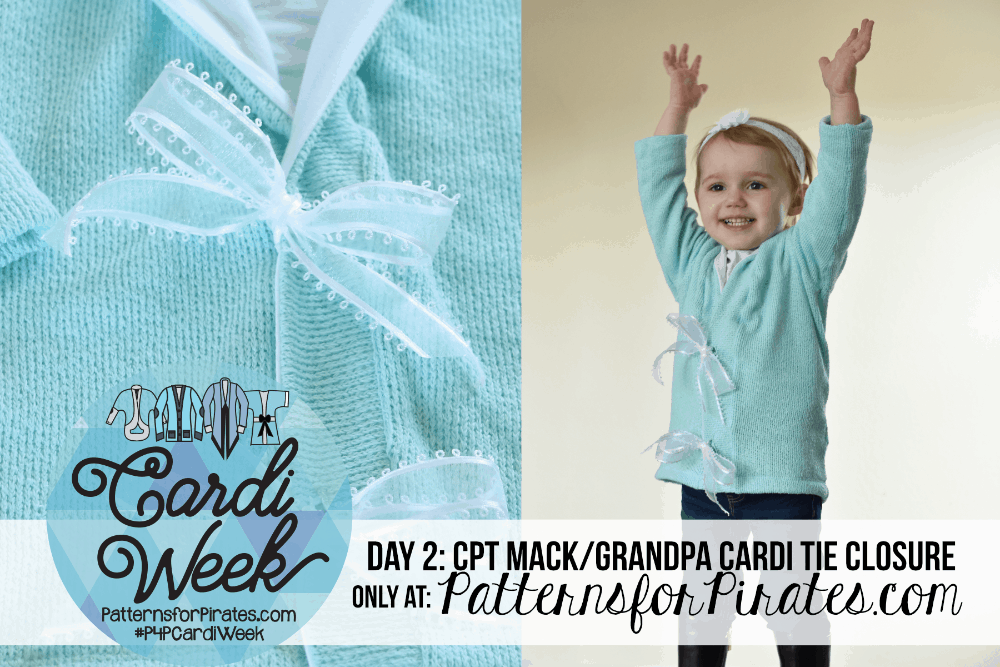
P4P Cardi Week :: Grandpa + Cpt. Mack Ribbon Tie Closure

January 23, 2017


Cpt Mack Ribbon Tie Closure Primary


Today I have for you a simple hack that can be applied to either the Patterns for Pirates women’s Grandpa Cardi or the youth version, the Cpt. Mack’s Cardigan. This mod is simple but it adds so much to the overall look! There are a few different ways that you could approach this; but grab your pattern and follow along the tutorial below to find out how I like to add a ribbon tie closure to the Cpt. Mack and Grandpa Cardigans.

For this tutorial I am using some simple satin and mesh ribbon to coordinate with my rayon spandex lined loose weave sweater knit Cpt. Mack.
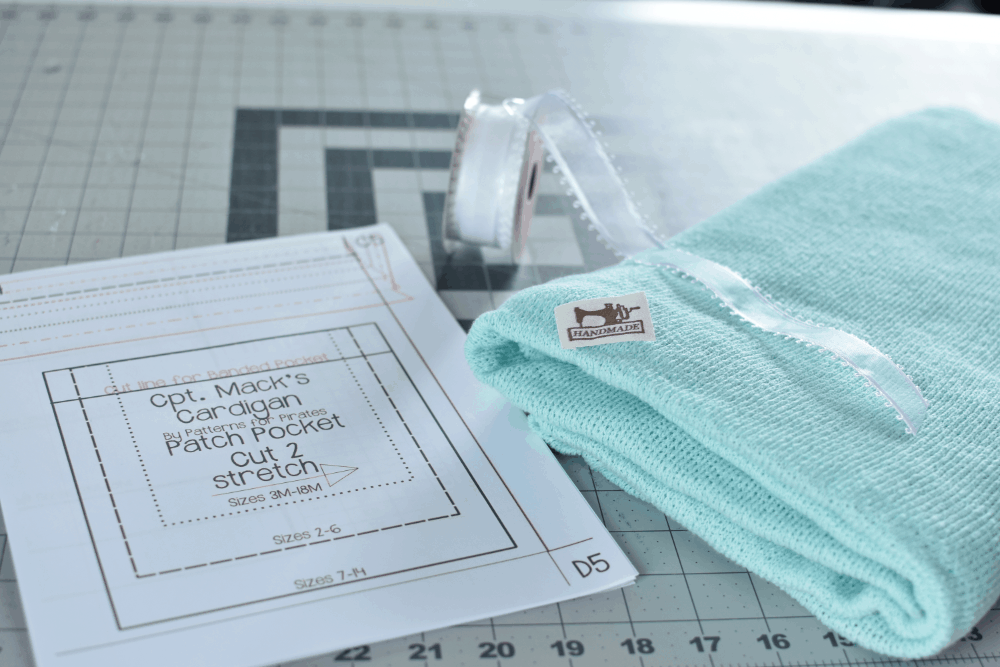
MATERIALS

Step 1: Sew up your cardigan, stopping just before attachment of the collar.
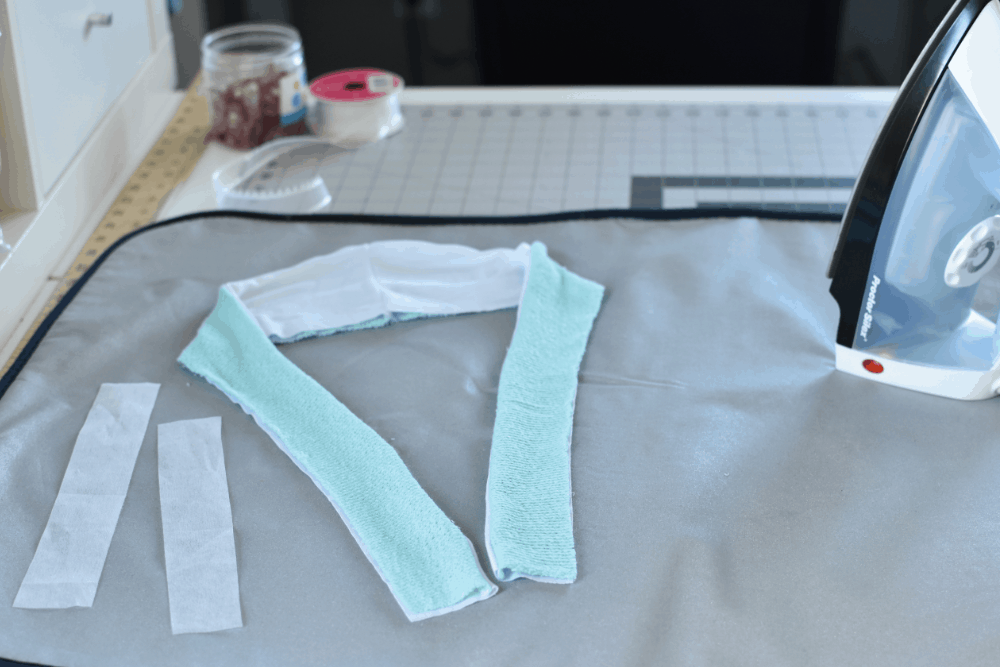
IMAGE 0

Step 2: Iron on some interfacing along the inside of the collar where the buttonholes will be stitched. This will provide some stability to your knit and to prevent the holes from being stretched out with use. I know my kids aren’t gentle with their clothes!
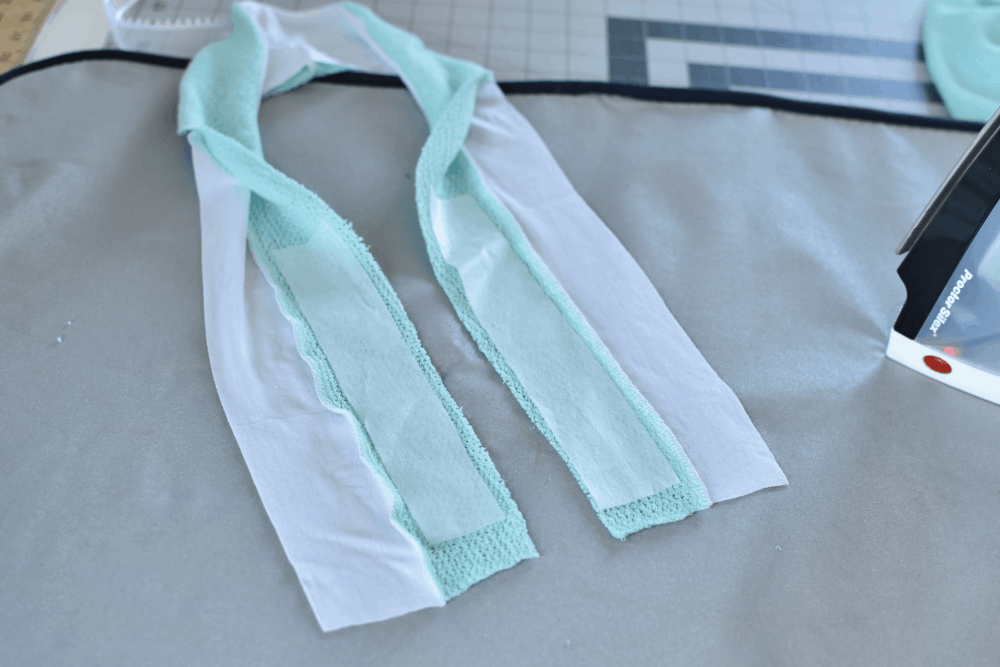
IMAGE 1

Step 3: Now sew your collar onto the cardigan as directed by the pattern tutorial.
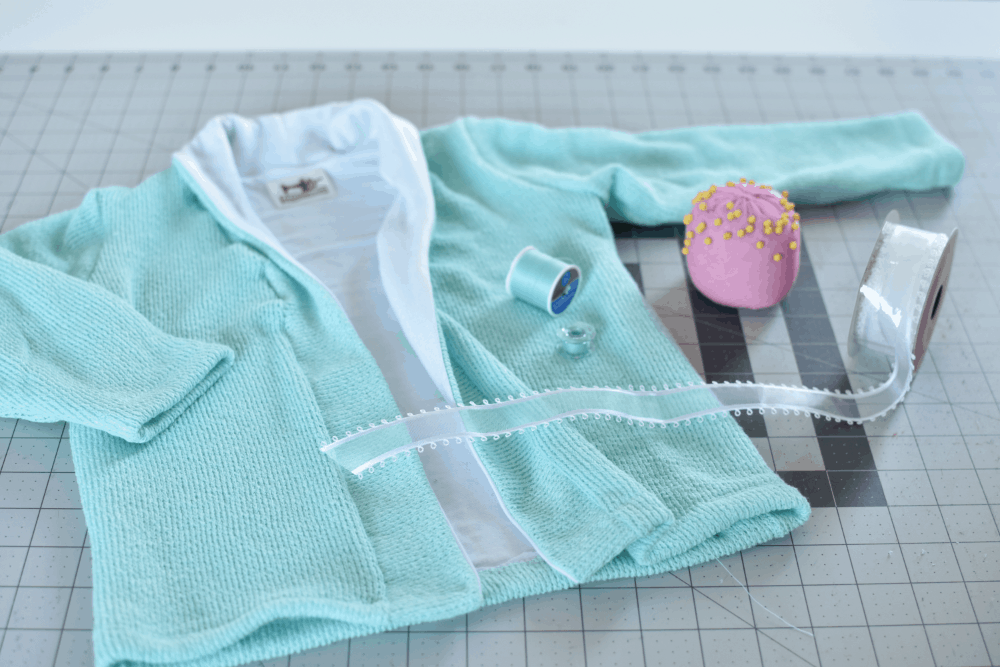
IMAGE 2

Step 4: Mark on the overlapping band (with pins) where you would like your bows to be located. I used two bows for my daughters size 2T tunic length cardigan. The width of the chosen ribbon should be considered when deciding how many bows to use as well. Now mark the corresponding location on the under lapping band.
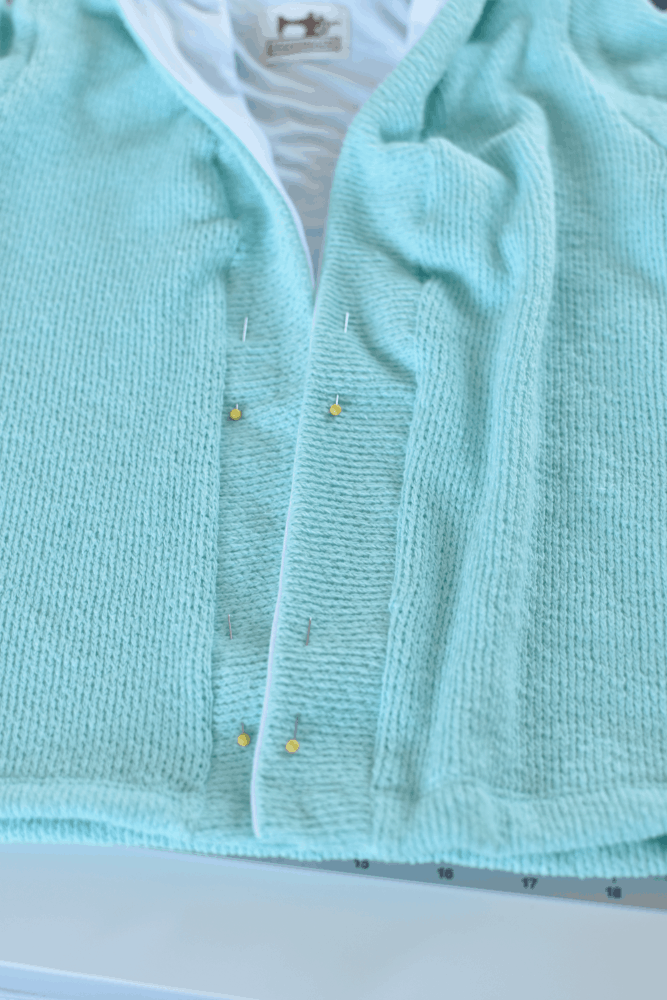
IMAGE 4

Step 5: Use your machine to create buttonholes on the overlapping band locations. For this I used my automatic buttonhole presser foot. If you haven’t yet used your buttonhole foot I highly suggest reading your manual or searching YouTube for a quick video. These make it super simple! If you do not have a buttonhole setting and foot option on your machine you can certainly use a zigzag stitch to create one yourself. Follow along Judy’s Carefree Cardigan Button blog post to see how she likes to create a buttonhole in that circumstance. Once the buttonhole is stitched, it’s time to very carefully cut them open with your seam ripper.
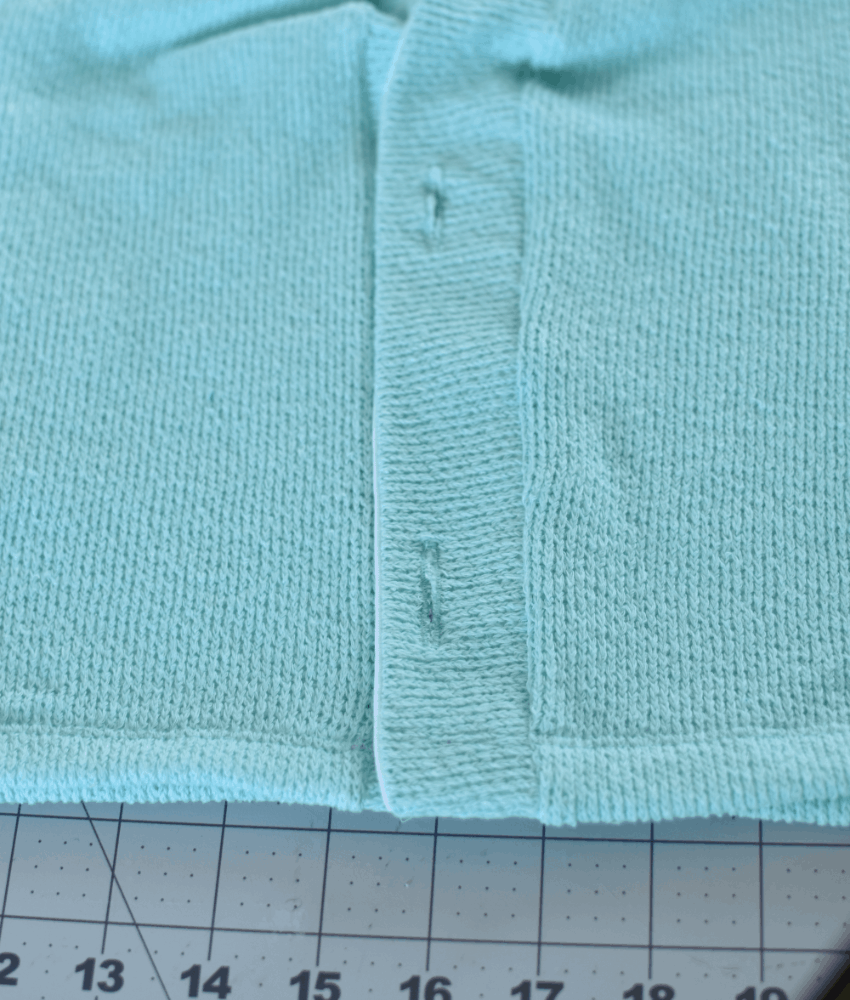
IMAGE 5

Step 6: Next, use your ribbon to tie a bow to the size of your liking. Trim the ribbon tails a little longer than desired to allow for some wiggle room as we construct this. Untie your bow and cut an additional piece equal in length for as many bows as you would like to attach.
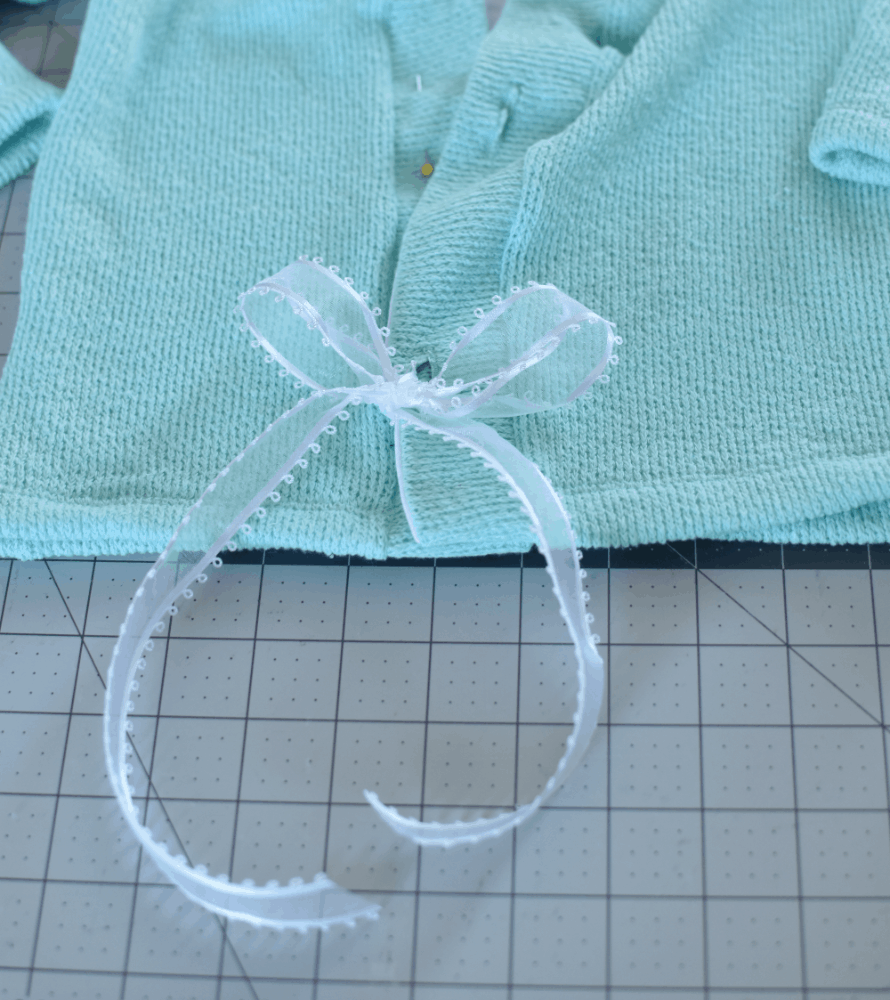
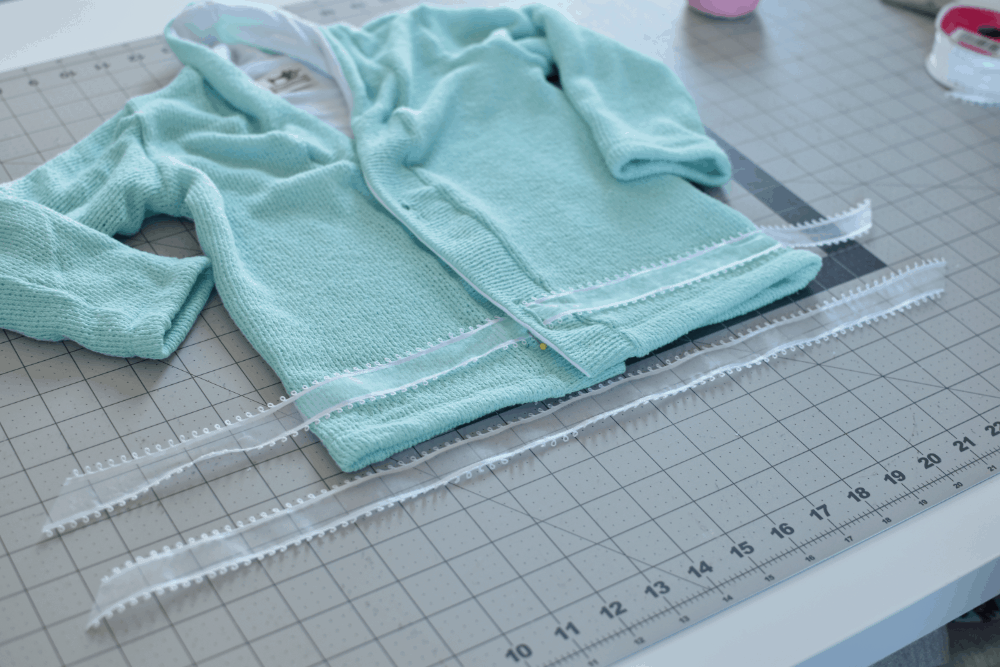
IMAGE 6

IMAGE 7

Step 7: Find the center of each piece of ribbon and secure it to the under lapping band at the pin locations. Sew a straight stitch vertically down the centerline of the ribbon to attach it to the cardigan. I stitched mine on along the left side of the band. This allows the overlapping band to fully cross over once tied.
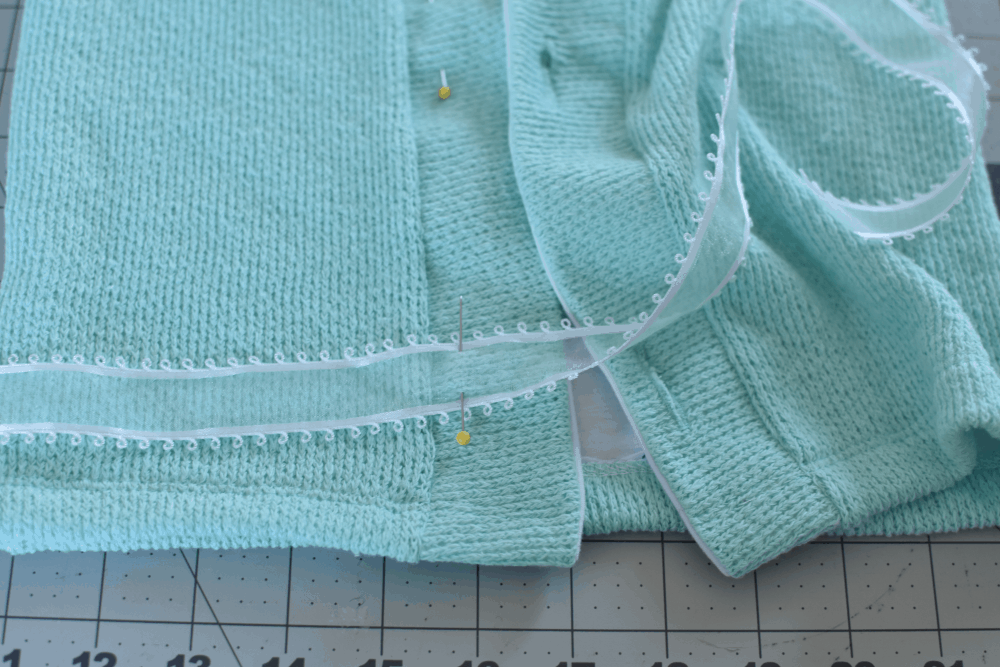
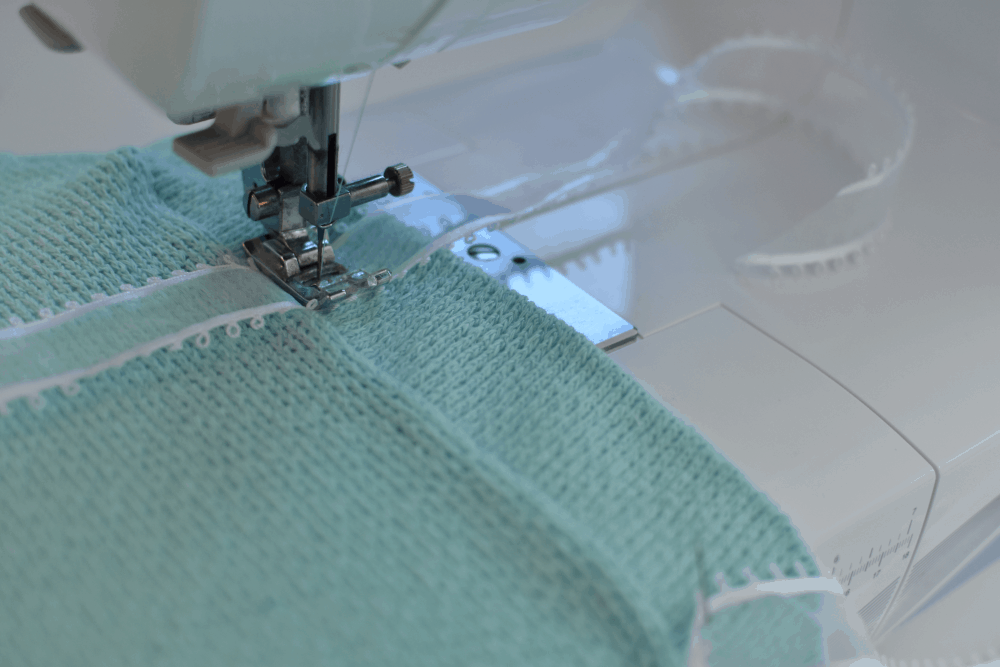
IMAGE 8

IMAGE 8B

Step 8: Pull one end of each ribbon through its corresponding buttonhole and tie into bows once again, closing the cardigan front. Once all of your bows are tied you can trim the tails to the desired lengths. If you prefer these to be permanent bows you can certainly hand stitch them so that they may not come untied.
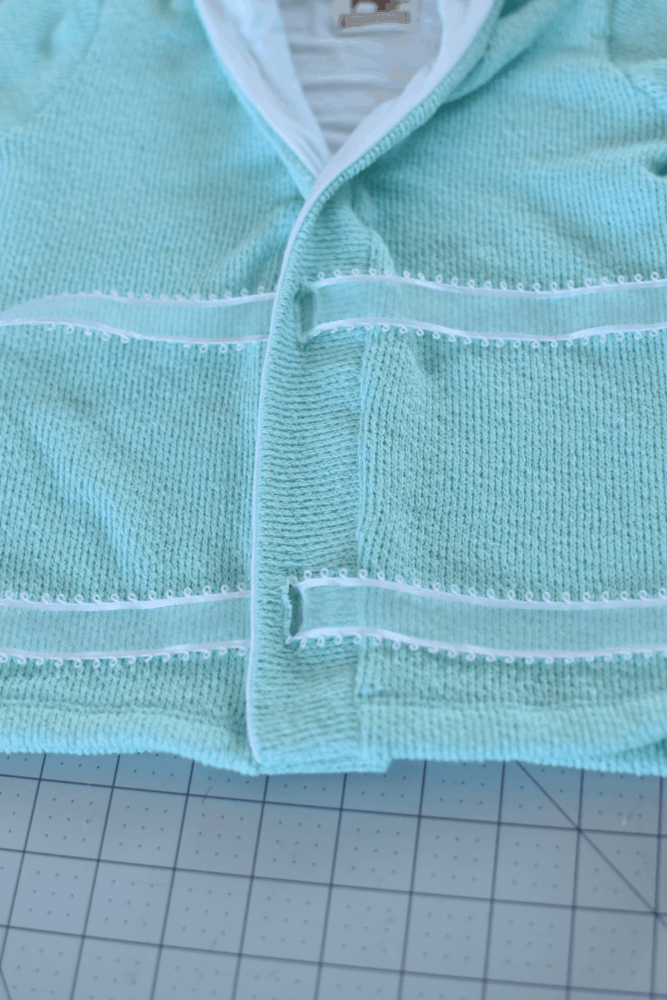
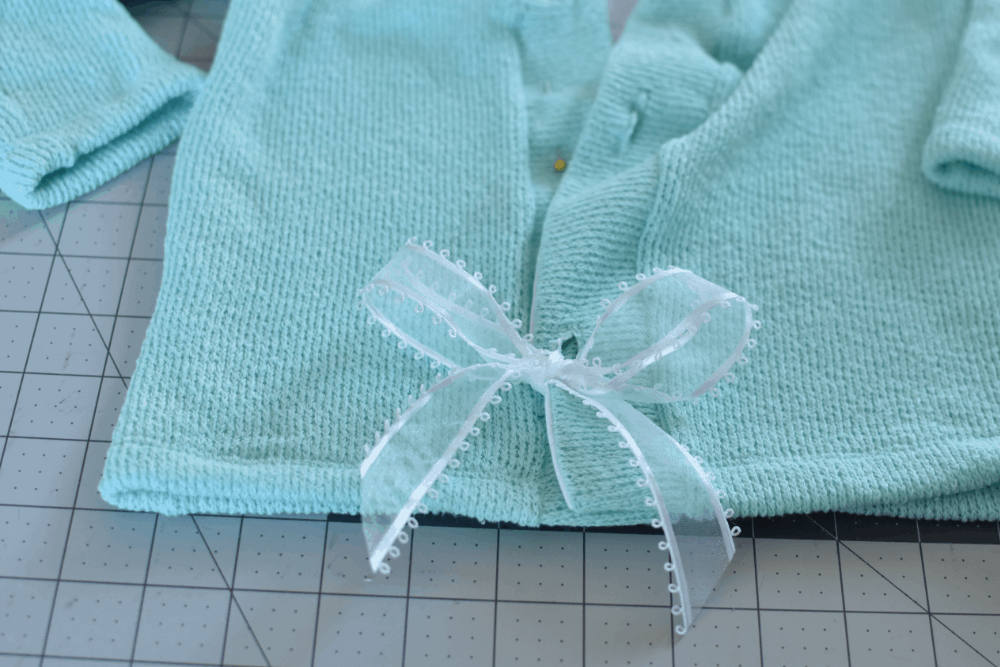
IMAGE 9

IMAGE 10

Step 9: If you have used a ribbon that frays easily, use a lighter to gently melt each ribbon end or some Fray Check to seal the weave. Be careful to use the heat from the flame and not the flame itself. If you mess up, no worries! Simply trim off the tip of the ribbon tail and try again.

There you have it. All done!
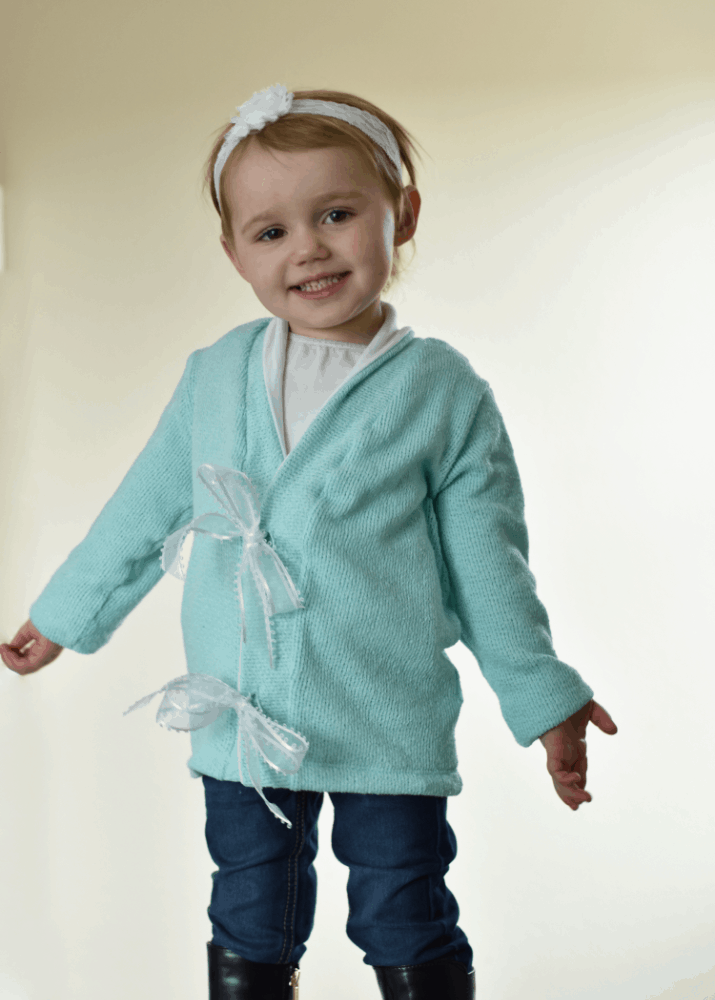
IMAGE 11B

Keep your eyes peeled for some other fun tutorials the ladies at Patterns for Pirates have prepared for you this week! Be sure to read all the way to the end of this post to find out how to participate in this week’s sewing contest!

-Kelly Bailey

P4P Blog Contributor


Take a look at our jam-packed schedule of cardigan love!

Saturday, January 21: #P4PCardiWeek Announcement

Sunday, January 22: Cocoon Lace Hems and Butterfly Ruffle

Monday, January 23: Ribbon Tie Closure Hack

Tuesday, January 24: Carefree Cardigan Fringe Hack

Wednesday, January 25: Duster-Length Adjustment

Thursday, January 26: Kimono Ruffle Sleeves + Hem

Friday, January 27: Varsity Sweater Style Hack

Saturday, January 28: Carefree Cardigan Flannel + Vest Hack

Monday, January 30: #P4PCardiWeek Winner Announcement

You can follow along on the blog here, or in our Facebook group.  Search #P4PCardiWeek to be able to find our posts all over social media.  And please feel free to sew-along with us on one or all of the days.  The more the merrier!

But wait, there’s more!  We wanted to create a friendly pirate-y competition with our P4P Cardi Week!

Between tomorrow and Saturday, January 28, sew up a Patterns for Pirates cardigan using one of our hacks, or by keeping the pattern as-is.  Share your photo with us on Instagram or in our Facebook group and use the tag #P4PCardiWeek. We will pick our favorite and the winner will win a free P4P pattern of choice AND be featured on this blog.  Fun right?

To make it even better we have put all the cardigan patterns in the shop on sale all week (no code needed)!

Now get out there and sew some cardigans, matey!
Filed Under: Contest/Giveaway, Pattern Hacks, Uncategorized 2 Comments

P4P Cardi Week:: Butterfly Ruffle

January 22, 2017

butterfly-ruffle-main

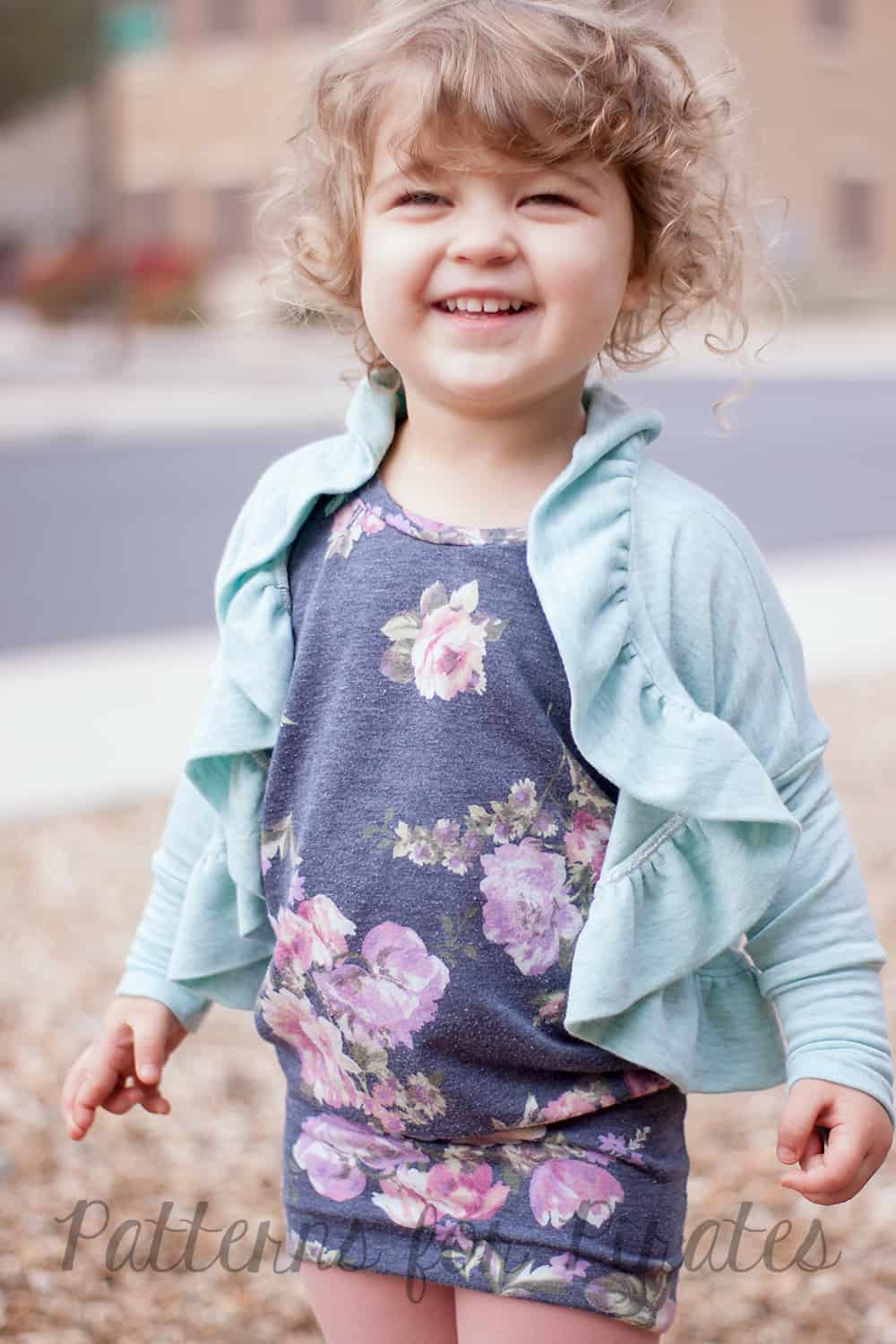
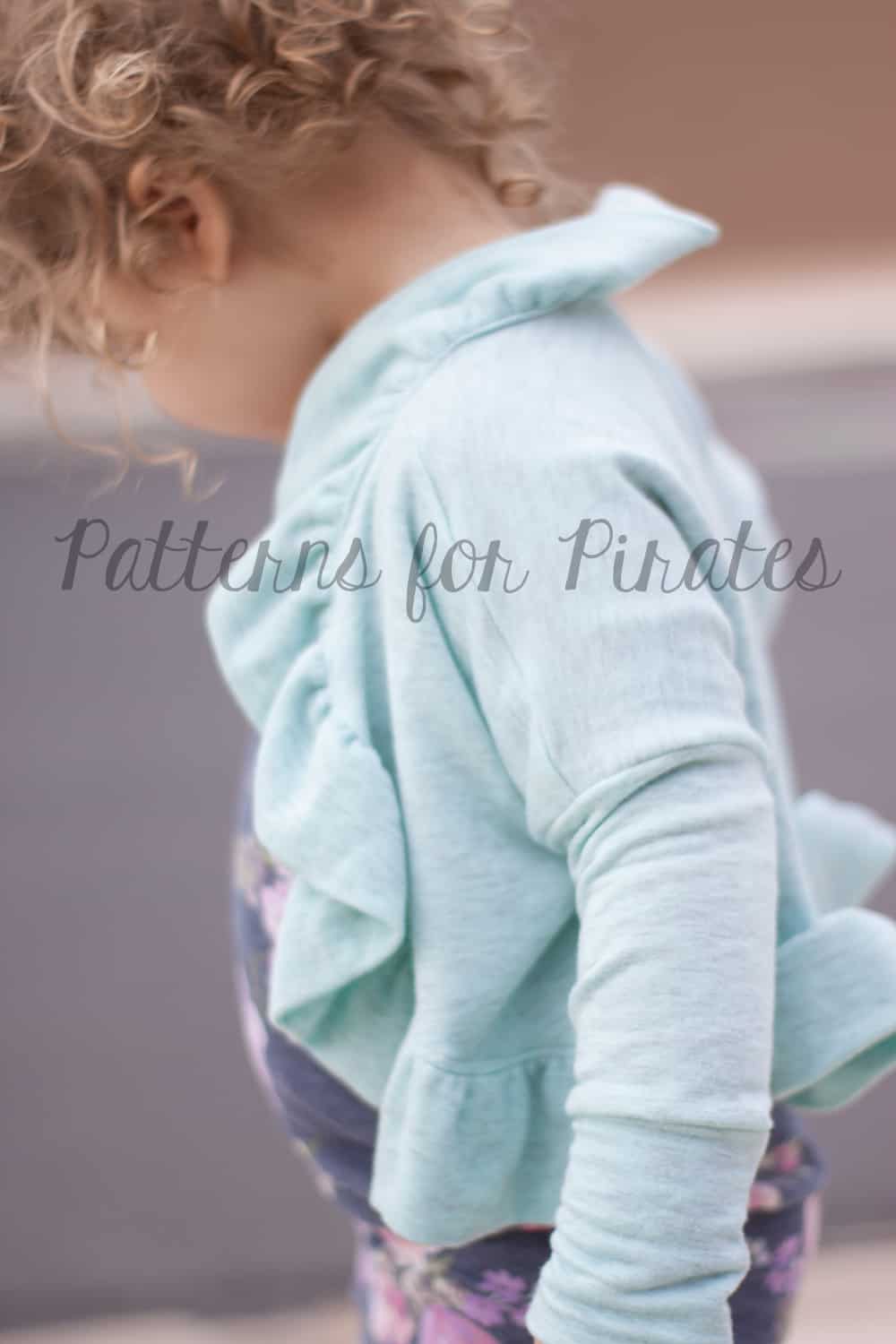
Last week we released the Butterfly Cardigan, the mini version of the Cocoon Cardigan and is so cute on the younger girls.  In case you missed the round up post, check it out HERE.  To add some extra girly details to the Butterfly, we thought why not add a ruffle? We’ve had a similar cardigan pinned as inspiration for awhile so here’s our take on it.

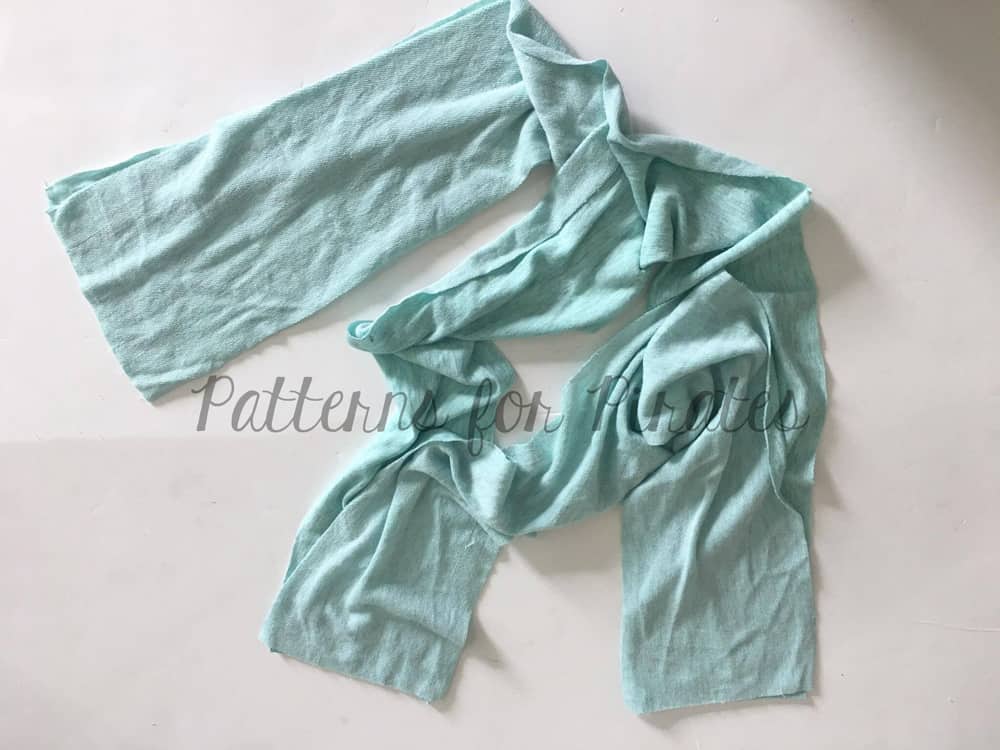
The construction of the main cardigan (body, lower sleeve and cuffs (if chosen) remains the same, however, you will need to cut longer neckbands. You will then ruffle the band and attach in the same manner as you do for the original cardigan.  Depending on the thickness of the fabric you are using, you will want to adjust the amount you multiply the band measurements by.  I used a thinner rayon French Terry spandex so went with 2.5 times the band measurements listed in the cut chart of the tutorial.  Use 2.5 to 3 times the width for thinner fabrics (rayon spandex, cotton lycra, etc) and 2 to 2.5 times the width for thicker fabrics (sweater knits and French Terry).

  • My original width measurements for a size 2 are as follows:  Cropped front band: 31.5″  /  Cropped back band: 13″  – Multiply by 2.5
  • My ruffle width measurements are as follows: Cropped front band: 78.75″  /  Cropped back band: 32.5″.  Since most knits are only 58″-60″ wide I will need to piece my front band so I chose to divide in half so will have equal pieces.   I will now cut 2 front bands 39.5″ (I rounded up for the simplicity of cutting).  Use the same length as indicated in the pattern.  ( I added 1/2″ to mine but in hindsight should have kept it to the original 4″ for her size.  The top neck tends to flop backwards too much with the weight of the extra height and ruffle.)

CREATING THE RUFFLE

1.  Stitch short ends of front and back bands, creating a circle.
butterfly-ruffle1a


2. Fold in half lengthwise, wrong sides together and press. Mark the midpoint of front and back bands.  This will make it easier to match and attach your ruffle to the cardigan.


butterfly-ruffle4a

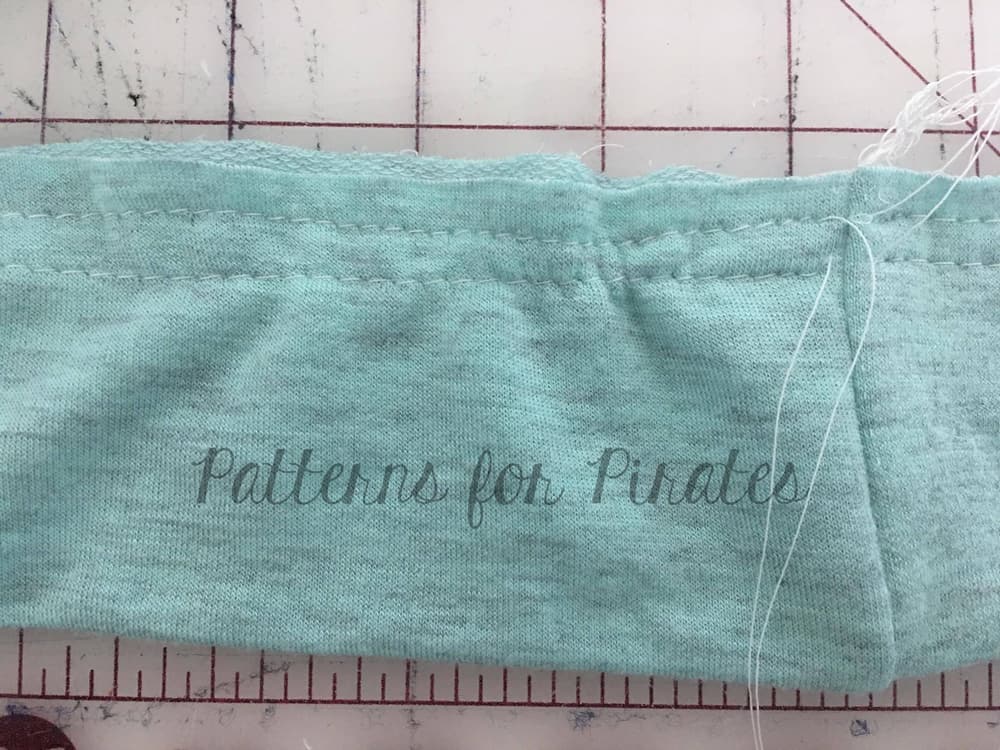
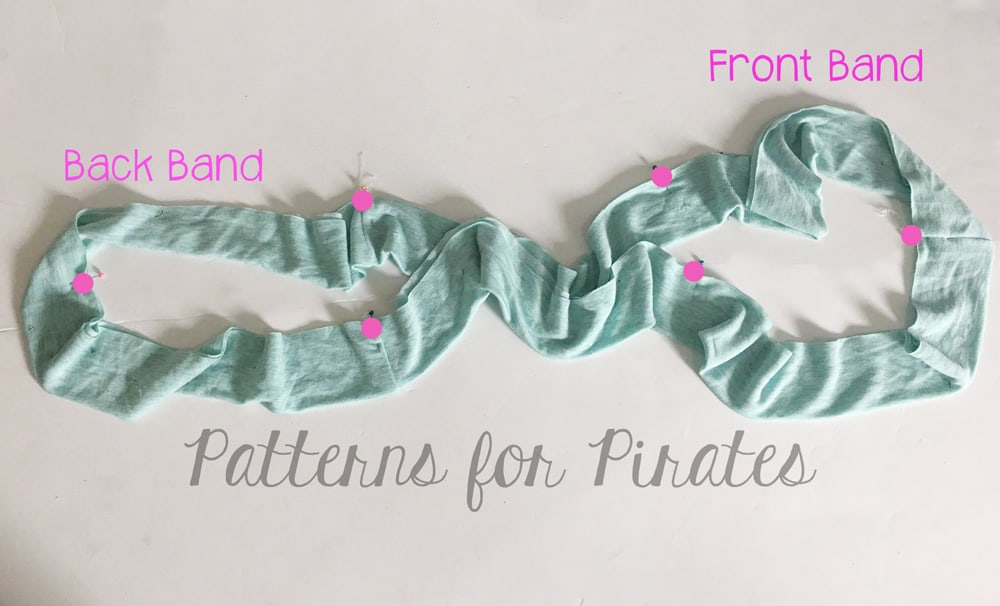
3. Stitch a gathering/basting stitch (set your stitch length to the longest possible on your machine) at 3/8″ and 5/8″ from raw edge.  Do not skip out on the second row of stitches.  I promise, that extra step is worth it!  You will have more even gathers and if one line of stitching breaks you have a backup without having to redo them.  I also like to gather in shorter sections so will stop and start at each seam of the band.  Be sure to leave a thread tail for easy pulling later.

butterfly-ruffle1

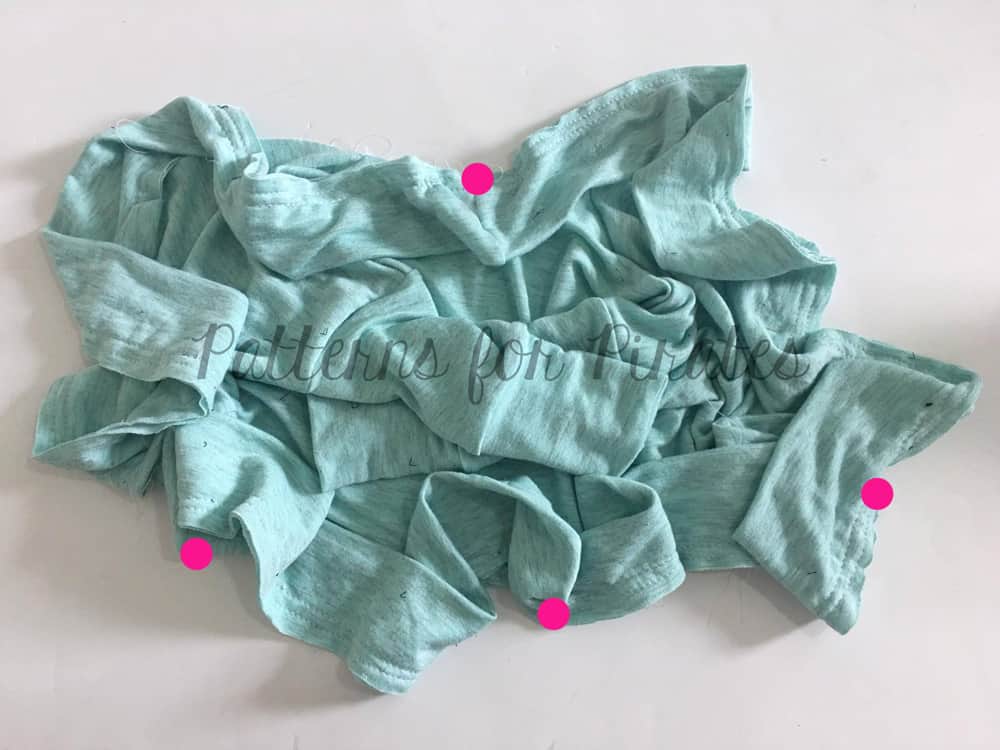
4. Match raw edges and align the side seams of the cardigan to the seam of the band.  Pin/Clip in place.  Match raw edges and align the seam of the front neckband to center back neckline.  Pin/Clip in place.

butterfly-ruffle3

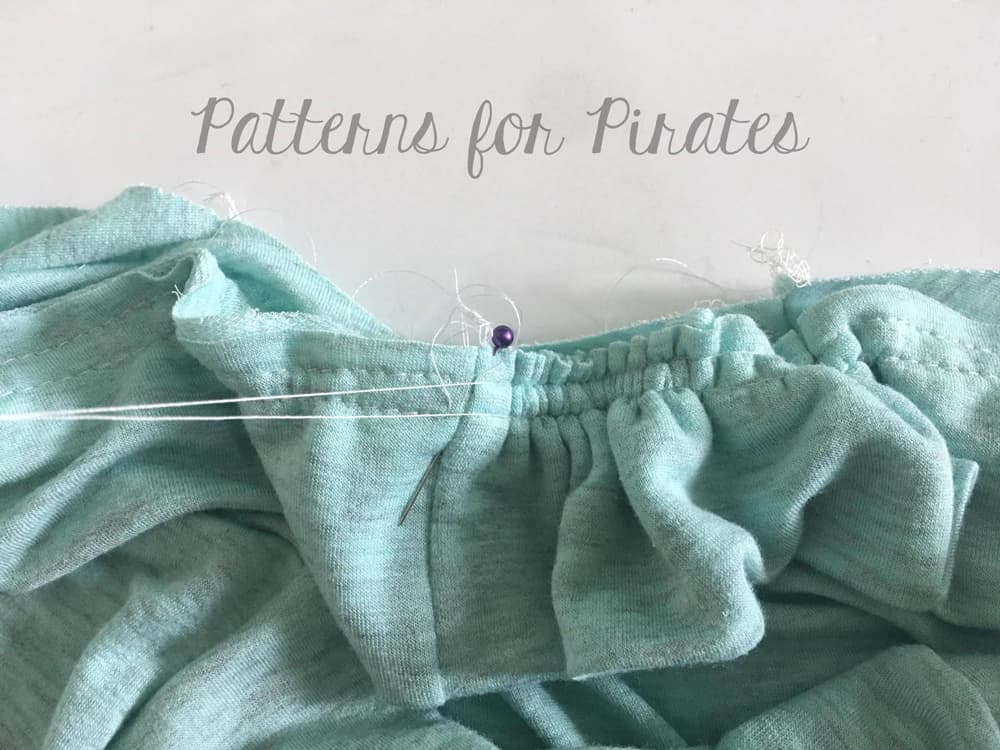
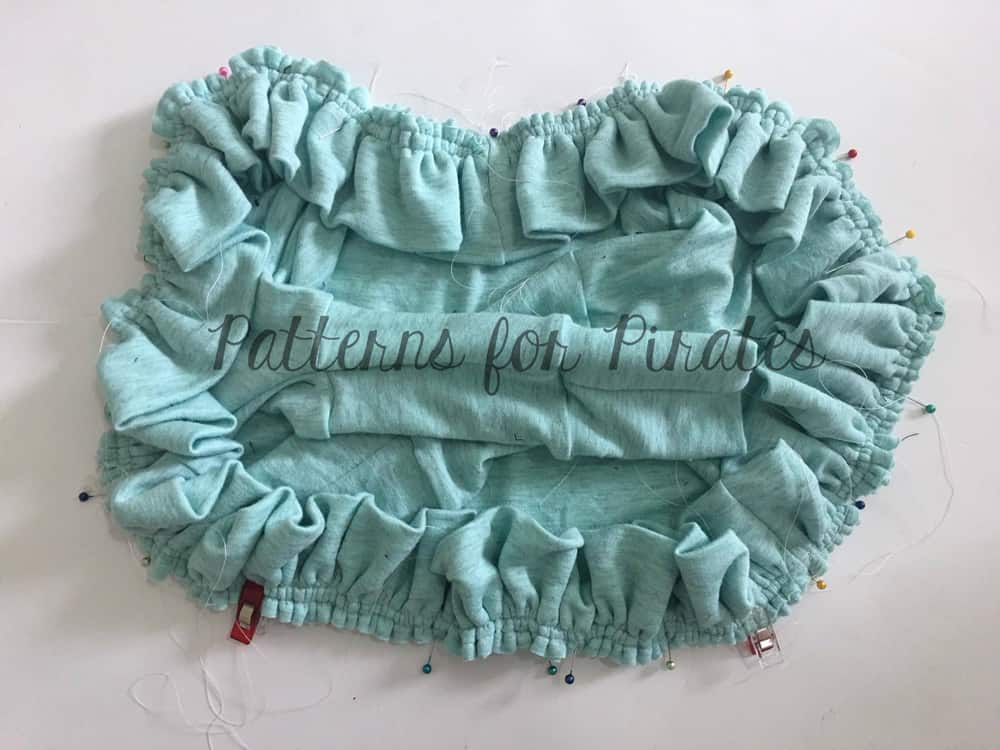
5.  Pull gathering/basting stitch (top threads) to gather band to match the length of the cardigan.  *Tip: once your gather reaches desired length, tie off your thread tails.  It will help keep the gather in tact while you even them out. Continue gathering each section until your band is completely gathered.  Pin/Clip in place.

butterfly-ruffle2butterfly-ruffle5

6. Stitch your band to your cardigan body.  Flip down, press and top-stitch (if desired).

butterfly-ruffle6


If the Butterfly Cardigan wasn’t already cute enough as it is, this surely made it!  Now add it to your cart and make your very own Butterfly Cardigan for your little! 😉

IMG_8689

IMG_8692 IMG_8687

Take a look at our jam-packed schedule of cardigan love!

Saturday, January 21: #P4PCardiWeek Announcement

Sunday, January 22: Cocoon Lace Hems and Butterfly Ruffle

Monday, January 23: Ribbon Tie Closure Hack

Tuesday, January 24: Carefree Cardigan Fringe Hack

Wednesday, January 25: Duster-Length Adjustment

Thursday, January 26: Kimono Ruffle Sleeves + Hem

Friday, January 27: Varsity Sweater Style Hack

Saturday, January 28: Carefree Cardigan Flannel + Vest Hack

Monday, January 30: #P4PCardiWeek Winner Announcement

You can follow along on the blog here, or in our Facebook group.  Search #P4PCardiWeek to be able to find our posts all over social media.  And please feel free to sew-along with us on one or all of the days.  The more the merrier!

But wait, there’s more!  We wanted to create a friendly pirate-y competition with our P4P Cardi Week!

Between tomorrow and Saturday, January 28, sew up a Patterns for Pirates cardigan using one of our hacks, or by keeping the pattern as-is.  Share your photo with us on Instagram or in our Facebook group and use the tag#P4PCardiWeek We will pick our favorite and the winner will win a free P4P pattern of choice AND be featured on this blog.  Fun right?

To make it even better we have put all the cardigan patterns in the shop on sale all week (no code needed)!

Now get out there and sew some cardigans, matey!
Filed Under: Contest/Giveaway, Pattern Hacks, Uncategorized 3 Comments

P4P Cardi Week :: Cocoon Lace Hems

January 22, 2017

cocoon-lace

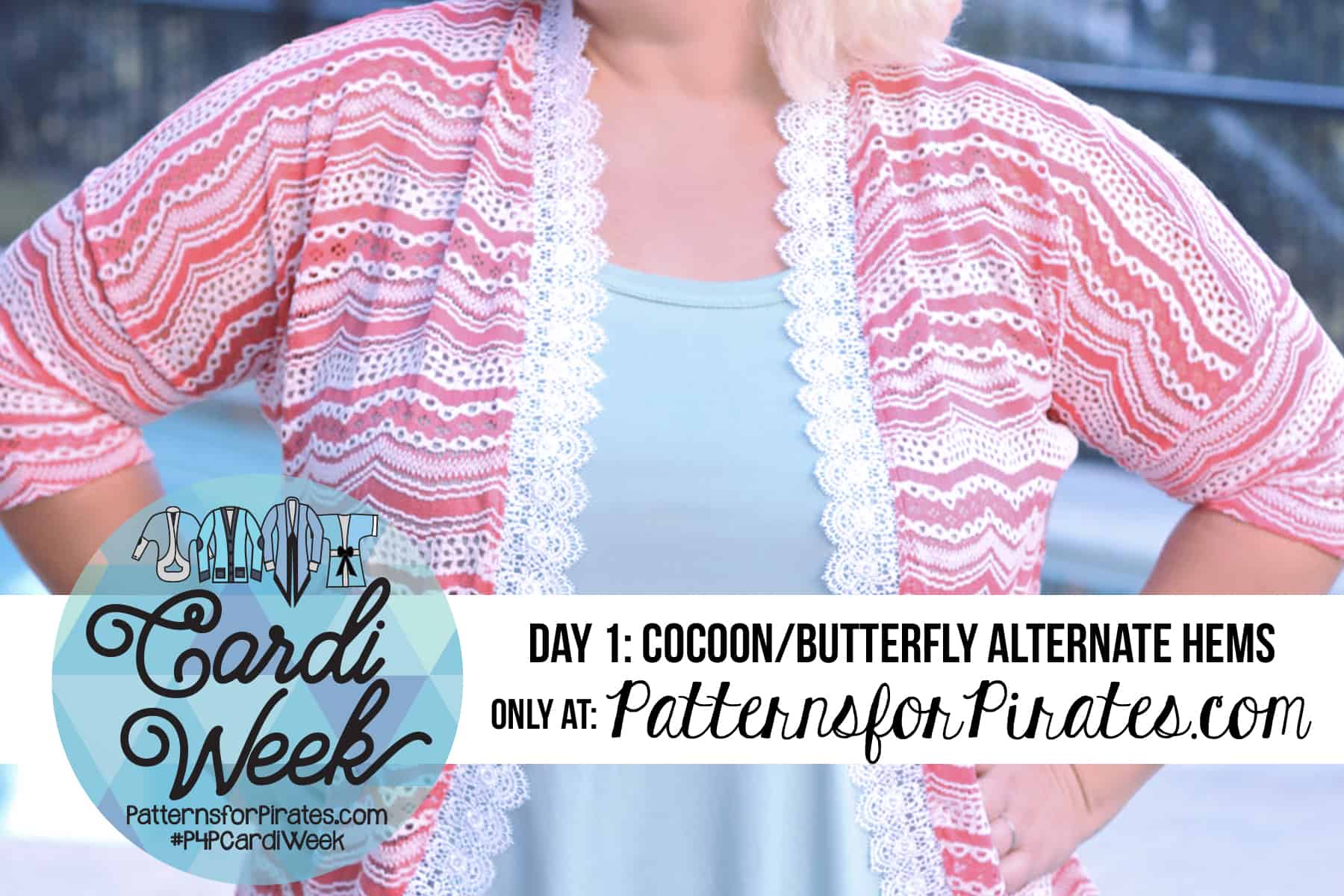
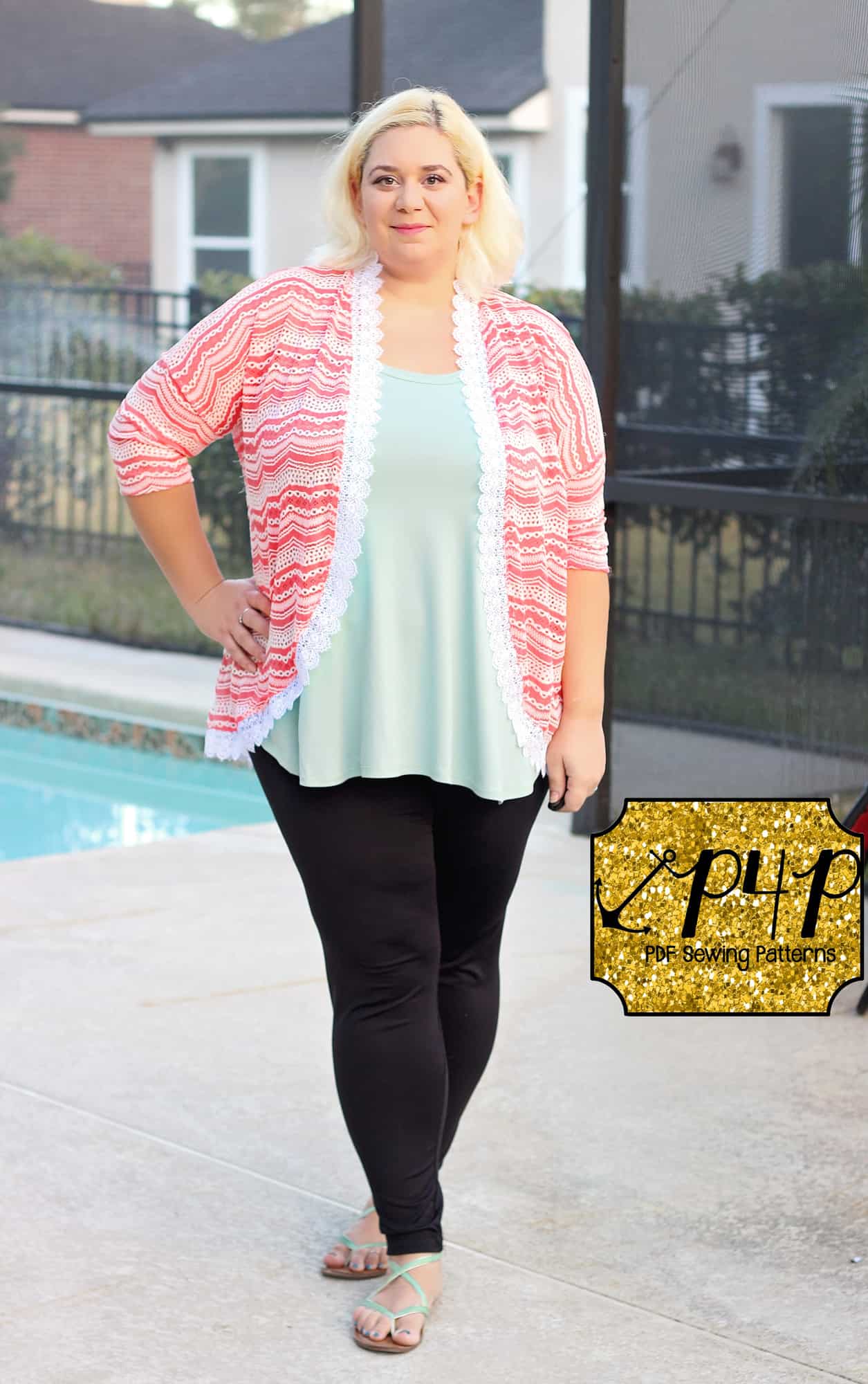
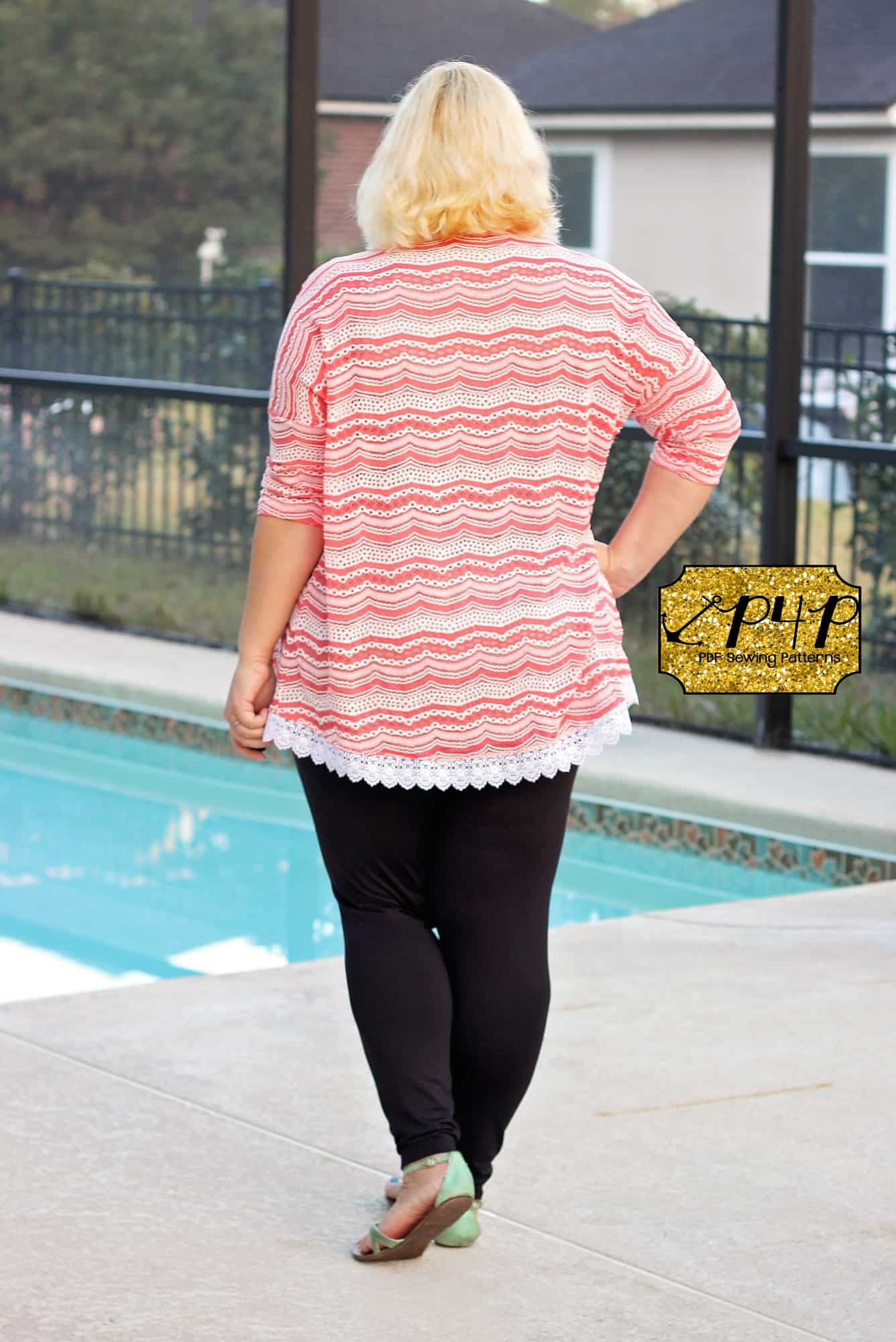
I’m sure by now you’ve all browsed Pinterest for cardigan inspiration, I know I have. When I saw a dolman style cardigan with lace trim I knew right away I needed to make myself one so in today’s blog I’ll show you how easy it is to get the look and I’ll also give you some tip for working with lace.

IMG_5383

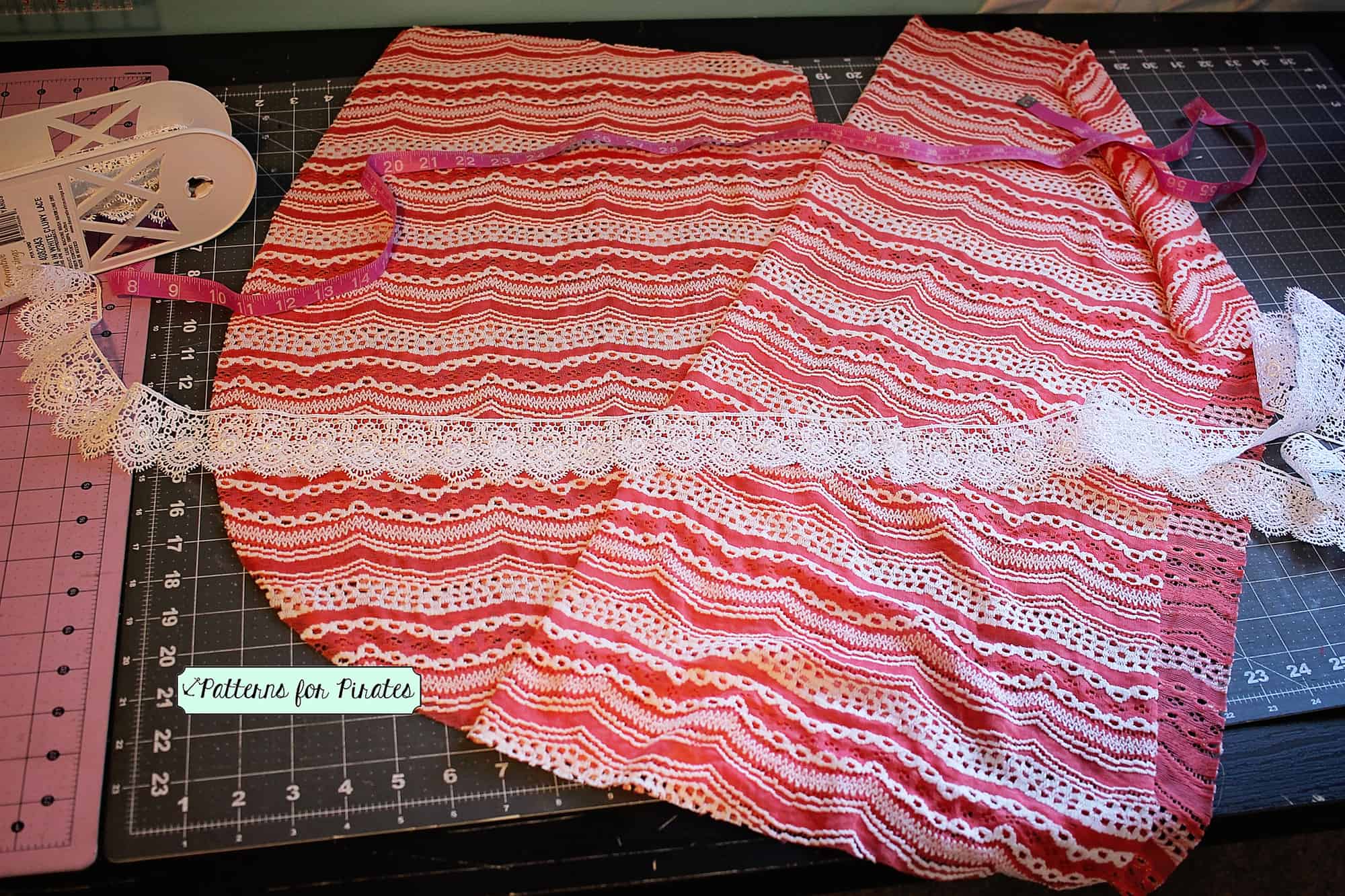
Start by cutting the Cocoon Cardigan pattern pieces. You will not need to cut the the band, we will be replacing it with trim. I made a tunic length, 3/4 hemmed sleeves with no pockets but you can apply this technique to either one of the styles. The fabric and lace I used are both from Hobby Lobby.

IMG_5282

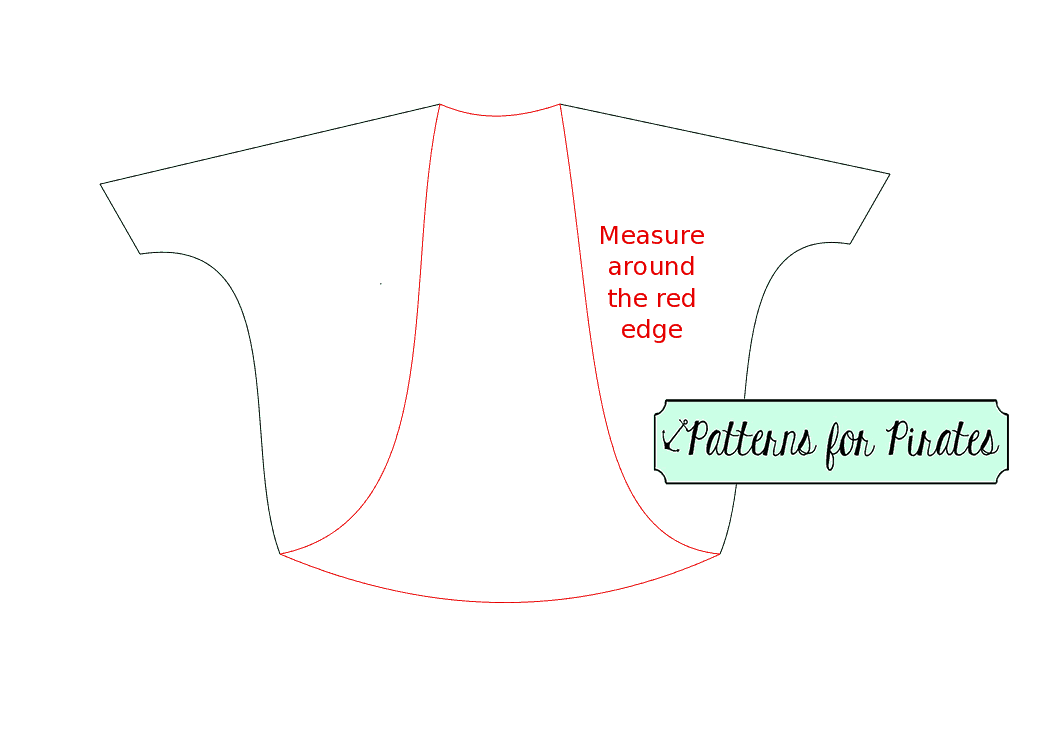
Assemble your pattern pieces as per the instruction. I like to leave the band for the end so you now have your cardigan ready to add the lace trim. The pattern band is shorter than the edge circumference and since most lace trims have no stretch we will have to measure the opening. The trim you will need will be equal to this length.

cocoondrawing1

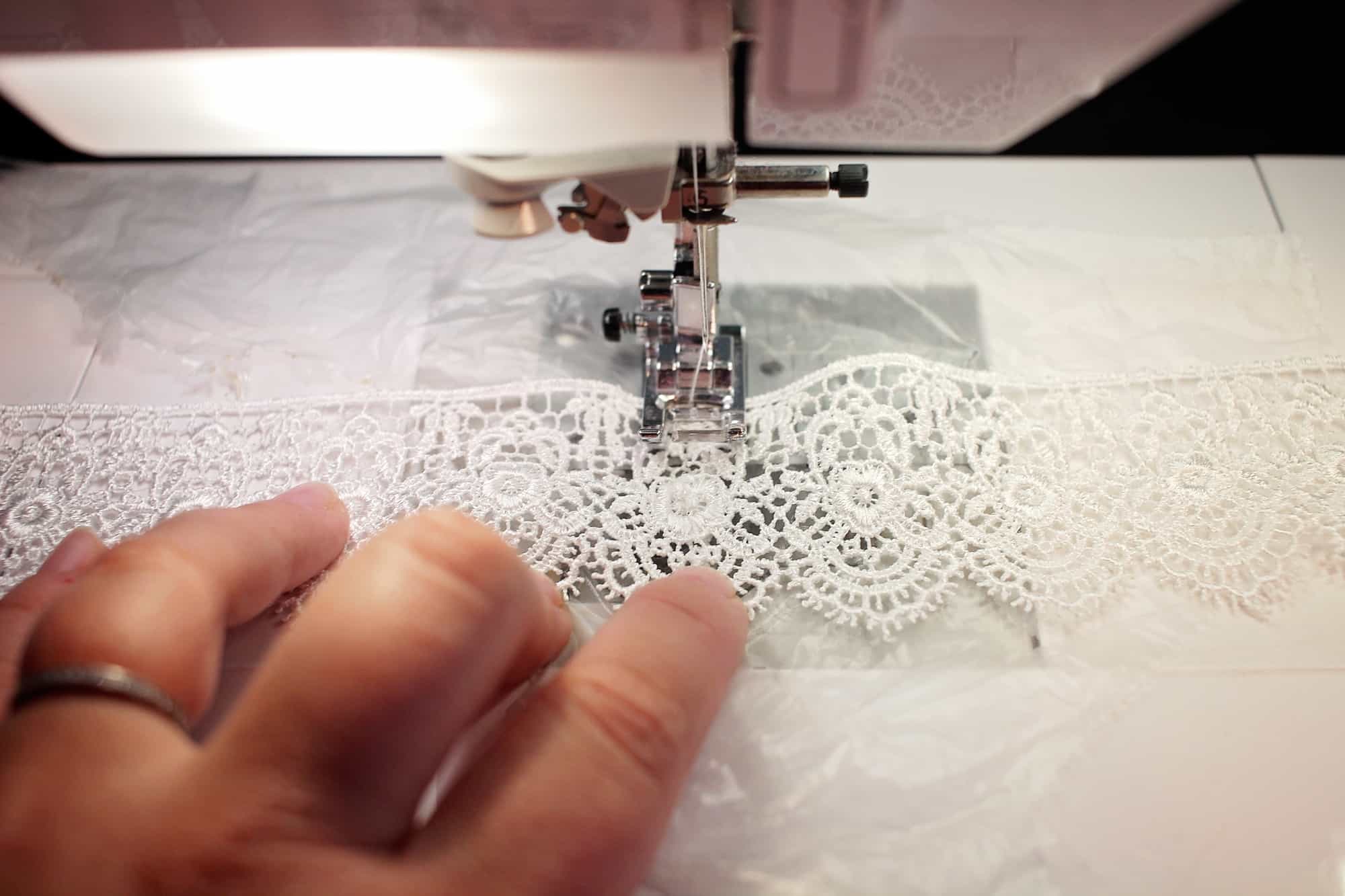
TIP: If your trim comes in 2 yards or less increments you will need to  attach two pieces together. To do that I like to use a zig zag stitch and just slightly overlap the ends. Stitch them together with a narrow zig zag stitch. Don’t forget to place a little piece of water soluble stabilizer under your lace when you stitch it.

IMG_5284

IMG_5285

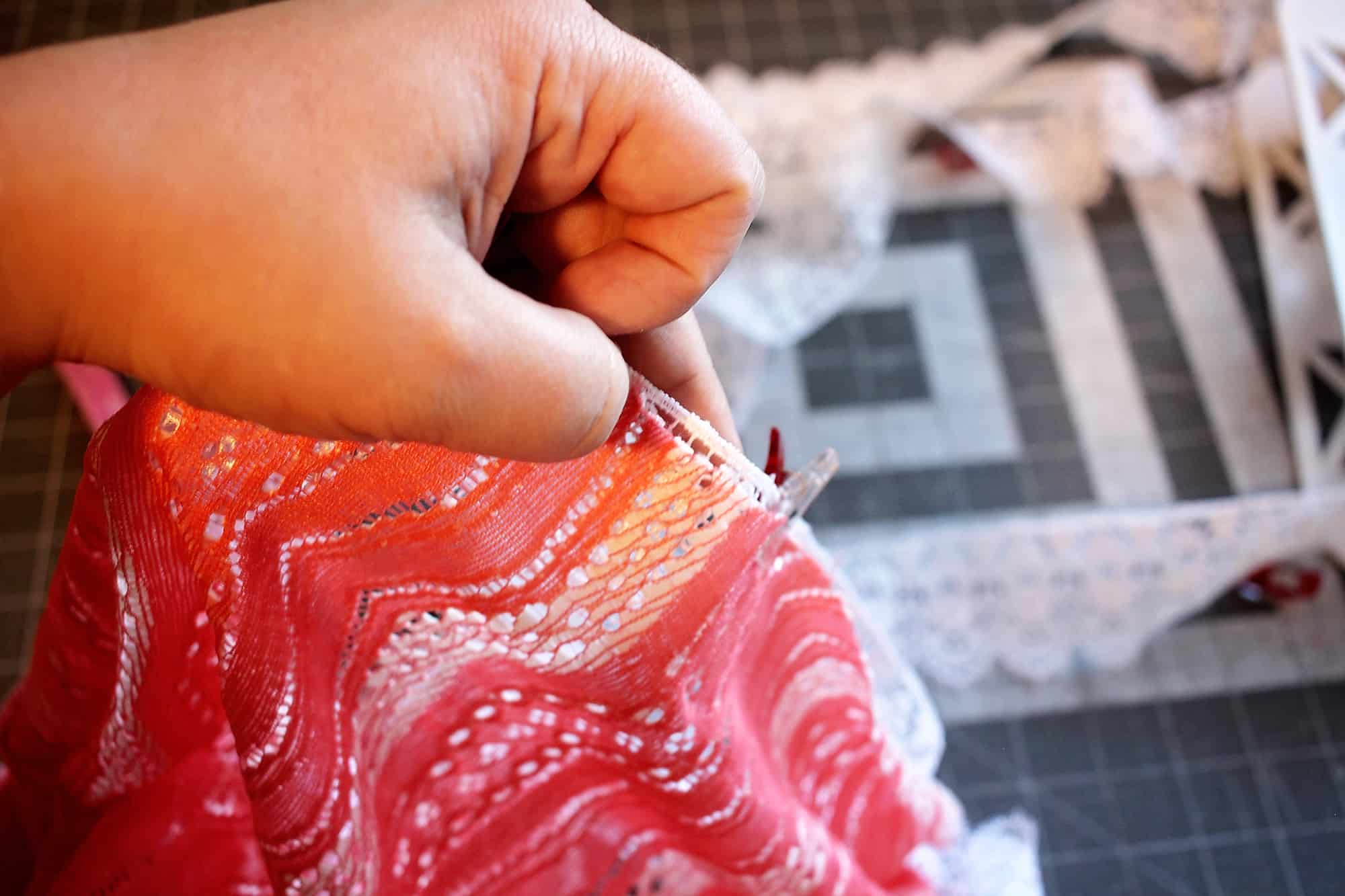
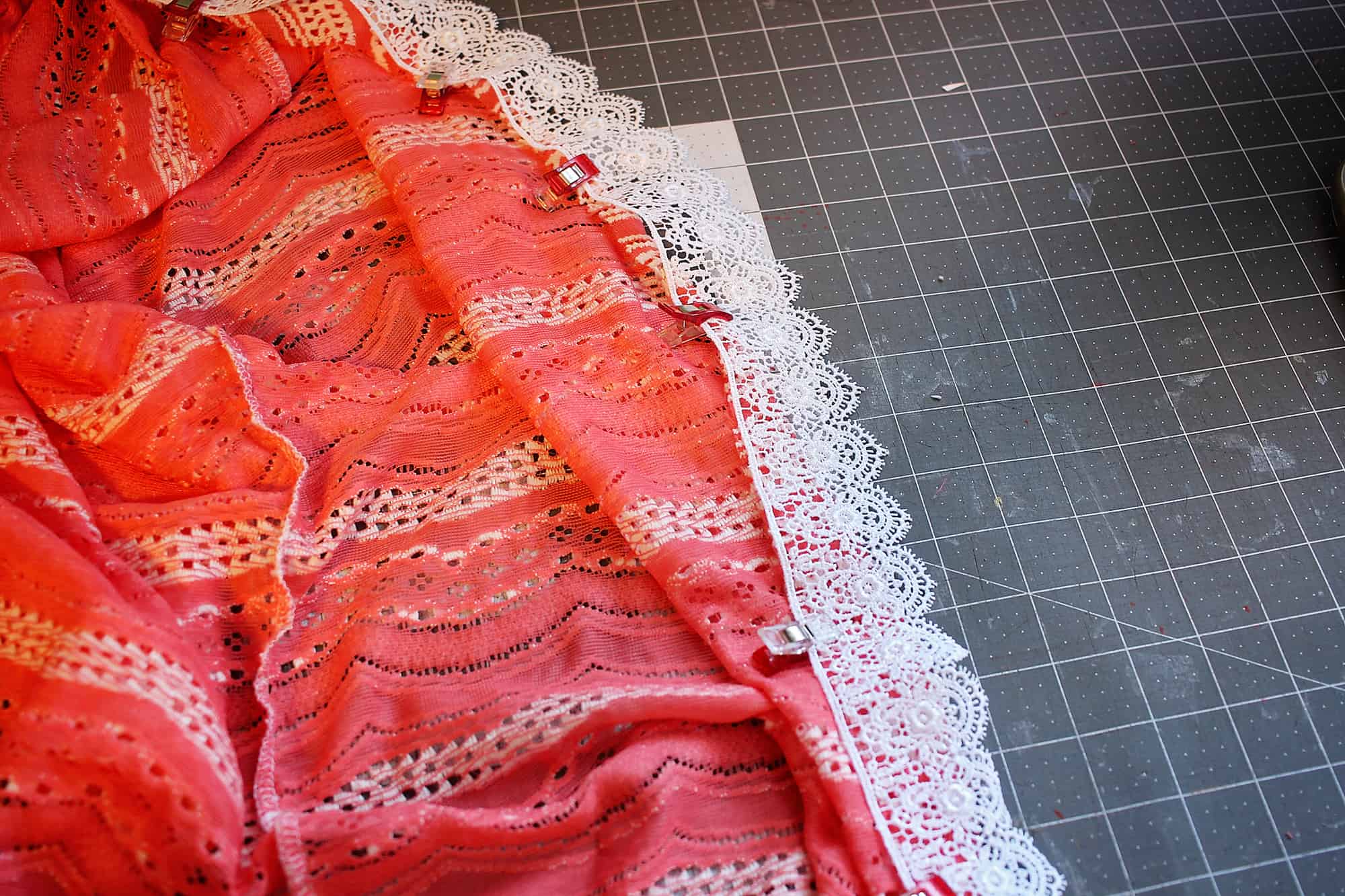
Pin (or clip) your lace to the cardigan raw edge, right sides together. Yes, there is a right side to the lace trim too! 🙂 Pin all around the edge, making sure you do not stretch the cardigan. When you get to the curved edge pin even closer since that part is not only stretchy but also on the bias.

IMG_5289

IMG_5290

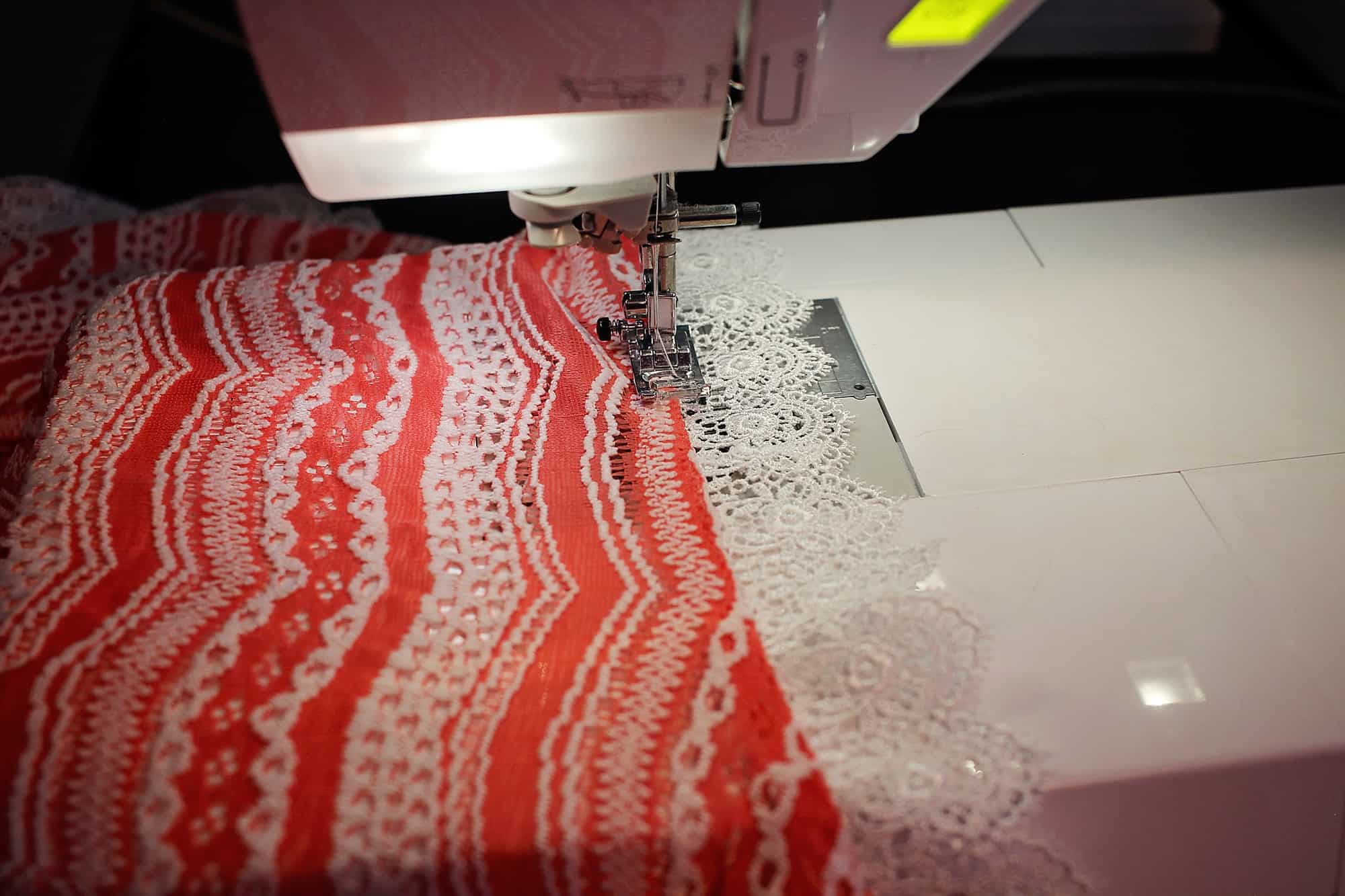
IMG_5291Once it’s all pinned in place sew the lace around the opening very slowly. I like to use my sewing machine for this step, instead of the serger. A stitch length of 3.5 with a 3.4-3.6 tension should be all you need. All you have to do now is top stitch around the opening, about 1/4-1/8 inch away from the trim and you are all set. See how easy that was?

IMG_5389

IMG_5371

Take a look at our jam-packed schedule of cardigan love!

Saturday, January 21: #P4PCardiWeek Announcement

                                                  Sunday, January 22: Cocoon Lace Hems and Butterfly Ruffle

Monday, January 23: Ribbon Tie Closure Hack

Tuesday, January 24: Carefree Cardigan Fringe Hack

Wednesday, January 25: Duster-Length Adjustment

Thursday, January 26: Kimono Ruffle Sleeves + Hem

Friday, January 27: Varsity Sweater Style Hack

Saturday, January 28: Carefree Cardigan Flannel + Vest Hack

Monday, January 30: #P4PCardiWeek Winner Announcement

You can follow along on the blog here, or in our Facebook group.  Search #P4PCardiWeek to be able to find our posts all over social media.  And please feel free to sew-along with us on one or all of the days.  The more the merrier!

But wait, there’s more!  We wanted to create a friendly pirate-y competition with our P4P Cardi Week!

Between tomorrow and Saturday, January 28, sew up a Patterns for Pirates cardigan using one of our hacks, or by keeping the pattern as-is.  Share your photo with us on Instagram or in our Facebook group and use the tag#P4PCardiWeek We will pick our favorite and the winner will win a free P4P pattern of choice AND be featured on this blog.  Fun right?

To make it even better we have put all the cardigan patterns in the shop on sale all week (no code needed)!

Now get out there and sew some cardigans, matey!
Filed Under: Pattern Hacks, Pattern Release, Uncategorized 2 Comments

Knit Types

January 13, 2017

We get a lot of questions about knit fabrics since most our patterns are drafted for a stretch knit!  We’ve done a few other blog posts trying to answer those questions that get asked most frequently like, What fabric pairs best with this top pattern?” We have our P4P Shirt Fits Explained blog about all the P4P top patterns, their intended fit and what my favorite fabrics are for them.  We also have Different Fabric, Different Fit post all about drape, thickness and stretch and how it can affect the fit of your top/dress.

knit types

Now I bring you a Knit Fabric Cheat Sheet– this is a printable, quick reference guide to knit fabric types that are popular.  I did not encompass every kind of knit fabric available, but I tried to put all the knit fabrics you might see at local stores and what most of us will be ordering online for home apparel sewing.

Sometimes different textile companies like to name/call fabrics by different names as well- so in turn the fabric shop will call it that name.  It can get confusing, but often if you ask the shop what it’s most like in terms of a more popular/well known fabric you will be able to find something to compare it to on this list.

For example: Liverpool.  Liverpool is something that I personal had never heard of in my years of fabric shopping until about a year ago.  It began popping up and becoming popular in LA fabric shops that buy from local textile companies directly and sell in their shops. It is what the textile companies were calling their “textured polyester” (this is what you’re most likely going to see it labeled as at a Joann) and so it’s what the fabric shops were calling it as well.  If you walked into a Joann and asked for “Liverpool” they most likely will not be able to point you in the right direction.

So in short, the fabric industry is constantly finding new ways to create fabrics and each textile company is going to name it what they want 🙂 If you learn the most popular knit types, what the fibers feel like and act like (poly, cotton, rayon, ect), terms like stretch percentage, drape and what that means, different ways to tell the weight/thickness of fabric it will be easier for you to order knit fabric online and know exactly what you’re expecting to receive in the mail! I added some notes at the very beginning of the print out about stretch percentages and weights of fabrics to help as well!

I still recommend going to your local stores and feeling as much knit fabric as possible.  Here I am walking into a Joann Fabrics and looking through a big chunk of their knits.  I tried to grab a variety and talk about them for those who are new to knits:

Same thing at a local Wal-Mart and their knit selection:

I will try to do a few more local stores and maybe some unboxing from online shops one day! 🙂
Here is your printable Knit Fabric Cheat Sheet again.  You can save on your phone or computer and pull it up when trying to order online and are feeling unsure or print it out and take it to your local store to make sure you’re getting what you need for a certain project!
I hope this helps everyone out there just beginning to dip their toes into sewing knit garments! I LOVE my knit pieces for myself, kids, even hubs gets some from time to time 😉 They’re more forgiving with fit, quicker to sew, comfortable to wear and usually require no ironing in the morning! 😉 I’ll try to make knit lovers out of all you!!! <3 <3 <3


Filed Under: P4P University, Sewing with Stretch, Knit Fabrics, Uncategorized 15 Comments

How to lower or raise a neckline

January 6, 2017

img_4108

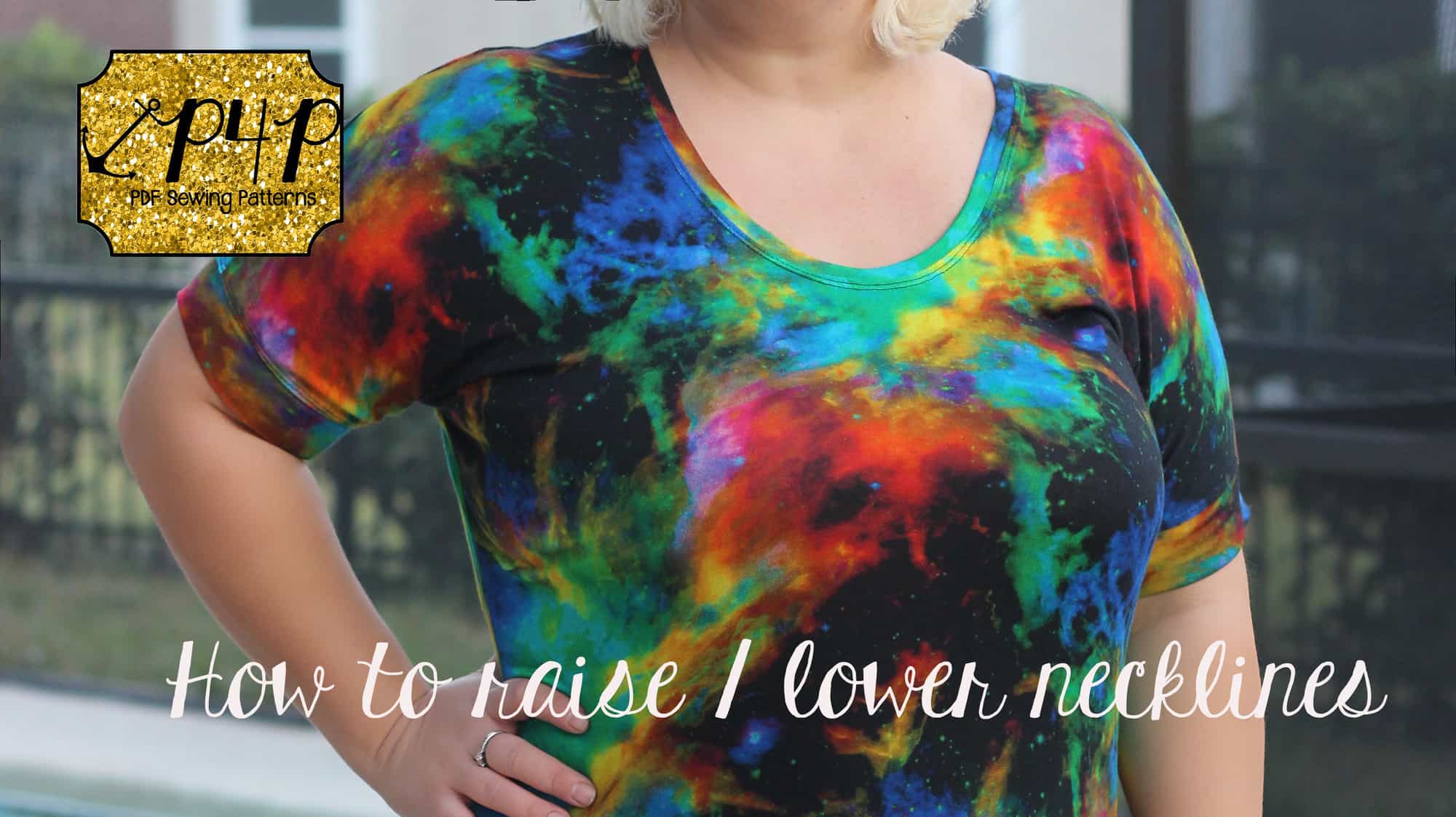
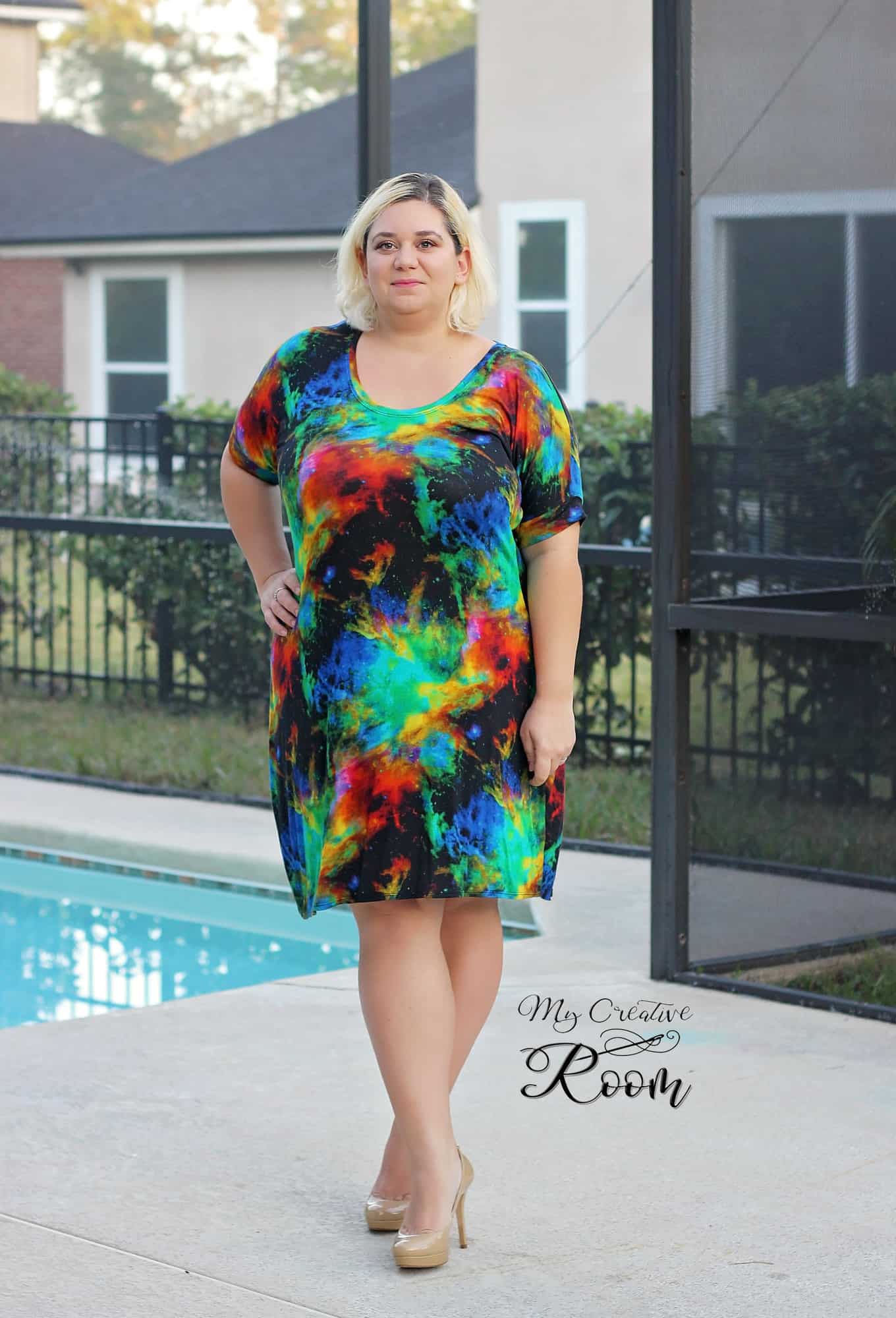
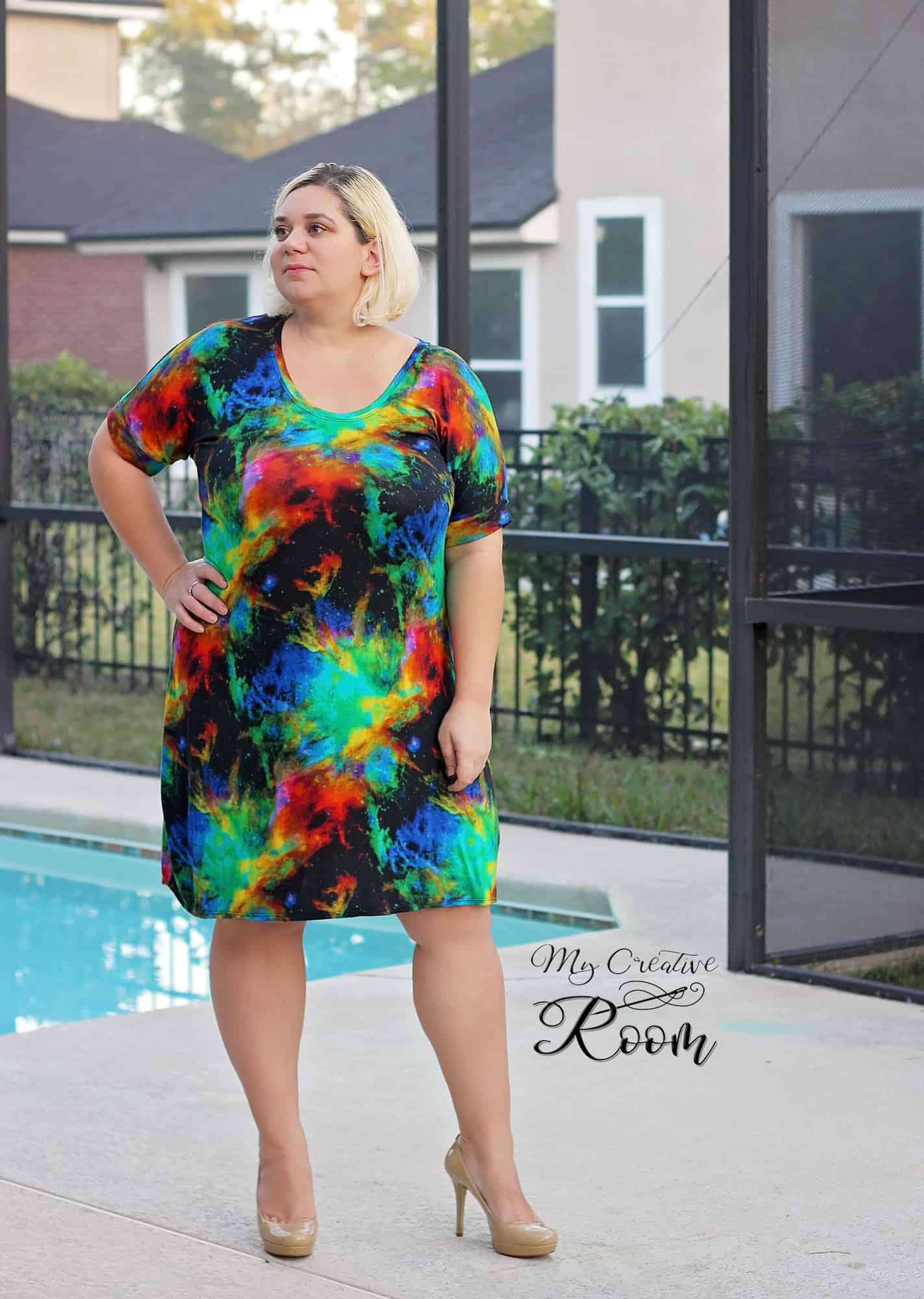
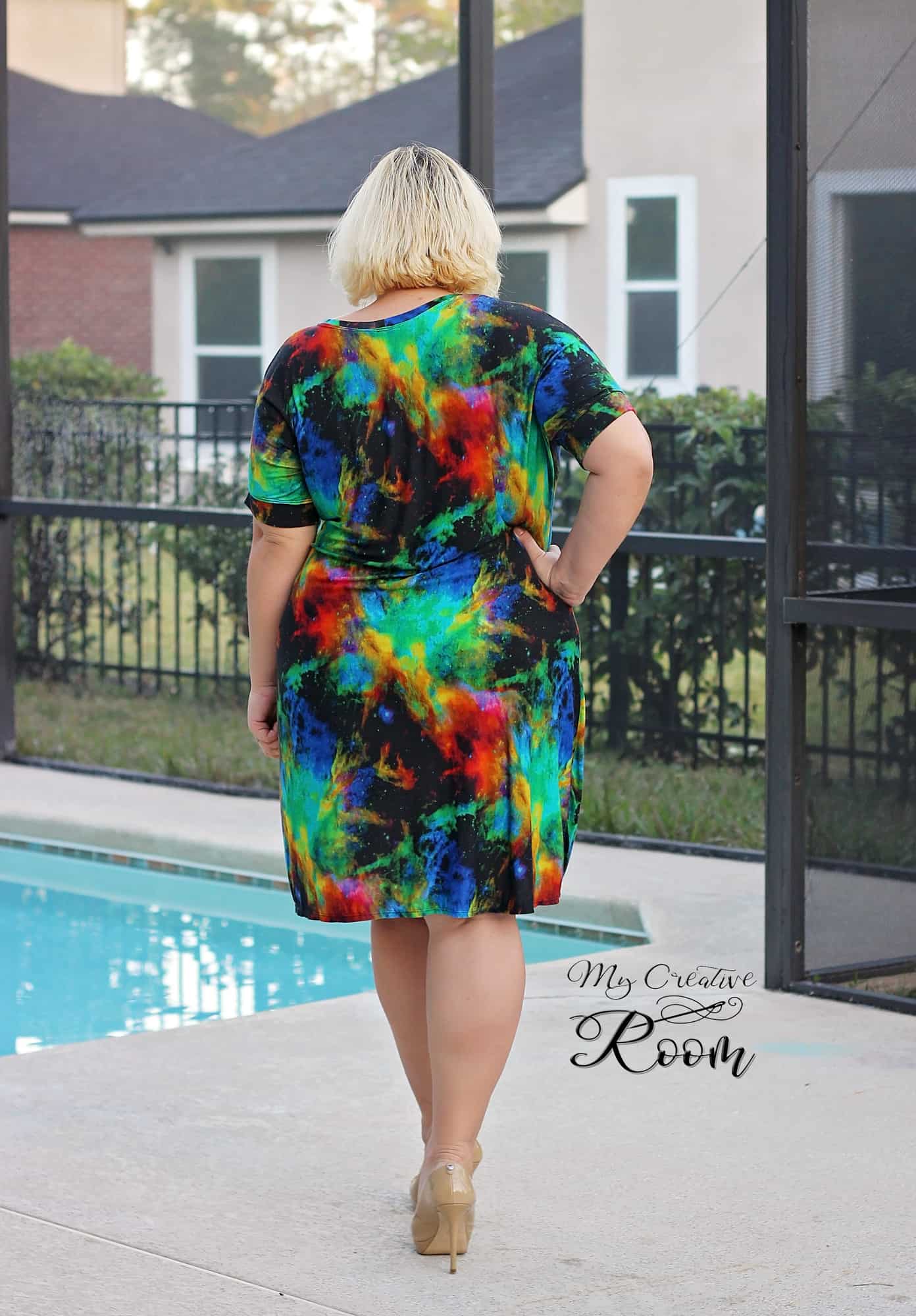
We have seen a lot questions about raising or lowering the neckline of various P4P shirts or dresses. On the blog today I show you how easy it is to alter the neckline to achieve the look you want. For this tutorial I will use the Sweet Tee pattern in a beautiful viscose rayon (dress option lengthen 3.5″) but you can apply this technique to either one of the shirt patterns.

img_4118

Start by printing and cutting your pattern in the size needed. The only piece we will be altering will be the front of the shirt (or bodice).

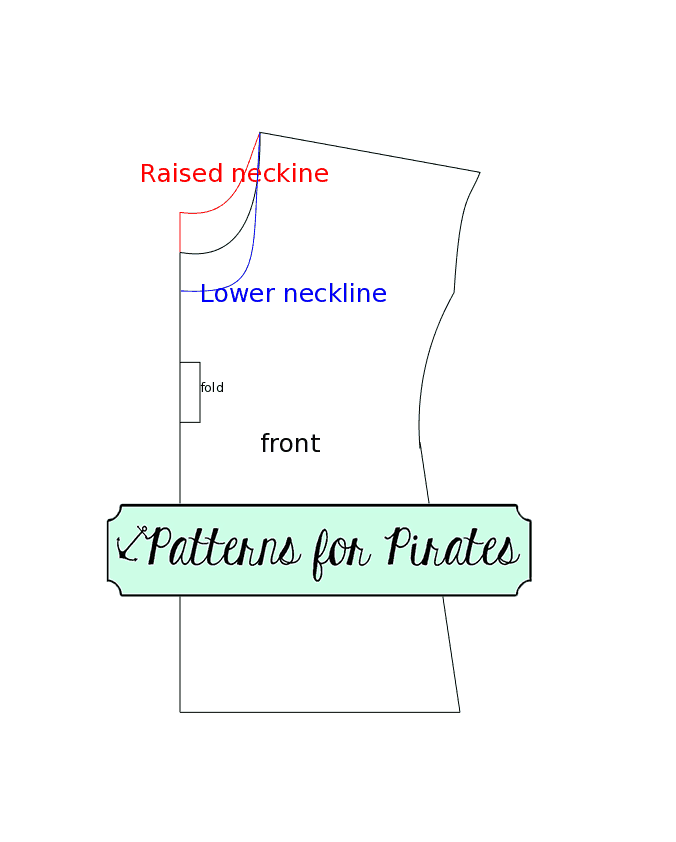
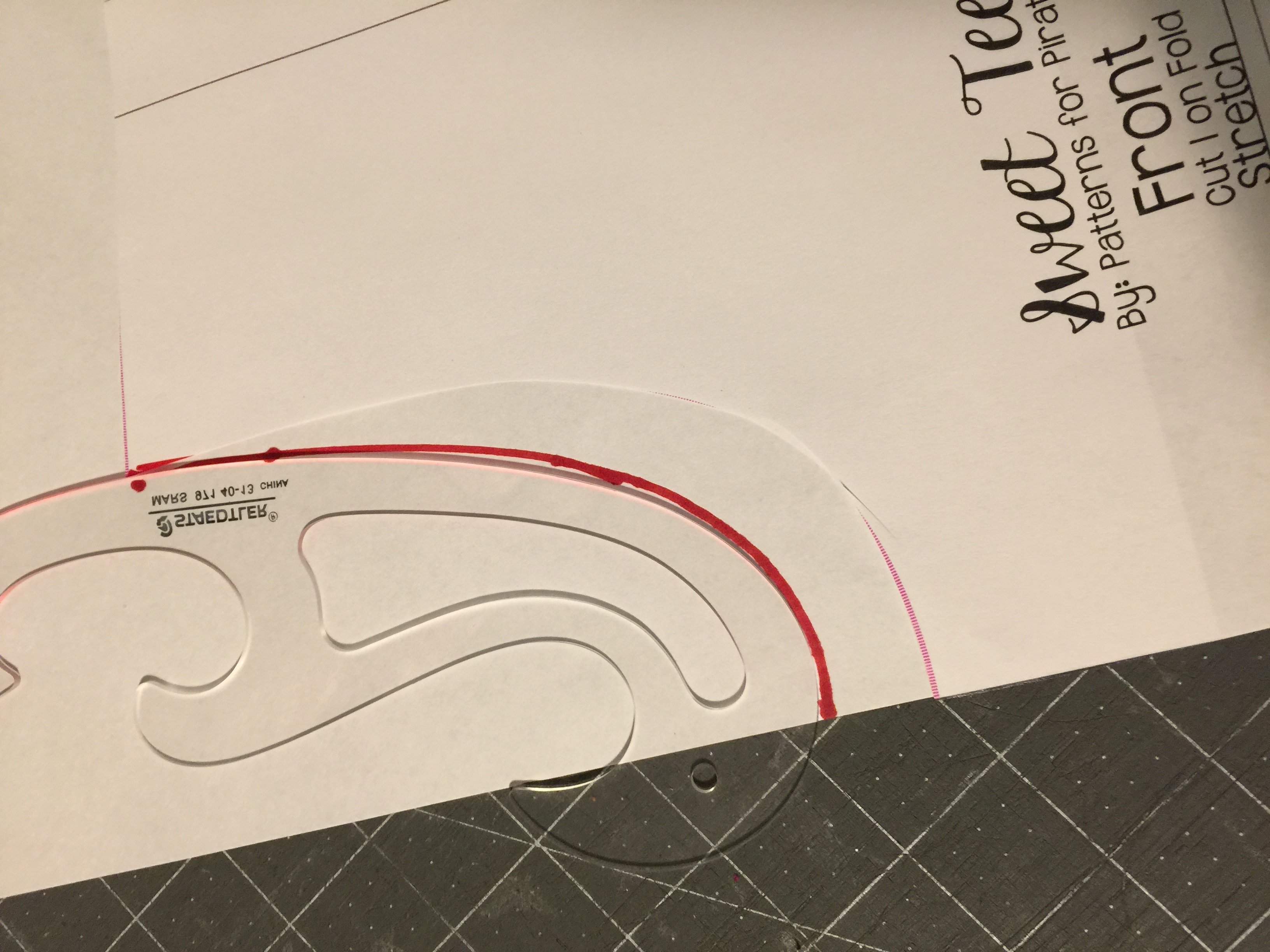
For lowering the neckline you will need to mark on the center fold where you would like the new neckline to be. I usually lower my Sweet Tee neckline 1.5 inches. Using a French Curve (or going slowly) draw a curve similar to the original one from your mark to the inner shoulder point.

raiselowerneckline

img_4502

Cut your fabric using the new front pattern piece. The rest of the pattern pieces will remain the same. The only other change you will need to make is the length of the neckband or binding.

To raise the neckline you will need to grab your front bodice piece and a blank piece of paper. Align the center fold of the front pattern piece  with the side of your paper and glue them together.

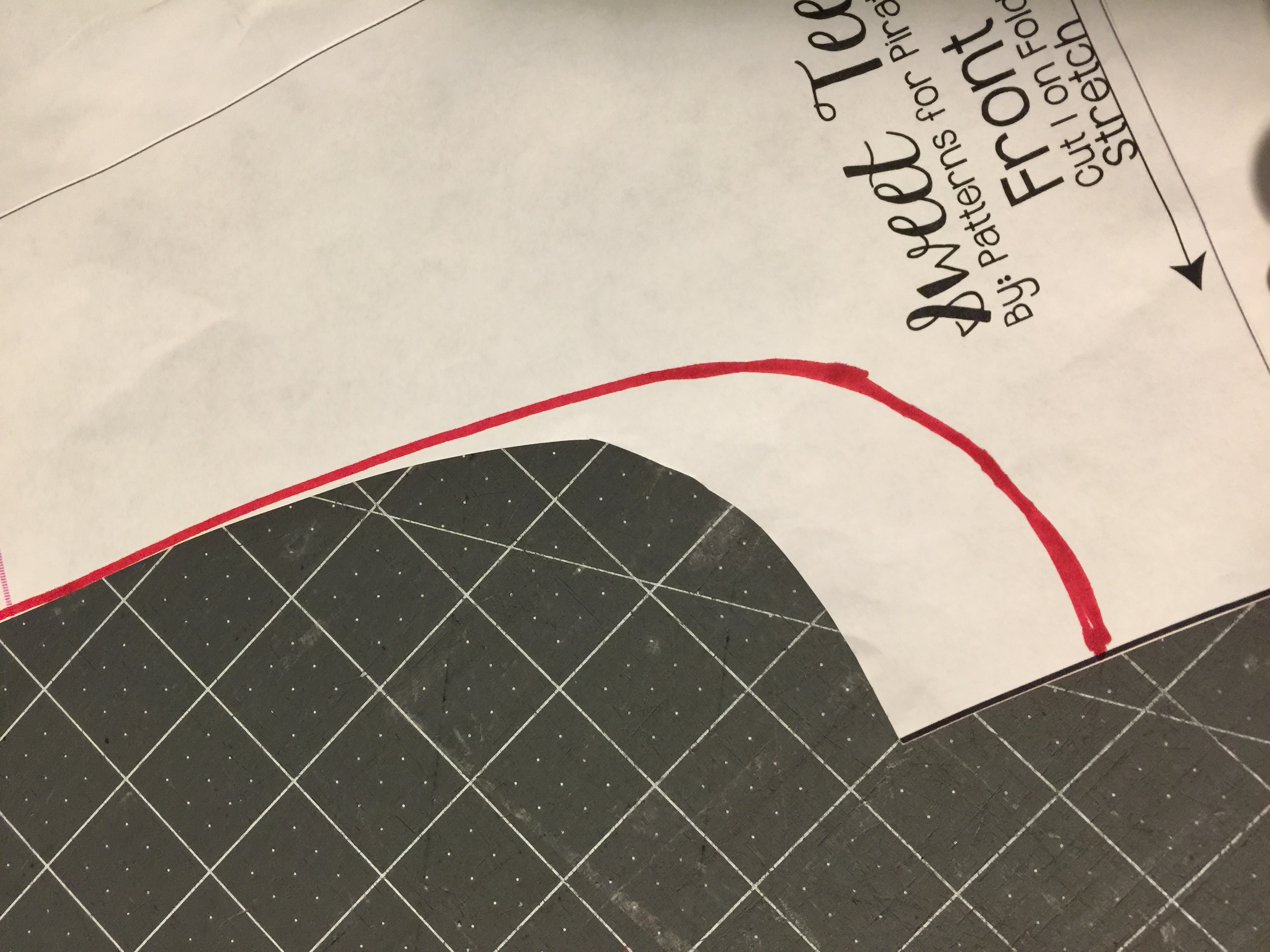
Mark a point 1-2 inches above the original top center depending on how high you’d like the neckline. Using the French Curve draw a curve from the center point to the inner shoulder point. Cut the new front using this modified pattern piece and the rest of the pieces as in the original pattern.

img_4503

The only additional modification you will need  to make is to adjust the neckband or binding length. You will need to make it longer or shorter depending on the new neckline. I like to calculate the new neckband length after I sew the front and back pieces together at the shoulder. To find out the new neckline circumference lay the neck opening along a ruler and multiple it by 2.

img_4505

Your new neckband length will be 85% of this circumference plus 1 inch to accommodate the seam allowance. (C * 0.85 +1 ). Cut the new neckband/binding using the new length but keeping the width suggests in the pattern. All you have left to do now is sew the shirt or dress according to the tutorial and you have just made yourself a custom outfit. Easy peasy…right? 🙂

I can’t wait to see your creations in the Pattern for Pirates group.

img_4115

img_4113

Happy sewing, pirates!

Filed Under: Frequently Asked Questions, Pattern Hacks, Uncategorized 6 Comments

Tips for working with sweater knits

November 25, 2016

img_3505

Have you seen the sneak peek Judy posted on Instagram? Check it out if you haven’t already. If you did you might have noticed that soon you will be sewing those pretty sweater knits you’ve been saving. In the blog today I will give you some of my tips and tricks to work with this kind of fabric.

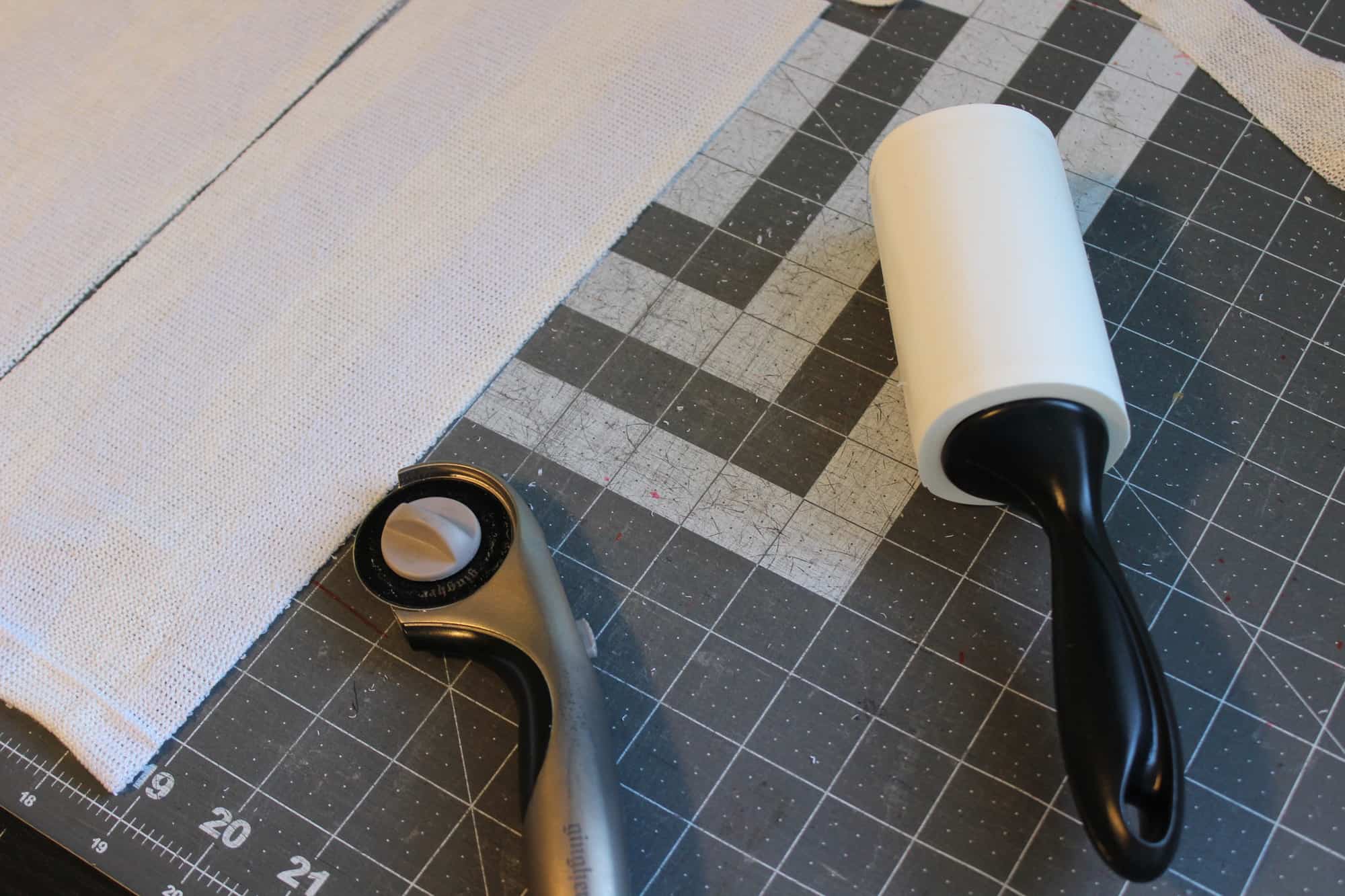
1.Grab the lint roller! No, I have not lost my mind…believe me, you will want the lint roller close by when you cut sweater knit. Whether it’s a open weave or a dense one, sweater knits tend to leave a lot of residue when being cut.

img_3488

TIP: Use the lint roller to not only clean your cutting mat but also the edges of the fabric pieces you just cut. That will help keep your sewing machine cleaner.

img_3491

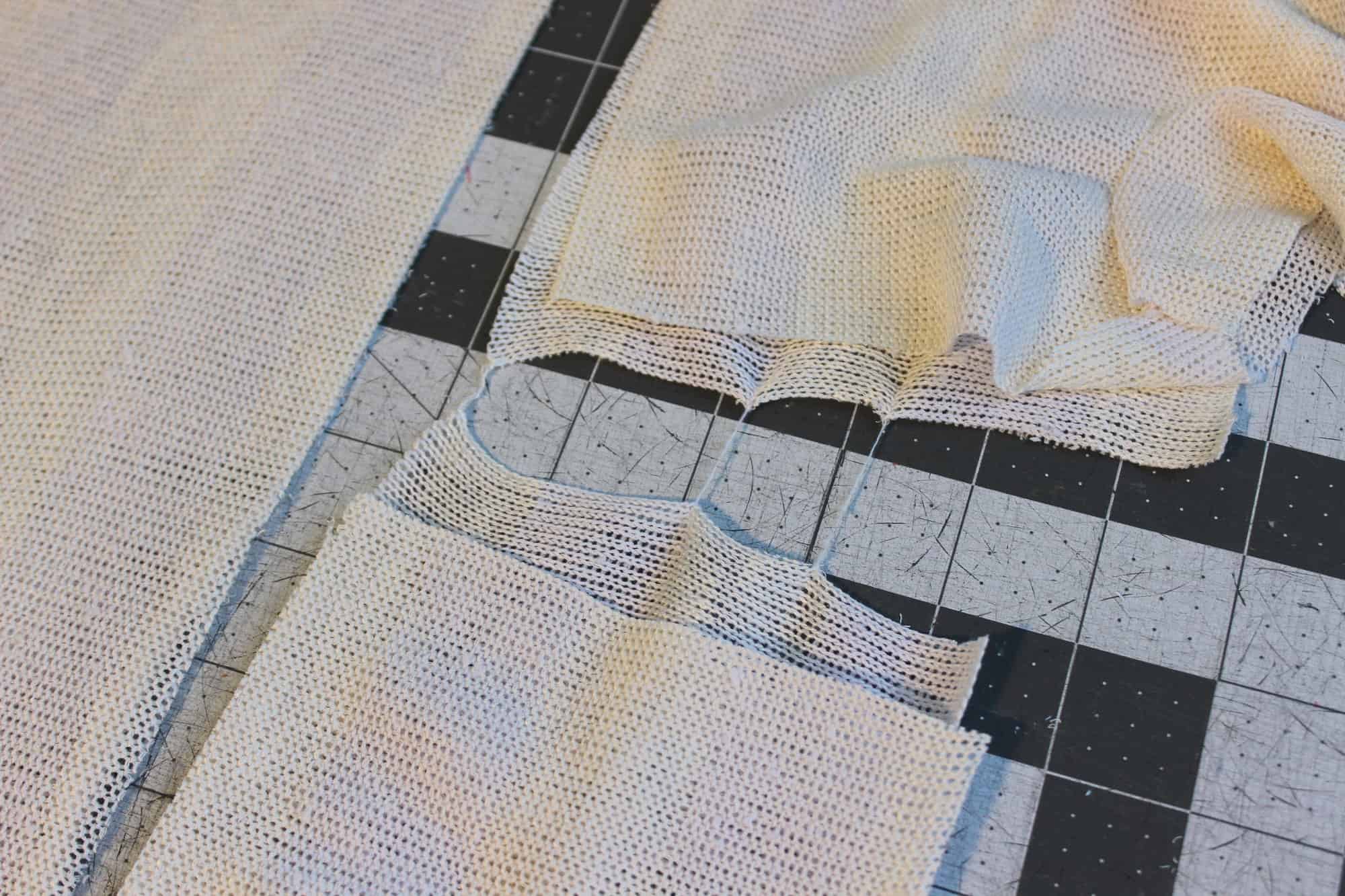
2. If cutting with a rotary cutter, use a new or very sharp blade. I find sweater knits to be more prone to getting a run in the fabric if  the cutter or scissors is not very sharp.

img_3489

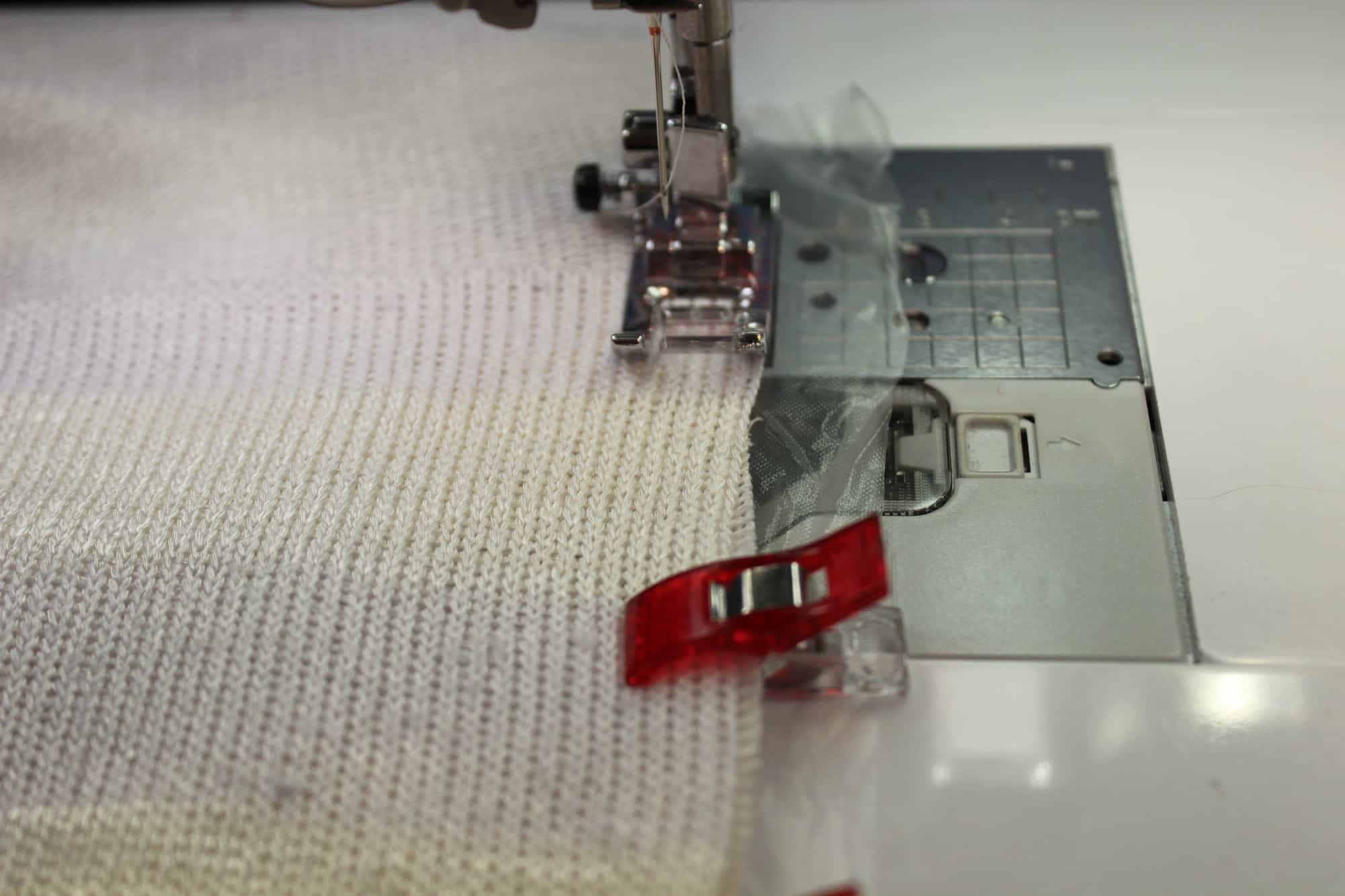
3. Water soluble stabilizer is not just for embroidery! When working with sweater knits on your sewing machine I highly recommend placing a piece of WSS under your fabric. This will not only make sewing it easier but it will also prevent puckering and even more important it will stop your machine from “eating” your fabric. Sweater knits, especially open weave ones have a lot of “holes” so your machine is basically sewing through air.

img_3493

Tear away the excess, the remaining water soluble stabilizer will disappear when you first wash the garment. I prefer transparent WSS but opaque ones work just as well.

img_3494

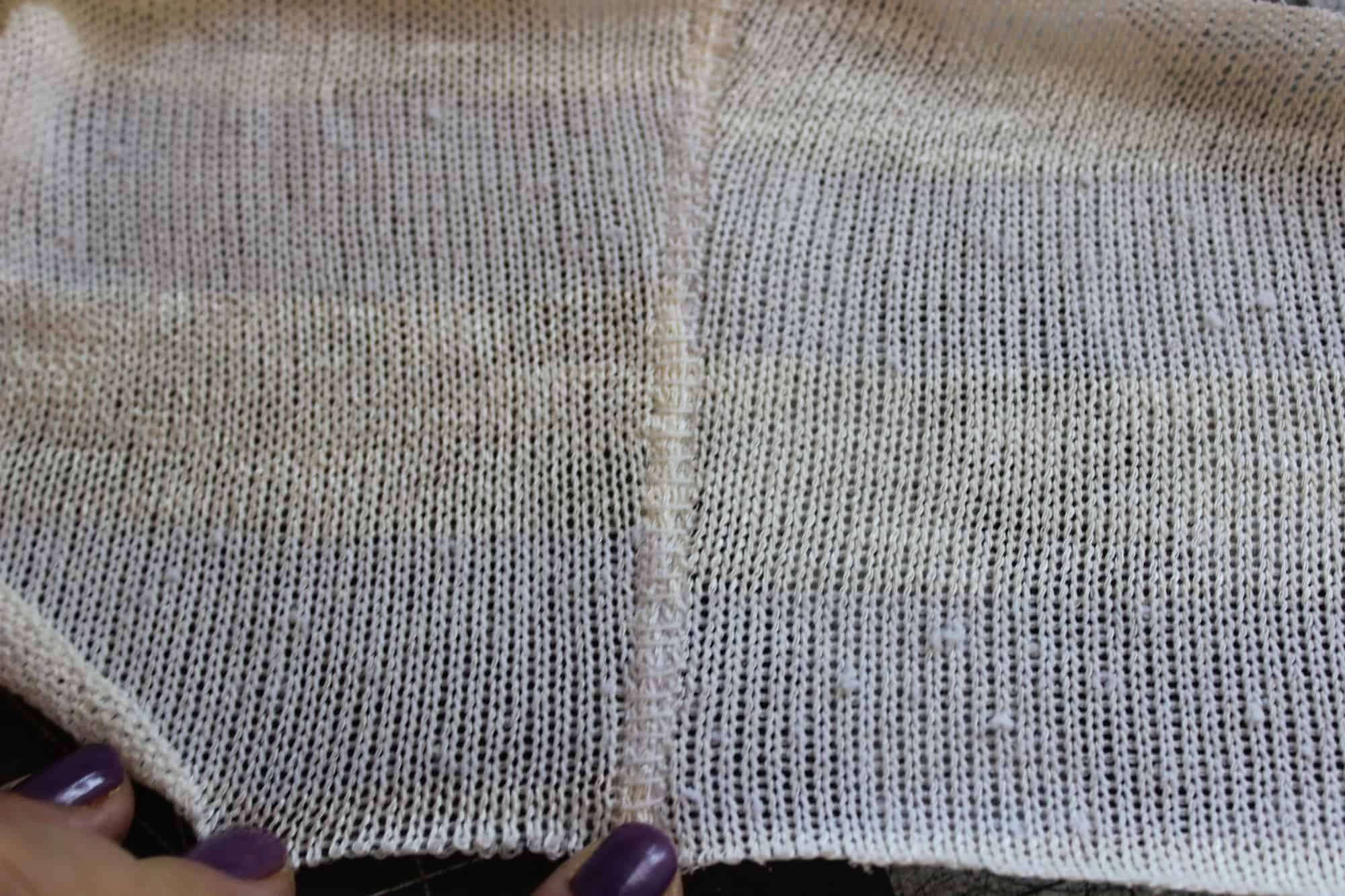
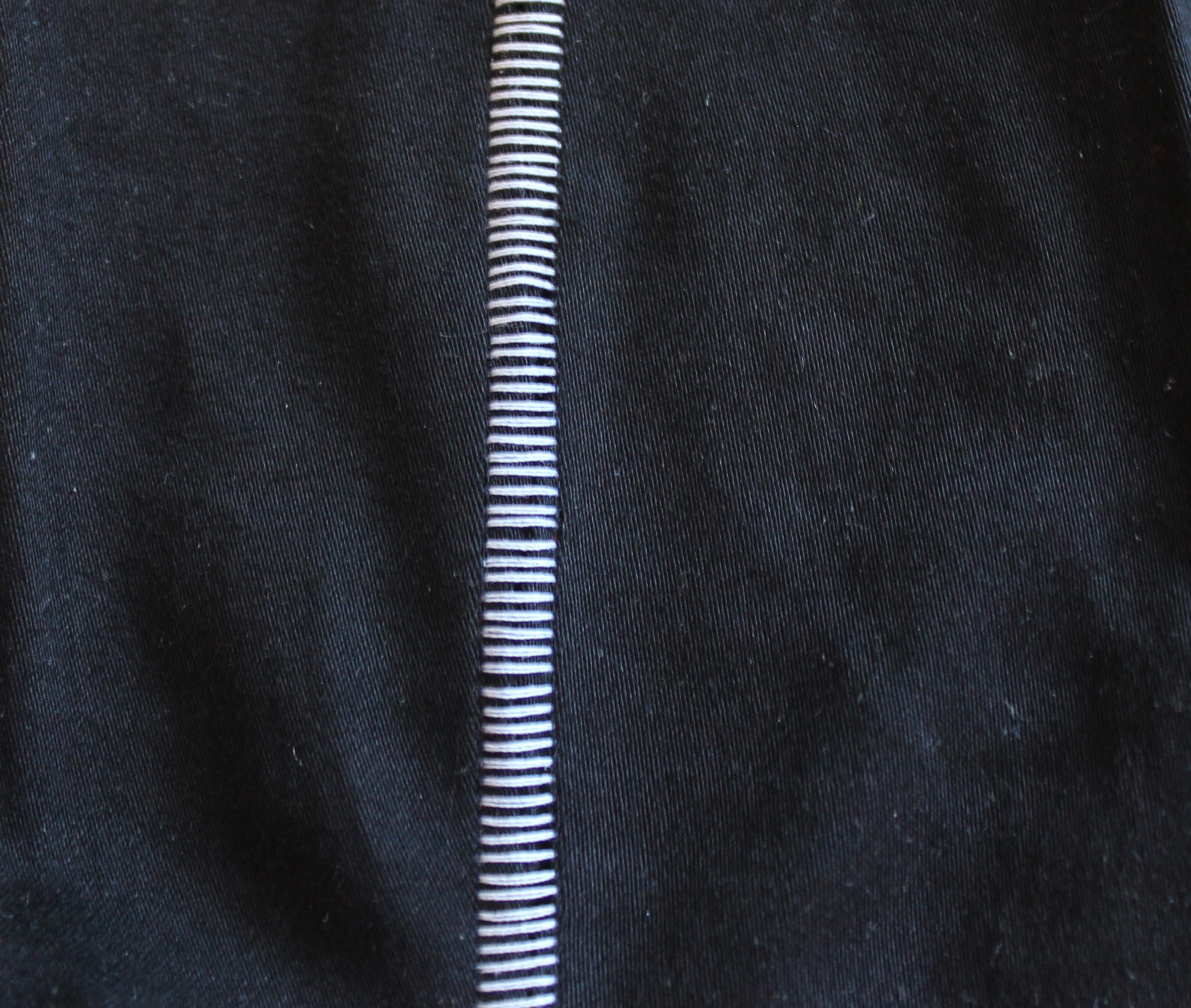
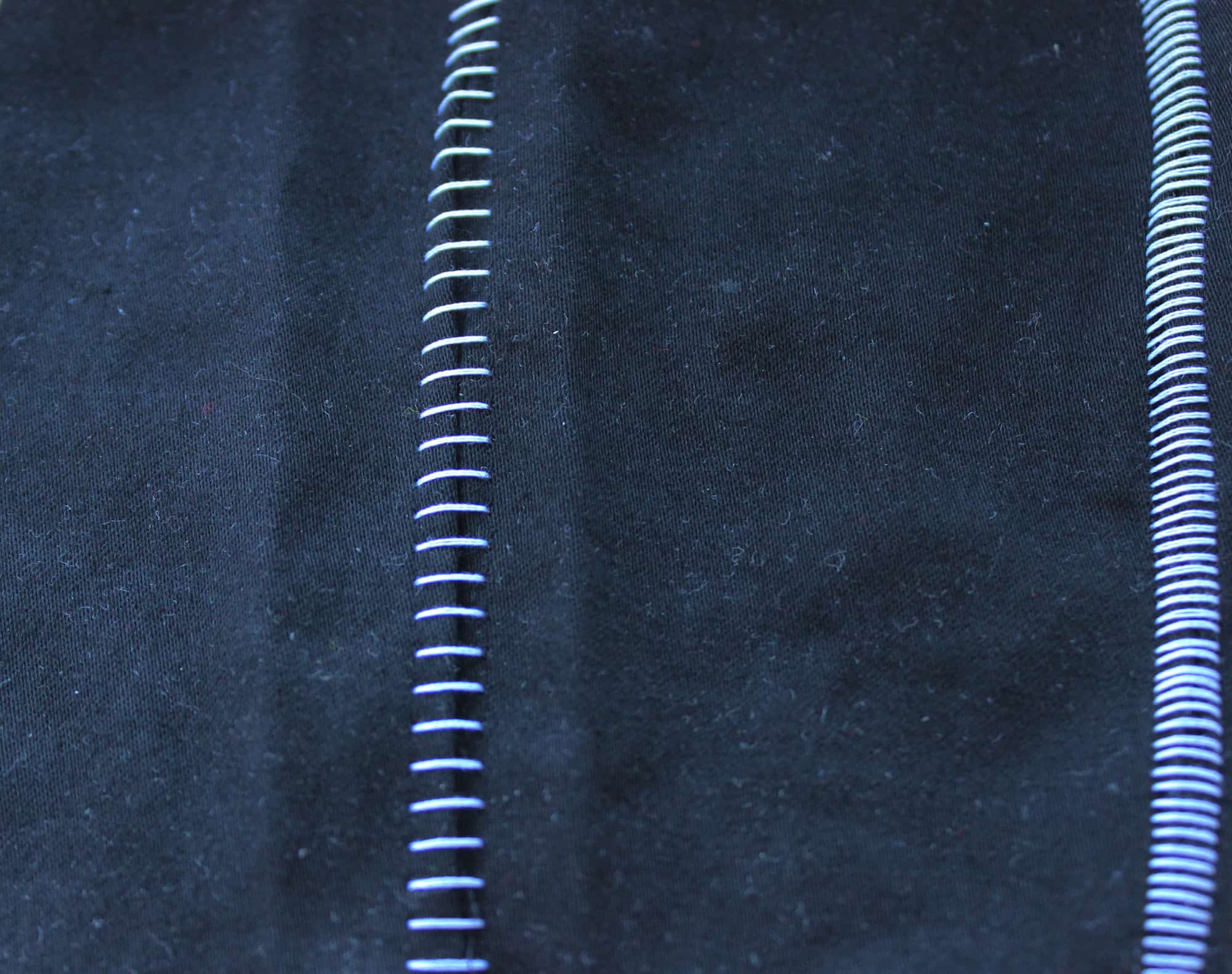
4. You can sew sweater knit entirely with your sewing machine however a serger will make the process faster and easier. You might need to adjust your settings a bit to accommodate this type of fabric. My favorite serger stitch when sewing sweater knits is the FLATLOCK stitch. Check your serger user manual to make the proper settings for a flatlock stitch, they will vary from model to model. Here is an example of how a white thread flatlock stitch looks like on a black piece of fabric.

img_3498

A narrower flat lock stitch

img_3501

A wider flat lock stitch

I use this type of serger stitch when I make sweater knit bands and hems. Use a matching thread so the stitch will blend in with the fabric.

img_3504

5. Just as with all knits, always use a ball point needle in your sewing machine and serger. You’ll also need to lower the pressure foot tension of your sewing machine.

6. The markings on open weave sweater knits will need to be added with chalk/ a tailor pen or by adding tailor tacks. Notches are impossible to see on sweater knits.

I hope you find these tips helpful when you will be sewing the new Cocoon pattern releases soon. I will leave you with another sneak peek of this amazing cardigan. Now get the sweater knits stash out and as always post your creations in the group so we can all ohh and ahhh over them.

img_3638img_3518

Alex


Filed Under: P4P University, Sewing with Stretch, Knit Fabrics, Uncategorized 1 Comment

P4P Professional Looks

November 18, 2016

“How can I make this look more professional?” “Is this okay to wear for an interview?” These are just a few of the questions that we see asked all the time about P4P patterns. Well, Angela and I are here to help give you some ways of how you can make and wear Patterns for Pirates a part of your professional wardrobe- and trust us, it’s possible.  Angela works in the insurance world and I am a teacher and both of us admit to wearing P4P almost everyday! So here are a few tips and tricks from to help make you the envy of your office!

Fabric Content Choice
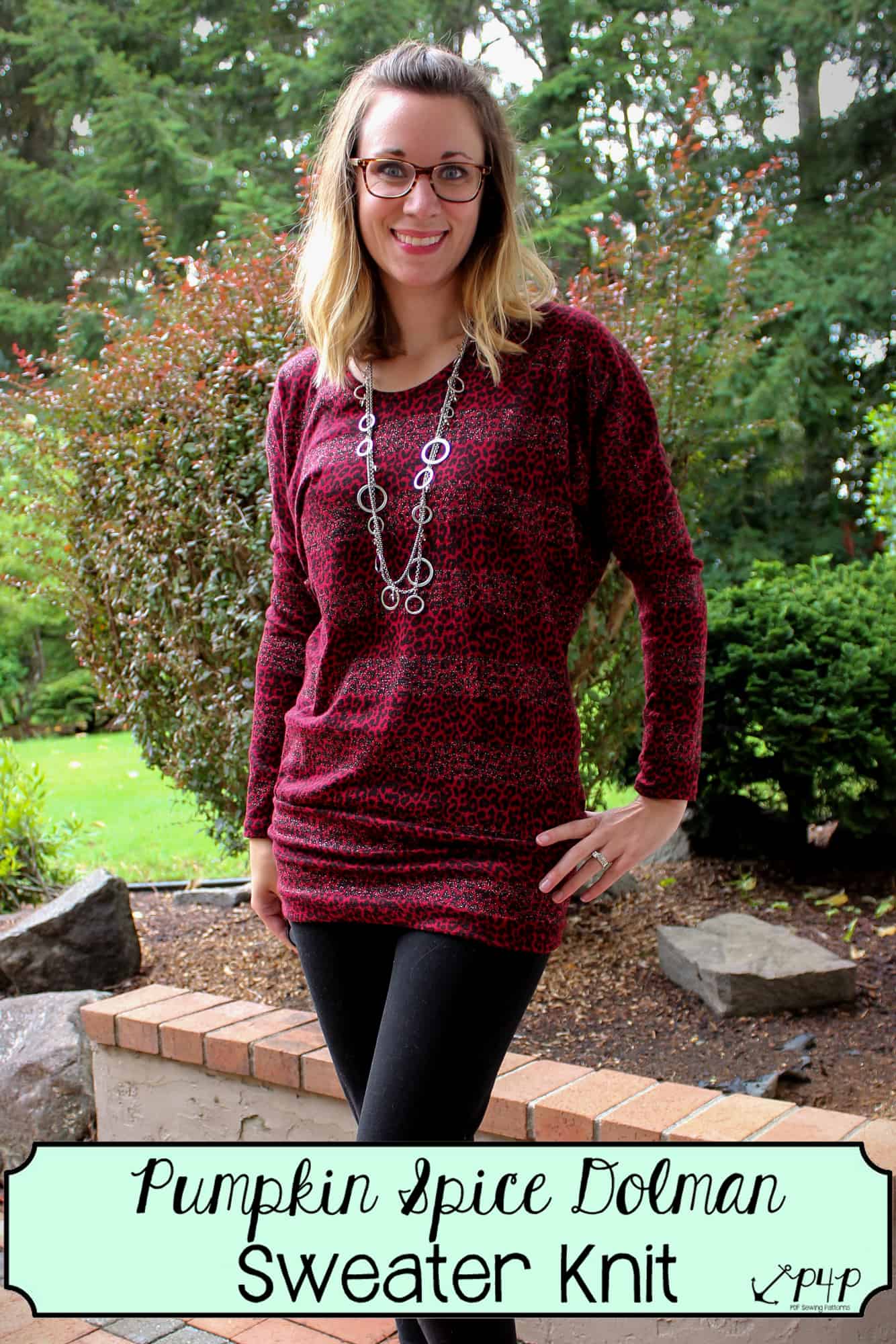
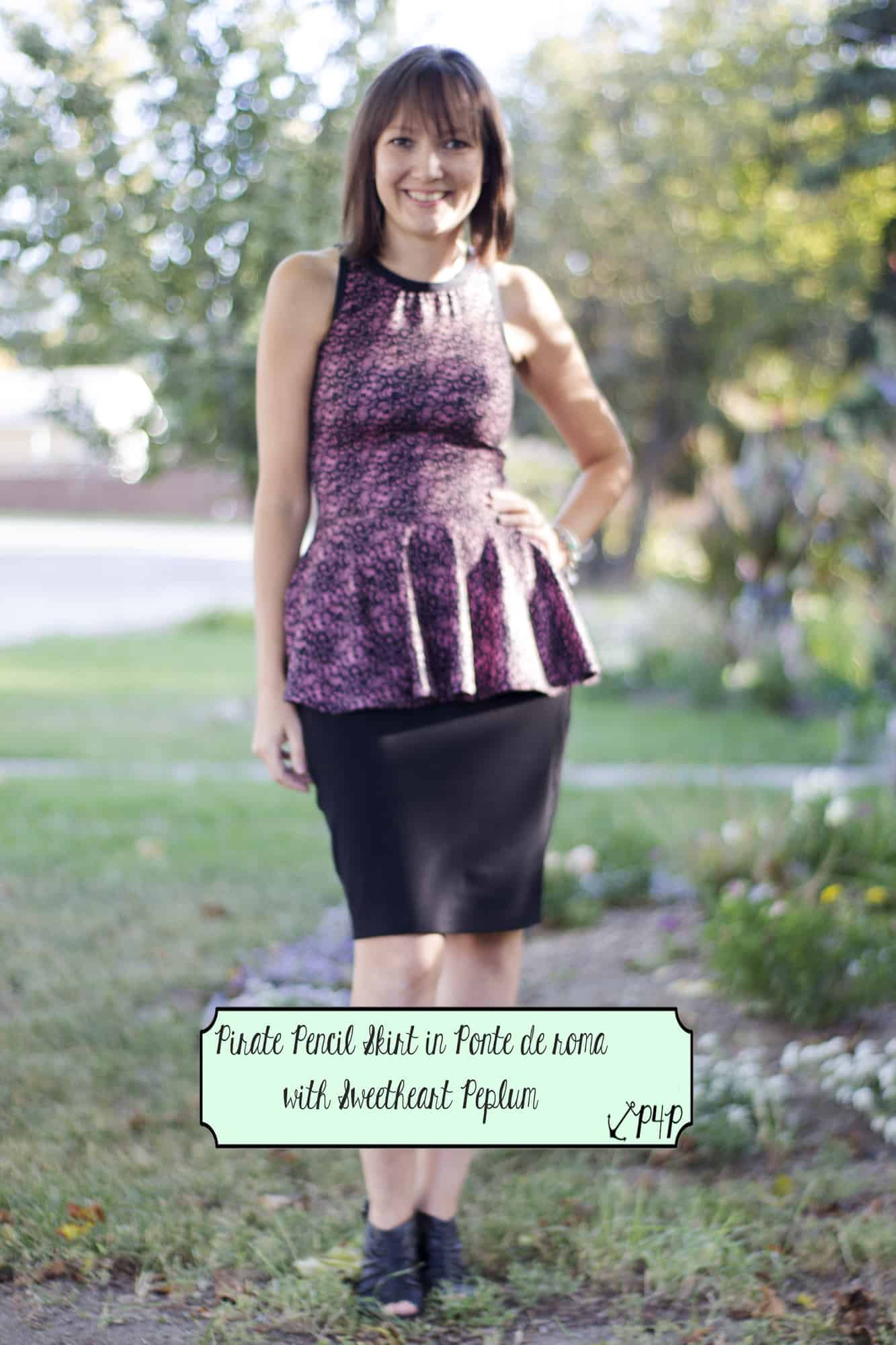
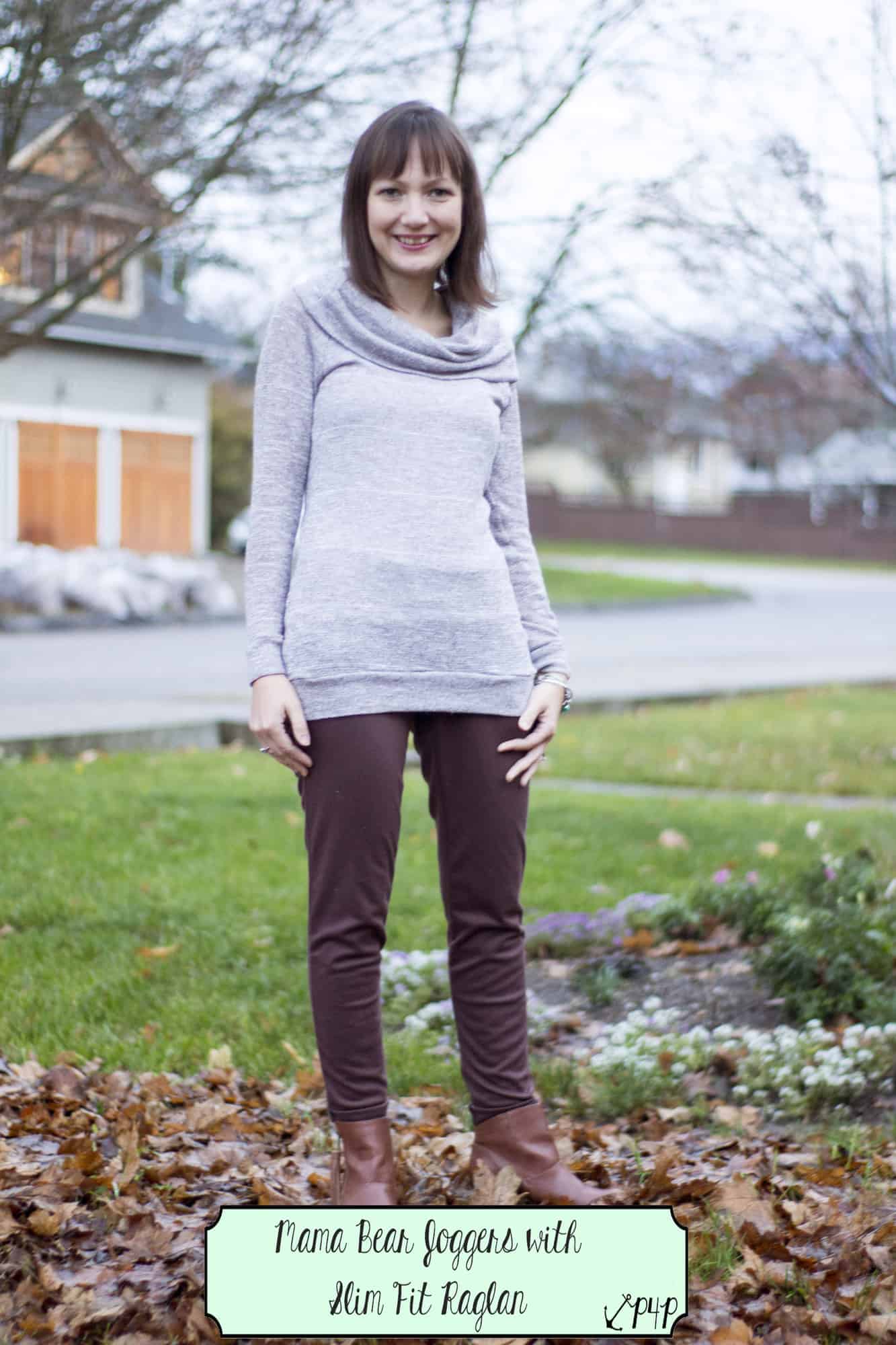
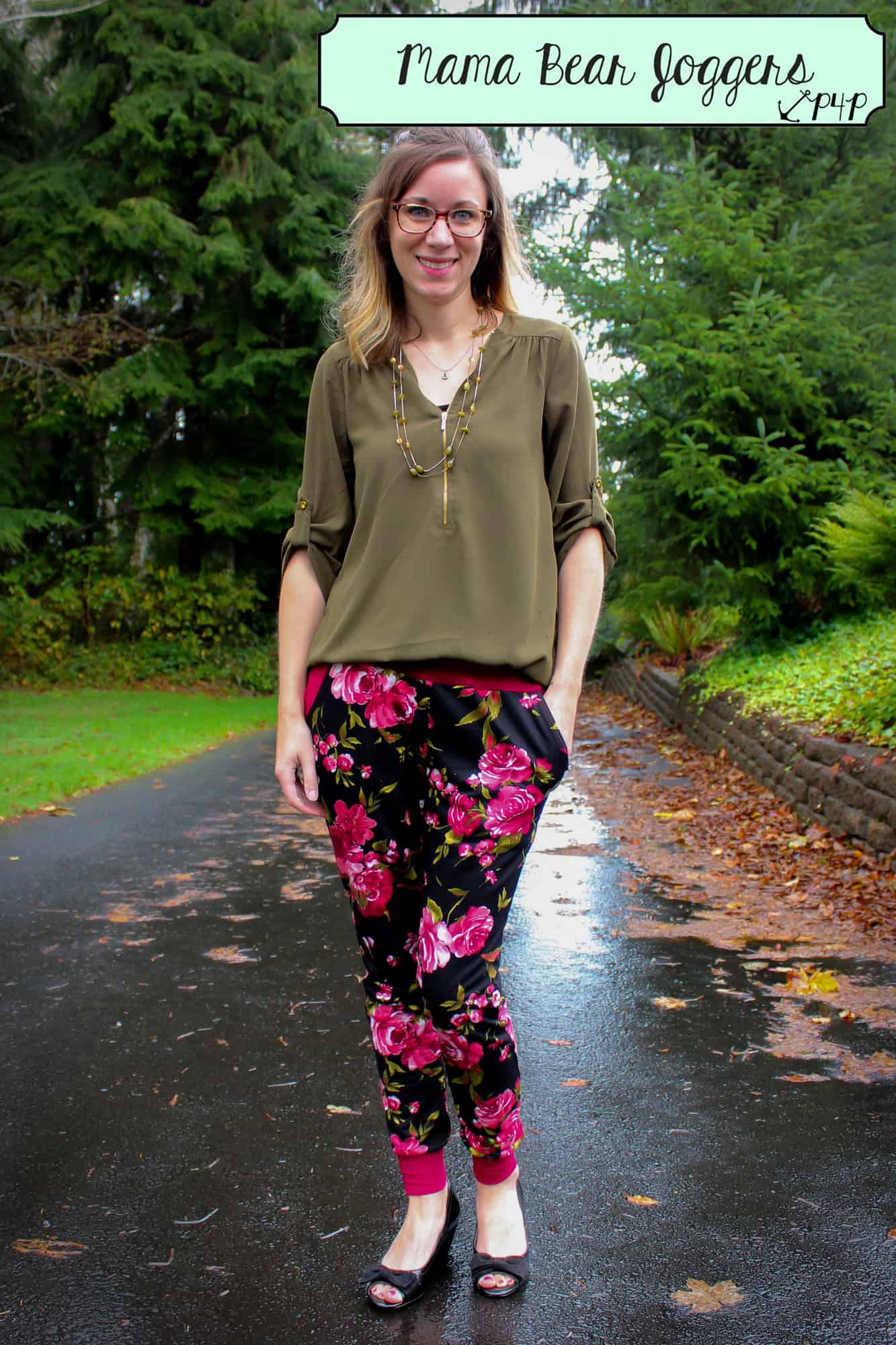
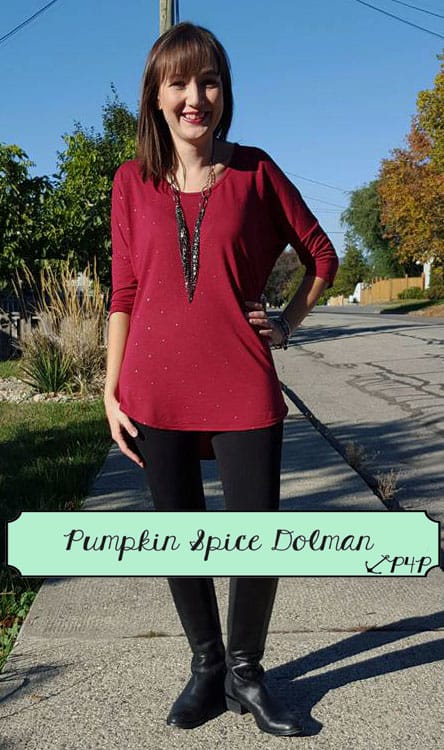
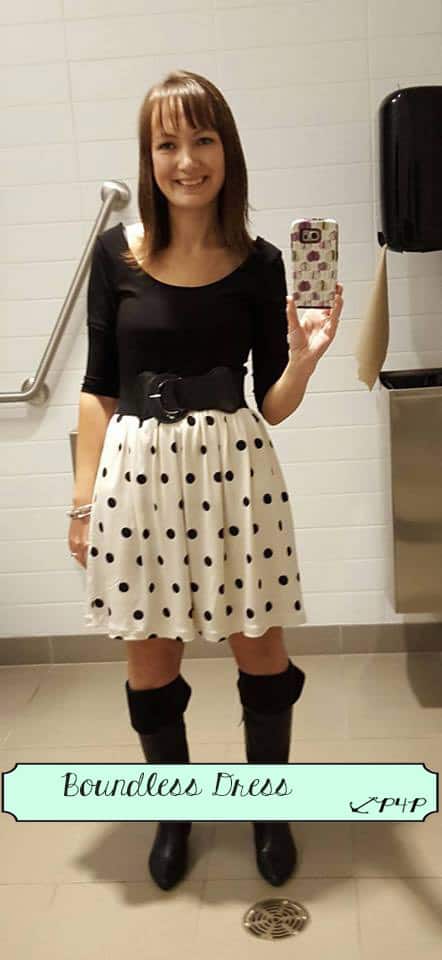
Every pattern will have a different look depending on which type of fabric you use. Some of our favorite contents for workwear are liverpool, ity, sweater knit, ponte de roma and brushed poly. It is important to be aware of the pattern you are using, as each fabric has a different drape and some are more suitable for different patterns. Liverpool is a more structured, textured fabric with great stretch. It is wonderful for patterns such as the Sweetheart, Sweet Tee, and SOS Knit Pants. Ity fabric is a very soft fabric with amazing drape and a smooth, soft texture. It comes in a variety of patterns and is great for making tops look more “dressy” and its a great choice for dresses like the Boundless Dress. Sweater knit is a very easy way to make patterns such as the Pumpkin Spice Dolman and the Grandpa Cardigan look professional for work. It can be found in a variety of weaves (loose to tight), textures, and weight. Another great option is ponte de roma, it is a nice weight and again is more structured so works well for the Pirate Pencil Skirt and bottoms like the SOS Knit Pants, Palazzo Pants and it really dresses up the Mama Bear Jogger shown below with a sweater knit Slim Fit Raglan with the cowl from the Add on Pack.  Another great fabric that seems to be popping up everywhere is brushed poly and it can be used for so much more than peglegs!  Brushed poly comes in various weights and can be single or double brushed and it has a great drape to it so it works well for tops and dresses.  Rayon spandex and bamboo spandex blends are another great choice for tops and dresses.

img_4825_edited-2img_57861img_60961


Fabric Pattern Choice
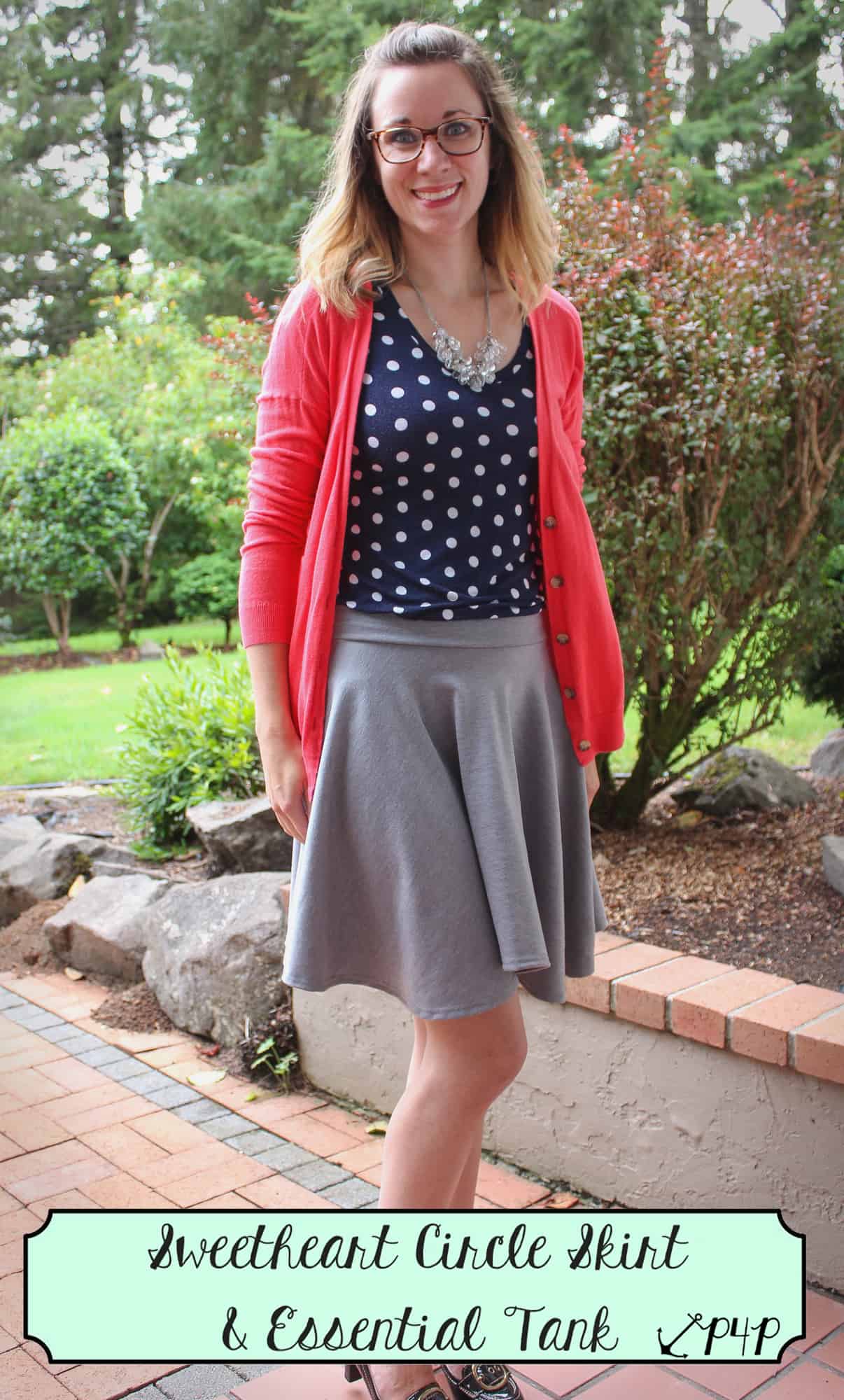
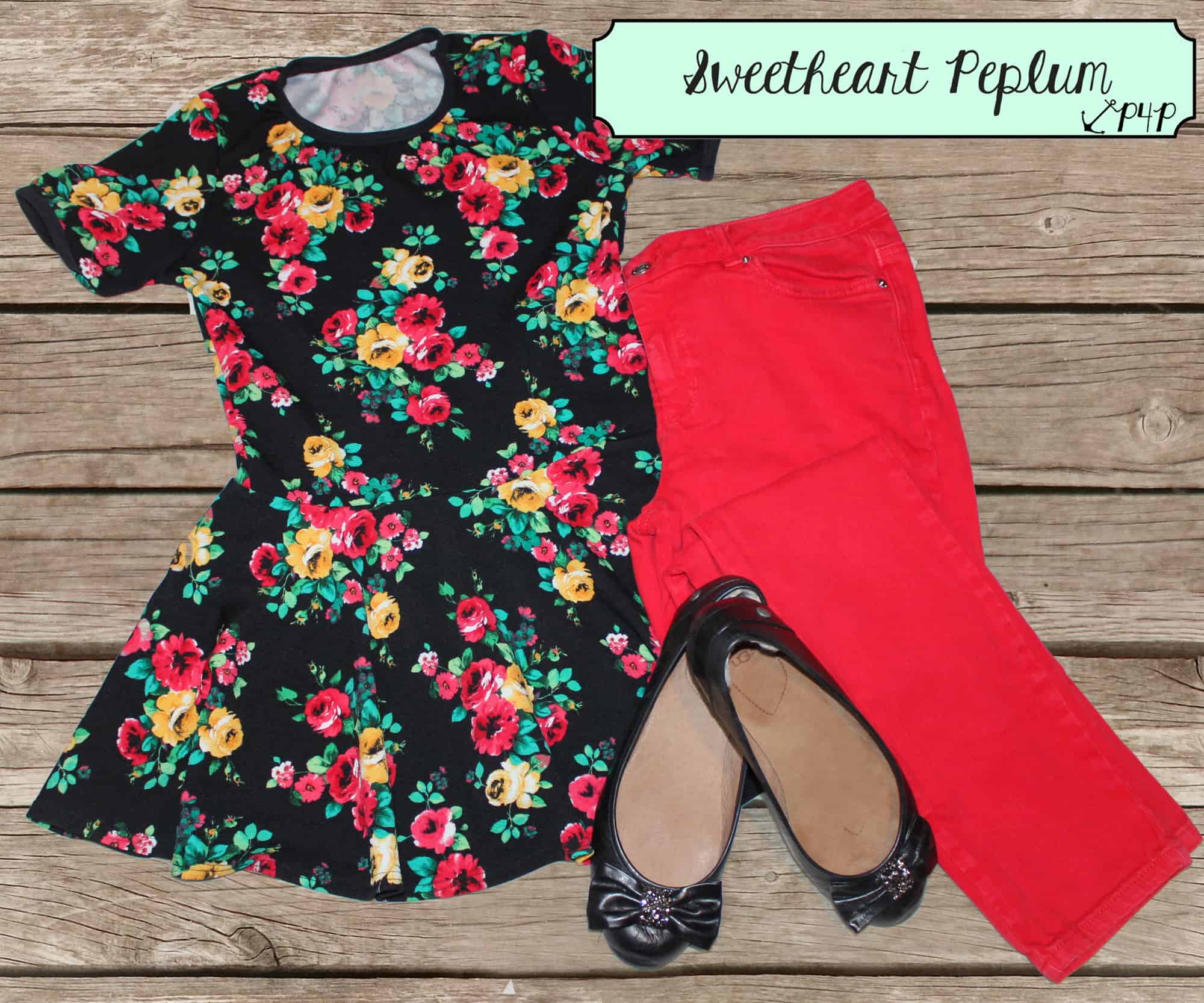
In the professional world, it is very easy to play it safe with neutral colors. Neutral colors can be a great base for any outfit- as you can see with most of ours. We both tend to have a solid color somewhere in an outfit and then will pair this with something more bold. For example, I used the Sweetheart skirt hack to create a circle skirt in a solid gray. I then paired this with a polka dot Essential Tank and a cardi. I have also paired the Mama Bear Joggers in a floral french terry with a solid top. And Angela has paired a solid black ponte de roma Pirate Pencil Skirt with a patterned brush poly Sweetheart Peplum.


img_5158_edited-1img_4816_edited-1img_61002

Adding Details
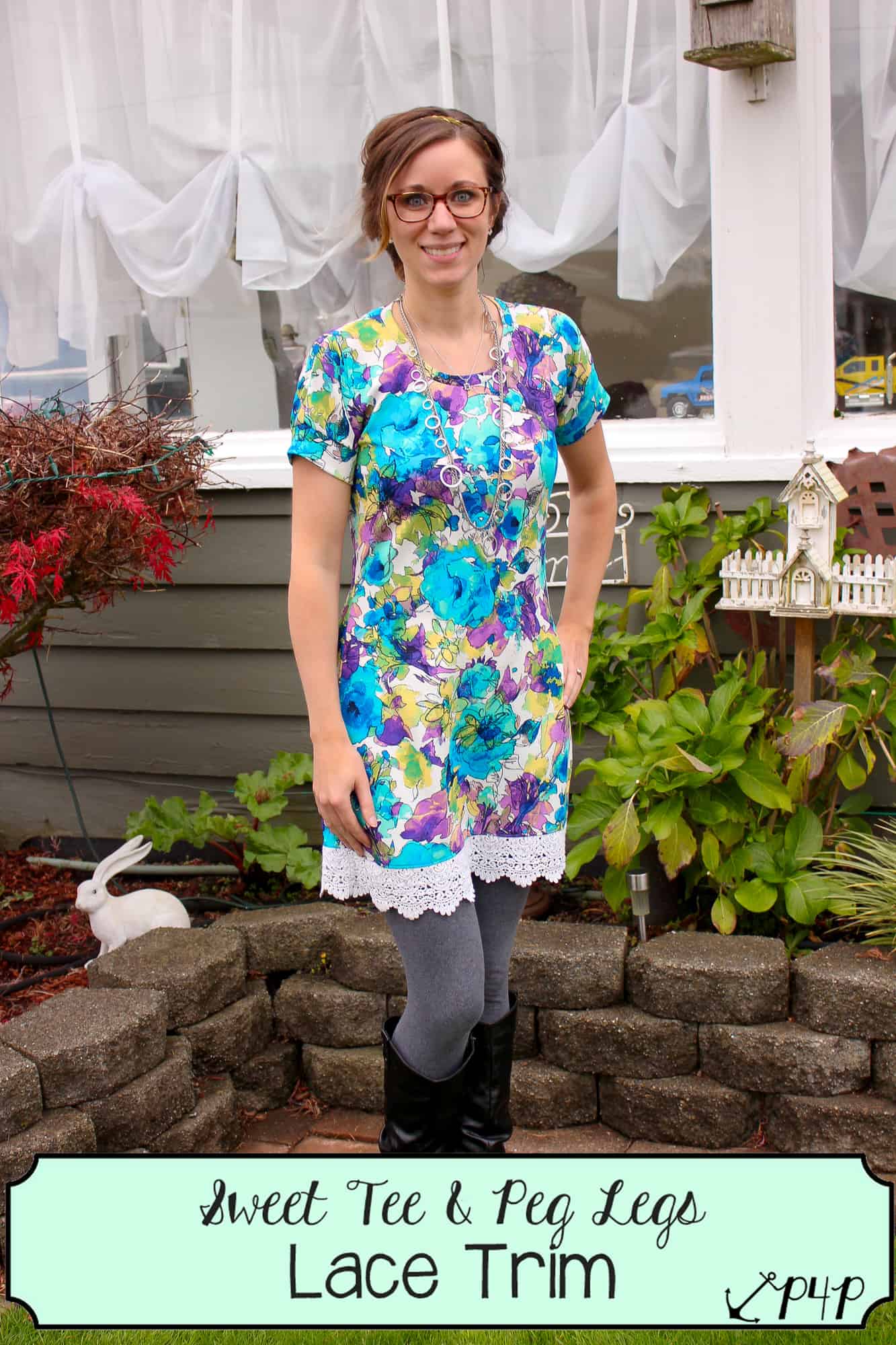
Adding details such as lace, trims, even a belt can help elevate a pattern to the next level. Lace is one of my favorite things to add to make an outfit look more professional. As you can see below, I used the Sweet Tee in the dress length, however added a lace trim to the hem. Angela added a belt to the Everyday Elegance to dress it up a bit. Or even just adding some jewelry like a necklace on a Pumpkin Spice Dolman. What shoes or boots your wear also can make such a difference on making your outfit look casual or office appropriate.

img_5273ee12105747_10153206085671033_1156641344939810881_n

Every office is going to be a bit different in what they allow and don’t allow. Some office will allow Peg Legs where as other office won’t allow any type of leggings, some won’t allow a skinny pant where as others will.  Patterns for Pirates have all your bases covered. Both Erinn and I get away with peg legs at the office but you will notice in pictures you see of us in our work attire we stick to solids for leggings. A lot of these looks would also pair nicely with a blazer for a more corporate look or try adding a Grandpa or Carefree Cardigan if your office is cold.  I know both of us have plans to sew a lot of the new Cocoon Cardigans for work as well.

And now that you’ve read some of the basics for becoming a “Professional Pirate”, here are a few more pictures for some inspiration!  And you know getting photo’s of your office attire isn’t easy so I’ve included some bathroom selfies cause I know that you all love seeing bathroom selfies 😉 Happy sewing and make sure to share your professional looks in the P4P Facebook group! ~ Erinn and Angela

img_46072img_4821_edited-1img_3606 14939622_10154070693911033_1112729001056391089_o10353639_10153256696556033_8649728710252151176_nimg_55351flatlay-sweetheartpepluem

Filed Under: Blog Tours, Uncategorized Leave a Comment

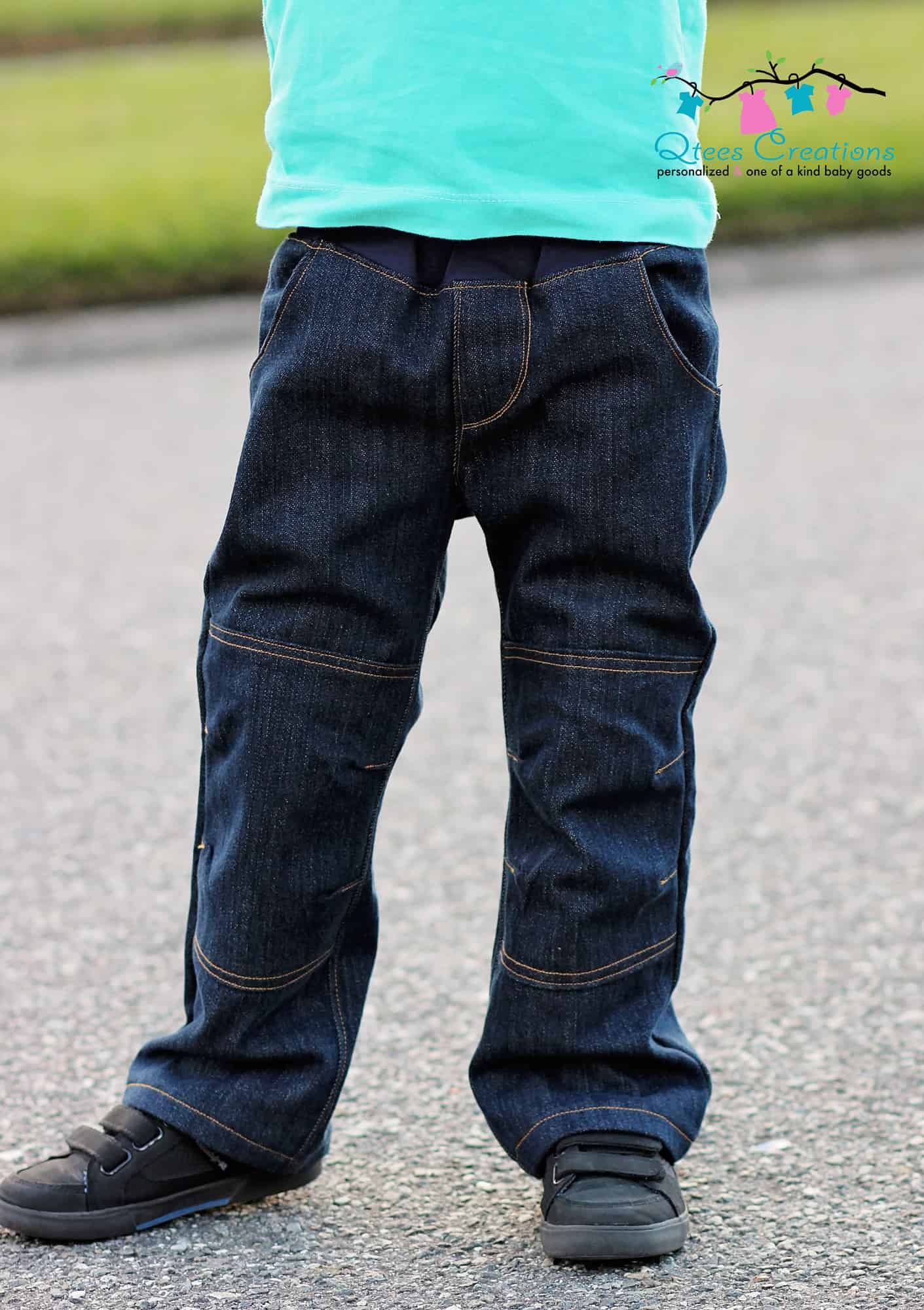
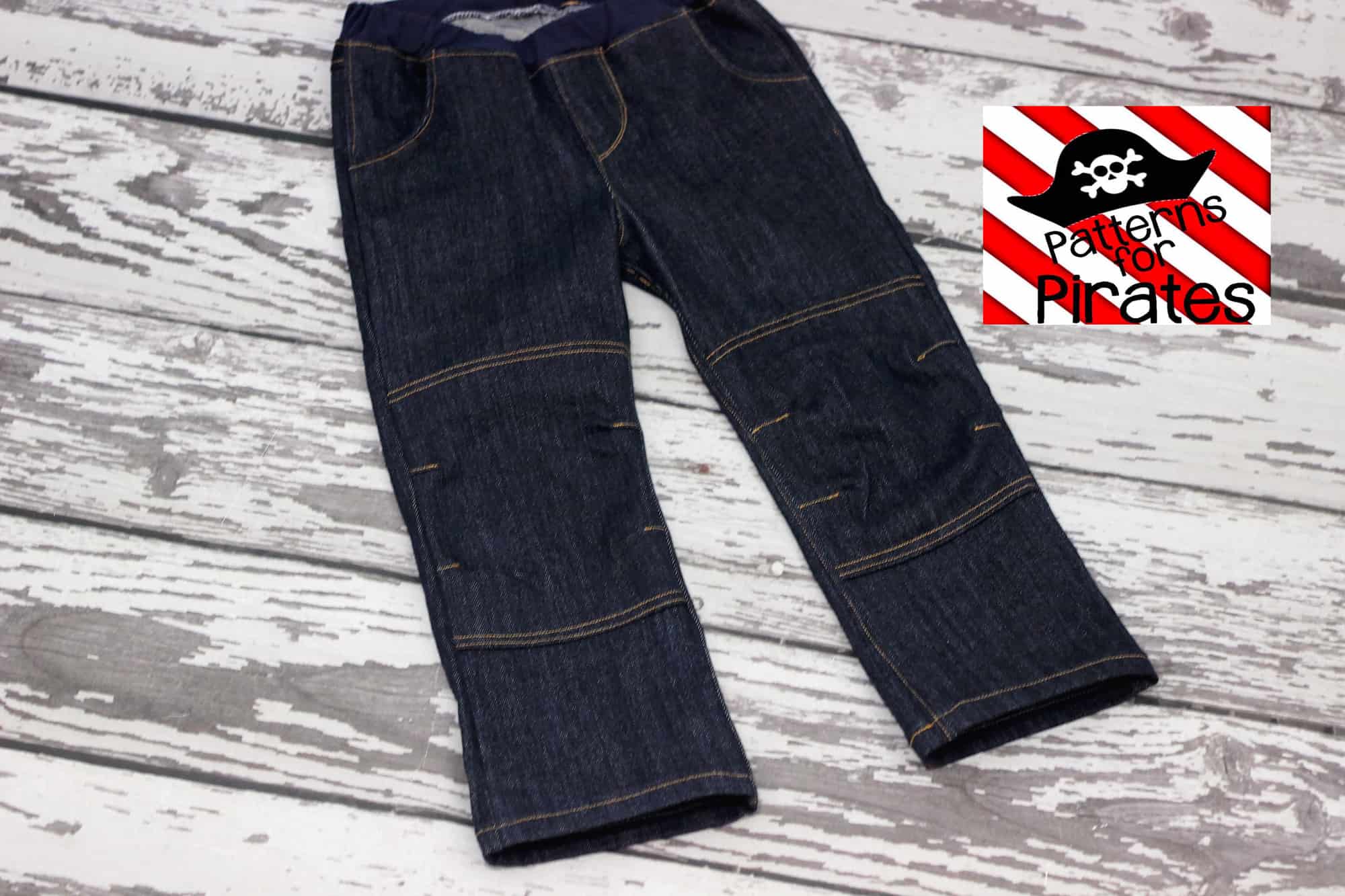
a cool way to add reinforced knees to the Captain Comfort Jeans

November 15, 2016


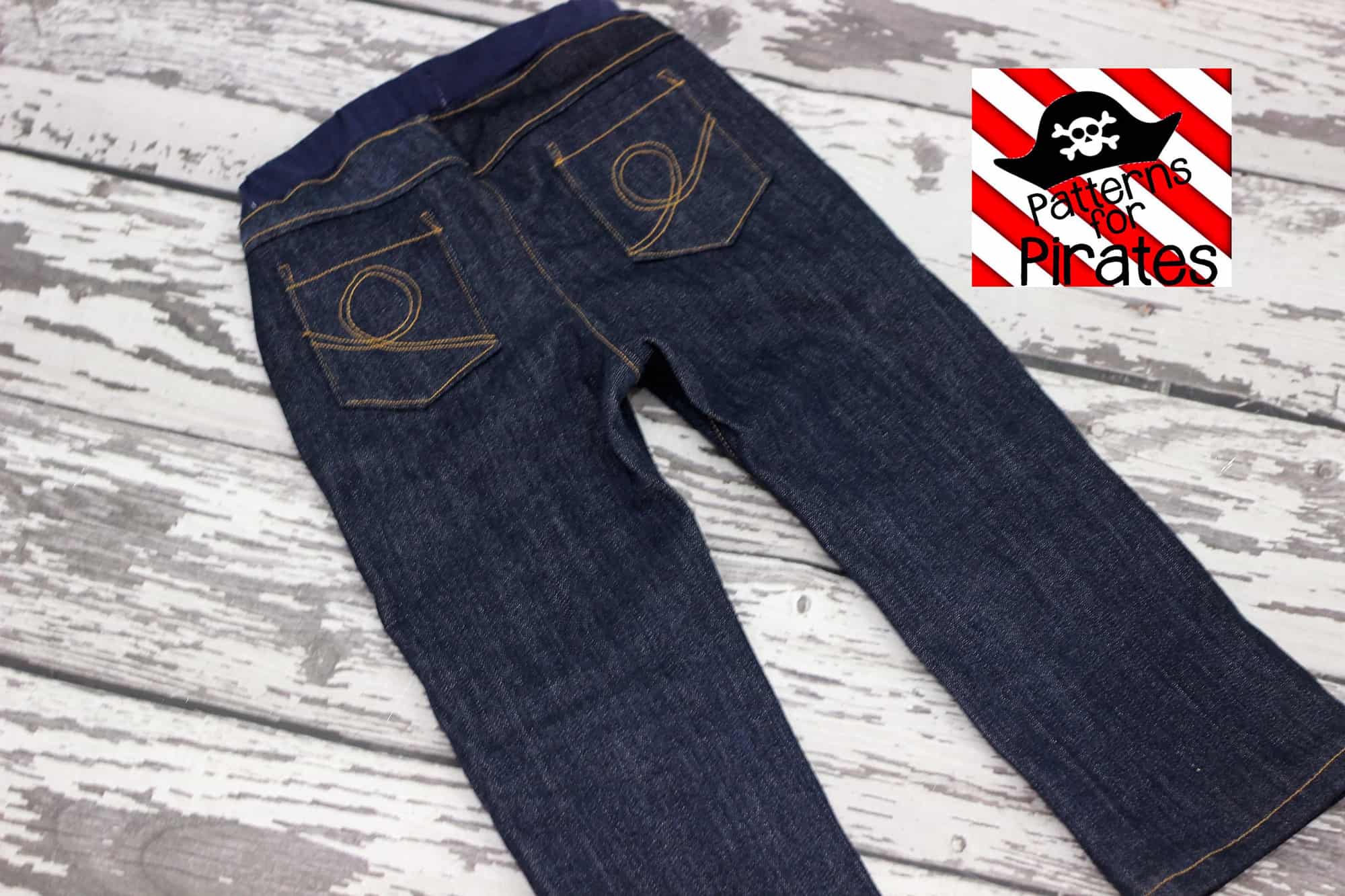
img_3369

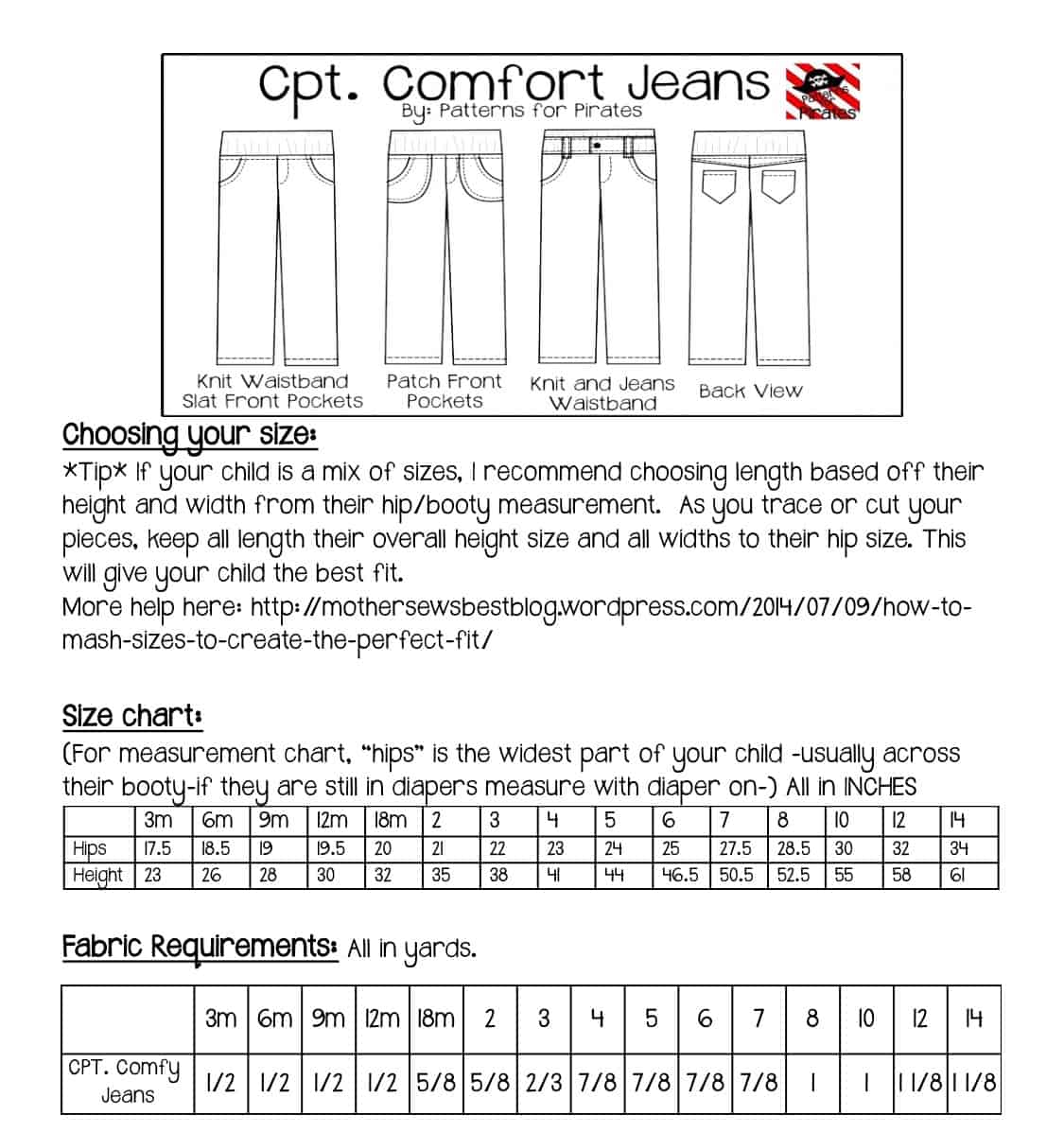
As a mom of young kids I am always looking to make them cool clothes that are not only on trend but can withstand their active lifestyle. In today’s blog I will show you how to take the already cool Captain Comfort Jeans to the next level and reinforce the knees in a modern new way.  If you’re looking at the Cpt. Comfort and need some tips on sewing jeans we’ve done a blog post all about it here!

img_3979

img_3319

img_3321

Start by printing the pattern and cutting your fabric. I used an old pair of jeans I had saved for upcyling. (Here is a blog post about using an old pair of jeans for this pattern!) I find denim fabric by the yard to be pretty costly so I save all usable jeans pairs that my husband and I don’t wear anymore. You can make any style Comfort jeans with this hack, including the lined version.

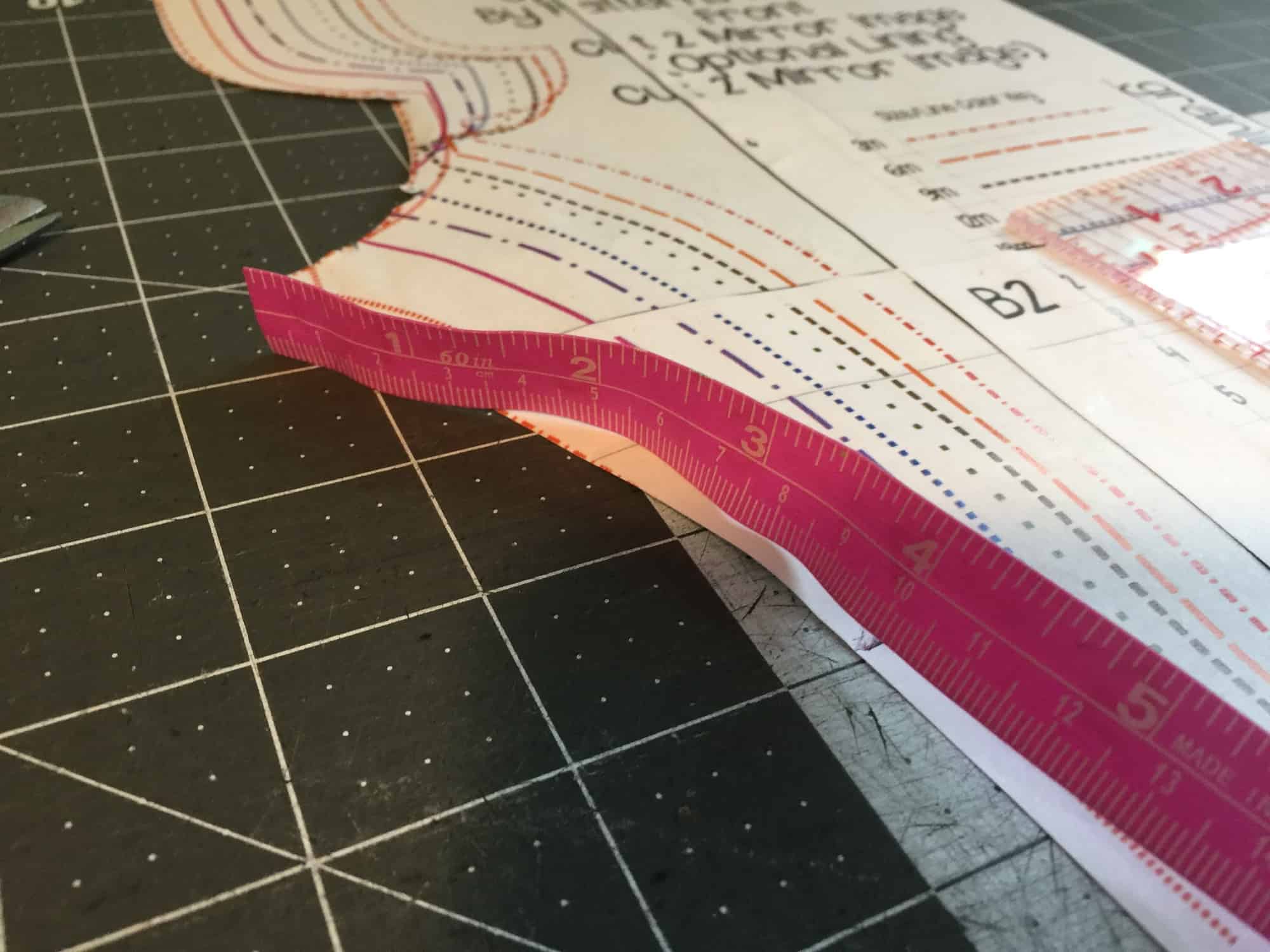
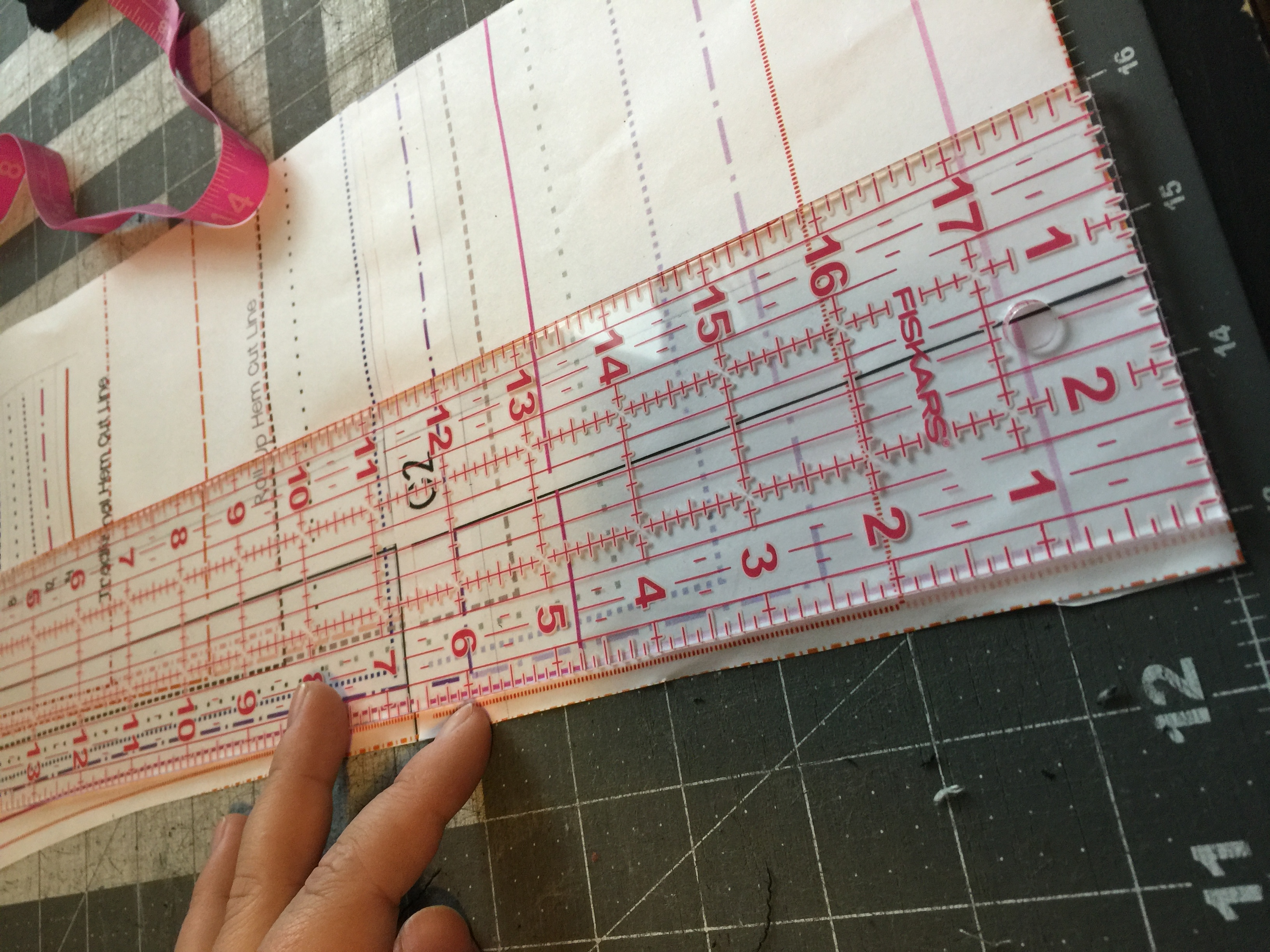
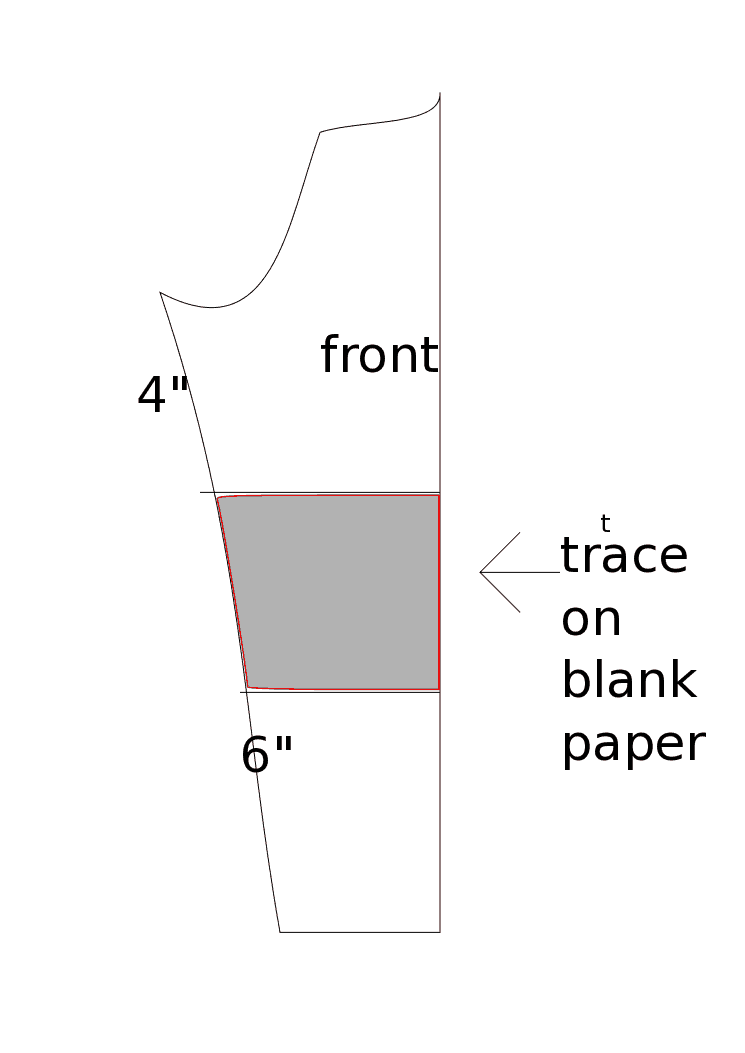
Take your front piece pattern and measure 4 inches down from the top of the inseam, mark it on the pattern. Now measure and mark 6 inches from the bottom of the hemmed option cut line. I made a size 5 but I think these measurements would work well for sized 4-6. You will need to mark higher or lower depending on the size you need and how big you want the knee patch.

img_3936

img_3937

front-cpt-comfort

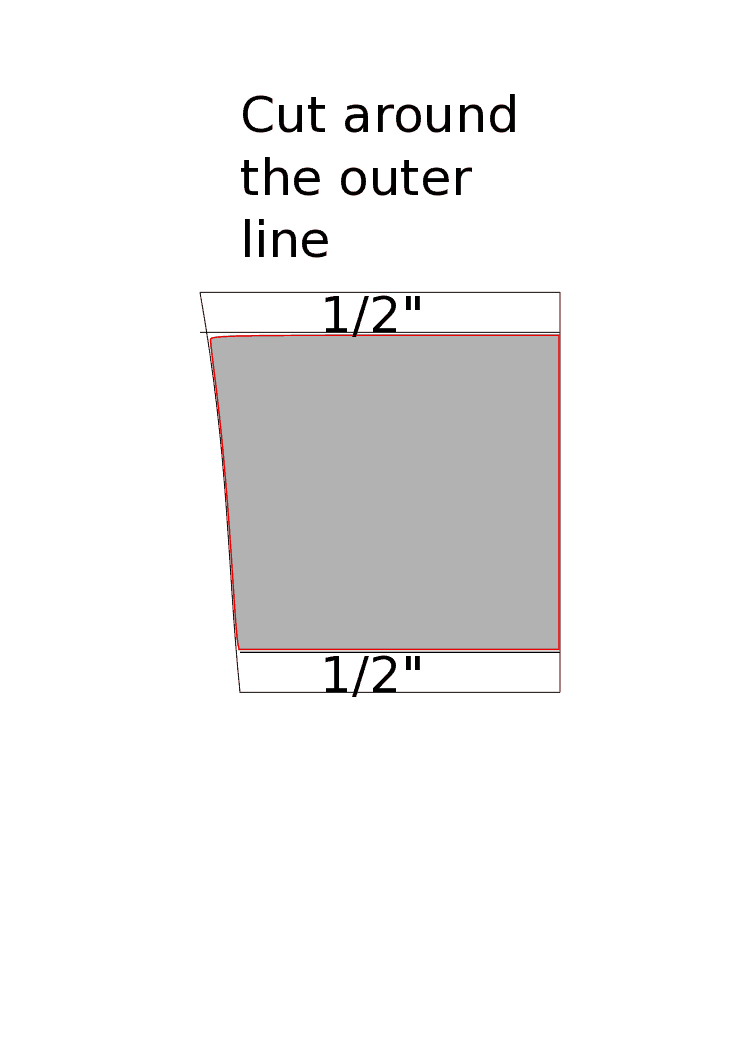
Draw a horizontal line from the two markings. Using a blank paper trace the knee patch between the two lines you just drew. Now you will draw another line parallel to these two 1/2 inch above the top line and 1/2″ bellow the bottom one. You just made the patch pattern piece.

patch

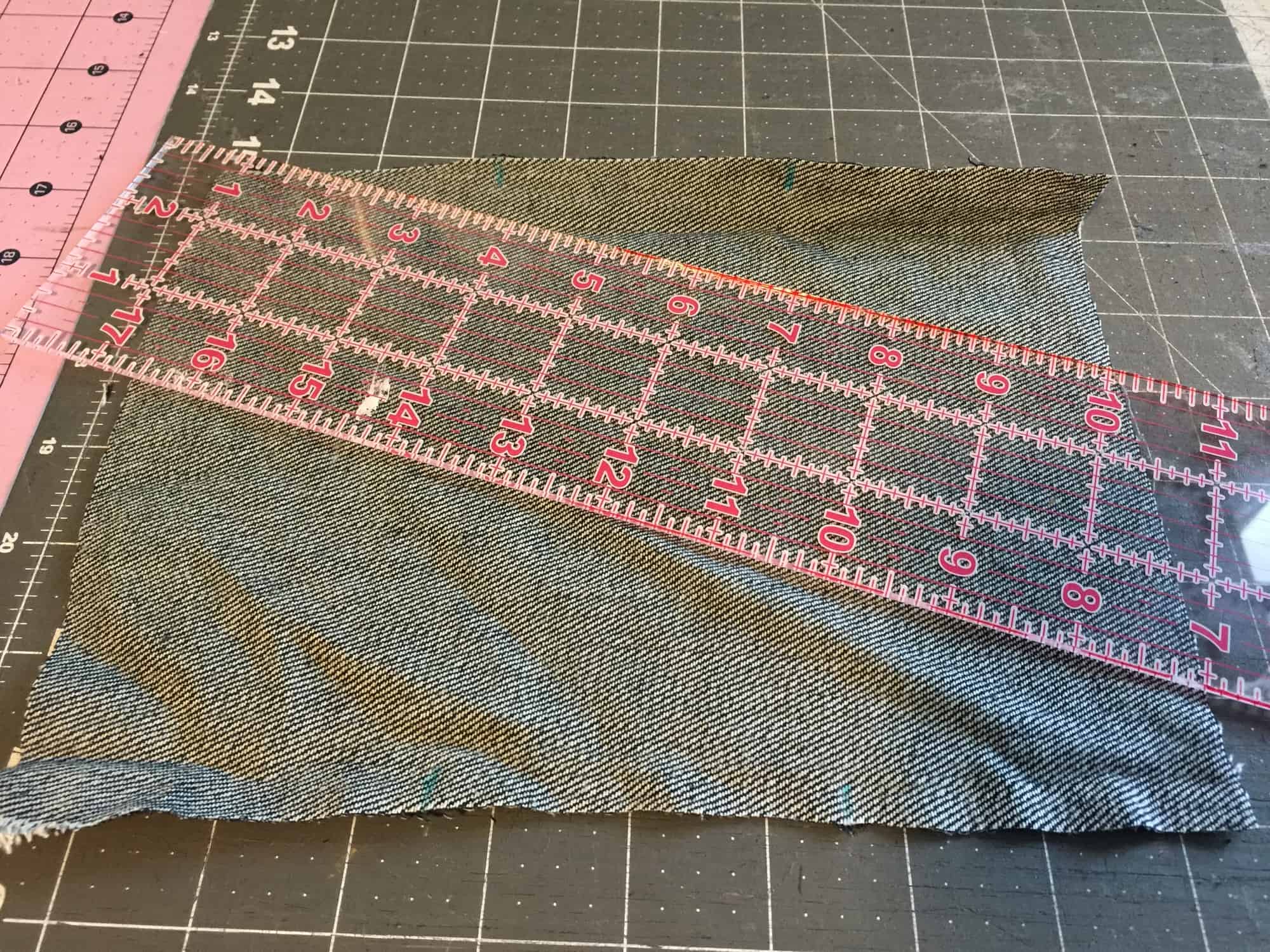
Cut two jeans patches using the pattern piece you just created. Don’t forget to mirror the pieces!! Measure the inner and outer leg part of the patch and divide it by 3. Grab your fabric marker or chalk  and draw a one inch line perpendicular to the sides of the patch at the markings.


img_3940

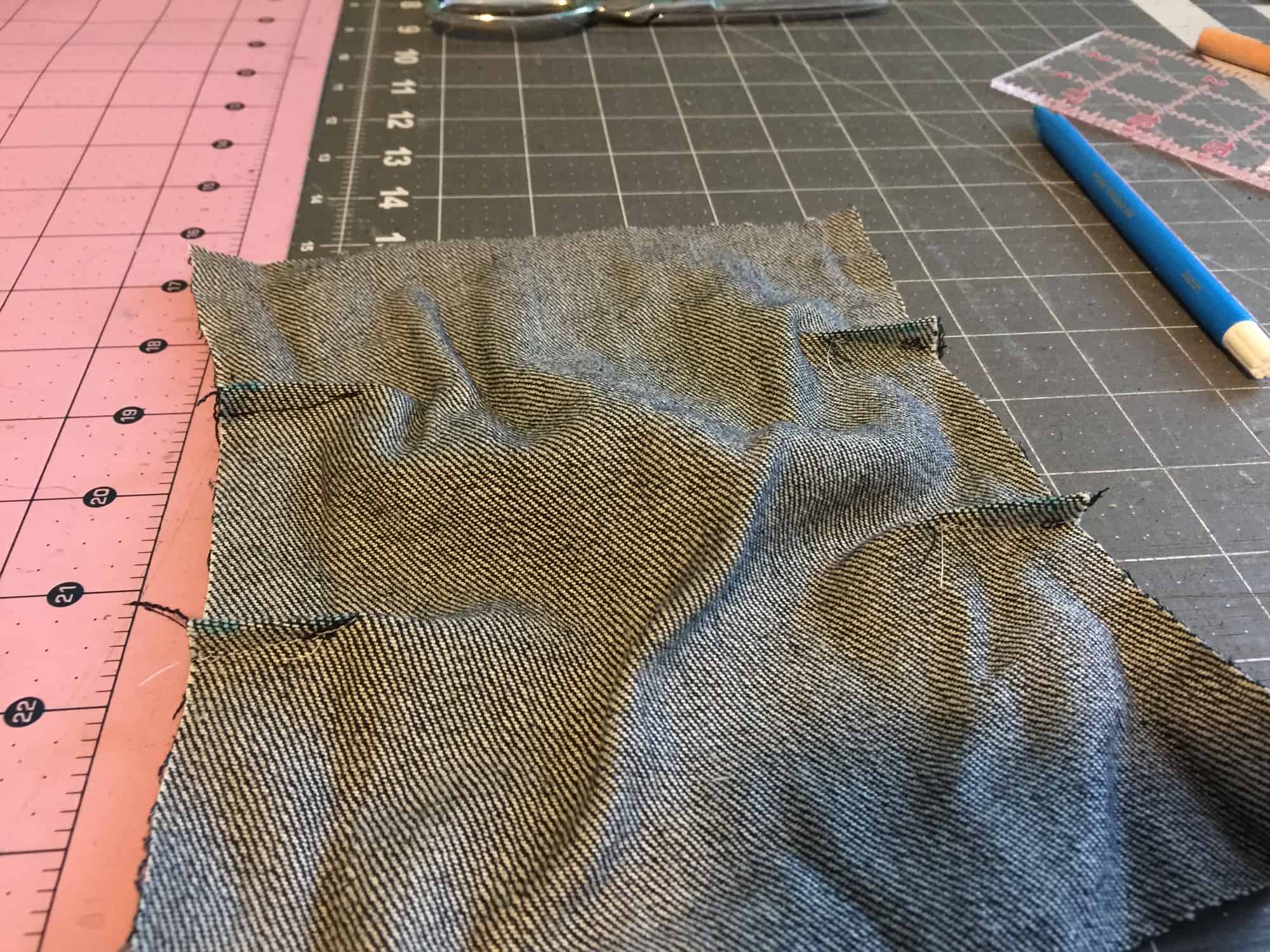
Using a your sewing machine and denim needles sew a small dart that starts 1/4 inch away from the marking. Repeat the process for the remaining 7 small darts on the two patches .

img_3942

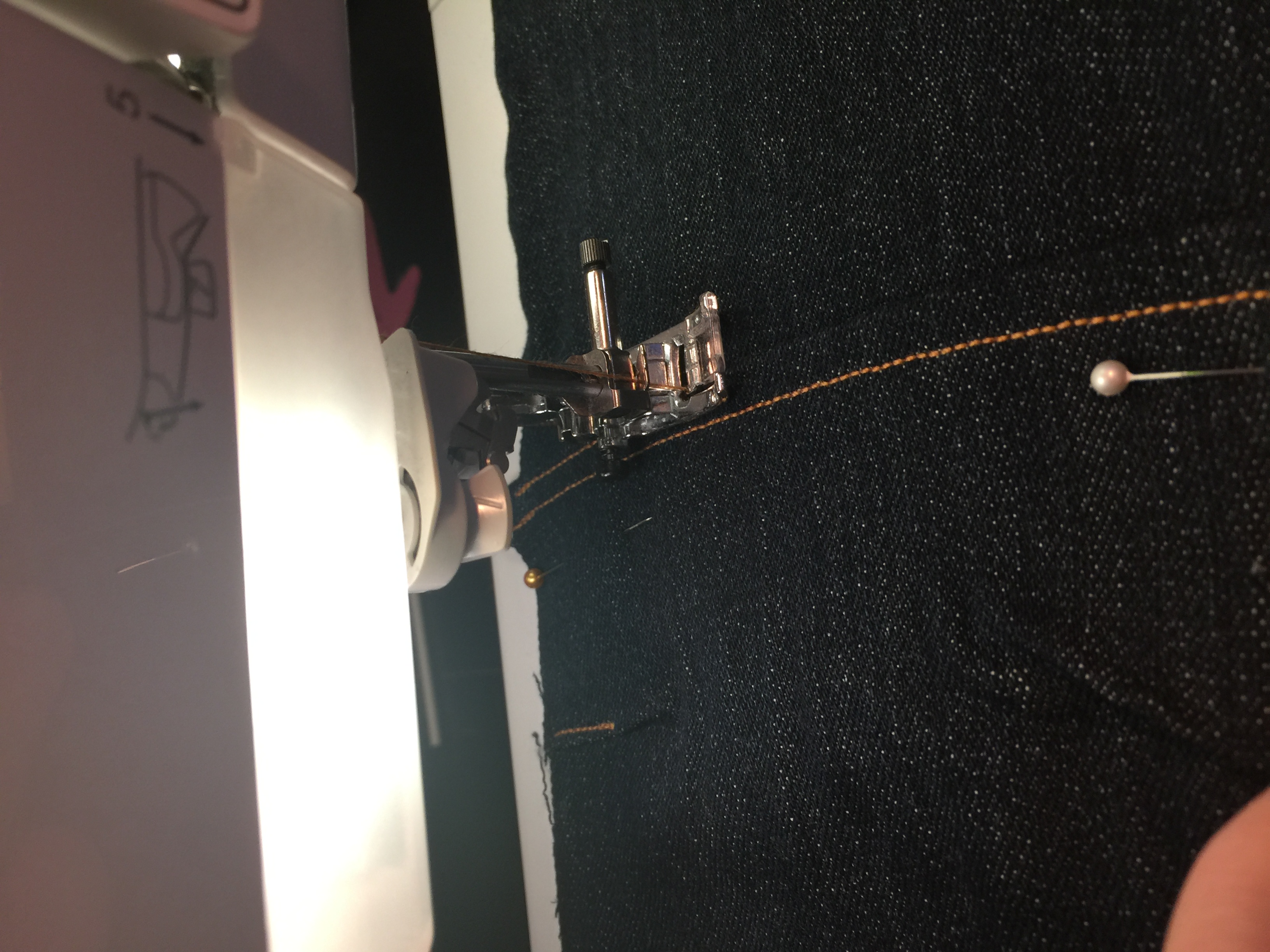
Press the top dart up and the bottom darts down. Top stitch them in place. I love jeans thread for topstitching, It adds a nice touch to the finished look. Take your patches to the ironing board and press the top and bottom edges 1/2″ wrong sides together. Stitch in place 3/8 inch from the fold.

Place the patched on the front pieces (wrong side of the patch to the right side of the leg piece) making sure to match the right leg patch to the right patch and the left leg patch to the left leg.  Sew the patches on about 1/8 inch away from the folded edge.

img_3952


img_3953

There you go! You just added cool knee patches to the Cpt Comfort Jeans. Continue sewing the pants according to the pattern and don’t forget to show them off in our group.

img_3349

img_3353

img_3339

Happy sewing, pirates!

Alex

Filed Under: Frequently Asked Questions, Pattern Hacks, Uncategorized 1 Comment

Flannel Kimono with pockets

October 28, 2016

img_2004

It is officially fall! The crisp morning air should make its appearance soon and what better way to embrace it than by treating ourselves with a cozy flannel top. For my blog today I’ll show you how you can take the Summer Kimono into fall and I’ll also give you some tips for working with flannel.

img_2008

You will need your printed and cut kimono pattern pieces. You can chose any of the styles, I went with the curved hem because it’s my favorite. 🙂 Now grab your Grandpa Cardi pattern and print just the pocket piece. It’s on page 22-23. img_1918

Sew your pockets according to the instructions. I opted for the band pocket but you can certainly use the non banded option too. Remember to press the bottom of the pocket too! You’ll now stitch them on to your two front pieces. Placement it’s a matter of personal preference so I’ll show you where I stitched mine on but you can certainly move them higher or lower. I placed the pocket about 4 inches from the center and about 2 inches from the bottom (remember the bottom is not hemmed yet). Sew the pockets on the front pieces.

img_1927You will now start assembling your kimono according to the instructions. Something very important to keep in mind, especially if you are sewing sizes L and up is that most flannel fabrics are 42-44 inches wide. Your fabric may not be wide enough to cut the entire length of the sleeve so in this case you have a few options. You can either do what I did and just shortened the sleeves length by 2.5 inches or so and either add the sleeve band (as per the pattern) or just hem it. The other option would be to attach additional fabric to the selvage and cut the pattern pieces as they are. You could use the same fabric as the main one or even coordinating/contrasting fabric for a colorblock look. Get creative!

TIP: When sewing a curved hem on woven fabrics I like to first serge the raw edge, making sure I don’t cut any of it with my serger knife.  This will basically give me the 1/4 inch mark and make the fabric more stable. Press the 1/4 inch hem, and then press again another 1/4 inches and sew in place. Wasn’t that easy? That’s the magic of serging the raw edge first.

img_1931

I know a lot of you have asked in the Facebook group is the Summer Kimono can be made with flannel fabric so now you know it can…and it’s pretty cozy on top of that! As always, don’t forget to show off your creations and tag me if you have any questions!

Alex

img_1988-1

img_1991 img_2013-1

Filed Under: Frequently Asked Questions, Pattern Hacks, Uncategorized 2 Comments

P4P Raglan Week: Off-The-Shoulder Raglan Hack

September 24, 2016

raglan-week-day6

IMG_0881 Did you start your fall sewing, pirates? Even though it doesn’t look like fall outside I like to tell myself cooler weather is coming. One of the staples in my fall/winter wardrobe is the raglan tunic. It is perfect for wearing it with Peg Legs (and we all know peg legs are practically fall uniform) and SOS pants. For my blog today I’ll show you how to get an “off the shoulder” look using the Relaxed Raglan. You can certainly use the Slim Fit Raglan if you prefer. I just am going for a looser, more casual look so I used the Relaxed Raglan pattern.

Screen Shot 2016-08-30 at 9.13.22 AM

First off, select your size, print and cut the pattern pieces according to the instructions. Don’t cut the fabric just yet! We’ll now make some small hacks to the pattern to get a wider neckline. Take the front pattern piece and measure 3 inches down on the center fold and mark that spot. Then measure 3 inches down on the sleeve part and mark that point too. Using a french curve (or just going slowly) and following the original pattern, draw a curve line between the two points. Repeat with the back and the sleeve pattern pieces.

testraglan

Once you drew the new cut line, remove the top part and cut the fabric following the new pattern pieces. At this point you will have a front, back and two sleeve pieces plus and additional cuffs or waistband you may need depending on the style raglan you chose. Do not cut the neckline as per the original pattern suggestion. If you do, the neckband will be too small for the new neckline.

Sew the raglan according to the instruction, leaving the neckline as is. Once sewn, take the shirt/tunic, lay it flat on a table and measure the neckline opening circumference. You will calculate the new neckband based on this measure. The new neckband will be 85% of the opening plus seam allowance. So you will do Opening X 0.85 + 1 (for SA). You now have the new length of the neckband. The width stays the same as the pattern.

You’re almost there. All you have to do now is cut the neckband and attach it to the shirt. Tadah! All done, you have a cool new off the shoulder raglan.

IMG_0903 IMG_0882 IMG_0888

I can’t wait to see what you create.  Don’t forget to show off your raglan in the group and keep an eye out for all the surprises during this Raglan Week.

IMG_0905

If you’ve hacked a sexy off-the-shoulder look of a raglan during P4P Raglan week, we would love for you to share it with us!  Head over to the Facebook Group or share on Instagram.  And be sure to use the tag#P4PRaglanWeek so we can find you!

Curious about what else has been happening during our raglan-loving week of fun?

Just take a look at our schedule!

Monday, September 19: Jolly Roger Raglan Pattern Update + Jolly Roger Add-On Pack Pattern Release

Tuesday, September 20: JRR Woven Fabric Hack

Wednesday, September 21: JRR Animal Faces Add-On

Thursday, September 22: Contrast Band Hack for Kangaroo Pockets

Friday, September 23: Women’s Keyhole / Scoopback Raglan Hack

Saturday, September 24: Off-The-Shoulder Raglan Hack

Sunday, September 25: Adding Stripes to Your Raglan Sleeves

Filed Under: Pattern Hacks, Uncategorized 4 Comments

  • « Previous Page
  • 1
  • …
  • 24
  • 25
  • 26
  • 27
  • 28
  • 29
  • Next Page »

connect with me

  • Email
  • Facebook
  • Instagram
  • Pinterest
  • YouTube
Privacy & Cookies: This site uses cookies. By continuing to use this website, you agree to their use.

To find out more, including how to control cookies, see here: Cookie Policy
  • Privacy Policy
  • Refund Policy
  • Contact Us
  • About

Copyright © 2026 Patterns for Pirates

Copyright © 2026 · Genesis Framework · WordPress · Log in